Mystery Mondays: Jennifer Young on Researching Historical Fiction

I’m so pleased to have award winning novelist Jennifer Young on Mystery Mondays. She’s here to talk to us about researching historical fiction – something I’m in awe of.

Hot off the press: Cold Crash (eBook Edition) is free today on Amazon. Why not check it out and post a review for Jennifer?

Researching Tips for Historical Fiction

cold crash front cover
Cinnamon Press Debut Novel Winner

When I started writing Cold Crash, I looked online for music that came out in early spring 1952. I found ‘Tenderly’ by Rosemary Clooney, and it played on a continual loop as I wrote the first chapters of Max Falkland’s story. It even found its way into what eventually became chapter twelve.

As I researched further though, I found that while ‘Tenderly’ came out in the United States in spring 1952, Rosemary Clooney didn’t release any records until years later in the United Kingdom. Max Falkland lived in the UK, so I had a problem. Fortunately, Max is Anglo-American, so I simply added a reference to her grandmother posting the record to her from America.

I told this story at a reading I did last week, and another author and friend Helen Gordon asked if I ever fudged my historical details, pointing out that my obsession with historical accuracy sounded more like creative nonfiction than fiction. Cold Crash is undoubtedly fiction – I’ve never flown a plane and I’m certainly not an archaeologist – but the facts represented in the novel are as accurate as I can make them.

Coming from an academic background, I consider it vital to get those details right. I love reading historical fiction, and I adore the details of the past that makes the world rich and compelling. I don’t want to be distracted from the mystery or character development by wondering if one tidbit of information is correct. It’s very easy to get overwhelmed with research. Here’s some advice from my experience researching and writing about spring 1952.

Research broad brush stroke history first. I started with overviews of the 1950s – reading books ranging from Robert Opie’s 1950s Scrapbook to Jessica Mann’s The Fifties Mystique. I also read about the Korean War. Max has just come out of mourning as the novel opens, for her brother who was shot down over Korea. (I had to supplement knowledge gleaned from a childhood of watching M*A*S*H!)

While you’re writing, don’t disappear into the internet to check one obscure fact. I did this far too regularly, and you end up wasting precious writing time. You can always correct a historical fact, but if you never write, you have nothing to correct! In one case in Cold Crash, I left a mistaken detail in place. Max’s friend Emma says it’s nice to bake scones with dried fruit again, when Max has provided it. In April 1952, dried fruit was off rationing, but I decided to leave the dialogue in, as Emma doesn’t have the money to splurge on dried fruit.

If you have an area that particularly interests you, save that for last. It sounds counterintuitive – it might have been the reason you chose your historical period. However, a real danger exists that you will research that one area forever, and never write. I deliberately chose to do this with fashion. After I had a complete first draft of the novel, I went to the British Library and poured over fashion magazines for 1952. I loved looking at Harper’s Bazaar and Vogue issues, the very ones that Max would have read, seeing the ads she would have seen. It felt almost like shopping – I needed a ball gown for this scene, a dinner dress for this one.

This worked well for other areas too. Train travel is not my passion, but I knew I needed details of both the look of the LMS trains from London to Oban. An Illustrated History of LMS Coaches gave me pictures of the upholstery on the LMS train line, as well as the sleeping compartments. The microfiche version of Bradshaw’s Guide allowed me to find out the timetable of trains going between London and Oban – and that the reverse train didn’t run on weekends at all. I reorganised the timings of the novel to allow Max to travel on a Friday. Would anyone have checked? Probably not, but that detail mattered to me.

My final piece of advice is to enjoy the research – and also take it seriously!


Who is Jennifer Young?

Jennifer Young University of Hertfordshire. Photography by Pete Stevens ©Jennifer Young was born in a small textile town in North Carolina, USA and moved to the UK in 2001. She has since completed a PhD, become the daughter-in-law of a Catholic priest and gained British citizenship. Her degrees are from the University of North Carolina Chapel Hill, Cardiff University and the University of Southampton. She is a Senior Lecturer in Creative Writing and an Associate Dean of the School of Humanities at the University of Hertfordshire. Jennifer lives in North London with her husband and daughter.

Her novel Cold Crash won the Cinnamon Press Debut Novel Prize.

www.maxfalkland.com

@maxfalkland

https://www.facebook.com/ArchaeologyandEspionage/

Buy Cold Crash

Cold Crash

For archaeologist Maxine ‘Max’ Falkland, life in early-50s London is difficult enough as cold crash front covershe tries to move on from the death of her brother, an RAF pilot shot down over Korea. But, when she meets John Knox things get more complicated — before they get outright dangerous.

Flying her light plane to Scotland, Max overhears whispered arguments in Russian coming from the next-door room and sees lights across the moors that appear to answer flashes from the sea. Add the mysterious malfunction of her plane and she has a lot to confide when she encounters the enigmatic Richard Ash, a local landowner and recluse. But when Knox unexpectedly reappears and a dive goes disastrously wrong, Max must act fast as she finds herself in the middle of a Soviet military plot.

Cold Crash is the first of four novels that follows Max through archaeology and espionage from 1952 to 1953.

Thanks for reading…

Top 3 Structural Editing Questions For Fiction Writers

After completing my first two novels, I knew to become a better writer, I needed to learn to edit my own story.

Write a Story Readers Love

What about you? Before sending your story to beta readers, writers’ critique groups, or to an editor, don’t you want your story to be the best you can make it?

I put all my energy in learning how to perform a structural edit. A structural edit, also known as a developmental edit or a story edit, will turn your draft into a story readers love. You’ll notice I like to use the term story edit. It sounds much more fun than the formal terms!


A Great Story Readers Love

Once you have a draft written, it’s time to focus on characters, plot, and setting.

Characters

During a story edit, you also take a hard look at your characters. How often do they appear? What are their goals? What gets in the way of their goals? Characters will drive the tension in your story, and tension is what keeps a reader engaged in your story.

Plot

Performing a story edit on your first draft means analyzing your story from a high-level perspective and fixing any weak areas. You want to make sure the story structure makes sense, the scenes are tense, there are no plot holes, and your key scenes appear in the best place along your story arc.

Setting

Finally, the story edit should examine your settings. Do you make the most of your settings? How often do you use the same setting, and is it too often? Do your settings help with the tone of your scenes? Settings are key to keeping your reader engaged, so don’t ignore them.


Where To Start Your Story Edit

Here are three questions to ask yourself when you review a scene and look for ways to improve it.

1. What is the purpose of this scene?

Defining the purpose of the scene first allows you to address other elements of the scene and test if they are in line with the purpose. A scene may have more than one purpose, but see if you can choose the most important one and then ask yourself does this help drive the story forward.

2. Who has the point of view?

Multiple points of view means the character who controls the POV for a scene changes from scene to scene. As a writer, you must be in control of this aspect. The generally accepted method is to have one POV character per scene. Switching mid-scene can be known as head-hopping and can jar the reader from the story.

3. Is the setting the best place for emotional impact?

When answering the question, think about who has the point of view for the scene and what makes them feel strong or vulnerable.

Do you have a character who is afraid of the dark? Imagine the character is about to have a confrontation with an employee. If the character feels confident being in his/her own office and you want the character to be in a position of strength, then use the office as a setting.

If you want the character to feel vulnerable during the confrontation, try locating him/her outside, at night, in an isolated parking lot. And make it very dark. The streetlight is broken. There is no moon. Maybe it’s windy, so a cry for help won’t be heard.

Tackle each question and edit each scene accordingly.

Fictionary is the first online tool for editing your story, not just your words. Think characters, plot, and settings. Find out more at Fictionary.co.

Download our free eBook, Story Editing: 15 Key Elements of Fiction To Ensure Your Story Works and learn how story editing is all about evaluating the major components of your story.

Turn Your First Draft Into A Great Story

Try Fictionary for free. The first 10 days are on us. No credit card required.

What Writers Are Saying About Fictionary!

D.S. Kane, Amazon Bestselling Author

“I have used Fictionary to revise my current work in progress, entitled MindField, an espionage technothriller due out in early December 2017. My feeling is that Fictionary helped me to improve the manuscript significantly, and I will use it on all my subsequent novels. I am trained as both a novelist and screenwriter, but I focus exclusively on producing novels. And, that is where Fictionary is most useful. The toolbox within Fictionary helps a novelist see exactly where their work is weakest and strongest, and pushes me to work on fixing my problems.”

Mystery Mondays: Heather Weidner on The Writing Life

Today on Mystery Mondays, we welcome author Heather Weidner to share her advice on becoming a writer and what she learned along the way. I connected with Heather because of the Pens, Paws, and Claws Website and Blog. If you like writing, and you like cats or dogs, this is the blog for you!

Over to Heather…

Key Things about the Writing Life

by Heather Weidner.

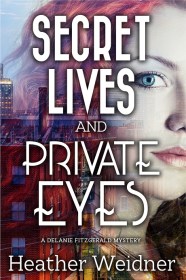
secret lives private eyes cover - webWhen I dreamed of being a writer, I had visions of working at my desk (at a house that overlooked the beach), doing TV interviews, and cashing royalty checks. I never realized how many marketing and other tasks are needed to sell books.
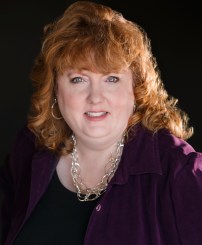
My debut novel launched in 2016, and the second in the Delanie Fitzgerald Mystery series is slated for mid-November 2017. For the first book, I planned a launch celebration and did interviews, author spotlights, and guest blog posts for 35 sites. I did a Facebook hop, a Goodreads give-away, radio interviews, and podcast interviews. I do about 50 book signings and presentations each year. And I am also a full-time IT manager, so writing and marketing get shuffled in with all the other demands of everyday life.

Here are some key things I’ve learned over the years about what it really means to be a writer.

  1. Publishing is a business. The goal is to sell books.
  2. Make sure that you’re writing your next book.
  3. Always be professional. Be on time and strive to meet all deadlines.
  4. Keep one master calendar for all your events and deadlines. Mine helps me stay organized with all the other parts of my life.
  5. Writing is a lot of work. The first few “sloppy” drafts need a lot of work.
  6. Build relationships through your social media platform. They make a difference.
  7. Set a blogging and social media schedule that works for you. These sites need care and feeding, but they shouldn’t be a 24×7 job.
  8. Everyone has an opinion. Comments and reviews can sting, but learn what you can from them and then move on.
  9. Try to write something every day.
  • Keep a notebook or electronic notes of names and story ideas. You never know when you’ll encounter something that’ll work in your next book or story.
  • Look at your social media posts. Make sure that they’re not all “buy my book.” Make sure that you share others’ celebrations on your social media sites.
  • It’s key for writers to network, market, and build their platforms. Just make sure you leave enough time for writing.
  • Collect email addresses at your events for your newsletter’s mailing list. Get a clipboard and make sure you take it with you to all events.
  • Writing is often lonely. Find a group of kindred souls. Look for other authors or groups who will assist and support you. (I am so fortunate to have my Sisters in Crime – Central Virginia, Sisters in Crime National, Guppies, and James River Writer friends.)
  • Find beta readers or a critique group to help you revise and edit your work.
  • Remind yourself that you do not have to do everything. There are lots of opportunities, but you can burn out if you’re constantly on the go. Take care of yourself.
  • Learn from your mistakes. Make note of how you’d do it differently next time.
  • I try a lot of events and marketing ideas. If it doesn’t work for me, I see what I can learn from it and move on.
  • Order bookmarks and postcards. Make sure you always have them with you.
  • Take pictures at your events or on your adventures to share on your website or social media platforms.
  • Review your website from time to time to ensure your content and photos are current.
  • Review your social media biographies or descriptions to ensure that they are current.
  • Make sure to back up your computer files. It’s devastating when you lose your work.
  • Keep your author headshot current. (People will comment if your picture is ten years old and no longer looks like you.)
  • Most of my correspondence is done via email. I keep lots of folders to ensure I can find the email when I need it. I also add new contacts to my address book immediately, so I don’t lose them.
  • Keep all your receipts and be diligent about tracking your mileage. You’ll be glad when it’s tax time.
  • When you schedule an event, ask about where you’ll be seated and what will be provided (especially if it is an outdoor event).
  • Keep a box of books in the trunk of your car. I’ve encountered times when the bookseller couldn’t get books in time for an event. Also, at several events, the bookseller sold out, so it was nice that I had some extras to provide on consignment.
  • Don’t give up. The writing life is a challenge, and it’s difficult sometimes, but it is worth it. I get excited every time that box of books arrives.
  • Take time to celebrate your wins and successes.

Who Is Heather Weidner?

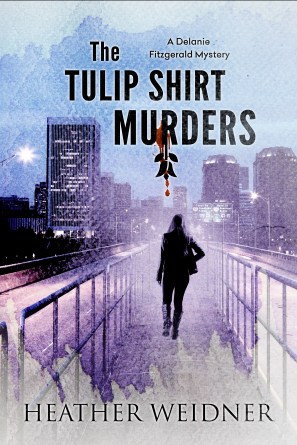
Heather WeidnerHeather Weidner’s short stories appear in the Virginia is for Mysteries series and 50 Shades of Cabernet. She is a member of Sisters in Crime – Central Virginia, Guppies, Lethal Ladies Write, and James River Writers. The Tulip Shirt Murders is the second novel in her Delanie Fitzgerald series. Secret Lives and Private Eyes debuted in 2016.
Originally from Virginia Beach, Heather has been a mystery fan since Scooby Doo and Nancy Drew. She lives in Central Virginia with her husband and a pair of Jack Russell terriers.

Heather earned her BA in English from Virginia Wesleyan College and her MA in American literature from the University of Richmond. Through the years, she has been a technical writer, editor, college professor, software tester, and IT manager. She blogs regularly with the Lethal Ladies and Pens, Paws, and Claws.

The Tulip Shirt Murders

TheTulipShirtMurdersFinalPrivate investigator Delanie Fitzgerald, and her computer hacker partner, Duncan Reynolds, are back for more sleuthing in The Tulip Shirt Murders. When a local music producer hires the duo to find out who is bootlegging his artists’ CDs, Delanie uncovers more than just copyright thieves. And if chasing bootleggers isn’t bad enough, local strip club owner and resident sleaze, Chaz Smith, pops back into Delanie’s life with more requests. The police have their man in a gruesome murder, but the loud-mouthed strip club owner thinks there is more to the open and shut case. Delanie and Duncan link a series of killings with no common threads. And they must put the rest of the missing pieces together before someone else is murdered.


The Tulip Shirt Murders is a fast-paced mystery that appeals to readers who like a strong female sleuth with a knack for getting herself in and out of humorous situations such as larping and trading elbow jabs with roller derby queens.


Contact Information

Website and Blog: http://www.heatherweidner.com

Twitter: https://twitter.com/HeatherWeidner1

Facebook: https://www.facebook.com/HeatherWeidnerAuthor

Instagram: https://www.instagram.com/heather_mystery_writer/

Goodreads: https://www.goodreads.com/author/show/8121854.Heather_Weidner

Amazon Authors: http://www.amazon.com/-/e/B00HOYR0MQ

Pinterest: https://www.pinterest.com/HeatherBWeidner/

LinkedIn: https://www.linkedin.com/in/heather-weidner-0064b233?trk=hp-identity-name


Helping Authors Create Stories That Work

You know I love to write, but I also love to edit. I’m thrilled to announce Fictionary’s Story Editing Course. Try it, and maybe you’ll love to edit too!

once-upon-a-time-719174_1920

At Fictionary, We believe to become a successful author, your novel needs to tell a great story.

Think about some of the best novels you’ve read. What do you remember?

Like me, you probably recall a compelling character like Jason Bourne, the intriguing plot told in Gone Girl, or the fantastic settings depicted in The Game of ThronesYou remember the story.

Combining Fictionary (a self-editing tool for fiction writers) with an online course seems like a great way to give authors the knowledge and process needed to complete their own story edit.

If you’ve finished that first draft and aren’t sure what to do next, we’ve got a solution.

Announcing the Fictionary Story Editing Course

This course will guide you through your manuscript with a scene-by-scene approach to editing. Fictionary focuses on the story, not the words.

To receive the first two lessons, all you have to do is sign up for a free trial of Fictionary. No credit card required. No obligations.

The full 14-lesson course is included with a Fictionary subscription.

Lesson Plan

  • Lesson 1: How To Use Fictionary To Make Your Story Work
  • Lesson 2: Characters And Novel Structure
  • Lesson 3: How To Improve Your Plot
  • Lesson 4: How To Improve Your Settings
  • Lesson 5: How To Use Word Count To Evaluate Your Scenes
  • Lesson 6: Connect Your Readers To Your Characters
  • Lesson 7: Make The Most Of Your POV Characters
  • Lesson 8: Story Arc And Engaging Your Readers
  • Lesson 9: Finding Plot Holes
  • Lesson 10: Draw Your Readers Into and Out of Each Scene
  • Lesson 11: Maximize Your Use of Tension And Conflict
  • Lesson 12: Check For An Empty Stage
  • Lesson 13: Keep Your Timeline Clear
  • Lesson 14: Bringing It All Together

Lesson 1: How To Use Fictionary To Make Your Story Work

Fictionary can identify and help you fix problems within your manuscript by focusing on the structure of your story, not on the words. In lesson one, we’ll tackle these critical structural areas:

  1. Pacing
  2. Character names and appearances
  3. Point of view characters and goals
  4. Story arc
  5. Plot holes (scenes without a clear purpose)
  6. Flow from scene to scene
  7. Absence of tension or conflict
  8. Empty stage syndrome
  9. Confusing timelines or missing objects

 
Where Can You Get More Information?

Check out Fictionary.co for a full description of what Fictionary is and how it can help you.

Download our free Story Editing eBook.

Learn how story editing is all about evaluating the major components of your story. We call these components the Key Elements Of Fiction.  Our eBook shows you how to use the key elements of fiction to evaluate your story and become your own big-picture editor.


Turn Your First Draft Into A Great Story

Farley’s Friday: Boot Failure

Farley here,

Can someone send me a design for new boots?

Yesterday, we went snowshoeing. As usual, Kristina tucked my paws into little booties before we left the house.

But look what happened.

MAtt and Farley SnowshoeingSnowballs everywhere. My paws are protected, but my legs and head aren’t.

You might wonder why I have so much snow on my face when I walk on my feet.

Well, I love to rub my nose in the snow.

So really I need new boots and a nose protector.

Woof Woof.

Mystery Mondays: Madeline McEwen with Guidance, Advice, and Jokes

This week on Mystery Mondays, it’s my pleasure to host author Madeline McEwen. I “met” Madeline when she joined the Imajin Books team this year.

Her novelette, Tied Up With Strings, will be published by Imajin Qwickies on the 11th December 2017. So keep an eye out for it!

Over to Madeline…

 Guidance, Advice, and Jokes

By Madeline McEwen

Thanks for the invitation, Kristina. I gave some thought about what to offer your readers: guidance, advice, jokes?

 Guidance first–how about that infernal problem—procrastination. Have no fear, I have several solutions whether you suffer from writer’s block or information overload. Both prevent productivity. If you find your time frittered away on social media and frivolous distractions then I am here to help.

Don’t get me wrong, social media is a Godsend to the isolated hermits of this world—the sparks keeping us connected, grounded, and alert to change. However, just like other addictions, moderation if our watchword. Instead, get your Internet fix—your reward–after completing specific, measurable goals. Make yourself a numbered and prioritized list, such as: one hour of writing / editing or 500 words / three loads of laundry / replace the air filter / de-mat the dog.

If you find you’re still dithering, use a paper template to make a 3-D cube, throw the di, and then do it.

Advice: buff your humor muscles as frequently as possible.

Joke: I love “knock knock” jokes, but Debra Purdy Kong got there first.


Knock 1


Knock 2


Here are a couple of mine:-

knock3

Who Is Madeline McEwen:

Madeline photoMadeline McEwen is an ex-pat from the UK, bi-focaled and technically challenged. She and her Significant Other manage their four offspring, one major and three minors, two autistic, two neurotypical, plus a time-share with Alzheimer’s. In her free time, she walks with two dogs and chases two cats with her nose in a book and her fingers on the keyboard.

Her novelette, Tied Up With Strings, will be published by Imajin Qwickies on the 11th December 2017, the first in the new series–The Serebral Seniors–celebrating the witty sparks of a ripening generation.

You can find me here:-

http://www.madelinemcewen.com

http://www.amazon.com/-/e/B00Q41VUFI

https://www.pinterest.com/macmaddy/pins/

https://twitter.com/#!/MadMcEwen

http://www.facebook.com/madeline.mcewenasker

https://www.goodreads.com/author/show/9886841.Madeline_McEwen

http://whittereronautism.com/


Farley’s Friday: The Dreaded Bath

Farley here,

Snow. I love to play in snow.

But snow loves to stick to my fur.

Farley covered in snow

When I get home, my choices are a warm bath or twenty minutes of Kristina grooming me to get the snow out of my fur.

I really, really, really don’t like a bath, so I choose grooming.

The best part…If I shiver a little and pretend I’m cold, Kristina will wrap me in a towel and give me a hug.

Who would ever choose a bath over that?

Woof Woof.

Free Video Training For First-Time Authors

Screen Shot 2017-11-07 at 6.56.18 AMIf you have your first book coming out or trying to get published, check out this free video training series on building author platform by my friend Donna!

She helps you discover how to connect with your ideal-readers, understand the rookie mistakes to avoid wasting time, money, and missed opportunities PLUS learn how to present with confidence with public speaking!

https://www.yourawesomeauthorlife.com/


Mystery Mondays: Debra Purdy Kong on Traditional to Self-Publishing

This week on Mystery Mondays we welcome Debra Purdy Kong. I first came across Debra’s writing when I read Opposite of Dark. I loved the book and reached out to Debra on LinkedIn and was very excited to hear back from her. She’s an author who is generous with her time and her advice, which you’ll get some of below.

As you can imagine, I’m happy to host Debra on Mystery Mondays again.

Debra is here to tell you what it’s like to transition from traditional publishing to self-publishing.

I’ve just preordered my copy of Knock Knock and only have to wait 2 days for it to arrive on my kindle!

Over to Debra…

Maintaining Continuity in Changing Times

Knock Knock, front coverThey say that the only constant in life is change. This is especially true for writers. Over the years, I’ve lost count of all the magazines and publishers I’ve worked with, but who no longer exist. When the publisher for my Casey Holland series let me and several other mystery authors go in 2015, I took it in stride and decided to continue self-publishing my series.

It took time to obtain all of my rights back, but I did, and then reissued the first four books in ebook format. I’m now delighted to announce that the 5th installment in my Casey Holland mystery series, Knock Knock, will be released on Wednesday, November 8th!

The decision to keep the series going raised new issues. I no longer had access to the jacket designer and editors who’d worked on the previous four books. I needed to find professionals who would help me maintain the editing style already adopted. But even then, there were questions.

For instance, I was never partial to my editor’s decision to use American spelling in a series set in Canada with Canadian characters. But changing this in mid-series didn’t seem right either, so I sent the editor I hired a detailed list of editing needs.

I also sent the new jacket designer images of the earlier novels. She did a beautiful job of capturing the essence of the series while providing a fresh look that I’m thrilled with.

Change isn’t always easy and sometimes continuity can be a challenge, but when you’re writing a series readers appreciate it, which makes everything worth the effort.


Who Is Debra Purdy Kong

Debra Purdy Kong, 2016Debra Purdy Kong’s volunteer experiences, criminology diploma, and various jobs, inspired her to write mysteries set in BC’s Lower Mainland. Her employment as a campus security patrol and communications officer provide the background for Casey Holland and Evan Dunstan mysteries.

Debra has published short stories in a variety of genres as well as personal essays, and articles for publications such as Chicken Soup for the Bride’s Soul, B.C. Parent Magazine, and The Vancouver Sun. She assists as a facilitator for the Creative Writing Program through Port Moody Recreation, and has presented workshops and talks for organizations that include Mensa and Beta Sigma Phi. She is a long-time member of Crime Writers of Canada.


Look for her blog at https://debrapurdykong.wordpress.com/ More information about Debra and her books is at www.debrapurdykong.com You can also find her on Twitter: https://twitter.com/DebraPurdyKong & Facebook: www.facebook.com/debra.purdykong


Where to find out more:

Amazon: myBook.to/KnockKnock

Kobo: http://tinyurl.com/y6wejnls

Apple: http://tinyurl.com/y96xscpv