Farley’s Friday: Puppy Days

Farley here,

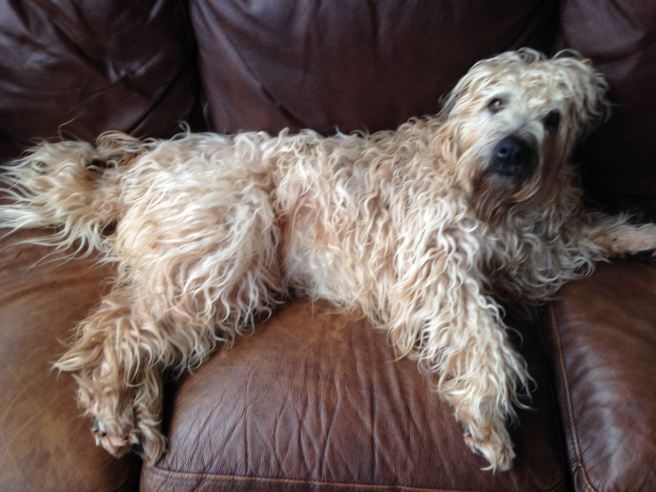
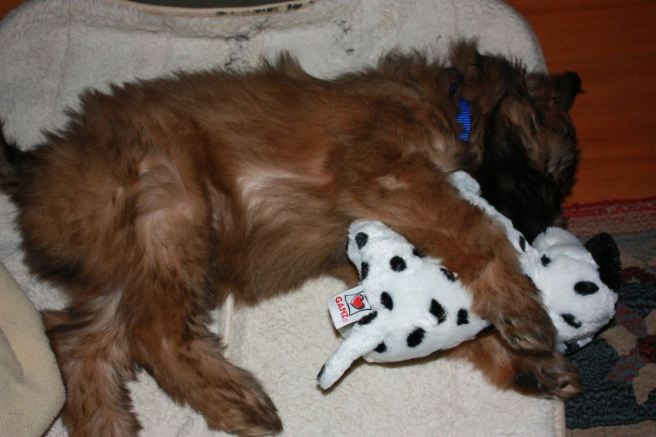
Sometimes Kristina likes to look at pictures of me when I was a puppy. Check out the “stick” I’m playing with.

Kristina threw it and said, “Fetch.”

I trotted after it, lay down, and chewed it. Like I’d pick something up and bring it back to her. No matter how hard she tried, I wouldn’t return with the stick. Finally I told her, ” It’s a twig not a stick.”

She laughed. “Come on, Farley. You can do it.”

Of course I could. But would I chose to? That’s the important question.

Farley Puppy

I think I was pretty cute and wagged my tail at her. No fetching a twig for me. And just so you know, to this day, I’ve never fetched a stick.

Woof Woof

Setting, Novel Structure, and Revising Your First Draft

I once read a book where I didn’t skim any of the setting description. Afterward, I wondered why. I admit, I’m impatient with too much description. To learn what captured me, I re-read

the book and highlighted every sentence that described the setting. What I realized was the author only described things or places that were relevant to the plot.

That was the moment I went on a mission to learn everything I could about setting and how to use it to make my novels more enjoyable.

Most writers know setting creates the story world. But in the context of novel structure, it can do so much more for you.

Once you’ve determined the setting for each scene, ask yourself if the setting is the best place for emotional impact. This one little question helps you:

  • increase or decrease conflict
  • increase or decrease tension
  • set the mood
  • show characterization

That’s a lot for a setting to do for you, but thinking about setting in terms of emotional impact will wake up your creativity. Let us give you an example.

Suppose you have a character who is afraid of the dark. Imagine the character is about to have a confrontation with an employee. If the character feels confident being in his/her own office and you want the character to be in a position of strength, then use the office as a setting.

If you want the character to feel vulnerable during the confrontation, try locating him/her outside, at night, in an isolated parking lot. And make it very dark. The streetlight is broken. There is no moon. Maybe it’s windy, so a cry for help won’t be heard.

Do you see the difference? The setting can help you bring out emotion in the scene by showing conflict, tension, mood, and characterization. You decide what emotion you want the reader to feel, then decide how the setting can help bring forward that emotion.

If you think the setting is not the best place for emotional impact, it’s time for a rewrite. Set the scene where you can elicit strong emotions, then rewrite the scene in that location.

This is only the beginning of how setting used properly within the structure of your novel can help you rewrite a novel that readers will love.

How will Feedback help with setting?

You can see in the screenshot above that Feedback will get you thinking about different elements of setting and how they fit into the structure of your novel.

Feedback will guide you through your manuscript, illustrating weak areas in plot, character, or setting that will lead you to make changes to your novel. With a guided approach, you’ll know which areas of your manuscript you’ve addressed and which you haven’t. This will speed up your rewriting process by enabling you to focus only on areas that need revision.

Feedback will save you money on future editing. If an editor works on your novel before you’ve finished addressing structural issues, the editor will spend time on changes you could have already made. By doing this work yourself, you’ll learn how to write better fiction and you’ll receive higher quality comments from an editor.

Find out more:

Our goal is to launch Feedback in the spring of 2017. In order to create an app that is valuable to writers, we’d like your input on building Feedback. Sign up at http://www.FeedbackForFiction.com, and we’ll send you updates on the development progress and ask you the occasional question to help define the product. As a bonus, we’ll send you rewriting tips available only to our subscribers.

Your support means a lot to us, so thank you.


Source: Feedback For Fiction | Setting, Novel Structure, and Revising Your First Draft

Mystery Mondays: Elaine Cougler on Linking History and Fiction

When I first started blogging, long before I was published, Elaine Cougler was one of the first author’s I met online. She’s been encouraging me ever since, so it’s a great pleasure to finally have her on Mystery Mondays.

book-tour-logo-final

Linking History and Fiction Through Theme

by Elaine Cougler

One of the things I like to do in my books is to show the strengths of ordinary people, fictional though they may be. Putting them in ever more dangerous and extraordinary situations allows me to do just that. In The Loyalist Legacy, for example, Lucy has to find a way to get her husband released from jail where he has been wrongly imprisoned with not so much as a charge against him. Oh, she learns why those in power are holding him. He has helped far too many simple settlers with legal problems over their land in the burgeoning Niagara communities, all too often going against the rich and powerful. In a rough country where democracy is still just an idea, the high-and-mighty rule.

A good shot with her very own rifle, Lucy is the mother of a grown family with grandchildren on both sides of the Niagara River. On more than one occasion she has shown her mettle, but now she yearns for what she had thought would be quiet years with her husband. Instead, she and John are still struggling, this time with their own British government in Upper Canada.

The day John was seized from their mill near Fort Erie, she rushed to Niagara (present-day Niagara-on-the-Lake) thinking John would be released immediately. It didn’t happen. This circumstance gave me, as the author, the chance to have Lucy meet Richard Beasley, the real person who owned the land on Burlington Bay, which the British actually seized as a marshalling station and army camp during the War of 1812.

Beasley’s mostly true story became one of the subplots in this third novel in the trilogy.

Here is the scene where Lucy meets Richard Beasley.

 Lucy lay on the lumpy bed as the snow beat against Aaron’s newly installed glass windowpane and tried to keep the tears from coming again. John had told her to forget about him. He worried that her constant running back and forth from the inn to the jail would aggravate her paining joints. “Go back home, Lucy,” he’d said week in and week out the past three months.

“But I can’t!” Her voice echoed in the bare room. How she ached to have him with her. She rolled over once again, taking care with her right knee. Her latest patchwork quilt at least kept her warm and reminded her of better times.

In the morning she would try to get the jailer to let her bring food to John. His hands were so bony and his trousers so loose, she knew they weren’t feeding him much at all. She would make that jailer listen to reason!

The rebuilt Angel Inn, burned with almost every building in Niagara that December of 1813, this morning bustled with travelers and local hangers-on, all slurping their steaming bowls of porridge and gulping tankards of ale as though they hadn’t eaten or drunk for days. Aaron was back in the kitchen dishing up orders while Lucy rushed as best she could from table to table, side-stepping the boots protruding into the aisles and the arms flung out to emphasize some important point in a customer’s harrowing story.

Her mind was on her plan this morning. That jailer would listen or she would—well, she didn’t know what she would do but she would convince him to let her give John the bowl of porridge she would carry with her. Maybe she’d take two and bribe the jailer with his very own. Ah, that’s a good idea.

“Watch what you’re doing, woman!”

She tripped and fell right into the table, upsetting the bowl of porridge she carried all over the men’s food. “I’m so sorry, gentlemen!” With her cloth she wiped up the mess. “I’ll get more. I wasn’t thinking…Please forgive me.” She couldn’t stop talking and felt the heat spread from her face all down her front, adding to her embarrassment.

“Madam, do not worry.” The well-dressed man’s voice soothed as he spoke. “This is just a trifle. Do not concern yourself.”

She looked up. The speaker was the ruddy-faced, white-haired man she’d noticed when he came in. He smiled at her. He still had most of his teeth. The table put back to rights, she picked up her cloth and curtsied quickly. “Thank you, sir,” she whispered in a voice so soft she wondered if he could even hear it.

But he did. “Landlord! Give this woman a shot of brandy. She’s pale as a ghost.”

The Loyalist Legacy.

Screen Shot 2016-11-12 at 1.22.23 PM.png

When the War of 1812 is finally over William and Catherine Garner flee the desolation of Niagara and find in the wild heart of Upper Canada their two hundred acres straddling the Thames River. On this valuable land, dense forests, wild beasts, disgruntled Natives, and pesky neighbors daily challenge them. The political atmosphere laced with greed and corruption threatens to undermine all of the new settlers’ hopes and plans. William cannot take his family back to Niagara, but he longs to check on his parents from whom he has heard nothing for two years. Leaving Catherine and the children, he hurries along the Governor’s Road toward the turn-off to Fort Erie, hoping to return in time for spring planting.

With realistic insights into the challenging lives of Ontario’s early settlers, Elaine Cougler once again draws readers into the Loyalists’ struggles to build homes, roads, and relationships, and their growing dissension as they move ever closer to another war. The Loyalist Legacy shows us the trials faced by ordinary people who conquer unbelievable hardships and become extraordinary in the process.

Praise for Elaine Cougler’s writing:

elaine-photo-2-from-paula-tizzard6203edit

“….absolutely fascinating….Cougler doesn’t hold back on the gritty realities of what a couple might have gone through at this time, and gives a unique view of the Revolutionary War that many might never have considered.”

Sharon’s Garden of Book Reviews.

“….an intriguing story”                                             A Bookish Affair


“I highly recommend this book for any student of history or anyone just looking for a wonderful story.”

Book Lovers Paradise –“Elaine’s storytelling is brave and bold.”                       Oh, for the Hook of a Book

Oh, for the Hook of a Book

BUY THE BOOK LINK: https://www.amazon.com/Loyalist-Legacy-Trilogy/dp/1539451283/ref=sr_1_1?s=books&ie=UTF8&qid=1478040721&sr=1-1&keywords=The+Loyalist+Legacy+Elaine+Cougler

ABOUT THE AUTHOR + LINK TO MY SITE http://www.elainecougler.com/news/author-bio/

VIRTUAL BOOK TOUR LOGO AND SCHEDULE http://www.elainecougler.com/

Elaine Cougler can be found on Twitter, Facebook Author Page, LinkedIn and on her blog at http://www.elainecougler.com/blog/
Starting a New Business is Like Writing a First Draft.

Hard work and research will help you create the best possible novel for your readers. If you’re an author and an entrepreneur, you know this is true. Part of starting a business is ensuring we’re building an app that solves a problem writers have, and to do that we need to expand our knowledge of how writers rewrite their first draft.

Today, we are  doing our research and knowledge gathering, and we have a few questions about your rewriting process. If you’re already familiar with what the Feedback app will do, you can jump straight to our short survey.

What does the Feedback app do?

writing-steps

With Feedback, you can focus on plot, character, and setting. You can evaluate on a scene-by-scene basis or on overall novel structure. Feedback will show you the most important structural elements to work on first.

Feedback will guide you through the rewriting process by asking you questions specific to your manuscript, enabling you to evaluate your own story.

Once you import your manuscript, Feedback automatically captures information such as word count, number of scenes per chapter, character names, and chapter and scene breaks, using this information to create the first set of reports. Any updates to your manuscript will still need to be completed in the writing app you used to create your first draft.

Feedback helps you visualize your manuscript. Forget about yellow stickies or white boards. Feedback will draw character arcs, provide reports on scene evaluation, and show your rewriting progress.

Thanks for taking the time to read about Feedback. We’d love your input. You can find out short survey here.

Thank you!

NaNoWriMo 2016 Blog & Social Media Hop

Here’s a cool opportunity for my fellow #NanoWriMo buddies.

raimeygallant's avatarRaimey Gallant

nano-blog-and-social-media-hop-01

Welcome fellow Wrimos! If you’ve read even one article on book promotion, you’re familiar with the term “author platform”, which is basically your marketing reach. It’s how you’ll promote your books, especially online. The bigger your platform, the better.

So, let’s build our platforms together! Add your blog and social media pages in the form below, and I’ll send it out to every participant at the end of NaNoWriMo 2016, so we can follow one another’s pages.

UPDATE: We have 275 participants so far, which means 275 engaged people who will follow back many of the accounts you add to this form.

The form will close on November 30.

View original post

Feedback For Fiction | Characters, Novel Structure, and Revising Your First Draft

Why do people read novels?   We think it’s to find out what happens next. But what happens next is only interesting if it the “what happens next” involves characters or somet…

Source: Feedback For Fiction | Characters, Novel Structure, and Revising Your First Draft

Mystery Mondays: M.H. Callway on Short Stories Vs Novels

It is my pleasure to welcome fellow author M.H. Callway to Mystery Mondays. Madeleine and I met online and have since become friends. Her novel Windigo Fire was a finalist for the Crime Writers of Canada Arthur Ellis Award. She writes both short stories and novels, and she’s here to tell you about that.

SHORT STORIES VS NOVELS

I often give talks on how to get published to aspiring writers. One tip I pass on is to start writing shorter pieces. As an author, I found great encouragement when one of my stories was accepted for publication and/or became a finalist for an award. The boost gave me the will to continue and to believe that I had enough talent to pursue my writing dream.

That’s not to say that writing a short story is easy although it is easier than tackling a novel. To use a running analogy, it’s like preparing for a 5K as opposed to a marathon. You need good basic cardio to run a 5K and most people can finish, but running a marathon introduces a whole new level of complexity. It requires far more endurance, experience and will power – and you won’t be able to complete one without the right training.

Would that I had followed my own advice!

I had always wanted to write a novel so that’s where I started. In 2002, I began my learner novel. Ignorance was bliss so I wrote and wrote and wrote. I ended up with 140,000 words of mishmash. Patient author friends ploughed through my verbiage and gave me excellent advice. I revised the draft several times, reduced the length to 100,000 words and mailed it off to multiple rejections and a few near misses.

By now, it was 2006. The Crime Writers of Canada announced a short story contest and several of my friends planned to enter. We are always advised to write what we know and since I’d spent most of my career working in the civil service, I wrote a comic short story about two hard-working civil servants saddled with a new Boss from Hell. To my great surprise and delight, “Kill the Boss” won first prize.

“Kill the Boss” was picked up by Silver Moon Magazine and reprinted in Mouth Full of Bullets. It proved to be a turning point for my writing career, mostly because I’d devoted four years to improve my writing skills.

I spent the next few years writing short stories. In 2009, I decided to try novel writing again. That work eventually became my first published novel, Windigo Fire. Writing and publishing short fiction kept me going through Windigo Fire’s ups and downs and continues to do so while I wrestle with the next book in the Danny Bluestone series, Windigo Ice.

My short fiction starts with a simple idea. When I write a short story, I’m a complete pantser though I usually know how the story is going to end. Often I have the closing line in mind. What I don’t know is how long it’s going to take to get to the end. I simply write until the story is fully told.

I find the process of writing short fiction immensely freeing. Also since I tend to write long, I’ve started exploring the novella form. In our digital age, we aren’t as constrained to rigid word limits as we once were because of the mechanics of print publishing. Nowadays, too, readers have less time, so I believe that the novella form has potential to become popular.

Readers can now find my published stories and novellas together in my new book Glow Grass and Other Tales. It’s available on Amazon in print and digital form.

I love to hear from readers. Do visit my website and leave me your comments at www.mhcallway.com. Or you may contact me at mcallway1@gmail.com.

M.H. Callway’s Books:


12000831_10154197942864018_1649104801334232488_oWINDIGO FIRE

A  Canadian noir thriller.

Danny Bluestone, a young Native man, overeducated and underemployed, is drawn into an illegal bear hunt to escape his stultifying hometown of Red Dog Lake in Northern Ontario.  Things quickly go violent and he must fight to survive both the killers and the wilderness.


glowgrassGLOW GRASS and OTHER TALES:

Revenge, guide dogs, cats big and small, beleaguered ladies of a certain age and a cop with a tarnished heart, meet them all here in Glow Grass and Other Tales.

The characters in the seven stories and two novellas fight for justice even when their sense of justice is warped.  The tales include winners of The Bony Pete and Golden Horseshoe awards as well as the finalists for the 2015 Derringer and 2016 Arthur Ellis Best Novella Award.


Feedback For Fiction | Starting Your Rewrite With A Focus On Plot

Find out where to start your rewrite by focusing on plot first.

You’ve finished your first draft, and you’re about to embark on rewriting that draft, turning it into a novel readers will love. Now is the time to focus on story and structure. Word choice, style,…

Source: Feedback For Fiction | Starting Your Rewrite With A Focus On Plot

Farley’s Friday: Where’s the snow?

Farley here,

I’m so confused. Last November there was snow on the ground. I love snow, and I can’t find it. Every morning I head outside and check if it arrived during the night. And every morning I find green grass.

Farley and Ruby

I’m ready for winter. I’ve got my booties cleaned and stacked by the door. There are extra towels to dry me off with. My blanket it ready by the fire.

Could someone call the weather people and tell them to send snow my way?

Woof Woof

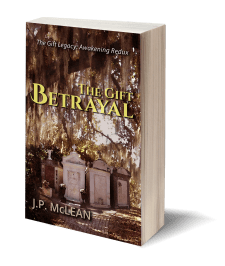
Testimonial for The Gift: Betrayal

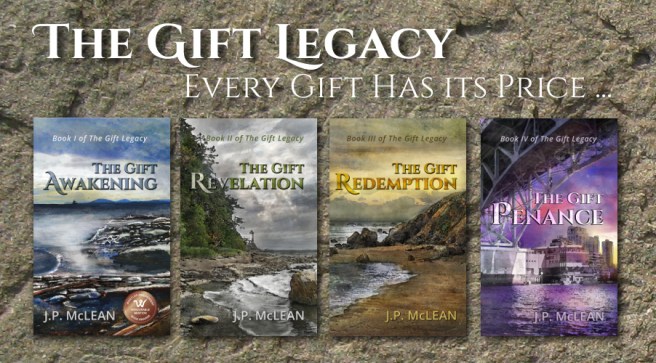
I’m so proud to be part of J.P. McLean’s author journey. If you don’t know about her books, you can find out what I had do say about her latest novel and get to know another author on her site.

Reblogged from The Gift Legacy.

When an author has a new book coming out, they often ask another author they respect and admire for a testimonial. It’s a small stamp of approval that gives readers confidence that the book is wort…

Source: Testimonial for The Gift: Betrayal