Writing Novels With A Spreadheet

If you’ve been reading my blog, you know I love to write with a spreadsheet. I’m still amazed by how helpful  I find the tool and that I still find new ways to use it.

One of the columns in my spreadsheet lists objects. Originally I put this column in to make sure my scenes weren’t empty sets. I also list smell, sights, and sounds for this purpose.

Sometimes with the objects, I’ll use the object in a later scene. Like an innocent little baseball bat. The list reminds me to check what I’ve placed in an earlier scene and see if I can use it in an inventive and unusual way in a following scene. Like an innocent little baseball bat that’s not so innocent.

I knew all this. What I discovered this week is the object column can also help me find errors.

In one scene I have two characters eating lunch together. I list a fork. Later in the scene, I list a spoon as an object. But wait! I’m writing about the same character eating the same meal, so why has her utensil changed?

I went back in the scene and discovered I’d changed the utensil. Silly, but unnoticed when I read the scene without listing objects.

I love discovering new ways my spreadsheet can help.

Let me know if you use a spreadsheet and how it helps you write.

Thanks for reading . . .

Related articles:

Writing a Series: Spreadsheet

Keeping Track of Scenes

How to Use a Spreadsheet for Your Synopsis

Tips For Ordering Scenes In A Novel

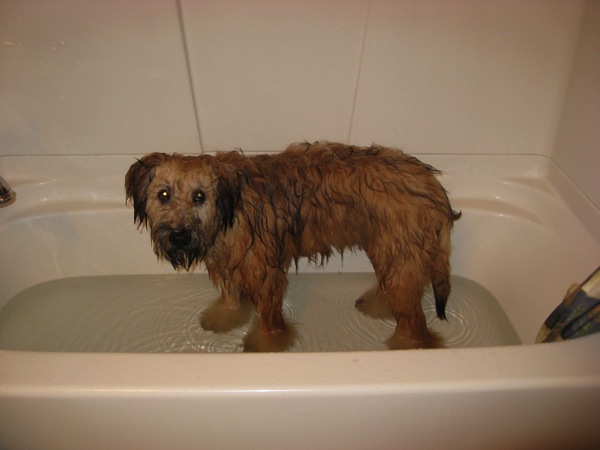
Farley’s Friday: A Wheaten Gets A Bath

How does Kristina not understand that I don’t like baths?

Look at me. This is my best pathetic look. Even as a puppy I knew how to look sad.

Farley gets a bath 2009 02 25

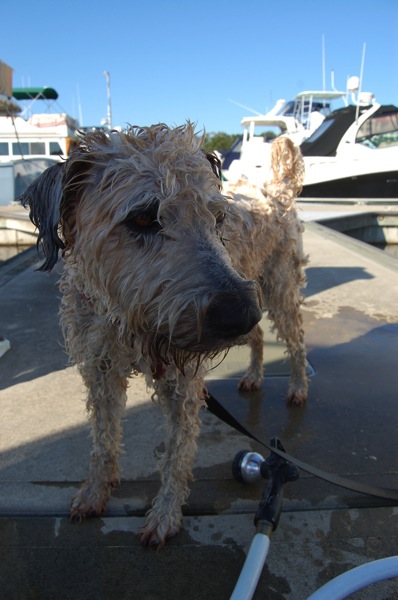
Still here we are, almost 5 years later and she’s still giving me baths.

Farley Gets A Bath Palm Coast

She talks about how the organic, chemical free shampoo is good for my skin. It even has oatmeal in it, like I care.

Just because I was running on the beach this morning, she decided I needed to be clean before I got on the boat.

Any advice on how I avoid future baths?

Woof Woof.

Lagoon 380: A freezer Gets Filled

Part of getting ready to set sail every year includes filling the freezer with meats – unless you’re a vegetarian, of course – and then you can fill the freezer with other yummy foods.

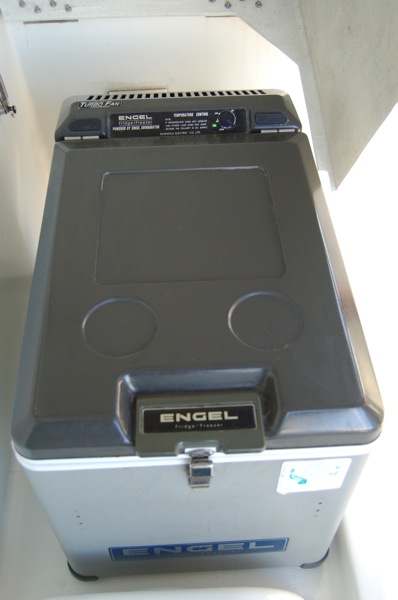
Our freezer sits underneath the cockpit bench and is easily accessible from just outside the galley. It’s an Engel and runs off both 12 volt and AC current. We run off the battery when we are underway and run off shore power at the dock. There is a small freezer inside our galley refrigerator, but it’s not big enough for the quantity we like to bring with us.

DSC 1664

I’ve learned a thing or two about getting the maximum use out of the space that I’d like to share.

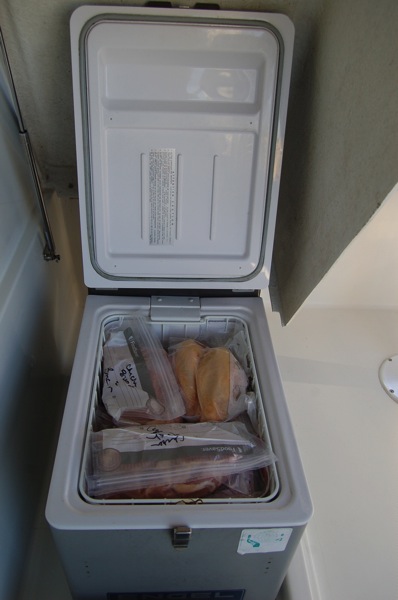
By not freezing the meat prior to storage, the meat uses up less space.  If the meat is frozen first, then you can’t manipulate the shape to pack more in. We store the meat raw while Mattina is plugged in at the dock. This little machine hums away until the meats are frozen solid.

DSC 1665

Warning: layer your  meats so that each row has a choice. Don’t put all the steak at the bottom, for instance.  The freezer has now become a jig saw puzzle and it’s amazing how hard it is to fit a frozen package back in once the pieces have been disturbed. After a while this doesn’t matter, but at first, if you can pick off the top layer without disturbing lower layers, life is much easier.

We also vacuum seal the meat so freezer burn doesn’t ruin the meat.

Now to get to the Bahamas so we can light up the barbecue.

Thanks for reading  . . .

Why Blog About Something You Want To Learn?

I had a friend in medical school who told me when she was learning a new medical procedure she was taught:

  1. Learn one
  2. Teach one
  3. Do one

I think this process can be applied to learning grammar and punctuation. When I’m unsure about a rule, the first thing I do is check my grammar books and read about it. This is the Learn One phase.

Next, I blog about it. If I can explain the rule, then I probably understand it. This is the Teach One phase. If you’re doing this, be careful to use your own words. Don’t cheat and look at the grammar book for help. You need to be able to explain the rule without any aids. Sometimes I don’t blog about the rule, but I do try to write the rule in my own words. Even if it’s on a scrap piece of paper, it helps me remember the rule.

Lastly, I write using the rule. This is the Do One phase. You can edit and proofread to ensure you’re using the rule properly too. I consider editing part of the Do One phase.

I figure if this is how medical students learn, it must work for other areas of knowledge too.

Do you have any tips for learning?

Thanks for reading . . .

Farley’s Friday: Toys For A Wheaten Terrier

Farley here.

Kristina and Matt are getting ready to leave the country for months on end, and there seems to be an endless supply of presents for me.

A delivery person arrives almost daily and gives me a box.

I can hear him coming, step by step, along the dock . . . I can tell by the smell it’s him.

“He’s here. He’s here,” I bark.

Kristina opens the door for me and let’s me greet him. The guy comes so often he knows my name.

He hands over my present. “Thanks,” I bark.

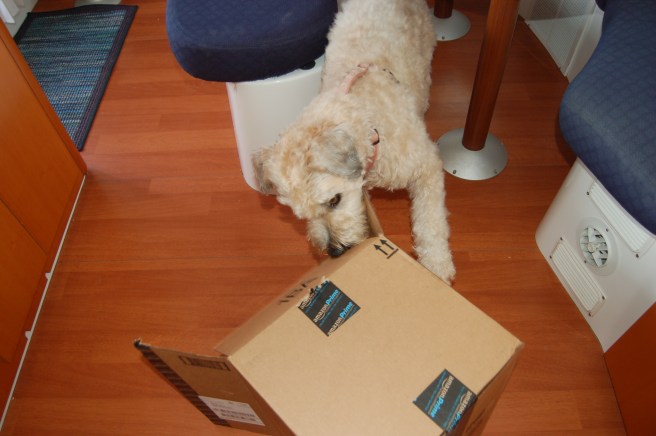
Kristina always takes out whatever is in the box, like I care. But then . . . I get to rip the box apart, making a mess, shredding cardboard. The sound is so satisfying.

Farley and the Box

Once I’m done, I just have to wait until he comes back with my next box. Who knows why I keep getting presents, but Kristina says it’s something about no stores where we are going and we have to get prepared.

Woof Woof.

Farley and box 2

Lagoon 380 Helm Station

Mattina is a lovely boat that needs protection from the sun. Even though we have a bimini shading the cockpit, we feel more is needed.

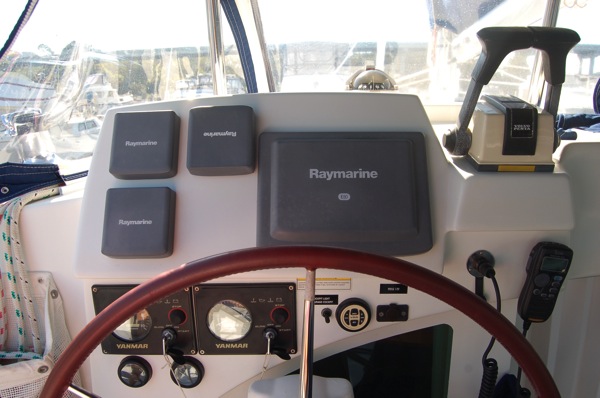
As we sail we have direct access to our depth sounder, wind speed and direction indicator, knot metre and a chart plotter with radar screen. Our helm station uncovered, looks like this:

MAttina Helm Instruments

The first part in protecting the instruments from the sun is the instrument covers. These get put on as soon as we are settled in an anchorage or at a dock.

Mattina Helm Instruments cover

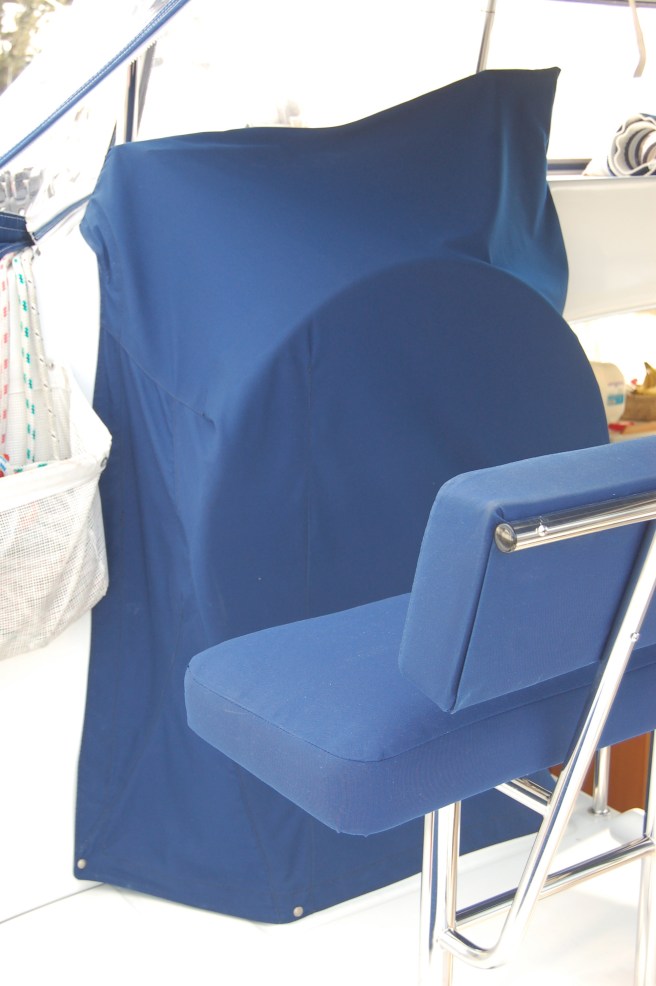
The second part of protecting the instruments is our custom-made helm cover. The cover is made of sunbrella that matches the rest of the canvas on Mattina.

Mattina Helm Cover

You can see from the second photo, there are more items than just the instruments that need covering, including the steering wheel.

Thanks for reading . .

As If Subordinating Conjunctions Can Be Confusing

Did you know if you want to spend a lifetime learning something, punctuation and grammar can give you the opportunity.

This week while proofreading my  novel, I noticed I wasn’t using ‘as if’ consistently. Sometimes I put a comma before the words and sometimes I didn’t.

I noticed this while I was reading on my Kindle. Last week I blogged about How To Avoid Errors In E-books, and here is one more instance where the new addition to my process helped me. As if!

I looked up ‘as if’ and found out it’s a subordinating conjunction. I knew this but had forgotten. Now I know the rules for comma use with ‘if’, another subordinating conjunction, so all I had to do was apply the rule to sentence containing ‘as if.’

The rule, you ask?

A subordinating conjunction joins two clauses of unequal importance. If the clause containing the subordination conjunction comes before the main clause then follow the clause with a comma. If it doesn’t, don’t.

  • As if he could stop the bleeding with his eyes, he stared at the knife impaling his calf. (subordinating conjunction before main clause)
  • He stared at the knife impaling his calf as if he could stop the bleeding with his eyes. (subordinating conjunction after main clause)

Attention to detail is a must when writing a novel, but how can you do that if you don’t know the rules? This brings me back to the lifetime of studying idea.

Keep on the look out for areas in your writing where you’re not consistent and you might find areas where you don’t know the rules. Grammar: How to Learn What You Don’t Know gives another idea on learning grammar.

How do you figure out what you don’t know?

Thanks for reading . . .

Farley’s Friday: A Wheaten Terrier And His Dinghy

Farley here.

I almost missed the maiden voyage of Allura: our dinghy.

Matt thinks he’s so smart. He uses our dinghy hoist to quietly lower the boat off the stern of Mattina. I hear the splash.

“Wait,” I bark from below. I know what he’s doing.

Then I hear it. One pull and the engine starts. Matt is smiling because it’s the first pull of the season.

I jump up the three stairs from the port hull, that’s my side by the way, and rush to the stern.

“Wait for me!” I bark.

Kristina is passing Matt a life jacket and I nudge her (gently) out of the way. I bound from the top step to the dinghy in one leap. I haven’t forgotten how to do this and am proud of myself. Once I jumped, current took the dinghy, and I went swimming. I try not to do that anymore.

Farley in Dingy

Purr goes the engine (and no it’s not a cat), yippee goes Matt, and woof woof go I.

We head out to the Intracoastal Waterway for my first dinghy ride of the season. I love my little boat.

Woof Woof.


Lagoon 380 Folding Props

As many of you know, Mattina, our Lagoon 380 S2 is already in the water, but I thought I’d back up a bit and show off our Radiche props.

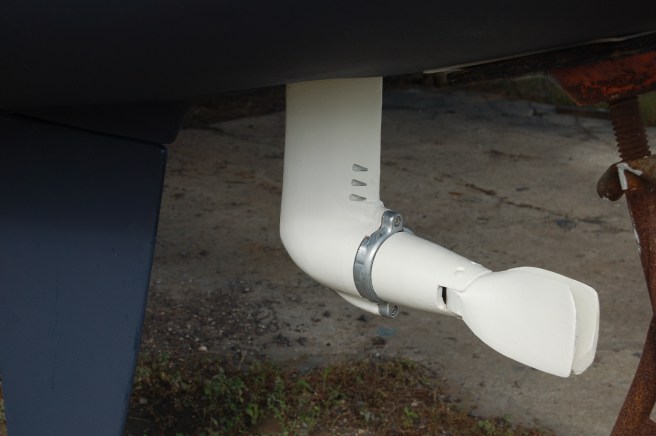
Mattina has folding propellers. The propellers fold back when not in use, as shown below, to reduce drag while we are sailing.

Folding Prop closed
Mattina Props Folded Sep 2013

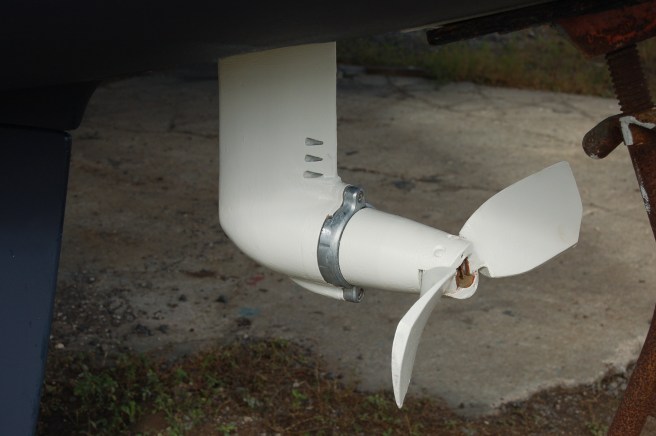
And they  open when we are under power.

Folding Props
Mattina props open: Sep 2013

Every year Matt paints the props with anti fouling paint and puts on new sacrificial zincs. Looking pretty nice for something that won’t be seen.  Not that it matters, because the whole point is for Mattina to sail faster when the propellers are folded back than she would with fixed propellers.

Now I can’t wait to get out on the ocean, head for the Bahamas, and do some sailing. What are you waiting for, you ask? The end of hurricane season.

Happy Sailing and Thanks for reading . . .

How To Avoid Errors In E-Books

Have you ever noticed typos in an e-book?

Maybe it’s not a big deal, but I’ve been reading reviews on Amazon lately and have found reviews where readers enjoyed the story but won’t buy another book by the author because of typos, grammatical errors, or bad formatting. That can’t be good.

If you’ve published electronically, you don’t want this to happen to you. But how do you avoid it?

After you’ve proofread, and proofread and proofread again, then had your novel proofread by someone other than yourself, there is another task you can perform to ensure high quality work.

I use Scrivener to write and recently found the feature that exports a manuscript into e-book formatting. I tried this and then sent my novel to my Kindle. I used to just send a word document to my Kindle and read my novel that way, but how could I know if the formatting was off?

Now with this feature, my novel is formatted as a reader would see it on their electronic device. Scrivener will export to epub (.epub), Kindle ebook (.mobi) or iBooks Author Chapters (.docx). I’m sure there are other writing programs that have the same function.

It’s interesting reading my novel for the first time in this format. I caught several errors in formatting; such as, no space after one scene and before the next. This might seem like an inconsequential error, but what if I’d confused a reader by not indicating when one scene ended and a new scene started?

As an added bonus, reading on the kindle makes my novel seem real.

Do you have ways to check your novel for formatting errors or typos?

See Proofreading/Copyediting  if you’re interested in my in-depth process.

Thanks for reading . . .