Farley’s Friday: Trick or Treat?

Farley here,

It’s not Hallowe’en, so I’m not sure why I’m being asked to do a trick in order to get a cookie.

Sonya  Farley

The normal state of my life…

I want cookie.

I go to cookie drawer and look at drawer.

Kristina gets up and gives me a cookie. No trick required.

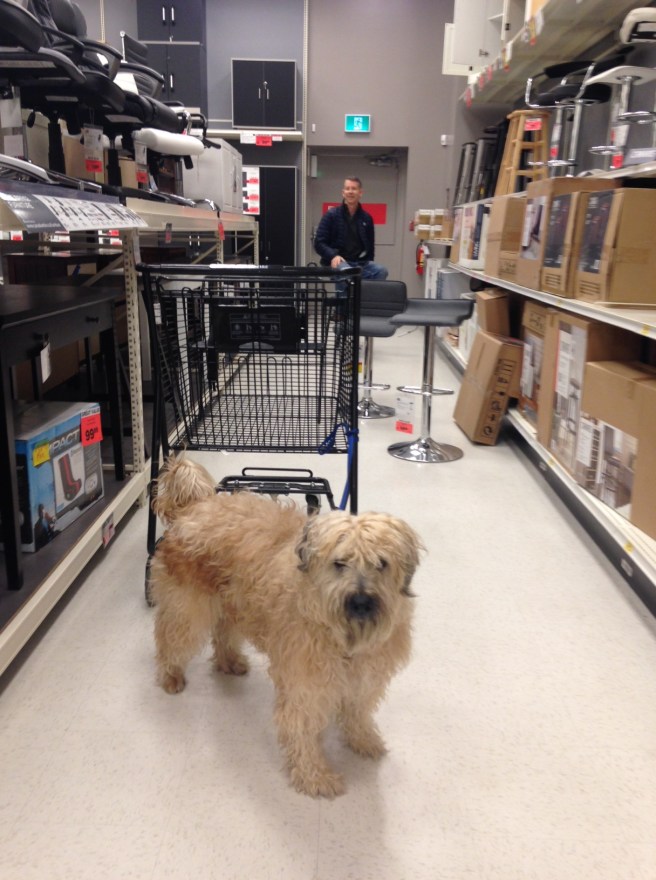
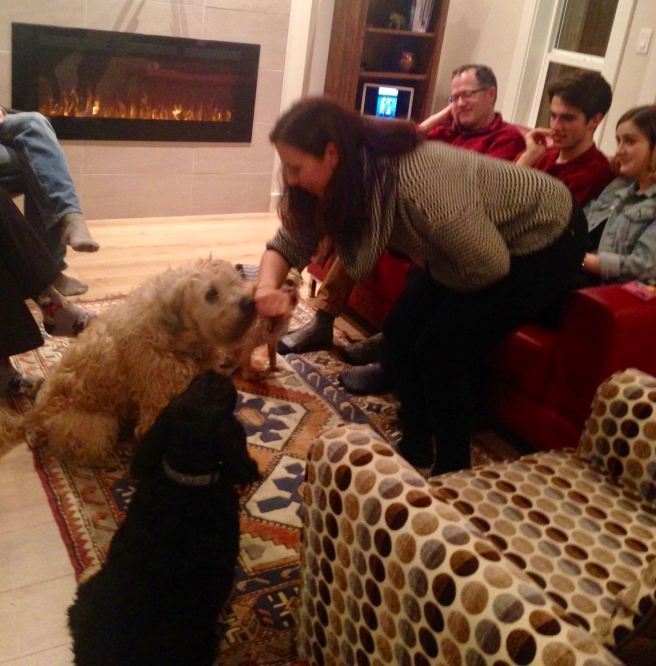
So, now I’m in the big city and this lady wants me to put my paws on her arm before I get my cookie. May pals, Sailor and Piper, watch this with a look of confusion on their faces.

Where is Kristina when I need her?

Woof Woof.

Mystery Mondays: Lisa de Nikolits on Chasing Her Muse

It’s always a pleasure to host Lisa de Nikolits on Mystery Mondays. Not only is she a Canadian author, her enthusiasm and happiness always comes through. She’s got a great story to share with you today.

Over to Lisa…

When the Muse Beckons, Chase Her!

by Lisa de Nikolits

My husband and I ended a rather harrowing 2017 with a lovely trip to Australia to visit my family. We finished the trip with four days in Auckland and it was all wonderful. The weather was great, it was marvellous to see my family – and I wrote thirty five thousand words of a new book!

I hadn’t planned on writing a thing. In fact, I had a few books with me; Wonder Valley by Ivy Pochon (who I had met at Bouchercon, we were fellow speed-daters), The Glass House by Louise Penny, Random by Craig Robertson (who I also met at Bouchercon), Now We Are Dead by Stuart MacBride and Two Kinds of Truth by Michael Connelly.

I also planned on reading some Australian and New Zealand fiction. In particular, I wanted to read a bunch of short stories as I’m trying to hone my skills in this area.

But what happened was this… we drove up to Blueys Beach, which is a few hours north east of Sydney, in the Pacific Palms area. It’s a spectacular stretch of coastal scenery and there are three beaches, all very close to the house my sister rented for us; Blueys Beach, Boomerang Beach and Elizabeth Beach.
BoomerangBeach01

My sister (wisely) had decided we’d take the trip one week before all the schools let out and so the area was really quiet. So much so, that at certain times, we had the beaches to ourselves. And on the day that we went to Boomerang Beach, there was no one around at all.

And, just to mention how amazing the flora and fauna is in Australia! The birds shout and screech – Australian birds do not make pretty sounds – some of those guys sounded like they were throwing up! And the cicadas were a wild and noisy chorus in the trees, so there was a cocophonic clash of sounds coming from the blue gums trees.

And the Australian flora is so different to ours, it’s dry and yet it’s succulent, there are bursts of magenta bougainvillea flowers, and yellow flowers bigger than my hand, with bright red stamens, and there are palm trees of all kinds. The whole place is lush and dense and every time I visit, I marvel at it. And, despite the fact that I lived in Sydney and have been back five or six times since I left in 2000 to come to Canada, I never cease to admire the intensity. And, no matter how many times I visit, I always see it afresh and I’m always thinking about how to potentially use it in a story.

The Occult Persuasion and the Anarchist’s Solution, (which will be published by Inanna Publication in 2019), is set in Sydney and I thought I was done with using Australia as a location, but apparently not!

My husband and I walked up a steep hill to get to Boomerang Beach. Not a person was to be seen. We got to the beach entrance which was set high on a hill, it was a small opening set between two hedges. I had a stone in my shoe and I urged my husband to go ahead, I’d catch up. And, left alone, on the side of the road, I thought what if a bus came along now and offered me a ride? And what if I was an unhappily married woman who wanted to escape from my life – who would ever see me go? No one would see me. I would vanish into thin air. Hmmm… who was that woman and whose bus did she get into? A cult! What kind of cult? What kind of bus? Where were they going? Already the wheel of ideas was in full spin!
BoomerangBeach02

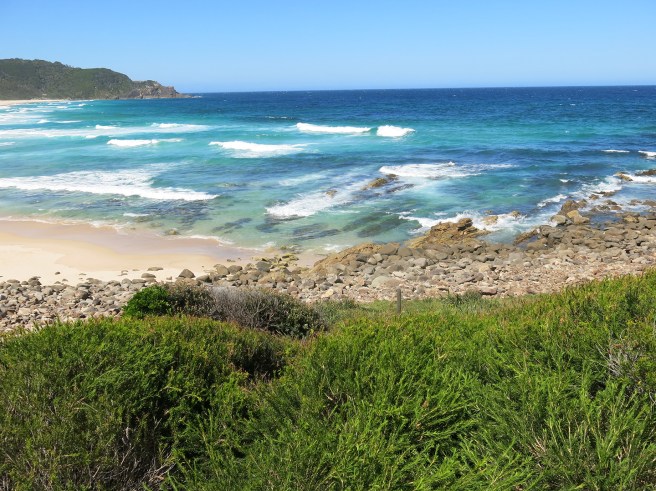
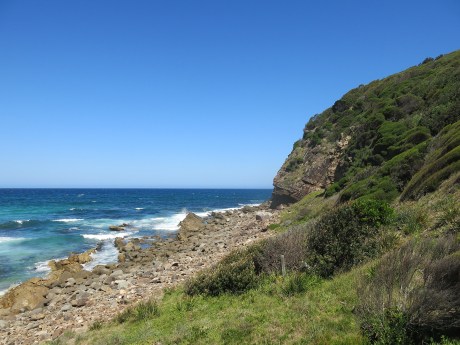
I left the road and walked down the steep, sandy stairs to get to the beach. Still, not a soul around. In front of me lay the most incredible beach of rocks and aqua waters, it was wild and magnificent with rock cliffs to the one side and a beach stretching for miles to the other. What rocks! Huge boulders with patches of rust of them, strange discolorations and striations, and there was a whole field of these alien-looking sculptures.

Hmm…. I thought again. And then, the husband could be accused of her murder! Wrongly, of course, but that could be great. The police might think that the husband did it by dashing her head on the rocks and throwing her into the waves. Come high tide, no one would be the wiser. And why would he kill her? Had she disgraced him? What was the story of dissent between them? So much to think about!

When we got back to the house, I got out my notebook, just to jot down a few ideas. But then I thought, no, don’t just write down the idea for the story, start writing the thing itself. You’re here now, you won’t recall the ideas with the same intensity that you have now.

As a result, I started writing and three notebooks later, I had what I thought was a respectable start to a story, of (I thought) about fifteen thousand words.

I wrote by hand. I had an iPad with me with a separate keyboard but I didn’t feel like typing. That would feel too much like being at work! But putting pen to paper, with the fantastic summer breeze blowing on me, that was relaxing and enjoyable! I wrote and wrote, waiting to run out of story but it didn’t happen! It was going so well that I wrote in the Auckland airport, waiting for the plane to come home and I wrote the whole way back, apart from one short sleep.

I had to input the story when I got home – I must admit, there are only two parts of the writing process I really dislike – inputting copy and updating self-edits from hard copy. I grumble a lot when I have to do it!

It took me a good week solid, to type the story in, but in the end, I had just under thirty five thousand words of an extremely weird story. I’d love to carry on writing it but first I have to finish my self edits to Rotten Peaches which will be coming out in Fall 2018. I hate to leave a story when it’s going so well but Rotten Peaches takes priority. I hope that my brain will use the time to keep working on Boomerang Beach in the background, and I’m going to trust that it will!

So you see, stories can pop up at any time in any place and I urge writers or would-be writers, that when the muse beckons, chase her! Chase her immediately because she can be fickle and even if you end up scribbling in poor handwriting, you’ll get a story!

Thank you for having me as guest today, Kristina and I hope your readers will have enjoyed the post!


Bio:
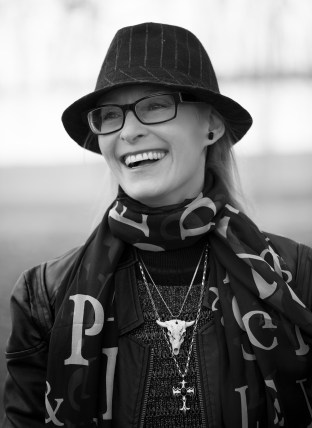
LisaNFLT01BWOriginally from South Africa, Lisa de Nikolits has lived in Canada since 2000. She has a Bachelor of Arts in English Literature and Philosophy and has lived in the U.S.A., Australia and Britain. Lisa lives and writes in Toronto. Previous works include: The Hungry Mirror (2011 IPPY Awards Gold Medal for Women’s Issues Fiction and long-listed for a ReLit Award); West of Wawa (2012 IPPY Silver Medal Winner for Popular Fiction and a Chatelaine Editor’s Pick); A Glittering Chaos (tied to win the 2014 Silver IPPY for Popular Fiction); The Witchdoctor’s Bones launched in Spring 2014 to literary acclaim. Between The Cracks She Fell was reviewed by the Quill & Quire, was on the recommended reading lists for Open Book Toronto and 49th Shelf. Between The Cracks She Fell was also reviewed by Canadian Living magazine and called ‘a must-read book of 2015’. Between The Cracks She Fell won a Bronze IPPY Award 2016 for Contemporary Fiction. The Nearly Girl was published in 2016 and No Fury Like That was published in 2017, with Rotten Peaches coming in 2018 and The Occult Persuasion and the Anarchist’s Solution coming in 2019. All books by Inanna Publications.

“Lisa is the author of seven impressive novels, each of them marked by her wild creativity and memorable characters. No Fury Like That is a genre bending literary thriller, wickedly funny with a brainy narrative.”

– Open Book Toronto

Lisa has a short story in Postscripts To Darkness, Volume 6, 2015, and flash fiction and a short story in the debut issue of Maud.Lin House as well as poetry in the Canadian Women Studies Journal (Remembering, 2013, and Water, 2015). Her short stories have also appeared on Lynn Crosbie’s site, Hood and the Jellyfish Review. She has a short story coming out in the anthology PAC’HEAT, a Ms. Pac-Man noir collection and a short story in the Sisters In Crime anthology, November 2016, The Whole She-Bang 3. Lisa is a member of the Mesdames of Mayhem and has a short story in the antholgies Thirteen O’ Clock and Thirteen Claws.


No Fury Like That
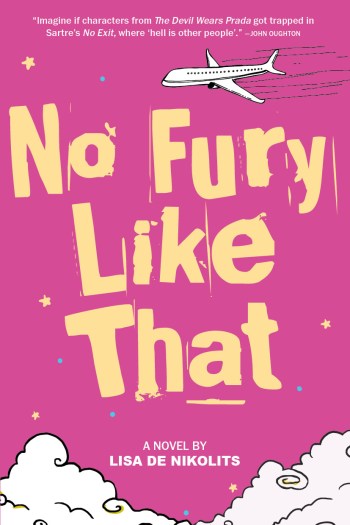
NoFuryCoverLisa de Nikolits is one of my most fascinating discoveries of Canadian literature. Her writing is fresh and attractive, but deep in ideas and thoughtful provoking.

No Fury Like That is a brilliant psychological exploration of human soul questioning our certitudes about the world: De Nikolits knows how to combine the oppressive atmosphere of Beckett or Kafka with the contemporaneous form of the thriller-narrative, always with a touch of humor and sensibility. And of course, with an extraordinary capacity to capture the essence of human emotions. —Miguel Angel Hernandez, Escape Attempt

Don’t dismiss No Fury Like That as a light, entertaining read. There are nuances to Ms. de Nikolits’ writing that could be missed with such a viewpoint. This book is really about second chances that we may never get the first time around on our trek along Eternity’s Road.

—James Fisher, The Miramichi Reader 

Afraid to die? Worse is yet to come! Julia, a ruthless business woman, suddenly finds herself in Purgatory not remembering if she has died, or how. Left with no choice but to make friends with other lost souls, she never dreams she will not only become their saviour but also an avenger. In this brilliantly written book you will be holding your breath when Julia realises she should have made things all right at the primary crime scene where it all started – Earth. —Suzana Tratnik, author of Games with Greta

No Fury Like That is de Nikolits at her best. She has taken the question, “What if you had a second chance?” and has given her imagination free rein to answer it. The result is a novel full of colourful characters who grapple with their lives, their deaths, and what it is to be human. By the final page the reader has not only witnessed Julia Redner’s metamorphic journey, but has also taken a personal step forward. —Liz Bugg, author of the Calli Barnow Mystery Series

A smart, satisfying read that’s laced with humour, peopled with quirky characters and moves along at a fast clip. Readers will root for its plucky heroine, hoping she’ll get a shot at a second chance. Another spellbinder from Lisa de Nikolits! —Rosemary McCracken, author of the Pat Tierney mysteries.

Imagine if characters from The Devil Wears Prada got trapped in Sartre’s play No Exit, where ‘hell is other people’. —John Oughton, author of Triangulation.


Links:

https://www.inanna.ca/catalog/no-fury/ (Inanna Publications)

http://www.lisadenikolitswriter.com (Author website)

https://www.facebook.com/lisa.denikolits

https://www.facebook.com/lisadenikolitsauthor/

http://bit.ly/2AzDAf6 (Goodreads)

https://www.linkedin.com/in/lisadenikolits/

https://www.instagram.com/lisadenikolits/

https://mesdamesofmayhem.com
 

Farley’s Friday: Cat Watching

Farley here,

I have a new game. It’s called Cat Watching. You count home many cats you see in one day. Whoever sees the most wins.

Farley Cat watching

Kristina allows me one bark per cat. That’s how she knows how many I’ve seen. I’m not very good at counting, but she is. And she’s very honest when keeping score.

So far, I’m winning the game.

Woof Woof.

Mystery Mondays: Val Tobin on the value of Beta Readers

This week on Mystery Mondays, I’m thrilled to host author Val Tobin.  Val has a great process for working with beta readers and editors.  Over to Val…

The Value of Beta Readers

by Val Tobin

I recently came across some writers who don’t use beta readers or who limit their beta readers to one trusted person. This puzzles me. I value my beta readers. Not only do I have a core group I can send my manuscript to, but I always recruit one or two new readers each time.

In his book On Writing, Stephen King mentions he writes for an ideal reader: his wife. She’s the first one to read his work when he’s ready to open the office door and share his creation with another human being. He values her feedback and wouldn’t consider not having her input on the raw material.

In my case, my ideal reader is my mother. She’s always the first beta to read my manuscript. I don’t pass it along to anyone else until she’s read it through. While Mom isn’t a professional writer, she’s an avid reader, a creative personality, and a talented artist. When she gives me feedback, I listen carefully.

Some might wonder if she’s biased – I’m her kid, after all – but anyone who knows her knows she speaks her mind. Once the story has passed through the trial-by-Mom fire and survived, I can hand it out to other betas.

This list typically includes a professional novel writer or two; a friend with a PhD in psychology who used to be a prison guard, a parole officer, and an air force pilot (not in that order); a couple of avid readers; my sister, who has a degree in human biology; and any experts I might enlist.

The experts vary depending on what I’ve written, and they might read just a small section that pertains to their area of expertise. For example, The Experiencers includes a scene with a hypnotherapy session, so I asked a hypnotherapist to read that particular chapter and provide feedback. I wanted to make sure the scene was credible.

While I welcome and appreciate feedback from my betas, this isn’t writing by committee. Some of their suggestions don’t fit my story goals. What I look for in the high-level feedback is where readers get bored or where they sense something off. This lack could be in missing or extraneous scenes, incorrect pacing, faulty characterization, too sparse or too verbose description, vague setting, or off-key tone, but most readers won’t recognize that – they’ll simply point out the part that stalled them, and I’ll take it from there.

If multiple betas point out the same issue, then I will change it. This is why it’s important to me to have more than one beta reader. Sometimes one person might have an issue with something that others deem to be a strength. For example, a sex scene in A Ring of Truth was described as gratuitous by two betas but considered necessary by four others when I asked them specifically about the scene.

In my own mind, the scene was necessary. It served as a way to traumatize a character who had been cavalier about sex up until this point. The situation forced him to evaluate how he views women and relationships, but the revelations didn’t all come in a flood as soon as the scene occurred. He had to grow into the epiphanies. The trauma provided the impetus to change.

Could I have toned it down? Faded to black and still created the trauma? Sure, but it wouldn’t have had the same impact. When writing the scene, I tried to strike a balance between graphic and too subtle, but it had to provide at least a small visceral hit or the point would be lost.

In this instance, the scene remained as is until my editor got to it. He asked me to shorten it and I did. Someone reading with the eye of a professional editor carries more weight, and when he provided valid reasons to reduce the word count there, I made the modifications. The betas alerted me to the possible issue, I evaluated their feedback and made a judgement call, and my editor provided the professional-level feedback required to give it the final polish.

After its release, one reader who reviewed A Ring of Truth nailed the purpose of all the sex scenes in the story when he/she wrote “Sex is a weapon, a tool and a healing.” It’s gratifying when readers get it.

In my opinion, this illustrates exactly why beta readers are invaluable. They don’t exist to tell a writer what to do but to help a writer polish a story. When you’re the creator of the story, you’re too close to it. Readers will point out inconsistencies you miss. They provide an invaluable service, and those who volunteer are thrilled to be part of the process.

Who is Val Tobin?

val-tobin-author-profile-1000x667Val studied general arts at the University of Waterloo, then went to DeVry Toronto to get a diploma in Computer Information Systems. She worked in the computer industry as a software and Web developer for over ten years, during which time she started to get serious about energy work and the paranormal and occult.

In October 2004, Val became a certified Reiki Master/Teacher. She acquired ATP® certification in March 2008, in Kona, Hawaii from Doreen Virtue, PhD.

Val started work on a bachelor of science in parapsychic science from the American Institute of Holistic Theology in March of 2007 and received her degree in September 2010. After obtaining her master’s degree in parapsychology at AIHT, Val has set her sights on the PhD, which she’ll pursue as time and finances permit.

At the end of October 2008, Val returned to Kona, Hawaii to complete the Advanced ATP® training and in April 2010 to take the Spiritual Writing workshop and the Mediumship Certification class. Val wrote freelance for content site Suite101 and was Topic Editor for Paganism/Wicca and Webmaster Resources at Suite.

A published author, she contributed a story to Doreen Virtue’s Hay House book Angel Words. Her novels are available from various retailers in both e-book and paperback.

The Valiant Chronicles

box set 1x3 28nov2017Three Exciting Novels in one box set from Award-Winning Author Val Tobin:

The Experiencers

Not killing her might be the death of him.

Black-ops Assassin Michael Valiant questions his agency’s motives when he’s ordered to silence a group of UFO enthusiasts who look less like terrorists than they do housewives and nerds. Michael finds himself running for his life and dragging his intended target along with him.

Can he save them both, or will the Agency and the aliens find them first?

A Ring of Truth

Some heroes come disguised as monsters.

To ensure her daughter’s safety, Carolyn Fairchild has surrendered to the Agency and the aliens. In retaliation, Michael Valiant, Agency assassin, has gone rogue. He’s made his way to the Northwest Territories to find the alien base in the Valley of the Headless Men. But time is running out, and the abductees are scheduled to be terminated. Who will survive the rampage?

Earthbound

Nothing says bad day like waking up dead.

Who killed Jayden McQueen? Why? How?

In her quest to find answers, Jayden sets in motion events that propel humanity towards a future already written. But just because events appear inevitable doesn’t mean you shouldn’t fight them. Does it?

Earthbound is #23 on the 50 Best Indie Books 2017 Award list from ReadFreely.

Contact Information

Website: www.valtobin.com

Blog: bobandval.wordpress.com

Twitter: twitter.com/valandbob

Facebook: www.facebook.com/valtobinauthor/

Amazon Author Page: www.amazon.com/Val-Tobin/e/B00KC5S69K

Smashwords Author Page: www.smashwords.com/profile/view/valtobin

Farley’s Friday: Too Many Homes

Farley here,

Humans like to visit each other over the holidays and things get a little crazy.

Over two weeks, I lived in 5 different houses – and only one of them had a dog!

The best part – Kristina brings my dog bed everywhere, so I have somewhere soft to sleep. The extra treats from the families we visit are good too.

The worst part – I’m never sure if my humans are coming back when they leave me alone in a house. What if I they left me? I can’t believe they would, but it’s hard not to worry. I speak to Kristina with my eyes, sending her a message every time she goes somewhere, and so far it’s working. She knows to come back.

Any tips on how to ensure your human comes home?

We’ve finally settled again, and I got play time on the beach.

Farley On Beach

Like a faithful human, Kristina has brought me on all her travels.

Woof Woof.

P.S. Thanks to all those who asked about me. I was too busy traveling to write my posts.

Mystery Mondays: Mary Clark on Exploring Family Dynamics

This week on Mystery Mondays, author Mary Clark is here to talk about her laster novel, Racing The Sun.

Over to Mary…

Exploring Family Dynamics

by Mary Clark

My latest book, Racing The Sun, is interwoven with surprises, some gently delivered, others more brutal. In several cases, accidents change lives. They also bring together people who wouldn’t have otherwise met. The main character, Leila Payson, a Miami high school teacher, finds that occupation not precarious enough; she moves through the world stirring things up, but not with careless force, but instead at a thoughtful pace. But the world has its surprises for her, too. And these come from close to home.

Her father has been looking into his family history at the suggestion of a life coach (who may be more than that). He shows Leila his DNA results and urges her to sign up on the same genealogy site and take the test as well. She’s interested in finding out about her mother’s line. But then her busy life intervenes and she doesn’t think about this much.

One day she receives an email that her test results are in.

On the site an icon flashed saying she had a hundred and forty notices of DNA matches. The first message said, Hello, our DNA tests say we’re related. Closely related. Get in touch with me if you want. Barb.

Leila wrote back: This is exciting. Who are your parents? Mine are Robert Payson and Kate Garrigus. I thought I knew all my close relatives.

The message came in later that day: Kate Garrigus was a good friend of my mother’s. My mother said she couldn’t have children, so she asked someone to be a surrogate for her. Did your mother ever say anything about this?

Well, no, she hadn’t. Leila asks where Barb lives and discovers it’s not far away. The two arrange to meet in a neutral place, and there Leila receives a great shock. Her understanding of her mother and their relationship changes forever.

With the advent of DNA tests, family secrets are being brought to light. This is one of the little mysteries in Racing The Sun. In this book, I attempt to explore the deep but subtle ways our lives change. That change is our responsibility: whether we let go of others, or reach out, whether we mask our pain, or work through it, whether we retreat from life with suspicion and hatred, or approach with curiosity and love. In our modern lives, change happens fast and almost continuously. Some of it is superficial, although alluring, which tries our ability to distinguish fact from fiction. Some change, though, is fundamental, and carries with it the mystery of our future lives.

RACING THE SUN

Racing The Sun Book Cover SmallLeila and her friends are back with more adventures in this sequel to Miami Morning. Leila works to start her new group, bringing together people of varying abilities. She meets Doug, a paraplegic, who wants to design and build better wheelchairs.
Her relationship with Mark evolves, and she discovers both her father and mother have secret lives. Raoul, her former hearing-impaired student, is back. And so is Mrs. Grisjun, the combative guidance counselor.
Leila’s friend Dov goes to Cuba in search of his new love, the hunky bird guide, Nìco. Cran, the father of Leila’s friend Charles, and husband of the erstwhile Berry, loves his vintage cars. After a racing accident, his life takes a different course.
And when will Leila—inspired by Doug’s experience—first discover she is also racing the sun?

Who Is Mary Clark?

MaryClarkSept2010Mary A. Clark was born in New Brunswick, New Jersey, USA, to parents who lived on the Rutgers University campus. Her family moved to Florida, where she spent her formative years, and where she was infused with awe and respect for the natural world. She also became aware of the lives of migrant workers, segregation, and the beginning of the Civil Rights Movement. Upon moving back to New Jersey, she completed high school near Plainfield and attended a county college before receiving a scholarship to Rutgers.

She graduated from Rutgers-Newark College of Arts and Sciences in 1972 with a bachelor’s degree in psychology. She had a strong sense of being a misfit, which propelled her to find her own place and occupation. She moved to New York City, and worked at the Poetry Festival at St. Clement’s Church, in the then outcast wilds of the Hell’s Kitchen neighborhood. For many years she lived in Hell’s Kitchen and worked for community organizations. In 1993 she started a monthly community newspaper, combining her two loves: the neighborhood and writing.  Later she relocated to Florida, and then moved to Virginia where she lives with her mother and three rescue cats.

Her books include: Tally: An Intuitive Life, a creative memoir, and Miami Morning, a Leila Payson novel, both published by All Things That Matter Press. A novel-in-verse, Children of Light, is available on Kindle, published by BardPress/Ten Penny Players. Her poetry has appeared in The Archer, Jimson Weed (University of Virginia at Wise), and Waterways: Poetry in the Mainstream. Some of her memoir, Into The Fire: A Poet’s Journey through Hell’s Kitchen, is online at Scribd.com. Her blog is: literaryeyes.wordpress.com, and her Facebook Author page: facebook.com/maryclarkbooks.

Avalanche – a review

Thank you, Roland for posting such a lovely review of Avalanche!

Roland Clarke's avatarWriting Wings

Kristina Stanley is one of my writing inspirations through her Stone Mountain mysteries. For the release of Avalanche in 2016, I ran her thoughts on ‘Writing A Series’ which encouraged me in writing my Welsh police procedural. Why I put off reading Avalanche until now is another mystery, especially as I rated the first two books as five stars each.

Anyway, that lapse is now corrected so here’s my review:

Avalanche Cover Final 

Avalanche (A Stone Mountain Mystery #3)

by Kristina Stanley (Goodreads Author)

On a cold winter morning, the safe at Stone Mountain Resort is robbed, and Kalin Thompson’s brother, Roy, suspiciously disappears. As Director of Security, Kalin would normally lead the investigation, but when her brother becomes the prime suspect, she is ordered to stay clear.

The police and the president of the resort turn their sights on Kalin, who risks everything to covertly attempt to clear Roy’s…

View original post 589 more words

Researching Tarot for Skeletons In The Attic by Judy Penz Sheluk

Judy Penz Sheluk on Tarot

Judy Penz ShelukIf you’ll pardon the pun, tarot was never in the cards when I began writing Skeletons in the Attic. I knew I’d have a protagonist, Calamity (Callie) Barnstable, who would be thrust into the position of finding out what happened when her mother disappeared thirty years earlier. I knew she’d be a fish out of water, a big city Toronto woman heading to Marketville, a town she described as the sort of place a family with two kids, a cat and a collie moved to. I even knew there was a scheming psychic, Misty Rivers, ready to take on Callie’s assignment if Callie turned it down. But my original thinking was more along the line of a crystal ball and tea leaves. Tarot? Not on the radar.

And then one day I walked into a quirky little gift shop attached to a large natural foods store. Among the crystals, crosses, and tie-dyed t-shirts there was a section on tarot. I found myself inexplicably drawn to the vibrant images on the Rider-Waite deck. What can I say? I walked out of the store that day with a deck of tarot cards and a book on how to read them, followed by countless trips to my local library to find out more. [Readers of Skeletons might recognize the setting of the gift shop in the book; in the novel it’s called Sun, Moon & Stars, a fictitious name.]

To say that I was naïve might be putting a gloss on things. Several sample readings, online research and how-to books later, I was no further to being an accomplished tarot card reader than I was ready to become an astronaut.

And that’s when I knew it would work. While searching the house she inherited from her father, Callie would find five tarot cards, and those cards, in addition to a basic understanding of the principles behind them, would be a matter of individual interpretation.

If you’re the curious sort (and if you read mysteries, you must be), these are the cards that Callie found:

Tarot1) III: The Empress

2) IV: The Emperor

3) VI: The Lovers

4) The Three of Swords

5) XIII: Death

What did they mean, and how do they impact Callie’s investigation? Ah…you’ll have to read (or listen) to the book to find out. The good news is it’s available in all e-book formats (Kindle, Kobo, Nook, GooglePlay, iBooks), trade paperback, and audiobook. Now go ahead, and pick a card… any card…


Skeletons CoverWhat goes on behind closed doors doesn’t always stay there…


Calamity (Callie) Barnstable isn’t surprised to learn she’s the sole beneficiary of her late father’s estate, though she is shocked to discover she has inherited a house in the town of Marketville—a house she didn’t know existed. However, there are conditions attached to Callie’s inheritance: she must move to Marketville, live in the house, and solve her mother’s murder.

Callie’s not keen on dredging up a thirty-year-old mystery, but if she doesn’t do it, there’s a scheming psychic named Misty Rivers who is more than happy to expose the Barnstable family secrets. Determined to thwart Misty and fulfill her father’s wishes, Callie accepts the challenge. But is she ready to face the skeletons hidden in the attic?


Find out more about Judy and her books at http://www.judypenzsheluk.com.


Find the book at all the usual suspects, including the publisher, Barking Rain Press.


Mystery Mondays: “Not Your Typical Christmas Story” by Author Debra Purdy Kong

Today we host Debra Purdy Kong. Debra’s new Evan Dunstan mystery novella, A Toxic Craft  is out, and I’ve already bought it. The first in the Evan Dunstan series is Dead Man Floating  which I loved, so I couldn’t wait for the second in the series to come be released.

Here’s the exciting news. Both books are on sale right now by Imajin Books! Give yourself a Christmas preset 🙂

Now, over to Debra…

Not Your Typical Christmas Story.

by Debra Purdy Kong

Two of my favorite Christmas movies are A Christmas Story and National Lampoon’s Christmas Vacation. Both moves portray the funnier aspects of pre-Christmas angst and obstacles until the big day arrives and everything turns out okay.

Although our family’s Christmas trees never caught fire as it does in Christmas Vacation, they did fall over a few times when we owned a lot of cats. My father eventually learned to anchor the tree to the wall. We also had our share of more serious Christmas troubles, but things did turn out okay, for the most part.

I wasn’t thinking of past Christmas challenges or those movies when I came up with the idea for my second Evan Dunstan mystery novella, A Toxic Craft. In fact, it wasn’t until I’d finished the final edits that I fully realized how much I’m drawn to Christmas fun and silliness.

Pageflex Persona [document: PRS0000447_00049]

In this second novella, Evan’s feisty grandmother is in charge of a seniors’ Christmas craft fair, being held at the campus where Evan works as a security guard. Things don’t run smoothly as the rivalry between her friend Flo and another knitter, Cora, threatens to become violent. It’s up to Evan to keep things under control. But he soon learns that those seniors have secrets and spicier lives than he thought possible. It’s almost more than he can deal with, particularly when those he cares about might be covering up a crime.

Does a Christmas tree catch fire in A Toxic Craft? Well, like any Christmas package, it’s Imajin Dead Man Floating Qwickiebest to open it and find out what’s inside! To that end, both A TOXIC CRAFT and Evan’s first adventure DEAD MAN FLOATING, are now on sale for only $.99 on Amazon! You can find them at:

http://getBook.at/AToxicCraft
myBook.to/DEADMANFLOATING

Thank you, and Happy Holidays to all!

Who Is Debra Purdy Kong?
Debra Purdy Kong, 2016

Debra Purdy Kong’s volunteer experiences, criminology diploma, and various jobs, inspired her to write mysteries set in BC’s Lower Mainland. Her employment as a campus security patrol and communications officer provide the background for her Evan Dunstan mysteries, as well as her Casey Holland transit security novels.

Debra has published short stories in a variety of genres as well as personal essays, and articles for publications such as Chicken Soup for the Bride’s Soul, B.C. Parent Magazine, and The Vancouver Sun. She assists as a facilitator for the Creative Writing Program through Port Moody Recreation, and has presented workshops and talks for organizations that include Mensa and Beta Sigma Phi. She is a long-time member of Crime Writers of Canada.

Look for her blog at http://writetype.blogspot.ca More information about Debra and her books is at www.debrapurdykong.com You can also find her on Twitter: https://twitter.com/DebraPurdyKong & Facebook: www.facebook.com/debra.purdykong

Be the first to know when Debra Purdy Kong’s next book is available! Follow Debra at https://www.bookbub.com/authors/debra-purdy-kong to receive new release and discount alerts.”


Conquering the Blank Page by Editor Eric Anderson

It happens to all of us. The dreaded blank page stares at us with high expectations. Our fingers freeze. Our eyes glaze over. The blinking cursor demands words from us.

There is no need to fear the blank page when you have concrete steps in place to finish your novel.

Today, we have editor Eric Anderson with us to share his advice on how to conquer the blank page and get your story written.

Over to Eric…

Conquering the Blank Page

by Eric Anderson

It doesn’t matter if I open a new document on my computer or take a notepad to a cozy café, the moment I look at the blank page, my mind follows suit. All the ideas I had percolating inside seem to vanish, and I’m left either doodling in the margins or distracting myself on Twitter. Some writers are able to sit down and start writing immediately, letting the ideas flow out of their minds onto the blank page. I am not one of those writers.

For me, having a smart outline is essential before I ever start filling in sentences. Think of it like building a house: you need to draw up the blueprints before you start to pour the concrete. I’d like to share a useful strategy to help conquer the blank page and set your writing project on the path to success.

Begin with the basics. Grab a piece of paper and draw a horizontal line. At the left is the beginning of your story. Here, make a few notes about what the story’s world will be like on the first page. Keep it simple. Add general things like the date, location, and other foundational details. On the other end is the last page of your story. Here, note where things will end up. Is it in the same year, or the same place? Are all of the original characters still alive and together?

From there, you can fill in the major plot points where they fit on your developing timeline. Since this is an introductory exercise, you don’t need to be detailed. Don’t wrack your mind at this point — it’s just a matter of getting the big events in order. At the start of the line, you can add characters introduced at the beginning of the story (even if they change later). Others can be added along the line where you imagine them being introduced. How far down the timeline will you bring them in? Add important details to flesh this out, but don’t let it get too unwieldy. The idea is to use it as a guide as the story develops, so avoid the temptation to make it too complex.

Here’s an example I created for a recent sci-fi story:

The next step is to create a more detailed outline. Whereas the timeline was horizontal, this is vertical. To start, open a new document on your computer or grab a blank notebook page make a list of ten chapters. Your book may eventually have more, or fewer, but this is a good place to start until you have a sense of your story’s length. Under the heading for chapter one, insert all the details from the beginning of your timeline, including the date and location, initial characters, and other important establishing information. Fill in the other chapter sections with the rest of the information you have so far. For example, if you’ve added a major plot point or introduced a character halfway through on your timeline, put that under chapter 5.

Under each chapter, add the main points you want to cover, and then under each major event, add smaller details like the characters involved and how they interact, important aspects of the setting, or even key lines you have already drafted. When these are organized, it will begin to look like a cascading list of details. Major points will have smaller details under them, which can be ordered and expanded on as you progress. You may find that some pieces, or even whole chapters, need to be reordered to make a cohesive plot, and that’s easier to do now than when you’re working on your first draft. Let’s look at a small piece of my outline from the sci-fi example above.

Eventually, you will have chapters that start to feel a little full. In that case, it’s easy to add another chapter to break up that section of the story. In my example, perhaps I find there is so much to say about Paolo’s time on the highway that I want to make his arrival at the hidden city into its own chapter. With a working outline, that’s easy to do. Conversely, you might find there isn’t enough to fill ten chapters, and you can then easily use a shorter outline or add more events to fill it up.

The key to this process is flexibility. While the outline and timeline are great tools for getting past the blank page and starting the writing process, they should also be living documents that change as your project develops. You may start writing and discover that a character should be introduced earlier than you originally planned. No problem! You can easily go back to your outline and play with the new structure, moving sections around as you write to make sure the changes don’t introduce any issues like continuity errors or plot holes.

When it’s finished, the outline should be a nearly point-for-point overview of the story and may be several pages long. You can see where subplots begin and end, when characters are introduced or leave, and how each chapter will flow from beginning to end. Then, when you being the real writing process, it’s simply a matter of fleshing out the points you’ve already listed. You can write any section that inspires you at the time, without worrying that it will change the order or development of the story. Are you most excited by the big fight scene towards the end? Write that first while you have the spark, without worrying that it will mess up things that came earlier. By using and adapting a working outline, you can keep things organized while focusing on the aspects of the project that excite you the most. Soon, you’ll look back and realize that maybe the blank page isn’t so scary after all.

Eric Anderson is a freelance book editor specializing helping self-published and independent authors reach their goals. For more information, visit his website at BrutallyHonestEditing.com.