Why is provisioning so tiring?

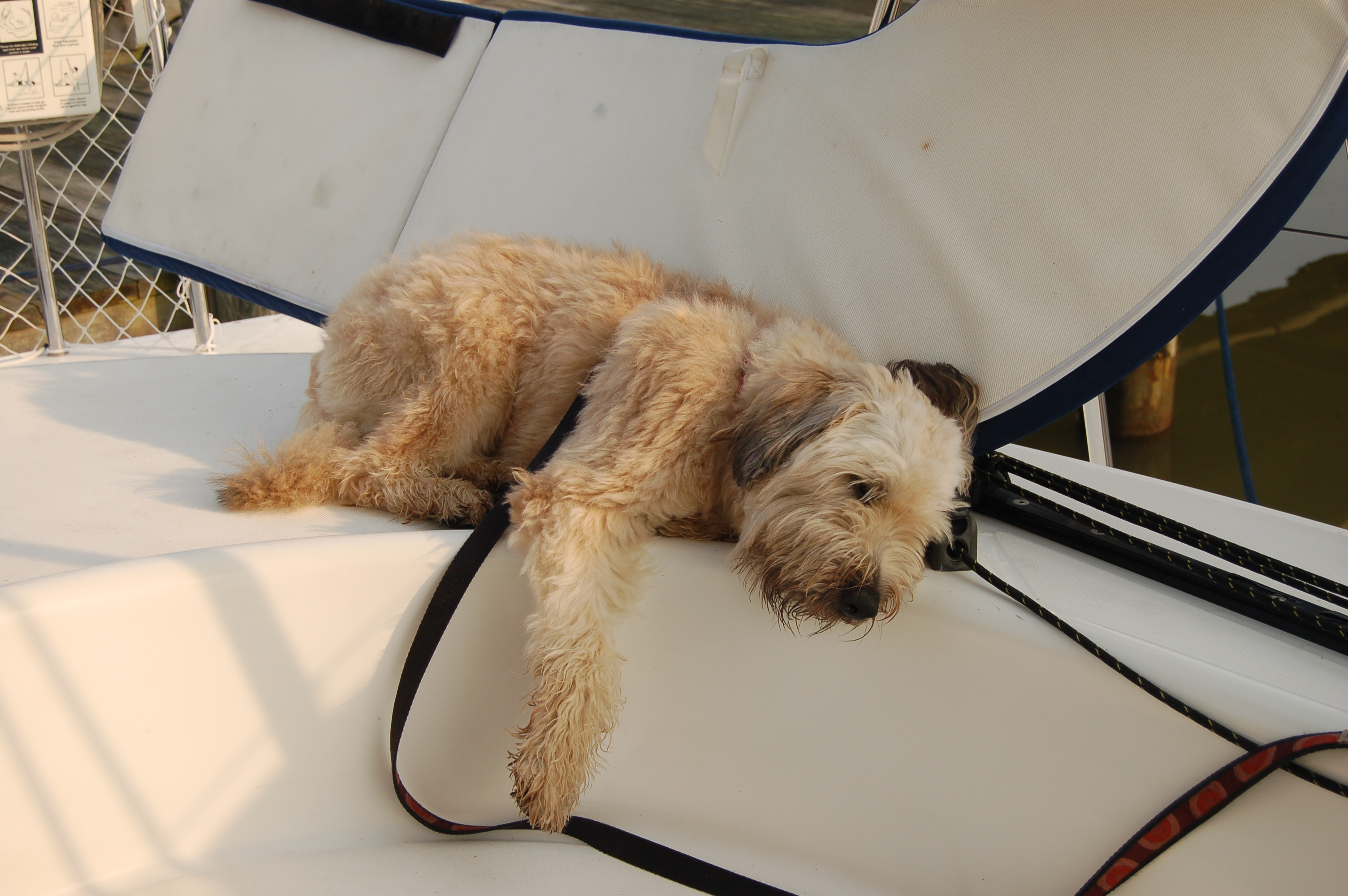
Could he be more tired?

Farley looks how I feel after trying to shop for six months. #sailing The hard part comes after getting back to the boat. After loading the provisions into our dingy, we to lift it onto Mattina.

Then the fun begins. We open all cabinets and storage areas and play the game for figuring out where to store everything.

Farley is left with a corner to sleep in the cockpit. Behind him you can see our cockpit cushions, shoved out of the way, so we can access spots for oil, cleaners, etc.

The question. Why is the dog exhausted when we did all the work?

Should Punctuation Show Emotion?

Is it better to use punctuation or dialogue tags? #writetip Here is a very simple example.

“Stop nagging at me!” Jane loomed over her husband and glared.

or

“Stop nagging at me,” Jane yelled. She loomed over her husband and glared.

or

“Stop nagging at me.” Jane loomed over her husband and glared.

I thought the goal was to eliminate exclamation marks. Now, I’ve been given other advice and I’m not so sure.

Any views on this one?

The Mentorship Begins . . .

Yesterday I got my first feedback from Garry Ryan. #writetip Garry is an author from Calgary, Alberta. He writes the Detective Lane series. For those of you who have been reading my blog for a while, I wrote about the Crime Writer’s of Canada mentorship program. I didn’t end of partnering with David Cole, but all has worked out and the program is underway. Garry has volunteered his time to help my make my novel better.

I won’t bore you with the details, but I want to mention one highlight in his comments. There has been talk about series writing this week on some of the writing blogs. Well, my novels aren’t a series, but I do have characters that are in all three novels.

Garry pointed out to me that I don’t describe my characters in the opening scene. Seems obvious, but for me, I’ve lived with them through three novels, so I know what they look like. I just forgot to tell the reader.

Garry is the first person to read my third novel who hasn’t read the first two. I’m not sure my readers who read the first two would have picked up on this omission. I guess it’s good to find readers that haven’t read all your work. You never know what improvement you might be able to make. Thanks Garry.

Does Every Character Deserve a Name?

How do you know if you should name your character? #writetip There are loads of writing books that tell you not to name a character unless that character has a significant part in your novel. Well, how to you know?

I name all characters in the first draft. I don’t always understand what role a character might play until I’ve finished the novel.

At the first draft stage, I review each scene for characters that appear only once. For example, I might need a lift attendant at a ski lift for a given scene to work. If that attendant only shows up once, I remove their name. I call them by their title at work, function in the scene, whatever works to identify them.

This is also the stage where I discover who I thought might be a minor character, a walk-on, is really someone significant to the story. Since I’ve already named them, I don’t have to change anything.

I’m sure there are many ways to accomplish this, but this method works for me.

First Draft Readers

Am I nervous? #writetip Of course I am. I have a new reader for my third novel. I decided I needed someone to read my novel that hadn’t read the first two. So what did I do to prepare my reader? A reader has different responsibilities at each stage of the  novel.

For the first draft I give the reader a list of suggestions and questions.

1. Don’t worry about proofreading for typos. That will come later.

2. Each time you suspect a character of committing the crime, write it in the margin. This allows me to see if I’ve dropped too few or too many hints.

3. Did you start to skim anywhere? This is how I find out if I’ve put too much detail.

4. Are you unsure who is speaking? This means I didn’t add enough dialogue tags.

5. Sometimes a character doesn’t appear for a few chapters. When they reappear, do you remember who they are or do I have to add a reminder?

6. Is there anything you didn’t understand or that was confusing?

And finally I ask them to comment on any passages they liked. To me this is just as important as finding out what didn’t work. Then I can review that passage and understand why they liked it. Okay, and it’s a nice boost to the ego.
Provisioning For Farley

Farley's Fed for the Winter

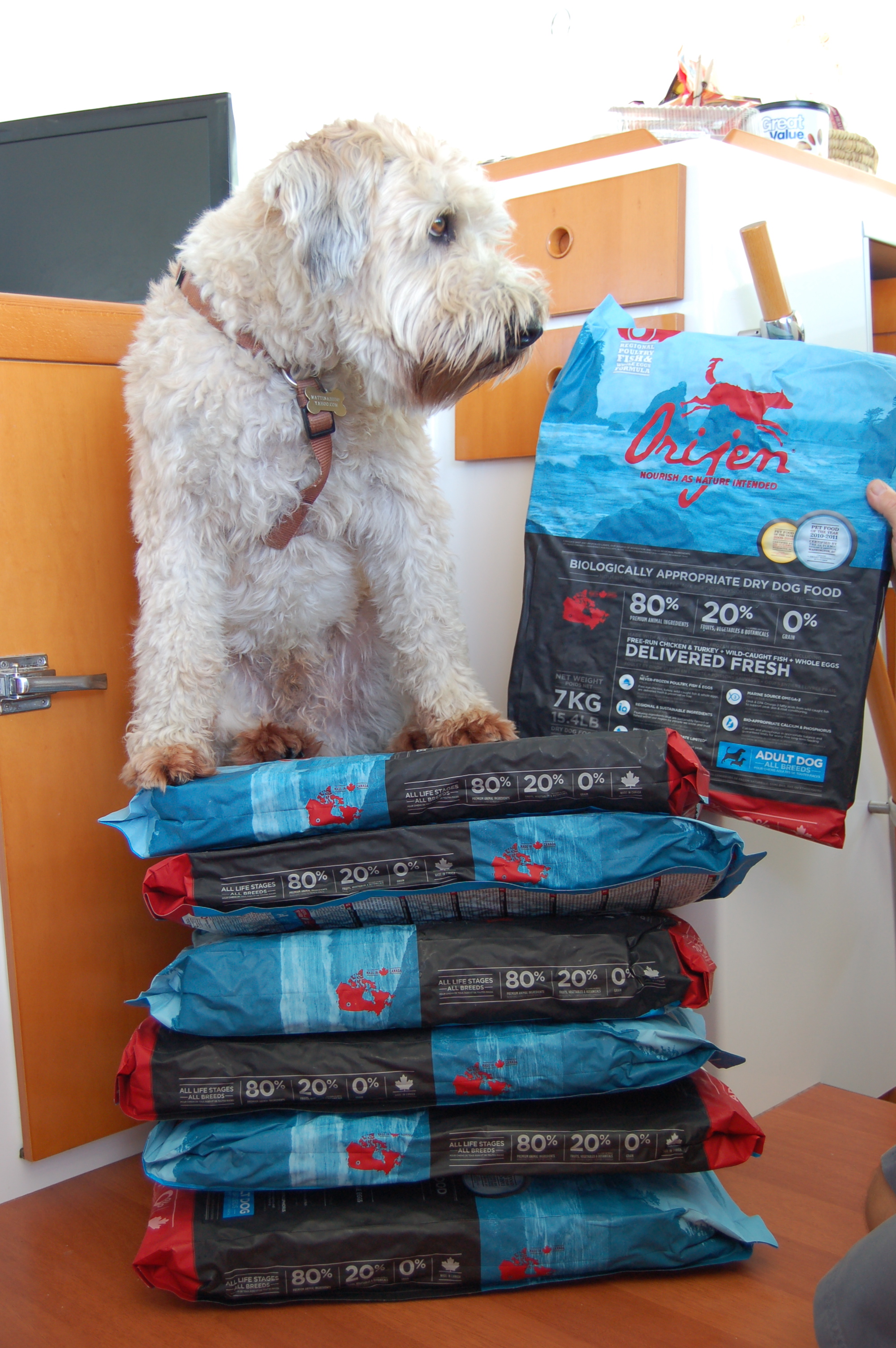
So who says my wheaten terrier is spoiled? #sailing Here he sits with his high-end pet food, Orijen, waiting patiently to eat.

Today, Farley and I went shopping. This mound will get him through till the spring. He even got to pick his own treat. Of course he chose a Bully Strap. While I loaded the car, he ate his treat in the pet store.

Dog food in the Bahamas can be expensive and the choice limited. I buy the smaller bags to reduce the risk of spoilage. If I lose one bag, that’s okay.

The smaller bags are easier to store on a sailboat. We just have to remember where we store them. After six months, it’s easy to forget.

My lucky dog.

Testing: Equipment and Scenes

As we get ready to head offshore we test all our equipment. #writetip Before you send your manuscript off to an agent or publisher, you should test it too. I can’t imagine going to sea unprepared or unsure that everything, and I mean everything, is working. Here we are testing bring the sail up and down, repeatedly.

I use several test people at different stages of my novel. I have a two very important test phases.

One is at first draft. Here you need a test reader that will work with you chapter by chapter and tell you what they like and what they don’t like.

Two is at the final stage before sending. Here you need a reader that has an amazing eye for detail. This is the person that will proofread for you. The one that will find all the typos your eye can no longer see.

If I’ve significantly changed a scene from when one of my experts read it, I will ask them to read one more time.  This is asking a lot, but I want to make sure I didn’t inadvertently put in a technical error.

I’m sure there are many ways to do this, but this is what works for me.

The Beginning: The End

How important is it to come full circle in your novel? #writetip

I find myself at the first draft stage of my third novel. This is a good opportunity for me to check that the ending fits with the first chapter.

Here are some important questions you can ask:

1. Do you close off on any problems you created for your protagonist or other main characters?

2. Do you answer any questions you left hanging in the first chapter?

3. What reasons did you give the reader to keep reading after chapter one? There must be closure to these issues.

4. Do the first and last chapter have something in common?

I like a novel to feel rounded. I want to know there was a point to the first chapter and that the author wrote it as part of a story and not a gimmick to get me reading.  The questions help me ensure my novel offers the reader the same courtesy.

Guest Blogging

If you want guest bloggers, can you make it easier for them to write  for your blog? #writetip

I’ve been asked twice now and feeling very flattered. Blogging keeps me writing daily. Yup – great practice. Now I’m thinking about what to write for other blogs.

One of the bloggers sent me a list of questions, specified length of article, and asked for photos. I found this helpful in focusing what I wrote.

The other blog asked if I would guest blog. To get an idea of what they want,  I’ve been reading for a while and getting a feel for what is appropriate for the site.

I found receiving a list of questions made writing the blog much easier and less time consuming. Even though I was asked later, I got that blog written first.

Cruising and Dog Safety

Farley gets a ride

If you plan to cruise with a dog, one thing you might want to consider is your pet’s safety gear.

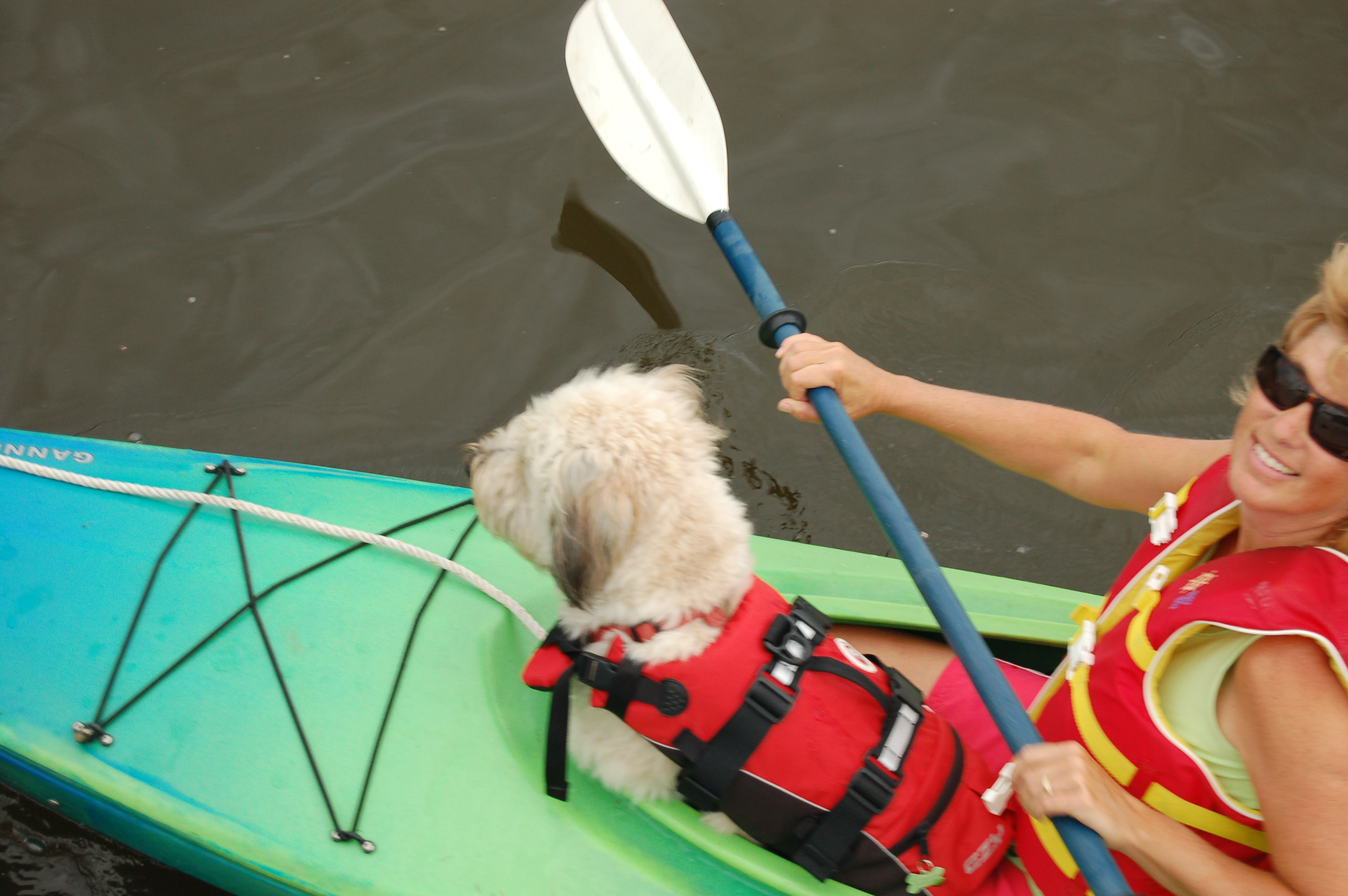
Farley has his own life jacket, a gift from  Chopper’s Pet Supplies in Invermere BC, but doesn’t wear it all the time. He’ll wear it kayaking in rough weather, or if we are kayaking along a rocky shoreline where he couldn’t get ashore himself.

When we are underway, Farley has his own tether and harness. He is not allowed out of the cockpit unless he is tethered to me or the boat. He has a safe spot to curl up when the boat is rocking.

We keep him in a harness instead of a collar when we are underway, so if he gets jarred his neck won’t het hurt. It also makes it easy for us to hoist him onboard if we have to.

Farley has a dog tag for each collar or harness wears. That way we don’t forget to put a tag on. His tags are engraved with his name, our email address, boat name and phone number. If he gets lost, we are easy to find. I’d love to hear about any other safety gear used by cruisers.