Cruising with Dogs

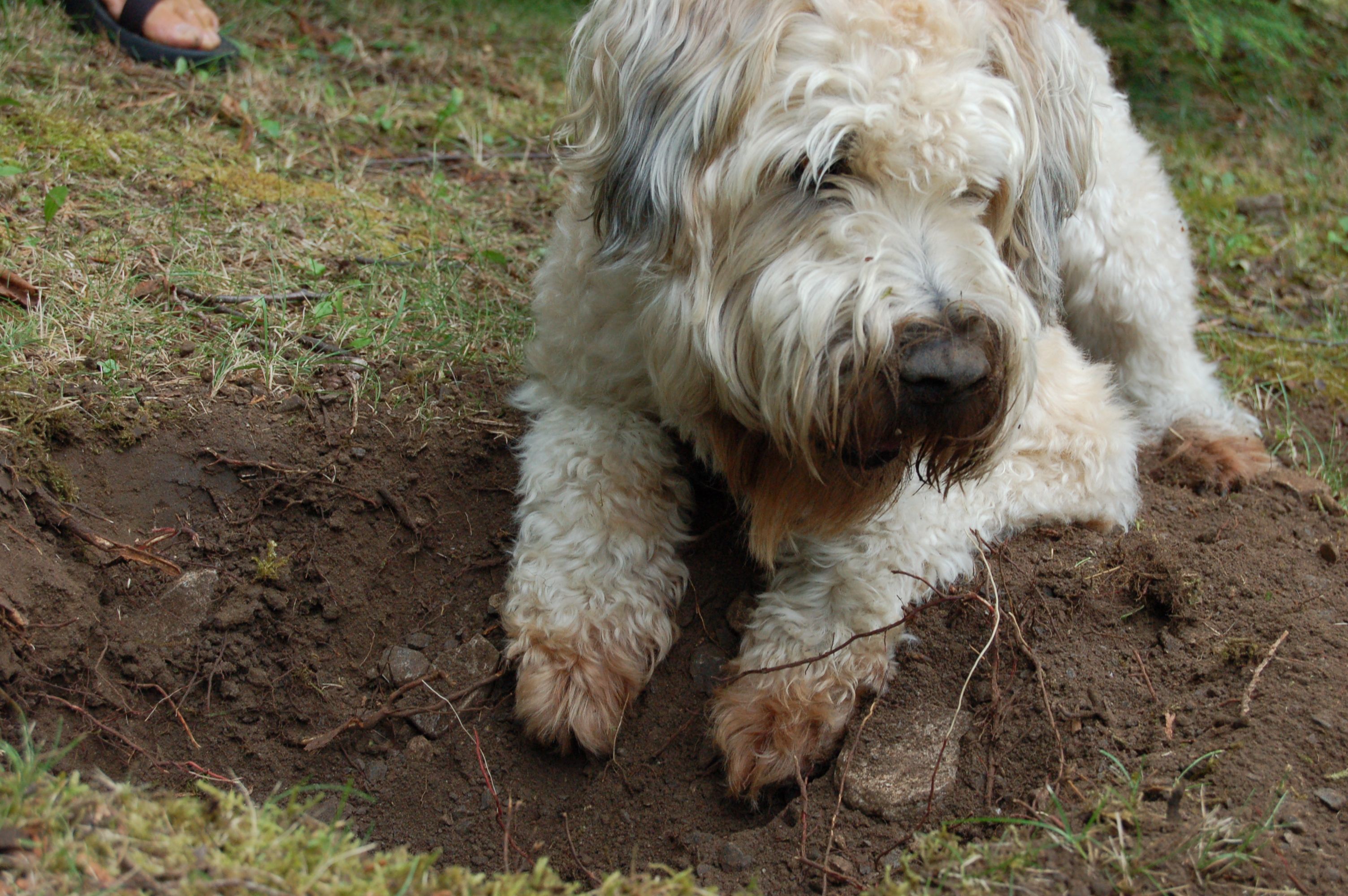
My dog who loves to dig is about to change his lifestyle.

This is the time of year I start focussing on the cruising part of my writing lifestyle. Cruising and writing are a great combination and our dog Farley (soft coated wheaten terrier) is a big part of it.

Receiving Farley’s dog permit in the mail from the Bahamian Government signifies the start of our winter cruising preparations. The dog permit allows us to take Farley into the Bahamas on our sailboat. It’s part of the process we go though in the fall.

My goal now is to keep focussed on writing while getting ready for the winter, and I will update the pages on my site for Lagoon 380 and Cruising with Dogs along the way.

Listening to Your Novel

What do you hear when your novel is read out loud? #writetip

I’ve tried reading my novel out loud and taping myself.  Although this helps find errors and hear the tone of the story, it is very time-consuming.

I use my Kindle. The text-to-speech sounds like a robot, but that’s okay. While I listen, I concentrate on the words on the page and it takes me half the time it took with the tape recorder method. I use the slowest reading speed available.

The comment feature enables me to put corrections into the kindle, like leaving comments in a pages or word document. When I’ve finished hearing the novel I go back to my computer and enter the changes. This gives me a chance to review the changes before updating the novel.

If you’re used to typing on your phone, then you’ll have no problem with your kindle keyboard.

Hearing a novel helps find typos, repeated use of words, awkward dialogue.

I’m sure there are other products for this, I just happen to have a Kindle and use this feature. If you know of others, I’d love to hear about them.

Points Of View

Do you have too many? #writetip This is where a spreadsheet comes in handy. If you write in first person with one point of view, then you don’t have a problem. Same goes for third person and one point of view. I like to write from several points of view.

Use the sort function in a spreadsheet to sort by POV. This will give you a quick overview of how many POVs you have and how many times a character gets a POV.

If I find that a character only got one POV then I take a hard took at that scene. Does it need to be in that character’s POV?  Could it be rewritten from another character’s POV?

If the POV is needed, I study the character. I must have been interested enough to write a POV scene, so maybe that character should have a bigger part.

Only you can decide if you have too many, but you can’t do this if you don’t know how many you have.

See my blog about Keeping Track of Scenes for more ideas on how to use a spreadsheet.

Writing Without Interruption

My imagination works best if I give it time. #writetip Turning off airport, or whatever you use to access the internet, is a good step. No dings when an email arrives, no temptation to check twitter or facebook. I blog first thing in the morning, then cut myself off. If you can switch off your phone, that’s even better.

Now if only the dog didn’t need a walk, I could get to work.

Reacting to Feedback

Feedback can be hard to hear. #writeip Especially when it’s not positive.

I try not to react right away. I listen, and make an attempt t to stop my mind from accepting or rejecting an idea too quickly. Then I go away and mull over the comments and decide what changes, if any, I’m going to make.

I find I am more open to suggestions if I ask specific questions.

Are there any awkward dialogue moments?

Are any of the passages boring?

Are character motivations clear?

It’s hard for someone to tell you that what you’ve written is boring, but if you ask a specific question, you’re more likely to get an honest answer. Then you can write a better story.

I write mystery novels and the most important question I have for my readers is: When did the reader figure out who committed the crime? I have my readers jot down each time they suspect a character. My hope is that they suspect different characters at different points in the novel. Their notes help me determine if I’ve put too many or not enough clues. In the end I want to surprise them with the villain. If I haven’t done that, it’s time to revise.

Write what you know?

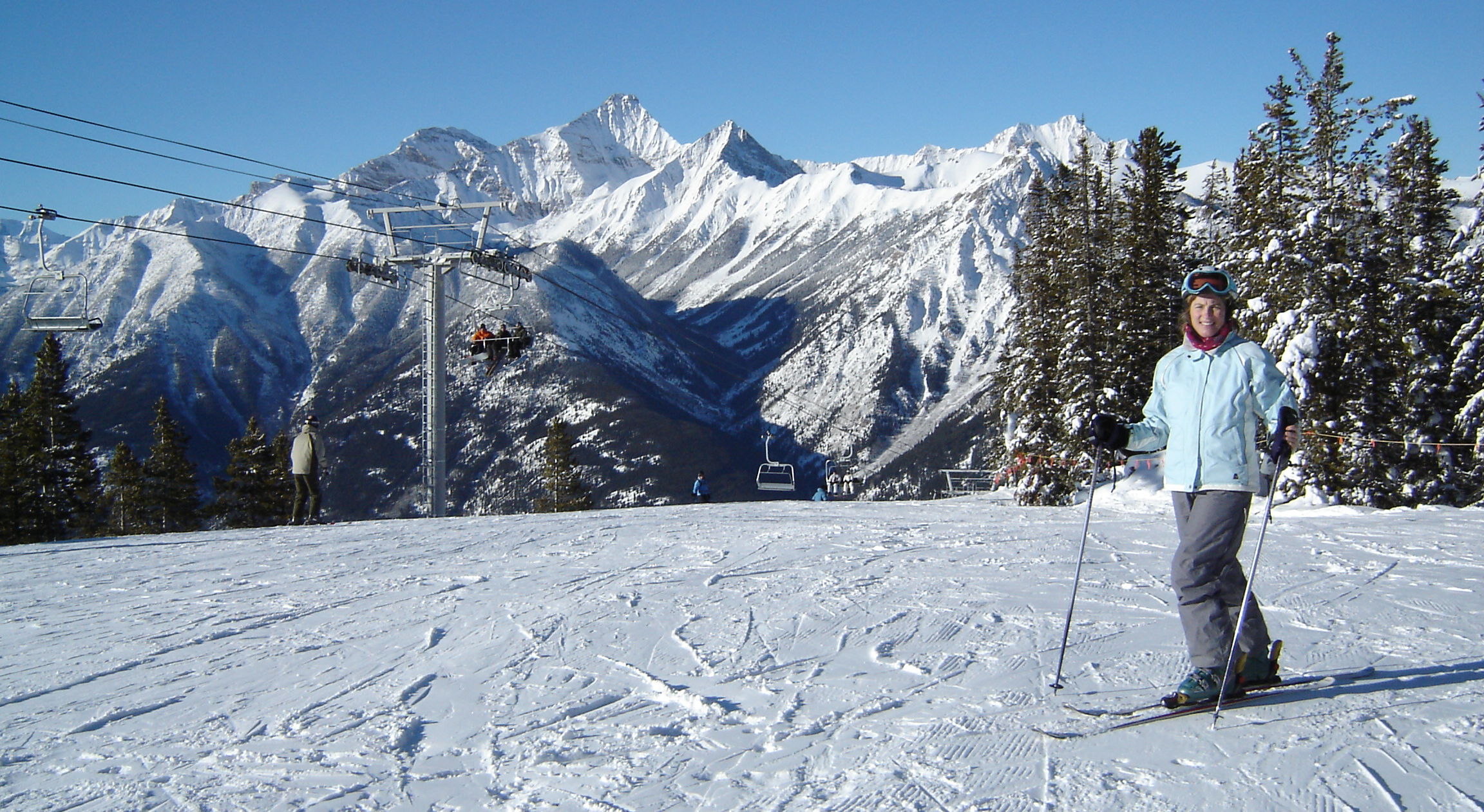
Skiing at Panorama Mountain Village

How many times have you heard that advice? #writetip. I think it should be: write what you’re passionate about.

It’s easy to do research about something you love, but hard to do research about something that bores you. And if it bores you, think about the readers.

There will be areas in your novel that you must research but are not your main areas of interest. That’s okay. I find they turn about to be small parts of the novel.

My novels take place in a fictitious ski resort called Stone Mountain. I certainly know about ski resorts and their inner workings, but I don’t think I could write about it if I wasn’t passionate about the sport and the industry.

When I’m not sure about something, I ask an expert or do research.

You and your novel will spent many hours together. Make it about something you enjoy.


Style Guides?

Should you create your own? #writetip A post by Kathy L. Hall made me think about how I spend my time during the day, and how I can be efficient with my time. Early on in my writing career a friend gave me the advice that I should create a style guide.

I use the Chicago Manual Of Style. So I thought, why do I need my own? I soon discovered it is a definite time saver. Being consistent in word usage is important. Do you use ‘toward’ or ‘towards’? You might use either, but I don’t think it should be changed within a novel or a series of novels.

Before sending my manuscript to my agent, Margaret Hart, I use my style guide as a reminder to check words I sometimes type wrong when I’m in the excitement of writing. Typing is not my strong point. I check that I’ve used their/there , your/you’re etc. in the right way. It’s not that I don’t know how to use them. It’s my fingers. They seem to type the letters on their own.

Dialogue Heavy Writing

Do you have a scene with too much dialogue? #writetip End up with an empty stage?

An easy way to remedy this situation, for me anyway, is to keep a list of objects in every scene. If I don’t have a single object, I get suspicious of the scene. This pushes me to analyze it and see if it’s barren. It gives me the opportunity to add description into the scene after I’ve written too heavily on dialogue or action.

After a first draft it’s fun to go back and put in objects that are used later in the novel. A little foreshadowing to keep things interesting.


Last Lines of a Scene

What to keep? What to cut? #writetip Yesterday I wrote about the first lines of a scene. Today is the day for the last lines. Sometimes a scenes just plain runs on, sort of like a run on sentence. That’s okay when writing the draft, but not for the finished copy.

My trick: read the scene, delete the last two or three sentences. Read the scene again. Are the lines needed? If not, get rid of them for good. Sometimes I remove the entire last paragraph.

I never do this before I have a first draft written. There might be something important in the lines that you don’t discover until the novel is completed. It’s interesting how the mind will plant something in a scene and it will surprise you later when you not only remember it, but need to use it in a scene.

The First Lines of a Scene

When to begin your scene is an important decision. #writetip Have you asked yourself is there a hook? Will the reader want to go on to the second paragraph?

It’s easy to start a scene too early. Once I have a draft of a novel completed, I review the beginning of each scene and decide if I need the first line, the first paragraph and sometimes the first page.  I read the scene out loud without the first few lines and see if it sounds better. Even if I think the writing is good, I cut the lines (can be hard to hit that delete button) if they are not improving the story.

I’ve actually removed an entire scene where I couldn’t find the point of the scene. I think I just liked writing it, but it wasn’t relevant to the story. Maybe I’ll use it someday…