Mind Control: Would You If You Could? by author Donna Galanti

I very curious how you answer the question, “Would You If You Could?” Donna Galanti is making us think today, so let’s hear you thoughts!

As a hidden gift…check below for your holiday sale.

Mind Control: Would You If You Could?
by Donna Galanti

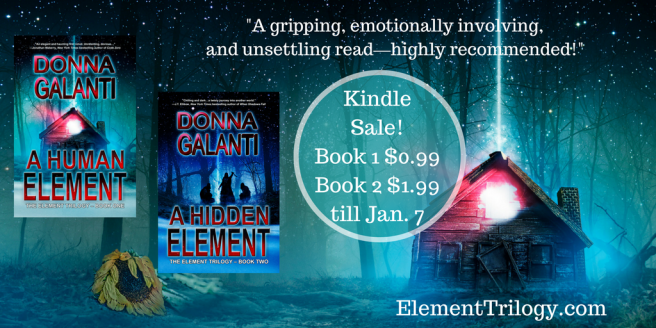
In my paranormal suspense novel, A Hidden Element, mind control is used by the Elyon cult community to get what they want – and its power can be taken away through punishment.

Yet, even while the Elyon community uses mind control to commit theft and murder they have strict rules about it being used on their own people. They know that uncontrolled use of it will lead to the very destruction of their community and the breakdown of rules.

The mission of a small “elite” group to control the masses is nothing new, in fiction or real life.

Dean Koontz uses mind control in his book Night Chills. By using a single phrase, the antagonist can force innocent people into a hypnotic state to do whatever he wants. Even scarier is that this technique was created through an experimental government program.

And the very real CIA’s MK-Ultra mind control program from 1953 to 1964 was a government program that conducted a series of covert experiments carried out on unwitting subjects with the aim of producing mind-control techniques. In 1973 the then director of the CIA destroyed nearly all of the MK-Ultra’s records. Perhaps most disturbing of all was the fact that the extent of experimentation on human subjects was unknown.

What if this happened to you, an “unwitting subject”? Would you just wake up missing time with no recollection of what you did during that missing time? Have you ever had missing time that you couldn’t account for? I have. Once I lost two hours of time. I was in my car to go shopping and when I looked two hours had passed and I had missed an appointment. I often wonder where did that time go? Did aliens kidnap me for an experiment? Was a government experiment conducted on me without my consent? Silly to think, but is it really?

In 1978 I was just nine years old and simultaneously horrified and fascinated by the story of Jim Jones in the news that shocked the world. Jones was best known for the mass suicide over 900 of his cult’s members in Jonestown, Guyana, by cyanide poisoning and the murder of five individuals at a nearby airstrip, including Congressman Leo Ryan.

As a child and now as an adult, I still can’t comprehend how so many could follow one man to their death. Yet, none of us are immune to mind control techniques. Peer pressure, hypnosis, sleep deprivation, fear, financial commitment, guilt, and isolation are just some ways we can be controlled to become people we never thought we might be. Here’s a post on mind control basics that details just how easy it can be.

Sadly, I know there will be more Jim Jones stories to come along. For as long as humans pursue power over the masses, mind control will be conducted by those who study human behavior in order to bend large populations to the will of a small “elite” group.

In writing about mind control in A Hidden Element, I tried to find my own way to explain how this could lead someone to do the unthinkable when presented with the choices before them.

Do you believe in mind control? And would you control others if you could do it?

ABOUT A HIDDEN ELEMENT

ElementTrilogy.com (2)

Evil lurks within…
When Caleb Madroc is used against his will as part of his father’s plan to breed a secret community and infiltrate society with their unique powers, he vows to save his oppressed people and the two children kept from him. Seven years later, Laura and Ben Fieldstone’s son is abducted, and they are forced to trust a madman’s son who puts his life on the line to save them all. The enemy’s desire to own them—or destroy them—leads to a survival showdown. Laura and Ben must risk everything to defeat a new nemesis that wants to rule the world with their son, and Caleb may be their only hope—if he survives. But must he sacrifice what he most desires to do so?

PRAISE FOR THE ELEMENT TRILOGY

“Chilling and dark…a twisty journey into another world.” —J.T. Ellison, New York Times bestselling author of When Shadows Fall

“Unrelenting, devious but full of heart.”—Jonathan Maberry, New York Times bestselling author

“Chilling suspense. A dark and haunting novel. Enjoy the ride.” —Kindle Book Review

ABOUT DONNA
DonnaGalanti

Donna Galanti is the author of the paranormal suspense Element Trilogy (Imajin Books) and the children’s fantasy adventure Joshua and The Lightning Road series (Month9Books). She is a contributing editor for International Thriller Writers the Big Thrill magazine. Donna has lived from England as a child, to Hawaii as a U.S. Navy photographer. She enjoys teaching at conferences on the writing craft and marketing and also presenting as a guest author at elementary and middle schools. Visit her at www.elementtrilogy.com and www.donnagalanti.com. For tips on building your author platform, visit Donna here: www.yourawesomeauthorlife.com


BUY THE ELEMENT TRILOGY BOOKS:

Purchase Book 1 in the Element Trilogy, A Human Element: mybook.to/AHumanElement
$0.99cents on Kindle NOW through 1/7/18!
Purchase Book 2 in the Element Trilogy, A Hidden Element: myBook.to/AHiddenElement
$1.99 Sale on Kindle 12/15/17 – 1/7/18

Mystery Mondays: DS Kane on Writing Inspiration

Dave 6247.jpgThis week in Mystery Mondays we have DS Kane covert operator turned thriller author. His latest book is MindField, Book 8 of the Spies Lie series.

When a federal government operative asks, “What The Worst That Could Happen?” don’t you want to know?

What’s The Worst That Could Happen?

by DS Kane.

It’s the question all fiction authors need to ask as they write a draft of their manuscript. Every plot twist, character arc, or scene setting should embody some essence of the worst that can happen. Then it’s up to the author to make it even worse.

But, improving your manuscript isn’t all you can get out of asking yourself this question. It also applies to all your life decisions. It’s one thing to take a risk, accepting a worse outcome as a possibility when you seek a bigger return. Surely you’ve encountered situations where you studied a multitude of outcomes for a decision you were about to make and thought, “What’s the worst that could happen?”

So, let’s assume you were able to craft a page-turning manuscript and recruit the team you thought you needed to get it out into the world (possibly a literary agent, or a team that included a cover designer, a copy editor, a formatter and a marketing person). What’s the worst that could happen? Your nightmares might include that your literary agent can’t sell what you write. Or your cover designer produces a work that fails to attract potential readers. Or your copy editor misses on several key errors that confuse readers. Or that your formatter can’t get the book into a format acceptable for CreateSpace, Kindle, Nook and Smashwords. Or that your marketing person can’t find a way to drive a critical mass of sales to recover your costs.

If you’re a writer, the list of things to worry about keeps getting longer as you encounter success. There are several life lessons I’ve had hit me in the head as I’ve authored my series, and here are my suggestions:

  • Use tools like Fictionary, Hemingway and Grammarly to optimize your draft before you send it to your critique group, test readers, literary agent, or editor.
  • Sit your draft in a computer folder for a few days after you finish it, and do something else. Then, with fresh ideas, pick it up and read it like a reader a few days later.
  • Form a team that can do the things you need done to publish the book. My literary agent (who asked that I not include her name) is legendary. My critique group and test readers know what to look for in my draft and call me on my failings every time. My cover designer, Jeroen Ten Berge has successfully branded my books. My copy editor, Karl Yambert, has saved my posterior worth correction to some things I mistakenly thought were true. My formatter, Barb Elliott of BookNook.biz has turned my manuscripts into works of beauty. And, most importantly, my marketing person, Rebecca Berus of 2MarketBooks.com, has netted me Amazon Bestseller status with every book I’ve produced.
  • When your cover designer sends you a bright, shiny new cover, make sure that at thumbnail size you can see your title and author name clearly. If you can’t, send it back. Does the cover graphic make sense in lieu of the novel’s name and theme? If not, well…
  • Review the plans you get from your marketer. Make sure they fit the budget you have established, and if not, either request changes or find more money. And be sure to track your sales, to ensure this novel isn’t the start of a long march into financial oblivion.

I’ve learned to manage a team, looking for a specific set of goals. My team members are all much smarter than me. I’m the one-trick pony that can write a bestselling techno-thriller, but I’m not good at the tasks my team easily does well. Don’t try to do it all. You haven’t got the time, and time is your most costly resource.

Screen Shot 2017-12-10 at 8.43.48 AM

I get my ideas from the news. I’ll see a story and think, “This looks like the kind of story that covers a darker one. How bad could that darker one be? Would it make the basis for a good story? What theme would it leave with my readers? Which characters would I cast and what would they have to do that they’ve never done before? Who would have to help them to learn their new skills? Where should I set this story that would deepen the mystery?

Last week, MindField, Book 8 of the Spies Lie series was released to the public on Amazon. While it may take some time for me to see how well it does, I’m already midway into the next book in the series, working title brAInbender. And, yes, as I plan and write this book, I’m asking on every page, “What’s the worst that could happen?”

Who Is DS Kane?

Dave 6439.jpgFor a decade, DS Kane served the federal government of the United States as a covert operative without cover. After earning his MBA and earning a faculty position in the Stern Graduate School of Business of NYU, Kane roamed as a management consultant in countries you’d want to miss on your next vacation, “helping” banks that needed a way to cover their financial tracks for money laundering and weapons delivery. His real job was to discover and report these activities to his government handler.

When his cover was blown, he disappeared from Washington and Manhattan and reinvented himself in Northern California, working with venture capitalists and startup companies.

Now he writes fictionalized accounts of his career episodes, as the Amazon bestselling author of the Spies Lie series.

@DSKaneThriller

https://www.facebook.com/DSKaneAFormerSpyStillTellingLies?ref=hl

http://dskanethriller.blogspot.com/

http://www.dskane.com

How To Avoid Plot Holes (Part II — Character Arcs)

A character’s arc includes when she enters and exits the story. Every character arc is a journey, and at the end of the journey, the character either succeeds at achieving his goal or he fails.

The moment a character enters a story, her character arc begins.

The first time a character appears, she must be introduced to the reader. This is where you decide how much time you spend on describing her and who she is in the story.

For a major character, put more emphasis on introducing the character and showing her goal(s). You either share the goal with the reader or make it an internal goal that will be revealed later. Either way, you as the author must know the goal.

For a minor character, write as little as possible and still keep the reader engaged and not confused.

You control how the information of a new character is presented. Consider her appearance, how she speaks, what her mannerisms are, her actions, and how she interacts with other characters.

When describing a character for the first time, describe the character so the reader:

  1. Can conjure up a physical image of the character.
  2. Understands the POV character’s interpretation of the new character.

Consider whose eyes the new character is being seen from and make the description something that character would think or feel.

For example, a rough and tumble character might look at a banker from a city and sneer at the manicured fingernails, whereas a pedicurist might look at the same character and be impressed with the care the person takes in her appearance.

Only include details that move the story forward. If a character’s length of time in his job is important then include that detail.

A character who has been a private detective for one day will act differently than a character who has been a private detective for ten years. If the job is not relevant to the story, then consider not including the detail when introducing the character.

After the character’s final scene, she may still have an impact on other characters in the novel, but she won’t grow or change again. Hence, it’s the end of her character arc.

At the end of the character arc, a reader should feel satisfied. Did the character achieve his goal? Did he fail? That’s up to you as an author to decide, but you must let the reader know.


Causes of Plot Holes

  1. Scenes are not connected to one another or to the story (covered here)
  2. A character arc is not closed off
  3. Scene locations are inconsistent
  4. The timing from one scene to the next doesn’t work.

Plot Hole Problem 2: Character Arc Not Closed

This problem occurs when a character exits your story, but her story was not closed off for the reader. This is extremely important for major characters and less important for minor characters.

Most likely, you’ll close the character arc for your protagonist and antagonist. It’s the other characters in your cast who might cause problems for you. Pay attention to characters who follow a subplot or hold the point of view for a scene. It’s easy to forget a goal or two.

Fictionary Example

The illustration below shows you how Fictionary leads a writer through the process of evaluating plot and looking for plot holes related to character arc.

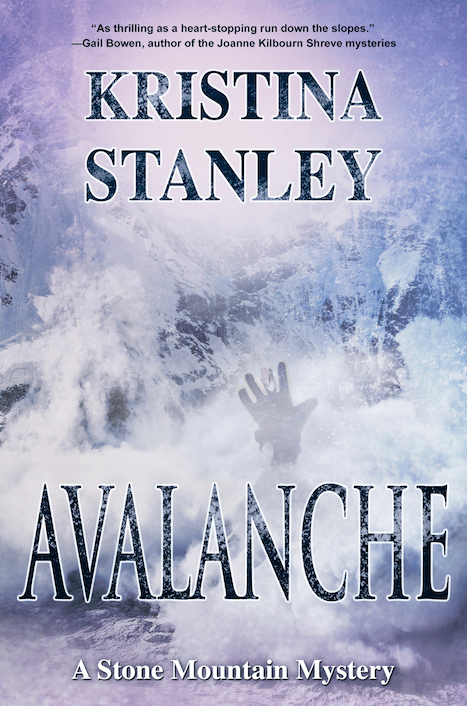
Let’s take a look at my novel Avalanche.

The Story Arc report can show you the first and last scene each character is in.

To consider if you’ve closed the character arcs, remind yourself of the character’s goals, review the last scene for each character, and make sure you’ve closed off any loose ends.

To do that you need to know what the character’s goals were.

I suggest starting with any characters who have the point of view for a scene. You can quickly scan the POV characters and their goals by choosing the Point of View (POV) and POV Goal in the drop-down menu of the Key Elements per Scene report. This way you can find the important goals you must close off (succeed or fail).

Once you’ve selected the elements, you’ll know the goals for each POV character.

To start checking your character arcs, choose a character and find the first scene she had the point of view for. I’ve chosen, Jessica Scott. She’s a supporting character who has an important role.

Her first point of view scene in Avalanche is scene 13. I found this quickly by looking at the POV report. The bottom row shows each POV character by initials in the order they appear in Avalanche.

Next, find the last scene your POV character is in. You can use the Story Arc report to do this.

Below, you can see Jessica’s last scene is scene 105.

If I need to read the scene, I can click on the black box shown above and the text of that scene will be displayed. I can then determine if I’ve closed off Jessica’s character arc properly.

​So now I know Jessica’s first POV scene, her goal, and her last scene. I can evaluate if I’ve closed off her goal by having her either succeed or fail.

I’ll repeat this for all POV characters and then move on to minor characters who don’t have POV for a scene but do have an important goal.

This takes a bit of time, but it’s worth it to create a better story for your readers.


Fictionary is the first online tool for editing your story, not just your words. Think characters, plot, and settings. Find out more at Fictionary.co.

How Fictionary Works

A writer imports a manuscript in MS Word .docx format. Fictionaryautomatically creates a character list, links characters to scenes, plots word count per scene, and draws a story arc.

The writer enters data regarding each scene, evaluates and edits the manuscript based the reports, and then exports the updated manuscript. The reports are dependent on the writer’s input and are created specifically for each manuscript. There are rewrite tips associated with each key element of fiction if you get stuck and need guidance.

Fictionary is designed for the serious author who wants to produce a high-quality manuscript.

Download our free eBook, Story Editing: 15 Key Elements of Fiction To Ensure Your Story Works and learn how story editing is all about evaluating the major components of your story.

Turn Your First Draft Into A Great Story

Try Fictionary for free. The first 10 days are on us. No credit card required.

Mystery Mondays: Phyllis Smallman on How to Fit In Writing Time

Today on Mystery Mondays I have the pleasure of hosting Phyllis Smallman.  I met Phyllis at the 2014 Crime Writers Of Canada Arthur Ellis Awards dinner.

Her latest book, LAST CALL, in the Sheri Travis series has just come out. It’s a thrill that it’s finally here. I’ve already read it and loved it.  You might like it, too 🙂

Over to Phyllis…

Write the small spaces.

by Phyllis Smallman

Whenever I give workshops the question that comes up most often is, “How do I find time to write, work, and have a life?”

  1. The first suggestion is don’t focus too hard on THE BOOK. I know, you want it done yesterday, but thinking only about this big block of writing takes the joy out of creating. All the little bits of writing you do, pieces that might never make it into THE BOOK, are equally important. Keep a small notebook with you, one with a cover that makes you smile. This is where you write your bits.


  1. Think of how much time we spend waiting. These are opportunities to focus on a character sketch, a mood, or even a vehicle that you’ll need. What do you smell and hear? Describing a sunset or the whine of the mechanics drill as he changes your tire, those are all terrific practice and necessary for writing well. These writing bits will be your freshest and strongest writing because they are from life. It’s like stocking your cupboard for an emergency. Write in the small spaces. In the dentist’s office do a short description of a person in the waiting room. Surprisingly, sooner or later you will likely use this. You’ll be writing a scene for your novel and need a casual player. There’s no need to interrupt the flow of the story to think up the character because you already have someone to insert. Or describe the dentist’s office. Coffee shops are perfect for these quick sketches. Pick a person and analyze them. How many piercings? Tattoos? Study the server. How much education does he have. Is a temporary job or will he be here forever? Surprising how many times I’ve needed to describe something like this and go blank. That’s when I pull out my trusty sketch book of words. Homeless people make great subjects and what cityscape is complete without one? Think of an artist drawing. That’s what you’re doing, but with words. I once wrote a whole piece about an unknown woman that I liked so much I wove her into the subplot.


  1. Eavesdropping is a good thing. It helps with so many aspects of writing. Not only does it teach you to write dialogue, but it shows you the ebb and flow of conversation. Overheard in a washroom, “Honey, you wouldn’t believe how much it costs to look this cheap.” You can bet that showed up in a book.


  1. Print out the part you need to edit. Waiting in line for the school pickup? Read that chapter out loud. You’ll quickly see the repetitions and the awkward bits. If your tongue stumbles, your reader’s eyes will. If you’re worried about people thinking you’re crazy, hold up your phone as if you are making a life changing call. This has the added benefit of keeping people from interrupting your writing time, because that’s what it is.


  1. And then there’s that three o’clock in the morning time when you can’t sleep. What else do you do at that time of the night? Worrying about your kids or how whacked you’re going to be at work the next day only makes being sleepless worse. And there’s no way you want to fixate on what the guy lying beside you is up to, so now’s the time to work on your plotting. Figure out how you can go deeper into the story. How can you make that plot twist more real? Can you go back and put in some foreshadowing? Can you combine two characters into one to streamline the story. The middle of the night is truly where you get the hard work done, not sitting in front of a screen.


  1. When a great idea comes along write that great idea down in that notebook that’s always handy. You can flesh it out later — maybe put two of these ideas together into one story. Two great ideas in one story, how brilliant is that? Or maybe you’ll create a short story from that idea. Now is not the time to edit or be critical, this is where you dream.


  1. Here’s something I’m a little squeamish to tell you. When I’m reading, if I see a wonderful phrase, I write it down. Think of it as a prompt or an inspiration. Always put it in bold quotes so you know it isn’t yours. You’ll put your own spin on it later. And another little secret, I also collect names from screen credits.


  1. If you write the little places, when you do have a block of time, you’ll be prepared to write. It’s like stretching before you exercise. When you sit down at your computer you don’t waste a minute thinking about what you’ll write because you’ve got this powerful sketch of your protagonist’s father to put in, one that will explain why she can’t commit to a relationship, and a brilliant description of their home, decayed and unloved, that mirrors their relationship.


  1. Coming to THE BOOK prepared to write makes you super-efficient because the hard bit has already been done. You just need to type it in. Sometimes I think we spend more time worrying about writing than we do writing.


  1. One more thing. Don’t tell me you aren’t a writer until you’re published. That’s garbage. You write; therefore, you are a writer. Being published doesn’t bestow some magic mantel on you. You already have it. And it’s a valuable and necessary thing to do. From the time humans sat around fires in caves, we’ve needed story tellers. It doesn’t matter how those stories are delivered, e-books, digital streaming or whispered in the dark, tall tales are necessary for humanity. So, do your bit, write.

Who is Phyllis Smallman?

Phyllis Smallman’s first novel, Margarita Nights, won the inaugural Unhanged Arthur award from the Crime Writers of Canada. Smallman has also won the IPPY golden medal for best mystery and numerous awards from the Florida Writers Association. Her writing has appeared in both Spinetingler Magazine and Omni Mystery Magazine. The Sherri Travis mystery series was chosen by Good Morning America for a summer read in 2010.

Before turning to a life of crime Smallman was a potter. She divides her time between a beach in Florida and an island in the Salish Sea.


LAST CALL

Screen Shot 2017-11-27 at 4.26.19 PM


Down in Key West, Sherri Travis and her best friend Marley are looking for a little fun in the sun. Promising to be back for last call, Marley leaves the Rawhide Saloon with an Elvis impersonator.

She doesn’t return. With Hurricane Alma turning toward Key West, and the police saying Marley must be missing for seventy-two hours before they start searching, Sherri and Lexi Divine, a six-foot tall drag queen, hunt for Marley amidst the chaos of the evacuation.


Six Tips to Combat Writer’s Anxiety by Editor Erin Liles

Before you can use Fictionary.co to edit your first draft, you have to write your first draft. That can be a daunting task and may even cause writer’s anxiety.

Editor, writer, and creative motivator is here with some great advice on how to get that first draft finished. And when you’re done, after you’ve celebrated, we’d love it if you tried Fictionary and let it help you turn your first draft into a story readers love.

Over to Erin…

Six Tips to Combat Writer’s Anxiety

By Erin Liles

Photo by Erin Liles

You know the feeling. You sit down at your computer, ready to write, and that blank white page glares at you, the cursor blinking accusingly, your heartbeat throbbing, underarms pricked with sweat. You start to hyperventilate. Anxiety.

Anxiety is not nice to writers. It’s a bully. It breaks you down. It whispers mean things in your ears like you can’t writeyou don’t have anything to sayyou’ll never write a book.

I’ve gone toe to toe with that bully, and she is formidable, let me tell you. And if you don’t do something about it, it can lead to the dreaded writer’s block.

So, now that we’ve established that anxiety does not make a good writing partner, let me ask you, why do you write? Hold on, I bet I know the answer. It’s probably something like, “it’s a passion.” Or it’s something in you, and you can’t not write. You love it. Right? Because if you didn’t, you wouldn’t do it, especially since, let’s face it, writing is hard! Particularly if you are writing a novel.

And if you’re like me, you buy books, you scour the Internet, you take classes, and gobble up as much information as possible. With all the information out there, some resources advising this, others advising that, some calling an idea one thing and someone else another, sometimes it’s even downright overwhelming.

Take heart! The best thing about learning to write better comes from all the things you’re probably already doing, but what’s more is that the best way to improve your writing is by doing it. There is no wasted writing. Every single time you write, you are learning how to write better.

But before you sit down to that terrifying blank white page, let’s do a few things to ease your fears, to get you excited to sit down at your computer and write. Because you can do this. Trust me, you can. It’s all about mindset. The anxious mind has its own agenda. Your job then is to direct the anxious mind into a more productive direction: the writing mind.

  • First, consider making your writing area a space you are comfortable in. If you have a desk in a designated place in your home, you might hang a bulletin board on which you pin inspirational quotes, images that represent something positive for you, pictures of your family, whatever makes you feel good. Or you could create a vision board, a visual representation of what you want to create. Place candles or other scented items in your space — whatever makes you feel good and excited to sit down and write. Make it a sacred space.
  • Meditation has been proven to lower stress, improve concentration, and increase happiness, along with myriad other benefits.
  1. Sit down at your desk. (You can sit anywhere really, but I find if I do this exercise at my desk, I come to associate it with peace and calm instead of anxiety about writing.) You can play some soothing music if you want to — YouTube as some great meditation channels.
  2. Close your eyes.
  3. Breathe in to the count of five.
  4. Hold your breath for three.
  5. Breathe out for seven.
  6. Take two normal breaths.
  7. Repeat for 10 minutes.

Focus on your breathing. If you have a thought, observe it and let it go. Don’t struggle. Let your muscles go slack.

You can also try this guided meditation for creativity: https://www.youtube.com/watch?v=WCEwZ0pIhRw

  • Mind Map. Get some colored pencils or markers and a piece of poster board. Put your main idea (or your character) smack dab in the center of the page. From here, add ideas, subplots, characters, theme, setting, anything at all in varying colors. Just let the ideas flow and connect them however you see fit. Here is a good example of how to mind map your book: http://www.magnoliamedianetwork.com/mindmap-to-start-your-book/
  • Flow. Open a blank Word document or a notebook and set a timer for fifteen minutes. Begin writing about your story idea. Write whatever comes to mind — do not censor yourself in any way. Forget the typos. Forget the bad grammar or misspellings. Your only job is to keep your hand moving. No stopping. Let the ideas flow, and don’t worry if they are good or bad. The idea here is to get those creative juices going.
  • Visualize. Visualize success! Do this when you are relaxed, perhaps after meditating. Close your eyes. Imagine yourself writing, the words just flowing from your fingertips onto the page. How does this feel? What does it look like? What do you hear? Engage all of your senses, and visualize this image as often as possible throughout your day.
  • Rephrase. Identify your negative thoughts and rephrase them positively. Instead of saying I can’t write, say I can and will write. What’s more, take the word should out of your vocabulary. Saying you should be writing only creates more pressure, resistance, and you guessed it, anxiety. Rephrase to say I want to write!

Don’t let that blank page intimidate you. See it as an invitation to create. What gets put on the page can always be changed, but you can’t change what you haven’t written!

And remember,

“Creating something out of nothing is exciting. Filling the empty page with words, sacred words, is inviting.” ~Rachel Ballon, Ph.D.

Now get out there and write!

Erin Liles is a freelance editor, writer, and creative motivator who works with large and small publishing houses and independent authors. She is represented by Mansion Street Literary Agency. For more information visit editperfectword.com.

How To Avoid Plot Holes (Part I)

A plot hole will make your readers unhappy. So how do you avoid falling into a hole? How do you even know there is a hole? Don’t be like my dog (Farley) and bound through the snow, not knowing what’s beneath.

​Scenes and the order that events take place in your story make up the plot. The scenes occur in a sequence, and that sequence forms the structure of your novel.

You’ll most likely have a main plot and one or two subplots. Your protagonist (main character) follows the main plot. Secondary characters follow the subplots.

Your job as a writer is to evaluate how you’ve written the plot (and subplots) and to edit and rewrite until you’ve created a compelling story for your readers.

If you make each scene great, have each scene flow from one to the next in a way that makes sense to the reader, and pay attention to the key elements of fiction for each scene, you’ll avoid plot holes.

Causes of Plot Holes:

  1. Scenes are not connected to one another or to the story
  2. A character arc is not closed off
  3. Scene locations are inconsistent
  4. The timing from one scene to the next doesn’t work.

​Today, I’ll focus on the first cause of plot holes.

Plot Hole Problem 1: Scenes Not Connected To One Another

When a scene causes a plot hole by not being connected to the story, this usually means the scene doesn’t have a purpose. If you don’t know the purpose of each scene in your novel neither will your reader.

Naming the scene will help you determine what the scene is about.

The purpose of the scene. must relate to the overall story. If it’s not driving the story forward, ask yourself why you included the scene in your novel.

​If you don’t know the answer or can’t come up with a purpose, consider deleting the scene. You can move any important tidbits to another scene if you need to.

Once you know the purpose of each scene, test how the flow of your novel is working. If your scenes don’t flow from one to another, then the plot doesn’t make sense to a reader. This is considered a plot hole, as the reader might fall into a hole and not read any further.

Keep track of how you enter and exit each scene.

For entering each scene, do you:

  • Vary the way you enter each scene in your draft?
  • Have a hook that draws the reader into the scene?
  • Anchor the reader in terms of point of view, setting, and timing?

For exiting each scene, do you:

  • Vary the way you end each scene?
  • Have a hook that makes the reader want to start the next scene?
  • Use a technique that connects the current scene to the following scene?

We’ll cover entry and exit hooks in the next lesson.

Fictionary Example

The illustration below shows you how Fictionary leads a writer through the process of evaluating plot and looking for plot holes.

Let’s take a look at my work in progress, Evolution. We’ll cover some of the plot elements in the basic mode of Fictionary and start with the scene opening.

Scene Name: I’ve named the scene Daisy Through Ice. This is enough for me to know what the scene is about. The word cloud helped me name the scene.

Story Arc: The story arc is set to yes because this scene is the inciting incident and will be plotted on the Story Arc under Visualize Your Manuscript in Fictionary.

Purpose of Scene: For each scene in your novel, Fictionary gives you two lists to choose a purpose from or you can add your own. This list shows you I’ve chosen the Inciting Incident.

If the Story Arc is set to “No” you’ll see a different list.

Opening Type: This scene opens with action. The first sentence is the character opening the refrigerator door. I’ll keep track of opening types throughout Evolution to ensure I’m not repetitive.

Below, you can read the closing of the scene.

Closing Type: You can see the last line of the scene is thought. “All I had to do was roll over and slide in.” Fictionary will show me a report for the closing type of every scene. I’ll know if I’m using enough variety for my scene endings.

​Let me know if you have other causes of plot holes and how you fix them.


Fictionary is the first online tool for editing your story, not just your words. Think characters, plot, and settings. Find out more at Fictionary.co.

How Fictionary Works

A writer imports a manuscript in MS Word .docx format. Fictionaryautomatically creates a character list, links characters to scenes, plots word count per scene, and draws a story arc.

The writer enters data regarding each scene, evaluates and edits the manuscript based the reports, and then exports the updated manuscript. The reports are dependent on the writer’s input and are created specifically for each manuscript. There are rewrite tips associated with each key element of fiction if you get stuck and need guidance.

Fictionary is designed for the serious author who wants to produce a high-quality manuscript.

Download our free eBook, Story Editing: 15 Key Elements of Fiction To Ensure Your Story Works and learn how story editing is all about evaluating the major components of your story.

Turn Your First Draft Into A Great Story

Try Fictionary for free. The first 10 days are on us. No credit card required.

Farley’s Fridays: Two Dogs In The House?

Farley here,

I heard Kristina and Mathew talking about getting another dog. Gasp!

What are they thinking?

Kristina dog sits other dogs. But when that happens, I’m forced to claim my place. Flint is trying to hustle in on my human, but really, he should sit on the floor.

Farley Flint Tina

I know Kristina loves me the most.

Yesterday, we went for a hike. I wore my boots like a good dog. What humans don’t understand about boots is I can’t get a grip on the snow.

I slip and slide all over the place.

We hit the golf course and traverse the signature hole called “Cliff Hanger.” Why is it called Cliff Hanger?…Cause it has a cliff between the tee and the putting green. Of course, it’s covered with snow now, so we can play on it.

I romp along the edge and lose traction. I slide over the edge, roll about 10 feet, and get stopped by a bush.

Every time I try to get back up the hill, I slide back into the bush. I keep trying but just can’t make it.

I know I’ll be ok when I see Kristina’s head appear. She’s calling me, but I can’t get to her.

She crawls down the slop and works her way to me. She sinks in the snow, so her progress is slow. When she reaches me, she grabs my harness and pulls.

I still can’t get a grip, and I’m struggling too hard for her to get my boots off.

She hauls me to her high side on the cliff and rests me her hip. She won’t let go. We struggle our way sideways across the slope – there is no going up – until we reach a spot that’s not too steep. She wraps her arms around me, heaves me upward, and crawls behind me.

I slide into her, but her body stops me from going down again. She pushed me up a few inches and crawls behind me. Eventually we make it to the top.

Snow covers her pants and winter coat. There’s even snow in her hair. She lays panting beside me, and I lick her cheek. We made it!

So this is how I know she loves me. Now why would she need another dog? I don’t like to share. Please tell her she can dog sit, but no permanent visits.

Woof Woof

Character Names – Don’t Confuse Your Readers

Confusing readers with character names that are too similar to each other might make a reader stop reading your book. Here’s why…

Photo from Pixabay

This morning over coffee I was reading a book. A mystery. The story line is strong. The characters are interesting.

As I was about a quarter of the way in and the unforgivable happened. I got confused and had to re-read a section. I got past that, so yes I forgave the author because a liked the story.

In the next scene, the same issue happened.

In one scene, a sheriff and his young deputy are questioning an older woman and her young nurse. The nurse’s name is Maggie. The deputy’s name is Molly. Two young women. Two names starting with M. Halfway through the scene one of them put their hand on the older woman’s shoulder. I thought, “Why would the deputy be so personal?” I had to go back and check which character had touched the woman.

In the next scene, the older sheriff and the deputy interview a older man. A man who was previously a sheriff. Two older men with the same career. Here we have Wilson and Wyatt. Again I had to check who was speaking.

This was frustrating. A little bit of editing would have fixed this problem.

Now I have to decide if I’ll invest more time in the book or give up. It’s shame, because it’s a good story.

If the author had used Fictionary, here’s what he/she would have seen. I used my WIP in Fictionary and added the character names for illustration. The screenshot below lists the characters in each scene.

You can see Maggie and Mollie one after another and in the next scene Wilson and Wyatt. Seeing your characters listed in connection to a scene will help you eliminate the confusion of having names within your story that are too similar to one another.

Hopefully this helps you edit your work in progress and make it a better experience for your readers. I’d love to hear how you deal with this issue.


Fictionary is the first online tool for editing your story, not just your words. Think characters, plot, and settings. Find out more at Fictionary.co.

How Fictionary Works

A writer imports a manuscript in MS Word .docx format. Fictionaryautomatically creates a character list, links characters to scenes, plots word count per scene, and draws a story arc.

The writer enters data regarding each scene, evaluates and edits the manuscript based the reports, and then exports the updated manuscript. The reports are dependent on the writer’s input and are created specifically for each manuscript. There are rewrite tips associated with each key element of fiction if you get stuck and need guidance.

Fictionary is designed for the serious author who wants to produce a high-quality manuscript.

Download our free eBook, Story Editing: 15 Key Elements of Fiction To Ensure Your Story Works and learn how story editing is all about evaluating the major components of your story.

Turn Your First Draft Into A Great Story

Try Fictionary for free. The first 10 days are on us. No credit card required.

Characters and Plot – Make Your Characters Work For You.

Why do people read novels?

I think people read to find out what happens next. But what happens next is only interesting if it the “what happens next” involves characters or something important to a character.

Characters ARE your story. They act and react. They create emotion. They show motivation. Without any of this, you don’t have a story. That’s a tall order for your characters. So how do you make sure you’re getting the most out of them?

You edit your story and rewrite until your characters are performing at their best.

Characters and Novel Structure

Once you’ve finished your first draft, you most likely know who your characters are, what they look like, where they work, and so on. But what about how they fit into your story structure? To understand this and make the most of it, you must evaluate your characters in the context of the structure of your novel.

By this point, you know if you’re writing from first-person point of view (POV) or third person. You’ve also decided if you’re writing from multiple points of view. In essence, you know who is telling your story.

When thinking about the POV character for each scene, ask yourself:

  • What is the POV external goal for the scene?
  • What is the POV internal goal for the scene?
  • How does the goal relate to the plot?
  • What happens if your POV fails to achieve the goal?
  • How does scene impact your POV character?
  • How does the scene impact your protagonist (if not the POV for the scene?)

Once you’ve answered the questions, check each scene to ensure the reader will understand the answers. You can show, tell, or imply the answers. It’s up to you to find the right balance. You’re the creative one!

The more important an event, the more you should show the reader what’s happening. “Tell” the less important events, so the reader can move on to the good stuff.

Taking on the task of editing and rewriting your first draft doesn’t have to be overwhelming. A bit of organization will help you complete your rewrite without it taking forever. We created Fictionary to help writers perform their own story edit in a knowledgable and efficient manner.

Below is a look at my work-in-progress, Evolution, within Fictionary. Fictionary helps me focus on my characters on a scene-by-scene basis. It keeps me from convincing myself a scene is okay.

When I review each scene with a focus on the POV character’s goal for example, I know what my character wants. If a character doesn’t want something, the scene will lack tension, and hence be boring. In the scene below, Jaz Cooper has the POV. Once I know the goal, I can decide if she will achieve her goal or not. Sometimes she will. Sometimes she won’t.

I can assess her external goal versus her internal goal. The reader may or may not know what the internal goal is, but if I do, I can be consistent with my character throughout the novel.

It takes work, but I’m serious about making my story a great story, so to me, it’s worth putting in the time and effort. I’ll evaluate each scene focussing on characters, then I’ll evaluate with a focus on plot and setting.


Characters Per Scene

Fictionary shows you how many characters are in each scene. This gives you a chance to determine if you have too many characters in a scene. Too many characters might confuse your reader.


Scenes Per Character

Fictionary will also show you how many scenes each character is in and the order they appear in the novel. You can see I have 33 characters in my novel.

Jaz Cooper is in 85 scenes (good news for me as she’s the protagonist). Eighty-five is the maximum number of scenes a character is in. The minimum number of scenes a character appears in is 1. Dr. Patron is an example of a character who appears once.

Jaz is the first character to appear in the novel. Also good news. The less important a character is, the later he/she can appear in the story.


Fictionary is the first online tool for editing your story, not just your words. Think characters, plot, and settings. Find out more at Fictionary.co.

How Fictionary Works

A writer imports a manuscript. Fictionary automatically creates a character list, links characters to scenes, plots word count per scene, and draws a story arc.

The writer enters data regarding each scene, evaluates and edits the manuscript based the reports, and then exports the updated manuscript. The reports are dependent on the writer’s input and are created specifically for each manuscript. There are rewrite tips associated with each key element of fiction if you get stuck and need guidance.

Fictionary is designed for the serious author who wants to produce a high-quality manuscript.

Download our free eBook, Story Editing: 15 Key Elements of Fiction To Ensure Your Story Works and learn how story editing is all about evaluating the major components of your story.

Turn Your First Draft Into A Great Story

Try Fictionary for free. The first 10 days are on us. No credit card required.

Mystery Mondays: Jennifer Young on Researching Historical Fiction

I’m so pleased to have award winning novelist Jennifer Young on Mystery Mondays. She’s here to talk to us about researching historical fiction – something I’m in awe of.

Hot off the press: Cold Crash (eBook Edition) is free today on Amazon. Why not check it out and post a review for Jennifer?

Researching Tips for Historical Fiction

cold crash front cover
Cinnamon Press Debut Novel Winner

When I started writing Cold Crash, I looked online for music that came out in early spring 1952. I found ‘Tenderly’ by Rosemary Clooney, and it played on a continual loop as I wrote the first chapters of Max Falkland’s story. It even found its way into what eventually became chapter twelve.

As I researched further though, I found that while ‘Tenderly’ came out in the United States in spring 1952, Rosemary Clooney didn’t release any records until years later in the United Kingdom. Max Falkland lived in the UK, so I had a problem. Fortunately, Max is Anglo-American, so I simply added a reference to her grandmother posting the record to her from America.

I told this story at a reading I did last week, and another author and friend Helen Gordon asked if I ever fudged my historical details, pointing out that my obsession with historical accuracy sounded more like creative nonfiction than fiction. Cold Crash is undoubtedly fiction – I’ve never flown a plane and I’m certainly not an archaeologist – but the facts represented in the novel are as accurate as I can make them.

Coming from an academic background, I consider it vital to get those details right. I love reading historical fiction, and I adore the details of the past that makes the world rich and compelling. I don’t want to be distracted from the mystery or character development by wondering if one tidbit of information is correct. It’s very easy to get overwhelmed with research. Here’s some advice from my experience researching and writing about spring 1952.

Research broad brush stroke history first. I started with overviews of the 1950s – reading books ranging from Robert Opie’s 1950s Scrapbook to Jessica Mann’s The Fifties Mystique. I also read about the Korean War. Max has just come out of mourning as the novel opens, for her brother who was shot down over Korea. (I had to supplement knowledge gleaned from a childhood of watching M*A*S*H!)

While you’re writing, don’t disappear into the internet to check one obscure fact. I did this far too regularly, and you end up wasting precious writing time. You can always correct a historical fact, but if you never write, you have nothing to correct! In one case in Cold Crash, I left a mistaken detail in place. Max’s friend Emma says it’s nice to bake scones with dried fruit again, when Max has provided it. In April 1952, dried fruit was off rationing, but I decided to leave the dialogue in, as Emma doesn’t have the money to splurge on dried fruit.

If you have an area that particularly interests you, save that for last. It sounds counterintuitive – it might have been the reason you chose your historical period. However, a real danger exists that you will research that one area forever, and never write. I deliberately chose to do this with fashion. After I had a complete first draft of the novel, I went to the British Library and poured over fashion magazines for 1952. I loved looking at Harper’s Bazaar and Vogue issues, the very ones that Max would have read, seeing the ads she would have seen. It felt almost like shopping – I needed a ball gown for this scene, a dinner dress for this one.

This worked well for other areas too. Train travel is not my passion, but I knew I needed details of both the look of the LMS trains from London to Oban. An Illustrated History of LMS Coaches gave me pictures of the upholstery on the LMS train line, as well as the sleeping compartments. The microfiche version of Bradshaw’s Guide allowed me to find out the timetable of trains going between London and Oban – and that the reverse train didn’t run on weekends at all. I reorganised the timings of the novel to allow Max to travel on a Friday. Would anyone have checked? Probably not, but that detail mattered to me.

My final piece of advice is to enjoy the research – and also take it seriously!


Who is Jennifer Young?

Jennifer Young University of Hertfordshire. Photography by Pete Stevens ©Jennifer Young was born in a small textile town in North Carolina, USA and moved to the UK in 2001. She has since completed a PhD, become the daughter-in-law of a Catholic priest and gained British citizenship. Her degrees are from the University of North Carolina Chapel Hill, Cardiff University and the University of Southampton. She is a Senior Lecturer in Creative Writing and an Associate Dean of the School of Humanities at the University of Hertfordshire. Jennifer lives in North London with her husband and daughter.

Her novel Cold Crash won the Cinnamon Press Debut Novel Prize.

www.maxfalkland.com

@maxfalkland

https://www.facebook.com/ArchaeologyandEspionage/

Buy Cold Crash

Cold Crash

For archaeologist Maxine ‘Max’ Falkland, life in early-50s London is difficult enough as cold crash front covershe tries to move on from the death of her brother, an RAF pilot shot down over Korea. But, when she meets John Knox things get more complicated — before they get outright dangerous.

Flying her light plane to Scotland, Max overhears whispered arguments in Russian coming from the next-door room and sees lights across the moors that appear to answer flashes from the sea. Add the mysterious malfunction of her plane and she has a lot to confide when she encounters the enigmatic Richard Ash, a local landowner and recluse. But when Knox unexpectedly reappears and a dive goes disastrously wrong, Max must act fast as she finds herself in the middle of a Soviet military plot.

Cold Crash is the first of four novels that follows Max through archaeology and espionage from 1952 to 1953.

Thanks for reading…