Talk about thrilled!
Gary Fearon, Creative Director at Southern Writers Magazine, reached out to me and asked if I would write a column in this magazine for authors. So of course, I said yes. Who wouldn’t?
Here’s a little teaser…
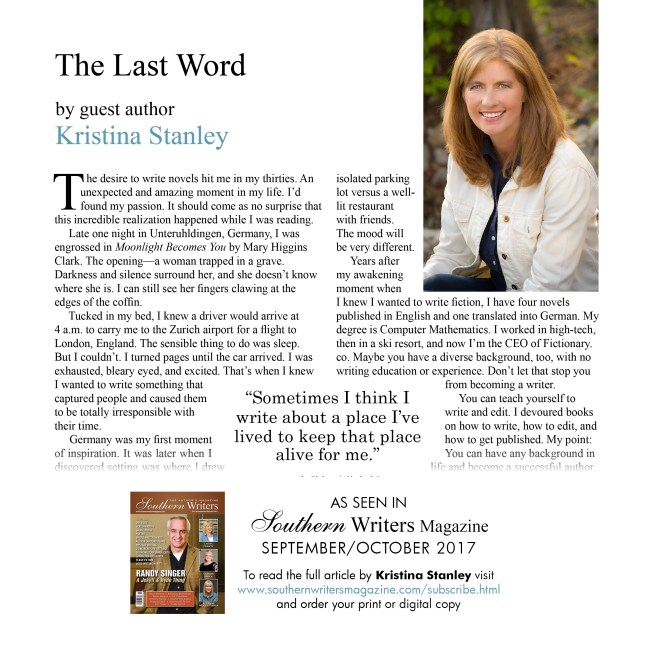
Talk about thrilled!
Gary Fearon, Creative Director at Southern Writers Magazine, reached out to me and asked if I would write a column in this magazine for authors. So of course, I said yes. Who wouldn’t?
Here’s a little teaser…
Farley here,
Playing at the pond with my pal Flint.
My human throws a stick. I’m don’t like to swim, so I wait for Flint to get the stick. I’ve a plan to get the stick…and I’m sneaky…
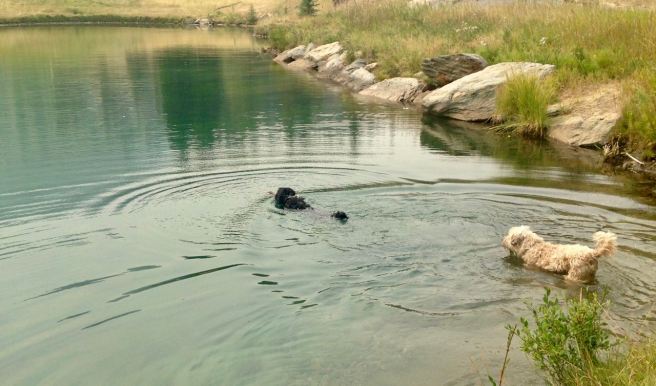
Flint has no idea I’m making him do the work. But here he comes, and I’ll get the stick without having to swim.

As it turns out, my plan didn’t work. The trickster gets the stick and takes off. I give Kristina my best stare, but she doesn’t understand she’s supposed to get the stick from Flint and hand it to me!

Grrr….
Woof Woof
 Focus on the settings in your novel and write a better story. Structural editing using Ficionary will help you get this done faster.
I highlighted every sentence that described the setting. What I realized was the author only described things or places that were relevant to the plot.
Most writers know the setting creates the story world. But in the context of novel structure, it can do so much more for you.
Consider the following for each scene when working on setting:…
Source: Improve Your Novel’s Setting With Structural Editing – Fictionary
 It’s the 25th of the month, taking centre stage we have another great author, a best selling one at that all the way from Canada! I’m thrilled to have her here let’s not waste anytime. L
et’s get into it and learn Kristina’s style….
Farley here,
So most of you know I don’t beg for food. Kristina thinks it’s because the humans never feed me from the dinner table.
But what’s up with Piper?
Her eyes are bugling from their sockets. She’s so surprised that not only is she sitting at the dinner table…she’s being hand fed!
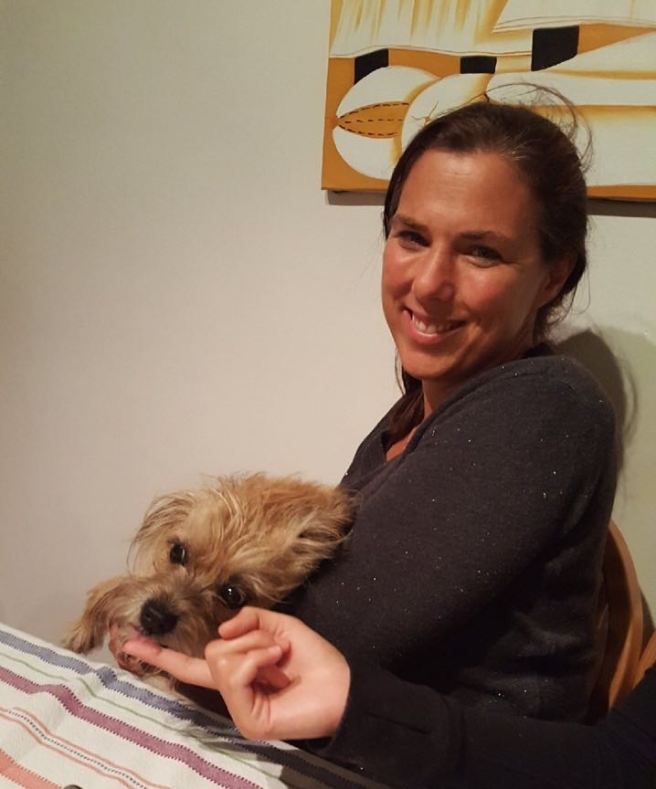
Even though she’s shocked by this human behaviour, she is willing to eat.
Someone throw me a cookie 🙂
Woof Woof
Today on Mystery Monday is another first. We have author L.J.M Owen here and she’s going to share her experience with self and traditional published novels. She’s done both! It’s all very interesting and insightful.
In 2015 I accidentally performed the ultimate newbie experiment: self-publishing and traditionally publishing the same book in one year. I’m often asked which option I’d recommend to aspiring authors. Here are my thoughts.
How did it happen?
The day I finished drafting Olmec Obituary, the first instalment in my Dr Pimms, Intermillennial Sleuth archaeological mystery series, I faced The Question: how do I publish it?
After calculating the odds of my Midsomer Murders-meets-Temperance Brennan tale rising from the collective slush pile, I decided on self-publishing. After all, there had to be other Amelia Peabody devotees out there who would love my awkward archaeologist-librarian protagonist as much as I did, right? All I had to do was find them. Enter crowdfunding.
On 12 December 2014 I launched a Kickstarter campaign to raise sufficient funds to print a 300 copy run. Just five days later I was contacted by a commissioning editor from Bonnier Australia asking to see the manuscript. The ensuing celebratory dance was, I’m told, a sight to behold!
Several nail-biting weeks later and not only did I reach the Kickstarter goal, Bonnier also offered me a book deal.
So, in 2015 I found myself publishing my first novel twice—once as a limited edition self-produced run, and then with a traditional publisher.
How did the processes differ?
The differences between the two experiences were stark.
To set up a Kickstarter proposal I had to sell the book to potential readers, which involved developing a project outline, financial spreadsheets, and a promotional a video and blurb. Then I stumbled through crash courses in Twitter and Facebook in an effort to reach my prospective audience. It was a month of incessantly promoting my work to others, not a comfortable undertaking for any introvert.
In order to complete the self-published run I had to develop brand new skills in editing, design, typesetting in multiple formats, printing, distribution, shipping, finances, social media strategy, marketing and events.
The exhaustion was overwhelming. I failed basic hair shampooing. Twice. (Despite the limited options in the confines of a shower cubicle I have no idea what I put in my hair. Can body wash and face scrub combine to form builder’s putty?)
Ultimately, I found self-publishing as a first-time novelist arduous but gratifying. The fatigue was the most difficult aspect to manage; if I had continued with self-publishing I honestly don’t know how many instalments I could have produced in the Dr Pimms series before collapse. Yet there was a special joy in sending books I had personally created to readers that, to this day, remains unmatched.
Publishing with Bonnier, by comparison, meant a team of experts handled cover design, typesetting, printing and finances. I was involved in editing, marketing and events, but not responsible for organising them. Oh, and the distribution! My traditionally published Olmec Obituary was on the shelves of every major book chain in Australia, something I could only dream of as a self-publisher.
The one difficulty I faced with traditional publishing was having to let other people in to largely control the process. If you’re used to (in life) being responsible for all aspects of delivery, as I am, it’s a touch unnerving to share the process. The benefits, however, far outweighed any considerations of personal comfort.
I’m three books into my planned series of nine now, and I honestly don’t know if I would have made it this far as a self-publisher. Apart from the innumerable practical aspects of publishing taken care of by Bonnier, having the support and encouragement of a commissioning editor who believes in my work is invaluable.
Which would I recommend?
Is self-publishing suitable for you? If you’re passionate about getting your work out there and confident you can handle the editing, typesetting, cover design, publishing, marketing and events on your own–or hire people directly to do those things for you–then yes. You’ll have the certainty of knowing your novel will be published, as long as you can shoulder the burden of managing the entire project.
If you want the machinery of a publishing house behind you, and are prepared to wait until you connect with the right publisher (I’m aware of and grateful for my ridiculously good fortune in having been plucked from obscurity via the internet), then the long-term benefits to an emerging author of signing on with a good publisher are incalculable.
Of course, you can always go for a combination by self-publishing some work while pitching other pieces to traditional publishers. If you’re successful as a self-publisher–that is, you build a significant social media following and demonstrate that your work sells–you’ll be an attractive proposition when the right publisher comes along.
 DR L.J.M. OWEN escapes dark and shadowy days as a public servant by exploring the comparatively lighter side of life: murder, mystery and forgotten women’s history. An author, archaeologist and librarian with a PhD in palaeogenetics, L.J.’s focus is on transforming science and history into accessible fiction with a broad appeal.
A passionate advocate for reclaiming women’s history, L.J. incorporates human genetics, forensic science and ancient cultures in her Australian-set mystery series: Dr Pimms, Intermillennial Sleuth. The first book in the series, Olmec Obituary (2015) was awarded a Highly Commended in the 2016 ACT Writing and Publishing Awards. The second in the series, Mayan Mendacity (2016), will be followed by Egyptian Enigma in 2018.
In addition to writing, L.J. is a panellist, interviewer, workshop provider and public speaker. Rare moments of free time are spent experimenting with ancient recipes–under strict feline supervision, of course.
 Dr Elizabeth Pimms has a new puzzle.
What is the story behind the tiny skeletons discovered on a Guatemalan island? And how do they relate to an ancient Mayan queen?
The bones, along with other remains, are a gift for Elizabeth. But soon the giver reveals his true nature. An enraged colleague then questions Elizabeth’s family history. Elizabeth seeks DNA evidence to put all skeletons to rest.
A pregnant enemy, a crystal skull, a New York foodie, and an intruder in Elizabeth’s phrenic library variously aid or interrupt Elizabeth’s attempts to solve mysteries both ancient and personal.
With archaeological intrigue, forensic insight and cosy comfort, Mayan Mendacity takes readers back into the world of Dr Pimms, Intermillennial Sleuth.
Really cold cases.
Website: ljmowen.com
Facebook Author Page: @DrLJMOwen
Facebook Book Series Page: @dr.pimms.intermillennial.sleuth
Twitter: @Bleuddyn_Coll
Instagram: Librocubicularist (@ljmowen)
Thirty seconds was all it took for me to get that little thrill of happiness as a writer.
I’d just returned from my morning run along the beach and decided to check my email before having breakfast.
This is what I found. A lovely note. A person out there read my book and took the time to tell me what they thought.
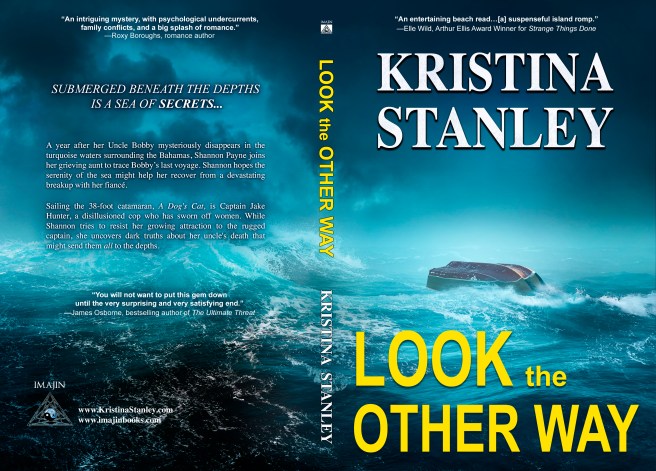
Doesn’t get better than this 🙂 You can buy Look The Other Way on Amazon.
Thanks for reading.
 Thank you, Raimey Gallant for organizing the #AuthorToolboxBlogHop. Today is the 5th post of this new series!
This is a monthly blog hop on the theme of resources/learning for authors: posts related to the craft of writing, editing, querying, marketing, publishing, blogging tips for authors, reviews of author-related products, anything that an author would find helpful.
To continue hopping through other great blogs in the monthly #AuthorToolboxBlogHop or to join, just hop on over to Ramey Gallant!
I’ll focus my entire series on self-editing. Here is what I’ve covered so far in the series:
The first plot element I evaluate is the purpose of the scene. The purpose of the scene must relate to the overall story. If it’s not driving the story forward, then ask yourself what is the point of including the scene in your novel.
Here are some examples of the way the purpose of a scene can drive the story forward. You can choose one of these to define your purpose or come up with your own definitions.
I articulate the purpose of the scene first, so I can address other elements of the scene and test if they are in line with the purpose.
Let’s say you fill out the list of objects in a scene. You can weigh the objects against the purpose of the scene and see if there is a way to use them to further the purpose. This goes for revelations, tension, conflict, weather, etc. Basically, every scene element can be tested against the scene purpose.
After you whittle down the purpose of a scene to a few words, one of three things will happen.
So you’ve got the purpose nailed. Yay! Move on to the next scene.
If the point of the scene is weak, see if you can take what is important in a scene and move it to another scene, then delete the weak scene. You can also enhance the scene to give it a stronger purpose.
If you can’t articulate the purpose of a scene, think about removing the scene.
If you’re looking for more help on self-editing download the free eBook, BIG-PICTURE Editing 15 Key Elements of Fiction To Make Your Story Work and learn how big-picture editing is all about evaluating the major components of your story. We call these components the Key Elements Of Fiction.
Our eBook shows you how to use the key elements of fiction to evaluate your story and become your own big-picture editor.
Why not try Fictionary?
A new online tool for serious fiction writers. Turn your first draft into a story reader love by becoming your own structural editor. Fictionary is the first web app to help fiction writers evaluate their own work with a focus on story, not words.
With Fictionary, you can focus on plot, character, and setting. You can evaluate on a scene-by-scene basis or on the overall novel structure. Fictionary will show you the most important structural elements to work on first.
Fictionally will guide you through the rewriting process by asking you questions specific to your manuscript, enabling you to evaluate your own story.
Fictionally helps you visualize your manuscript. Forget about yellow stickies or white boards. Fictionary will draw character arcs, provide reports on scene evaluation, and show your rewriting progress.
Happy editing and thanks for reading…
Welcome to Mystery Mondays. Today we have author Kathleen Duhamel here to talk to use about creating memorable heroines. Kathleen and I connected when Kathleen joined the group of authors published by Imajin Books. I’ve since read all her books, and love them. You might too!
So over to Kathleen…
By Kathleen Duhamel
A few years ago, when I began writing what became my first novel, Deep Blue, I had no idea it would ever be published, much less met with positive reviews. To begin with, I worried that my characters were too old to be relatable. Until recently, conventional romance and women’s fiction seldom featured characters past their thirties. When Deep Blue begins, Claire Martin is a 58-year-old “barely not starving” artist and her love interest is 62-year-old musician, Robert Silver. Would readers be turned off by the idea of these two enjoying a healthy love/sex life?
Deep Blue is also not a conventional “romance” in the sense that not every problem in the relationship gets resolved before the last page. Life tends to get a lot more complicated when you’re attempting to balance the demands of children, grandchildren, health issues, career pressures, and aging parents, and I wanted to touch on these issues in the book. Surprisingly, the age issue I worried about turned out to be a bonus for some readers, who found the senior love story “refreshing.”
What began as one book has morphed into three, with Deep End, the third book in the trilogy, due out in fall/winter 2017. As in the first and second books, what drives the plot is Claire’s emotional journey. While love is certainly part of that journey, she also is forced to deal with several unresolved issues in her life as a new wife and unexpected stepmother.
Here are my tips on how to create a strong female character that readers will remember.
Give her a spine.
At 58, Claire is certainly older (and presumably wiser) than younger heroines, having been through a few failed relationships, an acrimonious divorce, and financial struggles. She’s also a cancer survivor, which makes her identifiable with millions of others. Although she hasn’t given up on love, she’s somewhat wary of it, especially when a famous and charming man enters the picture and wants to sweep her into his overblown lifestyle.
She insists on solving her own problems without having to be “rescued” by her man.
However, she’s also a bit of a risk taker, and after being advised by her BFF to “go for it,” she begins an improbable, long-distance relationship with Rob. The same risk-taking behavior emerges in Book 2, Deeper, when she’s forced to acknowledge her husband’s eight-year-old love child and must decide if she’s willing to continue her marriage under vastly different circumstances.
Drawing on the same inner strength that got her through cancer treatment, she is ultimately able to express her disappointment and anger to Rob, while re-affirming her commitment to him and her new step-son.
Perhaps the greatest test of her inner resolve occurs in Deep End, when a disaster forces her to confront the possibility of life without her beloved husband.
Give her a guiding principle.
Claire’s favorite quote, which also becomes her mantra, is from Goethe: “Nothing is worth more than this day.” It is the perfect summation of who she is and how she approaches her post-cancer life. Not even a life-threatening illness could take away her fun-loving spirit and her determination to live fully, the very qualities that initially attracted Rob to her.
Let her have flaws.
She’s far from perfect. Claire worries about her scarred abdomen, disfigured from cancer surgeries. She continues to obsess over Rob’s first wife, a brilliant screenwriter killed in a car accident. Doubts about her relationship and endless taunts by Baby Mama land her in legal trouble and cause her to lose a promising new client. Her loathing of the news media manages to gain her more publicity, instead of less.
Like so many of us, she tends to suppress her negative feelings until they erupt in a damaging way. Although she struggles at times, the fact that she is able to move past her struggles and re-focus on what is most important in her life makes her a well-rounded and likeable heroine, scars and all.
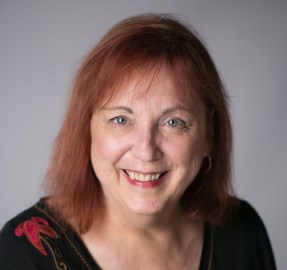 Kathleen Duhamel is the author of the Deep Blue Trilogy (Deep Blue, Deeper, and Deep End) and At Home With Andre. She wrote and illustrated her first short story at the age of eight, and has been a writer for most of her life.. Her love of the written word continued throughout her varied career as a newspaper journalist and editor, public relations executive, freelance travel writer and owner/operator of two small businesses. A native of Texas, she has spent most of her adult life in Colorado. She lives in the Denver area with her husband, a geriatric standard poodle and a spoiled cat. She is a lifelong devotee of rock and soul music, contemporary art, and pop culture.
Kathleen’s latest novel is coming out this fall DEEP END:
When her close-to-perfect world falls apart, can love still prevail?
After years of struggle and harsh criticism, happily married rock star wife Claire Martin has finally achieved the career success of her dreams. As the featured artist in an international traveling exhibit, she looks forward to her best year ever, while her husband, singer Robert Silver of the legendary band Deep Blue, contemplates a return to touring.
Things are also looking up for Claire’s best friend, Denise Hrivnak, who’s planning her wedding to Robert’s musical partner, Art Hoffman. However, what should have been most joyful day of Denise’s life turns to tragedy when an unexpected event forces both woman to contemplate the terrifying possibility of life without the men they love.
Besieged by the paparazzi and sick with worry, Claire waits for answers in a Las Vegas hotel room, thinking over her improbable relationship with Rob and praying that love alone is strong enough to bring her husband back from the brink.
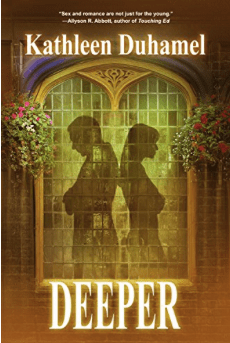 Secrets of the past seldom stay buried forever…
Now married to the love of her life, landscape artist Claire Martin’s peaceful world is rocked by an unexpected revelation that crushes her dreams of the future and causes her to question everything she thought she knew about her famous husband, legendary singer Robert Silver of the band Deep Blue.
Although Robert is now clean and sober, and embarking on a new opportunity with his musical partner Art Hoffman, the consequences of one night long ago fracture his family and threaten his marriage to the woman who loves him like no one else.
Will love survive, or will career pressures, family turmoil and the ever-present specter of the paparazzi destroy their new life together?
http://www.kathleenduhamel.com/
https://www.facebook.com/kathleen.duhamel
https://twitter.com/KathleenDuhamel
http://mybook.to/DeepBluenovel
http://mybook.to/athomewithandre
Welcome to my Second Acts Series! Today, we have Canadian author and CEO Kristina Stanley sharing her remarkable life-long journey. Here’s Kristina!
I’m very pleased to be invited onto Joanne’s blo…
Source: On Becoming the CEO of Fictionary | Joanne Guidoccio


