I love waking up to a surprise. Descent is now on Amazon in German.
Luzifer-Verlag bought the eBook and print rights to Descent (Stone Mountain Mystery #1) in 2016. And voila-here it is.
Happy Sunday everyone.
Thanks for reading…
I love waking up to a surprise. Descent is now on Amazon in German.
Luzifer-Verlag bought the eBook and print rights to Descent (Stone Mountain Mystery #1) in 2016. And voila-here it is.
Happy Sunday everyone.
Thanks for reading…
This week on Mystery Mondays we have Christina Hoag, author of SKIN OF TATTOOS, and GIRL ON THE BRINK. I met Christina through this blog, so it’s pleasure to have her on as a guest. She’ll share her experience about genres and why and author needs to know where their novel fits.
By Christina Hoag
One of those writing clichés tells aspiring authors to “write the book you want to read.” That may be true, but make sure your book fits into an accepted genre or no one else will read it.
As I was writing my noir thriller Skin of Tattoos, I never gave a thought as to what kind of a book it would be, as in what genre it fell into. After all, a good story is a good story, right? Not quite. As I later painfully discovered, genre is critical. It is how publishers market your book. If your book doesn’t fit neatly into a category, they don’t how to sell it and guess what, they won’t buy it.
Luckily, genre didn’t seem to matter in getting a literary agent. After much querying I landed a good agent, after first signing with a bad one. But then the agent had to figure out how to pitch the book. Was it noir, which involves telling an inside crime story from the point of view of the criminal? Well, yes. My novel is set in the gang underworld of Los Angeles and is told in first-person by a gang member protagonist. Or was it a thriller, which involves escalating tension between two characters as they battle over high stakes? That also loosely applied to my book as Mags, the narrator, is in a power and revenge struggle with his rival homeboy Rico for leadership of the gang.
Then there was my style. Amid the gang slang, Spanish phrases and occasional profanity, there was a lot of lyrical prose that wasn’t the usual style for a thriller, plus Mags’s character has an arc. In the end, the agent described it as a “literary thriller.” Although I hadn’t thought of myself as a thriller writer before, I thought that was an accurate enough description and out the book went.
The rejections rolled in. There was high praise for the writing, story elements, originality, and so on but the most pervasive comment was “who would be the audience for this book?” In other words, “literary thriller” wasn’t cutting it, especially coming from an unknown author. My agent consoled me, saying these were rejections based on “business decisions,” which was much better than having the book rejected for story reasons. Still, I saw that my book was too different, too original. I lamented that to my agent, who responded “publishers do want original stuff, but at the same time they want the same stuff. The same, but different.” Not very helpful.
Eventually, she ran out of places to submit and I got my manuscript back, but I wasn’t going to give up on it. I knew it was a good book. Top publishing editors had said so. I just needed to find someone to take a chance on it. I revised it yet again, cutting out about 13,000 words, including stuff that both agents had me add and that I now saw went nowhere. In fact, the additions didn’t make much sense and simply made the manuscript too long.
I sent the tightened version out to small publishers that accepted unagented submissions. The same thing happened. It was praised, but it didn’t fit in their lists. I started to despair then a publisher, Martin Brown Publishing, offered me a contract on it.
Skin of Tattoos finally was released in August and has been well received. Several readers told me the book is “unlike anything I’ve read before.” I take that as a compliment, unfortunately the mainstream publishing industry doesn’t.
I had another genre problem with my second novel, a YA called Girl on the Brink I was calling it a “contemporary romance,” but it’s not a romance because it’s about teen dating violence. Romance novels must have a happy-ever-after ending, which mine does not. But then the genre gods blessed me. I discovered my book did have a built in category: “contemporary social issues.” Since it contains a lot of suspense and escalating tension between the protagonist and the guy she fell for, I also describe it as a “romantic thriller,” which sounds like a less heavy read.
As for my third book, I’m making it a thriller after another discovery: I have to have an author brand because I’m expected to keep writing the same genre to build readership. So although I never set out to write thrillers, that’s now become my brand by default. Moral of the story: Know your genre.
 Christina Hoag is a former journalist for the Miami Herald and Associated Press who’s been threatened by a murderer, had her laptop searched by Colombian guerrillas and phone tapped in Venezuela, hidden under a car to evade Guatemalan soldiers, posed as a nun to get inside a Caracas jail, interviewed gang members, bank robbers, thieves and thugs in prisons, shantytowns and slums, not to forget billionaires and presidents, some of whom fall into the previous categories. Kirkus Reviews praised Christina as a “talented writer” with a “well crafted debut” in Skin of Tattoos (Martin Brown Publishing, 2016), a gangland thriller. Her YA thriller Girl on the Brink (Fire and Ice, 2016) was named to Suspense Magazine’s Best of 2016 YA list. She also writes nonfiction, co-authoring Peace in the Hood: Working with Gang Members to End the Violence (Turner Publishing, 2014), a groundbreaking book on violence intervention used in several universities. Christina makes her home in Santa Monica and lives on the web at http://www.christinahoag.com.
Los Angeles homeboy Magdaleno is paroled from prison after serving time on a gun po ssession frameup by a rival, Rico, who takes over as gang shotcaller in Mags’s absence. Mags promises himself and his Salvadoran immigrant family a fresh start, but he can’t find either the decent job or the respect he craves from his parents and his firefighter brother, who look at him as a disappointment. Moreover, Rico, under pressure to earn money to free the Cyco Lokos’ jailed top leader and eager to exert his authority over his rival-turned-underling, isn’t about to let Mags get out of his reach. Ultimately, Mags’s desire for revenge and respect pushes him to make a decision that ensnares him in a world seeded with deceit and betrayal, where the only escape from rules that carry a heavy price for transgression is sacrifice of everything – and everyone – he loves.
 He was perfect. At first. The summer before senior year, Chloe starts an internship as a reporter at a local newspaper. While on assignment, she meets Kieran, a quirky aspiring actor. Chloe becomes smitten with Kieran’s charisma and his ability to soothe her soul, torn over her parents’ impending divorce. But as their bond deepens, Kieran becomes smothering and flies into terrifying rages. He confides in Chloe that he suffered a traumatic childhood, and Chloe is moved to help him. If only he could be healed, she thinks, their relationship would be perfect. But her efforts backfire, and Kieran turns violent. Chloe breaks up with him, but Kieran pursues her relentlessly to make up. Chloe must make the heartrending choice between saving herself or saving Kieran, until Kieran’s mission of remorse turns into a quest for revenge.
This just in. DESCENT goes international.
Luzifer-Verlag releases the new cover for ABWAERTS. DESCENT (A Stone Mountain Mystery #1) will be published in German!
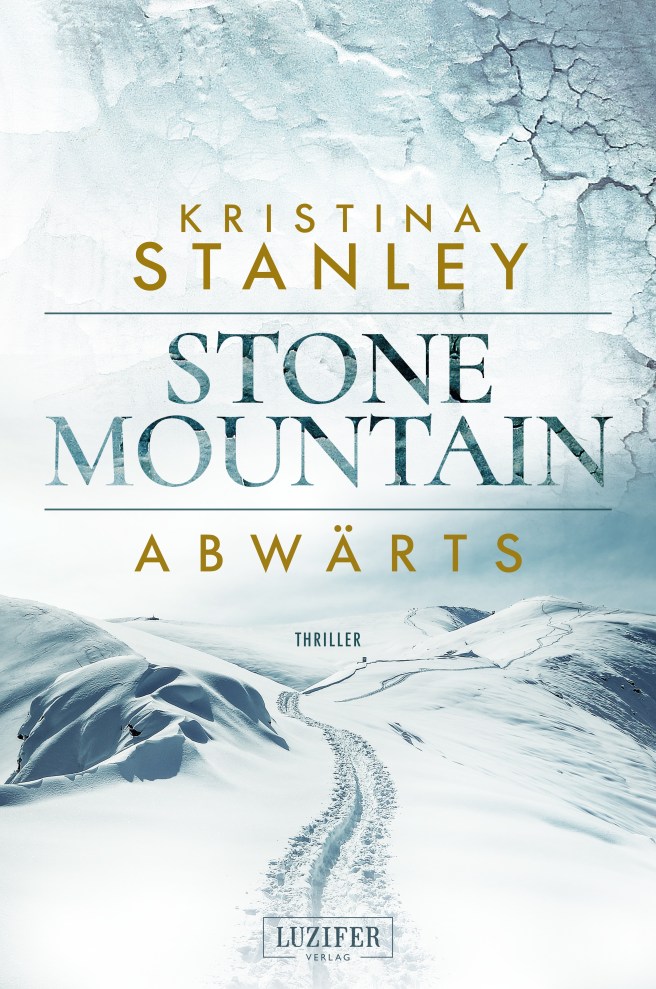
What do you think? I love the cover and can hardly wait to read the translation.
Thanks for reading…
 There was a lot of excitement at Feedback this week when our development team delivered our working prototype, and we took the app out to the writing community for early testing. We have authors from Canada, the US, and the UK using Feedback on their manuscripts, and the initial response has been fantastic.
Hey, for those of you with a finished draft. This is a great editing application tool to use! It can help you make your story that much stronger structurally BEFORE you send it off to a developmental editor so you get the most value out of their service! They also have a handy guide on the 13 Key Elements of Fiction to Make Your Story Great. Check it out 

Donna Galanti is the author of the paranormal suspense Element Trilogy (Imajin Books) and the children’s fantasy adventure Joshua and The Lightning Road series (Month9Books). Donna is a contributing editor for International Thriller Writers the Big Thrill magazine. Visit her at http://www.elementtrilogy.com.
I imported AVALANCHE, my third novel, and seconds later, Feedback automatically showed me the number Scenes per Character. You can quickly see that Kalin is present in the highest number of scenes. She’s the protagonist, so this makes sense. Next is Roy. The story is about Roy, so this is also good. Then comes Ben, Kalin’s love interest.
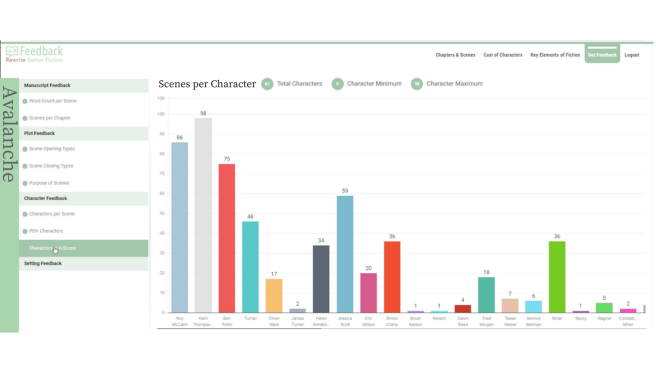
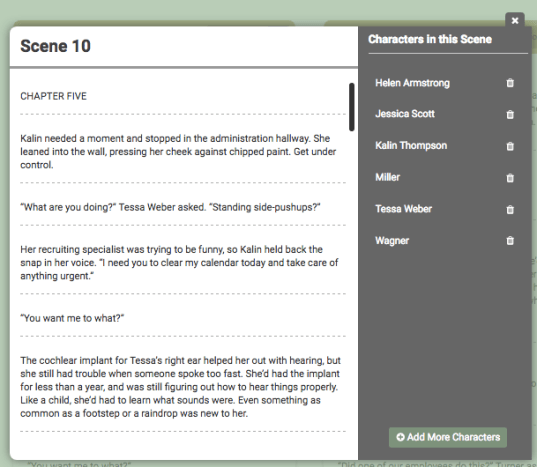
You can also look at a scene in detail. If you want to know who is in a scene, the app shows you that too! So for scene 10 in Avalanche, you’ll see:
All you have to do is sign up for early access, then send me an email. The writing community is amazing. The authors testing for us are generously spending their time and providing us with invaluable insights on how to make Feedback an app that will help writers turn their first draft into a great story readers love.
You heard that right. Summer 2017! We are targeting to make the Feedback app available to everyone later this summer. There is so much more to come, and I’ll keep sharing as more features are added.
Source: BIG-PICTURE editing is about to get a whole lot easier! – Feedback For Fiction
Many of you know I’ve sold the eBook and print rights for my upcoming novel LOOK THE OTHER WAY to Imajin Books. I’m excited to share that the fourth endorsement is in!
Look The Other Way takes place on a sailboat…that’s what’s in common between the endorsement and sailing.
In my book, The Author’s Guide To Selling Books to Non-Bookstores, I wrote about the importance of endorsements. Here’s a little excerpt to share with you why I’m working on getting endorsments:
 Why Are Endorsements Important
When you take your book to a store, endorsements on the front and back cover will add legitimacy to your books. That’s promotional material every time someone picks up your novel.
I believe this is more important for printed books than eBooks. The image of your book cover online may be too small for a potential buyer to read the endorsements. In a store, the endorsements may just give you an edge over other books on the shelf.
The endorsements that go on your cover are ones that connect with your readers. You want to find authors who write in your genre that readers will recognize. Having an endorsement from your mom is nice, but it won’t help sell your book. Unless your mom is a famous author, in which case, go ahead and use her.
Bestselling author James Osborne


James’s working career began in journalism and then teaching journalism, after which he took a detour through the corporate world before returning to writing. That detour included becoming vice-president of a Fortune 500 company — a mixed blessing — and then president of a management consulting firm for 10 years. Those experiences made clear that a varied life, filled with a diversity of good and occasional not-so-good experiences, provides a huge resource for creative writing.
You can find out more about James’s novels at https://jamesosbornenovels.com
James blogged on Mystery Mondays July 18th, 2016 and I hope he posts again.
Today on Mystery Mondays, we have Jennifer Berg, Author of The Hatbox Murders published by Barking Rain Press.
Writing can be a lot of fun, but my biggest tip for serious writing is to be organized. If you’re looking for a publisher, keep a log of all your leads, contacts, and submissions. When researching a book, keep extensive notes and have them organized in a way that works for you. Personally, I work from detailed plot outlines, and I take a few minutes each day (okay, most days) to log how many hours I spent on each project, and what sort of work I did (research, outlining, draft #1, 2, 3… editing, marketing, etc.).
Not only does this help me to realistically plan my workload, and keep my work-life balance in check, it’s also reassuring to watch the hours accumulate as I near each milestone. Writing is fun, but it really is a lot of work, too.
 Jennifer Berg grew up on a small peninsula on Puget Sound where she dug for clams, built her own rafts and camped in a tree house, a tool shed, and a teepee. She attended the University of Washington where she majored in History. When she’s not concocting new mysteries, Jennifer spends her time painting watercolors, gardening herbs and succulents, and knitting odd creations. She currently lives in San Diego with her husband and their Appenzeller Sennenhund.
Seattle, 1956
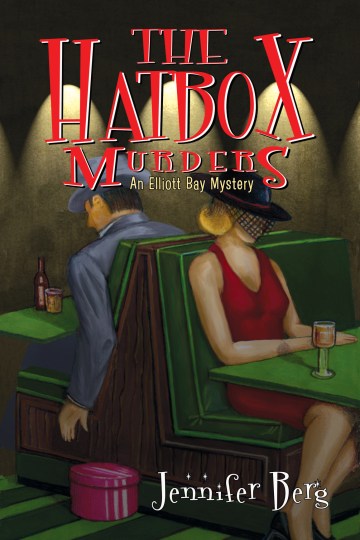 Inspector Michael Riggs doesn’t believe in “women’s intuition,” but when head stenographer Margaret Baker insists that her friend and co-worker, Ruby Pike, most certainly did not jump off a bridge to end her life, Riggs reluctantly agrees to re-examine the closed suicide case.
He quickly learns that Ruby’s mousy cousin hater her while her rich uncle adored herm showering Ruby with expensive gifts. Her shady boyfriend had good reason to be ride of Ruby, but he also has an alibi for the night of her death. Add to that a tight-lipped boss facing financial ruin, a jealous wife, and a bitter landlady whose heirloom jewelry was pilfered, and it doesn’t take long for Riggs to realize that Margaret’s feminine intuition might be right.
Unfortunately for Riggs, the only blues he can find are a gold watch with a cryptic inscription, a photo of a missing dress, and a pink hatbox. As the police chief starts to boil over, Riggs decides to call on Victoria Bell, an alluring Prussian librarian with a knack for solving crimes who has helped him with other cases. But this time, Victoria id determined to stay out of the limelight. She only agrees to help with the case if her assistance remains a secret.
But when the murderer strikes again, Victoria realizes that she’ll have to risk the spotlight if she’s going to help Riggs catch the murderer.
Thanks for reading…
I know a secret! Today on Mystery Mondays, Garry Ryan, best-selling author of the Detective Lane Mysteries, is here to talk about keeping a novel relevant. But that’s not the secret.
Do you want to know the secret? Of course you do.
The next novel in the Detective Lane series will be published by NeWest Press this year! The title: MATANZAS.
The blurb is below…Maybe if we’re lucky, Garry will give us more details on the release.
And now over to Garry.
How do you make a book relevant at release? A few years can pass after the process of writing, submitting and editing is completed. It can become a bit of a challenge to remain current.
As a result, I look for plausible predictions of what’s likely to happen. I also watch trends and think about outcomes.
Matanzas might work as an example here. It’s set in Cuba and Calgary. Before writing the novel there had been whisperings about Cuba and the US normalizing relations. After the book was written and accepted by the publisher, the US reopened its embassy in Havana. It was necessary to keep this likely scenario in mind while developing characters and plot so as not to make any obvious errors.

I’ve also been watching the changes happening in Latin America while working on novels exploring the relationship between Canada and Mexico. It’s really about seeing how the old, the new and our cultures interact during difficult times. Carrying a camera documents these changes, which comes in handy when writing scenes.

Predicting the future is a fool’s game, but considering a variety of outcomes and how they might legitimize or compromise a novel is worth considering.

 His psyche still reeling from having to kill a criminal in the line of duty, Calgary’s Detective Lane flies to Cuba to celebrate the wedding of his beloved niece. While there, though, he finds himself drafted by the local police into investigating the murder of a Canadian tourist.
Upon his return to Calgary, links between this incident and the deaths of local elderly pensioners start to make themselves known, drawing Lane and his partner Nigel Li further into a web of conspiracy, politics and big money.
Garry Ryan’s award-winning, best-selling mystery series continues with all the intrigue, good humour and mochaccinos that fans have come to expect.


Since 2004 Garry Ryan has published nine novels with NeWest Press. The second, The Lucky Elephant Restaurant, won a 2007 Lambda Literary Award. In 2009, Ryan was awarded Calgary’s Freedom of Expression Award.
Today on Mystery Mondays, we’re doing something a little different. Author, Jennifer Leeper is here to talk about short stories. I think this is the first short story collection I’ve hosted, so it’s a bit of a thrill for me. Enjoy!
 Whether you’re a reader or writer of short stories, you know they can offer as much of an emotional gut punch or brain rock as a 300,000-word tome. Collections of short stories offer authors and readers the chance to quickly dive deep into the lives of characters and repeat this experience over and over between two covers. My latest collection, Border Run and Other Stories explores many characters within a relatively short word span, and I’m privileged to take you on a sampling tour here of these vastly different character worlds.
If the shoe fits
In The Shoes, Carlos finds a letter from his abuela, who recently passed away, and in the letter she charges her family with conscientiously distributing her hoard of shoes. They can’t simply dump the house-sized pile of footwear at a thrift store, but must match each pair with the right feet. Not only does Carlos, his sister, and parents find it difficult to marry the shoes to wearers, but the result of hastily discarded pairs of shoes results in a horrific series of events that irreparably alters the lives of Carlos and his family.
The dead live on
In Book of the Dead, Violet Mora finds the “bucket list” Luca Barnes, the boy who bullied her in high school in the ashes of his family’s house that burned down after Luca fell asleep with a lit cigarette in his mouth. In the spirit of revenge, Violet decides to work her way through Luca’s list herself. Instead of revenge, however, Violet encounters Luca’s twin, Dominic, as she completes Luca’s objectives, and she experiences more than she bargained for when she took on Luca’s list.
Take this job and shove it
In The Vortex, a man has been writing the same resignation letter in his head for years but he never actually submits it to his boss. Then, one day he decides to erase thousands of emails with one mouse click. He is set free and set off course all at once.
Though there are threaded themes of redemption, loss, and mortality across the 14 stories of this collection it’s the character development that allows each piece to stand apart. It’s not the word count that matters, but how words are used to bring lives on the page to life that counts.
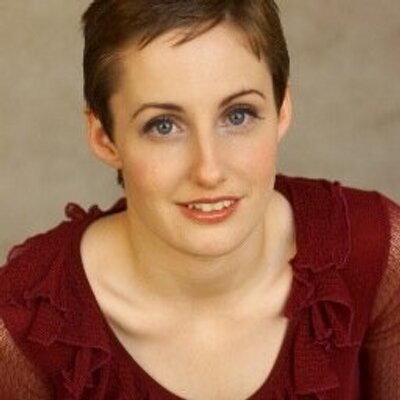 Ms. Leeper is an award-winning fiction author who’s publications credits include Independent Ink Magazine, Notes Magazine, The Stone Hobo, Poiesis, Every Day Fiction, Aphelion Webzine, Heater magazine, Cowboy Jamboree, The New Engagement, Alaska Quarterly Review and The Liguorian.
She has had works published by J. Burrage Publications, Hen House Press, Inwood Indiana Press, Alternating Current Press, Barking Rain Press, Whispering Prairie Press, and Spider Road Press.
In 2012, Ms. Leeper was awarded the Catoctin Mountain Artist-in-Residency, and in 2013, Ms. Leeper was a Tuscany Prize Novella Award finalist through Tuscany Press for her short novel, Tribe. Ms. Leeper’s short story Tatau was published in the journal, Poiesis, and was short listed as a finalist for the Luminaire Award in 2015, and nominated by Alternating Current for Queen’s Ferry Press’ Best of Small Fictions of 2016 Prize. In 2016,
The Saturday Evening Post honored Ms. Leeper’s short story Book of the Dead with an honorable mention in its Great American Fiction Contest. Ms. Leeper’s short story The Bottle won second place in the Spider’s Web Flash Fiction Prize through Spider Road Press.
You can find Border Run and Other Stories at Barking Rain Press: http://barkingrainpress.org/border-run/ and Amazon. You can find Jennifer and her other fiction on Twitter @JenLeeper1 or at her author website:
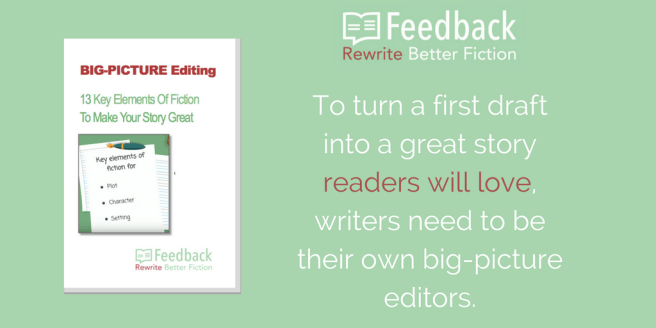
Just in case you missed this post a couple of months ago, I wanted to let you know we have a free eBook about the key elements of fiction.
Whether you’re self-publishing or going the traditional route, your story needs to be as good as you can possibly make it before sharing with others.
But just re-reading your novel and looking for areas of improvement without having a process can waste a lot of time. Questions that come to mind are:
Don’t despair. There is light at the end of the editing tunnel. Just like you learned how to write a novel, you can learn how to perform a big-picture edit. All you need is a clear process, some editing knowledge, and the right tool.
With our free eBook, you’ll learn how big-picture editing is all about evaluating the major components of your story. We call these components the Key Elements Of Fiction. Our eBook shows you how to use the key elements of fiction to evaluate your story.
Thanks for reading…
Farley here,
The door bell rings. I run in circles knowing there’s a human on the other side of the door. I don’t really care who it is ’cause I know I’ll get attention.
I run to the door, sit, and swish my tail across the tile.
Kristina follows me to the door. She opens it.

I rush forward and rub my nose in the person’s leg. She pets me.
Then…Kristina takes a package from her. It’s a present for me!
I love getting a box. It takes me an hour to rip it apart and leave it shreds on the floor.
Yippee.
Woof Woof.


