Farley’s Friday: Where Oh Where is my human?

Farley here,

Does anyone know where Kristina went? Every morning I get up and check the house. I sniff each room, I run around the backyard perimeter, and I even looked behind a big tree.

No luck.

I’m starting to miss her.

The humans taking care of me are great. Their only issue…They don’t allow dogs in the bed…

farley-and-piper

But you know me. Big brown eyes. A wagging tail. And I’m in. Piper, the border terrier, follows my lead. She’s in too!  I’m going to sleep here every night until I see Kristina.

Woof Woof

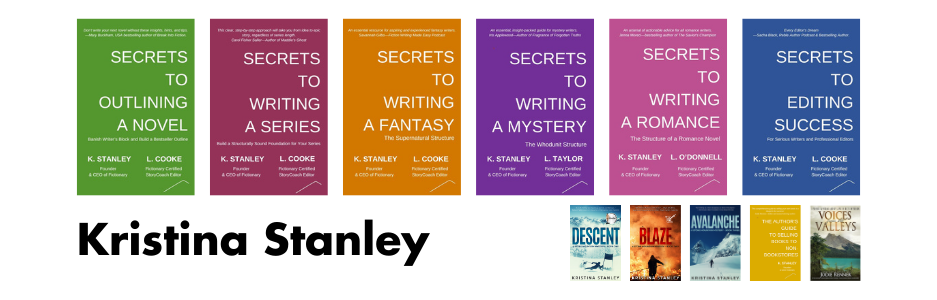
PS. In case you didn’t know, Kristina’s books are all on sale  I’m the star in BLAZE.

sm-sale

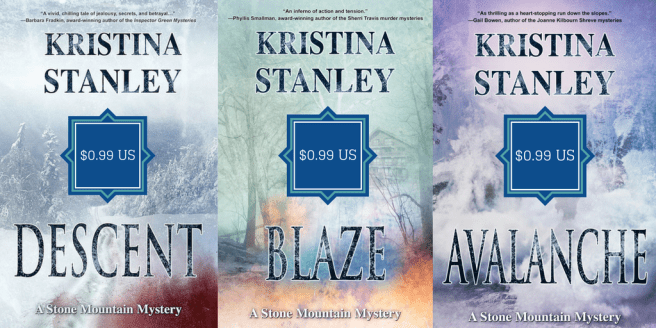
STONE MOUNTAIN MYSTERIES ON SALE

Thanks to Imajin Books, all three Stone Mountain Mysteries are on sale. Why not buy yourself and early Christmas gift.

sm-sale

But Imajin Books is even more generous…

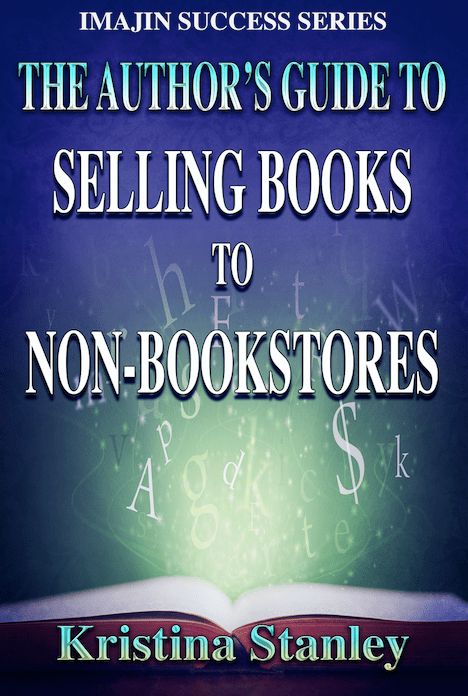
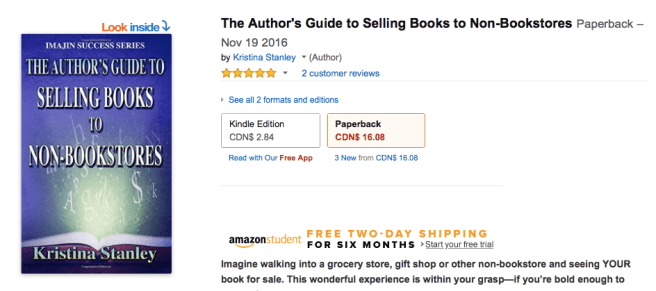
The Author’s Guide to Selling Books to Non-Bookstores is also on sale for $0.99 USD.

AGTSBNB

Thanks for reading…

Mystery Mondays: J.P McLean On Writing Deeper Dialogue

Hosting an author on Mystery Mondays that I’ve actually met in person is a treat. Jo-Anne and I met at a writers conference in Calgary, Alberta last summer and became friends. We both write, we both live in British Columbia, Canada, and we’re bit on reading, too.  So, it’s very exciting for me to have Jo-Anne here today.

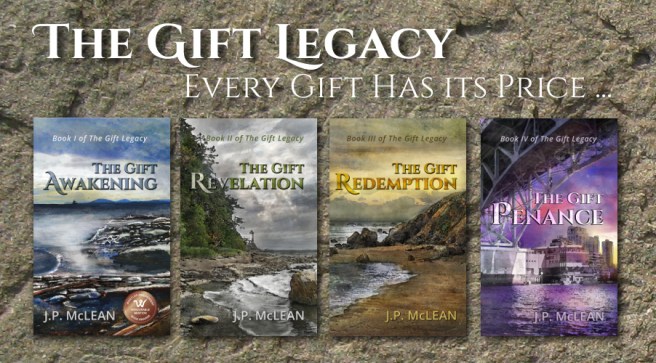
J.P. (Jo-Anne) McLean is the author of The Gift Legacy series, Awakening, Revelation, Redemption, Penance and, Betrayal. Reviewers call the series addictive, smart and fun. Within those pages, a young protagonist, Emelynn Taylor, tests the theory that what doesn’t break you makes you stronger.

legacy-collage-nov-16

Writing Deeper Dialogue by JP McLean 

Putting words in your characters’ mouths can make for an entertaining day of writing. Your characters say things you never would, in a tone your mother wouldn’t approve of, and using language that would raise eyebrows. It’s a bit of a power trip. It almost makes up for all those times you thought up the perfect comeback … moments too late.

But dialogue isn’t just the words in a conversation: it’s language, it’s context, it’s nuance. Dialogue gives the writer the opportunity to show a character’s education, origins, ethnicity, wealth, temperament, age, mind-set and so much more.

  • Is your character gonna or going to?
  • Is your character speaking in an east coast accent or a southern drawl?
  • Is your character late because she was dealing with an incompetent sales woman at Holt Renfrew or teasing bubble gum out of her two-year-old’s hair?
  • Are your characters using short, truncated sentences, or are they long-winded?
  • Are your characters speaking in a clipped tone, or with the patience of a nun?
  • How your characters describe something says something about them. Do they describe the homeless person as a rumpled waste of breath, or an unfortunate soul.
  • Where are your characters situated while they have their conversation? You can keep your readers grounded in the scene by occasional references to place. Will your characters gaze upon an original Picasso or a McDonald’s Ball Pit? If you’re referencing clothing, are they smoothing the nap of a fine wool overcoat, or picking burrs from an old pilled sweater?

And a few final notes:

Make sure you are punctuating your dialogue correctly—a quick refresher never hurts.

Read your dialogue out loud to double check that it sounds real—people rarely speak in full sentences, or use grammatically-correct English.

Use simple dialogue tags (he said/she said). Readers expect “said” and therefore it doesn’t get in the way or pull them out of the story. I’m not saying don’t use other tags (whispered, rasped), but use them sparingly, and let the dialogue and body language convey the sentiment.

Make sure the reader knows who’s speaking. You don’t need to tag each line of dialogue if there are only two people speaking, but in lengthy conversations you may want throw in a character reference to keep readers on track.

You can also use what are called “beats” to identify who’s speaking. In a bar scene for example, if only one of your characters is drinking beer, then we know who’s talking in this line: He downed his beer. “That’s it for me.”

And that’s it for me as well. Now go stir up some mischief and put words into your characters’ mouths! Best of luck with your writing.

Who is J.P. McLean?

Jo-Anne and her husband live on Denman Island, nestled between the coast of Britishjpmclean-headshot-1034x1034 Columbia and Vancouver Island. J.P. holds a degree in commerce from the University of British Columbia, is a certified scuba diver, an avid gardener and a voracious reader.

The first book of her Gift Legacy Series, Awakening, received Honourable Mention at the 2016 Whistler Independent Book Awards. In 2016, J.P.’s body of work was included in the centennial anthology of the Comox Valley Writers Society, Writers & Books: Comox Valley 1865-–2015.

She would love to hear from you. Contact her via her website at www.jpmclean.net or through her social media sites. Reviews are always welcome and greatly appreciated.

You can also find her here:

Betrayal 3D-Book on xparent.pngSign up for her Readers Club JP McLean’s Book News

Read and follow her blog www.jpmclean1.wordpress.com

Find her on Goodreads www.goodreads.com/jpmclean

Follow her on Twitter www.twitter.com/jpmclean1 @jpmclean1

Like her on Facebook www.facebook.com/JPMcLeanBooks

Farley’s Friday: Where Do Humans Go?

Farley here,

Something weird happened last week. Kristina and Mathew left the house, which they do on occasion, but late in the day, I started to get concerned.

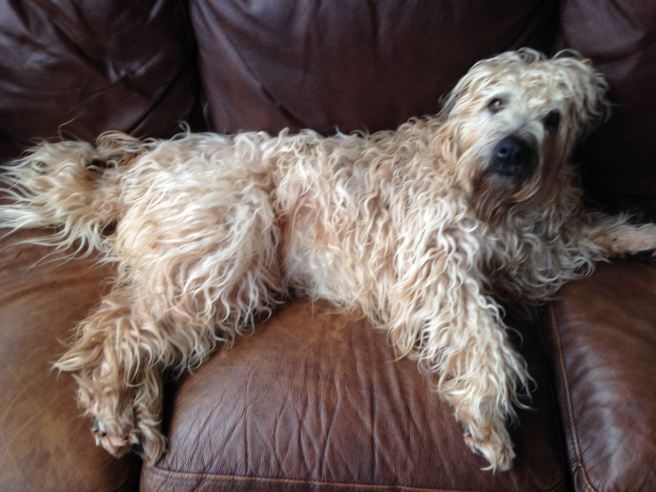
Farley on couch

My bedtime is 9 PM. I like Kristina to tuck me in. She rubs my back until I fall asleep on the floor beside her bed. Sometimes I sneak in her bed once she’s asleep. She never seems to notice.

One night, it’s been dark for hours. I’m getting tired. I want to go to bed, but I can’t find Kristina. I sniff each room. Her scent is in the house, but she’s nowhere to be found.

Kristina’s brother and sister-in-law are here. They feed me and walk me, but I think Kristina forgot to tell them how to tuck me in bed.

I poke my nose at Kristina’s brother. He pets my head but doesn’t follow me when I leave the room.

Next, I try Kristina’s sister-in-law. She loves dogs. She might help. I snuggled up to her, rest my chin on her knee, and turn my brown eyes up at her. She pets my head, too.

I give up on being tucked in, but there’s no way  I’m sleeping alone. I sneak by them, head up the stairs to their room, and hide between the bed and the wall. I’ll be really quiet and they won’t notice I’m in the room.

Someone please tell me where humans go at night. I’m not sure how many nights I can stand tucking myself in.

This is how I started my life with Kristina. I’m used to certain standards.

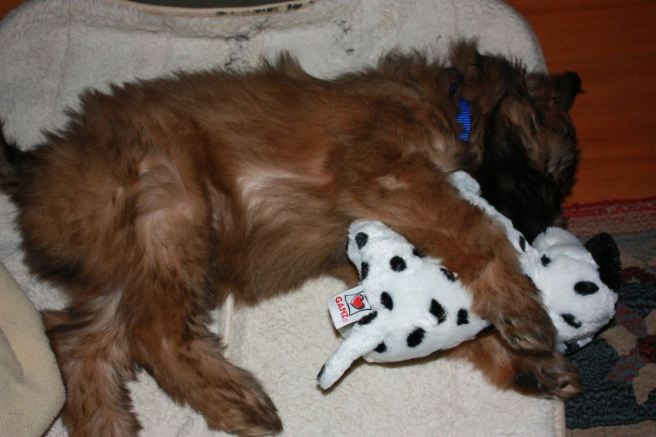
Farley with Stuffy

Woof Woof


Feedback For Fiction | Self-Evaluating Scene Openings and Novel Structure

Self-Evaluating Scene Openings and Novel Structure

There are times when a person has the luxury of sitting down and reading a novel in one session. Wouldn’t that be nice if we could all do that? However, most of us read a novel in multiple sessions.

screen-shot-2016-11-23-at-10-11-46-amWhen you’re rewriting your draft, dreaming of creating a novel readers will love, it’s critical to think about how readers read.

Many writing books talk about the importance of the first line, first paragraph and first page of a novel. If you don’t grab the reader then, you might lose them for good. There is a lot of pressure on a writer to produce an extraordinary first line for a novel. If your reader has put your book aside for a while and picked it up at a new scene, that scene opening has to all the things the opening of your novel does. So much pressure…but we have a process to help you.

When your readers start a new scene, they must be immediately be engaged in the scene. To ensure this happens, work through your revision as if you…

READ MORE at: Feedback For Fiction | Self-Evaluating Scene Openings and Novel Structure

Mystery Mondays: Linda Barton On Being An Indie Author

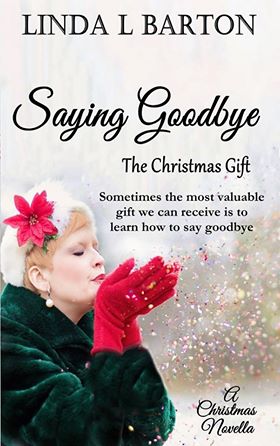
It’s Monday again, and we welcome Linda Barton, author of  Saying Goodbye: The Christmas Gift – A Christmas Novella. So let’s hear what Linda has to way about her life as an Indie author.

THE WORLD OF INDIE PUBLISHING by Linda Barton

The day in 2011, when I decided to dive into the world of Indie Publishing, I must admit that I had no idea what I was doing. I spent hours doing my research online and started asking questions. I was surprised at all the so-called Professionals who promised the world for a fee. They said they would get your masterpiece ready and out there for the readers to enjoy. However, I have never trusted someone selling a product or service that sounds too good to be true.

When you spend, endless hours writing your book, the last thing you need is to hand it over to someone who doesn’t have your best interests at heart. Over the years, I have heard so many horror stories of first-time authors paying thousands of dollars on the promise their book will be the next bestseller. Then only to learn it was all a lie. So often, I’ve heard of long fights to get the rights to their book back, only to have to hire someone to edit and reformat the book before they can publish it on their own.

Now, I’m not saying that being an Indie Author is a cakewalk. No, it’s hard work because everything falls on your shoulders. It’s your responsibility to see the book is properly edited, formatted, and you need to have a killer cover. However, having been in the beginner shoes myself, I know it’s something worth doing. Nowadays, there is so much help available for the first-time author. There are groups all over Facebook for Authors. Some are helpful more than others, but I know you’ll find one that suits your needs.

Another bit of advice to save yourself some money is to learn how to do as much of those things needed to publish your book as possible. To save myself some money, I have learned how to format and create my own covers. However, if you’re not so inclined, there are people such as myself who will perform those duties for a reasonable price.

So, there are some pearls of wisdom for the person wanting to take the path so many others have today. Don’t let anyone tell you cannot be an Author. With platforms, such as Amazon, B&N, and iTunes, the literary world has opened for those who have dreamed of sharing the stories swimming around in their minds. So, sit at your computer and just start writing.

WHO IS LINDA BARTON?

author-pbotoLinda L Barton is a Multi-Genre Author. Publishing her first book in 2011, Linda started out by writing Dark Thrillers. Since then she has branched out by writing YA Fantasy, Women’s Romantic Fiction, and even Children’s Books.

One of the high points of Linda’s writing career was when Next Move, You’re Dead: The Trilogy Bundle was chosen as 1 of 100 pre-loaded Kindle Fire ebooks given away in the 2013 Emmy Awards VIP Swag Bags to over 600 of those in attendance at the awards that evening.

Linda is also the Founder of Deadly Reads, Deadly Reads Author Services, and the Host of the Deadly Reads Radio Show – Journey into the Night, which airs live Thursday evenings on Blog Talk Radio.

Linda is also blessed to be married to a wonderful man, Bob for more than 30 years. Bob is her writing muse and has created several of the plots for her books. Together they have a daughter and son, as well as 5 beautiful grandchildren; all of whom are the joy of their lives.

Linda never thought she would become a published author, but now she cannot imagine doing anything else.

book-coverSaying Goodbye: The Christmas Gift – A Christmas Novella

Sometimes life doesn’t go in the direction we’ve planned for ourselves. We believe we have everything all figured out then something happens to flip our world upside down. Molly had always believed her life was on track. She figured she would graduate from Medical School and then go on to have a fulfilling career. However, life sometimes has other plans for us. Saying Goodbye takes you on a journey of discovery as Molly learns a powerful lesson we all try to avoid. As Molly comes to terms with her painful past, she finds the joy of learning how to say goodbye.

Where you can find Linda:

Facebook
Link to blog http://lindalbarton.blogspot.com/

Farley’s Friday: Puppy Days

Farley here,

Sometimes Kristina likes to look at pictures of me when I was a puppy. Check out the “stick” I’m playing with.

Kristina threw it and said, “Fetch.”

I trotted after it, lay down, and chewed it. Like I’d pick something up and bring it back to her. No matter how hard she tried, I wouldn’t return with the stick. Finally I told her, ” It’s a twig not a stick.”

She laughed. “Come on, Farley. You can do it.”

Of course I could. But would I chose to? That’s the important question.

Farley Puppy

I think I was pretty cute and wagged my tail at her. No fetching a twig for me. And just so you know, to this day, I’ve never fetched a stick.

Woof Woof

Setting, Novel Structure, and Revising Your First Draft

I once read a book where I didn’t skim any of the setting description. Afterward, I wondered why. I admit, I’m impatient with too much description. To learn what captured me, I re-read

the book and highlighted every sentence that described the setting. What I realized was the author only described things or places that were relevant to the plot.

That was the moment I went on a mission to learn everything I could about setting and how to use it to make my novels more enjoyable.

Most writers know setting creates the story world. But in the context of novel structure, it can do so much more for you.

Once you’ve determined the setting for each scene, ask yourself if the setting is the best place for emotional impact. This one little question helps you:

  • increase or decrease conflict
  • increase or decrease tension
  • set the mood
  • show characterization

That’s a lot for a setting to do for you, but thinking about setting in terms of emotional impact will wake up your creativity. Let us give you an example.

Suppose you have a character who is afraid of the dark. Imagine the character is about to have a confrontation with an employee. If the character feels confident being in his/her own office and you want the character to be in a position of strength, then use the office as a setting.

If you want the character to feel vulnerable during the confrontation, try locating him/her outside, at night, in an isolated parking lot. And make it very dark. The streetlight is broken. There is no moon. Maybe it’s windy, so a cry for help won’t be heard.

Do you see the difference? The setting can help you bring out emotion in the scene by showing conflict, tension, mood, and characterization. You decide what emotion you want the reader to feel, then decide how the setting can help bring forward that emotion.

If you think the setting is not the best place for emotional impact, it’s time for a rewrite. Set the scene where you can elicit strong emotions, then rewrite the scene in that location.

This is only the beginning of how setting used properly within the structure of your novel can help you rewrite a novel that readers will love.

How will Feedback help with setting?

You can see in the screenshot above that Feedback will get you thinking about different elements of setting and how they fit into the structure of your novel.

Feedback will guide you through your manuscript, illustrating weak areas in plot, character, or setting that will lead you to make changes to your novel. With a guided approach, you’ll know which areas of your manuscript you’ve addressed and which you haven’t. This will speed up your rewriting process by enabling you to focus only on areas that need revision.

Feedback will save you money on future editing. If an editor works on your novel before you’ve finished addressing structural issues, the editor will spend time on changes you could have already made. By doing this work yourself, you’ll learn how to write better fiction and you’ll receive higher quality comments from an editor.

Find out more:

Our goal is to launch Feedback in the spring of 2017. In order to create an app that is valuable to writers, we’d like your input on building Feedback. Sign up at http://www.FeedbackForFiction.com, and we’ll send you updates on the development progress and ask you the occasional question to help define the product. As a bonus, we’ll send you rewriting tips available only to our subscribers.

Your support means a lot to us, so thank you.


Source: Feedback For Fiction | Setting, Novel Structure, and Revising Your First Draft

Mystery Mondays: Elaine Cougler on Linking History and Fiction

When I first started blogging, long before I was published, Elaine Cougler was one of the first author’s I met online. She’s been encouraging me ever since, so it’s a great pleasure to finally have her on Mystery Mondays.

book-tour-logo-final

Linking History and Fiction Through Theme

by Elaine Cougler

One of the things I like to do in my books is to show the strengths of ordinary people, fictional though they may be. Putting them in ever more dangerous and extraordinary situations allows me to do just that. In The Loyalist Legacy, for example, Lucy has to find a way to get her husband released from jail where he has been wrongly imprisoned with not so much as a charge against him. Oh, she learns why those in power are holding him. He has helped far too many simple settlers with legal problems over their land in the burgeoning Niagara communities, all too often going against the rich and powerful. In a rough country where democracy is still just an idea, the high-and-mighty rule.

A good shot with her very own rifle, Lucy is the mother of a grown family with grandchildren on both sides of the Niagara River. On more than one occasion she has shown her mettle, but now she yearns for what she had thought would be quiet years with her husband. Instead, she and John are still struggling, this time with their own British government in Upper Canada.

The day John was seized from their mill near Fort Erie, she rushed to Niagara (present-day Niagara-on-the-Lake) thinking John would be released immediately. It didn’t happen. This circumstance gave me, as the author, the chance to have Lucy meet Richard Beasley, the real person who owned the land on Burlington Bay, which the British actually seized as a marshalling station and army camp during the War of 1812.

Beasley’s mostly true story became one of the subplots in this third novel in the trilogy.

Here is the scene where Lucy meets Richard Beasley.

 Lucy lay on the lumpy bed as the snow beat against Aaron’s newly installed glass windowpane and tried to keep the tears from coming again. John had told her to forget about him. He worried that her constant running back and forth from the inn to the jail would aggravate her paining joints. “Go back home, Lucy,” he’d said week in and week out the past three months.

“But I can’t!” Her voice echoed in the bare room. How she ached to have him with her. She rolled over once again, taking care with her right knee. Her latest patchwork quilt at least kept her warm and reminded her of better times.

In the morning she would try to get the jailer to let her bring food to John. His hands were so bony and his trousers so loose, she knew they weren’t feeding him much at all. She would make that jailer listen to reason!

The rebuilt Angel Inn, burned with almost every building in Niagara that December of 1813, this morning bustled with travelers and local hangers-on, all slurping their steaming bowls of porridge and gulping tankards of ale as though they hadn’t eaten or drunk for days. Aaron was back in the kitchen dishing up orders while Lucy rushed as best she could from table to table, side-stepping the boots protruding into the aisles and the arms flung out to emphasize some important point in a customer’s harrowing story.

Her mind was on her plan this morning. That jailer would listen or she would—well, she didn’t know what she would do but she would convince him to let her give John the bowl of porridge she would carry with her. Maybe she’d take two and bribe the jailer with his very own. Ah, that’s a good idea.

“Watch what you’re doing, woman!”

She tripped and fell right into the table, upsetting the bowl of porridge she carried all over the men’s food. “I’m so sorry, gentlemen!” With her cloth she wiped up the mess. “I’ll get more. I wasn’t thinking…Please forgive me.” She couldn’t stop talking and felt the heat spread from her face all down her front, adding to her embarrassment.

“Madam, do not worry.” The well-dressed man’s voice soothed as he spoke. “This is just a trifle. Do not concern yourself.”

She looked up. The speaker was the ruddy-faced, white-haired man she’d noticed when he came in. He smiled at her. He still had most of his teeth. The table put back to rights, she picked up her cloth and curtsied quickly. “Thank you, sir,” she whispered in a voice so soft she wondered if he could even hear it.

But he did. “Landlord! Give this woman a shot of brandy. She’s pale as a ghost.”

The Loyalist Legacy.

Screen Shot 2016-11-12 at 1.22.23 PM.png

When the War of 1812 is finally over William and Catherine Garner flee the desolation of Niagara and find in the wild heart of Upper Canada their two hundred acres straddling the Thames River. On this valuable land, dense forests, wild beasts, disgruntled Natives, and pesky neighbors daily challenge them. The political atmosphere laced with greed and corruption threatens to undermine all of the new settlers’ hopes and plans. William cannot take his family back to Niagara, but he longs to check on his parents from whom he has heard nothing for two years. Leaving Catherine and the children, he hurries along the Governor’s Road toward the turn-off to Fort Erie, hoping to return in time for spring planting.

With realistic insights into the challenging lives of Ontario’s early settlers, Elaine Cougler once again draws readers into the Loyalists’ struggles to build homes, roads, and relationships, and their growing dissension as they move ever closer to another war. The Loyalist Legacy shows us the trials faced by ordinary people who conquer unbelievable hardships and become extraordinary in the process.

Praise for Elaine Cougler’s writing:

elaine-photo-2-from-paula-tizzard6203edit

“….absolutely fascinating….Cougler doesn’t hold back on the gritty realities of what a couple might have gone through at this time, and gives a unique view of the Revolutionary War that many might never have considered.”

Sharon’s Garden of Book Reviews.

“….an intriguing story”                                             A Bookish Affair


“I highly recommend this book for any student of history or anyone just looking for a wonderful story.”

Book Lovers Paradise –“Elaine’s storytelling is brave and bold.”                       Oh, for the Hook of a Book

Oh, for the Hook of a Book

BUY THE BOOK LINK: https://www.amazon.com/Loyalist-Legacy-Trilogy/dp/1539451283/ref=sr_1_1?s=books&ie=UTF8&qid=1478040721&sr=1-1&keywords=The+Loyalist+Legacy+Elaine+Cougler

ABOUT THE AUTHOR + LINK TO MY SITE http://www.elainecougler.com/news/author-bio/

VIRTUAL BOOK TOUR LOGO AND SCHEDULE http://www.elainecougler.com/

Elaine Cougler can be found on Twitter, Facebook Author Page, LinkedIn and on her blog at http://www.elainecougler.com/blog/