Help Me Choose My Novel’s Back Text

My latest mystery novel, LOOK THE OTHER WAY, is written. My trustworthy beta readers have sent me their comments, and I’ve updated the novel. Each beta reader provided different input on the story, and each person helped me make it better.

So why not ask my beta readers for help with the book description? They’ve read the book and will know if the description is accurate. So ask, I did. After receiving feedback from 5 people, my two favorite versions are below.

Please vote on your favorite. Which description would entice you to read LOOK THE OTHER WAY?

OPTION A:

Bobby Hall’s body washes up in the surf on a remote Bahamian island. His death is declared accidental. His grieving wife, Debi, hires Captain Jake Hunter, a former cop fleeing personal trauma, to sail with her on A Dog’s Cat and retrace Bobby’s final weeks at sea.

Shannon Payne is fired from the job she loves. Her engagement ends in disaster, and she no longer trusts her judgment of men. Giving up the life she knows as a reporter, she joins her aunt on A Dog’s Cat. The tranquility of life on a sailboat is what she needs. A tumultuous journey with the handsome captain is what she gets.

As tensions heighten on board, so does the attraction growing between Jake and Shannon. When Shannon learns a shocking truth about her childhood, a truth that might mean Bobby was murdered, the only thing clearer than the crystalline waters of the Bahamian archipelago is that someone is not telling the whole truth and hasn’t for a long time.

OPTION B:

A year after her uncle is lost at sea, Shannon Payne joins her grieving aunt on a journey through the idyllic Bahamian islands. She needs to recover from a devastating breakup with her fiancé. And sailing the turquoise waters, tracing her uncle’s route as a tribute to him, may just repair her heart. But instead of tranquility, she uncovers dark secrets from her past that may destroy any chance she has at happiness.

Captain Jake Hunter joins the duo on the thirty-eight-foot catamaran, A Dog’s Cat. He’s running away from painful memories. He dreams of escaping his life as a cop but finds himself embroiled in an investigation. He’s sworn off women, and now he’s living in close quarters with his boss’s niece, a blue-eyed beauty he can’t resist but should. Could his life get any more turbulent?

Shannon and Jake suppress the attraction they feel for each other, Bobby’s mysterious death hangs over them, and someone out there doesn’t want the truth uncovered.


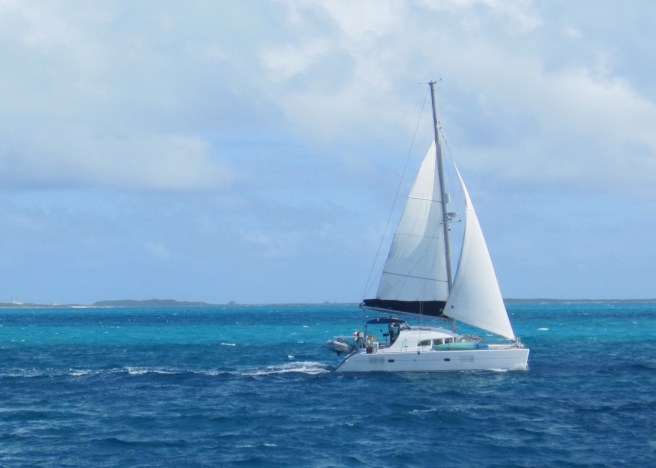
I sailed on Mattina, a 38-foot catamaran, for five years in the Bahamas. She’s the sailing vessel used in LOOK THE OTHER WAY, and this is her, one beautiful day in the Exuma Islands.

Mattina sailing


Thanks for voting! Comments are most welcome.


Mystery Mondays: Teagan Riordain Geneviene on What’s In A Name?

With a name as beautiful as Teagan Riordain Geneviene, you may well ask, what’s in a name? Well Teagan, author of ATONEMENT TENNESEE,  is here on Mystery Mondays to tell you.

At the bottom of the post, Teagan has some interesting questions for you, so keep reading…

What’s in a Name?

Hi Kristina. Thanks for inviting me to your Mystery Mondays.

Brain-NamesWhat do you think about names – generally? Or do you think about them? Most people don’t. I however, could really enjoy a big metaphysical discussion about names, but that’s not where I’m headed here. When I started this blog, I promised myself I’d stick to things related to writing or my books.

Names are incredibly important in life and in fiction. The names of my pets were something I chose very carefully, to suit them.

I’m just as meticulous in choosing the names of my characters. The right name can pull you into the mystery of the story, or lend a dramatic tone. When I write a classic type of fantasy, I go all out – researching name meanings and origins, and making sure they fit the traits of the character.

For stories located in the real world (fantasy or not), such as Atonement, Tennessee, I don’t always go to such lengths. Even so, each name speaks strongly to me about the who, what, and where of the character. Right now, I’m showing installments of my novel The Guitar Mancer at my blog. The name-meaning of the heroine is carefully interwoven into the story.atonement-video-cover-copy

There are a lot of cool sites about names and their meanings and origins. Yeah, I know — I’m a total research geek… but check out a few of the websites sometime. You already know that you can find an Internet site for just about anything. There are sites that list names of various myth figures, gods and goddesses, and summaries of the myths. Also, I’m sure you’ve seen at least one of the “baby name” sites. I even found one that list names by their popularity, by state, per year. It’s actually a cool resource if you want to find a character name that’s typical, or common for a given area and time, to help enhance the story in a subtle way.

I’ve used so many of these sites, I won’t try to list them all here. However, I liked this one (below), and thought it was general enough for other people to find it interesting. It’s divided by state. For the most recent years, it lists names for each year, but if you scroll down it gives an average over a five-year range. I liked that because it gave me a wide-ranging picture of what characters might populate my story. I used it for Atonement, Tennessee since the research for that National Novel Writing Month (NaNoWriMo) novel had to be done in such a hurry. http://pregnancy.about.com/od/localbabynames/a/statebabynames.htm

Okay, now I’m putting you to work. It’s time for a quick imagining of a story. Pick a state for the setting. Then choose the average age for most of the people there (even go to a “city data” page if you want to get the mean age in your chosen location), and figure out in what year they would have been born. Then click on the closest year listed. Now look at those names and tell me what images came to your mind. What did you see? Didn’t you see a group of people when you looked at the names? What were they doing? Where did they go when they headed out their separate ways?

Have fun,

Teagan

EASTER EGG HUNT for 3 Free Novellas

Easter may be over, but there are still Easter Eggs to be found…

Kristina Stanley's avatarKristina Stanley

Would you like three free novellas for the price of one book?

Imajin Books has a gift for you.

If you read DESCENT and receive your free novellas, let me know. I’d be thrilled to find out which ones you win. Imajin Books loves a mystery, and even I don’t know which novellas are hidden in DESCENT.

easter brunch party

Enjoy.

View original post

Write Better Fiction: The Scene Hook

Today on Write Better Fiction we’ll cover The Scene Hook. Write Better Fiction is a process to help you critique your own manuscript and give yourself feedback. This will help you improve your novel, so you’re ready to submit it to an editor.

Everyone knows the cliche hook, line, and sinker. You can apply that to your scene but think of it as entry hook, development, and exit hook. You’ll need all three of these elements in every scene to create a story your readers can’t put down.

What Is A Scene Entry Hook?

Many writing books talk about the importance of the first line, first paragraph and first page of a novel. If you don’t grab the reader then, you might lose them for good. There is a lot of pressure on a writer to produce an extraordinary first line for a novel.

But as with most things, practice will make you better. So start practicing now with the first line of every scene in your novel.

The end of a scene gives the reader an opportunity to close your book an ego to sleep. They might be tired and think about putting the book on the nightstand or closing the book on their eReader. But sometimes the reader will read the first sentence of the next scene to decide whether to keep reading or not, so it better be a good sentence.

I’ll bet you’ve done that late at night when your mind wants to read but your body wants to sleep. I certainly have.

You want the reader to keep reading, or at the very least look forward to reading the following scene the next day.

How Do You Get The Reader’s Attention?

With a good hook, of course. When creating a hook, consider:

  • Starting in media res
  • Foreshadowing trouble
  • Using a strong line of dialogue
  • Raising a question
  • Not wasting words on extraneous description.

So What About Characters?

Remember from last week’s post on scene anchoring, the hook must also introduce characters.

  • Who are they (and who has POV)
  • Where they are
  • What are they doing
  • What’s the timing of the scene

Alternate Your Technique

Alternate your technique so the reader doesn’t get bored. If you don’t know what the hook is or why the reader would start reading the next scene, think about rewriting the beginning of the scene.

Sometimes you might find you’ve started the scene too early. Look at cutting the scene until something exciting is happening. If there is description you need, move it to later in the scene if you can. You might just need a little reorganizing of the scene to make the beginning sizzle.

Last week’s blog covered anchoring your scene, so don’t forget to consider how to anchor your scene in conjunction with creating a good hook.

Your challenge this week is to ask yourself what is the hook for each scene. Is it enough to keep the reader reading?

I critiqued DESCENT and BLAZE using the techniques I’m sharing in Write Better Fiction, and I believe this helped me sign with a publisher.

Please let me know in the comments below if you have any suggestions how to check whether a hook is strong enough?

Thanks for reading…

Mystery Mondays: James M. Jackson On Is Your Manuscript Ready

Welcome to Mystery Mondays. I’m a huge fan of the Seamus McCree novels, so it’s a great honor to have James M. Jackson share his writing advice today. I first met James when he agree to have me guest blog on his site in August 2015. James was helping me spread the word about my first novel, Descent. Over the last year, I’ve learned what generous people authors are, and here he is again being generous with his time and sharing some advice.

Is it Soup Yet? by James M. Jackson

Well, no. When I agreed with Kristina to write this blog, (thank you so much for the invitation), I was confident I would have published the next book in the Seamus McCree series. It hasn’t happened, and I’m quite happy with that because the decision was mine.

By today’s standards, I am a slow writer. There are several reasons for this. Probably the most important is that writing is only one of the things I enjoy doing. I spend considerable time each year teaching the game of bridge at my local bridge club. [In fact my first published book was One Trick at a Time: How to start winning at bridge.] I also teach an online class on self-editing/revision, and I am the president of the 600-member Guppy Chapter of Sisters in Crime.

But none of those other interests or commitments are why you can’t buy Doubtful Relations today. You can’t buy it because I don’t think it’s ready.

Readers clamor for authors they enjoy to write more books more quickly. Publishers echo the demand, even writing faster deadlines into contracts. The once-a-year-release timetable has been replaced by a nine-month regimen. Many authors now produce two books a year, and many independent authors produce three or more books a year.

This pressure for more words, more quickly, comes at a time when publishers have pulled back on the amount of sales and marketing support they provide most of their authors. Now, most published authors spend a significant amount of time performing tasks that do not directly relate to writing their next book.

Some authors have always been prolific, producing great quality writing with everything (or nearly everything) they publish. For these authors, nothing has changed. I read eighty to a hundred books a year, mostly fiction, and over the past few years, I have discovered many authors who I once loved cannot produce high-quality manuscripts with these shorter timeframes.

Storylines become flat, characters become caricatures, plot holes appear. Editors in the past would have jumped all over these problems, but shortened production schedules don’t leave enough time for major fixes. Problems are papered over. For big names, this isn’t really much of a problem: a number one bestseller will obtain huge sales with a mediocre book, or two, or three. For a less-known author, it could be a death knell.

I teach my students that in revising a manuscript, it is important to give space between the writing and the rewriting. As a first step, they should try to read their manuscript as if they were a discerning reader. When I did that with Doubtful Relations, I realized the manuscript contained two major problems: new readers to the series required a deeper understanding of prior relationships than I had provided, and I had not given the reader sufficient understanding of the motivation of the primary antagonist.

Each problem had a straightforward solution, and had I been forced to turn in a manuscript to meet an approaching deadline, I could have applied those bandages to an otherwise decent manuscript. But in thinking about those issues, I realized I could significantly improve the novel if I tore it apart and addressed certain aspects using a different approach.

I attended a week-long workshop in 2015 run by Donald Maas, and one of the takeaways I have treasured is that sometimes the best way to fix something is to tear it down to its foundation and build it back up again. That’s what I am doing with Doubtful Relations. That’s also the approach I took with my most recent publication, Ant Farm. It started life as my first written novel. It attracted an agent’s attention and went nowhere. Frankly, it had good bones, but my writing was not yet mature. The flawed writing should not have earned an agent’s contract, and I am glad it was not published back in 2010. [I would now be very embarrassed if it had.] After being consigned to a drawer, I reread it in 2014, tore it down and built it up through a series of rewrites. When I was done, it won a contract through the Kindle Scout program.

I’m now in the process of building Doubtful Relations back up. I expect it will be available later this year. You can follow its progress (and the next two in the series that are also in the works) on my website, http://jamesmjackson.com or follow me on Facebook https://www.facebook.com/James-M-Jackson-388804844542707/ or on my Amazon page http://www.amazon.com/James-Montgomery-Jackson/e/B004U7FRP2 .

Ant Farm
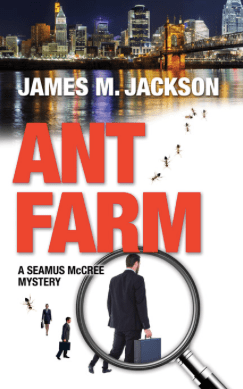
Screen Shot 2016-04-03 at 7.24.14 AMIn this thrilling prequel to Bad Policy and Cabin Fever, when thirty-eight retirees meet a gruesome end at a picnic meant to celebrate their achievements, financial crimes consultant Seamus McCree comes in to uncover the evil behind the botulism murders.

But the deadly picnic outside Chillicothe, Ohio, isn’t the only treacherous investigation facing Seamus; he also worms his way into a Cincinnati murder investigation when the victim turns out to be a church friend’s fiancé.

While police speculate this killing may have been the mistake of a dyslexic hit man, Seamus uncovers disturbing information of financial chicanery, and by doing so, puts his son in danger and places a target on his own back. Can Seamus bring the truth to light, or will those who have already killed to keep their secrets succeed in silencing a threat once more?

author-photoJames M. Jackson authors the Seamus McCree mystery series. ANT FARM, BAD POLICY, CABIN FEVER, and DOUBTFUL RELATIONS (2016). Jim also published an acclaimed book on contract bridge, ONE TRICK AT A TIME: How to start winning at bridge, as well as numerous short stories and essays. He splits his time between the deep woods of Michigan’s Upper Peninsula and the open spaces of Georgia’s Lowcountry.
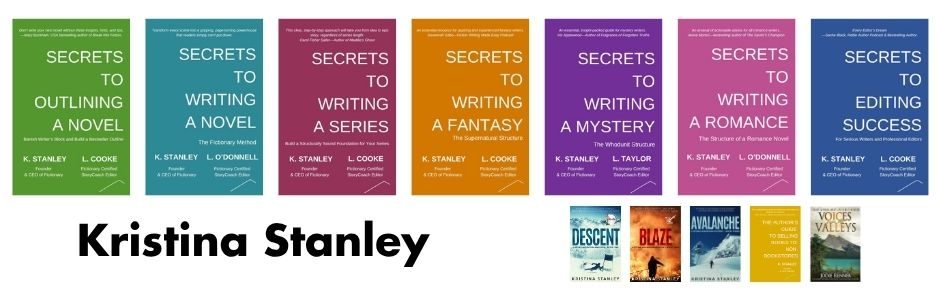
IMAJIN BOOKS’ bestsellers

Rosemary,

Thanks for the mention. I’m honored to be included with such a wonderful group of authors.

rosemarymccracken's avatarMoving Target

Thrilled to learn that I was the #2 bestselling author at Imajin Books in the month of March! Cheryl Kaye Tardif took the #1 place. And Luke Murphy, Kristina Stanley and Donna Galanti took #3, #4 and #5, respectively.

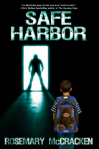
86651d0f9779f871e259679e38149042_5bi5The novel got me those top sales was SAFE HARBOR, the first Pat Tierney mystery, which was the #2 bestselling ebook of the month. After four years, that story still has strong legs. Which bodes very well for the release of RAVEN LAKE, the third Pat Tierney mystery, later this spring.

Go, Pat, go!

View original post

Farley’s Friday: Joke’s on me

Farley here,

Did you know when ice melts off a pond’s surface, the water doesn’t get warm right away? In fact, it’s freezing.

Kristina did try to tell me before I jumped in, but I didn’t listen.

Happy April Fool’s Day. Don’t do anything silly. 🙂

Farley swimming

Woof Woof

Write Better Fiction: Is Your Scene Anchored?

Today on Write Better Fiction we’ll cover Is Your Scene Anchored? Write Better Fiction is a process to help you critique your own manuscript and give yourself feedback. This will help you improve your novel, so you’re ready to submit it to an editor.

One could argue that asking yourself if your scene is anchored should fall under setting or under plot.

I’ve included scene anchoring under plot because it’s more than setting, and I think it leads well into the next topics we’ll cover, which are hook, development and climax of a scene.

AnchorSo what does it mean to anchor a scene?

The reader needs to know:

  • Who has the point of view
  • Where the character is
  • What the timing of the scene is

POINT OF VIEW:

We’ve dealt with point of view in detail, so I won’t say much here except you should checkEye whether the reader will know who has the point of view within the first paragraph or at least within the first couple of paragraphs. If not, the reader might find this frustrating. If you write your entire novel from one point of view, like many first person novels, then you don’t need to worry about this.

SETTING:

“Where is your character”“Where is your character” fits under setting. You know where the character is because your wrote the scene, but does your reader? If the reader can’t figure out where the character is within the first couple of paragraphs you may lose them – the reader I mean and not the character. 🙂

There are exceptions to this. If your scene is about a character waking in a dark place and confused about where she is, then it’s okay for the reader to be confused about where she is too. This will add to the tension. The reader does need to understand the lack of setting is done on purpose.

TIMING:

The timing of the scene can mean:Clock

  • Time of day
  • Time passed since last scene
  • A particular date

If several years or several seconds have passed in a characters life, then the reader needs to understand that. If you are jumping back in time or forward in time the reader needs to understand that too. The quicker the reader gets the timing, the quicker they will be drawn into the scene.

START OF A NEW SCENE:

The start of a new scene means point of view has changed, the setting has changed, or time has changed, hence every scene needs to be anchored.

Your challenge this week is to ask yourself if every scene in your novel is anchored. Does the reader know who has point of view, where the character is and what time it is?

I critiqued DESCENT and BLAZE using the techniques I’m sharing in Write Better Fiction, and I believe this helped me sign with a publisher.

Please me know in the comments below if you have any suggestions or improvements for anchoring a scene.

Thanks for reading…

Voice From The Valleys: Charitable Artwork

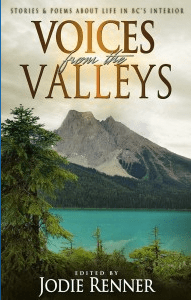
Jodie Renner spent her time and money putting together Voices From The Valleys. An anthology where all proceeds from book sales, after production expenses, go to Médecins Sans Frontières / Doctors Without Borders Canada (MSF).

I’m proud to say Deirdre Hunting Season, a funny story about a woman, a man, and a deer is the first story in the anthology (written by me 🙂 ). It’s followed by many other British Columbian authors who tell their tale about life in Canada’s western most province.

Thank you, Jodie, for the endless hours you put in gathering, editing, and producing this wonderful anthology.

Screen Shot 2015-09-22 at 7.33.47 AM

STORIES & POEMS ABOUT LIFE IN BC’S INTERIOR, an anthology for charity, features entertaining short stories, fascinating memoirs, and thought-provoking poetry by 50 talented BC writers, depicting life in every region of the interior of British Columbia, Canada, from the ’50s to today.
Peruse the pages and you’ll find stories about challenging experiences in remote areas, experiences with BC’s deer, bears, moose, and other wildlife; harrowing experiences with forest fires, humorous people-watching stories, touching memoirs, tales of tragic incidents, stories about relationships, and funny-only-in-hindsight true stories.

You’ll find beautiful, thought-provoking poetry about early ranching life, rock climbing, a beloved motorcycle, the loss of orchards, prospecting, experiences with forest fires, encounters with wildlife, and special moments from various regions in BC.
Colour photos of various regions of BC enhance the print version of this high-quality memoir.

So if you’d like to support a great cause, Médecins Sans Frontières / Doctors Without Borders Canada (MSF), and have a great read, check out VOICES FROM THE VALLEYS.

Thanks for reading…