Spelling: Canadian Vs. American

I’m confused.

I’m a Canadian and spell Canadian. I’ve spent many hours proofreading my novels to make sure my spelling is consistently Canadian.

I read novels written by Americans and am used to reading American spelling. This can make writing in one or the other difficult. as both ways of spelling look correct. I have my spell checker set to Canadian spelling, but sometimes there is an option and so the spell checker won’t highlight if I’ve slipped into American spelling when both versions may be acceptable.

What I’m saying is I’ve worked hard to keep my spelling consistently Canadian.

Then – and I feel like I should play music here – I attended the Bloody Words Conference in Toronto and a Canadian editor said, “It drives me crazy when the first thing I have to do is change all the Canadian spelling to American. Taking out the ‘u’ gets annoying.”

I didn’t get a chance to talk with her about the comment, but it’s been bothering me ever since.

Do any other Canadian writers out there prefer one way of spelling to another?

Is there a standard in the Canadian publishing industry?

Have I done this the wrong way?

If you’re opinionated on the subject, I’d love to hear about it.

Thanks for reading . . .

Farley’s Friday: A Wheaten Gets In Bed

Farley here,

Ever heard of stealth mode? I need to learn how to be stealthily. So to all you dogs out there who want to do something naughty, here’s what I happens if you’re not stealthy.

I’m visiting my human’s parents. They love dogs, and especially me. But there are some rules Kristina insists on when we are visiting others. She says she wants me to be welcome everywhere, so I have to behave. Like she behaves all the time! Ha!

I wanted in the home office so I could curl up under the desk. It’s my favourite place in the house. I run upstairs and find the door shut.

“Open the door,” I say in my sweetest wine. Nothing. All is quiet. I try a gentle scratch on the door. Still no response.

This is when I bust loose. I need to express my dissatisfaction with the situation. I just can’t help myself, and I get all excited. When I’m excited, I’m noisy. I run around in circles and then I jump on the bed.

Busted. I hear Kristina’s footsteps. They’re getting closer.

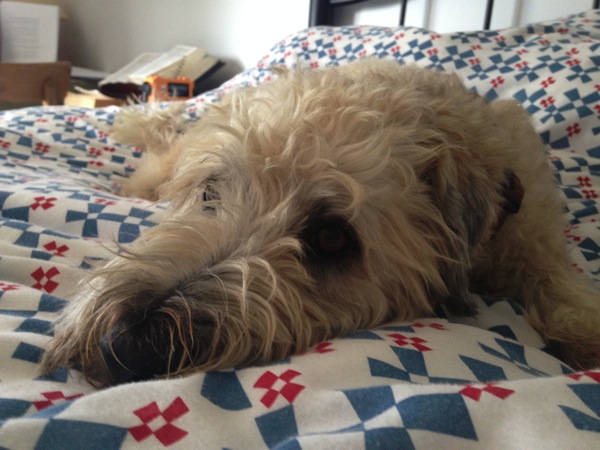
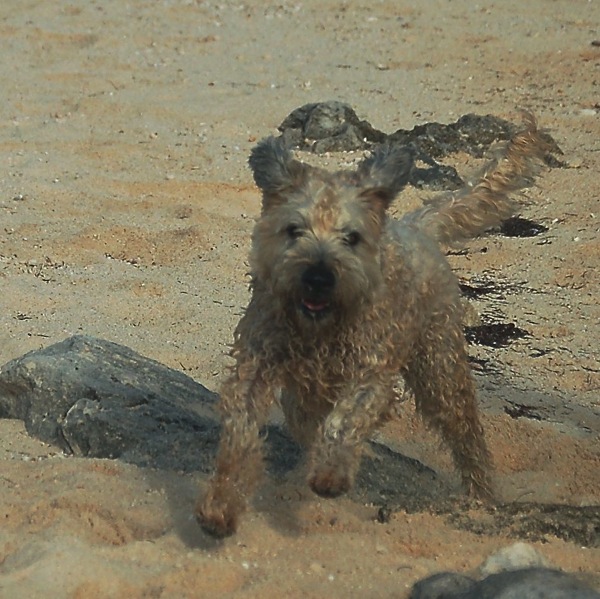
Farley on Bed

Instantly, I lay still and pretend I haven’t been messing up the covers. I give Kristina my best “I’m sorry” look, but she makes me get down anyway. What she doesn’t know is that when she’s not here, I get to sleep on the bed whenever I want.

Woof Woof

15 Tips For A Successful Author Reading

Writing means learning, and learning all the time, for the rest of your life.

In the modern world of publishing, whether you choose the traditional route or self publishing, much is expected from an author. Writing a great novel is only the beginning of the journey if you want your work to have a public audience.

Last week, I experienced some intense learning about reading aloud. And by this I mean what it takes to read your novel or short story in front of an audience. If you’ve been reading this blog, you know I won the Audrey Jessup award for short story crime writing from the Capital Crime Writers. Part of being nominated meant reading aloud before the winner announcement was made.

The reading was on June 11th. During the week before the event, I attended the Bloody Words conference in Toronto. A bit of luck, as it turned out, because I heard seven authors read. Then on Monday June 9th in Ottawa, I attended a reading by three Scandinavian authors. That’s 10 readings I could learn from.

Here’s my advice about delivering a great reading:

The advice is slit into  4 sections.

Practice before the event:

  • Don’t leave practicing to the last-minute. Practice every day even for short periods of time. If you can, read to an audience.
  • Practice pausing for commas, periods, paragraph breaks, and starting new scenes.
  • Practice until you can take your eyes away from the words and make eye contact with the audience. This will engage them in your reading. Reading to a mirror will allow you to see if you’re looking up.

Technical preparation:

  • Don’t staple the pages. Stapled pages are noisy when turned and are awkward to hold in place.
  • Number your free pages in case you drop them.
  • Ask how many minutes you have to read. Then prepare for a few minutes less, the exact amount of time and a few minutes more. If other readers don’t show up, you  might be given more time. If the proceedings are running long, you might be given less time, Be ready so you can end with a cliff hanger or a dramatic spot that will leave people wanting more.
  • If you’re reading from printed pages, print in font large enough to read. Remember the lighting could be dark or there could be glare from other lights. If the font in your printed books is small, you can always print the pages you want to read and place your book in front of you while you’re reading.
  • Ask what the setup will be. Is there a podium where you can set your pages? Will you be holding a mic? Will you be standing or sitting?

At the event, before you read:

  • If you’re not first, watch the other readers for what works and doesn’t work. Standing with the mic too close to the sound system can cause feedback, having the mic too far or too close to you mic can make understanding your words difficult.
  • Have your material ready. Don’t start looking for the section you want to read after you’re at the podium. This distracts the audience.

During your reading:

  • Once you are on stage, thank the hosts of the event. This will make your look professional and give you time to let your voice and your nerves settle before you start reading your story.
  • Breathe. This sounds obvious, but breathing will make your speech clear. During the reading, I was so nervous at first, I couldn’t bring air into my lungs. At the end of the first page, when I had to flip to the next page, I moved the mic away from my mouth and took a deep breath. This helped me calm down.
  • Don’t explain your work in the middle of reading. Let your words speak for themselves.
  • Only brief the audience about the story if you’re not starting at the beginning.
  • Speak slowly.

Remember: the audience came to hear you and they want you to succeed, so smile and have fun.

If you have any tips on reading aloud, please share 🙂 I’m always looking for ways to improve.

Thanks for reading . . .
Farley’s Friday: A Wheaten Can Listen Well (Audrey Jessup Crime Writing Award)

Farley here,

I’ve had a weird week.

Kristina talked for days on end and it took me a while to figure out what she was doing. First I thought she was talking to me, and I felt pretty flattered to get so much attention.

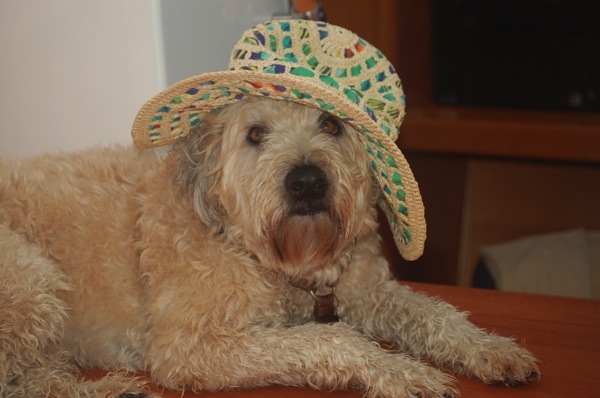
Then I realized she was focussed on something else entirely. And look what she made me wear.

Farley in Hat

“Take this hat off my head,” I bark.

“You’re my audience,” Kristina says.

“Audience for what?” I bark.

“I have to read aloud at the Audrey Jessup awards, and I need to practice.”

“Yeah, but why do have to wear a hat?”

“Because I’m pretending you’re sitting in a bar listing to me read my story.”

Okay, I get it. She’s nervous and wants to practice. She keeps mumbling something about the 10,000 hour theory and the more you do something to better you get at it.

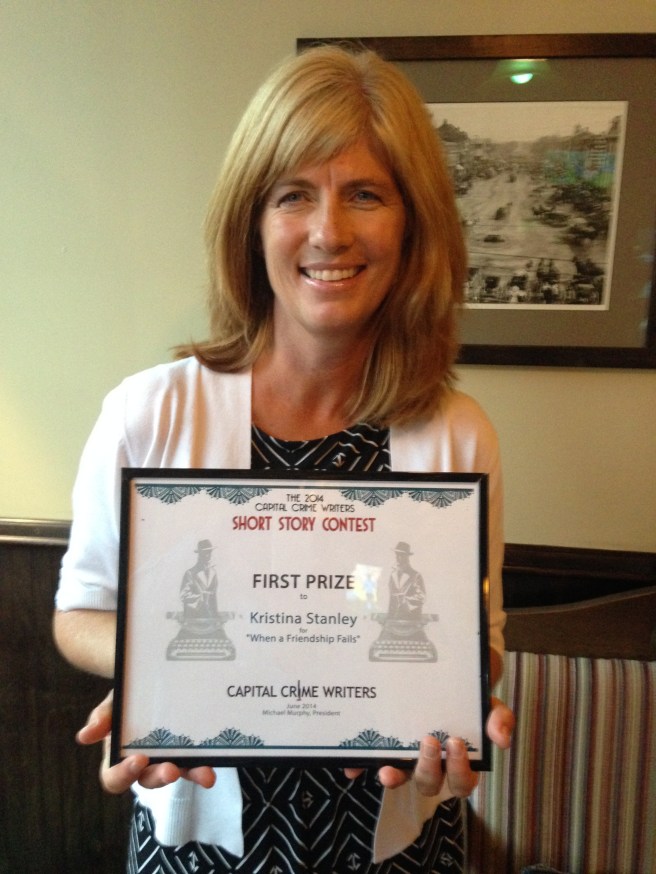
So the night of the awards, she comes home all happy and dances around the living room. She won 🙂

Kristina Stanley Audrey Jessup

Now I just wag my tail. I’ll let her read to me anytime if it helps.

Woof Woof.

Capital Crime Writers


Bloody Words Conference

Danse Macabre: The Historical Dance of Death was the theme of the Bloody Words conference held in Toronto over the June 6th weekend.

The action packed conference started on Friday night and ended Sunday afternoon.

My favourite part: Meeting other authors. What a treat it was to meet with people who have been my “internet friends” for the last several years. I was pleased to see so many of the Crime Writers of Canada authors in attendance.

Learning in the sessions is a given, but learning in the hallway is fun too. Everyone spent time networking  – translate: experienced authors sharing trade secrets with the newbies. There was an opportunity to meet with agents and publishers.

Many thanks to the gang who ran the conference. The hard work put into the conference showed in the professional delivery. On a sad note, rumour has it this is the last Bloody Words conference. The year was my first and I’m glad I got to the event.

Thanks for reading  . . .

Prepping for a Reading

Have you ever read your writing aloud in public? I haven’t and am about to.

My short story “When a Friendship Fails” has been nominated for the Capital Crime Writer’s Audrey Jessup. As part of the nomination, the 5 nominated authors are asked to read part of the story aloud. The event is taking place in a pub in down town Ottawa.

The complete story takes 20 minutes to read, and I’ve been given 7 minutes.

I’ve been using Audacity to practice, and to deliver a strong emotional impact, I need to choose if I should read:

  • from the beginning
  • middle
  • or the last three scenes

Audacity makes me listen and practice. After I decide which section to read, I can work on the timing.

Here’s my question.

When reading a scene on a page, the reader can see paragraph breaks and knows a new character is speaking. But when listening to a story, the listening doesn’t have the advantage of seeing the paragraph breaks. I’m not an actor who can change the sound of my voice for each character (although I’m trying),  so when reading from a finished work, is it okay to add a few he said/she said tags to make it clear who is speaking?

What comes next and is the most nerve-wracking of all: I have to read aloud in front of people.

Yikes.

Thanks for reading . . .

Farley’s Friday: A Wheaten on Leash

Farley here,

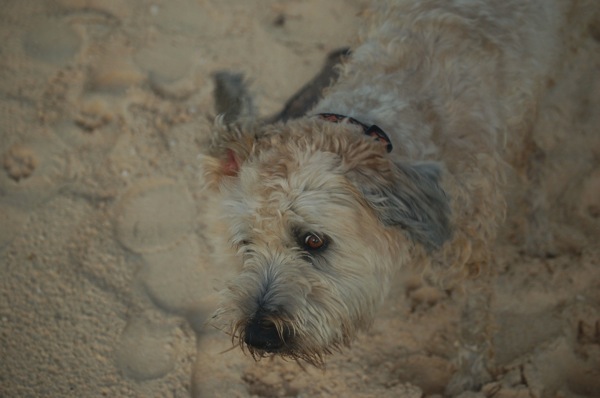
Culture shock. That’s what I have. I spend months in the Bahamas off leash, running around, digging holes in the sand, and swimming off the beach.

We get to Florida, and I have to wear a leash. I think that’s a bit humiliating. I don’t  run away – okay sometimes I might get distracted and chase a squirrel, but I stay in sight.

This is me looking tough. I’m trying to tell Kristina with eye contact alone that I don’t need a leash.

Farley on Guard

Does she listen?

Nope.

On goes the leash. I just don’t understand this leash law deal. I’m a good dog.

Woof Woof.

Thanks to HSW Literary Agency

Life as a writer is often spent behind closed doors working hard, but there are moments when a writer catches a glimpse of hope that her work may actually entered the world of the published.

Margaret Hart and Natalie St. Pierre at the HSW Literary Agency have been working hard behind the scene to help me get my novels published.

Their last post at HSW Literary Agency:News certainly made me smile, so here’s a shout out to say thanks.

Sometimes a girl just has to share her happiness.

Thanks for reading . . .

Here is what HSW wrote about me:

Persons Unknown? Crime Writer Kristina Stanley Makes Her Name

Author Kristina StanleyThe life of an author, quietly perfecting her craft, is often anonymous. But the efforts of crime writer Kristina Stanley are at last getting the attention they deserve: Stanley has three works up for separate crime writing awards!

Descent, the first book in Stanley’s Kalin Thompson series, is nominated for the Unhanged Arthur, the Arthur Ellis Award recognizing the year’s most promising piece of unpublished crime fiction. Over in the UK, the Crime Writers’ Association honours book two in the series, Burnt, with a nomination for their Debut Dagger. Finally, just in time for Short Story Month, Stanley’s “When a Friendship Fails” is nominated for the Capital Crime Writers‘ Audrey Jessup Short Story Award.

Congratulations, Kristina! We anxiously await the results!

Scapple and Writing

If you haven’t used Scapple, it’s a neat tool for organizing thoughts when editing or writing a novel.

I made bubble diagrams of each suspect in my novel, Avalanche.

Things I found that helped:

  • Connections between characters that could strengthen the readers belief that one of the characters was guilty.
  • Inconsistencies with clues.
  • Ideas for more clues.
  • At what point in the plot did the protagonist learn important details. Then I made sure I didn’t reference the information earlier.
  • Were the clues evenly balanced amongst the suspects?
The software is free flowing in the sense that you can draw what you like. Bubble diagrams, flow of information etc. It has a free 30 day trial so if you’re interested, you have nothing to lose.

It’s a fun and easy tool to work with, and I think has tightened my plot. See Literature and Latte for a better product description.

Here’s a shout out to Kirsten for pointing out Scapple to me. She always blogs about something interesting and useful.

Do you have any tools to help you write?

Thanks for reading . . .

Farley’s Friday: My Human Is Doing The Happy Dance

Farley here.

My human is singing “Debut Dagger Shortlist” and doing the happy dance. Sometimes Kristina looks really silly, but she’s so happy I won’t mention that to her.

I give her my confused look to ask her what’s going on. Seriously, she’s freaking me out.

Farley looking interested

She makes we wait until I settle down. Then she says, “My novel BURNT has been shortlisted for the Debut Dagger Award.”

“Huh,” I bark.

“It’s from the Crime Writers’ Association in the UK for unpublished authors.”

I decide I better do the happy dance too.

Farley Happy Dance

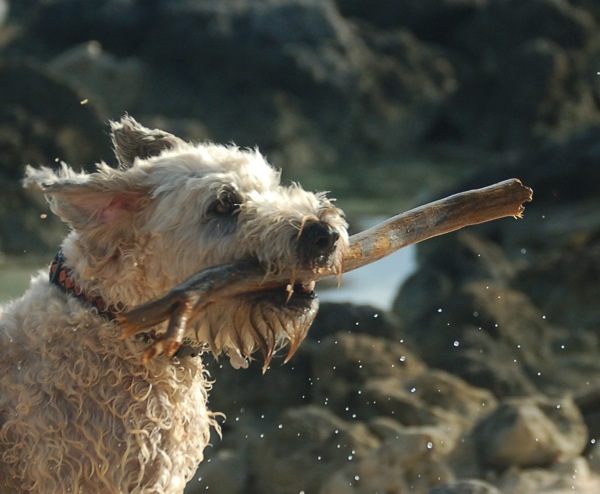
Then I bring her a present. Who doesn’t like an already chewed stick?

Farley With Stick


Well apparently Kristina. She won’t chew it, but she’s still dancing.


Woof Woof


See Mystery Fanfare: CWA Nominations