Top 5 Fiction Elements For A Mystery #AuthorToolboxBlogHop

Nano Blog and Social Media Hop2Thank you, Raimey Gallant for organizing the #AuthorToolboxBlogHop.

This is a monthly blog hop on the theme of resources/learning for authors: posts related to the craft of writing, editing, querying, marketing, publishing, blogging tips for authors, reviews of author-related products, anything that an author would find helpful.

To continue hopping through other great blogs in the monthly #AuthorToolboxBlogHop or to join, just hop on over to Ramey Gallant!

This week, I thought I’d focus on my favorite genre – Mysteries (my fav ’cause that’s the genre I write in).

Top 5 Fiction Elements For A Mystery

Self-editing a mystery is one of the joys of the writing process. You get to use your imagination to lead the reader through your story.
 

If you’re a mystery writer, it’s important to keep track of your story, and not only in the context of what you share with your readers but also what your characters know.

You don’t need to keep track while you write your first draft, but once you’ve written a draft, go back through your manuscript and rewrite it with the following 5 key elements of fiction in mind.

1. CLUES

A clue tells the readers something that will help them solve the mystery. You don’t want to give clues too early and have the reader guess who the villain is. You also want to give enough clues, so when you reveal the villain, the reader is surprised, but also feels the choice is logical. You can also call this a revelation. Any you let the reader know that’s important to the story.

2. FORESHADOW

Think of a clue as a piece of a puzzle. You need all the pieces to solve the puzzle. Foreshadowing is hinting at some future event. It’s not solving the puzzle. Foreshadowing will keep the tension rising throughout your story. It’s the anticipation of something bad happening that will draw your reader in.

Usually, I’ll put foreshadowing as the purpose of a scene if it includes foreshadowing. Then I can quickly check where I’ve done this.

3. POINT OF VIEW CHARACTERS

You need to decide early if your antagonist will have the point of view (POV) for any scenes. If your antagonist has a POV scene, you cannot let the reader know everything the character is thinking.

In a thriller, the reader often knows right away who the villain is, but in a mystery, the villain is kept secret until the very end.

4. WHAT PROTAGONIST KNOWS

Keep track of everything the protagonist learns. You need control what she/he knows versus what the reader knows. Your protagonist can only act on information she/he has.

5. WHAT THE READER KNOWS

This is very important if you write from multiple points of view. Keep track what the protagonist knows and if the reader knows something from another POV character that the protagonist doesn’t know.

Happy editing!


Check out Fictionary’s  free 14-day trial  and tell better stories.

Fictionary is online software that simplifies story editing.

Plot Point 2 In The Context Of The Story Arc

It’s the end of act II and all is lost. Your protagonist must work hard to get what she wants or lose everything.

The story arc has been around for over 2000 years, and is a proven way to tell a good story. It’s not the only way, but it does work.

Evaluating your story arc in the context of the three-act structure should spark your creativity, not box it in. Use the story arc to make your story better by understanding why certain key events happening at the right time will engage your readers.

The story is yours. The arc helps you make it better.

Today, we’re talking about Plot Point 2.

Earlier posts cover the Inciting IncidentPlot Point 1 and the Midpoint.


What Is Plot Point 2

Plot Point 2 (PP2) signals the end of Act II.

Plot Point 2 will be a low point for your protagonist. Her actions since the middle have caused disaster. At PP2, she becomes more determined to reach her goal.


Famous First Plot Points:

Note: there are story spoilers, so don’t read this section if you want to read the book or see the movie.

Gone Girl: Amy comes home and lies about being kidnapped. Nick wants nothing more to do with her, but can’t get away. Amy will frame him for attempted murder if he leaves her. Life looks bad for Nick.

The Martian: Mark leaves his base for the final time and has to cover 3000 km in a hostile environment. If he misses the window for the crew to pick him up, he’ll die on Mars. This is serious motivation.

The Philosopher’s Stone: Harry encounters the Voldemort in the Dark Woods. Voldemort tries to kill Harry, but a centaur rescues Harry. Harry will have to confront Voldemort at some point if he’s going to survive.

Twilight: A vampire is going to go after Bella for her blood, and Bella must leave Fork. Bella wants to survive.


Placement Of Plot Point 2

Plot Point 2 should be somewhere around the 75% mark in your novel. If this plot point comes too late, the story will feel like it’s dragging. If it comes too early, the story may feel rushed or lacking in depth.

Here’s an example of a story arc from Fictionary. The brown line shows the recommended story arc, and the green line shows the actual story arc for the novel.

You can see above, the inciting incident occurs too late in the story, plot point 1 occurs too quickly after the inciting incident, and the middle occurs too late in the story.

After that, plot point 2 is reached too quickly, denying the reader story depth. By appearing too early, it also means the last act is dragging. Act III is going on for too long.

And on it goes until the climax is too late, and there isn’t enough time for a satisfactory resolution. Meaning the reader won’t read the writer’s next book.

I’ve love to know what you think and if you have any questions 🙂


Fictionary is online software that simplifies story editing. Why not check out Fictionary’s free 14-day trial and tell better stories?



Post written by Kristina Stanley, best-selling author of Look The Other Way (Imajin Books, Aug 2017).

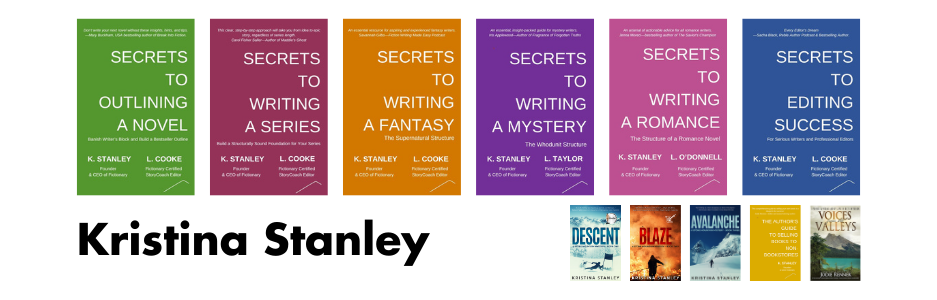
Kristina Stanley is the best-selling author of the Stone Mountain Mystery Series and Look The Other Way.

Kristina is the CEO of Fictionary.

Farley’s Friday: Couch Dogs

Farley here,

So I am the love of Kristina’s life, right?

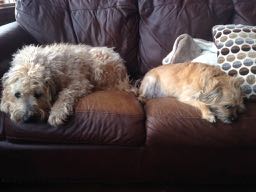
Well, I’m wondering why she feels the need to have other dogs stay with us.  Meet Piper.

Farley Piper


Sure, she’s cute. She’s pretty well behaved. But I don’t think she should have the same couch privileges as me. This is my couch, and Piper thinks she can sleep on it with me. Usually, I snuggle up here with Kristina, but there was no room for her.

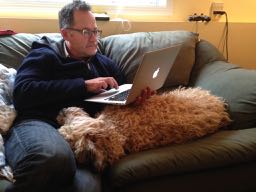
I decided to get even, so I went to Piper’s house and visited her human.

Mike and Farley

I think I won the couch game. No room for Piper here.

Woof Woof

The Midpoint Of A Novel In The Context Of The Story Arc

Act II is underway, and your story is dragging. What do you do?

A dragging story is not what we want as authors, so let’s look at how to fix this.

A good story contains key plot events. To create a story readers love, these events must happen at the right time — including the midpoint.

If you’ve written the inciting incident and plot point 1 well, then at the midpoint, you’ll be taking your readers on a journey where the protagonist moves from a reactionary mode to a proactive mode.

The midpoint of your novel happens at around 50% of your story’s total word count. It’s also about halfway through the second act. So that was a little obvious…but had to be said.

The events following your midpoint will lead the reader to plot point 2 (at the end of Act II), and then on to the climax.


Key Scenes In The Story Arc

The inciting incident is the moment the protagonist’s world changes in a dramatic way.

Plot point 1 is the point of no return. The character can’t back out of the central conflict. This is the moment when the setup of the story ends and Act I is over.

The midpoint is when the protagonist changes from reactive to proactive.

Plot point 2 happens when your protagonist discovers something that allows him to finish his mission, or he thinks all is lost. This depends on the type of story your writing. Act II is over.

The climax is where your protagonist faces the biggest obstacle in the story. She may or may not win…


How To Make Your Midpoint Sparkle

At the midpoint, make something terrible or life-changing happen to your protagonist. This will raise the stakes.

Your protagonist needs to find the strength to deal with whatever horrible thing you’ve made happen or she’ll lose everything.

Because of this, she’ll decide to do something and take the rest of the book to do it. Meaning, the event has to be significant.

At the midpoint point, your reader should understand the story is moving in a new direction.

Depending on the type of story you’re writing, the event could be emotional, spiritual, or action packed. It must fit your story. Even though the midpoint is an exceptional event, remember the climax has to have even higher stakes.


Famous Midpoints:

Note: there are story spoilers, so don’t read this section if you want to read the book or see the movie.

Gone Girl: Nick wants to improve his image and gives a press conference. Amy’s “secret” best friend attacks, demanding to know what he did with Amy. Nick must now get proactive if he’s going to save himself.

The Martian: Mark Watney finds out his supplies are going to be delayed and believes he’s going to die on Mars. This results in kicking him into action to figure out how to live long enough for the supplies to get to him.

The Philosopher’s Stone: During a Quidditch match, Harry’s Nimbus 2000 broom takes Harry on a ride. Snape casts a spell. Hermione lights Snape’s cloak on fire. Harry can’t ignore all this and must become proactive

Twilight: Bella sees Edward’s true power. This strengthens how she feels about him, and she’ll do anything to be with him.

See Inciting Incident In The Context Of The Story Arc and Plot Point 1 In The Context Of the Story Arc for more on these stories.


Fictionary is online software that simplifies story editing. Why not check out Fictionary’s free 14-day trial and tell better stories?


 Post written by Kristina Stanley, best-selling author of Look The Other Way(Imajin Books, Aug 2017).

Plot Point 1 In The Context Of The Story Arc

You’re heading into Act II of writing or editing your novel. So how are you going to keep readers engaged? You need a great plot point to drive them forward.


In an earlier post, I talked about the inciting incident in the context of a story arc. Today we’ll examine plot point 1.

What Is Plot Point 1?

Plot Point 1 is the point of no return. The character can’t back out of the central conflict. This is the moment when the setup of the story ends and Act I is over.

But there’s more. There must be something at stake. If the character doesn’t care about the outcome, a reader won’t care either.

Example plot point types (there a many more):

  • The character is obligated to take action.
  • The character is trapped.
  • Tuning back means returning to a life of unhappiness.
  • The character’s desire for something overrules all else.


Famous First Plot Points:

Note: there are story spoilers, so don’t read this section if you want to read the book or see the movie.

Gone Girl: Amy’s first treasure hunt clue is found. Nick has no choice but to follow it. Amy’s life is at stake (as far as the reader knows).

The Martian: Mark Watney decides he won’t die on Mars. Now he gets proactive. To back out means to die — that’s a lot a stake.

The Philosopher’s Stone: Harry Potter arrives a Hogwarts. He can’t turn back. He can’t get back on the train. That would mean life back with the Muggles and unhappiness.

Twilight: Bella learns what Edward is a vampire, but she loves him and decides to pursue him. Edward has emotional power over Bella.

See Inciting Incident in the Context Of The Story Arc for the Inciting Incident in each of the above stories.


Placement Of Plot Point 1


The story arc is the structure of your story and the timing of the events in that story.

The arc takes the reader from one state at the beginning to a changed state at the end.

Plot Point 1 should be somewhere around the 25% mark in your novel. If this plot point comes too late, the story will feel like it’s dragging. If it comes too early, the story may feel rushed or lacking in depth.


Here’s an example of a story arc from Fictionary. The brown line shows the recommended story arc, and the green line shows the actual story arc for the novel.

You can see above, the inciting incident occurs too late in the story.

After that, plot point 1 is reached too quickly, denying the reader story depth. By appearing too early, it also means the middle is dragging. Act II is going on for too long.

And on it goes until the climax is too late, and there isn’t enough time for a satisfactory resolution. Meaning the reader won’t read the writer’s next book.

I’ll cover other key events such as the midpoint, plot point 2 and the climax in future blogs.

I’ve love to know what you think and if you have any questions 🙂


Fictionary is online software that simplifies story editing. Why not check out Fictionary’s free 14-day trial and tell better stories?

Mystery Mondays: Author Joanne Guidoccio on Information Overload

Today on Mystery Mondays we have the pleasure of hearing from author Joanne Guidoccio. Joanne writes cosy mysteries and paranormal romances.

Special offer: read to the bottom, and you’ll find a chance to win an Amazon gift card.

In case you missed it, Joanne has also contributed to Mystery Mondays by writing Finding Your Voice.

If you’d like to contribute to Mystery Mondays, let me know.

Over to Joanne…

How to Deal With Information Overload

by Joann Guidoccio

One lost email could cost a life. A bit overly dramatic, but it didn’t stop Constable Leo Mulligan from suggesting that Gilda Greco could have prevented a former student’s death, if only she had read that email. 

The storyline of A Different Kind of Reunion revolves around this overlooked email.

I would like to think that a lost email would never set in motion such dire consequences in real life situations. But still, a part of me worries about the increased inflow and outflow of information.

Ten years ago, I had email and other correspondence under control. I was teaching full-time and would check emails and messages three times a day. Dealing with back-to-back classes, meetings, and extra-help sessions left with me with only small pockets of free time during the day. In the evenings, I disciplined myself to check email only after my marking and lesson preparation was complete.

Everything changed when I retired and started a full-time writing career. Suddenly, my in-box overflowed with messages from editors, publishers, and writers in different time zones. When I joined several national and international groups, I also had access to their Yahoo groups. Participating in Twitter, Facebook, Pinterest, and other social media added to the constant flow of information.

My personal numbers:

• 8 Yahoo Groups
• Over 6K Twitter followers
• 500+ connections on each of the following: LinkedIn, Facebook, Pinterest, and Goodreads.
• 100+ emails each day
• Following 30+ blogs
• Active participant in Twitter chats

Here are five strategies that help me stay on track:

  1. 1. Schedule blocks of time for email, doing research, completing work-related tasks, and simply browsing. Do not simply jump on anytime you feel like it. If necessary, disconnect from the internet if you need to focus on a particular task. In his book, The Power of Less, Leo Babuta introduces the idea of an “offline hour,” which could be extended to an “offline day.”
  1. 2. Turn off email notifications. Most programs have alerts like a sound, pop-up message, or blinking icon that let you know when you have received a new email. This interruption can be disruptive and gives power to anyone who wants to email you.
  1. 3. Work your way from top to bottom, one email at a time. Open each email and deal with it immediately. Reply, delete, or archive for future reference. Whenever possible, limit your response to five or fewer sentences. This forces you to be concise and limits the time spent in the email box. Before deleting any email, ensure there will be no negative consequences.
  1. 4. Take your breaks away from the Internet. Instead of checking social media during lunch and breaks, get away from your desk: take a walk, meditate, practice yoga, meet with friends. 
  1. 5. Eat the frog. This famous dictum comes from Mark Twain, who strongly recommended completing difficult—and sometimes unpleasant—tasks early in the day. e.g. Writing a synopsis, outlining a novel, completing a round of edits. 

How do you deal with Information Overload?

A Different Kind Of Reunion

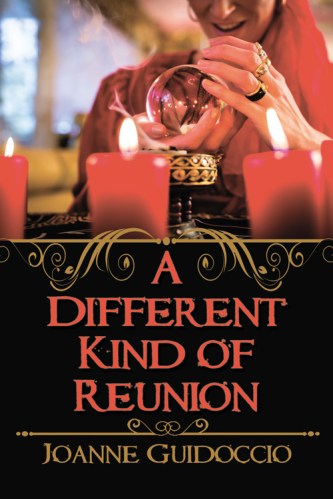
ADifferentKindofReunion_w12053_750 (2)While not usually a big deal, one overlooked email would haunt teacher Gilda Greco. Had she read it, former student Sarah McHenry might still be alive.

Suspecting foul play, Constable Leo Mulligan plays on Gilda’s guilt and persuades her to participate in a séance facilitated by one of Canada’s best-known psychics. Six former students also agree to participate. At first cooperative and willing, their camaraderie is short-lived as old grudges and rivalries emerge. The séance is a bust.

Determined to solve Sarah’s murder, Gilda launches her own investigation and uncovers shocking revelations that could put several lives—including her own—in danger. Can Gilda and the psychic solve this case before the killer strikes again?

Trailer

https://youtu.be/wqiTpt2KfZA

Giveaway:

Click on the Rafflecopter link below for your chance to win a $10 Amazon gift card.

http://www.rafflecopter.com/rafl/display/628069207/

Buy Links

Amazon (Canada):  https://is.gd/vR5Sxn

Amazon (United States): https://is.gd/lU0qw7

Kobo: https://is.gd/5MMKWF

Indigo: https://is.gd/11GpVs

Barnes & Noble: https://is.gd/ckNfhx

iTunes: https://is.gd/oPe0RD

The Wild Rose Press: https://is.gd/nQ2ZjT

About Joanne

Guidoccio 001In 2008, Joanne Guidoccio took advantage of early retirement and decided to launch a second career that would tap into her creative side and utilize her well-honed organizational skills. Slowly, a writing practice emerged. Her articles and book reviews were published in newspapers, magazines, and online. When she tried her hand at fiction, she made reinvention a recurring theme in her novels and short stories. A member of Crime Writers of Canada, Sisters in Crime, and Romance Writers of America, Joanne writes cozy mysteries, paranormal romance, and inspirational literature from her home base of Guelph, Ontario.

Where to find Joanne Guidoccio

Website: http://joanneguidoccio.com/

Twitter: https://twitter.com/joanneguidoccio

Facebook: https://www.facebook.com/authorjoanneguidoccio

LinkedIn: https://www.linkedin.com/in/joanneguidoccio

Pinterest: http://pinterest.com/jguidoccio/

Goodreads: https://www.goodreads.com/author/show/7277706.Joanne_Guidoccio

Inciting Incident In The Context Of The Story Arc

You’ve written a first draft. And with that major milestone completed, I’ll guess you want others to read your story and love it.

fantasy-3281795_1920

That means you need to take your first draft and tell a better story. One way to to tell a better story is to evaluate the story arc while you’re performing a story edit.

Today, we’ll cover the the first key event in the story arc. The inciting incident.

What is an inciting incident?

The inciting incident is the moment the protagonist’s world changes in a dramatic way.

It’s a major turning point that occurs before the midpoint of the first act. Note it doesn’t have to be the first event in your story.

The dramatic change can be positive or negative and should give the protagonist a goal she can’t turn away from.

To make your inciting incident shine, make it cause both a conscious and unconscious desire in your protagonist.

I recommend that you write your inciting incident as a dramatic scene and not as backstory or narrative summary. This enables the reader to experience the event at the same time as the protagonist and increases your chances of getting the reader emotionally involved.

The inciting incident can happen to the protagonist or can be caused by the protagonist. It’s up to you as the artist to decide what’s best for your story.

Famous Inciting Incidents

Gone Girl: Nick comes home to find his wife missing. (External goal — find wife. Internal goal — get wife out of his life.)

The Martian: Mark Watney goes missing during a storm on Mars. His teammates can’t find him, think he’s dead, and evacuate the planet.

The Philosopher’s Stone: Harry Potter receives a letter from Hogwarts and his uncle won’t let him have it.

Twilight: Bella faces the hunter as he moves forward to kill her.

Placement of the Inciting Incident

The story arc has been around for over 2000 years. It’s a proven form to keep readers engaged and is not about formula. The story, the imagination is unique to you.

The story arc is the structure of your story and the timing of the events in that story.

The arc takes the reader from one state at the beginning to a changed state at the end.

Using the tools at your disposal, like the story arc, and knowing how to write and when to place key events in your story for maximum reader satisfaction is key to a good story. So what’s a good story? It’s story others want to read.

The first of the key events is the inciting incident.

The inciting incident exists in the context of the complete story arc. If you don’t have an inciting incident in the first 15% of your novel, you need a strong reason for delaying it. Readers expect something to trigger the protagonist to act. If you delay the inciting incident, add in subplots that keep the reader engaged.

Here’s an example of a story arc from Fictionary. The brown line shows the recommended story arc, and the green line shows the actual story arc for the novel.

Story Arc Bad

You can see above, the inciting incident occurs too late in the story. The writer will lose readers who get bored.

After that, plot point 1 is reached too quickly, denying the reader story depth.

And on it goes until the climax is too late, and there isn’t enough time for a satisfactory resolution. Meaning the reader won’t read the writer’s next book.

I’ll cover other key events such as plot point 1, midpoint, plot point 2 and the climax in future blogs.

I’ve love to know what you think and if you have any questions 🙂


99428-0zktgjmg_nbxoiy49

Fictionary is online software that simplifies story editing. Why not check out Fictionary’s free 14-day trial and tell better stories?
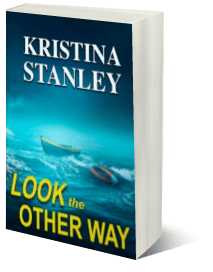

Post written by Kristina Stanley, author of Look The Other Way (Imajin Books, Aug 2017).

d9e70-1utkhhu-sp5fjiahqxtl8xwKristina Stanley is the best-selling author of the Stone Mountain Mystery Series and Look The Other Way.

Kristina is the CEO of Fictionary, and all of her books were edited using Fictionary.


Farley’s Friday: It’s a beach day

Farley here,

Some of you know I spent 5 years of my life living on a sailboat.  You’d think living on a boat meant I spent most of my days on the beach. However, I had to bark at my human as he windsurfed by me. I was letting him know it was time to hit the beach.

Farley Mattina

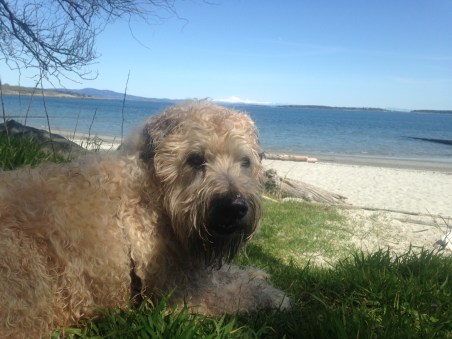
Now I’m a land lover – but I still find time to go to the beach. My plan for the long weekend – here’s what it will look like.

Farley at beach


Someone tell Kristina she might need sunscreen, as I’m going to stay on the beach the whole day.

Woof Woof

11 Steps to Find and Connect with Other Authors in Your Genre #AuthorToolboxBlogHop

Nano Blog and Social Media Hop2Thank you, Raimey Gallant for organizing the #AuthorToolboxBlogHop.

This is a monthly blog hop on the theme of resources/learning for authors: posts related to the craft of writing, editing, querying, marketing, publishing, blogging tips for authors, reviews of author-related products, anything that an author would find helpful.

To continue hopping through other great blogs in the monthly #AuthorToolboxBlogHop or to join, just hop on over to Ramey Gallant!

This week, I’ve chosen to do something a little special for everyone.

Even before you publish your first book, building an online network will help you when the exciting moment of releasing your novel to the world arrives.


Today, Donna Galanti, an expert in building a network for authors, is here to share her advice and she has a very generous offer for you (you can find it at the bottom of post).

11 Steps to Find and Connect with Other Authors in Your Genre

-by Donna Galanti

I’ve befriended many bestselling authors, online and in person, who want to help new writers. They’ve advised me, allowed me to guest post on their blogs, and have written blurbs for my work. They pay it forward. Someday you will too.

Remember, this is all about community and you are an author (or will be!) and you need to surround yourself with your author community. You are a member of the party now. And every party needs people to make it successful! 😊

Act respectful, professional, and positive in your reaching out to other authors and they will reciprocate. These people can be your biggest influencers when it comes to industry advice and connections with agents, editors, and publishers.


First — how to FIND Comparable Authors

1. Start with authors you are familiar with in your genre and connect online and in-person.

2. Conduct research to find other successful authors in your genre. Create a list from this and research these authors to connect with online.

3. Are you a debut author? Connect with other debut authors. Search online for “debut authors” and the year your book releases, plus “your genre,” to locate comparable debuts. On Goodreads, search in Lists for debut books by year and genre to match yours.

4. Go to the Amazon page of a similar author in your genre. Click on their books and scroll down the page to see books readers also bought like theirs. Hop on over to those book pages and check out those authors to see if a good fit for you to connect with as well.


Second — How to CONNECT with Comparable Authors

5. Add new author connections to a special private Twitter list called “Comparable Authors” and connect with them there on a regular basis and give them a shout out.

6. Engage on their Facebook author pages with useful, positive comments. Share their posts to your audience.

7. Comment on their blog posts with a useful remark or refer to something that you connected with in their post. This is a helpful tactic to draw the author and their followers into a conversation there, and they may connect back to your website and follow you online.

8. Connect via a conference, book event, or convention. In connecting with authors online, check out their events page to see what events they may be attending in person. Are any local to you or ones you have an interest in also attending? Be sure to connect in person at the event. Share why you love their books or follow their blog. Ask them a question that shows you’re interested in their work or ask for their best bit of advice for new authors on how to build a reader audience. Email them or post on social media after the event, letting them know you enjoyed meeting them and thank them for their time.

9. Ask the authors you engage with to guest blog on your blog. Authors love to be interviewed and provide guest posts, if they have time. It’s exposure for them and you — and content for your website!

10. Ask if YOU can guest blog on their blog and pitch an article idea that fits their audience (most folks love content for their blog!). I’ve had authors on group blogs ask me to fill in their monthly date spot if they are too busy, like The Kill Zone and Jungle Red Writers.

11. Join a group of debut authors. Start your own group if none! A book marketing collective is a strong way to help boost other authors and your own books. There is power in numbers. Banding with similar authors is a wonderful way to reach potential new readers while building a writer community as a resource

Be Sure to Avoid This Rookie Mistake:

Spamming an author’s Facebook wall and tagging them with your book or other promotion.

Go the Extra Mile:

Reach out to co-author blogs in your genre and ask if they are accepting new members as well as guest posts.

Banding with similar authors is a wonderful way to reach potential new readers while building a writer community as a resource.

Have you banded with other authors to build your influencer network? What worked for you? What are you willing to try that you haven’t done yet?


About Donna:

Donna Galanti is the author of the bestselling paranormal suspense Element Trilogy and the children’s fantasy adventure Joshua and The Lightning Roadseries. She is represented by Bill Contardi of Brandt & Hochman Literary Agents, Inc. Donna is a contributing editor for International Thriller Writers the Big Thrill magazine and regularly presents as a guest author at schools. She’s lived from England as a child, to Hawaii as a U.S. Navy photographer. Donna has long been a leader in the Mid-Atlantic writing scene as a workshop presenter. She’s taught on writing craft and marketing at writing conferences, retreats, regional writing organizations, and colleges and is also a writing contest judge at nycmidnight.com. Donna also loves teaching writers about building author brand and platform through her free training series at yourawesomeauthorlife.com. Visit her author website at donnagalanti.com


Special Promotion For Writers!:

Donna is offering a special deal just for Fictionary readers. Get 50% off Donna’s online course, Create Your Awesome Community for Debut Authors. Are you a debut novelist or a writer seeking publication? Then this course is perfect for you.

Create Your Awesome Community for Debut Authors (CYAC) is Donna’s proven complete step-by-step system designed to take you by the hand (as in step 1, step 2, step 3) to create community by connecting and collaborating with readers and writers for author platform and brand success. Reach more readers and sell more books! No ambiguity or confusion. Literally, step-by-step nothing is left out.

Create Your Awesome Community for Debut Authors includes instant access to:

  • Kick Butt Step-By-Step Modules
  • 15 Awesome Bonuses
  • 7 “Bigger Than a Bonus” Meet the Experts (insider secrets to success from the Masters!)
  • Lifetime access and login 24/7 (it is all digital + downloadable so you can log in to access the content and download the course and take it with you on the go)

For all the course details, including a peek in-depth into each module and bonus, and to take advantage of this 50% off special deal visit:https://www.createyourawesomecommunity.com/special


Why not check out Fictionary’s free 14-day trial and turn your draft into a story readers love?

Why, When and How to Beta your Book.

Sharing your story can be frightening, so I’ve asked the experts at BetaBooks to talk about how to get the most out of beta readers.

Please welcome guest writer, Paul Kilpatrick and learn the best practices in beta reading. In this context, beta reading is having someone else read your novel and get them to give you feedback that helps you make it a better story.

Check below for a special deal…

Over to Paul.


Why, When and How to Beta your Book.

by Paul Kilpatrick.

Hi, I’m Paul Kilpatrick. My partner Andrew Burleson and I founded BetaBooks, a software tool to help authors organize their betas. Since it launched, our software has helped authors beta over 1000 books. We’ve had countless conversations with authors and readers about why they choose to run or participate in Betas. So let’s get into it.

Why to Run a Beta

There are at least four great reasons to beta.

1. Big-Picture Editorial

You can use your beta to identify oversights and problems in your book. This is what comes to mind for most authors when they think of beta-ing their books. For beginning authors, it is one of the most valuable reasons to beta. A group of people can spot character inconsistencies that you have overlooked, draw attention to plot problems you can’t see, and let you know when you are straying from genre conventions. What you do with that information is up to you.

2. Market Research

Movies have test screenings before they open, bands test out new songs on good crowds before they go on albums, and plays schedule out of town runs, all to get early reactions so they can make their final product as tight as possible, giving them the greatest chance of success. Authors should always be looking for ways to do the same, and the beta is an amazing tool for that. What if someone just released a book in your genre with a similar twist? What if people are reading subtext into your story you did not intend? What if you are unaware of that go-to plot move that people are tired of? Getting your book in front of people in a low stakes setting is a great way to gather that information.

On top of all that, if you are starting out, it is a fantastic opportunity for you to test out different ways of selling your book. Experiment with and keep track of what you said to convince different people to read your book. Those techniques will help you sell your book to the world.

3. Community Building

You want fans who are invested in your books, and beyond that in you as an author. Inviting them into your process and making them feel important is a hugely powerful way to build reader engagement with you and nurture long term relationships. The beauty of beta readers is that they are important to your process. There is no artifice of marketing necessary here. A direct interactive relationship with the readers who are most invested in your work is invaluable. Don’t pass that opportunity up.

4. Sensitivity Reading

If you are writing outside of your own experience, it is essential to seek out people who can give you an honest response to characters like them. If you are not a lawyer but have a lawyer character, get a lawyer to read your book. Many people are so tired of seeing laughable versions of what they do represented in media they will be happy to give it a whirl. This can extend to any experience outside of your own. Write whatever you want but take the opportunity to make sure you are doing it respectfully by seeking out people who are like your characters.


When to Run a Beta

It’s best to beta after a few thorough self-edit drafts (possibly done with the input of a writers group or mentor), so the work will be clean enough for readers to enjoy. It’s also best to do it before a final meticulous copy edit and type setting, because you may make substantial changes based on the feedback you get.

That having been said, we have seen people beta their books at just about every phase of writing. Some authors beta chapters as they write them, and use that super early feedback during their first editorial pass. We have also seen authors use their beta as a last stop before publishing to give them just a little more peace of mind, or as a perk for their core fans to help build buzz before the launch.

There are two questions you should ask yourself before you decide to run a beta:

Am I mentally ready to accept feedback and make changes based on what an outsider says about my book?

Too late in the process and you may dismiss something because of the amount of work it represents. Too soon and you may not be happy enough with the story to avoid feeling attacked and hurt.

Is this draft in good enough shape that I am respecting my readers’ time?

The people we know who invite beta readers super early are practiced and know that what they write in their first draft is close to their final product. Other authors we know won’t show anything to a reader that hasn’t gone through half a dozen of their own revisions. This is not a statement about author skill, merely about process. Do not conform to anyone else’s timetable if you feel it encourages you to waste people’s time.


How to Run a Beta

There are three things you need to do to get the most out of the process. These are macro principles to keep in mind. If you want an in-depth step by step, we have written one here.

Have your book ready

There are authors who invite people to beta a few chapters of a work they never finish writing. Please don’t be that person. Not only are you wasting people’s time with your actions today, you may be turning potentially great beta readers off forever. Do everything you can to make sure you draft is in good shape. This will mean that a) your readers are getting the best experience possible and more importantly b) you have an easier time accepting feedback.

Set clear expectations

Clear guidance about what you, as the author, are looking for is essential. Kristina Stanley, for instance, has a blanket “Tell me when you skimmed” request. Other people ask readers which character they liked most in a chapter. Still others ask about specific beats, tone and believability. Ask 2–3 questions to start and then decide if your readers can handle more questions at a time. Giving a deadline is also a good idea, as a lot of people work better when they’ve got one.

After all of this, know that if you are building a beta team for multiple books, which I hope you are, you should be thinking of this as an opportunity to train and grow a part of your team so that the process can be better for everyone in the future.

Be ready to Engage Honestly

The final piece of macro advice I can give you has to do with your state of mind as an author. You are asking people for their honest feedback, so be ready for that feedback to hurt sometimes. Don’t blame the reader or try to defend yourself. Say, “Thank you,” and either move on or to try and fix the problem. Do not be discouraged. A beta that reveals a lot of problems you had overlooked is not a bad thing, it is an opportunity; and it means you did not release a subpar book into the world. Conversely, if you are getting a lot of positive feedback, take note and see what you are being praised for. Accept and enjoy it, but try to learn what you are doing that people like so you can lean into that in the future.

On Finding Readers

Now that we’ve covered, the WhyWhen, and How of running a beta, I want to delve briefly into how to find readers. Betas can contribute greatly to a book’s success, but many beginning authors have trouble even getting one off the ground because they are intimidated by finding readers. Don’t be one of those authors!

The two most frequent complaints about betas I hear from authors are: “It is impossible to find readers.” and “I just can’t find any good beta readers.” On both of these, I call baloney.

“It is impossible to find readers” is code for “I’m afraid to ask people to read my book.”

Asking people to read your book is uncomfortable, but it is also the job. Most people who are driven to be creative have a host of baggage that goes along with their creative drive. Imposter syndrome is real. So is introversion, self-doubt, self-loathing, low opinions of our own work, and a collection of other negative internal voices making it difficult to ask people to read our books.

The truth is, to find a good group of beta readers, you are going to have to ask a lot of people. It isn’t impossible. It isn’t even difficult, not really. It isawkward at first, and tedious and repetitive, and it opens you up to rejections. Those hurt, but accepting them is also an essential part of any writer’s journey. Hand-selling your book to someone is the most basic element of what makes a person an author. Many people write, but not all of those are authors. Convincing people that your work is worth reading and eventually worth money is what makes you an author.

Approach it as a challenge and accept it as necessary for your development. Sure there will be rejections, but these are the small rejections that help you build up your author armor. Finding beta readers is a numbers game. Posting an open call for people to do you a favor on your facebook page or on a forum will not get great results (and is another way to avoid actually opening yourself to specific rejection). Instead, ask everyone you know what kinds of things they are reading then see if they will read your book and give you their feedback. Be ready to get nine “no’s” for every “yes,” and know that only a third of the people who say yes will even finish.

It is worth repeating: finding a group of readers isn’t impossible or difficult. It is tedious and requires persistence, but with each person you ask it will get easier.

“I just can’t find any good beta readers,” is code for “I just can’t find a developmental editor who will edit my book for free.”

This one is really amusing to me because, duh. A beta reader isn’t an editor, and if what you want is an editor, go hire one. Beta reading is about gathering and sifting a reasonable amount of feedback into helpful and actionable changes to your book, not finding a silver bullet to save you time and money.


Wrapping Up

Each author does things her or his own way. It is one of the joys of being your own boss. Experiment with your beta so you get the most out of it and so your results complement your goals and process. This blog post lays out ideas we frequently see authors using to get the most out of their betas. If you are curious to read more about betas, you can check out the BetaBooks blog. We also tend to talk about betas a fair amount on our podcast How Authors Work. If you are running a beta soon, why not look at BetaBooks, and take the free trial tier for a spin? It might help you out.

Thank you for your time and good writing!


SPECIAL OFFER

Kristina here…

Thanks to the team at BetaBooks Fictionary has a special offer for you. You can sign up to BetaBooks for free, that’s a given.

The special offer:  Use the coupon code “fictionary” and receive 20% off any BetaBooks subscription plan. It’s easy! Sign up for the free plan and if you decide to upgrade your plan, enter the coupon code, can voila, you get a discount.