Mystery Mondays: Call For Authors

Promoting Reading – Promoting Authors

Mystery Mondays began in July 2015. Authors from many genres who write with a hint of mystery have told you about their books, answered your questions about writing and shared their thoughts with you. Every Monday, you’ve be introduced to another author and maybe discovered someone you’re not familiar with.

Are you interested in guest blogging?

I am now accepting guest blog requests for the remainder of 2016 starting on June 26th (although some spots are books throughout the summer). If you’re interested contact me here.

If you’d like to participate, here’s what you need to qualify:

  • you are a published author – traditional or Indie or any other way that I don’t know about,

OR

  • you are about to publish and have a launch date within a week of blog post,

AND

  • you want to promote other authors and spread success,
  • you write novels with a hint of mystery,
  • you are willing to engage in the comments section when readers comment on your post.

All I ask from you is that you follow my blog, comment on author’s posts and help share via Twitter and Facebook.  If you’re interested send me a message via my contact page.

The Requitements:

You’ll have to send me your bio, back text of your novel, author photo and book cover.

I’d like you to write something about yourself, your novel, your research, a writing tip or a publishing tip. Please keep in mind I am a family friendly blog.

I do reserve the right to edit anything I think might be inappropriate for my audience, which I will discuss with you first. I think anything under 700 words is great, but it’s your book so up to you.

I’m looking forward to hearing from you and sharing your novel with the Internet world.

Mystery Mondays: Elaine Cougler with 7 Reasons Why Writers Need To Be Speakers

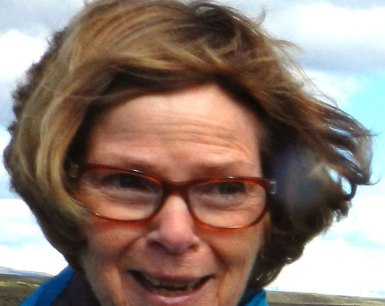
This week on Mystery Mondays, it is my great pleasure to host author Elaine Cougler. Elaine was one of the very first authors to connect with me when I first started writing a blog. Years have gone by, and we still support each other in our work. It’s a wonderful thing to have a friend I’ve never met but feel like I know.

Elaine first appeared on Mystery Mondays in November 2016 with a post about Linking History and Fiction.

Today, she’s here with another topic.

7 Reasons Writers Need To Be Speakers by Elaine Cougler

Screen Shot 2017-05-28 at 4.46.58 PMWhen I first talked to Kristina about appearing on her Monday Mystery blog, we discussed a new book I was working to finish and that this would be a lovely place to write about it. As sometimes happens in this writing life my muse took a holiday and left me to click clack on the keyboard alone; hence, I have no new book to announce just yet.

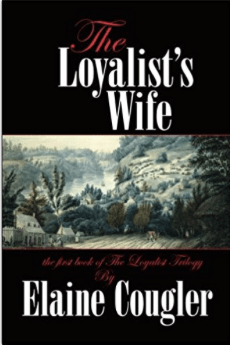
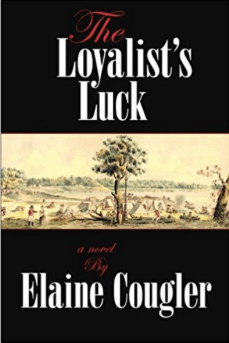
What I do have, though, is the voice of experience—my experience with my first three books, my Loyalist trilogy, and their marketing.

I made the mistake most new writers make in not paying attention to marketing until after I had the book published. I was busy enough I thought. Then three weeks into my new life as a published author receiving book orders from friends and family—all so supportive—I got the call to speak at a meeting in my city. And I could take my books to sell.

Coming into that event I had twenty-five years experience as a high school teacher and many more years as a singer, both “on-stage” pursuits that helped me battle the nerves and just have fun with my audience. Well that particular meeting changed my life.

I took my place at the podium with the mic and the electronic pointer for my slides. I’d barely begun when one of the men—the audience was all men—walked to the front of the room close to where I was. Distraction. I ignored it. In a moment he was up there again and this time my teacher voice kicked in. “There’s one in every class.” I laughed and pointed at the offender. The all male audience roared. I relaxed and so did they. And the man stayed in his seat from then on.

This incident shows that even though they all knew each other and most certainly knew this man, they shared a characteristic of all audiences. They wanted me, their guest speaker, to succeed. And they could see this man’s distraction. They loved it when I took over the stage and made it my own. As author-speakers we need to remember the audience is with us. They are most comfortable when we speakers succeed.

Here are a few other points that might convince all of us writers to be ready to talk about our books:

  1. Our books compete with literally millions of other new titles published in the world each year. We have to try to stand out in order to even be noticed. We can do that on stage.
  2. There’s nothing like personal contact where potential readers can hear about our stories right from the author’s lips. A smile goes a long way.
  3. A speaker has a captive audience. What a great way to engage potential readers who may want to give your book a try.
  4. We get to read excerpts from our books and if we’re smart we’ll pick parts that end with a cliffhanger. I have one chapter that ends with Lucy having a nightmare. I ended it with her sitting up in bed and the last line is “Someone was in the room.” My audience wants to know what happens and I sell books.
  5. If you publicize your event, you get publicity even if not everyone who reads the ad comes to your event. I do this on Facebook a lot. That reminds me that I’ve got to put an event for this Saturday up there! (I’m helping my friend who has a recording studio do a workshop on recording books. He did mine.)
  6. You meet others who can add to your own knowledge about your subject. This happens to me because I write historical fiction and it also leads me to other gigs. Check your own area for clubs such as reading clubs, historical groups, book clubs, library clubs, church groups, Women’s Institute or similar groups, ancestry groups, schools and any other organizations whose purpose relates to your book. Because I’ve written about the Loyalists, many of those Canadian groups have contacted me, eager to engage about our common loyalist ancestry.
  7. People will introduce you to their friends as a writer. You need to have your 15-second elevator pitch down cold because they will ask what you write about. And be excited, not apologetic. Let your eyes shine. You’ll see soon enough who wants to hear more and who is not the slightest bit interested. It’s okay. Not everyone is a reader. At book selling events I often ask people who are kind enough to stop at my table if they are readers. If they say no, that’s fine. They may buy books for someone who is a reader. The trick is to find out. And not to be pushy!

The audience does want you to succeed. And you want to give them what they want. Take the time to practice your talk. Get comfortable with it. If you go for a prepared speech, make sure you don’t just read it. Mark places to look up, engage your audience with questions, let them see you’re a person. You can even do self-deprecating humour where you laugh at yourself.

I often mention the catalyst for this journey of mine, my son, who asked me if there was anything I wished I had done in my life that I hadn’t yet tackled. I answered, “Write a novel.” He replied with a long list of my accomplishments, which I tell them, and then I interject “I think he wanted money or something.” They laugh. And I go on with his final bit “If not now, when?” It really was the catalyst. The next week I bought How to Write and Sell Your First Novel and I was off on this great self-defining adventure.

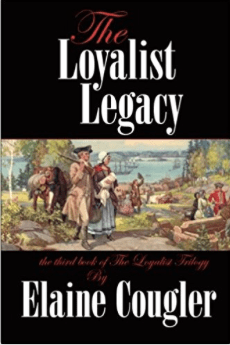
All three books in the Loyalist trilogy are available on Amazon.

Screen Shot 2017-05-28 at 4.45.25 PMAfter the crushing end of the War of 1812, William and Catherine Garner find their allotted two hundred acres in Nissouri Township by following the Thames River into the wild heart of Upper Canada. On their valuable land straddling the river, dense forest, wild beasts, displaced Natives, and pesky neighbors daily challenge them. The political atmosphere laced with greed and corruption threatens to undermine all of the new settlers’ hopes and plans. William knows he cannot take his family back to Niagara but he longs to check on his parents from whom he has heard nothing for two years. Leaving Catherine and their children, he hurries back along the Governor’s Road toward the turn-off to Fort Erie, hoping to return home in time for spring planting.

With spectacular scenes of settlers recovering from the wartime catastophes in early Screen Shot 2017-05-28 at 4.46.11 PMOntario, Elaine Cougler shows a different kind of battle, one of ordinary people somehow finding the inner resources to shape new lives and a new country. The Loyalist Legacy delves further into the history of the Loyalists as they begin to disagree on how to deal with the injustices of the powerful “Family Compact” and on just how loyal to Britain they want to remain.


Elaine low reswww.elainecougler.com

Elaine Cougler is on Twitter, LinkedIn and YouTube

www.facebookcom/ElaineCouglerAuthor


Mystery Mondays: Lucinda E Clarke On Becoming an Author

Today on Mystery Mondays, we welcome Lucinda E. Clarke, author of Amie African Adventure.

Becoming an Author by Lucinda E. Clarke

I was first published at the age of seventeen – for the church magazine. I had fraudulently volunteered to be the Sunday School teacher in order to gain brownie points for the CV I submitted to teacher training college. I have no idea what I wrote but it got little exposure, as I swiped most of them from the table at the back of the church and took them home to read.

I knew at the age of five that I wanted to be a writer, but life gets in the way, so in between I washed up in kitchens, made pies in factories and dug up dead Romans. I taught children, bred animals for pet shops, cairn terriers and a couple of daughters. Moving to Libya I presented on radio, moved further south and ran the worst riding school in the world in Botswana while teaching and developing photographs. I constructed giant teddy bears, until, in my mid forties I fell into my dream career after an appalling audition in the drama department of the South African Broadcasting Corporation. “You are no great shakes as an actress,” I was told, “but you can write. Go home and write.”

I did, and bombarded every branch of media south of the equator with articles, plays, short stories, reports until I was offered my first contract writing for radio. I graduated to scripting for television, freelancing for a variety of production houses, major corporations, banks, government departments, tourism, covering a vast range of subjects. I was the guest at the party who knew a little about everything and could bore you to tears with my scant knowledge.

Before retiring in 2008, I was running my own video production company in South Africa, supporting children mentioned about, a husband, a St Bernard and the family who kept house for us.

On moving to Spain I discovered an old manuscript under the bed and decided to self publish. I’d been commissioned by two of the Big 5 to write educational books in the 1990’s and decided that self publishing was the way forward for me.

Since then I have scribbled three memoirs, a satirical comedy set in Fairyland and three mystery novels set in Africa (#4 due out in July).

I seldom watch a film or read a book a second time. I like to be surprised at the end, I adore those last minute twists that leave me breathless and that’s the kind of books I like to write. The memoirs were easy, I knew the content and how the story ended. Writing fiction is very different. I start with a basic idea and then my major character Amie takes over and I just write what she tells me to. Often the villain is not who you think it is, and I have a nasty habit of killing people off.

Back in the days when I was scripting for radio I owned four sets of encyclopaedias, today most of my research is on the internet, but since my stories are set in Africa, and I lived there for forty years, I draw on my own experiences.

When I began self publishing I made every mistake in the book. To begin with I didn’t realize you had to market, or even tell anyone I’d written a book – a very different genre to media writing. I made an appalling cover off CreateSpace, self edited (I’d been paid to edit a national magazine, so of course I know how to do it), and sat back and waited to order the super yacht for sale in the nearby harbour.

It didn’t happen.

However I’m self published from choice. I don’t have to prove I can earn my living from writing, I already have, and I’ve turned down offers from small publishing houses. I’m not a control freak but I want to choose my covers and editors, lower my prices when I want to, decide which platforms in which to sell, and retain copyright. I also want as large a slice of the royalties I can get my greedy hands on.

If I was to advise a new writer I can do that in two words. Write. Read.

Today I write for myself. I have no clients to answer to, no propaganda to spin, and if action / adventure, page-turning stories (where no one drinks blood and lives in a dystopian world with elves and dragons) are not in vogue, I don’t care.

Finally, if I can glance at a shelf of books in the old age home with my name on them which will live on long after I’m gone, that is all I ask.

Who Is Lucinda E. Clarke?

LUCINDA 3 APRIL 2016Born in Dublin, dragged up in the Cotswolds, matured and finished off in Liverpool. Family not wildly enthusiastic
about following grandfather into Fleet Street (unfeminine, unreliable and dangerous), so she was packed off to dockland Liverpool to get teaching qualifications (safe, respectable and pensionable).

Lucinda returned south extremely good at self defence. She married and went crofting in Scotland, a disaster, and bred dogs among other things, less of a disaster. She moved to Kenya with 3 week old daughter, abandoned in the bush, then on to Libya, surviving riots, public hangings, imprisoned husband and eventual deportation. Moved to Botswana – still teaching – opened and ran horse riding school with ‘How to…’ book in hand.

Emigrated to South Africa taught for four years, but since 1984, she wrote freelance full time, for major corporations, UNESCO, UNICEF and the SABC for both radio and television. Moving into television production in 1986, she has received over 20 awards, specializing in the fields of education, documentaries, municipal and government.

She has also worked on radio in both Libya and South Africa, had a newspaper column, and was commissioned to write two educational text books. In 1996 she set up her own video production company, and retired to Spain in 2008. Well that was the plan…

AMIE AFRICAN ADVENTURE

AMIE 1 NEW COVER KINDLE HIGHER RESJust an ordinary girl, living in an ordinary town, with nothing but ordinary ambitions, Amie Fish is plunged into hot water when her husband gets posted to a country she’s never heard of. Amie’s ability to adapt and make a life for herself in equatorial Togodo, lands her in more trouble than she could have imagined, her life is threatened and everything she holds dear is ripped away from her. If Amie could have seen that one day she would be totally lost, fighting for her life, and enduring untold horrors, she would never have stepped foot on that plane.


African Adventure is the first book in the ‘Amie’ series – international multi award winning #1 bestsellers on both sides of the Atlantic. From naive, newly-married housewife, Amie faces challenges and dangers that change her beliefs and behaviour beyond all recognition.



Mystery Mondays: C.T. Collier on Critique Groups

Every week is a mystery on Mystery Mondays. You never know what writing topic we’ll cover. This week, I am trilled to have author C.T. Collier here to talk about critique groups.

The Benefits of Critiques with a Variety of Readers and Writers

by C. T. Collier

Nothing improves my writing so much as critique sessions with a variety of writers. That’s one reason I’m an active member of three face-to-face writers groups and one online group, all of whom offer critiques of one kind or another. My local writer’s group is a community of people who love language. My nearby-city group is a mix of published and aspiring writers, fiction and non-fiction. My regional group, which is a mix of readers and writers, is all about mysteries. And my online group is set up for mystery authors focused on publication. Each group in its own way is helpful to my writing, and I believe my contributions are helpful to theirs as well.

How do those language lovers around the table at my local library benefit me as a published author? Every time we meet, I’m reminded of what drew me to writing in the first place. It wasn’t the desire to have my words in print. It was the desire to use language effectively to bring to life my thoughts, hopes, dreams, and stories. All of us in the local writers group share that. Whether I’m reading a five-minute clip of my work-in-progress or listening to others, the experience rekindles my respect for and passion for the written word.

My close-by-city writers group schedules three critique meetings each year into its regular monthly schedule. The procedure is simple: each submission goes out to participants a few days ahead of the meeting; each participant prepares written comments for each submission. On critique day, we go round robin, one submission at a time, sharing our (always constructive) feedback and offering encouragement. With such a variety of input, my work-in-progress improves in ways I could not accomplish on my own. And I learn from and help all the participants, always a good feeling.

My mystery-only group is still in the formation stage and has not yet integrated critiques with meetings. However, three other members are writers with whom I critique one-on-one. Check back in a year to see how this evolves. There are many models to consider and an exciting variety of members interested in participating.

My online publication-focused group offers a variety of critique modes—subgroups that focus by subgenre; full-manuscript swaps; feedback for partial work in progress; and other types. I participate in several, and I always learn from the critical feedback. Just as important, I learn by reading another author’s work and offering feedback. I spot better ways of phrasing. I see tight plotting and weak plotting and get a sense of how my own can improve. I see another writer’s “darlings” and, from the experience, get the courage to eliminate my own.

Just as important—and this is true for all the critique sessions, regardless of the type of group—is ongoing community with writers. Writing can be a lonely business. And, since my intention in writing novels is threefold—to communicate, to inform, and to entertain—getting candid reader feedback and constructive editorial feedback are essential in making my book the best it can be before sending it to my editor. Finally, some critiquers become invested in my work, and I in theirs, and we become eager readers and good ambassadors for each other.

The benefits of critiques are many, and the only costs are the courage to put my work out there and the time to prepare thoughtful helpful responses to my fellow writers. If you haven’t ventured into critiques, I strongly encourage it. Please share your comments and questions about critiques with us below.

Who is C.T. Collier?

 CT-Collier-authorC. T. Collier was born to solve logic puzzles, wear tweed, and drink Earl Grey tea. Her professional experience in cutthroat high tech and backstabbing higher education gave her endless opportunity to study intrigue. Add to that her longtime love of mysteries, and it’s no wonder she writes academic mysteries that draw inspiration from traditional whodunits. Her setting is entirely fictional: Tompkins College is no college and every college, and Tompkins Falls is a blend of several Finger Lakes towns, including her hometown, Seneca Falls, NY
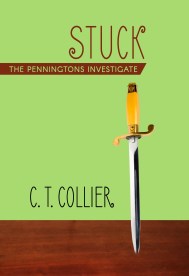
STUCK by C.T. Collier

Stuck_Meet the Penningtons—Lyssa, Ph.D. Economics, and her husband “the handsome Brit” Kyle, Ph.D. Computer Science—in their second investigation, Stuck.

Murder never entered the picture until Fritz Van Derzee decided, at long last, to clear his name. Who stuck a jeweled stiletto into his desktop after stabbing him to death? Fritz’s daughter, Emma, recruits her former professor Lyssa Pennington to find the killer.

And where’s the ten million Fritz was falsely accused of embezzling? Tompkins College President, Justin Cushman, hires his old friend Kyle Pennington to trace the missing money.

While Lyssa uses charm and tenacity on the long list of suspects, Kyle reconstructs the college’s old homegrown finance system. As they converge on the killer, Lyssa and Kyle may be the next two casualties.

Mystery Mondays: Edith Maxwell on Write What You Know – Plus Some

Welcome once again to Mystery Mondays. Today we have the pleasure of hearing from award-winning author Edith Maxwell.  Find out what she has to say about finding a dead body in a greenhouse…

Write What You Know – Plus Some by Edith Maxwell

I’m delighted to be a guest here today.  Mulch Ado About Murder, my fifth Local Foods Mystery, is coming out soon, so it’s a good time to talk about the origins of the story and the research I do, too.

The series is set on an organic farm with a group of  locavores – local foods enthusiasts – as recurring characters. The series has its roots in the fertile soil of the farm I formerly owned and operated in the northeast corner of Massachusetts. It was the smallest certified organic farm in Essex County. I’d had organic gardens for years, but wanted to work on a slightly larger scale, so it made sense to start this project when my sons were young and I was taking a few years off my hi-tech career.

When I started to write crime fiction, it made sense for me to use my knowledge of small-scale farming as backdrop to the mysteries. Being older and not quite as energetic as I was then, I love immersing myself in the world of growing without having to do all the hard work! One of my little boys is now a twenty-eight year old permaculture farmer who has kept chickens, so I have a current-day consultant on the books when I need one.

Of course, we authors don’t only write what we know. I might have begun with a modest organic farm located in a town much like the one mine was in, but the imagination takes over soon after.  My farmer Cam Flaherty is taller, much younger, and more of an introvert than me, and she’s also single. I didn’t have a Locavore Club knocking on my barn door fervently asking to sign up for my farm share program. And I certainly never found a dead body in my greenhouse – nor would I have attempted to solve the mystery if I had.

But that’s what fiction is for, right? I’ve been happy writing a book a year  about farming for Kensington Publishing, and along the way acquired a few other multi-book contracts, too. Called to Justice, my latest historical Quaker Midwife Mystery, released a month ago, and When the Grits Hit the Fan, Country Store Mystery number three (written as Maddie Day), came out only ten days before it. I’m living my dream writing about what I know – plus some.

Who is Edith Maxwell?

MaxwellCrop2017 double Agatha-nominated and national best-selling author Edith Maxwell writes the Quaker Midwife Mysteries and the Local Foods Mysteries; as Maddie Day she writes the Country Store Mysteries and the Cozy Capers Book Group Mysteries. Her award-winning short crime fiction has appeared in many juried anthologies and journals, and she serves as President of Sisters in Crime New England.

A fourth-generation Californian and former tech writer, farmer, and doula, Maxwell now writes, cooks, gardens (and wastes time as a Facebook addict) north of Boston with her beau and three cats. She blogs at WickedCozyAuthors.com, Killer Characters, and with the Midnight Ink authors. Find her on Facebook, twitter, Pinterest, Instagram, and at www.edithmaxwell.com.

Mulch Ado About Murder HCMulch Ado About Murder

It’s been a hot, dry spring in Westbury, Massachusetts. As organic farmer Cam Flaherty waits for much-needed rain, storm clouds of mystery begin to gather. Once again, it’s time to put away her sun hat and put on her sleuthing cap when a fellow farmer is found dead in a vat of hydroponic slurry—clutching a set of rosary beads. Showers may be scarce this spring, but there’s no shortage of suspects, including the dead woman’s embittered ex-husband, the Other Man whose affair ruined their marriage, and Cam’s own visiting mother. Lucky for Cam, her nerdy academic father turns out to have a knack for sleuthing. Will he and Cam be able to clear Mom’s name before the killer strikes again?

Mystery Mondays: Christina Hoag on Know Your Genre

This week on Mystery Mondays we have Christina Hoag, author of SKIN OF TATTOOS, and GIRL ON THE BRINK. I met Christina through this blog, so it’s pleasure to have her on as a guest. She’ll share her experience about genres and why and author needs to know where their novel fits.

The Importance of Genre

By Christina Hoag

One of those writing clichés tells aspiring authors to “write the book you want to read.” That may be true, but make sure your book fits into an accepted genre or no one else will read it.

As I was writing my noir thriller Skin of Tattoos, I never gave a thought as to what kind of a book it would be, as in what genre it fell into. After all, a good story is a good story, right? Not quite. As I later painfully discovered, genre is critical. It is how publishers market your book. If your book doesn’t fit neatly into a category, they don’t how to sell it and guess what, they won’t buy it.

Luckily, genre didn’t seem to matter in getting a literary agent. After much querying I landed a good agent, after first signing with a bad one. But then the agent had to figure out how to pitch the book. Was it noir, which involves telling an inside crime story from the point of view of the criminal? Well, yes. My novel is set in the gang underworld of Los Angeles and is told in first-person by a gang member protagonist. Or was it a thriller, which involves escalating tension between two characters as they battle over high stakes? That also loosely applied to my book as Mags, the narrator, is in a power and revenge struggle with his rival homeboy Rico for leadership of the gang.

Then there was my style. Amid the gang slang, Spanish phrases and occasional profanity, there was a lot of lyrical prose that wasn’t the usual style for a thriller, plus Mags’s character has an arc. In the end, the agent described it as a “literary thriller.” Although I hadn’t thought of myself as a thriller writer before, I thought that was an accurate enough description and out the book went.

The rejections rolled in. There was high praise for the writing, story elements, originality, and so on but the most pervasive comment was “who would be the audience for this book?” In other words, “literary thriller” wasn’t cutting it, especially coming from an unknown author. My agent consoled me, saying these were rejections based on “business decisions,” which was much better than having the book rejected for story reasons. Still, I saw that my book was too different, too original. I lamented that to my agent, who responded “publishers do want original stuff, but at the same time they want the same stuff. The same, but different.” Not very helpful.

Eventually, she ran out of places to submit and I got my manuscript back, but I wasn’t going to give up on it. I knew it was a good book. Top publishing editors had said so. I just needed to find someone to take a chance on it. I revised it yet again, cutting out about 13,000 words, including stuff that both agents had me add and that I now saw went nowhere. In fact, the additions didn’t make much sense and simply made the manuscript too long.

I sent the tightened version out to small publishers that accepted unagented submissions. The same thing happened. It was praised, but it didn’t fit in their lists. I started to despair then a publisher, Martin Brown Publishing, offered me a contract on it.

Skin of Tattoos finally was released in August and has been well received. Several readers told me the book is “unlike anything I’ve read before.” I take that as a compliment, unfortunately the mainstream publishing industry doesn’t.

I had another genre problem with my second novel, a YA called Girl on the Brink I was calling it a “contemporary romance,” but it’s not a romance because it’s about teen dating violence. Romance novels must have a happy-ever-after ending, which mine does not. But then the genre gods blessed me. I discovered my book did have a built in category: “contemporary social issues.” Since it contains a lot of suspense and escalating tension between the protagonist and the guy she fell for, I also describe it as a “romantic thriller,” which sounds like a less heavy read.

As for my third book, I’m making it a thriller after another discovery: I have to have an author brand because I’m expected to keep writing the same genre to build readership. So although I never set out to write thrillers, that’s now become my brand by default. Moral of the story: Know your genre.

WHO IS CHRISTINA HOAG

ChristinaHoagAuthorHeadshotChristina Hoag is a former journalist for the Miami Herald and Associated Press who’s been threatened by a murderer, had her laptop searched by Colombian guerrillas and phone tapped in Venezuela, hidden under a car to evade Guatemalan soldiers, posed as a nun to get inside a Caracas jail, interviewed gang members, bank robbers, thieves and thugs in prisons, shantytowns and slums, not to forget billionaires and presidents, some of whom fall into the previous categories. Kirkus Reviews praised Christina as a “talented writer” with a “well crafted debut” in Skin of Tattoos (Martin Brown Publishing, 2016), a gangland thriller. Her YA thriller Girl on the Brink (Fire and Ice, 2016) was named to Suspense Magazine’s Best of 2016 YA list. She also writes nonfiction, co-authoring Peace in the Hood: Working with Gang Members to End the Violence (Turner Publishing, 2014), a groundbreaking book on violence intervention used in several universities. Christina makes her home in Santa Monica and lives on the web at http://www.christinahoag.com.

SKIN OF TATTOOS

Los Angeles homeboy Magdaleno is paroled from prison after serving time on a gun poSkinofTattoosCoverssession frameup by a rival, Rico, who takes over as gang shotcaller in Mags’s absence. Mags promises himself and his Salvadoran immigrant family a fresh start, but he can’t find either the decent job or the respect he craves from his parents and his firefighter brother, who look at him as a disappointment. Moreover, Rico, under pressure to earn money to free the Cyco Lokos’ jailed top leader and eager to exert his authority over his rival-turned-underling, isn’t about to let Mags get out of his reach. Ultimately, Mags’s desire for revenge and respect pushes him to make a decision that ensnares him in a world seeded with deceit and betrayal, where the only escape from rules that carry a heavy price for transgression is sacrifice of everything – and everyone – he loves.

GIRL ON THE BRINK

GirlOnTheBrinkCoverHe was perfect. At first. The summer before senior year, Chloe starts an internship as a reporter at a local newspaper. While on assignment, she meets Kieran, a quirky aspiring actor. Chloe becomes smitten with Kieran’s charisma and his ability to soothe her soul, torn over her parents’ impending divorce. But as their bond deepens, Kieran becomes smothering and flies into terrifying rages. He confides in Chloe that he suffered a traumatic childhood, and Chloe is moved to help him. If only he could be healed, she thinks, their relationship would be perfect. But her efforts backfire, and Kieran turns violent. Chloe breaks up with him, but Kieran pursues her relentlessly to make up. Chloe must make the heartrending choice between saving herself or saving Kieran, until Kieran’s mission of remorse turns into a quest for revenge.

Mystery Mondays: Jennifer Berg On Being An Organized Writer

Today on Mystery Mondays, we have Jennifer Berg, Author of The Hatbox Murders published by Barking Rain Press.

The Importance of Being Organized by Jennifer Berg

Writing can be a lot of fun, but my biggest tip for serious writing is to be organized. If you’re looking for a publisher, keep a log of all your leads, contacts, and submissions. When researching a book, keep extensive notes and have them organized in a way that works for you. Personally, I work from detailed plot outlines, and I take a few minutes each day (okay, most days) to log how many hours I spent on each project, and what sort of work I did (research, outlining, draft #1, 2, 3… editing, marketing, etc.).

Not only does this help me to realistically plan my workload, and keep my work-life balance in check, it’s also reassuring to watch the hours accumulate as I near each milestone. Writing is fun, but it really is a lot of work, too.

Who Is Jennifer Berg?

Jennifer Berg 2017_20Jennifer Berg grew up on a small peninsula on Puget Sound where she dug for clams, built her own rafts and camped in a tree house, a tool shed, and a teepee. She attended the University of Washington where she majored in History. When she’s not concocting new mysteries, Jennifer spends her time painting watercolors, gardening herbs and succulents, and knitting odd creations. She currently lives in San Diego with her husband and their Appenzeller Sennenhund.
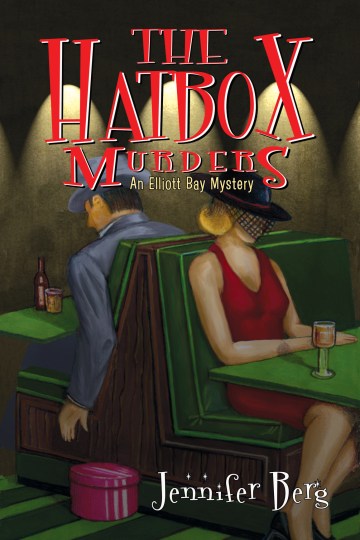
 

The Hatbox Murders

Seattle, 1956

HatboxCoverInspector Michael Riggs doesn’t believe in “women’s intuition,” but when head stenographer Margaret Baker insists that her friend and co-worker, Ruby Pike, most certainly did not jump off a bridge to end her life, Riggs reluctantly agrees to re-examine the closed suicide case.

He quickly learns that Ruby’s mousy cousin hater her while her rich uncle adored herm showering Ruby with expensive gifts. Her shady boyfriend had good reason to be ride of Ruby, but he also has an alibi for the night of her death. Add to that a tight-lipped boss facing financial ruin, a jealous wife, and a bitter landlady whose heirloom jewelry was pilfered, and it doesn’t take long for Riggs to realize that Margaret’s feminine intuition might be right.

Unfortunately for Riggs, the only blues he can find are a gold watch with a cryptic inscription, a photo of a missing dress, and a pink hatbox. As the police chief starts to boil over, Riggs decides to call on Victoria Bell, an alluring Prussian librarian with a knack for solving crimes who has helped him with other cases. But this time, Victoria id determined to stay out of the limelight. She only agrees to help with the case if her assistance remains a secret.

But when the murderer strikes again, Victoria realizes that she’ll have to risk the spotlight if she’s going to help Riggs catch the murderer.

Thanks for reading…


Mystery Mondays: Jennifer Leeper on the Emotions Punch Of Short Stories

Today on Mystery Mondays, we’re doing something a little different. Author, Jennifer Leeper is here to talk about short stories. I think this is the first short story collection I’ve hosted, so it’s a bit of a thrill for me. Enjoy!

Short, Not Small by Jennifer Leeper

515-HrYG7AL._SX322_BO1,204,203,200_Whether you’re a reader or writer of short stories, you know they can offer as much of an emotional gut punch or brain rock as a 300,000-word tome. Collections of short stories offer authors and readers the chance to quickly dive deep into the lives of characters and repeat this experience over and over between two covers. My latest collection, Border Run and Other Stories explores many characters within a relatively short word span, and I’m privileged to take you on a sampling tour here of these vastly different character worlds.

If the shoe fits

 In The Shoes, Carlos finds a letter from his abuela, who recently passed away, and in the letter she charges her family with conscientiously distributing her hoard of shoes. They can’t simply dump the house-sized pile of footwear at a thrift store, but must match each pair with the right feet. Not only does Carlos, his sister, and parents find it difficult to marry the shoes to wearers, but the result of hastily discarded pairs of shoes results in a horrific series of events that irreparably alters the lives of Carlos and his family.

The dead live on

In Book of the Dead, Violet Mora finds the “bucket list” Luca Barnes, the boy who bullied her in high school in the ashes of his family’s house that burned down after Luca fell asleep with a lit cigarette in his mouth. In the spirit of revenge, Violet decides to work her way through Luca’s list herself. Instead of revenge, however, Violet encounters Luca’s twin, Dominic, as she completes Luca’s objectives, and she experiences more than she bargained for when she took on Luca’s list.

 Take this job and shove it

In The Vortex, a man has been writing the same resignation letter in his head for years but he never actually submits it to his boss. Then, one day he decides to erase thousands of emails with one mouse click. He is set free and set off course all at once.

Though there are threaded themes of redemption, loss, and mortality across the 14 stories of this collection it’s the character development that allows each piece to stand apart. It’s not the word count that matters, but how words are used to bring lives on the page to life that counts.

Who Is Jennifer Leeper:

f792d207c31f8ddac4e71e9aaa583014_400x400Ms. Leeper is an award-winning fiction author who’s publications credits include Independent Ink Magazine, Notes Magazine, The Stone Hobo, Poiesis, Every Day Fiction, Aphelion Webzine, Heater magazine, Cowboy Jamboree, The New Engagement, Alaska Quarterly Review and The Liguorian.

She has had works published by J. Burrage Publications, Hen House Press, Inwood Indiana Press, Alternating Current Press, Barking Rain Press, Whispering Prairie Press, and Spider Road Press.

In 2012, Ms. Leeper was awarded the Catoctin Mountain Artist-in-Residency, and in 2013, Ms. Leeper was a Tuscany Prize Novella Award finalist through Tuscany Press for her short novel, Tribe. Ms. Leeper’s short story Tatau was published in the journal, Poiesis, and was short listed as a finalist for the Luminaire Award in 2015, and nominated by Alternating Current for Queen’s Ferry Press’ Best of Small Fictions of 2016 Prize. In 2016,

The Saturday Evening Post honored Ms. Leeper’s short story Book of the Dead with an honorable mention in its Great American Fiction Contest. Ms. Leeper’s short story The Bottle won second place in the Spider’s Web Flash Fiction Prize through Spider Road Press.

You can find Border Run and Other Stories at Barking Rain Press: http://barkingrainpress.org/border-run/ and Amazon. You can find Jennifer  and her other fiction on Twitter @JenLeeper1 or at her author website:


Mystery Mondays: Janet Elizabeth Lynn on Researching A Novel.

Today we welcome Janet Elizabeth Lynn to Mystery Mondays. Will Zeilinger his going to sneak in here too! I think this a a first for Mystery Mondays – a couple co-authoring novels. They are here with a new release and an essay about research.

Researching Hollywood 1950s

The Feminine and the Dignified by Janet Elizabeth Lynn

My husband, Will Zeilinger, and I write the Skylar Drake Murder Mystery series set in 1955 in Hollywood.  Private Investigator, Skylar Drake, hunts down murders in the Los Angeles area while working as a stuntman for the movie studios. Though the stories are hard-boiled, Drake also lives in the era which required us to research the life and times of Los Angeles mid 1950s.

While researching this period we had to carefully scrutinize the clothes, cars, politics, music, movies and (of all things) weather for each book. The fun part of the research are the clothes. Dressing our Femme Fatales for daytime and evening, as well as the men has been a real kick.

We discovered the hardships of returning War II and Korean War veterans beginning careers and marrying. Women were expected to give up their wartime careers to become homemakers and mothers. Because of this, there was a move toward a more feminine look for women and dignified look for men. There was also a desire to indulge in luxury, after the years of wartime deprivation and rationing.

Desert Ice, released this January, is the third in the series. And, yes we are still married!


WHO ARE Janet Elizabeth Lynn and Will Zeilinger

BW Janet Bill 01Published authors Janet Elizabeth Lynn and Will Zeilinger had been writing individually until they got together and wrote the SKYLAR DRAKE MURDER MYSTERY Series.

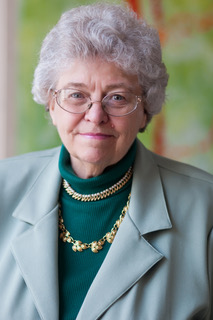
These hard-boiled tales are based in old Hollywood of 1955.  Janet has published seven mystery novels and Will has three plus two short stories. Their world travels have sparked several ideas for murder and crime stories. This creative couple is married and live in Southern California.


DESERT ICE

Desert Ice front cover _Web

In 1955, a missing Marine and stolen diamonds lead Private Eye Skylar Drake to Sin City, where the women are beautiful and almost everything is legal—except murder.

The FBI and a Las Vegas crime boss force him to choose between the right and wrong side of the law. All the while, government secrets, sordid lies and trickery block his efforts to solve the case.

Common sense tells him to go back to L.A. but is gut tells him to find his fellow Marine.


Find Out More:

Janet Elizabeth Lynn http://www.janetlynnauthor.com/

Will Zeilinger http://www.willzeilingerauthor.com/

Desert Ice on Amazon.

Mystery Mondays: Author Carolyn Mulford on 10 Common Mistakes

Today on Mystery Mondays I have the pleasure of hosting Carolyn Mulford. Carolyn writes mysteries and historical novels and has some sage advice on making your first draft better. At the end of this post, you’ll find a giveaway…

Beware 10 Common Mistakes by Carolyn Mulford

Working as a magazine editor, I observed that most of my well-educated contributors made the same types of mistakes in content, structure, and syntax. Then I started my transition from writing short nonfiction to writing novels. By the time my first mystery, Show Me the Murder, came out, experience in rewriting my own novels and in critiquing other writers’ work convinced me that most mystery writers also err in the same ways.

I share 10 errors common in first drafts—and sometimes the second and third. Even a newbie won’t go wrong on all of them, but even a veteran must guard against one or two.

The types of errors differ in the manuscript’s three major sections: the opening (two to four chapters), the middle (twenty to thirty chapters), and the ending (three to five  chapters).

The opening chapters

You have to grab readers fast, preferably on the first page, and keep a firm grip on them through the opening chapters. These set the tone and establish your voice for the entire book. Watch out for these problems.

  1. A lengthy backstory

Reveal only absolute essentials about your protagonist in the first chapter. Details delay the story. Later drop in the necessary backstory in phrases or sentences.

  1. Long descriptions of the setting

Select only telling details that put the reader in the time and place and establish the mood.

  1. A prologue revealing a dramatic point late in the book

Often writers use this kind of prologue, or a flashback, because the beginning lacks excitement. Consider making the prologue part of chapter one or starting the story closer to the murder.

  1. Multiple characters

How many names do you remember after a cocktail party? Readers can’t remember more than that. Introduce your protagonist immediately as readers identify with those they meet first.

 The middle chapters

We agonize over the crucial opening and lose steam in the much longer middle, the heart of the investigation and of character development. Worry about readers putting the book down at the end of a chapter. Each chapter must motivate them to read on, so avoid the following.

  1. A lack of action

Something must happen in every chapter. Check that by writing chapter headlines. Be sure you have a plot point and conflict—in solving the crime, in reaching the protagonist’s goals, in personal and professional interactions.

  1. Clues or characterizations that reveal too much

Drop in little clues here and there rather than big ones bunched together. Present three or four viable suspects and speculate on at least two motives. Draw suspects in gray rather than black and white.

  1.   Indistinguishable characters

Give each named character a memorable characteristic—appearance, mannerism, speech pattern, etc. For me, one of the great challenges and delights is portraying each character through distinctive dialogue, which involves vocabulary, grammar, syntax, and rhythm.

 The final chapters

Readers will condemn the whole book if the ending doesn’t satisfy them. They feel cheated if the solution shocks rather than surprises or characters act out of character. Readers’ frustration often comes from the following mistakes.

  1.   The first indication of the villain and the motive

From the beginning on, insert the character traits and the facts—at minimum the classic motive, means, and opportunity—needed to solve the crime. The last piece of the puzzle, or an interpretation of it, comes near the end, but clues and red herrings pop up all the way through.

  1.   Illogical, coincidental, or incredible solutions

You want readers to say, “Oh, of course. Now I get it.” Mystery readers require the writer to play fair in telling them what they need to know to solve the crime. They also expect justice.

  1. Villain reveals all

If the bad guy has to explain why and how, you need to go back and insert clues. Remember to wrap up all the loose ends, starting with the subplots. If you’re writing a series, readers accept an obvious loose end (often involving a relationship) that propels them into your next book.

Writing a mystery gives us countless opportunities to lose our readers, an intelligent and demanding group. Writing and rewriting with these 10 common mistakes in mind may help retain their attention.

One other thing that years of writing both nonfiction and fiction has taught me: If I become bored or restless in either writing or reading my own work, it’s time to rewrite.

Mulford18csmallWho Is Carolyn Mulford?

Carolyn Mulford worked on five continents as a nonfiction writer/editor before turning to fiction. Her award-winning Show Me series features Phoenix Smith, a former CIA covert operative who returns to rural Missouri and adapts her tradecraft to solve crimes with old friends and a K-9 dropout.

You can read the first chapters of her five mysteries and two YA historicals on her website: http://CarolynMulford.com.


Show Me the Sinister Snowman:

perf6.000x9.000.inddNorth Missouri has seldom been snowier and the mysteries more perplexing than in Show Me the Sinister Snowman, the fifth novel in Carolyn Mulford’s Show Me detective series.

Was the ailing congressman’s death an accident, suicide, or perhaps even murder?  And if it was murder, could it be that he was the wrong victim and the murderer might be poised to strike again?  The questions and perils build up, but retired CIA operative Phoenix Smith—with help from her faithful canine assistant, Achilles—is on the case.  We watch as the action zeroes in on a snow-bound estate to provide a new twist on the classic country house mystery.


More on Carolyn:

Go to Goodreads by April 2 to enter a giveaway of Show Me the Sinister Snowman. The giveaway begins March 24th, so be sure to check out Carolyn’s Goodreads page.

Cave Hollow Press, March 31, 2017, $14.95 (trade paperback) and $3.99 (e-book), 290 pp.; ISBN: 978-0-9713497-9-7.

((Five Star published the first four in the series: Show Me the Murder, Show Me the Deadly Deer, Show Me the Gold, Show Me the Ashes.))