Vicki Delany on Creating the Character of the Antagonist will be first up on the agenda at Saturday’s Scene of the Crime Festival. In the afternoon it’s a discussion panel on Writing the Villain. Then Tactical Survival. I think I’ll walk away at the end of the day feeling a little more evil than when I walked in.
Mystery Novels

Research: Getting Advice from Experts
Advice from an expert can make an unbelievable scene in a novel believable. #writetip Find a person in the industry you need expertise on and ask direct and focussed questions.
For me, reading the criminal code of Canada is helpful in creating a knowledge base, but when is comes to understanding what an RCMP constable would do in a certain situation, there is nothing more accurate than asking an RCMP constable. I’m often surprised by the answer and sometimes get delightful tidbits that give life to a scene.
For my novels, I interact with the RCMP, firefighters, doctors, EMTs, ski technicians, mountain operations experts, and ski racing experts.
Finding the expert you need: If you don’t know an expert in the field you need, find someone who can introduce you to one. Talk it up with friends. Be vocal about what you need. Social networking is invaluable for this (Facebook, LinkedIn, etc.). If you get lucky, a friend of a friend will be the person you need. When choosing an expert, make sure they have the right experience. I get my advice from an RCMP constable in BC because I write about BC.
Research: Internet, library, books, videos are all good places to start your research.
Write the scene: Complete a draft scene before speaking with an expert.
Focus your questions: Look for areas of uncertainty or vagueness within the scene. This is where the questions come from.
Ask the expert: Now you’re ready to speak to an expert. Your questions are focussed, so you won’t waste the experts time. This way, they might be willing to help in the future. The experts that take time out their busy lives to a help are special people.
Follow-up questions: Revise the scene based on any new information you collected. You may find you need to ask the expert follow-up questions. You may also find the direction of your story has changed.
As usual, please feel free to let know if you have something to add to this.
Share this:
Keeping Track of Scenes
There is a crazy amount of information in one novel. #writetip I sometimes get asked how I keep track of it all.
The spreadsheet is my friend. I use one row for each scene and the following column headings: Act, chapter, scene, name of scene, POV, location of scene, characters in scene, characters introduced, objects, brief description of what happens, revelation, tension, weather, and TOD.
Some of these need a little explanation.
Name of scene: This helps focus thoughts and pinpoint what the scene is about. Taking a scene and summarizing it into one or two words tells me whether the scene has focus.
Characters Introduced: If you find yourself moving your scenes around, you might move a scene with a character to a point in your novel where they haven’t been introduced yet. You can quickly go to the scene where they were first written about and move the intro material for that character.
Revelation: Some important information gets revealed to the reader and one or more characters. This enables you to quickly remember when a character knows something crucial.
Weather: Here is where I catch if I’ve changed the weather by mistake. This can happen if a new scene is added long after the original scenes were written.
I build the spreadsheet as I write the novel, but wait until a scene is complete before updating the spreadsheet. This way creativity is not interrupted for the housekeeping part of writing.
If you have any tips on how you keep track of your story, I’d love to hear about it.
Share this:
Character Naming
Character naming can be difficult. #writetip There are many sources to find names suitable for age groups and geographical locations. I’ve used marathon results (or any sports event) listed in the newspaper and my nephews commencement brochure. Places that carry a large number of names in one place give you the opportunity to choose a name quickly. You can always change it later if you don’t like it. Halfway through a novel a name might not feel right for a character. Once I changed a name without realizing it until it was pointed out by an editor. I used the ‘find and replace’ feature to change all previous occurrences of the name. Clearly, my mind had decided a new name was needed.
I keep a spreadsheet that I can sort by characters first names and last names. This way, I can make sure I don’t have character names that are too similar to each other. I’m never happy when I read a novel and get confused on what character is being written about because the names sound or look the same.
Share this:
Writing Intervals
Sometimes having a whole day in front of me to write is intimidating. I wonder what I could possibly have to write that will fill the hours. My trick is to give myself a deadline for some other errand. Say, by eleven I need to buy groceries. What usually happens is I feel pressure from the deadline, and I don’t want to stop writing when the times arrives. I’m always surprised by the scenes that appear and develop into a novel. I try to reminded myself to have faith in the process. If it doesn’t work, at least I can distract myself with an errand and try again later. Buying something delicious for lunch always helps.
Share this:
The Angel’s Game
I am currently reading the Angel’s Game by Carlos Ruiz Zafon. I was captured by the first paragraph. Made me smile, think and keep reading. It’s a beautifully written paragraph about a character’s reason for writing. Thought provoking for writers to read.
Share this:
When to ask for feedback
After having two novels reviewed by friends, I’ve discovered it’s better not to give the manuscript out too early. It makes the reviewers work too hard. Once I found my friends that excel at proofreading, I didn’t want to waste their time be making them read an early copy. I think even my first readers deserve the best I can write. Sounds obvious, but I wanted to share it anyway.
Share this:
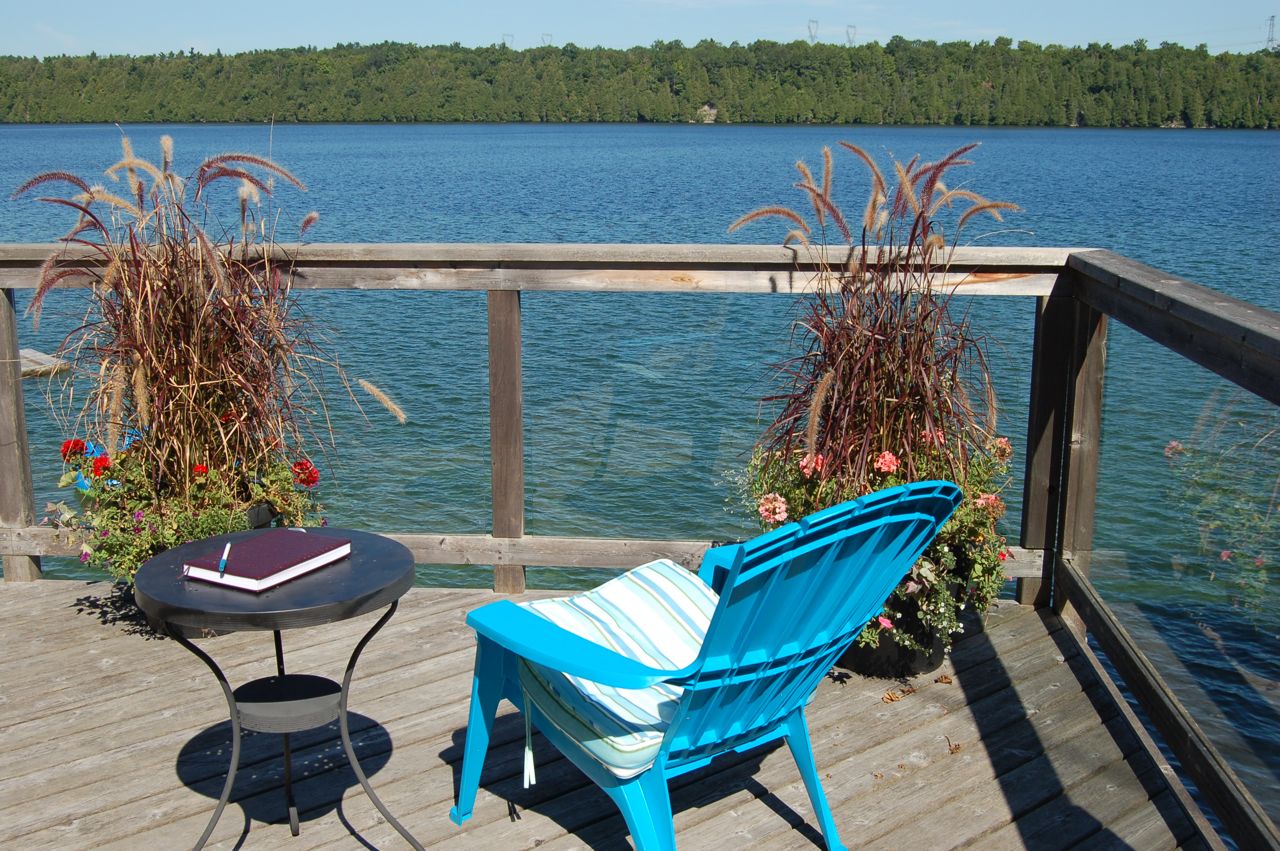
Where I write from

After Submiting
Getting advice from experts. One of my favorite things. I heard Antanas Sileikas speak last year and one tip he gave was what to do after you submit your work to an agent or publisher. Star writing your next novel that same day. This worked for me and jump started me on my second novel. It stopped me from obsessing about the submitted novel and got me focussing on writing instead. It only took four months to hear back from Margaret Hart and get the first positive news. By that time I had 60,000 words written.
Share this:
Feedback from Friends
Convincing friends to critique my writing was harder than I expected. Lots were willing to help, but none wanted to hurt my feelings. First I had to explain how it helped me write better, then demonstrate I was able to accept the comments without getting upset, and then I showed my early readers the results of their work. Joan Barfoot was the first to critique my writing when I attended the HSW Correspondence program. I’ve kept all her notes and sometimes use them as examples to show my friends what I’m looking for. One of the greatest surprises about writing was how much time and effort my friends were willing to spend on my novel. I have friends who critiqued Fracture Line and The Final Gate and are now offering to do the same for Burnt (my third novel). Amazing.
