Do you have a scene with too much dialogue? #writetip End up with an empty stage?
An easy way to remedy this situation, for me anyway, is to keep a list of objects in every scene. If I don’t have a single object, I get suspicious of the scene. This pushes me to analyze it and see if it’s barren. It gives me the opportunity to add description into the scene after I’ve written too heavily on dialogue or action.
After a first draft it’s fun to go back and put in objects that are used later in the novel. A little foreshadowing to keep things interesting.
What to keep? What to cut? #writetip Yesterday I wrote about the first lines of a scene. Today is the day for the last lines. Sometimes a scenes just plain runs on, sort of like a run on sentence. That’s okay when writing the draft, but not for the finished copy.
My trick: read the scene, delete the last two or three sentences. Read the scene again. Are the lines needed? If not, get rid of them for good. Sometimes I remove the entire last paragraph.
I never do this before I have a first draft written. There might be something important in the lines that you don’t discover until the novel is completed. It’s interesting how the mind will plant something in a scene and it will surprise you later when you not only remember it, but need to use it in a scene.
When to begin your scene is an important decision. #writetip Have you asked yourself is there a hook? Will the reader want to go on to the second paragraph?
It’s easy to start a scene too early. Once I have a draft of a novel completed, I review the beginning of each scene and decide if I need the first line, the first paragraph and sometimes the first page. I read the scene out loud without the first few lines and see if it sounds better. Even if I think the writing is good, I cut the lines (can be hard to hit that delete button) if they are not improving the story.
I’ve actually removed an entire scene where I couldn’t find the point of the scene. I think I just liked writing it, but it wasn’t relevant to the story. Maybe I’ll use it someday…
While writing my third novel, I’ve found myself in need of information on both forest fire fighting and snow making knowledge.
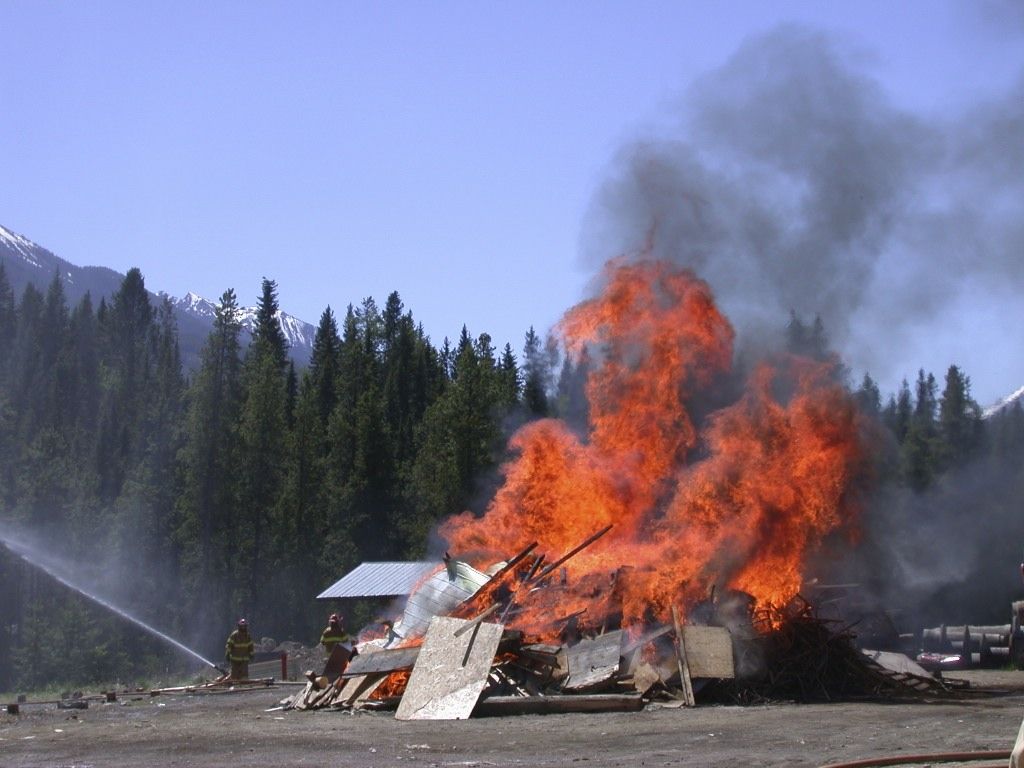
Here the Panorama Fire Department protects the surrounding forest while they control a burn. Before starting the fire, the area was soaked and the firefighters continued to drench the trees until the burn finished.
A ski resort has resources that can protect the area during the summer months from an advancing forest fire. Snow making equipment can be set up to soak the trees near buildings and homes. The snow guns can deliver over 1800 gallons of water an hour. The combined knowledge of the fire fighters and the resort’s snow making team could save the area.
Part of the fun of writing is the research. Now to take the information and create a suspenseful adventure for my characters . . .
What do you think about when you are creating your antagonists? #writetip Here are a few thoughts from the Scene of The Crime Workshop.
Have the antagonist(s) appear early in your story. The reader doesn’t need to know they are the antagonist, so you can hide them among other characters.
To keep the suspense going, the antagonist can play a prominent role, focussing focus both the reader’s and the protagonist’s attention.
Here are a few questions to ask yourself about your antagonist.
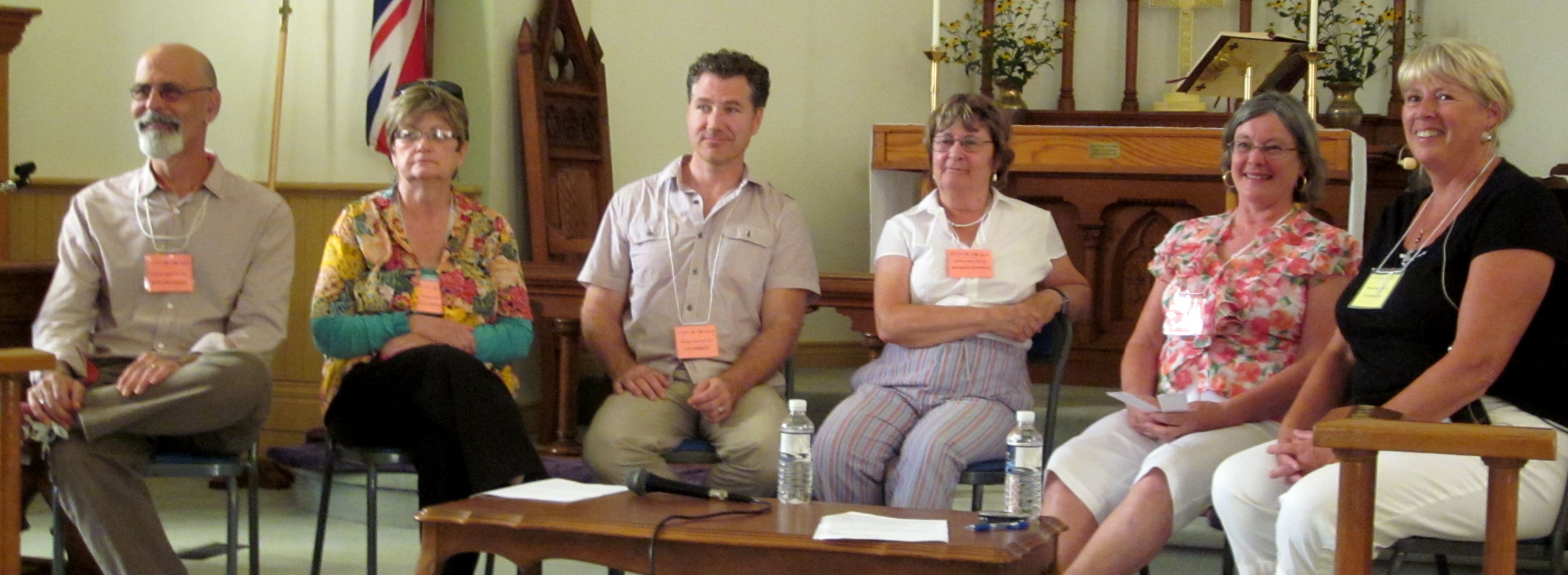
How can such nice people write such scary novels? The breadth of the authors making up the panel at the Scene of the Crime Festival gave the audience interesting insight into the art of mystery writing. Throughout the day, the authors were available to meet and talk with the audience.
The festival took place on Wolfe Island, a short ferry ride from Kingston Ontario.
I thought it would be fun to put some of their comments here. I, of course, am paraphrasing and have put in only portions of the answers. The following are a selection of questions Vicky asked the panel.
Vicki Delany asked: How much time does the author spend on their antagonist?
Howard Shier said: He likes his antagonist to be complex and human. In almost all of his books, the antagonist pushed the protagonist forward or backward. He stressed for his mob characters, he did a large amount of research to get the villain to seem real.
Vicki Delany asked: Does real life inspire the author?
Elizabeth Duncan said: The idea from her first book was inspired by an article in the newspaper, and the story took off.
Vicki Delany asked: Is the antagonist influenced by the protagonist?
C.B. Forrest said: Circumstances create the hero and the villain. A villain can cause a weak person to be a hero in the right circumstances.
Vicki Delany asked: What kind of person would do a bad thing?
Maureen Jennings had the following advice when writing your antagonist: Ask yourself what was the antagonist thinking of when he/she committed crime? Was he/she born bad? Does he/she know they’re bad?
Vicki Delany asked: Does the author use non-human antagonists?
R.J. Harlick said: Her main character, Meg, struggles with alcohol, but she didn’t think of it as a creating a non-human antagonist. She felt it gave Meg character and baggage to carry around. She also uses nature. Ice storms and forests fires have a place as an antagonist too.
Vicki Delany on Creating the Character of the Antagonist will be first up on the agenda at Saturday’s Scene of the Crime Festival. In the afternoon it’s a discussion panel on Writing the Villain. Then Tactical Survival. I think I’ll walk away at the end of the day feeling a little more evil than when I walked in.
Advice from an expert can make an unbelievable scene in a novel believable. #writetip Find a person in the industry you need expertise on and ask direct and focussed questions.
For me, reading the criminal code of Canada is helpful in creating a knowledge base, but when is comes to understanding what an RCMP constable would do in a certain situation, there is nothing more accurate than asking an RCMP constable. I’m often surprised by the answer and sometimes get delightful tidbits that give life to a scene.
For my novels, I interact with the RCMP, firefighters, doctors, EMTs, ski technicians, mountain operations experts, and ski racing experts.
Finding the expert you need: If you don’t know an expert in the field you need, find someone who can introduce you to one. Talk it up with friends. Be vocal about what you need. Social networking is invaluable for this (Facebook, LinkedIn, etc.). If you get lucky, a friend of a friend will be the person you need. When choosing an expert, make sure they have the right experience. I get my advice from an RCMP constable in BC because I write about BC.
Research: Internet, library, books, videos are all good places to start your research.
Write the scene: Complete a draft scene before speaking with an expert.
Focus your questions: Look for areas of uncertainty or vagueness within the scene. This is where the questions come from.
Ask the expert: Now you’re ready to speak to an expert. Your questions are focussed, so you won’t waste the experts time. This way, they might be willing to help in the future. The experts that take time out their busy lives to a help are special people.
Follow-up questions: Revise the scene based on any new information you collected. You may find you need to ask the expert follow-up questions. You may also find the direction of your story has changed.
As usual, please feel free to let know if you have something to add to this.
There is a crazy amount of information in one novel. #writetip I sometimes get asked how I keep track of it all.
The spreadsheet is my friend. I use one row for each scene and the following column headings: Act, chapter, scene, name of scene, POV, location of scene, characters in scene, characters introduced, objects, brief description of what happens, revelation, tension, weather, and TOD.
Some of these need a little explanation.
Name of scene: This helps focus thoughts and pinpoint what the scene is about. Taking a scene and summarizing it into one or two words tells me whether the scene has focus.
Characters Introduced: If you find yourself moving your scenes around, you might move a scene with a character to a point in your novel where they haven’t been introduced yet. You can quickly go to the scene where they were first written about and move the intro material for that character.
Revelation: Some important information gets revealed to the reader and one or more characters. This enables you to quickly remember when a character knows something crucial.
Weather: Here is where I catch if I’ve changed the weather by mistake. This can happen if a new scene is added long after the original scenes were written.
I build the spreadsheet as I write the novel, but wait until a scene is complete before updating the spreadsheet. This way creativity is not interrupted for the housekeeping part of writing.
If you have any tips on how you keep track of your story, I’d love to hear about it.
Character naming can be difficult. #writetip There are many sources to find names suitable for age groups and geographical locations. I’ve used marathon results (or any sports event) listed in the newspaper and my nephews commencement brochure. Places that carry a large number of names in one place give you the opportunity to choose a name quickly. You can always change it later if you don’t like it. Halfway through a novel a name might not feel right for a character. Once I changed a name without realizing it until it was pointed out by an editor. I used the ‘find and replace’ feature to change all previous occurrences of the name. Clearly, my mind had decided a new name was needed.
I keep a spreadsheet that I can sort by characters first names and last names. This way, I can make sure I don’t have character names that are too similar to each other. I’m never happy when I read a novel and get confused on what character is being written about because the names sound or look the same.