Mystery Mondays: Mary Clark on Exploring Family Dynamics

This week on Mystery Mondays, author Mary Clark is here to talk about her laster novel, Racing The Sun.

Over to Mary…

Exploring Family Dynamics

by Mary Clark

My latest book, Racing The Sun, is interwoven with surprises, some gently delivered, others more brutal. In several cases, accidents change lives. They also bring together people who wouldn’t have otherwise met. The main character, Leila Payson, a Miami high school teacher, finds that occupation not precarious enough; she moves through the world stirring things up, but not with careless force, but instead at a thoughtful pace. But the world has its surprises for her, too. And these come from close to home.

Her father has been looking into his family history at the suggestion of a life coach (who may be more than that). He shows Leila his DNA results and urges her to sign up on the same genealogy site and take the test as well. She’s interested in finding out about her mother’s line. But then her busy life intervenes and she doesn’t think about this much.

One day she receives an email that her test results are in.

On the site an icon flashed saying she had a hundred and forty notices of DNA matches. The first message said, Hello, our DNA tests say we’re related. Closely related. Get in touch with me if you want. Barb.

Leila wrote back: This is exciting. Who are your parents? Mine are Robert Payson and Kate Garrigus. I thought I knew all my close relatives.

The message came in later that day: Kate Garrigus was a good friend of my mother’s. My mother said she couldn’t have children, so she asked someone to be a surrogate for her. Did your mother ever say anything about this?

Well, no, she hadn’t. Leila asks where Barb lives and discovers it’s not far away. The two arrange to meet in a neutral place, and there Leila receives a great shock. Her understanding of her mother and their relationship changes forever.

With the advent of DNA tests, family secrets are being brought to light. This is one of the little mysteries in Racing The Sun. In this book, I attempt to explore the deep but subtle ways our lives change. That change is our responsibility: whether we let go of others, or reach out, whether we mask our pain, or work through it, whether we retreat from life with suspicion and hatred, or approach with curiosity and love. In our modern lives, change happens fast and almost continuously. Some of it is superficial, although alluring, which tries our ability to distinguish fact from fiction. Some change, though, is fundamental, and carries with it the mystery of our future lives.

RACING THE SUN

Racing The Sun Book Cover SmallLeila and her friends are back with more adventures in this sequel to Miami Morning. Leila works to start her new group, bringing together people of varying abilities. She meets Doug, a paraplegic, who wants to design and build better wheelchairs.
Her relationship with Mark evolves, and she discovers both her father and mother have secret lives. Raoul, her former hearing-impaired student, is back. And so is Mrs. Grisjun, the combative guidance counselor.
Leila’s friend Dov goes to Cuba in search of his new love, the hunky bird guide, Nìco. Cran, the father of Leila’s friend Charles, and husband of the erstwhile Berry, loves his vintage cars. After a racing accident, his life takes a different course.
And when will Leila—inspired by Doug’s experience—first discover she is also racing the sun?

Who Is Mary Clark?

MaryClarkSept2010Mary A. Clark was born in New Brunswick, New Jersey, USA, to parents who lived on the Rutgers University campus. Her family moved to Florida, where she spent her formative years, and where she was infused with awe and respect for the natural world. She also became aware of the lives of migrant workers, segregation, and the beginning of the Civil Rights Movement. Upon moving back to New Jersey, she completed high school near Plainfield and attended a county college before receiving a scholarship to Rutgers.

She graduated from Rutgers-Newark College of Arts and Sciences in 1972 with a bachelor’s degree in psychology. She had a strong sense of being a misfit, which propelled her to find her own place and occupation. She moved to New York City, and worked at the Poetry Festival at St. Clement’s Church, in the then outcast wilds of the Hell’s Kitchen neighborhood. For many years she lived in Hell’s Kitchen and worked for community organizations. In 1993 she started a monthly community newspaper, combining her two loves: the neighborhood and writing.  Later she relocated to Florida, and then moved to Virginia where she lives with her mother and three rescue cats.

Her books include: Tally: An Intuitive Life, a creative memoir, and Miami Morning, a Leila Payson novel, both published by All Things That Matter Press. A novel-in-verse, Children of Light, is available on Kindle, published by BardPress/Ten Penny Players. Her poetry has appeared in The Archer, Jimson Weed (University of Virginia at Wise), and Waterways: Poetry in the Mainstream. Some of her memoir, Into The Fire: A Poet’s Journey through Hell’s Kitchen, is online at Scribd.com. Her blog is: literaryeyes.wordpress.com, and her Facebook Author page: facebook.com/maryclarkbooks.

Avalanche – a review

Thank you, Roland for posting such a lovely review of Avalanche!

Roland Clarke's avatarWriting Wings

Kristina Stanley is one of my writing inspirations through her Stone Mountain mysteries. For the release of Avalanche in 2016, I ran her thoughts on ‘Writing A Series’ which encouraged me in writing my Welsh police procedural. Why I put off reading Avalanche until now is another mystery, especially as I rated the first two books as five stars each.

Anyway, that lapse is now corrected so here’s my review:

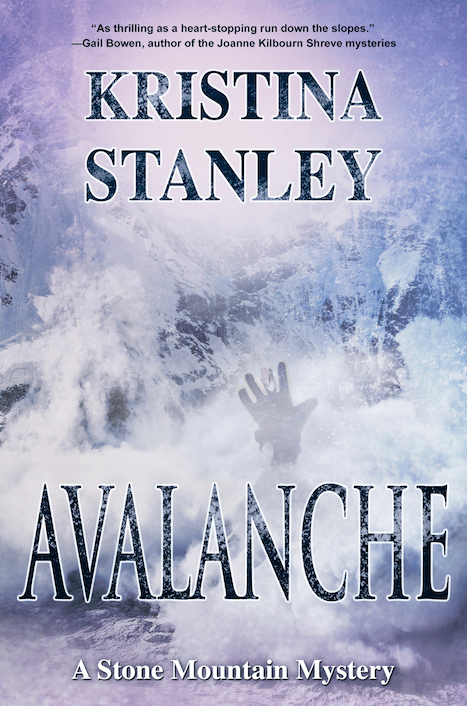
Avalanche Cover Final 

Avalanche (A Stone Mountain Mystery #3)

by Kristina Stanley (Goodreads Author)

On a cold winter morning, the safe at Stone Mountain Resort is robbed, and Kalin Thompson’s brother, Roy, suspiciously disappears. As Director of Security, Kalin would normally lead the investigation, but when her brother becomes the prime suspect, she is ordered to stay clear.

The police and the president of the resort turn their sights on Kalin, who risks everything to covertly attempt to clear Roy’s…

View original post 589 more words

Researching Tarot for Skeletons In The Attic by Judy Penz Sheluk

Judy Penz Sheluk on Tarot

Judy Penz ShelukIf you’ll pardon the pun, tarot was never in the cards when I began writing Skeletons in the Attic. I knew I’d have a protagonist, Calamity (Callie) Barnstable, who would be thrust into the position of finding out what happened when her mother disappeared thirty years earlier. I knew she’d be a fish out of water, a big city Toronto woman heading to Marketville, a town she described as the sort of place a family with two kids, a cat and a collie moved to. I even knew there was a scheming psychic, Misty Rivers, ready to take on Callie’s assignment if Callie turned it down. But my original thinking was more along the line of a crystal ball and tea leaves. Tarot? Not on the radar.
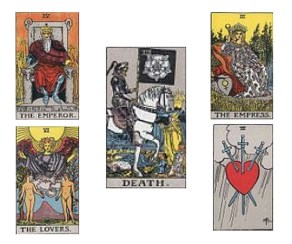
And then one day I walked into a quirky little gift shop attached to a large natural foods store. Among the crystals, crosses, and tie-dyed t-shirts there was a section on tarot. I found myself inexplicably drawn to the vibrant images on the Rider-Waite deck. What can I say? I walked out of the store that day with a deck of tarot cards and a book on how to read them, followed by countless trips to my local library to find out more. [Readers of Skeletons might recognize the setting of the gift shop in the book; in the novel it’s called Sun, Moon & Stars, a fictitious name.]

To say that I was naïve might be putting a gloss on things. Several sample readings, online research and how-to books later, I was no further to being an accomplished tarot card reader than I was ready to become an astronaut.

And that’s when I knew it would work. While searching the house she inherited from her father, Callie would find five tarot cards, and those cards, in addition to a basic understanding of the principles behind them, would be a matter of individual interpretation.

If you’re the curious sort (and if you read mysteries, you must be), these are the cards that Callie found:

Tarot1) III: The Empress

2) IV: The Emperor

3) VI: The Lovers

4) The Three of Swords

5) XIII: Death

What did they mean, and how do they impact Callie’s investigation? Ah…you’ll have to read (or listen) to the book to find out. The good news is it’s available in all e-book formats (Kindle, Kobo, Nook, GooglePlay, iBooks), trade paperback, and audiobook. Now go ahead, and pick a card… any card…


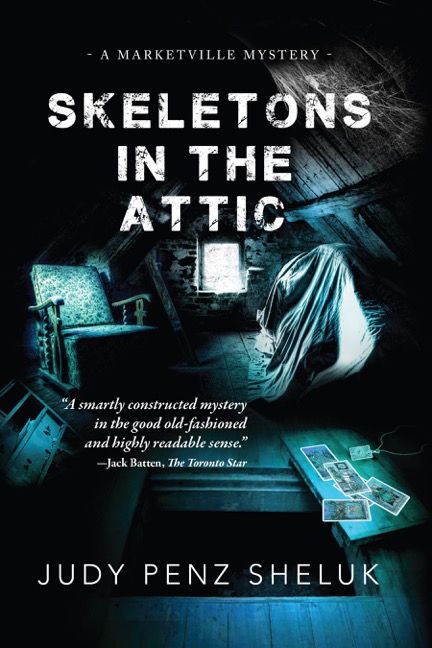
Skeletons CoverWhat goes on behind closed doors doesn’t always stay there…


Calamity (Callie) Barnstable isn’t surprised to learn she’s the sole beneficiary of her late father’s estate, though she is shocked to discover she has inherited a house in the town of Marketville—a house she didn’t know existed. However, there are conditions attached to Callie’s inheritance: she must move to Marketville, live in the house, and solve her mother’s murder.

Callie’s not keen on dredging up a thirty-year-old mystery, but if she doesn’t do it, there’s a scheming psychic named Misty Rivers who is more than happy to expose the Barnstable family secrets. Determined to thwart Misty and fulfill her father’s wishes, Callie accepts the challenge. But is she ready to face the skeletons hidden in the attic?


Find out more about Judy and her books at http://www.judypenzsheluk.com.


Find the book at all the usual suspects, including the publisher, Barking Rain Press.


Mystery Mondays: “Not Your Typical Christmas Story” by Author Debra Purdy Kong

Today we host Debra Purdy Kong. Debra’s new Evan Dunstan mystery novella, A Toxic Craft  is out, and I’ve already bought it. The first in the Evan Dunstan series is Dead Man Floating  which I loved, so I couldn’t wait for the second in the series to come be released.

Here’s the exciting news. Both books are on sale right now by Imajin Books! Give yourself a Christmas preset 🙂

Now, over to Debra…

Not Your Typical Christmas Story.

by Debra Purdy Kong

Two of my favorite Christmas movies are A Christmas Story and National Lampoon’s Christmas Vacation. Both moves portray the funnier aspects of pre-Christmas angst and obstacles until the big day arrives and everything turns out okay.

Although our family’s Christmas trees never caught fire as it does in Christmas Vacation, they did fall over a few times when we owned a lot of cats. My father eventually learned to anchor the tree to the wall. We also had our share of more serious Christmas troubles, but things did turn out okay, for the most part.

I wasn’t thinking of past Christmas challenges or those movies when I came up with the idea for my second Evan Dunstan mystery novella, A Toxic Craft. In fact, it wasn’t until I’d finished the final edits that I fully realized how much I’m drawn to Christmas fun and silliness.

Pageflex Persona [document: PRS0000447_00049]

In this second novella, Evan’s feisty grandmother is in charge of a seniors’ Christmas craft fair, being held at the campus where Evan works as a security guard. Things don’t run smoothly as the rivalry between her friend Flo and another knitter, Cora, threatens to become violent. It’s up to Evan to keep things under control. But he soon learns that those seniors have secrets and spicier lives than he thought possible. It’s almost more than he can deal with, particularly when those he cares about might be covering up a crime.

Does a Christmas tree catch fire in A Toxic Craft? Well, like any Christmas package, it’s Imajin Dead Man Floating Qwickiebest to open it and find out what’s inside! To that end, both A TOXIC CRAFT and Evan’s first adventure DEAD MAN FLOATING, are now on sale for only $.99 on Amazon! You can find them at:

http://getBook.at/AToxicCraft
myBook.to/DEADMANFLOATING

Thank you, and Happy Holidays to all!

Who Is Debra Purdy Kong?
Debra Purdy Kong, 2016

Debra Purdy Kong’s volunteer experiences, criminology diploma, and various jobs, inspired her to write mysteries set in BC’s Lower Mainland. Her employment as a campus security patrol and communications officer provide the background for her Evan Dunstan mysteries, as well as her Casey Holland transit security novels.

Debra has published short stories in a variety of genres as well as personal essays, and articles for publications such as Chicken Soup for the Bride’s Soul, B.C. Parent Magazine, and The Vancouver Sun. She assists as a facilitator for the Creative Writing Program through Port Moody Recreation, and has presented workshops and talks for organizations that include Mensa and Beta Sigma Phi. She is a long-time member of Crime Writers of Canada.

Look for her blog at http://writetype.blogspot.ca More information about Debra and her books is at www.debrapurdykong.com You can also find her on Twitter: https://twitter.com/DebraPurdyKong & Facebook: www.facebook.com/debra.purdykong

Be the first to know when Debra Purdy Kong’s next book is available! Follow Debra at https://www.bookbub.com/authors/debra-purdy-kong to receive new release and discount alerts.”


Conquering the Blank Page by Editor Eric Anderson

It happens to all of us. The dreaded blank page stares at us with high expectations. Our fingers freeze. Our eyes glaze over. The blinking cursor demands words from us.

There is no need to fear the blank page when you have concrete steps in place to finish your novel.

Today, we have editor Eric Anderson with us to share his advice on how to conquer the blank page and get your story written.

Over to Eric…

Conquering the Blank Page

by Eric Anderson

It doesn’t matter if I open a new document on my computer or take a notepad to a cozy café, the moment I look at the blank page, my mind follows suit. All the ideas I had percolating inside seem to vanish, and I’m left either doodling in the margins or distracting myself on Twitter. Some writers are able to sit down and start writing immediately, letting the ideas flow out of their minds onto the blank page. I am not one of those writers.

For me, having a smart outline is essential before I ever start filling in sentences. Think of it like building a house: you need to draw up the blueprints before you start to pour the concrete. I’d like to share a useful strategy to help conquer the blank page and set your writing project on the path to success.

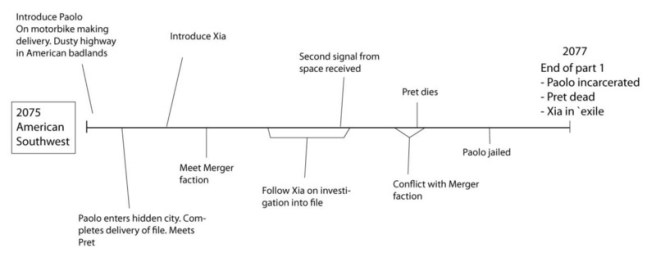
Begin with the basics. Grab a piece of paper and draw a horizontal line. At the left is the beginning of your story. Here, make a few notes about what the story’s world will be like on the first page. Keep it simple. Add general things like the date, location, and other foundational details. On the other end is the last page of your story. Here, note where things will end up. Is it in the same year, or the same place? Are all of the original characters still alive and together?

From there, you can fill in the major plot points where they fit on your developing timeline. Since this is an introductory exercise, you don’t need to be detailed. Don’t wrack your mind at this point — it’s just a matter of getting the big events in order. At the start of the line, you can add characters introduced at the beginning of the story (even if they change later). Others can be added along the line where you imagine them being introduced. How far down the timeline will you bring them in? Add important details to flesh this out, but don’t let it get too unwieldy. The idea is to use it as a guide as the story develops, so avoid the temptation to make it too complex.

Here’s an example I created for a recent sci-fi story:

The next step is to create a more detailed outline. Whereas the timeline was horizontal, this is vertical. To start, open a new document on your computer or grab a blank notebook page make a list of ten chapters. Your book may eventually have more, or fewer, but this is a good place to start until you have a sense of your story’s length. Under the heading for chapter one, insert all the details from the beginning of your timeline, including the date and location, initial characters, and other important establishing information. Fill in the other chapter sections with the rest of the information you have so far. For example, if you’ve added a major plot point or introduced a character halfway through on your timeline, put that under chapter 5.

Under each chapter, add the main points you want to cover, and then under each major event, add smaller details like the characters involved and how they interact, important aspects of the setting, or even key lines you have already drafted. When these are organized, it will begin to look like a cascading list of details. Major points will have smaller details under them, which can be ordered and expanded on as you progress. You may find that some pieces, or even whole chapters, need to be reordered to make a cohesive plot, and that’s easier to do now than when you’re working on your first draft. Let’s look at a small piece of my outline from the sci-fi example above.

Eventually, you will have chapters that start to feel a little full. In that case, it’s easy to add another chapter to break up that section of the story. In my example, perhaps I find there is so much to say about Paolo’s time on the highway that I want to make his arrival at the hidden city into its own chapter. With a working outline, that’s easy to do. Conversely, you might find there isn’t enough to fill ten chapters, and you can then easily use a shorter outline or add more events to fill it up.

The key to this process is flexibility. While the outline and timeline are great tools for getting past the blank page and starting the writing process, they should also be living documents that change as your project develops. You may start writing and discover that a character should be introduced earlier than you originally planned. No problem! You can easily go back to your outline and play with the new structure, moving sections around as you write to make sure the changes don’t introduce any issues like continuity errors or plot holes.

When it’s finished, the outline should be a nearly point-for-point overview of the story and may be several pages long. You can see where subplots begin and end, when characters are introduced or leave, and how each chapter will flow from beginning to end. Then, when you being the real writing process, it’s simply a matter of fleshing out the points you’ve already listed. You can write any section that inspires you at the time, without worrying that it will change the order or development of the story. Are you most excited by the big fight scene towards the end? Write that first while you have the spark, without worrying that it will mess up things that came earlier. By using and adapting a working outline, you can keep things organized while focusing on the aspects of the project that excite you the most. Soon, you’ll look back and realize that maybe the blank page isn’t so scary after all.

Eric Anderson is a freelance book editor specializing helping self-published and independent authors reach their goals. For more information, visit his website at BrutallyHonestEditing.com.

Mind Control: Would You If You Could? by author Donna Galanti

I very curious how you answer the question, “Would You If You Could?” Donna Galanti is making us think today, so let’s hear you thoughts!

As a hidden gift…check below for your holiday sale.

Mind Control: Would You If You Could?
by Donna Galanti

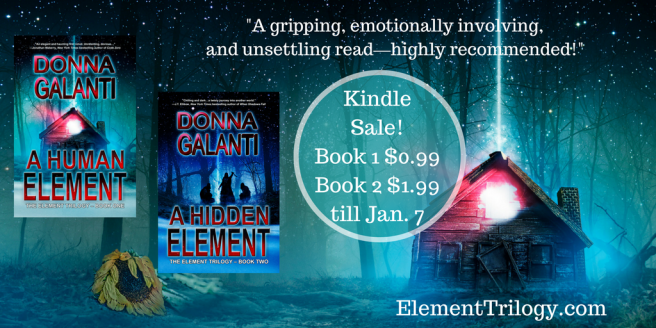
In my paranormal suspense novel, A Hidden Element, mind control is used by the Elyon cult community to get what they want – and its power can be taken away through punishment.

Yet, even while the Elyon community uses mind control to commit theft and murder they have strict rules about it being used on their own people. They know that uncontrolled use of it will lead to the very destruction of their community and the breakdown of rules.

The mission of a small “elite” group to control the masses is nothing new, in fiction or real life.

Dean Koontz uses mind control in his book Night Chills. By using a single phrase, the antagonist can force innocent people into a hypnotic state to do whatever he wants. Even scarier is that this technique was created through an experimental government program.

And the very real CIA’s MK-Ultra mind control program from 1953 to 1964 was a government program that conducted a series of covert experiments carried out on unwitting subjects with the aim of producing mind-control techniques. In 1973 the then director of the CIA destroyed nearly all of the MK-Ultra’s records. Perhaps most disturbing of all was the fact that the extent of experimentation on human subjects was unknown.

What if this happened to you, an “unwitting subject”? Would you just wake up missing time with no recollection of what you did during that missing time? Have you ever had missing time that you couldn’t account for? I have. Once I lost two hours of time. I was in my car to go shopping and when I looked two hours had passed and I had missed an appointment. I often wonder where did that time go? Did aliens kidnap me for an experiment? Was a government experiment conducted on me without my consent? Silly to think, but is it really?

In 1978 I was just nine years old and simultaneously horrified and fascinated by the story of Jim Jones in the news that shocked the world. Jones was best known for the mass suicide over 900 of his cult’s members in Jonestown, Guyana, by cyanide poisoning and the murder of five individuals at a nearby airstrip, including Congressman Leo Ryan.

As a child and now as an adult, I still can’t comprehend how so many could follow one man to their death. Yet, none of us are immune to mind control techniques. Peer pressure, hypnosis, sleep deprivation, fear, financial commitment, guilt, and isolation are just some ways we can be controlled to become people we never thought we might be. Here’s a post on mind control basics that details just how easy it can be.

Sadly, I know there will be more Jim Jones stories to come along. For as long as humans pursue power over the masses, mind control will be conducted by those who study human behavior in order to bend large populations to the will of a small “elite” group.

In writing about mind control in A Hidden Element, I tried to find my own way to explain how this could lead someone to do the unthinkable when presented with the choices before them.

Do you believe in mind control? And would you control others if you could do it?

ABOUT A HIDDEN ELEMENT

ElementTrilogy.com (2)

Evil lurks within…
When Caleb Madroc is used against his will as part of his father’s plan to breed a secret community and infiltrate society with their unique powers, he vows to save his oppressed people and the two children kept from him. Seven years later, Laura and Ben Fieldstone’s son is abducted, and they are forced to trust a madman’s son who puts his life on the line to save them all. The enemy’s desire to own them—or destroy them—leads to a survival showdown. Laura and Ben must risk everything to defeat a new nemesis that wants to rule the world with their son, and Caleb may be their only hope—if he survives. But must he sacrifice what he most desires to do so?

PRAISE FOR THE ELEMENT TRILOGY

“Chilling and dark…a twisty journey into another world.” —J.T. Ellison, New York Times bestselling author of When Shadows Fall

“Unrelenting, devious but full of heart.”—Jonathan Maberry, New York Times bestselling author

“Chilling suspense. A dark and haunting novel. Enjoy the ride.” —Kindle Book Review

ABOUT DONNA
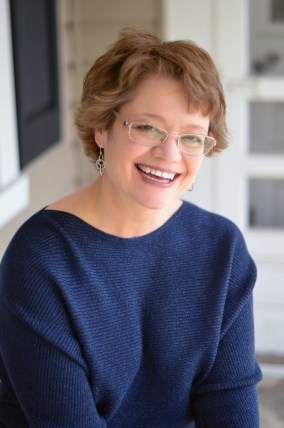
DonnaGalanti

Donna Galanti is the author of the paranormal suspense Element Trilogy (Imajin Books) and the children’s fantasy adventure Joshua and The Lightning Road series (Month9Books). She is a contributing editor for International Thriller Writers the Big Thrill magazine. Donna has lived from England as a child, to Hawaii as a U.S. Navy photographer. She enjoys teaching at conferences on the writing craft and marketing and also presenting as a guest author at elementary and middle schools. Visit her at www.elementtrilogy.com and www.donnagalanti.com. For tips on building your author platform, visit Donna here: www.yourawesomeauthorlife.com


BUY THE ELEMENT TRILOGY BOOKS:

Purchase Book 1 in the Element Trilogy, A Human Element: mybook.to/AHumanElement
$0.99cents on Kindle NOW through 1/7/18!
Purchase Book 2 in the Element Trilogy, A Hidden Element: myBook.to/AHiddenElement
$1.99 Sale on Kindle 12/15/17 – 1/7/18

Mystery Mondays: DS Kane on Writing Inspiration

Dave 6247.jpgThis week in Mystery Mondays we have DS Kane covert operator turned thriller author. His latest book is MindField, Book 8 of the Spies Lie series.

When a federal government operative asks, “What The Worst That Could Happen?” don’t you want to know?

What’s The Worst That Could Happen?

by DS Kane.

It’s the question all fiction authors need to ask as they write a draft of their manuscript. Every plot twist, character arc, or scene setting should embody some essence of the worst that can happen. Then it’s up to the author to make it even worse.

But, improving your manuscript isn’t all you can get out of asking yourself this question. It also applies to all your life decisions. It’s one thing to take a risk, accepting a worse outcome as a possibility when you seek a bigger return. Surely you’ve encountered situations where you studied a multitude of outcomes for a decision you were about to make and thought, “What’s the worst that could happen?”

So, let’s assume you were able to craft a page-turning manuscript and recruit the team you thought you needed to get it out into the world (possibly a literary agent, or a team that included a cover designer, a copy editor, a formatter and a marketing person). What’s the worst that could happen? Your nightmares might include that your literary agent can’t sell what you write. Or your cover designer produces a work that fails to attract potential readers. Or your copy editor misses on several key errors that confuse readers. Or that your formatter can’t get the book into a format acceptable for CreateSpace, Kindle, Nook and Smashwords. Or that your marketing person can’t find a way to drive a critical mass of sales to recover your costs.

If you’re a writer, the list of things to worry about keeps getting longer as you encounter success. There are several life lessons I’ve had hit me in the head as I’ve authored my series, and here are my suggestions:

  • Use tools like Fictionary, Hemingway and Grammarly to optimize your draft before you send it to your critique group, test readers, literary agent, or editor.
  • Sit your draft in a computer folder for a few days after you finish it, and do something else. Then, with fresh ideas, pick it up and read it like a reader a few days later.
  • Form a team that can do the things you need done to publish the book. My literary agent (who asked that I not include her name) is legendary. My critique group and test readers know what to look for in my draft and call me on my failings every time. My cover designer, Jeroen Ten Berge has successfully branded my books. My copy editor, Karl Yambert, has saved my posterior worth correction to some things I mistakenly thought were true. My formatter, Barb Elliott of BookNook.biz has turned my manuscripts into works of beauty. And, most importantly, my marketing person, Rebecca Berus of 2MarketBooks.com, has netted me Amazon Bestseller status with every book I’ve produced.
  • When your cover designer sends you a bright, shiny new cover, make sure that at thumbnail size you can see your title and author name clearly. If you can’t, send it back. Does the cover graphic make sense in lieu of the novel’s name and theme? If not, well…
  • Review the plans you get from your marketer. Make sure they fit the budget you have established, and if not, either request changes or find more money. And be sure to track your sales, to ensure this novel isn’t the start of a long march into financial oblivion.

I’ve learned to manage a team, looking for a specific set of goals. My team members are all much smarter than me. I’m the one-trick pony that can write a bestselling techno-thriller, but I’m not good at the tasks my team easily does well. Don’t try to do it all. You haven’t got the time, and time is your most costly resource.

Screen Shot 2017-12-10 at 8.43.48 AM

I get my ideas from the news. I’ll see a story and think, “This looks like the kind of story that covers a darker one. How bad could that darker one be? Would it make the basis for a good story? What theme would it leave with my readers? Which characters would I cast and what would they have to do that they’ve never done before? Who would have to help them to learn their new skills? Where should I set this story that would deepen the mystery?

Last week, MindField, Book 8 of the Spies Lie series was released to the public on Amazon. While it may take some time for me to see how well it does, I’m already midway into the next book in the series, working title brAInbender. And, yes, as I plan and write this book, I’m asking on every page, “What’s the worst that could happen?”

Who Is DS Kane?

Dave 6439.jpgFor a decade, DS Kane served the federal government of the United States as a covert operative without cover. After earning his MBA and earning a faculty position in the Stern Graduate School of Business of NYU, Kane roamed as a management consultant in countries you’d want to miss on your next vacation, “helping” banks that needed a way to cover their financial tracks for money laundering and weapons delivery. His real job was to discover and report these activities to his government handler.

When his cover was blown, he disappeared from Washington and Manhattan and reinvented himself in Northern California, working with venture capitalists and startup companies.

Now he writes fictionalized accounts of his career episodes, as the Amazon bestselling author of the Spies Lie series.

@DSKaneThriller

https://www.facebook.com/DSKaneAFormerSpyStillTellingLies?ref=hl

http://dskanethriller.blogspot.com/

http://www.dskane.com

How To Avoid Plot Holes (Part II — Character Arcs)

A character’s arc includes when she enters and exits the story. Every character arc is a journey, and at the end of the journey, the character either succeeds at achieving his goal or he fails.

The moment a character enters a story, her character arc begins.

The first time a character appears, she must be introduced to the reader. This is where you decide how much time you spend on describing her and who she is in the story.

For a major character, put more emphasis on introducing the character and showing her goal(s). You either share the goal with the reader or make it an internal goal that will be revealed later. Either way, you as the author must know the goal.

For a minor character, write as little as possible and still keep the reader engaged and not confused.

You control how the information of a new character is presented. Consider her appearance, how she speaks, what her mannerisms are, her actions, and how she interacts with other characters.

When describing a character for the first time, describe the character so the reader:

  1. Can conjure up a physical image of the character.
  2. Understands the POV character’s interpretation of the new character.

Consider whose eyes the new character is being seen from and make the description something that character would think or feel.

For example, a rough and tumble character might look at a banker from a city and sneer at the manicured fingernails, whereas a pedicurist might look at the same character and be impressed with the care the person takes in her appearance.

Only include details that move the story forward. If a character’s length of time in his job is important then include that detail.

A character who has been a private detective for one day will act differently than a character who has been a private detective for ten years. If the job is not relevant to the story, then consider not including the detail when introducing the character.

After the character’s final scene, she may still have an impact on other characters in the novel, but she won’t grow or change again. Hence, it’s the end of her character arc.

At the end of the character arc, a reader should feel satisfied. Did the character achieve his goal? Did he fail? That’s up to you as an author to decide, but you must let the reader know.


Causes of Plot Holes

  1. Scenes are not connected to one another or to the story (covered here)
  2. A character arc is not closed off
  3. Scene locations are inconsistent
  4. The timing from one scene to the next doesn’t work.

Plot Hole Problem 2: Character Arc Not Closed

This problem occurs when a character exits your story, but her story was not closed off for the reader. This is extremely important for major characters and less important for minor characters.

Most likely, you’ll close the character arc for your protagonist and antagonist. It’s the other characters in your cast who might cause problems for you. Pay attention to characters who follow a subplot or hold the point of view for a scene. It’s easy to forget a goal or two.

Fictionary Example

The illustration below shows you how Fictionary leads a writer through the process of evaluating plot and looking for plot holes related to character arc.

Let’s take a look at my novel Avalanche.

The Story Arc report can show you the first and last scene each character is in.

To consider if you’ve closed the character arcs, remind yourself of the character’s goals, review the last scene for each character, and make sure you’ve closed off any loose ends.

To do that you need to know what the character’s goals were.

I suggest starting with any characters who have the point of view for a scene. You can quickly scan the POV characters and their goals by choosing the Point of View (POV) and POV Goal in the drop-down menu of the Key Elements per Scene report. This way you can find the important goals you must close off (succeed or fail).

Once you’ve selected the elements, you’ll know the goals for each POV character.

To start checking your character arcs, choose a character and find the first scene she had the point of view for. I’ve chosen, Jessica Scott. She’s a supporting character who has an important role.

Her first point of view scene in Avalanche is scene 13. I found this quickly by looking at the POV report. The bottom row shows each POV character by initials in the order they appear in Avalanche.

Next, find the last scene your POV character is in. You can use the Story Arc report to do this.

Below, you can see Jessica’s last scene is scene 105.

If I need to read the scene, I can click on the black box shown above and the text of that scene will be displayed. I can then determine if I’ve closed off Jessica’s character arc properly.

​So now I know Jessica’s first POV scene, her goal, and her last scene. I can evaluate if I’ve closed off her goal by having her either succeed or fail.

I’ll repeat this for all POV characters and then move on to minor characters who don’t have POV for a scene but do have an important goal.

This takes a bit of time, but it’s worth it to create a better story for your readers.


Fictionary is the first online tool for editing your story, not just your words. Think characters, plot, and settings. Find out more at Fictionary.co.

How Fictionary Works

A writer imports a manuscript in MS Word .docx format. Fictionaryautomatically creates a character list, links characters to scenes, plots word count per scene, and draws a story arc.

The writer enters data regarding each scene, evaluates and edits the manuscript based the reports, and then exports the updated manuscript. The reports are dependent on the writer’s input and are created specifically for each manuscript. There are rewrite tips associated with each key element of fiction if you get stuck and need guidance.

Fictionary is designed for the serious author who wants to produce a high-quality manuscript.

Download our free eBook, Story Editing: 15 Key Elements of Fiction To Ensure Your Story Works and learn how story editing is all about evaluating the major components of your story.

Turn Your First Draft Into A Great Story

Try Fictionary for free. The first 10 days are on us. No credit card required.

Mystery Mondays: Phyllis Smallman on How to Fit In Writing Time

Today on Mystery Mondays I have the pleasure of hosting Phyllis Smallman.  I met Phyllis at the 2014 Crime Writers Of Canada Arthur Ellis Awards dinner.

Her latest book, LAST CALL, in the Sheri Travis series has just come out. It’s a thrill that it’s finally here. I’ve already read it and loved it.  You might like it, too 🙂

Over to Phyllis…

Write the small spaces.

by Phyllis Smallman

Whenever I give workshops the question that comes up most often is, “How do I find time to write, work, and have a life?”

  1. The first suggestion is don’t focus too hard on THE BOOK. I know, you want it done yesterday, but thinking only about this big block of writing takes the joy out of creating. All the little bits of writing you do, pieces that might never make it into THE BOOK, are equally important. Keep a small notebook with you, one with a cover that makes you smile. This is where you write your bits.


  1. Think of how much time we spend waiting. These are opportunities to focus on a character sketch, a mood, or even a vehicle that you’ll need. What do you smell and hear? Describing a sunset or the whine of the mechanics drill as he changes your tire, those are all terrific practice and necessary for writing well. These writing bits will be your freshest and strongest writing because they are from life. It’s like stocking your cupboard for an emergency. Write in the small spaces. In the dentist’s office do a short description of a person in the waiting room. Surprisingly, sooner or later you will likely use this. You’ll be writing a scene for your novel and need a casual player. There’s no need to interrupt the flow of the story to think up the character because you already have someone to insert. Or describe the dentist’s office. Coffee shops are perfect for these quick sketches. Pick a person and analyze them. How many piercings? Tattoos? Study the server. How much education does he have. Is a temporary job or will he be here forever? Surprising how many times I’ve needed to describe something like this and go blank. That’s when I pull out my trusty sketch book of words. Homeless people make great subjects and what cityscape is complete without one? Think of an artist drawing. That’s what you’re doing, but with words. I once wrote a whole piece about an unknown woman that I liked so much I wove her into the subplot.


  1. Eavesdropping is a good thing. It helps with so many aspects of writing. Not only does it teach you to write dialogue, but it shows you the ebb and flow of conversation. Overheard in a washroom, “Honey, you wouldn’t believe how much it costs to look this cheap.” You can bet that showed up in a book.


  1. Print out the part you need to edit. Waiting in line for the school pickup? Read that chapter out loud. You’ll quickly see the repetitions and the awkward bits. If your tongue stumbles, your reader’s eyes will. If you’re worried about people thinking you’re crazy, hold up your phone as if you are making a life changing call. This has the added benefit of keeping people from interrupting your writing time, because that’s what it is.


  1. And then there’s that three o’clock in the morning time when you can’t sleep. What else do you do at that time of the night? Worrying about your kids or how whacked you’re going to be at work the next day only makes being sleepless worse. And there’s no way you want to fixate on what the guy lying beside you is up to, so now’s the time to work on your plotting. Figure out how you can go deeper into the story. How can you make that plot twist more real? Can you go back and put in some foreshadowing? Can you combine two characters into one to streamline the story. The middle of the night is truly where you get the hard work done, not sitting in front of a screen.


  1. When a great idea comes along write that great idea down in that notebook that’s always handy. You can flesh it out later — maybe put two of these ideas together into one story. Two great ideas in one story, how brilliant is that? Or maybe you’ll create a short story from that idea. Now is not the time to edit or be critical, this is where you dream.


  1. Here’s something I’m a little squeamish to tell you. When I’m reading, if I see a wonderful phrase, I write it down. Think of it as a prompt or an inspiration. Always put it in bold quotes so you know it isn’t yours. You’ll put your own spin on it later. And another little secret, I also collect names from screen credits.


  1. If you write the little places, when you do have a block of time, you’ll be prepared to write. It’s like stretching before you exercise. When you sit down at your computer you don’t waste a minute thinking about what you’ll write because you’ve got this powerful sketch of your protagonist’s father to put in, one that will explain why she can’t commit to a relationship, and a brilliant description of their home, decayed and unloved, that mirrors their relationship.


  1. Coming to THE BOOK prepared to write makes you super-efficient because the hard bit has already been done. You just need to type it in. Sometimes I think we spend more time worrying about writing than we do writing.


  1. One more thing. Don’t tell me you aren’t a writer until you’re published. That’s garbage. You write; therefore, you are a writer. Being published doesn’t bestow some magic mantel on you. You already have it. And it’s a valuable and necessary thing to do. From the time humans sat around fires in caves, we’ve needed story tellers. It doesn’t matter how those stories are delivered, e-books, digital streaming or whispered in the dark, tall tales are necessary for humanity. So, do your bit, write.

Who is Phyllis Smallman?

Phyllis Smallman’s first novel, Margarita Nights, won the inaugural Unhanged Arthur award from the Crime Writers of Canada. Smallman has also won the IPPY golden medal for best mystery and numerous awards from the Florida Writers Association. Her writing has appeared in both Spinetingler Magazine and Omni Mystery Magazine. The Sherri Travis mystery series was chosen by Good Morning America for a summer read in 2010.

Before turning to a life of crime Smallman was a potter. She divides her time between a beach in Florida and an island in the Salish Sea.


LAST CALL

Screen Shot 2017-11-27 at 4.26.19 PM


Down in Key West, Sherri Travis and her best friend Marley are looking for a little fun in the sun. Promising to be back for last call, Marley leaves the Rawhide Saloon with an Elvis impersonator.

She doesn’t return. With Hurricane Alma turning toward Key West, and the police saying Marley must be missing for seventy-two hours before they start searching, Sherri and Lexi Divine, a six-foot tall drag queen, hunt for Marley amidst the chaos of the evacuation.


Six Tips to Combat Writer’s Anxiety by Editor Erin Liles

Before you can use Fictionary.co to edit your first draft, you have to write your first draft. That can be a daunting task and may even cause writer’s anxiety.

Editor, writer, and creative motivator is here with some great advice on how to get that first draft finished. And when you’re done, after you’ve celebrated, we’d love it if you tried Fictionary and let it help you turn your first draft into a story readers love.

Over to Erin…

Six Tips to Combat Writer’s Anxiety

By Erin Liles

Photo by Erin Liles

You know the feeling. You sit down at your computer, ready to write, and that blank white page glares at you, the cursor blinking accusingly, your heartbeat throbbing, underarms pricked with sweat. You start to hyperventilate. Anxiety.

Anxiety is not nice to writers. It’s a bully. It breaks you down. It whispers mean things in your ears like you can’t writeyou don’t have anything to sayyou’ll never write a book.

I’ve gone toe to toe with that bully, and she is formidable, let me tell you. And if you don’t do something about it, it can lead to the dreaded writer’s block.

So, now that we’ve established that anxiety does not make a good writing partner, let me ask you, why do you write? Hold on, I bet I know the answer. It’s probably something like, “it’s a passion.” Or it’s something in you, and you can’t not write. You love it. Right? Because if you didn’t, you wouldn’t do it, especially since, let’s face it, writing is hard! Particularly if you are writing a novel.

And if you’re like me, you buy books, you scour the Internet, you take classes, and gobble up as much information as possible. With all the information out there, some resources advising this, others advising that, some calling an idea one thing and someone else another, sometimes it’s even downright overwhelming.

Take heart! The best thing about learning to write better comes from all the things you’re probably already doing, but what’s more is that the best way to improve your writing is by doing it. There is no wasted writing. Every single time you write, you are learning how to write better.

But before you sit down to that terrifying blank white page, let’s do a few things to ease your fears, to get you excited to sit down at your computer and write. Because you can do this. Trust me, you can. It’s all about mindset. The anxious mind has its own agenda. Your job then is to direct the anxious mind into a more productive direction: the writing mind.

  • First, consider making your writing area a space you are comfortable in. If you have a desk in a designated place in your home, you might hang a bulletin board on which you pin inspirational quotes, images that represent something positive for you, pictures of your family, whatever makes you feel good. Or you could create a vision board, a visual representation of what you want to create. Place candles or other scented items in your space — whatever makes you feel good and excited to sit down and write. Make it a sacred space.
  • Meditation has been proven to lower stress, improve concentration, and increase happiness, along with myriad other benefits.
  1. Sit down at your desk. (You can sit anywhere really, but I find if I do this exercise at my desk, I come to associate it with peace and calm instead of anxiety about writing.) You can play some soothing music if you want to — YouTube as some great meditation channels.
  2. Close your eyes.
  3. Breathe in to the count of five.
  4. Hold your breath for three.
  5. Breathe out for seven.
  6. Take two normal breaths.
  7. Repeat for 10 minutes.

Focus on your breathing. If you have a thought, observe it and let it go. Don’t struggle. Let your muscles go slack.

You can also try this guided meditation for creativity: https://www.youtube.com/watch?v=WCEwZ0pIhRw

  • Mind Map. Get some colored pencils or markers and a piece of poster board. Put your main idea (or your character) smack dab in the center of the page. From here, add ideas, subplots, characters, theme, setting, anything at all in varying colors. Just let the ideas flow and connect them however you see fit. Here is a good example of how to mind map your book: http://www.magnoliamedianetwork.com/mindmap-to-start-your-book/
  • Flow. Open a blank Word document or a notebook and set a timer for fifteen minutes. Begin writing about your story idea. Write whatever comes to mind — do not censor yourself in any way. Forget the typos. Forget the bad grammar or misspellings. Your only job is to keep your hand moving. No stopping. Let the ideas flow, and don’t worry if they are good or bad. The idea here is to get those creative juices going.
  • Visualize. Visualize success! Do this when you are relaxed, perhaps after meditating. Close your eyes. Imagine yourself writing, the words just flowing from your fingertips onto the page. How does this feel? What does it look like? What do you hear? Engage all of your senses, and visualize this image as often as possible throughout your day.
  • Rephrase. Identify your negative thoughts and rephrase them positively. Instead of saying I can’t write, say I can and will write. What’s more, take the word should out of your vocabulary. Saying you should be writing only creates more pressure, resistance, and you guessed it, anxiety. Rephrase to say I want to write!

Don’t let that blank page intimidate you. See it as an invitation to create. What gets put on the page can always be changed, but you can’t change what you haven’t written!

And remember,

“Creating something out of nothing is exciting. Filling the empty page with words, sacred words, is inviting.” ~Rachel Ballon, Ph.D.

Now get out there and write!

Erin Liles is a freelance editor, writer, and creative motivator who works with large and small publishing houses and independent authors. She is represented by Mansion Street Literary Agency. For more information visit editperfectword.com.