How do you know? #writetip I ask four or five early readers. On my first novel, my husband was my first reader. I expected him to tell me I was fabulous, my writing was great, and he’d never read anything better. Well, that’s what husbands are for. Right?
So after he did all the above, he said he didn’t like my protagonist. Wasn’t I surprised. She was whiny and negative. Not a great personality if you’re going to spend 300 pages with her. We had a detailed discussion about why he thought this and it was back to work for me. I liked her, but I had to think hard about why others might not.
Now, I ask all my early readers to tell me what they do and don’t like about my main characters. This helps me gain perspective on the characters and think about who I want them to be.
If you’ve read a few of my posts, you’ll know I depend on my early readers. I can’t thank them enough for helping me, spending their time reading my drafts, and being willing to comment. The conversations after they’d read my work are often invigorating. Who said writing was lonely?
How to organize your cast of characters quickly. #writetip I don’t draw, but this is an easy cartoon anyone can create. If you’re like me, you’ve kept a list of characters, however small the role, somewhere on your computer. Mine are in a spreadsheet.
I start with the protagonist, putting her/his name in the center of a blank page and drawing a balloon around her/him.
Now the fun begins.
Add the antagonist. Don’t worry if you have more than one. Pick the character who has the largest interaction with your protagonist.
Draw a line between the protagonist and the antagonist. Then write their relationship on the line. Father/daughter. Boss/Employee. You can put any other relevant information in a balloon. Words like killer, victim etc.
Continue until you have all your characters on the page. Draw a line between balloons that hold characters who have some type of relationship. This can get messy. I use dotted lines if I have to cross through one balloon to get to the next.
Add then end, you’ll have a spiderweb of balloons.
Now you can analyze it and “see” if all the connections make sense.
The drawing will show me if there are two characters I could fold into one or if I’ve confused any relationships. Best of all, it often gives me scene ideas. Here is where I can “see” if there are questions I need to answer or story lines I’ve left unfinished. This is why I leave this exercise until I’m close to a first draft.
Have fun with this one. It’s an entertaining way to look at your novel.
But how do you know it’s good? You need to hear it. Grab a digital recorder and read the dialogue to yourself. This works for me. If I stumble over words I’m reading, I know it’s not right.
You get two shots at it. Once when reading, and once when playing the dialogue back to yourself on the recorder.
How do you get one? #writetip The Crime Writers of Canada(CWC) offers a mentorship program each fall. To apply all you have to do is send in an application, your bio, a synopsis and ten pages of your novel.
I’ve just been notified that my mentor is David Cole, author of the Laura Winslow Mysteries.
I’m using my third novel, (working title Burnt) for this program. David and I will work together on improving the first 50 pages.
My first experience with a mentorship program was the Humber School for Writers when I had Joan Barfoot as my mentor. I believe this helped me get my manuscript into shape and accepted by my agent, Margaret Hart.
The mentors from CWC offer up their time and knowledge for free, proving the generosity in the writing community is unbounded. Thanks to David and the other mentors for helping those of us at earlier stages in our careers.
I’ll blog about what I learn and how this program works out for me.
– A very excited mentee signing off for a day of writing.
Being asked to proofread someone else’s novel is a scary and flattering task. #writetip I’ve been asked to do this, and I started thinking about what this means.
I asked the author and myself the following questions:
What is the author looking for? Does he want comments on punctuation and grammar, characters, or plot line.
Does he use a style guide that I should consult?
What are my own talents? Being honest here is important. Can you pick up typos? Or does your eye easily breeze over them?
Do I have the time? It’s a big commitment to review a manuscript. It deserves my full attention. The author has spent many hours creating the manuscript, and it’s better to say no to reading than to rush through it.
With that said, I’d better get focussed and start reading.
Characters can create themselves. #writetip It’s a great experience when an unplanned character appears in a scene. Don’t stop to think about it. You can go back later and create a bio for the character. Depending on the character, a Bio can be as short as one line (the character’s name) or it can take up a whole spreadsheet.
I’ve used a few characters across three novels and need to keep track of them. Some of the things I record are:
– appearance
– habits
– personality traits
– relationships
– likes
– dislikes
– secrets
– something unique about them
– important information about the past (before the novel’s starting point that the reader may or may not know about)
You can keep whatever you might need to look up later. To keep the bio up-to-date, when I reread or edit my novel, I add details as I go.
When a character appears out of nowhere and wants the POV, let the writing flow. #writetip Sometimes a scene needs to be written. You many not want the extra POV in your novel and can decide later whether you use it or not.
Yesterday I wrote a scene with an existing character, but one that I have not given a point of view scene before. I didn’t end up using the scene in my novel, but I did write a follow-up scene with a different character as the POV, and it was much better (in my opinion) because I knew exactly what had happened behind closed doors.
Character A and B argued. Character B revealed a key piece of information to character A. I wrote this from Character A’s POV. Then I removed the scene.
Next Scene. An RCMP officer interviews character A right after the heated argument. I found it easier to describe Character A, his mannerisms, his answers, etc. because the fight was fresh in my mind. Character A had a hard time talking with the RCMP when he hadn’t processed the information.
#writing Demands on our time that take us away from writing can be managed. Over the next couple of months I’ll carefully split my time between writing and preparing for our trip south.
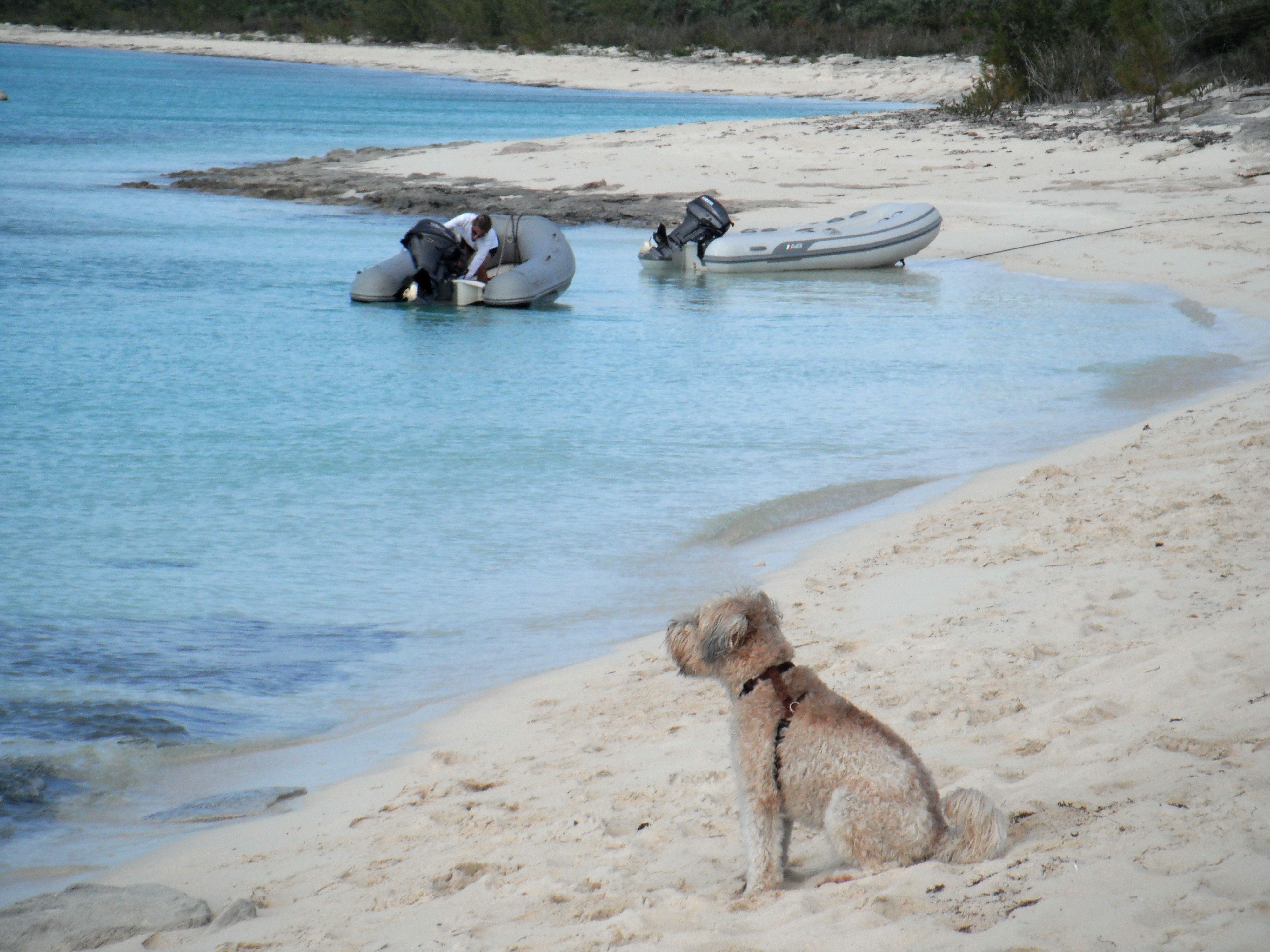
Cruising requires long checklists, and I try to tick off one or two items per day and then move on to writing. Part of my checklist includes getting our boat, Mattina, ready for our dog, Farley (Cruising with Dogs updated with medical info).
On the topic of writing, this morning a friend of mine reminded me of Eats, Shoots and Leaves by Lynne Truss. It’s a good follow-up to yesterday’s blog about back to school studying and is an entertaining commentary on the value of punctuation. It’s been a while since I read it, but definitely worth it.
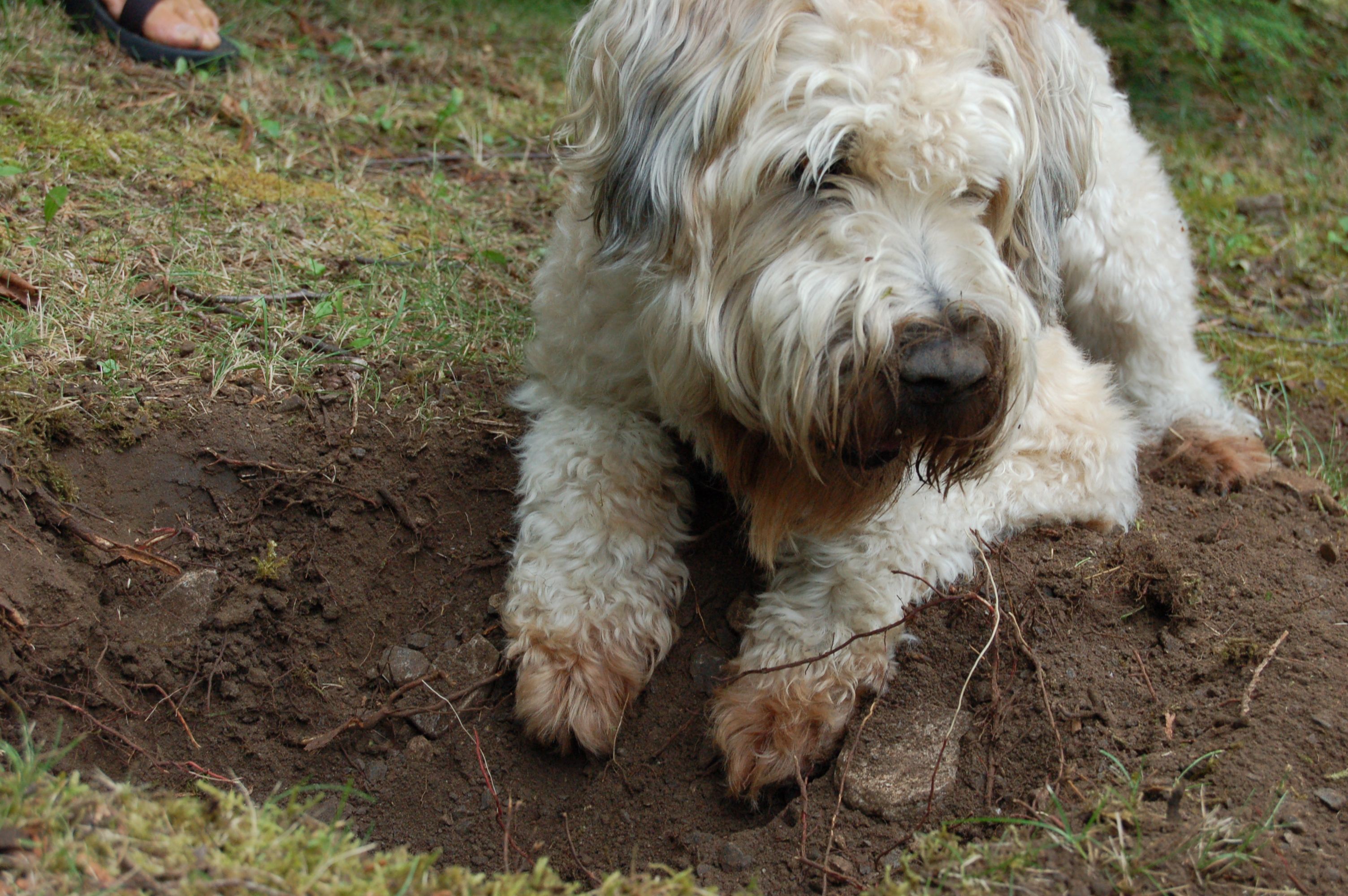
My dog who loves to dig is about to change his lifestyle.
This is the time of year I start focussing on the cruising part of my writing lifestyle. Cruising and writing are a great combination and our dog Farley (soft coated wheaten terrier) is a big part of it.
Receiving Farley’s dog permit in the mail from the Bahamian Government signifies the start of our winter cruising preparations. The dog permit allows us to take Farley into the Bahamas on our sailboat. It’s part of the process we go though in the fall.
My goal now is to keep focussed on writing while getting ready for the winter, and I will update the pages on my site for Lagoon 380 and Cruising with Dogs along the way.
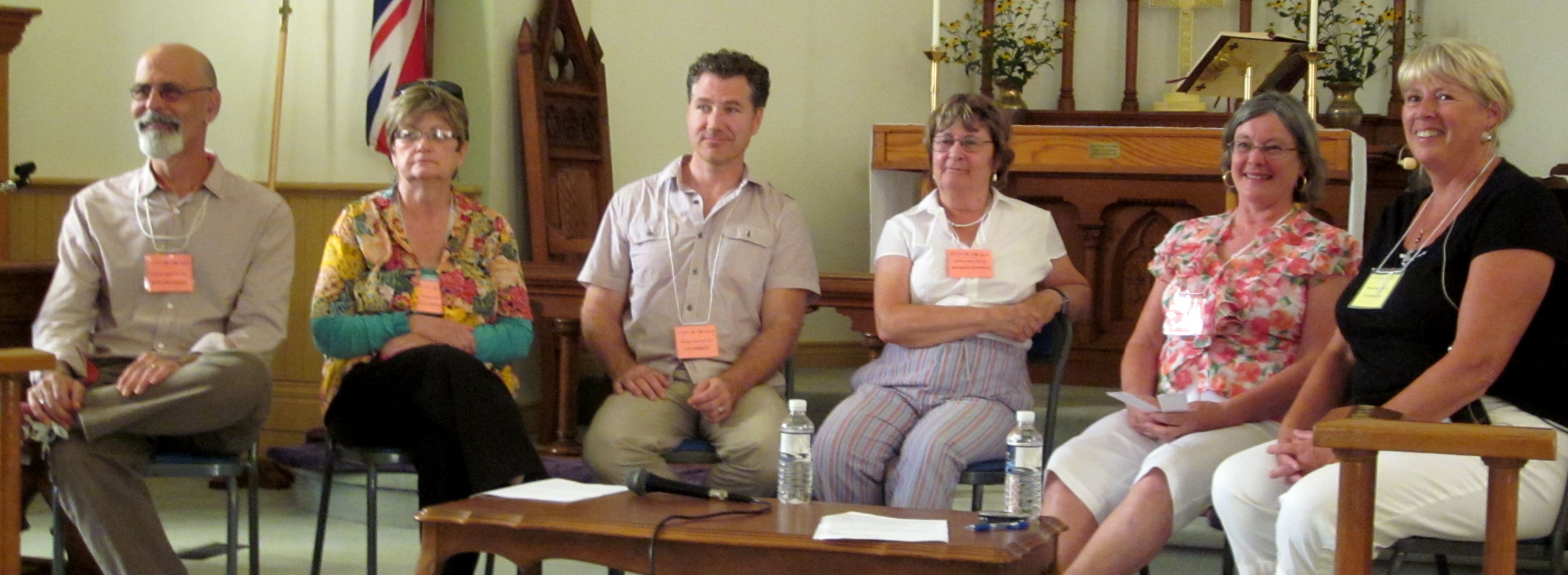
How can such nice people write such scary novels? The breadth of the authors making up the panel at the Scene of the Crime Festival gave the audience interesting insight into the art of mystery writing. Throughout the day, the authors were available to meet and talk with the audience.
The festival took place on Wolfe Island, a short ferry ride from Kingston Ontario.
I thought it would be fun to put some of their comments here. I, of course, am paraphrasing and have put in only portions of the answers. The following are a selection of questions Vicky asked the panel.
Vicki Delany asked: How much time does the author spend on their antagonist?
Howard Shier said: He likes his antagonist to be complex and human. In almost all of his books, the antagonist pushed the protagonist forward or backward. He stressed for his mob characters, he did a large amount of research to get the villain to seem real.
Vicki Delany asked: Does real life inspire the author?
Elizabeth Duncan said: The idea from her first book was inspired by an article in the newspaper, and the story took off.
Vicki Delany asked: Is the antagonist influenced by the protagonist?
C.B. Forrest said: Circumstances create the hero and the villain. A villain can cause a weak person to be a hero in the right circumstances.
Vicki Delany asked: What kind of person would do a bad thing?
Maureen Jennings had the following advice when writing your antagonist: Ask yourself what was the antagonist thinking of when he/she committed crime? Was he/she born bad? Does he/she know they’re bad?
Vicki Delany asked: Does the author use non-human antagonists?
R.J. Harlick said: Her main character, Meg, struggles with alcohol, but she didn’t think of it as a creating a non-human antagonist. She felt it gave Meg character and baggage to carry around. She also uses nature. Ice storms and forests fires have a place as an antagonist too.