Farley’s Friday: Guide Dogs At The Mall

Farley here,

I’m a volunteer! Meet Kinta. She’s a guide dog in training. Kristina brought her into our home.

“Who is the dog?” I bark. I sniff her, give her a friendly shoulder bump, and then snuggle into Kristina. Sometimes, Kristina dog sits other dogs, but I know something is up. This one came with her own bed, a BIG bag of dog food, and a box of toys.

“You’re job is to teach Kinta to be calm around other dogs, behave in stores, and relax at home.”

I wag my tail. “I can do that,” I bark.

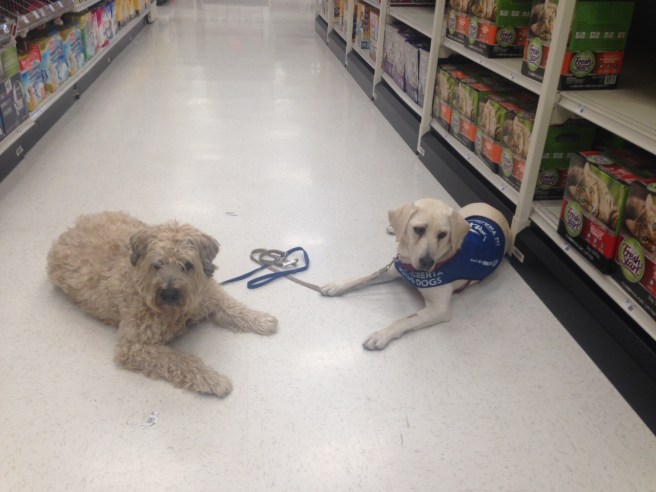
This is me showing Kinta how to relax when Kristina is in the pet aisle at Canadian Tire. This is very important if we want Kristina to buy us a new toy.

Farley & Kinta at mall

Kinta and I walk side-by-side on a leash. She’s learning her leash manners, and I’ve taught her not to pull. I cheer her on every time she gets it right.

I’m a little jealous. But here’s the deal. I get to sleep on the couch and in the bed. Kinta doesn’t. That’s my special place where I get Kristina all to myself.

Woof Woof

Perform An Awesome Author Reading #AuthorToolboxBlogHop

Thank you, Raimey Gallant for organizing the #AuthorToolboxBlogHop.

This is a monthly blog hop on the theme of resources/learning for authors: posts related to the craft of writing, editing, querying, marketing, publishing, blogging tips for authors, reviews of author-related products, anything that an author would find helpful.

To continue hopping through other great blogs in the monthly #AuthorToolboxBlogHop or to join, just hop on over to Ramey Gallant!


Writing means learning — all the time — for the rest of your life.

And in the modern world of publishing, writing a great novel is only the beginning of the journey if you want your work to have a wide audience.

Public readings are a part of that journey. They’re a great place to build your readership and sell books — but they can also be incredibly daunting.

The first time I read out loud was intense. It was 2014, and I was nominated for the Audrey Jessup Award for short story crime writing from the Capital Crime Writers. Part of being nominated meant reading aloud before the winner announcement was made. To say I was nervous would be an understatement. I hadn’t read out loud before and had no idea how to go about it.

As luck would have it, I attended the Bloody Words conference in Toronto a week before the event and heard seven authors read there. Days later, I found myself at another reading, this time by three Scandinavian authors. That’s 10 readings I could learn from. Some of the readings were great and some could have used a bit of practice.

I watched and learned from these readings and thought I was ready. But not quite. There was a time limit of five minutes on the reading. I practiced and had my timing down perfectly, but I didn’t account for the time it took to be introduced and say thank you to my hosts. I was cut off about 30 seconds before I’d finished — literally. The hosts turned the microphone off. It stung a bit, but other authors were cut short too. (At least it wasn’t just me, and I didlearn from the experience.)

I won the Audrey Jessup Award, even though my reading wasn’t the greatest. After winning, I sold that story to Ellery Queen Mystery Magazine. My first sale!

Since then, I’ve read in some strange places. One reading took place in a senior’s residence. Another in a ski lodge. One in a bookstore — which you’d expect. Each time I do a reading, I get better at it and I’m less nervous.

I’m here today to help you get comfortable with holding an author reading of your own.

How to prepare & practice

  • Don’t leave it until the last minute. Practice every day, even for short periods of time. If you can, read to an audience.
  • Practice pausing for commas, periods, paragraph breaks, and starting new scenes.
  • Practice until you can take your eyes away from the words and make eye contact with the audience. This will engage them in your reading. Reading to a mirror will allow you to see if you’re looking up.

Technical tips

  • Don’t staple the pages. Stapled pages are noisy when turned and awkward to hold in place.
  • Number your free pages in case you drop them.
  • Ask how many minutes you have to read. Then prepare for a few minutes less, the exact amount of time and a few minutes more. If other readers don’t show up, you may be given more time. If the proceedings are running long, you might be given less time. Be ready so you can end with a cliffhanger or a dramatic spot that will leave people wanting more.
  • If you’re reading from printed pages, print in font large enough to read. Remember: the lighting could be dark or there could be glare. If the font in your printed book is small, you can always print the pages you want to read and place your book in front of you while you’re reading.
  • Ask what the setup will be. Is there a podium where you can set your pages? Will you be holding a microphone? Will you be standing or sitting?

At the event, before you read

  • If you’re not first, watch the other readers for what works and doesn’t work. Standing with the microphone too close to the sound system can cause feedback, having the microphone too far or too close to you can make understanding your words difficult.
  • Have your material ready. Don’t start looking for the section you want to read after you’re at the podium. This distracts the audience.

During your reading

  • Once you’re on stage, thank the hosts of the event. This will make you look professional and give you time to let your voice and your nerves settle before you start reading your story.
  • Breathe. This sounds obvious, but breathing will make your speech clear. During my first reading, I was so nervous that I couldn’t bring air into my lungs. At the end of the first page, when I had to flip to the next page, I moved the microphone away from my mouth and took a deep breath. This helped me calm down.
  • Don’t explain your work in the middle of reading. Let your words speak for themselves.
  • Only brief the audience about the story if you’re not starting at the beginning.
  • Speak slowly.

Remember: the audience came to hear you and they want you to succeed, so smile and have fun.


Fictionary: Tell Better Stories

I’m the CEO of Fictionary, and we help writers tell better stories. Fictionary is software that simplifies story editing and helps you improve characters, plot, and settings. After a Fictionary story edit, you’ll know your story is ready to share with others.

Fictionary is an automated approach that helps you evaluate your story against 38 key elements for Characters, Plot, and Settings.

Fictionary draws your story arc and compares it to the recommended story arc. You can see how to improve the structure of your story within seconds.

This week we’ve teamed with ProWritingAid to offer you an amazing bundle. Check out how Fictionary and ProWritingAid work together.

Until September 22nd, get annual subscriptions to both Fictionary ($200) and ProWritingAid Premium ($50) for just $99.

Click here to get the Fictionary and ProWritingAid bundle now!

Thanks for reading.

Mystery Mondays: Judy Penz Sheluk – In Praise of Book Clubs

This week on Mystery Mondays, it is my pleasure to have author Judy Penz Sheluk as a returning guest. I’m a big fan and have read every one of her books!

Today she’s sharing some interesting insights into book clubs and at the end of this post, you’ll find a recipe that might make you happy 🙂

Judy’s latest release, Past & Present, is coming soon! Congratulations. Let’s cheer her on in the comments.

In Praise of Book Clubs

by Judy Penz Sheluk

BOOK CLUBS!

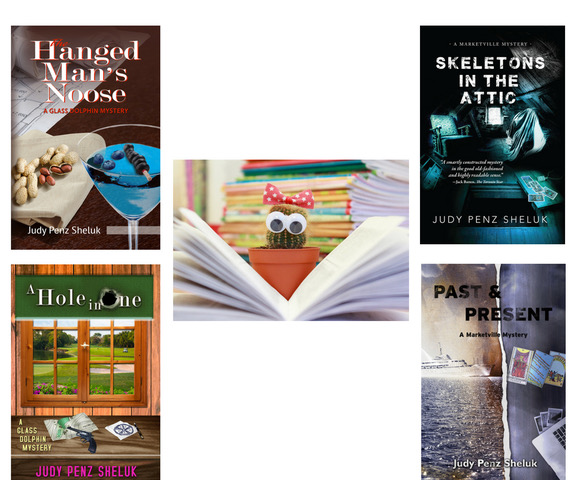
One of the things I enjoy doing as an author is visiting local book clubs, should they select one of my novels for their monthly read. Not all of those picks translate into sales—my town’s library has book club sets of The Hanged Man’s Noose and Skeletons in the Attic—but now and again someone will download an e-book copy or purchase another one of my books. I’ve also received paid speaking engagements as a result, most recently to a PROBUS group, where I was paid a speaker’s fee of $150 and sold about 20 books. Not a bad deal for an hour’s work.

But visiting book clubs isn’t about the money or getting speaking gigs. It’s about connecting with readers, getting their honest feedback, answering questions, and for a short time, playing the role of “Author Judy” before heading back to the solitude of my office.

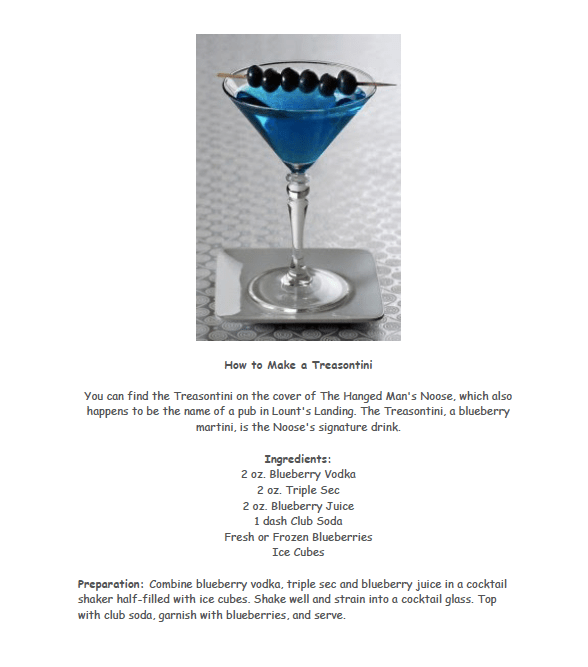
Not all book clubs are created equal, however. Some offer tea and homemade cookies. Some really go all out, making book-themed related food and drink, like the Treasontini from the Hanged Man’s Noose (recipe attached). And one didn’t offer me so much as a glass of water (I’ve learned to bring my own). There’s also the occasional book club whose members heavily favor “literary” and “don’t really read or ‘get’ mysteries.” I’ve learned to take it all in stride.

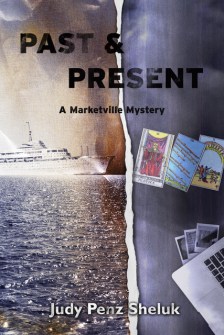
pnp3My upcoming release is Past & Present, book 2 in my bestselling Marketville Mystery series. I’m already putting feelers out there for book clubs and I’ve decided to expand my horizons. If your book club is interested in reading it, or any of my other titles, I’ll find a way to connect with your group online. If you’re interested, you can email me at judy at judypenzsheluk dot com and we can sort out the details.

In the meantime, here’s some Shameless Self Promotion for Past & Present, including a blurb about the book. It’s on pre-order for $2.99 US / CAD (no nasty U.S. exchange) on Kindle (regular $5.99) and will also be available in paperback (if your bookstore or library doesn’t have it, they can order it from Ingram Spark). Release date is September 21, 2018. So without further ado:

Sometimes the past reaches out to the present…

It’s been thirteen months since Calamity (Callie) Barnstable inherited a house in Marketville under the condition that she search for the person who murdered her mother thirty years earlier. She solves the mystery, but what next? Unemployment? Another nine-to-five job in Toronto?

Callie decides to set down roots in Marketville, take the skills and knowledge she acquired over the past year, and start her own business: Past & Present Investigations.

It’s not long before Callie and her new business partner, best friend Chantelle Marchand, get their first client: a woman who wants to find out everything she can about her grandmother, Anneliese Prei, and how she came to a “bad end” in 1956. It sounds like a perfect first assignment. Except for one thing: Anneliese’s past winds its way into Callie’s present, and not in a manner anyone—least of all Callie—could have predicted.

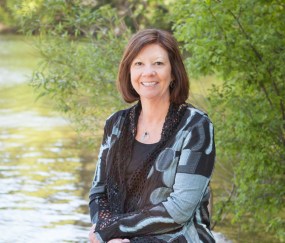
IMG_4117 copyAbout the author:An Amazon International Bestselling Author, Judy Penz Sheluk’s debut mystery novel, The Hanged Man’s Noose, the first in the Glass Dolphin Mystery series, was published in July 2015, and is also available in audiobook. The sequel, A Hole In One, was published March 2018, with audiobook to follow Fall 2018.

Skeletons in the Attic, Judy’s second novel, and the first in her Marketville Mystery series, was first published in August 2016 and re-released in December 2017. It is also available in audiobook format. The sequel, Past & Present, will be released September 2018. Judy’s short crime and literary fiction appears in several collections.

Judy is a member of Sisters in Crime, International Thriller Writers, the Short Mystery Fiction Society, and Crime Writers of Canada, where she serves on the Board of Directors as a representative for Toronto/Southwestern Ontario.

Find out more about Judy at http://www.judypenzsheluk.com.

The promised Treasontini Recipe…

Screen Shot 2018-09-04 at 1.15.11 PM


Farley’s Friday: Beach Time For Dogs

Farley here.

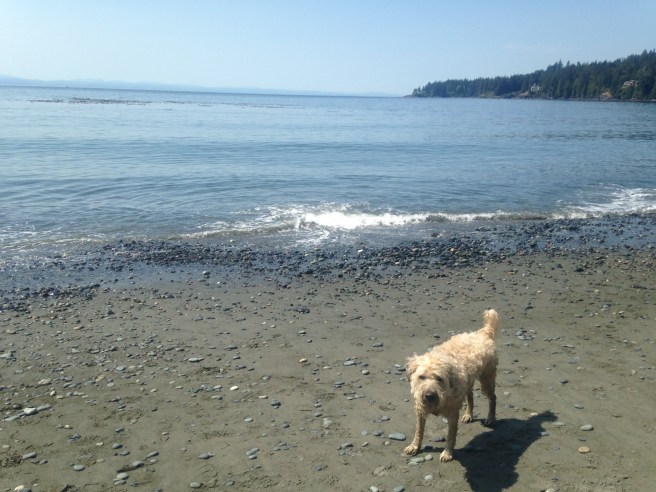
Woof Woof. Wag Wag. It’s fall and that means the beaches on Vancouver Island start to open to dogs.

Yup, that means swimming! That means running off leash.

Farley on beach

And it means getting full of sand and shaking it off in the back of the car. Kristina loves that part. Maybe love is a stretch, but she takes me to the beach anyway.

I love fall!

Woof Woof

Farley’s Friday: Dogs Go Hiking

Farley here,

Somehow I don’t look excited here, but I am!

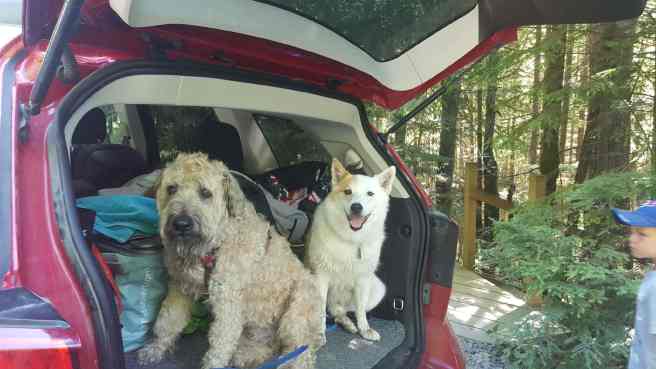
Farley & Finn

I’m with my pal Finn, and we spent a week hiking all over Vancouver Island. The thing to know about the island is it’s super dog friendly.

Off leash parks, hikes, beaches, etc abound. We’re even allowed in some of the outdoor restaurants.

If you’re a dog and need a vacation, tell your peeps to take you to Vancouver Island!

Woof Woof!

Who Will Read Your First Draft And How Do You Help Them #AuthorToolboxBlogHop

Nano Blog and Social Media Hop2Thank you, Raimey Gallant for organizing the #AuthorToolboxBlogHop.

This is a monthly blog hop on the theme of resources/learning for authors: posts related to the craft of writing, editing, querying, marketing, publishing, blogging tips for authors, reviews of author-related products, anything that an author would find helpful.

To continue hopping through other great blogs in the monthly #AuthorToolboxBlogHop or to join, just hop on over to Ramey Gallant!

This month, I’m going to focus on what I’ve learnt from working with beta readers.

When I finished the first draft of my first novel, Descent, I was exhilarated and terrified. Exhilarated because I’d accomplished my dream of writing a novel, and terrified because I now had to share it with someone.

But who?

My lucky husband got to be my first beta reader. He understood how important my story was to me. He’d be kind yet helpful. So I took a deep breath and hit the print button.

I couldn’t be in the same room with him as he read. That was just too stressful.

Once he finished, he gave me one of the most useful pieces of advice that I still use today. It came in the form of a question.

“Do you know you start every scene in a doorway?”

I hadn’t noticed that. His question made me do a full rewrite of every scene, looking at the opening. This is when I discovered the term in medias res — start in the middle of the action.

Now, before I share my story with anyone, I check the beginning of each scene and choose the opening carefully. I try to open with a hook for each scene.

As the years have gone by, I’ve had many beta readers and received a lot of valuable advice, comments, and questions. I couldn’t write the way I do without these precious people.


What’s a Beta Reader?

A beta reader is a person who reads your manuscript before it’s published and provides you with feedback on your story. The feedback is usually on characters, plot, and settings. (Although you may get comments on copyediting and proofreading, too.)

A helpful beta reader gives you honest feedback, positive or negative, that you use to improve your story.

An ineffective beta reader says, “That’s a nice story. I liked it.” While that feels good, it doesn’t help you write a better story.


Tips for Getting Useful Feedback

Convincing friends to give you honest feedback is difficult. People who care about you usually don’t want to hurt your feelings and may be worried about beta reading.

Questions like “What if I don’t like the story?” or “How will I tell you if I find something I don’t like?” may swirl around their heads while they’re thinking of a way to say no.

Make sure your readers understand you won’t be hurt or offended by negative feedback. Feedback on what’s not working is the only way for you to tell a better story.

To make it easy for your beta readers to know what you want, provide a list of specific questions or instructions. This will help your reader know what you want from them.

I ask beta readers to do or answer the following:

  1. Mark anywhere you skim. This is an easy way to know that the writing is boring.
  2. Did you get confused on who a character was? Maybe you need more clues or dialogue tags.
  3. Did you lose track of who was speaking? I like to write with minimal dialogue tags, so this is critical.
  4. Note anytime you suspect a character of being the villain or know the ending. This helps to determine if you’ve done enough to too much foreshadowing.
  5. Mark each passage where you stopped reading. Get your beta readers to mark this each time, even it was to have dinner, go to work, etc. If all your beta readers put the book down at the same passage, there may be a problem with the story.
  6. Did you notice any story inconsistencies? To help your beta reader, give them an example of what you mean. I read a story where a dog was left at home in one scene, and in the next scene, the dog was still with the owner. The author had forgotten where the dog was.
  7. Avoid asking for copy editing or proofreading from beta readers. It’s ok if your readers notice errors and point them out, but what you want at this stage is input on your story, not on the grammar or typos.

Make Your Beta Reader Feel Special

Image Source: Pixabay

Once you’ve put a lot of time into finding helpful beta readers, you want to keep them for your next book.

The first time a beta reader gives you negative feedback, thank them. If you make the suggested change, let them know. A beta reader will put a lot of effort into reading your story and seeing that their comments resulted in changes can be very satisfying.

When you ask someone to beta read, make it easy for the author by asking what format he/she would like to receive the manuscript in. I offer a PDF file first, but some prefer a printed copy and others mobi. Some like to receive manuscripts in .docx format as it’s easy to convert and read on a Kindle. I try to send the manuscript in the format the beta reader prefers. I believe it’s a sign of respect for the person.

In the acknowledgment section of your published book, thank your beta readers. Mine all love to see their names in the book.

Make your beta reader feel really special and send them a signed copy of your book once it’s published.

Let us know if you have any suggestions for working with beta readers. We’d love to hear from you!


Perform a Story Edit Before Sharing with Beta Readers

Fictionary is online software that simplifies story editing. Fictionary will help you evaluate your story on a scene-by-scene basis. You’ll be able to focus on problem areas in your manuscript and improve it quickly. Then your beta readers will be impressed!

Why not check out Fictionary’s free 14-day trial and tell better stories? We don’t ask for a credit card until you’re ready to pay, so there’s no risk.

Thanks for reading!

Who Will Read Your First Draft And How Do You Help Them?

When I finished the first draft of my first novel, Descent, I was exhilarated and terrified. Exhilarated because I’d accomplished my dream of writing a novel, and terrified because I now had to share it with someone.

But who?

My lucky husband got to be my first beta reader. He understood how important my story was to me. He’d be kind yet helpful. So I took a deep breath and hit the print button.

I couldn’t be in the same room with him as he read. That was just too stressful.

Once he finished, he gave me one of the most useful pieces of advice that I still use today. It came in the form of a question.

“Do you know you start every scene in a doorway?”

I hadn’t noticed that. His question made me do a full rewrite of every scene, looking at the opening. This is when I discovered the term in medias res — start in the middle of the action.

Now, before I share my story with anyone, I check the beginning of each scene and choose the opening carefully. I try to open with a hook for each scene.

As the years have gone by, I’ve had many beta readers and received a lot of valuable advice, comments, and questions. I couldn’t write the way I do without these precious people.


What’s a Beta Reader?

A beta reader is a person who reads your manuscript before it’s published and provides you with feedback on your story. The feedback is usually on characters, plot, and settings. (Although you may get comments on copyediting and proofreading, too.)

A helpful beta reader gives you honest feedback, positive or negative, that you use to improve your story.

An ineffective beta reader says, “That’s a nice story. I liked it.” While that feels good, it doesn’t help you write a better story.


Tips for Getting Useful Feedback

Convincing friends to give you honest feedback is difficult. People who care about you usually don’t want to hurt your feelings and may be worried about beta reading.

Questions like “What if I don’t like the story?” or “How will I tell you if I find something I don’t like?” may swirl around their heads while they’re thinking of a way to say no.

Make sure your readers understand you won’t be hurt or offended by negative feedback. Feedback on what’s not working is the only way for you to tell a better story.

To make it easy for your beta readers to know what you want, provide a list of specific questions or instructions. This will help your reader know what you want from them.

I ask beta readers to do or answer the following:

  1. Mark anywhere you skim. This is an easy way to know that the writing is boring.
  2. Did you get confused on who a character was? Maybe you need more clues or dialogue tags.
  3. Did you lose track of who was speaking? I like to write with minimal dialogue tags, so this is critical.
  4. Note anytime you suspect a character of being the villain or know the ending. This helps to determine if you’ve done enough to too much foreshadowing.
  5. Mark each passage where you stopped reading. Get your beta readers to mark this each time, even it was to have dinner, go to work, etc. If all your beta readers put the book down at the same passage, there may be a problem with the story.
  6. Did you notice any story inconsistencies? To help your beta reader, give them an example of what you mean. I read a story where a dog was left at home in one scene, and in the next scene, the dog was still with the owner. The author had forgotten where the dog was.
  7. Avoid asking for copy editing or proofreading from beta readers. It’s ok if your readers notice errors and point them out, but what you want at this stage is input on your story, not on the grammar or typos.

Make Your Beta Reader Feel Special

Image Source: Pixabay

Once you’ve put a lot of time into finding helpful beta readers, you want to keep them for your next book.

The first time a beta reader gives you negative feedback, thank them. If you make the suggested change, let them know. A beta reader will put a lot of effort into reading your story and seeing that their comments resulted in changes can be very satisfying.

When you ask someone to beta read, make it easy for the author by asking what format he/she would like to receive the manuscript in. I offer a PDF file first, but some prefer a printed copy and others mobi. Some like to receive manuscripts in .docx format as it’s easy to convert and read on a Kindle. I try to send the manuscript in the format the beta reader prefers. I believe it’s a sign of respect for the person.

In the acknowledgment section of your published book, thank your beta readers. Mine all love to see their names in the book.

Make your beta reader feel really special and send them a signed copy of your book once it’s published.

Let us know if you have any suggestions for working with beta readers. We’d love to hear from you!


Perform a Story Edit Before Sharing with Beta Readers

Fictionary is online software that simplifies story editing. Fictionary will help you evaluate your story on a scene-by-scene basis. You’ll be able to focus on problem areas in your manuscript and improve it quickly. Then your beta readers will be impressed!

Why not check out Fictionary’s free 14-day trial and tell better stories? We don’t ask for a credit card until you’re ready to pay, so there’s no risk.

Thanks for reading!

Farley’s Friday: Can a dog ride a bike?

Farley here,

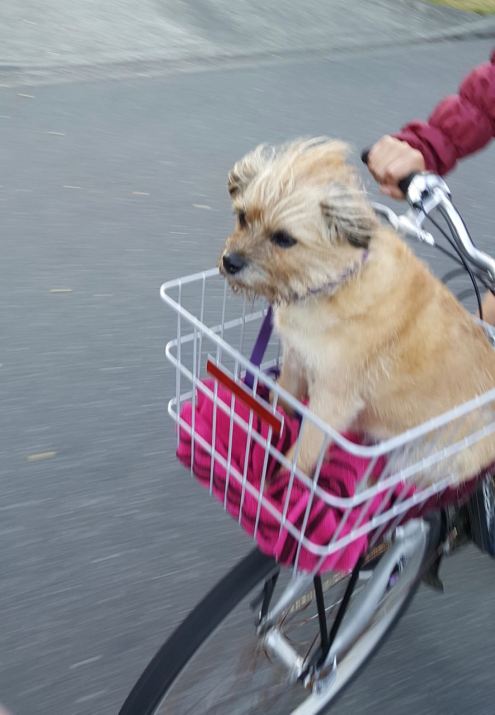
My lifelong gal pal loves to ride a bike. How does she do that you ask?

Well, she gets in the basket.

Piper Cycling

Did you notice the wind in her hair – like she’s a glamour queen. I asked Kristina if I could ride a bike too, and she said I was too big for the basket.

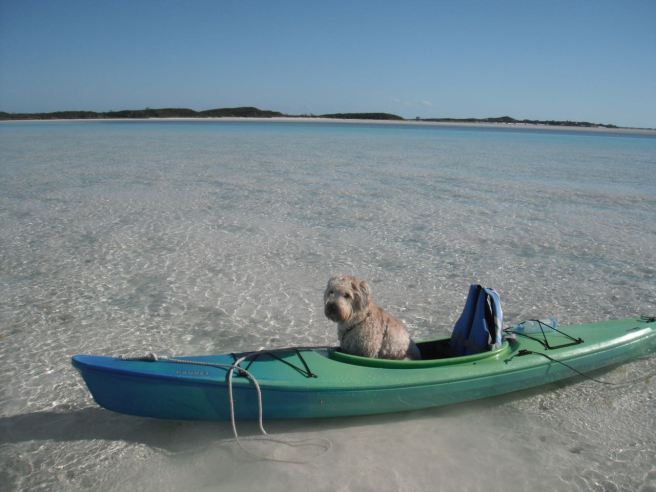
I don’t get that. I’ve done a lot of kayaking, so why not biking, too?

Farley in Kayak

Woof Woof

Mystery Mondays: J.E. Barnard on the Scene of the crime

I’m always thrilled when I get to announce a new release by an author contributing to Mystery Mondays. J.E. Barnard’s latest novel, When the Flood Falls, was released last week. Congrats Jayne!

As a crime writer, Jayne is here to talk about the scene of the crime. How appropriate.

Over to Jayne.

Returning to the Scene of the Crime

By J.E. Barnard

How many places have you seen in your lifetime where you could dump a body?

If you’re a sweet old lady who loves Agatha Christie books, any place has possibilities.

Take, for instance, my godmother. She’d be 90 now. On our last outing, we went together to Butchart Gardens on a warm summer evening, to admire the artful lighting and colourful fountains, to sniff the breeze for exotic floral aromas that quicken in the dew-laden air. As we strolled slowly along a path in the old quarry, she paused by a Japanese maple snugged against the rocky wall. The front leaves were translucent flame, spotlit from below; behind the trunk, in sharp and artful contrast, was shadow deep as midnight. Standing amid the delicate pale blossoms, gazing into the heart of blood-red darkness, this dear old woman sighed happily and murmured, “You could hide TWO bodies in there if you had to.”

That touching moment occurred the same summer that the city of Moose Jaw, Saskatchewan was about to open its long-awaited new Art Museum. The museum’s curator took me and a few other part-time instructors on a tour of the new facility. We exclaimed over the huge clay sink (coffin-sized!), praised the classroom spaces, admired the view over the Serpentine Canal, and eventually were taken to the sub-basement via a special key and admitted to that holiest of holies in the art world: the vault.

An art vault is typically a secure storage space with diverse capabilities, from open floor space for large sculptures to shelves for smaller pieces, and metal racks from which to hang paintings and other framed artworks. These racks in particular fascinated me. To open the one nearest the wall, you had to roll each successive rack sideways, leaving a barely-body-wide gap for the unlucky curators to squeeze into with the painting to be stored.

As the curator began rolling each rack back into place, she was explaining the measures built into prevent the vault flooding if the Serpentine Canal spilled over its banks. Amid the sense of menace from rising water, the gap by the wall closed with a crunch. In my mind’s eye I saw a flood outside and, trapped at the very back of the vault, at the mercy of this half-tonne of gliding metal, a body. I went home with my brain abuzz. Whose body would it be? How long could it stay in that climate-controlled environment undetected? Who had, or could get, access to the special key card?

Life intervened, as it does to most fictive dreams, and ten years passed. Standing in a different museum in a different province, admiring a framed painting whose label said it had been in secure storage for many years, I remembered that art vault and that hypothetical body, and set to work on a mystery that would take place in a new Art Museum.

In 2016, fully 18 years after my vision in that small art vault in Moose Jaw, my mystery featuring an art vault won the Dundurn Unhanged Arthur for Best Unpublished Crime Novel. There were many changes the way – to the plot, the characters, the technology – but that vault remained. On July 14, 2018, the ‘art vault mystery’ was released by Dundurn Press as When the Flood Falls, which is set in Bragg Creek, Alberta where the Elbow River flooded slightly in 2005 and catastrophically in 2013. There’s no real-life Art Museum on the Elbow’s bank but I pictured one so vividly during the writing that I’m always surprised when I cross that bridge and the building isn’t there.

This past weekend, I read the vault scene live for the first time, at the Saskatchewan Festival of Words, held annually in the Moose Jaw Art Museum. Two floors beneath my feet, in the sub-basement that is only accessible by special key, lurked the original art vault that inspired the scene in the book. Did I picture, for a disorienting instant, a real body trapped behind those real, heavy, rolling metal racks?

You bet I did. My godmother would have been so proud.

WHEN THE FLOOD FALLS
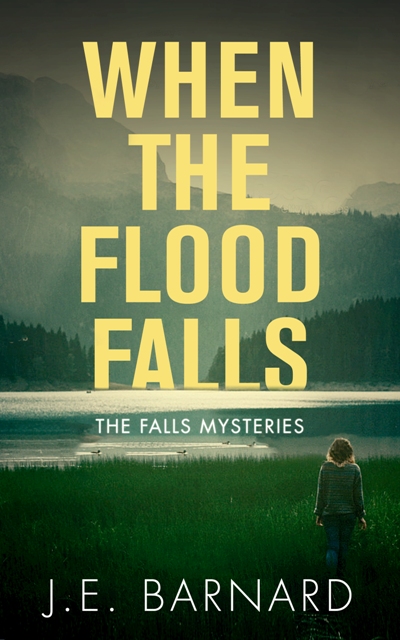
WhentheFloodFallsNew compressed 1With her career in tatters and her marriage receding in the rear-view mirror, ex-RCMP corporal Lacey McCrae trades her uniform for a tool belt, and the Lower Mainland for the foothills west of Calgary. Amid the oil barons, hockey stars, and other high rollers who inhabit the wilderness playground is her old university roommate, Dee Phillips. Dee’s glossy life was shaken by a reckless driver; now she’s haunted by a nighttime prowler only she can hear.

As snowmelt swells the icy river, threatening the only bridge back to civilization, Lacey must make the call: assume Dee’s in danger and get her out, or decide the prowler is imaginary and stay, cut off from help if the bridge is swept away.

WHO IS J.E Barnard?
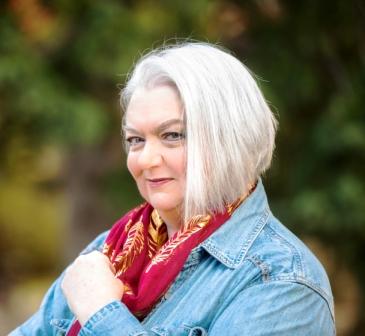
Jayne Barnard 2017 sly shrunkJ.E. Barnard is a Calgary-based crime writer with 25 years of award-winning short fiction and children’s literature behind her. Author of the popular Maddie Hatter Adventures (Tyche Books), and now The Falls Mysteries (Dundurn Press), she’s won the Dundurn Unhanged Arthur, the Bony Pete, and the Saskatchewan Writers Guild Award.
Her works were shortlisted for the Prix Aurora (twice), the UK Debut Dagger, the Book Publishing in Alberta Award (twice), and three Great Canadian Story prizes. Her most recent book is When the Flood Falls, a small-town psychological thriller set in the Alberta foothills west of Calgary.