Farley’s Friday: A Wheaten Can Listen Well (Audrey Jessup Crime Writing Award)

Farley here,

I’ve had a weird week.

Kristina talked for days on end and it took me a while to figure out what she was doing. First I thought she was talking to me, and I felt pretty flattered to get so much attention.

Then I realized she was focussed on something else entirely. And look what she made me wear.

Farley in Hat

“Take this hat off my head,” I bark.

“You’re my audience,” Kristina says.

“Audience for what?” I bark.

“I have to read aloud at the Audrey Jessup awards, and I need to practice.”

“Yeah, but why do have to wear a hat?”

“Because I’m pretending you’re sitting in a bar listing to me read my story.”

Okay, I get it. She’s nervous and wants to practice. She keeps mumbling something about the 10,000 hour theory and the more you do something to better you get at it.

So the night of the awards, she comes home all happy and dances around the living room. She won 🙂
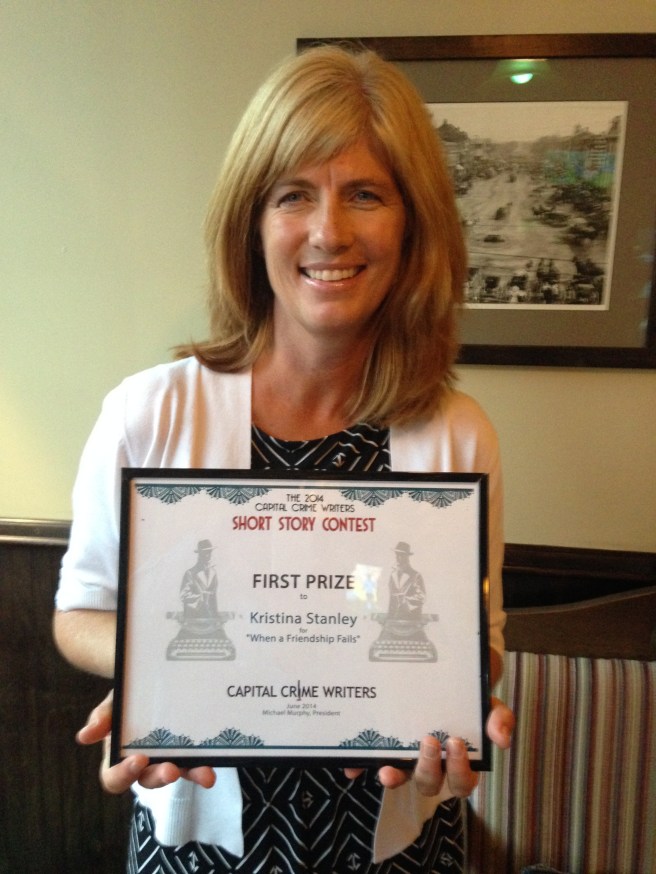
Kristina Stanley Audrey Jessup

Now I just wag my tail. I’ll let her read to me anytime if it helps.

Woof Woof.

Capital Crime Writers


Prepping for a Reading

Have you ever read your writing aloud in public? I haven’t and am about to.

My short story “When a Friendship Fails” has been nominated for the Capital Crime Writer’s Audrey Jessup. As part of the nomination, the 5 nominated authors are asked to read part of the story aloud. The event is taking place in a pub in down town Ottawa.

The complete story takes 20 minutes to read, and I’ve been given 7 minutes.

I’ve been using Audacity to practice, and to deliver a strong emotional impact, I need to choose if I should read:

  • from the beginning
  • middle
  • or the last three scenes

Audacity makes me listen and practice. After I decide which section to read, I can work on the timing.

Here’s my question.

When reading a scene on a page, the reader can see paragraph breaks and knows a new character is speaking. But when listening to a story, the listening doesn’t have the advantage of seeing the paragraph breaks. I’m not an actor who can change the sound of my voice for each character (although I’m trying),  so when reading from a finished work, is it okay to add a few he said/she said tags to make it clear who is speaking?

What comes next and is the most nerve-wracking of all: I have to read aloud in front of people.

Yikes.

Thanks for reading . . .