Every week is a mystery on Mystery Mondays. You never know what writing topic we’ll cover. This week, I am trilled to have author C.T. Collier here to talk about critique groups.
The Benefits of Critiques with a Variety of Readers and Writers
by C. T. Collier
Nothing improves my writing so much as critique sessions with a variety of writers. That’s one reason I’m an active member of three face-to-face writers groups and one online group, all of whom offer critiques of one kind or another. My local writer’s group is a community of people who love language. My nearby-city group is a mix of published and aspiring writers, fiction and non-fiction. My regional group, which is a mix of readers and writers, is all about mysteries. And my online group is set up for mystery authors focused on publication. Each group in its own way is helpful to my writing, and I believe my contributions are helpful to theirs as well.
How do those language lovers around the table at my local library benefit me as a published author? Every time we meet, I’m reminded of what drew me to writing in the first place. It wasn’t the desire to have my words in print. It was the desire to use language effectively to bring to life my thoughts, hopes, dreams, and stories. All of us in the local writers group share that. Whether I’m reading a five-minute clip of my work-in-progress or listening to others, the experience rekindles my respect for and passion for the written word.
My close-by-city writers group schedules three critique meetings each year into its regular monthly schedule. The procedure is simple: each submission goes out to participants a few days ahead of the meeting; each participant prepares written comments for each submission. On critique day, we go round robin, one submission at a time, sharing our (always constructive) feedback and offering encouragement. With such a variety of input, my work-in-progress improves in ways I could not accomplish on my own. And I learn from and help all the participants, always a good feeling.
My mystery-only group is still in the formation stage and has not yet integrated critiques with meetings. However, three other members are writers with whom I critique one-on-one. Check back in a year to see how this evolves. There are many models to consider and an exciting variety of members interested in participating.
My online publication-focused group offers a variety of critique modes—subgroups that focus by subgenre; full-manuscript swaps; feedback for partial work in progress; and other types. I participate in several, and I always learn from the critical feedback. Just as important, I learn by reading another author’s work and offering feedback. I spot better ways of phrasing. I see tight plotting and weak plotting and get a sense of how my own can improve. I see another writer’s “darlings” and, from the experience, get the courage to eliminate my own.
Just as important—and this is true for all the critique sessions, regardless of the type of group—is ongoing community with writers. Writing can be a lonely business. And, since my intention in writing novels is threefold—to communicate, to inform, and to entertain—getting candid reader feedback and constructive editorial feedback are essential in making my book the best it can be before sending it to my editor. Finally, some critiquers become invested in my work, and I in theirs, and we become eager readers and good ambassadors for each other.
The benefits of critiques are many, and the only costs are the courage to put my work out there and the time to prepare thoughtful helpful responses to my fellow writers. If you haven’t ventured into critiques, I strongly encourage it. Please share your comments and questions about critiques with us below.
Who is C.T. Collier?
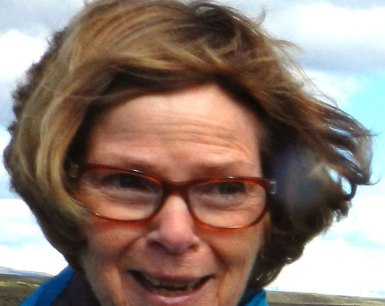 C. T. Collier was born to solve logic puzzles, wear tweed, and drink Earl Grey tea. Her professional experience in cutthroat high tech and backstabbing higher education gave her endless opportunity to study intrigue. Add to that her longtime love of mysteries, and it’s no wonder she writes academic mysteries that draw inspiration from traditional whodunits. Her setting is entirely fictional: Tompkins College is no college and every college, and Tompkins Falls is a blend of several Finger Lakes towns, including her hometown, Seneca Falls, NY
STUCK by C.T. Collier
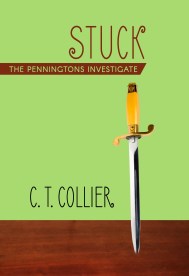 Meet the Penningtons—Lyssa, Ph.D. Economics, and her husband “the handsome Brit” Kyle, Ph.D. Computer Science—in their second investigation, Stuck.
Murder never entered the picture until Fritz Van Derzee decided, at long last, to clear his name. Who stuck a jeweled stiletto into his desktop after stabbing him to death? Fritz’s daughter, Emma, recruits her former professor Lyssa Pennington to find the killer.
And where’s the ten million Fritz was falsely accused of embezzling? Tompkins College President, Justin Cushman, hires his old friend Kyle Pennington to trace the missing money.
While Lyssa uses charm and tenacity on the long list of suspects, Kyle reconstructs the college’s old homegrown finance system. As they converge on the killer, Lyssa and Kyle may be the next two casualties.

