The Story Arc & Why Stories Captivate!

Are you struggling to make your story work?

The story arc can help you.

The story arc is made up of the Inciting IncidentPlot Point 1, the Midpoint and Plot Point 2, and the Climax.

There are those who think the story arc is a formula to follow and that it will stifle creativity. I don’t believe this. I think the story arc is about form, not formula, and it inspires me to tell better stories.

Writing a novel is a personal story arc.

Inciting Incident: You’ve been living your life, but something just isn’t right. AND THEN…your brain tells you that you need to write a story. You don’t know yet how hard this is going to be, but the world has changed, and you’re going to roll with it. So here’s the problem. How are you going to write 80,000 to 100,000 words and get people to like it?

Plot Point 1: You’ve written 20,000 words or so, spent hours doing this, and there is no turning back. You’ve invested emotion, time, brainpower and you won’t give up.

Midpoint: You’ve made it halfway. Now you really get working. Everything you have is going into the story. This is where you figure how hard it is to write a novel, but you’re determined to solve the problem.

Plot Point 2You can’t possibly go on writing. Your structure is a mess. Everything you’ve written since the middle is making it difficult to bring the story together. You don’t know how to end the story, but you know you must work hard to finish or you’ll lose the whole story — and maybe a little part of yourself, too.

Climax: You are going to overcome your demons and finish the story. Your adrenaline is rushing. You’ve got this. You just have to fight your way through and you can write the resolution. There’s the word count you needed, and you’ve solved your problem.

I searched for an interesting way to describe the story arc. And then I found Tomas Pueyo and had to share his video.

This entertaining and insightful video will motivate you!

It’s time to stop struggling to make your story work.

Why not evaluate your story arc and see if you can make the story better? You’ve got nothing to lose by learning and trying — as long as you save your work before making large changes…



Fictionary is online software that simplifies story editing. Fictionary draws a recommended story arc and draws the story arc for your story. You can see how to improve the structure of your story within seconds.

Why not check out Fictionary’s free 14-day trial and tell better stories?

The Climax In The Context Of The Story Arc

The climax scene is where you get to shine as an author. Every word you’ve written up to this point is going to pay off.

What is the Climax?

You’ve built you’re story up to the climax with rising action, and now the climax scene (or scenes) will have the highest level of conflict, the greatest tension, or the most devastating emotional upheaval.

Up to this point there has been no scene as intense as the climax scene.

I read a book where the most intense scene occurred at the midpoint. A woman trapped in a car was slowly being submerged. The scene was wonderfully written and had me turning the pages. The book could have ended there. If I’d stopped reading there, I would have left the book feeling satisfied.

Unfortunately, I had no idea the climax was going to be a let down compared to the midpoint scene. The climax was less tense and less emotionally satisfying. The author built up the expectation by putting a ripper of a scene in the middle of the book and couldn’t keep the excitement rising. I felt let down at the end.

The protagonist must be in your climax scene, or you risk alienating your reader. The protagonist should face the biggest obstacle in the story and determine her own fate.

After the climax you’ll follow up with a resolution to the story.

Earlier posts cover the Inciting IncidentPlot Point 1, the Midpoint and Plot Point 2.


Famous Climax Scenes:

Note: there are story spoilers, so don’t read this section if you want to read the book or see the movie.

Gone Girl: Nick plans to reveal Amy to the world in a novel that reveals the true story of what she did. He thinks he has the upper hand until she tells him she’s pregnant. In order to protect his unborn child, he’ll never be able to leave Amy.

The Martian: Mark is finally at the moment where he launches his space ship so he can intercept with the crew on the Hermes. The tension is built when his ship doesn’t have the range to reach the Hermes and he has to pierce his space suit to propel himself to the Hermes.

The Philosopher’s Stone: Harry, Ron, and Hermione must protect the Philosopher’s Stone from (they think) Snape. They want to stop Snape from giving the stone to Voldemort. Ron sacrifices himself during the climax, and Harry faces the final confrontation alone.

Twilight: Bella gets injured by James when as she tries to save her mother.


Placement Of The Climax

The climax should happen somewhere around 90% into your novel. This is a guide so you can check you’re not writing too much before or after the climax.

If the climax occurs too early in your story, the reader may get impatient with a long resolution and start skimming.

If the climax appears to late, the resolution may lack depth and the reader finishes the story without being satisfied.

Here’s an example of a story arc from Fictionary. The brown line shows the recommended story arc, and the green line shows the actual story arc for the novel.

Image Source: Fictionary

You can see above, the inciting incident occurs too late in the story, plot point 1 occurs too quickly after the inciting incident, and the middle occurs too late in the story.

After that, plot point 2 is reached too quickly, denying the reader story depth. By appearing too early, it also means the last act is dragging. Act III is going on for too long.

And on it goes until the climax is too late, and there isn’t enough time for a satisfactory resolution. Meaning the reader won’t read the writer’s next book.

I’ve love to know what you think and if you have any questions 🙂


Fictionary is online software that simplifies story editing. Why not check out Fictionary’s free 14-day trial and tell better stories?


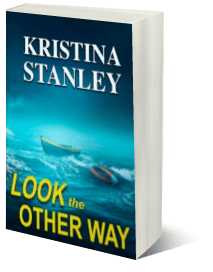
Post written by Kristina Stanley, best-selling author of Look The Other Way (Imajin Books, Aug 2017).

Top 5 Fiction Elements For A Mystery #AuthorToolboxBlogHop

Nano Blog and Social Media Hop2Thank you, Raimey Gallant for organizing the #AuthorToolboxBlogHop.

This is a monthly blog hop on the theme of resources/learning for authors: posts related to the craft of writing, editing, querying, marketing, publishing, blogging tips for authors, reviews of author-related products, anything that an author would find helpful.

To continue hopping through other great blogs in the monthly #AuthorToolboxBlogHop or to join, just hop on over to Ramey Gallant!

This week, I thought I’d focus on my favorite genre – Mysteries (my fav ’cause that’s the genre I write in).

Top 5 Fiction Elements For A Mystery

Self-editing a mystery is one of the joys of the writing process. You get to use your imagination to lead the reader through your story.


If you’re a mystery writer, it’s important to keep track of your story, and not only in the context of what you share with your readers but also what your characters know.

You don’t need to keep track while you write your first draft, but once you’ve written a draft, go back through your manuscript and rewrite it with the following 5 key elements of fiction in mind.

1. CLUES

A clue tells the readers something that will help them solve the mystery. You don’t want to give clues too early and have the reader guess who the villain is. You also want to give enough clues, so when you reveal the villain, the reader is surprised, but also feels the choice is logical. You can also call this a revelation. Any you let the reader know that’s important to the story.

2. FORESHADOW

Think of a clue as a piece of a puzzle. You need all the pieces to solve the puzzle. Foreshadowing is hinting at some future event. It’s not solving the puzzle. Foreshadowing will keep the tension rising throughout your story. It’s the anticipation of something bad happening that will draw your reader in.

Usually, I’ll put foreshadowing as the purpose of a scene if it includes foreshadowing. Then I can quickly check where I’ve done this.

3. POINT OF VIEW CHARACTERS

You need to decide early if your antagonist will have the point of view (POV) for any scenes. If your antagonist has a POV scene, you cannot let the reader know everything the character is thinking.

In a thriller, the reader often knows right away who the villain is, but in a mystery, the villain is kept secret until the very end.

4. WHAT PROTAGONIST KNOWS

Keep track of everything the protagonist learns. You need control what she/he knows versus what the reader knows. Your protagonist can only act on information she/he has.

5. WHAT THE READER KNOWS

This is very important if you write from multiple points of view. Keep track what the protagonist knows and if the reader knows something from another POV character that the protagonist doesn’t know.

Happy editing!


Check out Fictionary’s  free 14-day trial  and tell better stories.

Fictionary is online software that simplifies story editing.

Plot Point 2 In The Context Of The Story Arc

It’s the end of act II and all is lost. Your protagonist must work hard to get what she wants or lose everything.

The story arc has been around for over 2000 years, and is a proven way to tell a good story. It’s not the only way, but it does work.

Evaluating your story arc in the context of the three-act structure should spark your creativity, not box it in. Use the story arc to make your story better by understanding why certain key events happening at the right time will engage your readers.

The story is yours. The arc helps you make it better.

Today, we’re talking about Plot Point 2.

Earlier posts cover the Inciting IncidentPlot Point 1 and the Midpoint.


What Is Plot Point 2

Plot Point 2 (PP2) signals the end of Act II.

Plot Point 2 will be a low point for your protagonist. Her actions since the middle have caused disaster. At PP2, she becomes more determined to reach her goal.


Famous First Plot Points:

Note: there are story spoilers, so don’t read this section if you want to read the book or see the movie.

Gone Girl: Amy comes home and lies about being kidnapped. Nick wants nothing more to do with her, but can’t get away. Amy will frame him for attempted murder if he leaves her. Life looks bad for Nick.

The Martian: Mark leaves his base for the final time and has to cover 3000 km in a hostile environment. If he misses the window for the crew to pick him up, he’ll die on Mars. This is serious motivation.

The Philosopher’s Stone: Harry encounters the Voldemort in the Dark Woods. Voldemort tries to kill Harry, but a centaur rescues Harry. Harry will have to confront Voldemort at some point if he’s going to survive.

Twilight: A vampire is going to go after Bella for her blood, and Bella must leave Fork. Bella wants to survive.


Placement Of Plot Point 2

Plot Point 2 should be somewhere around the 75% mark in your novel. If this plot point comes too late, the story will feel like it’s dragging. If it comes too early, the story may feel rushed or lacking in depth.

Here’s an example of a story arc from Fictionary. The brown line shows the recommended story arc, and the green line shows the actual story arc for the novel.

You can see above, the inciting incident occurs too late in the story, plot point 1 occurs too quickly after the inciting incident, and the middle occurs too late in the story.

After that, plot point 2 is reached too quickly, denying the reader story depth. By appearing too early, it also means the last act is dragging. Act III is going on for too long.

And on it goes until the climax is too late, and there isn’t enough time for a satisfactory resolution. Meaning the reader won’t read the writer’s next book.

I’ve love to know what you think and if you have any questions 🙂


Fictionary is online software that simplifies story editing. Why not check out Fictionary’s free 14-day trial and tell better stories?


Post written by Kristina Stanley, best-selling author of Look The Other Way (Imajin Books, Aug 2017).

Kristina Stanley is the best-selling author of the Stone Mountain Mystery Series and Look The Other Way.

Kristina is the CEO of Fictionary.

The Midpoint Of A Novel In The Context Of The Story Arc

Act II is underway, and your story is dragging. What do you do?

A dragging story is not what we want as authors, so let’s look at how to fix this.

A good story contains key plot events. To create a story readers love, these events must happen at the right time — including the midpoint.

If you’ve written the inciting incident and plot point 1 well, then at the midpoint, you’ll be taking your readers on a journey where the protagonist moves from a reactionary mode to a proactive mode.

The midpoint of your novel happens at around 50% of your story’s total word count. It’s also about halfway through the second act. So that was a little obvious…but had to be said.

The events following your midpoint will lead the reader to plot point 2 (at the end of Act II), and then on to the climax.


Key Scenes In The Story Arc

The inciting incident is the moment the protagonist’s world changes in a dramatic way.

Plot point 1 is the point of no return. The character can’t back out of the central conflict. This is the moment when the setup of the story ends and Act I is over.

The midpoint is when the protagonist changes from reactive to proactive.

Plot point 2 happens when your protagonist discovers something that allows him to finish his mission, or he thinks all is lost. This depends on the type of story your writing. Act II is over.

The climax is where your protagonist faces the biggest obstacle in the story. She may or may not win…


How To Make Your Midpoint Sparkle

At the midpoint, make something terrible or life-changing happen to your protagonist. This will raise the stakes.

Your protagonist needs to find the strength to deal with whatever horrible thing you’ve made happen or she’ll lose everything.

Because of this, she’ll decide to do something and take the rest of the book to do it. Meaning, the event has to be significant.

At the midpoint point, your reader should understand the story is moving in a new direction.

Depending on the type of story you’re writing, the event could be emotional, spiritual, or action packed. It must fit your story. Even though the midpoint is an exceptional event, remember the climax has to have even higher stakes.


Famous Midpoints:

Note: there are story spoilers, so don’t read this section if you want to read the book or see the movie.

Gone Girl: Nick wants to improve his image and gives a press conference. Amy’s “secret” best friend attacks, demanding to know what he did with Amy. Nick must now get proactive if he’s going to save himself.

The Martian: Mark Watney finds out his supplies are going to be delayed and believes he’s going to die on Mars. This results in kicking him into action to figure out how to live long enough for the supplies to get to him.

The Philosopher’s Stone: During a Quidditch match, Harry’s Nimbus 2000 broom takes Harry on a ride. Snape casts a spell. Hermione lights Snape’s cloak on fire. Harry can’t ignore all this and must become proactive

Twilight: Bella sees Edward’s true power. This strengthens how she feels about him, and she’ll do anything to be with him.

See Inciting Incident In The Context Of The Story Arc and Plot Point 1 In The Context Of the Story Arc for more on these stories.


Fictionary is online software that simplifies story editing. Why not check out Fictionary’s free 14-day trial and tell better stories?


 Post written by Kristina Stanley, best-selling author of Look The Other Way(Imajin Books, Aug 2017).

Plot Point 1 In The Context Of The Story Arc

You’re heading into Act II of writing or editing your novel. So how are you going to keep readers engaged? You need a great plot point to drive them forward.


In an earlier post, I talked about the inciting incident in the context of a story arc. Today we’ll examine plot point 1.

What Is Plot Point 1?

Plot Point 1 is the point of no return. The character can’t back out of the central conflict. This is the moment when the setup of the story ends and Act I is over.

But there’s more. There must be something at stake. If the character doesn’t care about the outcome, a reader won’t care either.

Example plot point types (there a many more):

  • The character is obligated to take action.
  • The character is trapped.
  • Tuning back means returning to a life of unhappiness.
  • The character’s desire for something overrules all else.


Famous First Plot Points:

Note: there are story spoilers, so don’t read this section if you want to read the book or see the movie.

Gone Girl: Amy’s first treasure hunt clue is found. Nick has no choice but to follow it. Amy’s life is at stake (as far as the reader knows).

The Martian: Mark Watney decides he won’t die on Mars. Now he gets proactive. To back out means to die — that’s a lot a stake.

The Philosopher’s Stone: Harry Potter arrives a Hogwarts. He can’t turn back. He can’t get back on the train. That would mean life back with the Muggles and unhappiness.

Twilight: Bella learns what Edward is a vampire, but she loves him and decides to pursue him. Edward has emotional power over Bella.

See Inciting Incident in the Context Of The Story Arc for the Inciting Incident in each of the above stories.


Placement Of Plot Point 1


The story arc is the structure of your story and the timing of the events in that story.

The arc takes the reader from one state at the beginning to a changed state at the end.

Plot Point 1 should be somewhere around the 25% mark in your novel. If this plot point comes too late, the story will feel like it’s dragging. If it comes too early, the story may feel rushed or lacking in depth.


Here’s an example of a story arc from Fictionary. The brown line shows the recommended story arc, and the green line shows the actual story arc for the novel.

You can see above, the inciting incident occurs too late in the story.

After that, plot point 1 is reached too quickly, denying the reader story depth. By appearing too early, it also means the middle is dragging. Act II is going on for too long.

And on it goes until the climax is too late, and there isn’t enough time for a satisfactory resolution. Meaning the reader won’t read the writer’s next book.

I’ll cover other key events such as the midpoint, plot point 2 and the climax in future blogs.

I’ve love to know what you think and if you have any questions 🙂


Fictionary is online software that simplifies story editing. Why not check out Fictionary’s free 14-day trial and tell better stories?

Inciting Incident In The Context Of The Story Arc

You’ve written a first draft. And with that major milestone completed, I’ll guess you want others to read your story and love it.

fantasy-3281795_1920

That means you need to take your first draft and tell a better story. One way to to tell a better story is to evaluate the story arc while you’re performing a story edit.

Today, we’ll cover the the first key event in the story arc. The inciting incident.

What is an inciting incident?

The inciting incident is the moment the protagonist’s world changes in a dramatic way.

It’s a major turning point that occurs before the midpoint of the first act. Note it doesn’t have to be the first event in your story.

The dramatic change can be positive or negative and should give the protagonist a goal she can’t turn away from.

To make your inciting incident shine, make it cause both a conscious and unconscious desire in your protagonist.

I recommend that you write your inciting incident as a dramatic scene and not as backstory or narrative summary. This enables the reader to experience the event at the same time as the protagonist and increases your chances of getting the reader emotionally involved.

The inciting incident can happen to the protagonist or can be caused by the protagonist. It’s up to you as the artist to decide what’s best for your story.

Famous Inciting Incidents

Gone Girl: Nick comes home to find his wife missing. (External goal — find wife. Internal goal — get wife out of his life.)

The Martian: Mark Watney goes missing during a storm on Mars. His teammates can’t find him, think he’s dead, and evacuate the planet.

The Philosopher’s Stone: Harry Potter receives a letter from Hogwarts and his uncle won’t let him have it.

Twilight: Bella faces the hunter as he moves forward to kill her.

Placement of the Inciting Incident

The story arc has been around for over 2000 years. It’s a proven form to keep readers engaged and is not about formula. The story, the imagination is unique to you.

The story arc is the structure of your story and the timing of the events in that story.

The arc takes the reader from one state at the beginning to a changed state at the end.

Using the tools at your disposal, like the story arc, and knowing how to write and when to place key events in your story for maximum reader satisfaction is key to a good story. So what’s a good story? It’s story others want to read.

The first of the key events is the inciting incident.

The inciting incident exists in the context of the complete story arc. If you don’t have an inciting incident in the first 15% of your novel, you need a strong reason for delaying it. Readers expect something to trigger the protagonist to act. If you delay the inciting incident, add in subplots that keep the reader engaged.

Here’s an example of a story arc from Fictionary. The brown line shows the recommended story arc, and the green line shows the actual story arc for the novel.

Story Arc Bad

You can see above, the inciting incident occurs too late in the story. The writer will lose readers who get bored.

After that, plot point 1 is reached too quickly, denying the reader story depth.

And on it goes until the climax is too late, and there isn’t enough time for a satisfactory resolution. Meaning the reader won’t read the writer’s next book.

I’ll cover other key events such as plot point 1, midpoint, plot point 2 and the climax in future blogs.

I’ve love to know what you think and if you have any questions 🙂


99428-0zktgjmg_nbxoiy49

Fictionary is online software that simplifies story editing. Why not check out Fictionary’s free 14-day trial and tell better stories?

Post written by Kristina Stanley, author of Look The Other Way (Imajin Books, Aug 2017).

d9e70-1utkhhu-sp5fjiahqxtl8xwKristina Stanley is the best-selling author of the Stone Mountain Mystery Series and Look The Other Way.

Kristina is the CEO of Fictionary, and all of her books were edited using Fictionary.


Why, When and How to Beta your Book.

Sharing your story can be frightening, so I’ve asked the experts at BetaBooks to talk about how to get the most out of beta readers.

Please welcome guest writer, Paul Kilpatrick and learn the best practices in beta reading. In this context, beta reading is having someone else read your novel and get them to give you feedback that helps you make it a better story.

Check below for a special deal…

Over to Paul.


Why, When and How to Beta your Book.

by Paul Kilpatrick.

Hi, I’m Paul Kilpatrick. My partner Andrew Burleson and I founded BetaBooks, a software tool to help authors organize their betas. Since it launched, our software has helped authors beta over 1000 books. We’ve had countless conversations with authors and readers about why they choose to run or participate in Betas. So let’s get into it.

Why to Run a Beta

There are at least four great reasons to beta.

1. Big-Picture Editorial

You can use your beta to identify oversights and problems in your book. This is what comes to mind for most authors when they think of beta-ing their books. For beginning authors, it is one of the most valuable reasons to beta. A group of people can spot character inconsistencies that you have overlooked, draw attention to plot problems you can’t see, and let you know when you are straying from genre conventions. What you do with that information is up to you.

2. Market Research

Movies have test screenings before they open, bands test out new songs on good crowds before they go on albums, and plays schedule out of town runs, all to get early reactions so they can make their final product as tight as possible, giving them the greatest chance of success. Authors should always be looking for ways to do the same, and the beta is an amazing tool for that. What if someone just released a book in your genre with a similar twist? What if people are reading subtext into your story you did not intend? What if you are unaware of that go-to plot move that people are tired of? Getting your book in front of people in a low stakes setting is a great way to gather that information.

On top of all that, if you are starting out, it is a fantastic opportunity for you to test out different ways of selling your book. Experiment with and keep track of what you said to convince different people to read your book. Those techniques will help you sell your book to the world.

3. Community Building

You want fans who are invested in your books, and beyond that in you as an author. Inviting them into your process and making them feel important is a hugely powerful way to build reader engagement with you and nurture long term relationships. The beauty of beta readers is that they are important to your process. There is no artifice of marketing necessary here. A direct interactive relationship with the readers who are most invested in your work is invaluable. Don’t pass that opportunity up.

4. Sensitivity Reading

If you are writing outside of your own experience, it is essential to seek out people who can give you an honest response to characters like them. If you are not a lawyer but have a lawyer character, get a lawyer to read your book. Many people are so tired of seeing laughable versions of what they do represented in media they will be happy to give it a whirl. This can extend to any experience outside of your own. Write whatever you want but take the opportunity to make sure you are doing it respectfully by seeking out people who are like your characters.


When to Run a Beta

It’s best to beta after a few thorough self-edit drafts (possibly done with the input of a writers group or mentor), so the work will be clean enough for readers to enjoy. It’s also best to do it before a final meticulous copy edit and type setting, because you may make substantial changes based on the feedback you get.

That having been said, we have seen people beta their books at just about every phase of writing. Some authors beta chapters as they write them, and use that super early feedback during their first editorial pass. We have also seen authors use their beta as a last stop before publishing to give them just a little more peace of mind, or as a perk for their core fans to help build buzz before the launch.

There are two questions you should ask yourself before you decide to run a beta:

Am I mentally ready to accept feedback and make changes based on what an outsider says about my book?

Too late in the process and you may dismiss something because of the amount of work it represents. Too soon and you may not be happy enough with the story to avoid feeling attacked and hurt.

Is this draft in good enough shape that I am respecting my readers’ time?

The people we know who invite beta readers super early are practiced and know that what they write in their first draft is close to their final product. Other authors we know won’t show anything to a reader that hasn’t gone through half a dozen of their own revisions. This is not a statement about author skill, merely about process. Do not conform to anyone else’s timetable if you feel it encourages you to waste people’s time.


How to Run a Beta

There are three things you need to do to get the most out of the process. These are macro principles to keep in mind. If you want an in-depth step by step, we have written one here.

Have your book ready

There are authors who invite people to beta a few chapters of a work they never finish writing. Please don’t be that person. Not only are you wasting people’s time with your actions today, you may be turning potentially great beta readers off forever. Do everything you can to make sure you draft is in good shape. This will mean that a) your readers are getting the best experience possible and more importantly b) you have an easier time accepting feedback.

Set clear expectations

Clear guidance about what you, as the author, are looking for is essential. Kristina Stanley, for instance, has a blanket “Tell me when you skimmed” request. Other people ask readers which character they liked most in a chapter. Still others ask about specific beats, tone and believability. Ask 2–3 questions to start and then decide if your readers can handle more questions at a time. Giving a deadline is also a good idea, as a lot of people work better when they’ve got one.

After all of this, know that if you are building a beta team for multiple books, which I hope you are, you should be thinking of this as an opportunity to train and grow a part of your team so that the process can be better for everyone in the future.

Be ready to Engage Honestly

The final piece of macro advice I can give you has to do with your state of mind as an author. You are asking people for their honest feedback, so be ready for that feedback to hurt sometimes. Don’t blame the reader or try to defend yourself. Say, “Thank you,” and either move on or to try and fix the problem. Do not be discouraged. A beta that reveals a lot of problems you had overlooked is not a bad thing, it is an opportunity; and it means you did not release a subpar book into the world. Conversely, if you are getting a lot of positive feedback, take note and see what you are being praised for. Accept and enjoy it, but try to learn what you are doing that people like so you can lean into that in the future.

On Finding Readers

Now that we’ve covered, the WhyWhen, and How of running a beta, I want to delve briefly into how to find readers. Betas can contribute greatly to a book’s success, but many beginning authors have trouble even getting one off the ground because they are intimidated by finding readers. Don’t be one of those authors!

The two most frequent complaints about betas I hear from authors are: “It is impossible to find readers.” and “I just can’t find any good beta readers.” On both of these, I call baloney.

“It is impossible to find readers” is code for “I’m afraid to ask people to read my book.”

Asking people to read your book is uncomfortable, but it is also the job. Most people who are driven to be creative have a host of baggage that goes along with their creative drive. Imposter syndrome is real. So is introversion, self-doubt, self-loathing, low opinions of our own work, and a collection of other negative internal voices making it difficult to ask people to read our books.

The truth is, to find a good group of beta readers, you are going to have to ask a lot of people. It isn’t impossible. It isn’t even difficult, not really. It isawkward at first, and tedious and repetitive, and it opens you up to rejections. Those hurt, but accepting them is also an essential part of any writer’s journey. Hand-selling your book to someone is the most basic element of what makes a person an author. Many people write, but not all of those are authors. Convincing people that your work is worth reading and eventually worth money is what makes you an author.

Approach it as a challenge and accept it as necessary for your development. Sure there will be rejections, but these are the small rejections that help you build up your author armor. Finding beta readers is a numbers game. Posting an open call for people to do you a favor on your facebook page or on a forum will not get great results (and is another way to avoid actually opening yourself to specific rejection). Instead, ask everyone you know what kinds of things they are reading then see if they will read your book and give you their feedback. Be ready to get nine “no’s” for every “yes,” and know that only a third of the people who say yes will even finish.

It is worth repeating: finding a group of readers isn’t impossible or difficult. It is tedious and requires persistence, but with each person you ask it will get easier.

“I just can’t find any good beta readers,” is code for “I just can’t find a developmental editor who will edit my book for free.”

This one is really amusing to me because, duh. A beta reader isn’t an editor, and if what you want is an editor, go hire one. Beta reading is about gathering and sifting a reasonable amount of feedback into helpful and actionable changes to your book, not finding a silver bullet to save you time and money.


Wrapping Up

Each author does things her or his own way. It is one of the joys of being your own boss. Experiment with your beta so you get the most out of it and so your results complement your goals and process. This blog post lays out ideas we frequently see authors using to get the most out of their betas. If you are curious to read more about betas, you can check out the BetaBooks blog. We also tend to talk about betas a fair amount on our podcast How Authors Work. If you are running a beta soon, why not look at BetaBooks, and take the free trial tier for a spin? It might help you out.

Thank you for your time and good writing!


SPECIAL OFFER

Kristina here…

Thanks to the team at BetaBooks Fictionary has a special offer for you. You can sign up to BetaBooks for free, that’s a given.

The special offer:  Use the coupon code “fictionary” and receive 20% off any BetaBooks subscription plan. It’s easy! Sign up for the free plan and if you decide to upgrade your plan, enter the coupon code, can voila, you get a discount.

Tension and Conflict. What’s the Difference?

Tension and conflict will keep your reader engaged in every scene. Knowing the difference and when to use each will drive your story forward.

Tension

Tension is the threat of something bad happening. This creates suspense.

Tension can be subtle or in-your-face.

Subtle Tension: Imagine one character is hiding a secret that could destroy his life and another character is about to accidentally spill the secret. The reader will feel the tension if you’ve set up the scene so that the reader knows the second character can’t keep a secret.

In-your-face Tension: A woman is thrown off a boat at sea. The tension comes if the reader cares about the character and wants her to survive. Or the tension could be she’s an evil woman who is about to destroy the world, and the reader doesn’t want her to survive.


Conflict

Conflict is the fight that is actually happening. A physical fight, an argument, a battle to win a race.

Conflict can also be subtle or in-your-face action.

Subtle Conflict: Imagine a couple having dinner with friends. The wife is describing an event that happened in the past. The husband says, “Honey, that’s not what really happened.” The wife grits her teeth and smiles. She re-tells the story the way her husband wanted it told. She’s angry but hides it from others at the table. There is a silent argument going on between the couple.

In-your-face Conflict: Imagine that same couple having dinner in a restaurant. The woman knows her husband is having an affair but hasn’t let on she knows. The husband’s mistress enters the restaurant, and he winks at her. The wife loses control, grabs her drink, runs at the mistress, and throws it in her face. She attacks the woman and knocks her to the ground. That is direct conflict.


Do You Have Tension or Conflict in Every Scene?

Use conflict and/or tension in every scene and keep your reader engaged. You don’t need both in every scene, but you should have one in each scene.

Your challenge is to ask yourself if every scene in your novel has tension or conflict.

How does your manuscript measure up? Are you using tension and conflict to your advantage?


How Fictionary Can Help You

Fictionary is a new interactive web app for self-editing fiction that helps writers turn a first draft into a story readers love.

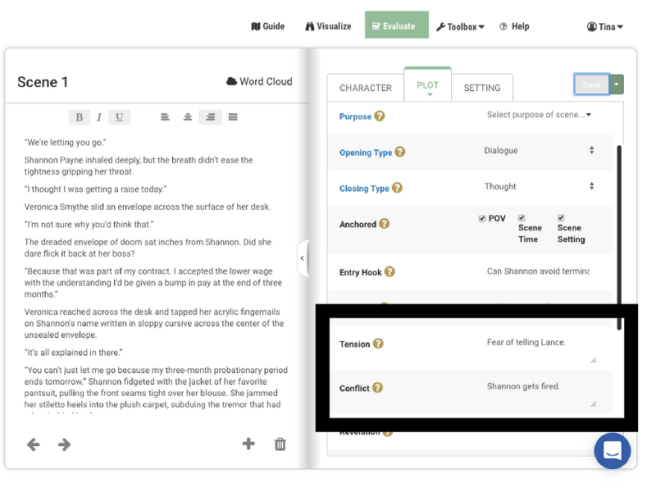
Below is the opening scene from Look The Other Way (by Kristina Stanley).

The “Conflict” in the scene is between an employer (Veronica) and employee (Shannon). Veronica is getting fired and Shannon argues against it, trying to keep her job.

The “Tension” in the scene occurs when Shannon is in the middle of being fired and she worries about how to tell her fiancé. They are just about to buy a house and need her income. The tension also foreshadows there will be problems between Shannon and her fiancé. A double use of a key element will make your story stronger.

The question marks in Fictionary contain information about each Key Element of Fiction and how to use the elements to make your story better.


Post written by Kristina Stanley, author of Look The Other Way (Imajin Books, Aug 2017).

Kristina Stanley is the best-selling author of the Stone Mountain Mystery Series and Look The Other Way.

Crime Writers of Canada nominated DESCENT (Imajin Books, July 2015) for the Unhanged Arthur award. The Crime Writers’ Association nominated BLAZE (Imajin Books, Oct 2015) for the Debut Dagger. Imajin Books published her third novel in the series, AVALANCHE, in June 2016.

Luzifer-Verlag published Abwaerts (Descent) in Germany in the fall of 2017.

Her short stories have been published in the Ellery Queen Mystery Magazine and The Voices From the Valleys anthology. She is the author of THE AUTHOR’S GUIDE TO SELLING BOOKS TO NON-BOOKSTORES.

Her short story, WHEN A FRIENDSHIP FAILS, won the 2014 Audrey Jessup with Capital Crime Writers.

Kristina is the CEO of Fictionary, and all of her books were edited using Fictionary.


Why not check out Fictionary’s free 14-day trial and turn your draft into a story readers love?

5 Ways to Hook Your Reader In Every Scene

Many writing books talk about the importance of the first line, first paragraph and first page of a novel.

If you don’t grab the reader early in your novel, you might lose them for good. Taking that thought and applying it to each scene means evaluating the entry hook for each scene.

There’s a lot of pressure on a writer to produce an extraordinary first line for a novel.

But as with most things, practice will make you better. So start practicing now with the first line of every scene in your novel. By the time you’ve evaluated every scene looking for the entry hook, and maybe rewriting the scene opening for a few, you’ll be ready to go back and rework the first line of your novel.


What Is A Scene Entry Hook?

How many times have you read a book, were a little tired, and not sure if you wanted to start the next scene or chapter? You might read the first few lines of the next scene and then decide to keep reading.

Whatever you read at the beginning of the scene that kept you reading was the scene entry hook.


5 Ways To Hook Your Reader

When creating an entry hook, consider:

  1. Starting in media res
  2. Foreshadowing trouble
  3. Using a strong line of dialogue
  4. Raising a question
  5. Not wasting words on extraneous description.

Alternate Your Technique

Alternate your technique so the reader doesn’t get bored. If you don’t know what the hook is or why the reader would keep reading the scene, think about rewriting the scene opening.

Sometimes you might find you’ve started the scene too early. Look at cuttingthe beginning of the scene until something exciting happens.

If there is description you need, move it to later in the scene if you can. You might just need a little reorganizing of the scene to make the opening sizzle.


How Fictionary Can Help You

Fictionary is a new interactive web app for self-editing fiction that helps writers turn a first draft into a story readers love.

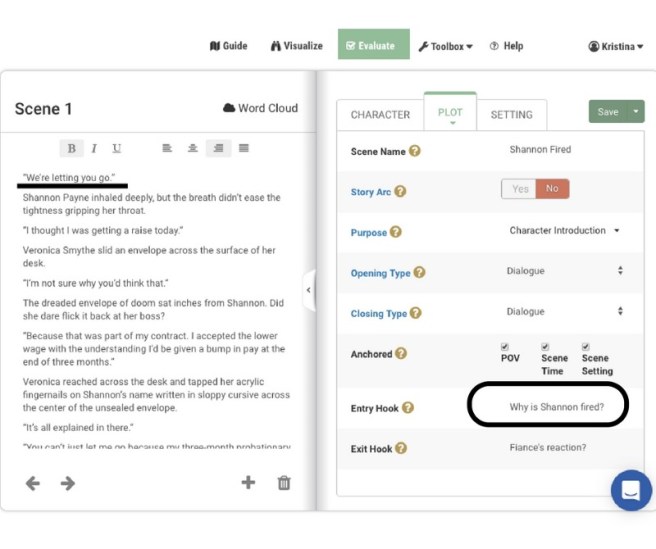
Below is the opening scene from Look The Other Way (by Kristina Stanley).

The “Entry Hook” key element makes me evaluate each scene and think about whether I’ve used a good entry hook. If I haven’t, then I need to rewrite the opening.

The entry hook is the first line of dialogue. “We’re letting you go.” leaves the reading wondering who is being fired and why.

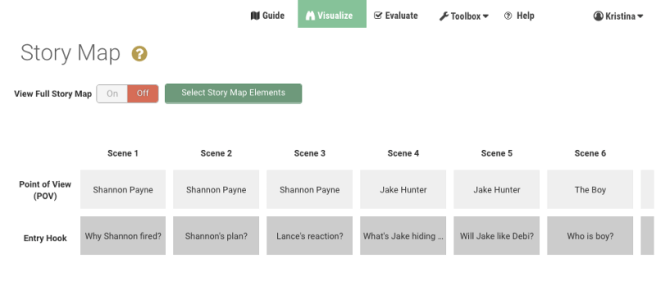
In Fictionary, you can use the Story Map so evaluate key elements of fiction throughout your story.

Here, I’ve chosen just the point of view character and the entry hook to be shown in the Story Map. This way I can evaluate how I’m drawing a reader into each scene.

Your challenge is to ask yourself if every scene in your novel is has an entry hook.


Post written by Kristina Stanley, author of Look The Other Way (Imajin Books, Aug 2017).

Kristina Stanley is the best-selling author of the Stone Mountain Mystery Series and Look The Other Way.

Crime Writers of Canada nominated DESCENT (Imajin Books, July 2015) for the Unhanged Arthur award. The Crime Writers’ Association nominated BLAZE (Imajin Books, Oct 2015) for the Debut Dagger. Imajin Books published her third novel in the series, AVALANCHE, in June 2016.

Luzifer-Verlag published Abwaerts (Descent) in Germany in the fall of 2017.

Her short stories have been published in the Ellery Queen Mystery Magazine and The Voices From the Valleys anthology. She is the author of THE AUTHOR’S GUIDE TO SELLING BOOKS TO NON-BOOKSTORES.

Her short story, WHEN A FRIENDSHIP FAILS, won the 2014 Audrey Jessup with Capital Crime Writers.

Kristina is the CEO of Fictionary, and all of her books were edited using Fictionary.


Why not check out Fictionary’s free 14-day trial and turn your draft into a story readers love?