One of the most common questions I hear when I tell people I co-authored a craft book on writing romance is, “Does it really have to end with a happily ever after?” The short answer is yes. The longer answer is far more interesting, because it gets to the heart of what makes romance such a powerful and enduring genre. If you’re new to writing romance, understanding this expectation will save you a lot of confusion and revision down the road.
Romance isn’t defined by the presence of a love story. Plenty of novels contain love stories — literary fiction, thrillers, historical, even horror. A romance is defined by its promise: the central relationship must resolve in a way that is emotionally satisfying for the reader. In other words, it must end with either an HEA (Happily Ever After) or an HFN (Happy For Now). Think of an HEA as “we’re in it for the long haul” and an HFN as “we’re together and happy, and we’ll see where life takes us.”
This isn’t a formula. It’s a contract.
When a reader picks up a romance, they’re entering into an agreement with the author. They’ll endure the wounds and fears, the complications and obstacles you put in the character’s path, trusting that, in the end, their heart is safe. The HEA/HFN is the fulfillment of that promise. It’s the moment when the emotional arc lands, the internal epiphanies click into place, and the characters choose each other in a way that feels earned.
An HEA is the classic version: the couple is together, committed, and looking toward a shared future. It doesn’t require a wedding, a ring, or a baby. It simply requires clarity: the reader closes the book knowing the relationship is solid, and the characters have done the work to make it last.
An HFN offers a future that’s hopeful, even if it’s not fully mapped out. HFNs are especially common in romance series arcs or in stories where the characters are still in transitional phases of life. The key is that the ending feels emotionally complete, even if the future isn’t yet spelled out.
If you’re new to romance, you might worry that this makes your story predictable or less “serious.” In reality, readers choose romance because they want that emotional payoff. Your job isn’t to surprise them with whether it ends happily, but to surprise and move them with how it happens. Genre expectations don’t limit creativity; they shape it. Mysteries must solve the crime. Thrillers must stop the threat. Romance must resolve the relationship. Readers want to feel hopeful and secure about the couple’s future. Within that framework, authors set their stories apart through character depth, emotional complexity, unique conflicts, and fresh settings. The HEA/HFN simply ensures that the emotional journey lands where romance readers need it to.
And readers do need it. Romance is one of the few genres that consistently affirms hope — not in a naïve way, but in a deeply human one. These stories remind us that people can grow, relationships can heal, and love is worth the risk. In a world that often feels chaotic and uncertain, that promise matters.
So yes, a romance requires an HEA or HFN. Not because the genre is rigid, but because the emotional payoff is the point. It’s what makes romance comforting, cathartic, and profoundly satisfying. It’s what keeps readers coming back. And it’s what makes writing romance such a joyful, meaningful pursuit.
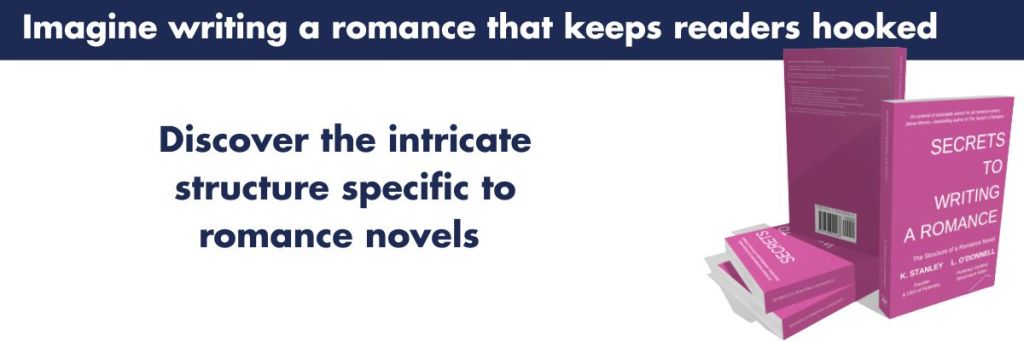
To learn more about Happily Ever Afters and other romance topics, pick up a copy of Secrets to Writing a Romance.
Post Written by Linda O’Donnell
Linda O’Donnell is a writer, certified structural editor, certified copy editor, and a writing and editing instructor. She co-authored Secrets to Writing a Romance with Kristina Stanley, and together they are working on their latest book, Secrets to Writing a Novel. Linda’s contemporary romance novel, Behind the Scenes, is coming out soon.
When people hear I’m a writer, they often respond with something like, “Oh, I’ve been thinking about writing a book,” as if a novel can be conjured up over a long weekend. And when I mention that I write romance, the respect level usually drops, even though it shouldn’t.
Romance is the top-selling genre in fiction, accounting for nearly a quarter of all sales, about $1.5 billion in annual revenue. That’s a lot of readers eager to fall in love with a story. But before you grab your favorite mug, settle in with your keyboard, and start crafting that ode to love, it helps to know that there’s a real precision to storytelling. Writing a strong romance isn’t just about chemistry; it’s about structure that supports emotional payoff.
Learn How to Write a Romance
That idea is what inspired Kristina and me to write Secrets to Writing a Romance. We wanted to help writers understand not just how all stories work, but what makes a romance feel different. Every successful novel relies on what we call the five story arc scenes, the key turning points that give a story its spine. Without that foundation, pacing drags, tension fizzles, and the story can lose its way. Structure holds everything together, even in a genre built on emotion.
If you love romance, you already know that a happy ending, whether it’s a Happily Ever After or a Happy For Now, is non-negotiable. But what many writers don’t realize is that the other story arc scenes in a romance differ from other genres. In our book, we map how romance delivers its emotional beats through its core structure: from the meet-cute, to the admission of attraction, to the middle’s emotional pivot, the break-up moment, and finally the declaration of love. These specialty scenes are what make readers sigh, swoon, and turn the pages late into the night.
Imagine writing a romance with a clear sense of direction, one that keeps readers hooked through every emotional high and low. Secrets to Writing a Romance offers exactly that: a guide to pairing structure with purpose and letting emotion be informed by design. Think of it as a toolkit for crafting love stories that truly work, both on the page in the heart.
Kristina Stanley, CEO and founder of Fictionary, award-winning writer, and the driving force behind The Fictionary School for Writers & Editors, laid the foundation for this book with her deep expertise in story structure. Together, we shaped our shared knowledge into practical strategies romance writers can use.
Tips for Writing a Romance
Each month, I’ll be sharing a blog post with a practical tip from the book, bite-sized lessons on structure, specialty scenes, and emotional craft you can apply to your own project, no matter where you are in the process. I hope you’ll follow along and join the conversation as we explore how to turn the timeless magic of romance into stories that truly connect.
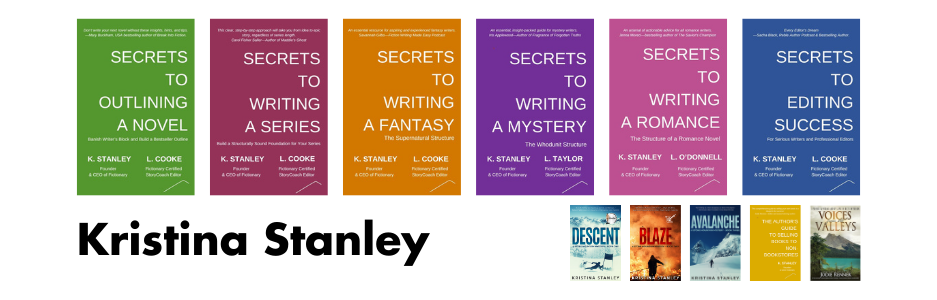
If you’re ready to dive deeper into the craft of romance, Secrets to Writing a Romanceis now available in eBook and print. I hope you’ll pick up a copy and bring its tools into your own writing practice.
Written by Linda O’Donnell
Linda O’Donnell is a writer, certified structural editor, certified copy editor, and a writing and editing instructor. She co-authored Secrets to Writing a Romance with Kristina Stanley and together, they’re working on their latest book, Secrets to Writing a Novel. Linda’s romance novel, Behind the Scenes, is coming soon.
Want to Learn to Self-Edit?
Join the Fictionary School for Writers and Editors
Thank you, Raimey Gallant for organizing the #AuthorToolboxBlogHop. Today is the fourth post of this new series!
This is a monthly blog hop on the theme of resources/learning for authors: posts related to the craft of writing, editing, querying, marketing, publishing, blogging tips for authors, reviews of author-related products, anything that an author would find helpful.
To continue hopping through other great blogs in the monthly #AuthorToolboxBlogHop or to join, just hop on over to Ramey Gallant!
I’ll focus my entire series on self-editing. Here is what I’ve covered so far in the series:
Treat every scene like you would treat the opening scene in your novel. You’ve got to hook the readers so they don’t put your book down. You want them to be so intrigued by your scene opening, that they HAVE to keep reading.
You can do this be evaluating the scene opening type, the scene entry hook, and scene anchoring.
Scene Opening Type
Don’t Bore Your Reader With Repetitive Scene Opening Types. You have four choices for scene opening type:
Dialogue
Thought
Description
Action
Go through each scene of your novel and label the scenes with one of the above. Then check that you haven’t been repetitive. Do many scenes in a row starting with one type is tiresome.
Scene Entry Hook
Get The Reader’s Attention With A Great Scene Hook
When creating a scene entry hook, consider:
Starting in media res (opening in the middle of action)
Foreshadowing trouble
Using a strong line of dialogue
Raising a question
Not wasting words on extraneous description
After your first draft is complete, check each scene and list how you created a hook. As with the scene opening type, you want to vary the method you use. Variety will keep the reader engaged.
Scene Anchoring
Anchor Your Readers, And They Won’t Put Your Book Down
Anchor The Point Of View:
Check whether the reader will know who has the point of view within the first paragraph or at least within the first couple of paragraphs of each scene. If not, the reader might find this frustrating.
If you write your entire novel from one point of view, like many first-person novels, then you don’t need to worry about this.
Anchor The Setting:
You know where the character is because you wrote the scene, but does your reader? If the reader can’t figure out the setting within the first couple of paragraphs, you may lose them–the reader I mean and not the character.
There are exceptions to this. If your scene is about a character waking in a dark place and confused about where she is, then it’s okay for the reader to be confused about where she is, too. This will add to the tension. The reader does need to understand the lack of setting is done on purpose
Anchor The Timing:
The timing of the scene can mean:
Time of day
Time passed since the previous scene
A particular date
Your readers will get disoriented if they can’t follow the timeline. Check each scene and make sure the timing is clear.
Want to Learn to Self-Edit?
Join the Fictionary School for Writers and Editors
Thank you, Raimey Gallant for organizing the #AuthorToolboxBlogHop. Today is the third post of this new series, and I’m very excited to be part of it.
This is a monthly blog hop on the theme of resources/learning for authors: posts related to the craft of writing, editing, querying, marketing, publishing, blogging tips for authors, reviews of author-related products, anything that an author would find helpful.
To continue hopping through other great blogs in the monthly #AuthorToolboxBlogHop or to join, just hop on over to Ramey Gallant!
I once read a book where I didn’t skim any of the setting descriptions. Afterward, I wondered why. Engaging settings generate emotion.
I admit I’m impatient with too much description. To learn what captured me, I re-read the book and highlighted every sentence that described the setting. I realized the author only described things or places that were relevant to the plot.
That was the moment I went on a mission to learn everything I could about setting and how to use it to make my novels more enjoyable.
Location
Location is the place where a scene happens.
When describing the location, ask yourself: Is the location important to the plot, characters, or theme? If no, fewer details are required. If yes, be more generous with the details.
Once you’ve determined the location for each scene, ask yourself if the setting is the best place for emotional impact. This one little question helps you:
Increase or decrease conflict
Increase or decrease tension
Set the mood
Highlight emotion
Show characterization
Slow down or speed up pacing
Thinking about location in terms of emotional impact will wake up your creativity. Let me give you an example.
Suppose you have a character who is afraid of the dark. Imagine the character is about to have a confrontation with an employee. If the character feels confident being in his office and you want the character to be in a position of strength, then use the office as a setting.
If you want him to feel vulnerable during the confrontation, try locating him outside, at night, in an isolated parking lot. And make it very dark. The streetlight is broken. There is no moon. Maybe it’s windy, so a yell for help won’t be heard.
Do you see the difference? The location can help you bring out emotion in the scene by showing conflict, tension, mood, and characterization. Conflict is action that is happening. Tension is the suspicion/dread something will happen.
You decide what emotion you want the reader to feel, then decide how the location can help elicit that emotion.
If you think the location is not the best place for emotional impact, it’s time for a rewrite. Set the scene where you can elicit strong emotions, then rewrite the scene in that location.
More Self-Editing Advice
Join the Fictionary School for Writers and Editors
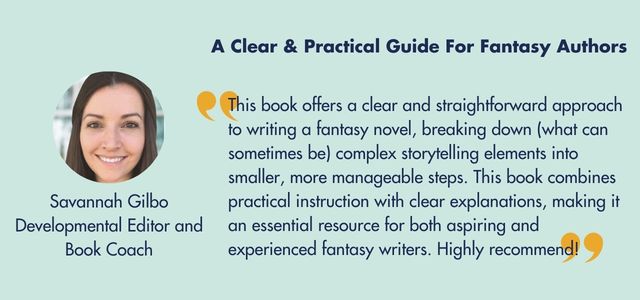
Did you know that every commercially successful fantasy novel actually contains two complete story arcs?. Discover how to weave a high-stakes external adventure together with a gripping supernatural journey to create a narrative that satisfies every reader’s expectation.
Most fantasy writers start with a spark of magic—a unique dragon bond, a complex spell system, or a world-ending curse. But somewhere between that initial idea and the finish line, many manuscripts stall because they lack the foundation to support such a complex narrative. If you’ve ever felt like your plot is a “jumbled ball of words,” the solution isn’t adding more magic; it’s writing using deep structure.
Before you get down to the level of copy editing or proofreading, make sure your story structure is strong. You can do this while you write your novel, or you can do this during the self-editing phase.
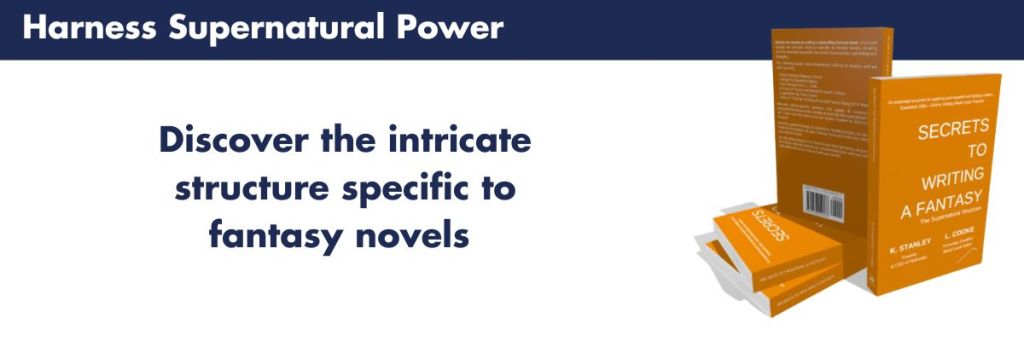
In Secrets to Writing a Fantasy, we reveal one of the most powerful patterns found in commercially successful novels: the dual-arc system.
The Two Hearts of Your Story
A sensational fantasy novel is a perfect balance of two distinct but intertwined plot lines :
The External Plot: This is the universal adventure narrative. It is the challenge issued to your protagonist that forces them to leave their ordinary world. Without this, you don’t have a story.
The Supernatural Plot: This is the unique factor that satisfies genre expectations. It tracks the protagonist’s journey from their first inkling of magic to harnessing (or losing) it in the final battle. Without this, you don’t have a fantasy.
Weaving The Story Arc Scenes
The key to a page-turner is how you weave these two arcs together. Every story needs five core “story arc scenes” to form its spine: the Inciting Incident, Plot Point 1, Middle Plot Point, Plot Point 2, and the Climax.
In a fantasy novel, that means you are actually managing ten pivotal moments—five for the adventure and five for the magic. When you align these scenes, you create a story that is both balanced and believable. For example, the supernatural inciting incident often happens right after the external one, proving to the reader that your character isn’t just on an adventure—they are on a magical one.
The Guiding Light: The Combined Skeleton Blurb
How do you keep track of all these moving parts without getting lost? It starts with a Combined Skeleton Blurb. This single sentence captures your protagonist, their dual goals, and the high-stakes consequences of failure.
Formula: [The protagonist] must [external goal] and [supernatural goal]; otherwise, [external stakes] and [supernatural stakes].
By defining this promise early, you ensure that every scene you write—from the first goal attempt to the final resolution—works hard to support your story’s core mission.
Don’t leave your structure to chance. Stop guessing and start building a structurally sound novel, scene by sensational scene. Read Secrets to Writing a Fantasy and write your best novel.
Getting your first book edited can be an overwhelming experience. There’s different types of editors, huge swings in price ranges and that’s all before you receive the feedback itself. ALLi partner member and CEO of Fictionary.co Kristina Stanley, is here to explain everything you need to know about fiction editing.
Why is Fiction Editing so Complicated?
Let’s start with the terms. Substantive, developmental, structural, line, copyedit, proofread. Lost yet? When I started as an author, I researched these terms to figure out what they meant. Now that I’m a fiction editor, I want to uncomplicate this for you.
We’re proud to announce Fictionary is now a vetted, trusted Partner Member and affiliate of Alliance for Independent Authors (ALLi).
Why not check out Fictionary’s StoryTeller free 14-day trialand tell powerful stories? No credit card required unless you love StoryTeller as much as we do and decide to subscribe.
When Lisa at ProWritingAid.com asked me to write about plot versus story, I thought no problem. I’m a story expert. However, once I started researching the topic, I realized there is a lot of conflicting information out there.
I also realized a discussion about plot and story would be incomplete if we didn’t mention structure. Understanding the difference between plot, structure, and story is important because knowing the difference and how they affect your writing process can help you tell a powerful story.
As we head into Black Friday and Cyber Monday for 2019, there are some great deals for writers. I think there will be something on this list that will help you become a better, more successful writer.
Of course, Fictionary is offering an amazing deal on Fictionary StoryTeller, along with deals on other writing & editing software, writing courses, & publishing tools from our friends in the writing community.
Note: A few of the links above are affiliate links, which means I’ll get a small commission at no extra cost to you. Others are just deals that we thought were awesome!
Creative editing software for fiction writers and editors.
Use coupon code BLACKFRIDAY19 and get 50% off for up to a year.
Fictionary StoryTeller makes editing easier by applying universal storytelling structures to every scene. Evaluate and revise your manuscript against 38 Fictionary Story Elements to tell a powerful story readers will naturally connect with.
StoryTeller automatically creates powerful visuals by analyzing your manuscript from start to finish. Insights such as the Story Arc provide a 30,000-foot view of your manuscript and quickly highlight structural areas that need improvement.
Grammar guru, style editor and writing mentor in one package
This is the only time of year that ProWritingAid offers a wide, public discount on ProWritingAid Premium. Click here to get 50% off a lifetime license! Don’t miss your chance.
We all know that there is a lot more to good writing than just correct grammar. ProWritingAid created their software based on the same ideas you would learn in a university writing course.
The software addresses readability issues such as passive and hidden verbs, over-reliance on adverbs, repeated sentence starts, emotional tells and much more. These suggestions are the same as a professional copyeditor would give you (in fact many of them use ProWritingAid). ProWritingAid works right within Fictionary StoryTeller.
Use coupon code BLACKFRIDAY at payment to get 50% off this beautiful, secure writing interface with everything you need to organise, write and edit your novel – wherever you are.
Novlr is built by writers for writers, and is constantly in development – adding the features and changes that our writers tell us they need.
Use coupon code BLACKFRIDAY to get 50% off until Monday December 2nd. The Novel Factory helps writers become more productive and achieve their writing goals
The Novel Factory Online is the ultimate online novel writing software for writers.
It includes tons of useful novel writing tools, including:
How to write a novel step by step guide
Novel writing templates
Character profile development questions
Character bio templates
and so much more
The Novel Factory software can help you achieve your dream of writing a novel – it teaches you the craft of writing, while you complete your manuscript.
Use coupon code BLACK2019 to get 40% off all software packages until December 2nd.
Unlock your creative voice – explore our line of software with creative writers in mind. Persona helps you get inside your characters’ heads, and Contour helps you take control of your story.
MasterWriter gives you Word Families, Phrases, Synonyms, Pop Culture, Rhymes, Definitions, a searchable Bible and Figures of Speech (Metaphors, Similes, Onomatopoeia, Idioms, Oxymorons, Allusions and Intensifiers).
While a computer program cannot compete with the mind and imagination of a writer, the mind cannot compete with the word choices MasterWriter will give you in an instant. When the two work together, great things happen…
To take advantage of this 50% off discount, simply sign up, add the BLACKFRIDAY code in the coupon box on the subscription page, and then choose your plan.
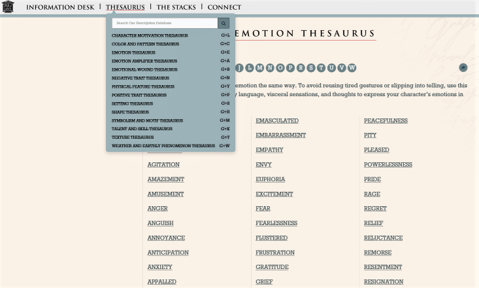
Ready to write your best novel yet? One Stop for Writers is a creativity portal that puts powerful storytelling tools and game-changing resources into your hands. Build characters deeper than you thought possible, stories that capture the imagination, and worlds that your readers won’t want to leave. From our hyper-intelligent Character Builder that guides you in creating fascinating characters that come with their own accurate character arc blueprint, to the largest description database for writers found anywhere online, One Stop for Writers isn’t like anything else you’ve seen. This ideal writing partner is there at every step as you plan, write, and revise, helping you create masterful fiction.
Use coupon code OUTLINE to get 25% this brainstorming tool for writers. It is designed to guide you in discovering the brilliant possibilities in your ideas, so you can identify those best suited to creating a solid story that will entertain and move your readers.
The Outlining Your Novel Workbook software provides an easy fill-in-the-blanks format that will guide you through every step of the process. Creating your own outline is as simple as starting on the first screen, using the prompts and lessons to work through your story in the most intuitive way, and clicking through the tabs at the top to access important sections.
Use discount code BLACKFRIDAY to get 50% off The Pre-Write Project, Crafting Incredible Characters, World-Building Warrior, and The Novel Planner.
Stop settling for so-so stories. Get the step-by-step guidance you need to craft truly spectacular novels with Well-Storied’s writing workbooks. All Well-Storied workbooks come in PDF format and can be printed or filled digitally (with the exception of The Novel Planner, which is specifically designed for print).
Featured in the INC 5000 list as one of the 5,000 fastest growing private companies in America, Self Publishing School is an online education company that teaches people how to write, market, & publish their first book in as little as 90 days. Join over 4,527 students who have followed their methodology to go from idea to publication *without *having to deal with traditional publishers.
Use discount coupon BLACKFRIDAY to get 50% off at check out on this in-depth course aimed to teach fiction writers how to become emotional masters in showing and evoking emotion.
To be an effective writer, you must master the emotional challenge of our stories. It won’t do to hope we will move our readers in some way. It won’t do to hope we get across our characters’ emotions. By examining more than 40 passages from best-selling novels, with over six hours of instruction, you will learn techniques to masterfully reveal character emotion and spark emotional response in readers. Enrollment in this online course includes lifetime access and a 30-day money-back guarantee. Join the thousand+ students who master the craft of fiction writing in Writing for Life Workshops online courses!
Use discount code BLACKFRIDAY11 at checkout to get 50% off this course for non-fiction writers who want to become more prolific.
Conquer Writer’s Block is ideal if you want to start writing a story or book, but you don’t know where to start, have lots of great ideas inside of you and just want to let them flow, have set and missed writing deadlines and want to finally do something about it, and want to discover how New York Times best-selling authors write and approach their creative projects. Avoid putting pressure on yourself to write 500 or 1,000 words a day and instead to set a target that works!
Use coupon code CHANGENOW to get 50% off this class that will help you start a journal for writing success.
The act and activity of journaling is what helps writers unfold and unpack the aspects of their lives that were or were not working. It is the writing itself that is transformational.
50% off the course or the bundle with the coupon code BLACKFRIDAY19
The Building Your Author Platform bundle is for the author who is struggling to effectively market their book and grow their audience and fan base. There is nothing worse than working hard to create a well-written, edited, fantastic book only to have it completely flop when you launch it. This self-paced bundle of courses will help authors:
identify their target audience
learn how to position themselves to grow the audience
grow the email list and social media platforms
receive expert guidance on tools and ways to market a book
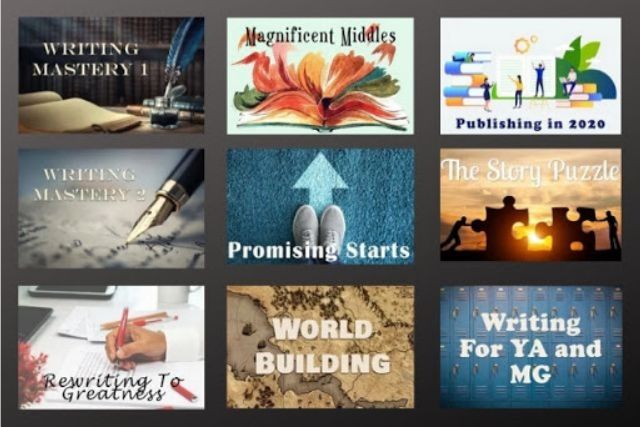
David Farland has trained more than a dozen #1 New York Times Bestsellers. Now it’s your turn: Get David Farland’s popular courses: The Story Puzzle, Writing Mastery 1, Writing Mastery 2, Promising Starts, and Magnificent Middles, along with seminars like Publishing in 2020, and books like Million Dollar Outlines and Writing Wonder . The bundle gives you 1 year of access for only $109.
Good grammar doesn’t make good writing, but good writing demands good grammar. Elevate your writing and editing skills. More than 43K students have learned from course creator/instructor Ellen Feld. In this online classroom, when you ask grammar questions, you get grammar answers!
Use coupon code BLACKFRIDAY2019 for Free Premium Add-ons for Life along with a 10% Lifetime discount on the Plus Plan to create unlimited images.
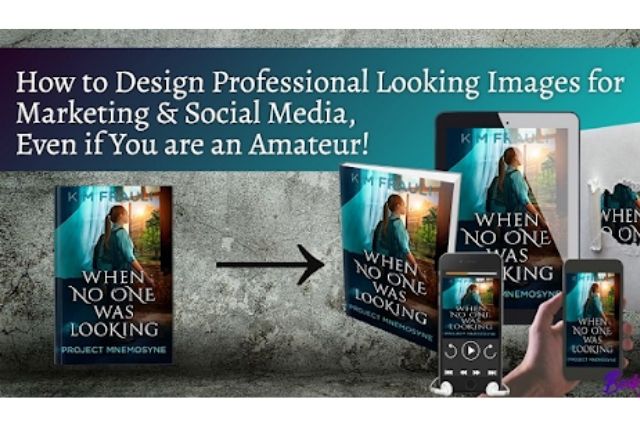
Book Brush is a platform that provides an easy way for authors to create professional looking ads and images for social media featuring their book covers.
Use code 100OFFBOOK at checkout when you order over 100 books.
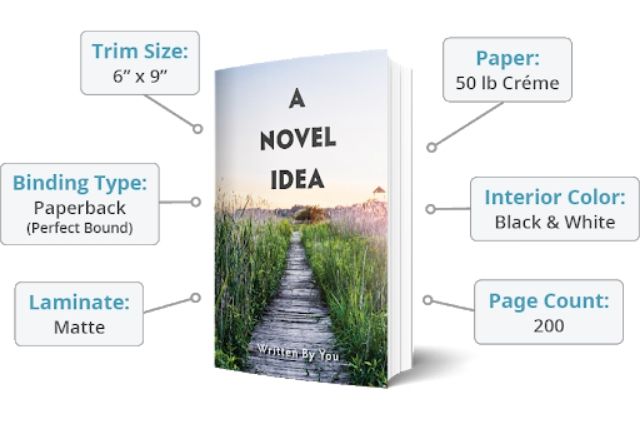
Why print your book with BookBaby? Our formula for great custom book printing is very simple: BookBaby is a book printing company staffed by professionals utilizing the world’s best book printing and binding equipment. While every individual book project is different, the results are always the same: eye-popping colors, crisp and even ink coverage, quality paper stocks, sturdy, tight book binding, all carefully packaged and delivered to your door. With over 50,000 projects successfully delivered last year, we know what authors require and expect from their book printer.
Use Promo Code NANO2020 for free title upload on a print book, ebook, or both!
IngramSpark® is an award-winning independent publishing platform that offers the same fully integrated print and digital products and global distribution services enjoyed by big-time publishers. Once you finish and format your book, IngramSpark makes it possible to share it with the world. It’s your content. We help you do more with it.
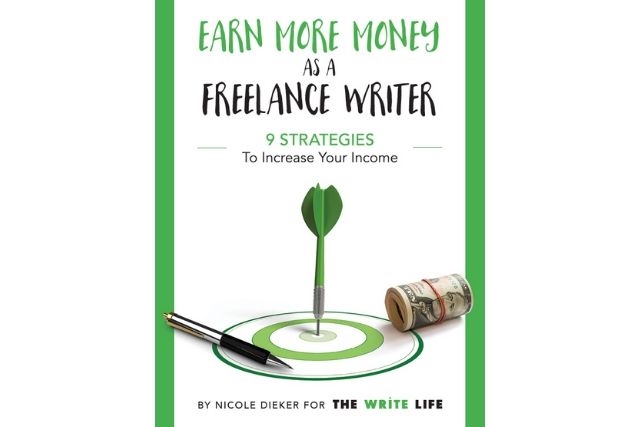
Get 50% off top freelance writing business coach Carol Tice’s proven methods for finding, contacting, and getting hired by better clients!
Freelance writing business coach Carol Tice shows you exactly how how to quickly find lists of good prospects, locate a contact email, and write a winning pitch — and get hired! . Includes pitch templates!
Click here to get 50% off “30 Days to Freelance Freedom” – a 10-step success system to launching and growing a profitable freelance business from anywhere.
This 30-day video-based program will guide you step-by-step through the process of setting-up, managing and growing your freelance writing business. It includes 10 practical modules taught by a 16-year freelancer veteran. It also features over 50 easy-to-follow videos along with relevant guides and checklists to help you put into action all you are learning. The program is designed for the new and experienced freelancer who is looking to uplevel their success in 2020!
Transcribe Anywhere trains aspiring transcriptionists to work from home with their high-quality, affordable transcription training.
Multimedia, self-paced course. Video tutorials, worksheets, printable PDF cheatsheets, tons of practice with multiple levels of difficulty to really prepare you for the job, tips, tricks, and step-by-step how-to from a 30+ year transcription veteran instructor, lifetime support, lifetime updates to course material .
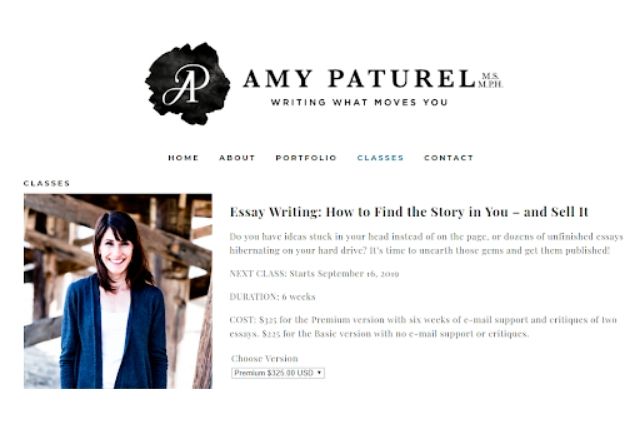
Use promo code ESSAY at checkout to learn how to come up with salable essay ideas, craft compelling essays, and get your most personal stories published.
This 6-week, self-guided course will take you through every step, from essay idea to salable piece. You’ll learn how to grab readers (and editors), journal your way to essay ideas, identify the critical elements of a salable essay, critique your own essays and incorporate feedback from others, pitch and submit essays. A parting gift: A spreadsheet loaded with more than 130 relevant markets, including editor contacts.
Why not check out Fictionary’s StoryTeller free 14-day trialand tell powerful stories? Get your Black Friday deal by starting your free trial and then entering coupon code BLACKFRIDAY19. No credit card required unless you love StoryTeller as much as we do and decide ro subscribe.
I’m now an author member of the Alliance of Independent Authors. Already, I’ve met other writers, their private Facebook group is a great place to ask and answer questions, and their members only blogs and podcasts are a wealth of information.
As many of you know, I’m the CEO of Fictionary, so I love to share information about my company. I’m proud to announce Fictionary is now a vetted, trusted Partner Member and affiliate of Alliance for Independent Authors (ALLi).
Alliance of Independent Authors (ALLi), is the global non-profit association for writers who self-publish. Part of ALLi’s remit is to take self-publishing education and advice out to the wider indie author and publishing community.
There are lots of other great benefits too — you can find more on the Alliance’s website: HERE If you do join using the link, ALLi will refund me 30% of your first year’s fees. And as a member, you’ll then be able to recommend the alliance to your friends — and get the same benefit.
We’re proud to be a partner member because this means Fictionary has been vetted by ALLi’s Watchdog Desk team and adheres to ALLi’s Code of Standards.
The Watchdog Desk is headed up by indie author John Doppler and supported by ALLi Directors Orna Ross and Philip Lynch, and News Editor Dan Holloway.
The Alliance of Independent Authors (ALLi), a great writers’ organization and I thought you might like to join too. Love to see you in an ALLi member forum soon!
StoryTeller is creative editing software for fiction writers. Transform your story, not just your words. Successful stories depend on your ability to edit, improve, and revise your work. Only when you master story editing, can you master storytelling.
Why not check out Fictionary’s StoryTeller free 14-day trialand tell powerful stories?
If you’d like to listen to an in-depth discussion on story editing, check out Story Edit Like A Pro.
Today, I’m thrilled to welcome author, Jennifer Leeper. She’s here to motivate your through the final days of NaNoWriMo,
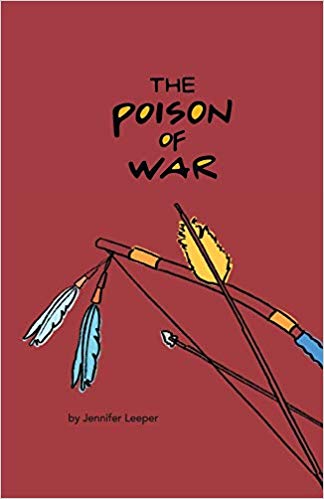
Jennifer has a new release, coming out tomorrow: The Poison of War. How great does this sound?
Two Mexican drug smugglers are murdered on Native American soil and the only clues left behind are two single arrowheads in this compelling page-turner of tribal secrets and distrust at the border.
When detective Frank Silva of the Tohono O’odham Nation arrived at the scene of the crime he immediately feared his investigation would require him to turn inward—to his own people—in search of the killer.
The End is Near
THE END. These two words are a far-off promise—a mirage both figurative and literal, for many, if not most writers on day one of Nanowrimo (National Novel Writing Month). These two words represent the end of a 50,000- (or more) word purge that can drain away optimism, sleep and even hope, in more dire instances.
By this last week of Nanowrimo, most writers don’t have the creative momentum they began with on November 1. The fortune-cookie wisdom and positivity floated by everyone within the Nanowrimo community during the first half of the month is deflated. In this spirit, I’m offering some end-of-the-line motivation to bathe the overworked, creative brains out there, and stoke the fires of Nanowrimo for just a few more days—or, in this case, a few more words.
Most people never run far enough on their first wind to find out they’ve got a second.
― William James
If you’re going through hell, keep going.
― Winston Churchill
It’s not about passion. Passion is something that we tend to overemphasize, that we certainly place too much importance on. Passion ebbs and flows. To me, it’s about desire. If you have constant, unwavering desire to be a cook, then you’ll be a great cook. If it’s only about passion, sometimes you’ll be good and sometimes you won’t. You’ve got to come in every day with a strong desire. With passion, if you see the first asparagus of the springtime and you become passionate about it, so much the better, but three weeks later, when you’ve seen that asparagus every day now, passions have subsided. What’s going to make you treat the asparagus the same? It’s the desire. —Thomas Keller, Interview with Mark Wilson
Writing/Nanowrimo-Specific Motivation
[Writing] is like wrestling; you are wrestling with ideas and with the story. There is a lot of energy required. At the same time, it is exciting. So it is both difficult and easy. What you must accept is that your life is not going to be the same while you are writing. I have said in the kind of exaggerated manner of writers and prophets that writing, for me, is like receiving a term of imprisonment — you know that’s what you’re in for, for whatever time it takes. — Chinua Achebe, “The Art of Fiction, No. 139,” The Paris Review
Remember you love writing. It wouldn’t be worth it if you didn’t. If the love fades, do what you need to and get it back. Remember writing doesn’t love you. It doesn’t care. Nevertheless, it can behave with remarkable generosity. Speak well of it, encourage others, pass it on. — Al Kennedy
Respect the way characters may change once they’ve got 50 pages of life in them. Revisit your plan at this stage and see whether certain things have to be altered to take account of these changes. — Rose Tremain
If you get stuck, get away from your desk. Take a walk, take a bath, go to sleep, make a pie, draw, listen to music, meditate, exercise; whatever you do, don’t just stick there scowling at the problem. But don’t make telephone calls or go to a party; if you do, other people’s words will pour in where your lost words should be. Open a gap for them, create a space. Be patient. — Hilary Mantel
As for me, I’ve never conquered the beast called Nanowrimo, but I keep those two words I mentioned earlier at the forefront of my imagination each November. I hope you push on toward November 30th, even if you stumble away in defeat, short of your I targeted word count. I hopeyou’ll return next November and do it all over again, because it’s never been the word count that really counts.
You can find Jennifer Leeper’s latest work, THE POISON OF WAR, a southwestern crime/mysteryhere, or visit www.thepoisonofwar.com to follow her ongoing writing journey.
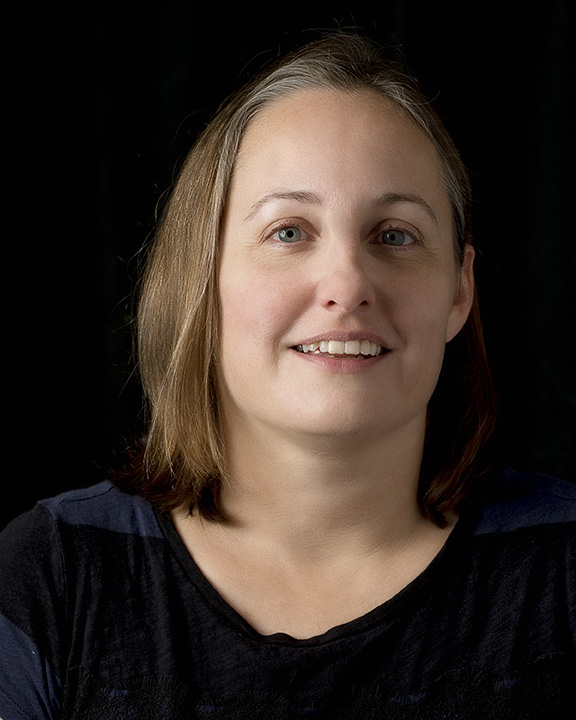
Who is Jennifer Leeper?
Ms. Leeper is an award-winning fiction author whose previous or forthcoming publications credits include Independent Ink Magazine, The Stone Hobo, Poiesis, Every Day Fiction, Aphelion Webzine, Heater Magazine, CowboyJamboree, The New Engagement, Alaska Quarterly Review, Falling Star Magazine and The Liguorian. She has had works published by J. Burrage Publications, Hen House Press, Inwood Indiana Press, Alternating Current Press, Barking Rain Press, Whispering Prairie Press, Prensa Press and Spider Road Press.
In 2012, Ms. Leeper was awarded the Catoctin Mountain Artist-in-Residency, and in 2013, Ms. Leeper was a Tuscany Prize Novella Award finalist through Tuscany Press for her short novel, Tribe. Ms. Leeper’s short story Tatau was published in the journal, Poiesis, and was short listed as a finalist for the Luminaire Award in 2015, and nominated by Alternating Current for Queen’s Ferry Press’ Best of Small Fictions of 2016 Prize. In 2016, The Saturday Evening Post honored Ms. Leeper’s short story Book of the Dead with an honorable mention in its Great American Fiction Contest.
Ms. Leeper’s short story The Bottle won second place in the Spider’s Web Flash Fiction Prize through Spider Road Press.


 Linda O’Donnell is a writer, certified structural editor, certified copy editor, and a writing and editing instructor. She co-authored Secrets to Writing a Romance with Kristina Stanley and together, they’re working on their latest book, Secrets to Writing a Novel. Linda’s romance novel, Behind the Scenes, is coming soon.





 When Lisa at













 Ms. Leeper is an award-winning fiction author whose previous or forthcoming publications credits include Independent Ink Magazine, The Stone Hobo, Poiesis, Every Day Fiction, Aphelion Webzine, Heater Magazine, Cowboy Jamboree, The New Engagement, Alaska Quarterly Review, Falling Star Magazine and The Liguorian. She has had works published by J. Burrage Publications, Hen House Press, Inwood Indiana Press, Alternating Current Press, Barking Rain Press, Whispering Prairie Press, Prensa Press and Spider Road Press.
