Farley’s Friday: What’s for dinner?

Farley here,

Humans are odd. They bring rodents into the house and expect me not to chase them.

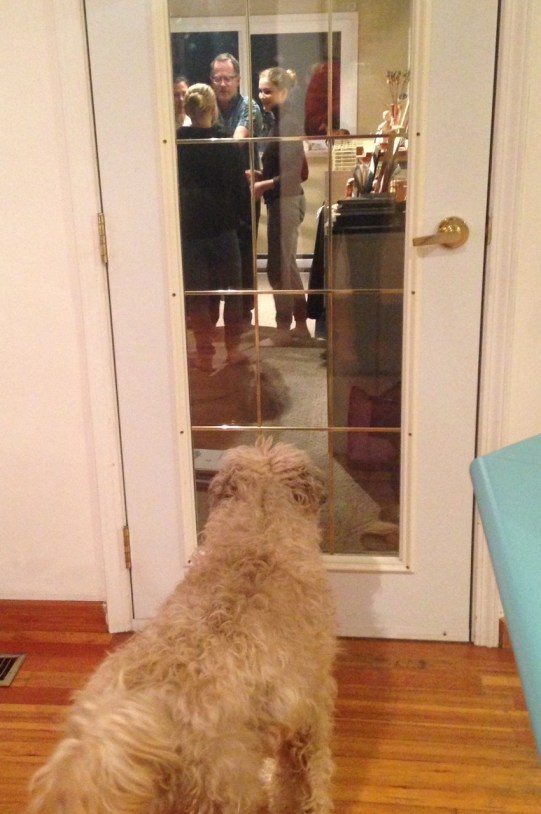
I can see them hiding behind the glass door! They’re holding these things called Guinea Pigs. They squeak. They run in bursts. So tempting…

farley-and-guinea-pigs

I’m a wheaten terrier, stress the terrier. I just want a little sniff of the creatures.

What harm could that do?

Woof Woof.


Big-Picture Editing and Word Count Per Scene – Feedback For Fiction

As a writer, you’ve probably read there are recommended lengths for a manuscript depending on the genre you write in. We’ve done some research and thought we’d share that with you.

In order of length, word count guidelines for a few of the popular genres are:

  • Novellas: 20,000 to 30,000
  • Middle Grade: 25,000 to 40,000
  • Romance: 40,000 to 100,000
  • Young Adult: 50,000 to 80,000
  • Mysteries, thrillers, and suspense: 70,000 to 100,000
  • Paranormal: 75,000 to 95,000
  • Fantasy: 90,000 to 100,000
  • Horror: 80,000 to 100,000
  • Science Fiction: 95,000 to 125,000
  • Historical: 100,000 to 120,000

Genre length may vary with different publishers, so check submission guidelines carefully. If you’re self-publishing, readers of the genres have come to expect a certain word count, and you don’t want to disappoint them, so think about the word count and make a conscious decision on the length of your novel.

But what about word count per scene?

When you’re about to begin a big-picture edit, you may wonder if counting the number of words per scene is important. We think it is, and we’ll tell you why.

Scene Emphasis

After you’re happy with the total word count for your novel, it’s time to evaluate how your word count is spread across your scenes.

By counting the words in each scene, you can see where you are putting emphasis and where you are not. Without knowing the specific word count, you don’t have a method to know if a critical scene is too short or a minor scene is too long.

Patterns

Some authors like to write scenes of the same length for the entire novel. Others vary the scene word count. The choice is yours, and you can use it to your advantage if you evaluate the per scene word count from a big-picture view.

If you follow a pattern (same word count per scene) throughout your novel and one scene is way longer than the rest of your scenes, make sure this is the climax scene. If it’s not, you probably have too many words in the scene.

How I Used Word Count To Improve My Novel

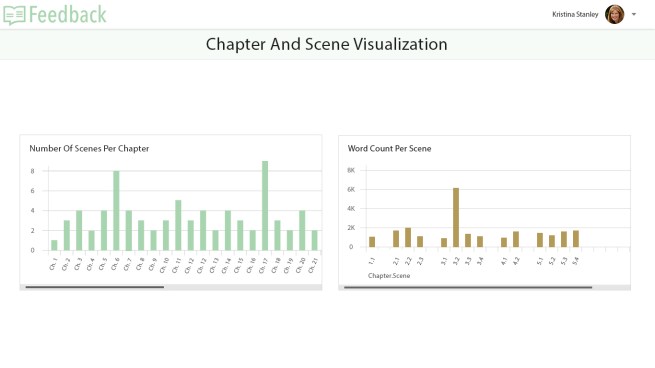
You can see in the Word Count Per Scene graph below, that scene 2 in chapter 3 is over 6000 words long. The other scenes in the novel are all under 2000 words. I discovered this during my big-picture edit of DESCENT (my first novel).

This was a scene early in the novel where my main protagonist, Kalin Thompson, moves to Stone Mountain Resort. In great detail, the scene described Kalin moving into her new apartment. After I looked at the word count, I realized I’d written the scene to give the reader a feel for resort life. Nothing much happened in the scene to move the plot forward.

I knew I needed to fix this. Instead of putting the details in one scene,  I cut the scene and sprinkled the details throughout the other scenes.

This improved the story by eliminating an info dump but still leaving in details that showed the reader what it’s like to move to a ski resort. If I hadn’t reviewed the word count of the scene in the context of the other scenes, I might have missed this.

How The Feedback App Will Help

Depending on the software you use to write your novel, counting the words in each scene can be a time-consuming exercise.

For example: In Microsoft word, you’ll highlight each scene and look at the word count displayed at the bottom of each page. In Scrivener, it’s a little easier. The word count is displayed at the bottom of each screen if you’ve broken your text into scenes as you write. In either case, you’ll have to keep track of the word count and evaluate it from a manuscript level.

The Feedback app will automatically break your novel into scenes and create a report showing you how many words are in each scene. You’ll be shown a graph, and can easily see where you need to focus on word count. Word count is one of the Key Elements Of Fiction the app uses to help you perform your own big-picture edit.

The Feedback App will also show you the breakdown of scenes per chapter. We’ll talk about this in another blog.


Download our free eBook, BIG-PICTURE Editing And The Key Elements Of Fiction and learn how big-picture editing is all about evaluating the major components of your story. We call these components the Key Elements Of Fiction.  Our eBook shows you how to use the key elements of fiction to evaluate your story and become your own big-picture editor.

Source: Big-Picture Editing and Word Count Per Scene – Feedback For Fiction

Mystery Mondays: Call For Author Guest Blogs

Promoting Reading – Promoting Authors

Mystery Mondays began in July 2015. Authors from many genres who write with a hint of mystery have told you about their books, answered your questions about writing and shared their thoughts with you.

Every Monday, you’ve be introduced to another author and maybe discovered someone you’re not familiar with.

Are you an author interested in guest blogging?

I am now accepting guest blog requests for the next few months of 2017 starting on March 27th so if you’re interested contact me here.

If you’d like to participate, here’s what you need to qualify:

  • you are a published author – traditional or Indie or any other way that I don’t know about,
  • or you are about to publish fairly soon
  • and you want to promote other authors and spread success,
  • you write novels with a hint of mystery,
  • you are willing to engage in the comments section when readers comment on your post.

All I ask from you is that you follow my blog, comment on author’s posts and help share via Twitter and Facebook.  If you’re interested send me a message via my contact page.

The Guidelines:

You’ll have to send me your bio, back text of your novel, author photo and book cover. I’d like you to write something about yourself, your novel, your research, a writing tip or a publishing tip.

Please keep in mind I am a family friendly blog. I do reserve the right to edit anything I think might be inappropriate for my audience, which I will discuss with you first. I think anything under 700 words is great, but it’s your book so up to you.

I’m looking forward to hearing from you and sharing your novel with the Internet world.

Mystery Mondays: Lily Black on Riding the Authorial Rollercoaster

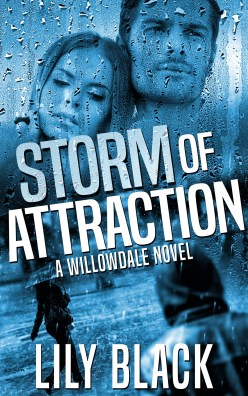
storm-of-attraction-hi-resWelcome to Mystery Mondays. Today we’ll go on an emotional ride with author Lily Black.

Let’s give her a gift by sharing this post and helping her spread the word about her debut novel Storm Of Attraction!

Riding the Authorial Rollercoaster (without losing your breakfast) in three easy steps by Lily Black

As writers and authors, we’ve willingly stepped away from the midway games, with their big fluffy teddy bear prizes. We’ve scarfed down the last of our cotton candy, and asked someone else to hold our hat and coat. We’ve climbed on a rollercoaster, because that’s just what being a writer and author feels like.

Early on, I thought this was a temporary state. That once I got comfortable writing books, it would get easier. Once I had a solid critique group. After I signed an agent, or after my first book was published. But I’ve done all of the above (and undone some of them) and also watched as friends advanced their own careers, and I’m now confident that the particular swoops of the rollercoaster may change, but authors never get off for long.

So here are my suggestions for how to survive riding the authorial rollercoaster!
1–Ever notice how much easier it is to scream and wave your hands on a roller coaster when other people are doing it, too?  This applies to submissions—whether to agents or publishers as well!  Find other authors in the same stage you’re at, or only a little further down the path.  Having a group like that to hang out with socially is great, because the challenges you’re facing now go way beyond needing help with a manuscript and are hard to explain to someone who hasn’t been there.

2–Promise yourself you’ll buy that cute little stuffed unicorn if you get on the ride and don’t jump off in the middle.  Why the reward?  Well, you’d celebrate if you got a contract, right? Probably rush out and buy yourself that fluffy unicorn you’ve been eyeing! But when you’re riding the submission roller coaster, getting a contract is beyond your control.  In fact–and this is important–the moment where you get a contract is actually a reflection of all the many things you did right up to that point. So isolate those things you did right/will do right to get there, and as you go forward, reward yourself in bite-sized pieces for taking those steps.

3–What about that writing thing you’re supposed to be doing?  How does that fit into this roller coaster riding?  You’ll spend a lot of time standing in line—that is, waiting on reviewers, publishers, and everyone else.  And when you’re doing that, it’s tempting to focus entirely on how nervous you are about the roller coaster, and how you hope this time you don’t cry and you’ll be brave enough to lift your hands.  But you’ve got to take your mind off the roller coaster and focus on your next book. So, one of your daily things you get rewarded for (like the fluffy unicorn, above) should be writing, revising, and working on the next book.

BONUS, because this particular section of the roller coaster has steep curves and someone just lost their hat: Once in awhile, remind yourself of all the rejections that world famous bestselling authors received.  I know, I know!  This will feel like an indulgence, and maybe a tad narcissistic since they’re all so amazing and you’re just you.  But you know what?  They were noobs once, too, and setbacks happen to the best of us.  A little reminder that rejection is part of the process, and not a value statement of your book can really help you survive those sharp turns.
After eight years of riding every rollercoaster in town, my first romantic suspense launched into the world just two weeks ago. Now I’m enjoying some new swoops and turns as the reviews come in. It’s already been quite the ride, but I promise to throw my hands up if you will. 😉

lily-with-zeke-largeLily Black believes in true love, but is also quite sure going after it is the scariest thing we’ll ever do!  She explores this dynamic in her romantic suspense novels, which are set in the small imaginary town of Willowdale, where people dream big, love deeply, and kick butt if necessary.  She has a black belt in Chung Do Kwan Tai Kwon Do, and has also trained in everything from judo to broadswords.  She lives in North Carolina, where she works as a content editor for a small publisher, and divides her free time between the mountains and the sea with her very patient and loving husband and their teen daughter. She is also the co-creator of the Book Ninjas’ Blush-O-Meter. Readers everywhere search the Book Ninja’s online catalog for romance, YA and chicklit novels in all genres, and find books that match their blush level!

Her debut romantic suspense–Storm of Attraction–launched February 13th, 2017 from Red Adept Publishing.  She welcomes you to join her on the journey!

Author website: http://www.lilyblackbooks.com/

Book Ninja’s Catalog: http://www.book-ninjas.com/

Facebook: https://www.facebook.com/Lily-Black-1713161408963150/

Twitter: https://twitter.com/lilyblackbooks

Goodreads: https://www.goodreads.com/author/show/16078435.Lily_Black


Storm of Attraction

storm-of-attraction-hi-resLove is worth fighting for.

Alexa Wolving has just one rule: never give a guy a second chance. That works just fine in the safe life she’s built. In the charming town of Willowdale, her day job as a librarian balances perfectly with her evening job as a black belt instructor. But when she attracts the attention of a stalker, Alexa’s carefully built world begins to crumble.

Drew Cosimo knows he broke Alexa’s heart five years ago when he took his first Ranger assignment and disappeared from her life. Now that he’s out of the army, he’s moving back home to Willowdale. He’s not looking for a fight, but making peace would be easier if Alexa hadn’t told the entire town he was a money-grubbing jerk. Despite the tension between them, Drew is quick to offer his protection when a stalker forces Alexa from her home.

As the stalker’s attacks escalate, Alexa and Drew are forced to face their painful past and the simmering attraction between them. They must fight to save each other before everything they care about goes up in flames.


New Book Deal: Imajin Books and Kristina Stanley

I’m thrilled to announce I’ve sold the eBook and print rights for my upcoming novel LOOK THE OTHER WAY to Imajin Books.

What’s LOOK THE OTHER WAY about?

It’s the beginning of a new series set in the Bahamas. The mystery takes place aboard a Lagoon 380 catamaran, which happens to be the type of boat I lived on for 5 years.

Mattina sailing
Mattina in the Bahamas

Here’s the blurb:

A year after her Uncle Bobby mysteriously disappears in the turquoise waters surrounding the Bahamas, Shannon Payne joins her grieving aunt to trace his last voyage. Shannon hopes the serenity of the sea might help her recover from a devastating breakup with her fiancé.

Sailing their 38-foot catamaran, A Dog’s Cat, is Captain Jake Hunter, a disillusioned cop who has sworn off women. While Shannon tries to resist her growing attraction to the rugged captain, she uncovers some dark truths about her uncle’s death that might send all three of them to the depths.

Thank you to Imajin Books for once again supporting me!

Imajin Books is a Canadian publisher that publishes suspense, mystery, thriller, paranormal, horror, romance, fantasy, young adult and select non-fiction. They will be open for submissions April 2017, so keep your eye on the website if you’re looking to submit a novel this year.

Mystery Mondays: CJ Petterson on Novel Themes

screen-shot-2017-01-21-at-8-43-04-amMystery Thriller Week is an annual event that celebrates the Mystery, Thriller genre. Welcome to all writers, published or unpublished. MTW was Feb.12-19, 2017! That was last week, but we still have mystery authors to showcase.

Mystery Mondays is helping celebrate by hosting mystery writers leading up to this exciting week.  Today we have C.J. Petterson, author of contemporary romance novels.

NOVEL THEMES by C.J. PETTERSON

How does an author come up with a theme for a novel? I usually look for something in the news, but that’s incredibly ominous and ugly right now. So, let’s go lighter. First, let’s agree that novels need a theme, a premise on which to hang the action and plot points. An overall theme continues as a thread through the novel. It lets a writer connect the dots of subplots to the main plot. One way to get a handle on finding your theme/premise might be to think about describing your novel in one sentence, a cliché for example. I try to come up with the cliché to use as a thread (premise) then polish it into a back-of-the-book blurb.

Caveat:  A cliché is, by definition, a trite and overused expression—a figure of speech that has become tiresome and uninteresting. Several experts advise against the use of clichés in your narrative. In fact, author and editor Sol Stein has this advice: “Cut every cliché you come across. Say it new and say it straight” (Stein on Writing, 1995).

Clichés are those taboo things that writers should avoid like the plague, but they can be good fodder for this exercise.

For a romance story, how about this one? “Love will find a way.” Then every time you put an obstacle in a character’s path on the way to her required happily ever after, that obstacle would be overcome with some kind of act of love . . . even self-love (conceit, egotism) is fair game.

Another cliché for a romance could be, “All is fair in love and war.” Here, the premise is that the character can do whatever he/she can in order to capture the heart of a lover. You’d expect the tale to be rife with conflict.

For a love story (which doesn’t always end happily ever after): “Always a bridesmaid, never a bride.” Sounds sad.

Or how about this trite line for a YA or memoir: “A coming of age story.” That premise keeps the threads of the story tied to some agonizing affliction and growth of young people over a longer time span.

A possible theme for one of my stories could be “My brother’s keeper.” Choosing Carter is about an American woman who wants to extract her brother from a domestic terrorist cell.

In my latest work, “Bad Day at Round Rock,” a historical fiction short story in the Western anthology, The Posse, I think of the premise as being “Money is the root of all evil.” The characters’ quests to find a hidden cache of stolen twenty-dollar gold pieces are the cause of all the mystery, murder, myth, and greed in the story.

Going back to Stein’s admonition to cut all clichés, what if one of your characters is fond of using clichés? I say, okay. Use them, but only in that character’s dialogue.  However, too much of that can become distracting to your readers. I also believe that even Stein’s new and straight words can become hackneyed when used too often.

If you have a different way of working on theme/premise for your novels, let me know how you do it. I love, love, love learning new methodologies.

And thanks, Kristina, for your gracious hospitality. ‘Preciate it.

THE POSSE:

6-ebook-cover-the-posseMy latest work is a short story in the Western anthology, The Posse. “Bad Day at Round Rock” is a historical fiction story written in overlapping segments about four people whose lives are changed by a cache of twenty-dollar gold pieces that the outlaw Sam Bass stole in a train robbery. The story is chockfull of history, mystery, myth, greed, and love…as is the rest of the anthology. Seven authors contributed short stories to The Posse. All are human interest tales but with all the action you expect in a story about the Wild West.

Lyn Horner: The Schoolmarm’s Hero

Franks Kelso: One Way or Another

cj petterson: Bad Day at Round Rock

Charlene Raddon: The Reckoning

Chimp Robertson: Headed for Texas

Jim Stroud: Savage Posse

Chuck Tyrell: Set a Thief

Bonus- Frank Kelso: Tibby’s Hideout.

Look for The Posse anthology, tales of action, romance, myth and truth, on Amazon.
WHO IS C.J. Peterson?

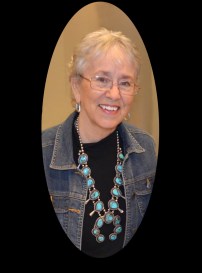
cj-author-pix-crop-2-copyAuthor cj petterson is the pen name of Marilyn A. Johnston. As cj, she writes contemporary romance novels as well as fiction and non-fiction short stories that have appeared in numerous anthologies. She has served as judge for the Romance Writers of America’s Daphne du Maurier contests. Her works-in-process include a mystery series that features private detective Jannicka “Jake” Konnor.

Retired from corporate life and now living on Alabama’s Gulf coast, Marilyn takes her pen name from her paternal grandmother. She is a member of the international Sisters-in-Crime organization and their online Guppy group, the Alabama Writers Forum, the Alabama Writers Conclave, and a charter member of the Mobile Writers Guild

cjpetterson@gmail.com

Facebook

Amazon Central Author Page

Choosing CarterKindle / Nook / Kobo   / iTunes/iBook

Deadly Star Kindle / Nook / Kobo

California Kisses 10-book publishers bundle on Amazon 99 cents

blog at: www.lyricalpens.com

Coming in late February 2017—“Bad Day at Round Rock” a short story in The Posse, a Western anthology of tales of action, romance, myth and truth.

MTW Facebook
Free eBook: BIG-PICTURE Editing Using Feedback’s Key Elements Of Fiction

You’ve finished your first draft. Congratulations! Now what?

Whether you’re self-publishing or going the traditional route, your story needs to be as good as you can possibly make it before sharing with others.

Now is the time to evaluate your writing with a big-picture edit to ensure your story works and is compelling to your readers.

But just re-reading your novel and looking for areas of improvement without having a process can waste a lot of time. Questions that come to mind are:

  • Where to start?
  • What to change?
  • How to make it better?

DOWNLOAD Free eBook

Don’t despair. There is light at the end of the editing tunnel. Just like you learned how to write a novel, you can learn how to perform a big-picture edit. All you need is a clear process, some editing knowledge, and the right tool.

With our free eBookyou’ll learn how big-picture editing is all about evaluating the major components of your story. We call these components the Key Elements Of Fiction.  Our eBook shows you how to use the key elements of fiction to evaluate your story.

BIG-PICTURE Editing

Farley’s Friday: A Magic Cupboard

Farley here,

There is a magic cupboard. It’s the holder of all treats. But there is a magic spell required to open the door.

Sometimes, I just need a treat, so I head to the door and gently tap my paw on it.

Humans have strange desires. They don’t like scratch marks on walls, furniture, doors-anything really. It’s as if they don’t want anyone else to know they’ve been in a room. A dog likes to leave a mark everywhere he goes, but I guess I have to be smart if I want that cookie.

I drag my nails hard enough to make a sound but not hard enough to leave mark.

Kristina comes to me and smiles. Now, this can go two ways. I get a treat, or I don’t get a treat. That’s part of the magic.

She’s hesitating, so I put my paws on my nose and push my rump in the air. I’ve got to look cute if I want her to be obedient and get my cookie.

Farley Being Cute

That doesn’t quite do it, so I roll around a bit. This makes her laugh.

She takes one step toward the door, and I know I’ve won. She’s going to give me a cookie!

Woof Woof

TOP 5 Fiction Elements For A Mystery

I had to share my guest post on A NEW LOOK ON BOOKS. I hope the editing tips help!

Self-editing A Mystery (TOP 5 FICTION ELEMENTS FOR A MYSTERY)

Self-editing a mystery is one of the joys of the writing process. You get to use your imagination to lead the reader through your story. As a mystery writer, it’s important to keep track of your story, and not only in the context of what you share with your readers but also what your characters know….


Source: Day 1: Mystery; Kristina Stanley – A New Look On Books

Mystery Mondays: Jane Jordan With Advice to Aspiring Writers

screen-shot-2017-01-21-at-8-43-04-amMystery Thriller Week is an annual event that celebrates the Mystery, Thriller genre. Welcome to all writers, published or unpublished. The Kickoff begins Feb.12-19, 2017! That’s this week!

Mystery Mondays is helping celebrate by hosting mystery writers leading up to this exciting week.  Today we Jane Jordan, Author of The Beekeeper’s Daughter.

Advice For Aspiring Writers by Jane Jordan.

front-cover-of-the-beekeepers-daughterI started writing in 2004 after I stayed in a remote old house on Exmoor which is located on the South West coast of England. The remote location along with the odd happenings I experienced made a significant impression. The caretaker’s stories of both the resident ghost and other related visitor reports fueled my imagination further, and so began the gothic vampire trilogy that were to be my first three novels.

The Beekeeper’s Daughter, was supposed to be my second novel. I already had completed a couple of chapters and had a basic plot. But that first story grew and grew, and I became absorbed in that saga and the research. I knew I had to finish those three books, before I could move on and concentrate fully on what was to become my fourth novel

In my first three books, I delved into the world of vampire superstition and legend, and combined it with a modern and complex love story. In my fourth book, I gave myself the challenge of writing about witchcraft and another time period. The more research I completed the more fascinated I became to write a historical thriller. It was a story that seemed to have a life of its own, leading me to interesting sub-plots and digressions that took me into realms I could not have imagined.

The Beekeepers Daughter tells the tale of an impossible love triangle, a dark legacy and a dangerous secret stretching back through generations of madness and betrayal. It was challenging to write because the book starts in the year 1698 in England.

The first scene portrays a witch being burnt at the stake. In order for my readers to feel it was authentic, I did a lot of internet research and studied several books. I uncovered old sixteenth century records of witch trials and visited the witchcraft museum in Boscastle, England. This museum houses the most comprehensive collection of artifacts in Europe. The story moves to the Victorian era, and I relied on research from books and the internet to make sure I accurately portrayed all the historical details, right down to the clothing and social etiquette of the times.

Annabel Taylor is a bee charmer and the Beekeeper’s Daughter. She has grown up on wild Exmoor, but when she meets Jevan, the blacksmith son, her life changes forever. They form an unbreakable bond, until they are forced apart when Jevan must leave for London. Annabel is heartbroken, she believes her life is over, and her only solace is her beloved bees. I loved the idea of the bees being a witch’s familiar, because bees are so key to nature and that fitted perfectly with the story.

By chance she meets Alex, the heir to vast estate lands and the foreboding Gothelstone manor house. Socially they are worlds apart, even though Annabel is inexplicably drawn to him, and even if she feels that Alex’s attention is merely a distraction from her true love. Although Alex has other ideas.

When Jevan eventually returns, Annabel realizes just how precarious her situation has become, and when Jevan’s life is threatened, she has to make a heartbreaking choice that could mean she will lose him forever.

It soon becomes apparent that Alex and Annabel are merely pawns in someone else’s sinister plan. Left with no other choice, Annabel must embrace her inherent power and destroy a powerful witch, before she and everyone she loves is destroyed.

My advice to any aspiring writer is to be true to yourself. Write about what interests you and not what you think you should write about, because it is the current trend. The reality is that the publishing process can take a long time and by the time you have finished your novel that market will have left you far behind.

When I first wrote about vampires they were not fashionable, and it was a couple of years before ‘Twilight’ hit the headlines, but I didn’t write that story worrying about that, or even thinking it could sell and make money. I wrote the story because it needed to be written. All my novels are like that, I stay true to myself and my genre, no matter what may or may not be in-vogue.

WHO IS JANE JORDAN?

janeJane was born in England, and grew up exploring the history and culture of London and surrounding counties. In the 1990’s she immigrated to Detroit, USA, eventually settling in South West Florida. She returned to England after a fifteen-year absence, to spend six years in the South West of England living on Exmoor. Here, inspired by the atmosphere, beautiful scenery and the ancient history of the place, she began writing.

Jane’s writes in the dark romance genre. She has four published novels. She also writes short stories and being a trained horticulturist, she has had articles published in a gardening magazine.

Jane Returned to Florida in 2013, and now lives in Sarasota.

http://www.janejordannovelist.com/