Farley’s Friday: A Wheaten Terrier and Kite Boarding

Farley here.

My life is so exciting, and sometimes that excitement seems to happen on the trampoline of my Lagoon 380 Catamaran.

I hear the roar of a kite coming close and I bolt from a deep sleep on the floor of the port cabin to fully alert in seconds. I know that noise.

This usually means a large, bird-like thing is chasing on of my humans.

I reach the tramp, looking left and right for the danger. It’s hard to hear through all this wind. My stomach is churning, my heart is racing.

And then, I can’t help myself. A bark explodes from my throat.

“Go faster,” I bark at Bruce. He’s the guy in trouble.

He zooms by our bow.

Farley and Kiting

“Look out. It’s coming!” I bark.

The silly man waves as he rips by.

Then, in a sudden move, Bruce turns around. Unlucky for him the flying creature turned with him.

“It’s still there,” I bark, sure in the knowledge Bruce can hear me and will speed up.

They keep going unit they are  out of sight. There’s nothing for me to do but to go back to my napping.

You’ll be happy to know I saw Bruce at dinner later, and he’s fine. I guess he outran the monster.

Woof Woof.

Opening Your Story

Do you read books on how to write?

The latest I read talked about opening a story and checking for four criteria.

Does your opening start with:

  • the protagonist,
  • conflict,
  • movement,
  • setting?

This is a lot for an opening, and I’ve been studying novels to check if authors do this.

The first point, the protagonist, doesn’t seems to happen consistently. There are books that start with the protagonist, the villain, a minor character, or a character that doesn’t appear in the rest of the novel at all. I like all of them. So I guess on this one, you have to decide for yourself if your protagonist is the best place to start. I do agree the protagonist should appear early in the story.

Conflict: This one seems more consistent. Sometimes the conflict is quiet or subtle. Sometimes it’s a full-out battle, but it’s there.

Movement: I find books with no movement boring. Even if the character is walking, it’s better than sitting still, or worse yet, if there’s no mention of what the character’s doing.

Setting: This might only be one word, one line, one paragraph or this could be more. To me the setting it important at the beginning. I like to know where the character is. Are they in a city, in the country, on a mountain or in outer space? This helps me figure out what kind of story I’m reading.

Do you follow any guidelines for opening your story?

Thanks for reading . . .

Farley’s Friday: A Wheaten and his BFFs

Farley here,

Does BFF mean a dog can only have one? I need many BFFs. I guess “best” implies one, but I’m a dog, so I’m going to extend the meaning.

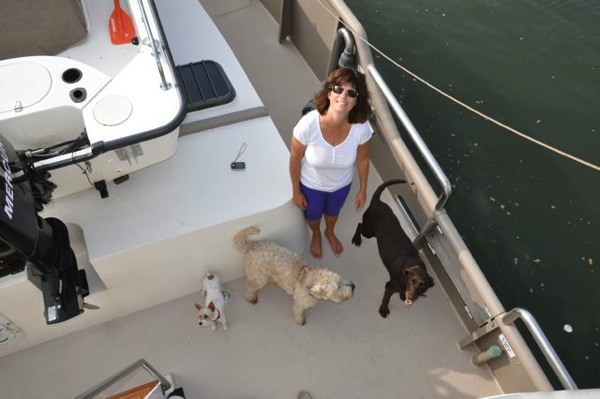
This is me boating with Smudge, the lab, Cali, the Jack Russell, oh and Kristina too. She’s not a dog, but we let her hang with us anyway.

Dogs on Boats

My point – any size dog can go boating. Large dog, small dog and medium-sized dog (me) all have a place aboard. And any size dog can join the BFF club.

Woof Woof

Mattina Hiding From Weather

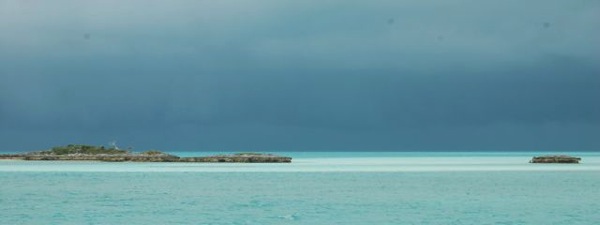
Do the skies look menacing?

Pipe Cay

Thinking we should stay put for a while. Sailing is all about freedom and doing what you want to do when you want to do it.

Well, as it turns out, the weather has something to say about that.

We anchored behind Pipe Cay and can see the weather coming. This would be the time to put out a second anchor and sit snuggly in the lee.

We have a Rochna on Mattina, which holds in any weather, but sometimes, it’s nice to add the security of a second anchor. We rarely do this. I think last year, we didn’t use two anchors at all. This is our first occasion for the 2013-2014 season, but a good night’s sleep is worth it.

Thanks for reading . . .

To Plot or Not To Plot

Do you plot your story before writing it or do you write and then plot?

I write first. Then I get serious and look at my plot after I have a first draft written.

There is lots of writing advice out there telling writers to have major events at 25%, 50% and 75%. These are major plot points where something happens to change the direction of the story or the character arc.

So I went through my novels to see if I’d done this and was surprised to find I was close. I ended up with plot points between 22% and 27%, 45% and 53% and again between 72% and 77%. I figure this is close enough. There must be something about reading many books that makes this structure appear naturally when writing.

I used the kindle to find look at the percentages. This was easier than counting words. Now in my scrivener, I add a per cent number at each chapter heading. One more way to see if my writing is on track.

So, how to you know if you’re plot is laid out properly? and does it matter?

Thanks for reading . . .

Farley’s Friday: A Wheaten and A Retriever

Farley here,

Last week when I wrote about dolphins, you might have gotten the impression I’m afraid of large animals. Not true.

When I was a young pup, my BFF was Joe – a 120 pound golden retriever.

Our life together existed of …

Farley and Joe Playing

And more of …

Farley and Joe Playing 2

But then I had to share my bed with him. He didn’t quite fit, and he didn’t quite get that. You know how some small dogs think they’re big dogs. Well, Joe thinks he’s a small dog. Ha ha on him.

Farley and Joe Sleeping

I will admit, I liked to cuddle with him. That doesn’t mean I’m not a cool dude, though.

Woof Woof.

Sailing, Windsurfing and Kiting

Sometimes during the fall it seems like all we do is work on Mattina to get her ready for the season. Although I love this part too, the fun bits come once we reach the Bahamas.

Kiting and windsurfing in an isolated anchorage with 20 knots of winds makes a pretty good day.

Windsurf Kite

Thanks for reading . . .

Word Sensitivity

As a writer you probably focus on words more than others. You spend a good part of your day trying out the different words to see which one gives your sentence the meaning and nuance you’re striving for.

But what does this do to you as a person?

Do you listen differently than you used to?

I’ve found that I certainly do.

Sometimes I hear what’s been said, then I process it, and then whammo – I think – that was an insult. I might not have noticed before I started writing, but now I have to turn down my sensitivity metre. Sometimes it’s not a good thing to understand the deeper meaning behind words. Sometimes I think, what a great way to hide an insult inside a compliment, and then I use it in a novel.

On the happy side, it means I’ll notice a compliment more often too. And that makes me smile.

Has writing changed you? Do you hear differently?

Thanks for reading . . .

Mattina At Compass Cay

Fall and winter in the Bahamas can mean cold fronts. Now we don’t mind some, but anything pushing thirty knots and we want to find a place to hide.

There are several marina’s in the Exumas that offer 360 degree protection. Highbourne Cay, Compass Cay and Cave Cay are all good places to hide.

This photo was taken last year by a friend from the top of his mast.

Mattina At Compass Cay

You can see Mattina in the bottom left  corner. You can also see how many other boats chose to hide with us.

The thing about Compass is it’s easy to keep busy. Walking, swimming, kayaking in the mangroves and even hiking to the bubbles baths for a splash in the surf entertain us.

Sometimes we hunker down at anchor and wait out a cold front. This can get a little boring or very exciting depending on what the weather does. Really all we care about is that we’re safe

Thanks for reading . . .

Scrivener and Setting Summaries

Scrivener is still helping me write.

In Scrivener and Scene Summaries, I wrote about using a template for asking a series of questions about a scene to ensure I making the most of the opportunity to engage readers in the story.

I’ve added a second template where I ask myself the following questions about the setting of the scene.

  • Role In Story
  • Related Characters
  • Unique Features
  • Description
  • Sights
  • Sounds
  • Smells
  • Objects
  • Notes

This helps in several ways.

  1. I keep track of how many times a use the same setting. Sometimes it’s easy to write about the same setting, but maybe that’s a lazy way to write. i follow this up by asking myself, could be the scene be set somewhere else that would further the plot and make the story more interesting?
  2. If I use a setting more than once, this is a memory aid for keeping the descriptions consistent and for not repeating details.
  3. If I don’t fill out enough of the points, I haven’t put enough effort into describing the setting.
  4. I use the notes section to remind myself of how I want to use the setting later in the novel, Perhaps I’ve used setting for foreshadowing and I want to remember to follow through later in the story.
How do you ensure your settings work for you and move your story forward?
Thanks for reading . . .