New Release: Secrets to Writing a Mystery

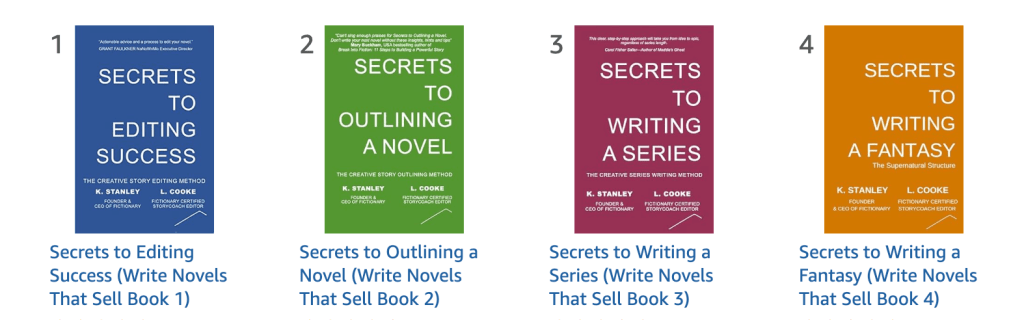
The latest book in the Write Novels that Sell series, Secrets to Writing A Mystery: The Whodunit Structure is now available. Are you a writer ready to move beyond the basics and dive into the deep structure that powers commercially successful mystery novels? Then this book is for you.

Unlock the secrets to writing a bestselling mystery novel. 

This book solves the puzzle of deep structure specific to mysteries and guides you through an actionable, flexible process to outline, write, and edit a mystery novel.

Through the process, you’ll

  • Learn to identify your mystery type (Cozy, Traditional, Detective)
  • Assemble your essential cast of characters (Sleuth, Victim, Suspects, and Culprit)
  • Anchor your story with the five mystery story arc scenes.
  • Develop your story with genre-specific patterns and scenes.
  • Learn how secondary plots and subplots can be woven into the mystery plot.
  • Deepen your story by giving victims fatal flaws and anchoring culprit motives in personal stakes.
  • Structure the story by choosing the right POV strategy to control tension and effectively drop clues and red herrings.  

Use this book as a reference, and from now on, you’ll write every mystery with confidence.

As with all the books in the Write Novels that Sell series, we give you the theory—the why behind our recommendations—and you use the actionable advice to understand the theory and apply it.

Are you a writer ready to move beyond the basics and dive into the deep structure that powers commercially successful mystery novels? Then this book is for you.

Praise for Secrets to Writing a Mystery:

While reading this book, I kept thinking, “I wish I had this book when I wrote my own mystery.” Secrets to Writing a Mystery brilliantly demystifies the genre. It’s an essential, insight-packed guide for mystery writers. Clear, actionable, and full of those “ah-ha” moments that change the way you write. —Iris Applewood, Author of Fragrance of Forgotten Truths

You can buy your copy here.

Textbook for the Fictionary School for Writers & Editors

Secrets to Writing a Mystery: The Whodunit Structure is a comprehensive reference that provides the deep structural theory and an actionable process for Fictionary’s Write a Mystery course.

It serves to solidify and expand on the concepts taught in the live course, allowing your to internalize the techniques and apply them to your own manuscripts.

Thinking of taking the course? Our Black Friday Sale is now on. The Write A Mystery course is included in the Write Your Series Program.

🔥 Black Friday Deal: Get 40% Off Your Membership 🔥

For a limited time, you can secure your membership for 40% off the regular price. This is the best deal we’ll offer all year. Offer ends December 1, 2025.

Use the coupon code BF2025

Black Friday Pricing: 

Write Your Series: $281 /quarter or $899 /year (Reg $468 /quarter or $1499 /year)

Note we also have our other programs (Write Your Novel and Become and Editor) on sale too.

Commit to Your Best Novel With Series Membership Programs

Write Your Series: Eight live 8-week courses to launch your series are delivered by our world-class instructors. This program takes 12 months to complete and includes 64 hours of live instruction. StoryTeller Premium software included.

Use the coupon code BF2025
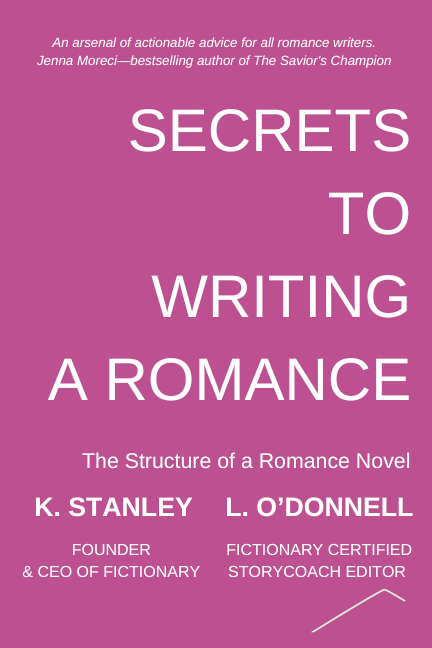
New Release: Secrets to Writing a Romance

The latest book in the Write Novels that Sell series is now available.

Unlock the secrets to writing a bestselling romance novel. This book reveals the specific structure of the genre and the essential elements that make these stories captivating.

Balance reader expectations with your distinctive voice to create an irresistible story that satisfies romance readers.

Go beyond the “meet-cute” and learn about the scenes readers expect in commercially successful romance novels. Portray character growth and perfect your story’s pacing by writing scenes that build tension and demonstrate conflict. Drive your story forward by weaving in external and subplot story arcs.

We analyze six commercially successful romance novels with different subgenres and subplots. It’s exciting to see that each novel follows the story arc pattern but is still a unique story.  You’ll see the full breakdown of these books:

  • The Bodyguard by Katherine Center
  • Happy Place by Emily Henry
  • The Seven Year Slip by Ashley Poston
  • The Flatshare by Beth O’Leary
  • Just for the Summer by Abby Jimenez
  • The Wedding Date by Jasmine Guillory

As with all the books in the Write Novels that Sell series, you’ll learn the theory—the “why” behind our recommendations—and use the actionable advice to outline, write, and edit your novels.

Praise for Secrets to Writing a Romance

Secrets to Writing a Romance is a valuable tool with an arsenal of actionable advice for seasoned and novice romance writers alike. Stanley and O’Donnell leave no stone unturned when dissecting the genre so readers feel confident and in control at every step of the writing process. I’ll definitely have this guide on hand for many years to come. 

– Jenna Moreci, award-winning and Amazon bestselling author of The Savior’s Champion 

You can buy your copy here.

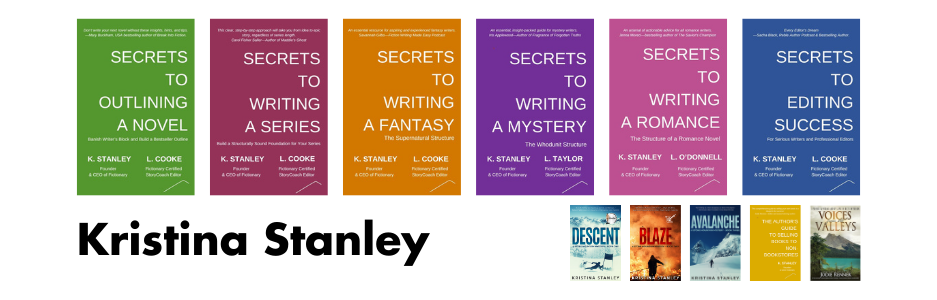
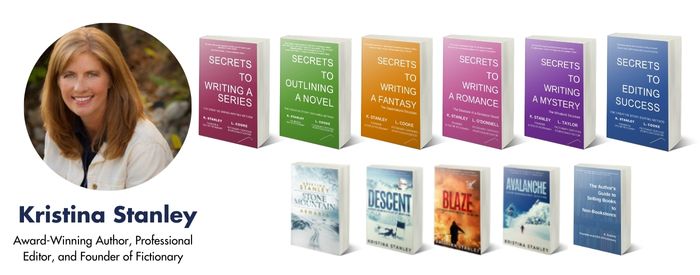
Also available by K. Stanley

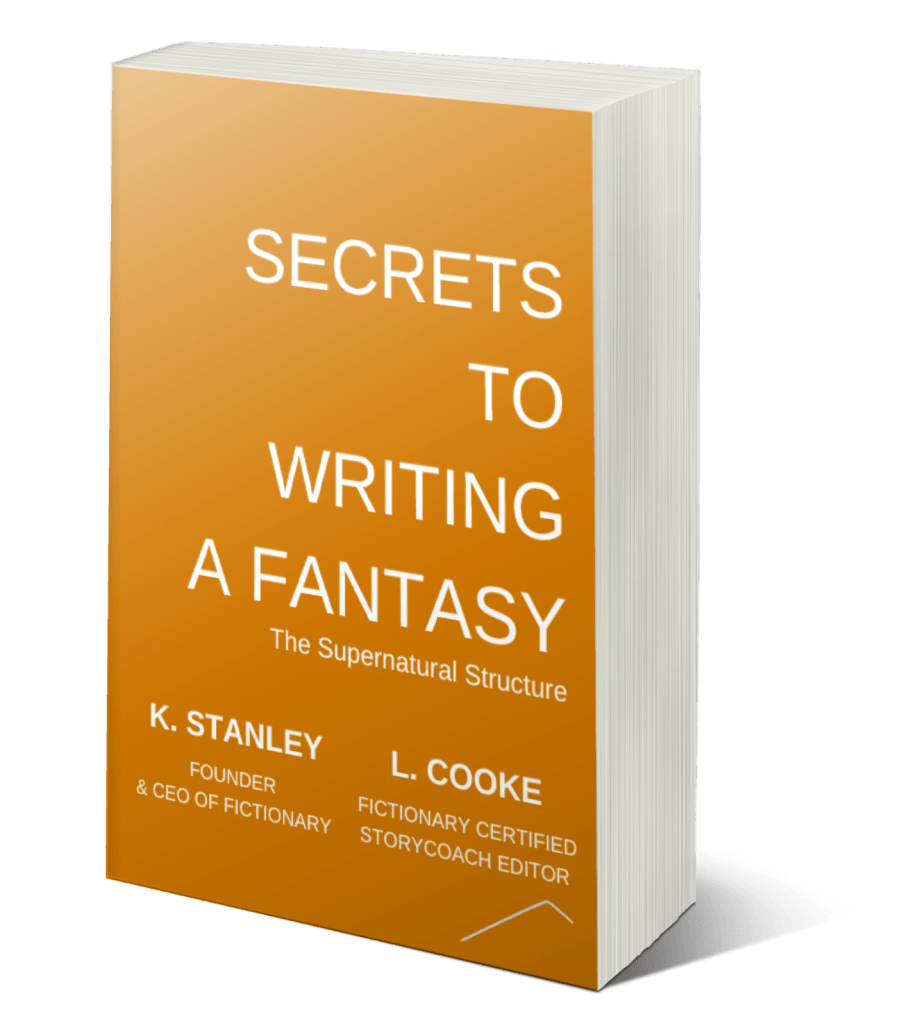
New Release: Secrets to Writing a Fantasy

The latest book in the Write Novels that Sell series is now available.

Unlock the secrets to writing a bestselling fantasy novel. This book reveals the intricate structure specific to fantasy novels, showing you the essential elements that make these stories captivating and engaging.

The following books have entertained millions of readers, and we show you why. 

  • Fourth Wing by Rebecca Yarros
  • Twilight by Stephenie Meyer
  • The Unbroken by C. L. Clark
  • A Court of Thorns and Roses by Sarah J. Maas
  • Legendborn by Tracy Deonn
  • Game of Thrones: A Song of Ice and Fire by George R. R. Martin

Discover the scenes readers expect in commercially successful fantasy novels. Create an external and supernatural story arc. Learn how the story arcs are woven together to drive a story forward.

You’ll be guided through an actionable, flexible process, so you can build the foundation of your fantasy novel and write your story as you read this book.

As with all the books in the Write Novels that Sell series, we give you the theory—the why behind our recommendations—and you use the actionable advice to write and edit your novels.

You can buy your copy here.

Also available by K. Stanley

Setting the Scene: Template for A Novel

Last week I wrote about my template for writing a scene. One of the questions I asked in that template was:  Is the setting the best place for emotional impact?

How do I answer that question? I use another template. For each setting, I ask myself:

What is the Setting Role in Story:

Who are the Related Characters:

Season:

Unique Features of the Setting:

Description:

Sights:

Sounds:

Smells:

Notes:


This allows me to determine if I’ve described the scene in a vivid manner. If I can’t answer most of the questions,  I don’t think the scene is the best place for emotional impact. I don’t believe sight, sound and smell have to be in every scene, but there should be something there.

The real purpose of the template is to make myself think about the scene in a structured way. If you have a way to do this, I’d love to hear about it.

Thanks for reading . . .

Can Writing a Novel Help Your Career?

I believe the answer is yes.

Without clear communication it’s hard to get things done in our world of team work, offices in different locations, cities or countries, partners working time zones hours away, and the multicultural workplace.

Much of our communication happens via the internet or intranet, making written communication extremely important.

Using interesting, concise and clear communication will help you get your job done, convince others to work on your project, and highlight your intelligence.

Think of the time you save if you only have to send a memo once and not answer questions about it.

Over the last few years, I’ve improved my writing skills by writing several novels. The more time I spend writing, the better I get at it. As they say, whoever they are, practice makes perfect.

So if you think spending time writing a novel that might never get published is a waste of time, think again. Writing a novel will improve how you communicate by the written word.

Have you found this to be true, too?

Thanks for reading.

Novels: Point of a Scene – Is there one or should you cut it?

Is There One or Should You Cut It?

I’ve often read the advice that a novelist should be able to summarize their novel in one to two sentences. This made me start thinking about scenes and chapters.

I asked myself if I knew the point of a scene, and if I didn’t should I cut – yes the dreaded word cut – the scene from the novel? It’s easy to get attached to a scene for many reasons but if there is no point, then I ask you what is the point? J

I challenged myself to go through my latest novel and write one sentence describing the point of the scene.

Taking this one level deeper, and adding a new column to my spreadsheet, I tried to reduce the sentence to one word that described the scene.

This did a couple of things for me.

  1. It showed me what to cut. Ouch.
  2. I helped me organize my chapters into a theme.

The second item was a surprise and created a new way for me to look at organizing chapters.

How do you decide it a scene is needed or not?

Thanks for reading . . .


Before the Story Begins . . .

For any author, the starting point of a novel is a big decision. Do you start before the beginning, at the beginning or after the beginning? And how do you decide?

For my fourth novel, Look the Other Way, I’m trying something new. I wrote 20,000 words of the story. With 20,000 words on paper, I have a good idea who the characters are.

The characters come to life, but not fully at this point. Next, I write character synopses that include the basic details, but also the story of the character’s life up to the beginning of the novel. Each synopsis ends up being three to five pages.

The synopsis format is informal. Point form will do. I don’t worry about typos or grammar, but I do get to know my characters.

This process helps me decide where to begin my novel. It’s a creative process. As I write each synopsis, I keep a separate document open that contains plot points or ideas. By the time I have all the synopses written, I have the full novel outline done too.

From this process, I somehow know where the starting point should be and what the inciting incident is. I chose the point that will drive the characters through the story. Too early, and the scene’s aren’t needed. Too late, and an important scene might be excluded.

Next comes scene writing.

Everybody has a different process for writing a novel. What’s yours?

Need Help Writing a Blurb?

#writetip Are you struggling with writing your blurb? Your novel is finished and you are getting ready to submit it, but the blurb just doesn’t sound right?

Why not ask a couple of your readers to write a blurb for you? A person that is not as close to the novel as you are might have an interesting take on what should be in your blurb.

You may get a whole blurb out of the exercise, you may only use one line, but it is sure to spark your imagination.

First Draft: Then What?

#writetip Do you get to relax and celebrate when you finish a manuscript and are getting ready to send it to your agent or publisher? You probably deserve it, but if you’re anything like me, it’s time to get to the next activity.

Yesterday, I finished updating my 3rd novel, Burnt, based on comments from Garry Ryan. I’ve sent it off to be proofread, and now, I’m not going to look at it for a couple of weeks.

What am I going to do with my time?  Well . . .

  • Write a blurb
  • Write a synopsis
  • Figure out if Burnt is the best title for the novel
  • Update my website
  • Update the CWC website
  • Update my agent’s website (Margaret Hart at HSW Literary Agency)

And on and on it goes . . .

There is so much more to writing a novel than actually writing the novel.

Switching POVs

#writetip. I find reading novels with multiple POVs entertaining and enjoyable. So what’s the trick to writing multiple POVs. As usual, this is only my opinion, so here’s what I think.

If you’re going to have multiple POVs in your novel, it’s important to let your reader know this early on in the story.

I could be jarring for a reader to get half way through a novel, and the POV is ripped from underneath their feet and a new character steps in.

Changing POVs in the first few chapters will warn the reader this is your style and hopefully they’ll enjoy your book more. They’ll expect different characters to have their say, to drive the novel, and to provide surprises. They won’t get so attached to one POV that they can’t bear the change and toss the novel aside.