Write Better Fiction: Characters Mentioned In A Scene

Feedback iconToday on Write Better Fiction we’ll cover the Characters Mentioned in a Scene. Write Better Fiction is a process to help you critique your own manuscript and give yourself feedback. This will help you improve your novel, so you’re ready to submit it to an editor. Check the bottom of this post for links to previous Write Better Fiction articles.

Sometimes a character does not have a role in a scene but is referred to by another character. This could be in dialogue, thought, dream, an eMail or phone conversation.

Why would you do this?

  • To remind the reader of a character if you haven’t written about them for a few scenes or chapters
  • To show the character through the eyes of an other character
  • To foreshadow an event that will affect the character
  • To give the reader a clue or red herring
  • To show the POV character’s goal, personality trait, or attitude
  • To keep the antagonist in the readers mind if the antagonist doesn’t have any POV scenes.

This is a column that I fill out when I review each scene. Once the spreadsheet is complete review the column and plot how often characters are referred to. This is similar to a first character appearance diagram.

Once I’ve finished, I review the column for each character. I’m looking for:

  • Big blocks of time where a character disappears
  • Sections where a character is mentioned repeatedly but then not for a while
  • Mentioning an unimportant character too often

Your challenge this week is fill out this column with the characters mentioned.  Then review you major characters and see how often they are mentioned. Too often? Too Little? Too much time passed between being in a scene or being mentioned?

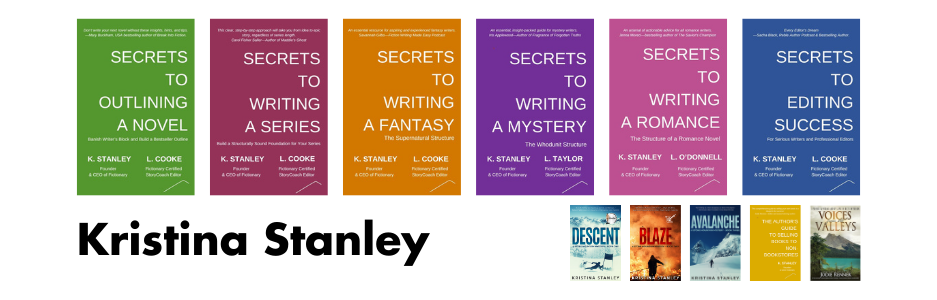
I critiqued DESCENT and BLAZE using the techniques I’m sharing in Write Better Fiction, and I believe this helped me sign with a publisher.

Please me know in the comments below if you found this exercise challenging. Did it help you improve your character arcs?

Thanks for reading…

Other blogs on the topic…

Write Better Fiction: A Character Enters A Scene

Write Better Fiction: Characters in a Scene – too few/too many?

Write Better Fiction: #1 Question To Ask About Characters In A Scene.

Write Better Fiction: The Antagonist

Feedback icon
Self Critique Your Novel


Today on Write Better Fiction we’ll cover the Antagonist. Write Better Fiction is a process to help you critique your own manuscript and give yourself feedback. This will help you improve your novel, so you’re ready to submit it to an editor. Check the bottom of this post for links to previous Write Better Fiction articles.

This is similar to last week’s post except you are looking at when your antagonist shows up in your novel instead of the protagonist.

The antagonist should show up early and be visible throughout the novel. This doesn’t mean they can’t disappear for a while, but controlling the appearances will give you power to create the most tension.

The antagonist may or may not have the point of view in any scene. That’s a choice for you to make. In the thriller genre you may be pitting your protagonist against the antagonist, so you’ll want to give both point of view scenes.

In a mystery, you may choose NOT to write any scenes from your antagonist’s point of view so you don’t have to give away inner thoughts.

The goal of this column is to have you look at how early the antagonist arrives in your novel, how many scenes he/she appear in, and most importantly, is he/she in the climax scene.

Same as last week, sort the spreadsheet by the antagonist column. Are you giving your antagonist enough time for the reader to be surprised but not blindsided that he/she is the villain?

Your challenge this week is to count the number of scenes your antagonist is in. Does this seem balanced compared to the number of scenes your protagonist is in?

Previous blog posts on Write Better Fiction:

  • Number 1 Question to ask yourself about PLOT
  • Number 1 Question to ask yourself about CHARACTER
  • Number 1 Questions to ask yourself about SETTING.
  • ACTION in a scene
  • NAME of a scene
  • GOAL of point of view character
  • The PROTAGONIST

I critiqued DESCENT and BLAZE using the techniques I’m sharing in Write Better Fiction, and I believe this helped me sign with a publisher.

Please me know in the comments below if you agree with the advice on counting scenes for your antagonist? Does the genre impact if the antagonist has a point of view scene?

Thanks for reading…

Write Better Fiction: Point of View Character Goal

Feedback iconToday on Write Better Fiction we’ll cover the Goal of your Point of View Character. Write Better Fiction is a process to help you critique your own manuscript and give yourself feedback. This will help you improve your novel, so you’re ready to submit it to an editor. Check the bottom of this post for links to previous Write Better Fiction articles.

Last week I wrote about naming a scene. This week I’ll cover the goal of the point of view character. Each scene will have a point of view character, and we discussed this in #1 question to ask yourself about plot. ADD LINK

The point of view (POV) character must have a goal. Without a goal, what’s the point?

There are two types of goals:

Internal: The reader isn’t told what the POV goal is.

External: The reader clearly understands what the POV goal is.

Each POV character should have an overall novel goal. The most important goals should belong to your protagonist and antagonist. Of course, these goals should oppose each other.

Screen Shot 2015-12-17 at 1.28.11 PMThe overall goal drives the character throughout the novel. In DESCENT, Kalin Thompson’s external goal is to find out who killed an Olympic-caliber skier. She has an internal goal that drives her through the first three novels in The Stone Mountain Mystery series, which I can’t share or it would ruin the mystery, but it’s there and influences how I write.

Finding a murderer is Kalin’s main goal throughout DESCENT. She also has goals within each scene where she holds the point of view. In the opening scene her external goal is to go skiing. Her internal goal is to be good at her job. Both goals will be tested very early in the story.

The reader doesn’t know about the internal goal, but it helped me create a focus and drive for Kalin in the next few chapters.

Other characters might have a goal in the scene. In fact, they should and it should be in conflict with the POV goal. This is a different column in the spreadsheet that we’ll talk about later.

Your challenge this week is to review each scene in your novel and determine what are the internal and external goals of each POV character. This will also focus you on the who has POV and give you another opportunity to check you’re consistent with the POV and that you’re not head hopping (unless it’s intentional). Please let me know in the comments if this helped you write better fiction.

I critiqued DESCENT and BLAZE using the techniques I’m sharing in Write Better Fiction, and I believe this helped me sign with a publisher.

Previous blog posts on Write Better Fiction:

Please me know in the comments below how you deal with the goal of your POV characters? Did you have difficulty defining a clear scene goal?

Thanks for reading…

Write Better Fiction: Scene Naming

Feedback iconToday on Write Better Fiction we’ll cover NAMING A SCENE. Write Better Fiction is a process to help you critique your own manuscript and give yourself feedback. This will help you improve your novel so you’re ready to submit it to an editor. Check the bottom of this post for links to previous Write Better Fiction articles.

Last week I wrote about the action in a scene. Maybe it seems odd I chose to fill out the action before naming the scene, but I have a strategy for this.

Did you find it hard to describe a scene in three sentences or less? Well, naming a scene is harder, but it help you hone the scene.

Scene NamesNow I’m going to ask you to use one word to name the scene. If you must, you can use two. I confess this sometimes happens to me.


Some writers list scenes with numbers only and that’s fine. For me, the exercise of naming the scene makes me narrow down what the scene is about. Since I already have the scene action defined in one to three sentences, the scene name might already exist somewhere in those words.

The Scene Name column is connected to the Purpose of a Scene column, and will help you discover what the scene is really about. The purpose of the scene is another place to look for hints on what to name your scene. At this point you may want to re-evaluate the purpose of the scene in case you’ve changed your mind based on the scene action and naming the scene.

The names of the scenes might give you insight into the theme of your novel.

Your challenge this week is to name each scene in your novel. Then let me know if this helped you focus your scenes.

I critiqued DESCENT and BLAZE using the techniques I’m sharing in Write Better Fiction, and I believe this helped me sign with a publisher.

Previous blog posts on Write Better Fiction:

Please me know in the comments below how you name your scene? Is it important for you to have a scene name?

Thanks for reading…

Write Better Fiction: Scene ACTION

Welcome the 2016 kickoff of Write Better Fiction. It’s the start of a new year, maybe you wrote your manuscript during November, took a break for the holidays and are ready to get to work.

But what to do? How about self-critiquing your manuscript?

If you missed the first three blogs in this series, you might want to check them out before reading this one.

Feedback icon

I need a systematic method for critiquing my novels, and I’ve used this method for all my novels. To prove to you it works, here is what Todd Barselow, senior editor at Imajin Books, said about DESCENT.

“My life would be so much easier if all the manuscripts that crossed my desk were as clean as yours.”

Now that I have your attention, today I’ll explain how to use the ACTION column.

Screen Shot 2015-11-30 at 5.06.20 PM

I keep this entry short. Use only one to three sentences to describe what happens in the scene. If you can’t describe the action in three sentences, maybe too much is happening in the scene, and it could be broken into two or three scenes. A scene with too much happening might confuse or exhaust the reader.

Once you’ve written the action for every scene in your novel, review the entire column and look for repetitions. Repetitions, unless written for a purpose, can be boring to the reader.

For example, your protagonist is hit by a car. In three different scenes you fill in the action, having your protagonist tell another character about the incident. Do you really need to have this happen three times? Could you summarize if the other character needs to know this information?

The action column helps me write a synopsis. After I’ve completed this for the manuscript I cut the column, save it to a word document and start writing a synopsis. It’s only a beginning, but it gives me a framework. And we all know how hard it is to write a synopsis.

Your challenge this week is to articulate the action for each scene in your novel. Please me know in the comments below how you evaluate the action? Do you have a question you ask yourself about action?

I critiqued DESCENT and BLAZE using the techniques I’m sharing in Write Better Fiction, and I believe this helped me sign with a publisher.

Thanks for reading…