Write Better Fiction: #1 Question To Ask About Characters In A Scene.

Are you trying to figure out how to self-critique your writing?

Write Better Fiction is a series focussing on how to give yourself feedback.

Last week on Write Better Fiction we covered using a spreadsheet to critique your manuscript.

As you remember, we broke each scene in a novel into three categories.

  1. PLOT
  2. CHARACTER
  3. SETTING

There are other elements of a scene I believe you’re better off getting feedback from people, meaning editors or beta readers, as opposed to using a spreadsheet to organize your thoughts, so if you think something is missing from my list, that’s probably why. But if you’re not sure, just let me know in the comments below and we can discuss the idea.

As promised, I’m going to give you the #1 question to ask yourself for each scene element under the category of CHARACTER.

WHO HAS THE POINT OF VIEW?

According to my research, it’s generally agreed upon that each scene should be written from one character’s point of view (POV). Of course, it’s up to you if you want to follow that advice or not.

I believe you should make a conscious choice. If you want to keep your writing tight and the reader engaged, you should at least understand if you’re writing in one POV and if not, when you change POV do so consciously.

There are many books written about what POV, so I’m not going to cover the topic here. I’ll list some of the books I’ve read on point of view at the end of the blog.

THE SPREADSHEET

Screen Shot 2015-11-30 at 5.06.20 PM


Is the point of view in the best order for pacing?

If you write from only one POV, then you don’t need to include this column.

Let’s assume you have multiple POVs. You can quickly check the POV column and evaluate the order of the POV scenes.

If you plan to change POVs the generally accepted writing advice is to do so early in your novel. Making a POV change 50% into the novel might jar your reader out of the story.

Too many scenes in one POV before switching to another can cause the same issue.

The genre you write in may influence how you use this column. In a romance novel you might want to give the female and male protagonists (read love interests) alternating scenes. Check if you’ve done this and if they each got a fair number of scenes.

SORTING THE SPREADSHEET 

Once I’ve entered a POV for each scene, I sort the spreadsheet by that column. It now tells me how many POV scenes each character has and how many different points of view I’ve written in.

Who is your main protagonist? Does this character have the majority of scenes? If not,  evaluate whether this character should be your main protagonist. If the answer is yes, you can review scenes where the protagonist is not your POV and determine if you can rewrite the scene from his/her point of view.

How many point of view characters is too many? That’s up to you as a writer, but if you’re getting feedback from your readers that they have trouble keeping track of your characters or lose interest in the story because of a point of view change, then the spreadsheet can help you figure out how to improve.

Do you have any characters that only one scene where they are the point of view character? Here’s your chance to reduce the number of POVs. Review the scene and determine if you can write it from another character’s point of view, perhaps one that has quite a few scenes.

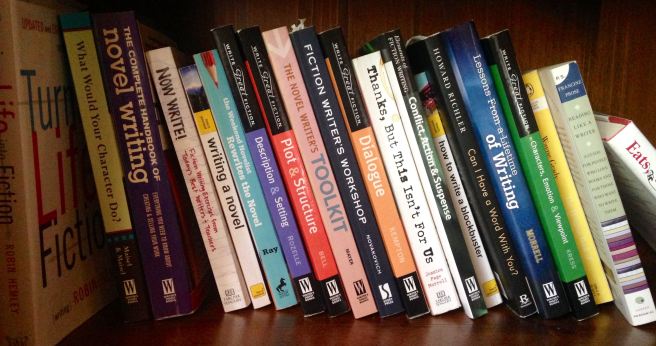
BOOKS I’ve read on POV:

The Power of Point of View by Alicia Rasley

Characters and Viewpoint by Orson Scott Card

Characters, Emotions and Viewpoint by Nancy Kress

Next week I’ll share with you the #1 question to ask yourself about SETTING. Using a spreadsheet to force yourself to critique your own writing and give yourself feedback enabling you to write better fiction.

Please comment below and let me know what you think of the advice. Do you agree, disagree or do something different to evaluate point of view?

Thanks for reading…

Mystery Monday: Howard Shrier on 10 Rules of Writing

Today we welcome TorontBuffalo Jumpo Author Howard Shrier. I had the pleasure listening to Howard speak about Buffalo Jump at The Scene Of The Crime on Wolf Island, Kingston, Ontario and never dreamed I’d be hosting him on my blog. Howard writes the Jonah Geller series.

Howard is sharing some of his insight today, but if you’re interested in more…Howard teaches a Mystery Writing Workshop at the University of Toronto.Boston Cream

TOP TEN RULES OF WRITING BY HOWARD SHRIER

1.Create characters with strong needs and send them on a journey worth documenting and telling

2. Place significant obstacles in their path and allow them to reveal their characters through the actions they take to get around them.

3. Do enough research to be authoritative and plausible, but keep it to a minimum in the text.

4. Read voraciously, epsecially but not exclusively in your chosen field.

5. Tell your story in the most compelling voice you can muster. Have a sense of urgency, even if it’s buried. And develop an ear for dialogue if you don’t already have one.

High Chicago6. As Hemingway and so many others have noted, the best writing day ends when you know how you’re starting tomorrow.

7. Outlining, even if it’s in your head, can save you months of grief. The process of building a story in notebooks, all the aha moments, can be every bit as creative as writing itself.

8. Throw everything you can at the first draft. You can always cut it later.

9. Cut it later. And often.

10. Do not, under any circumstances, make the mistake I did and quit your day job before your first book comes out.

11. Bonus: A first draft is just that. Once you finish it, get people to read it. Take their comments graciously, even if you don’t agree with them. Sleep on them. See if they make sense in the morning. For me, revisions are where the best writing happens. Cutting what’s not needed, tightening the springs that provide tension, sharpening dialogue. As much as you revise your completed text, polish your first few chapters to a fine point. Bring them to a note of suspense, perhaps the incendiary incident we’ve talked about. Create a worthy sample of 5,000-10,000 words to show an agent if you get the chance.

Howard Shrier Bio

Howard Shrier PhotoHoward Shrier is the author of four acclaimed novels featuring Toronto investigator Jonah Geller: Buffalo Jump (2008), High Chicago (2009), Boston Cream (2012) and Miss Montreal (2013). A two-time winner of the Arthur Ellis Award for excellence in crime fiction, he has also written the standalone thriller Lostport, and is now working on a crime novel set in Montreal, 1950, when it was Canada’s Sin City.

Howard was born and raised in Montreal, where he earned an Honours Degree in Journalism and Creative Writing at Concordia University in 1979. He started out as a crime reporter at The Montreal Star and has since worked in print journalism, theatre and television, sketch comedy and improv, and corporate and government communications. Howard now lives in Toronto with his wife and two sons and teaches writing at University of Toronto’s School of Continuing Studies. He also works with mystery writers on their manuscripts to bring them up to professional standards. You can find out more about his work at howardshrier.com.

Introducing Write Better Fiction

Introducing Write Better Fiction- Give Yourself Feedback On Your Manuscript

Feedback is an important part of the writing process. There are some elements of your novel you’ll need human feedback for, but there are others you can analyze on your own. Today, I’m kicking off a series called WRITE BETTER FICTION. Every Wednesday, I’ll post on the topic of self-critiquing.

Whether you’re a panster or a plotter, the thrilling moment will arrive when you’ve written a first draft.

Are you ready for beta readers to see your work for the first time?

How do you know when it’s time for an editor and a proofreader?

Are you thinking of hitting the publish button?

If you’re anything like me, you don’t want to share your writing with anyone until you’ve done your best to perfect it. Maybe you’ve read hundreds of writing books, maybe you’ve taken courses and information is spinning in your head, but how do you keep track of the knowledge and ensure you’re using what you’ve learned? With a spreadsheet, of course.

Writing Books
Some of my books


A novel is made of of scenes, and scenes are made up of elements. Over the years, I’ve created a spreadsheet, and every time I learned about a scene element, I added that element to my spreadsheet.

My spreadsheet consists of  65 columns. That may seem like a lot, but each element needs to be considered if you’re writing a scene for maximum reader engagement.

Screen Shot 2015-11-30 at 5.06.20 PM

To make analyzing easier, I’ve broken the spreadsheet into three categories.

  1. PLOT
  2. CHARACTER
  3. SETTING

To quote James Scott Bell in his book, PLOT & STRUCTURE, he says,“Plot happens.” To me that means it’s the action of the story. So every element not included under CHARACTER or SETTING is grouped under PLOT.

Each of these categories has a set of elements, meaning when I work on a scene I can work on more than one element at a time. Over the next 65 weeks or so, I’m going to explain how I use each element in the spreadsheet to strengthen scenes, and thereby strengthen the novel. Hence this is the first in a series of blogs I’ll tag, “Write Better Fiction.”

WHERE TO START WHEN THERE ARE 65 CHOICES

Once I have a completed draft, I look at the most important element of each category. Today I’ll start with PLOT.

The first element under PLOT I evaluate is the purpose of the scene. The purpose of the scene must relate to the overall story. If it’s not driving the story forward, then ask yourself what is the point of including the scene in your novel.

Here are some examples of the way the purpose of a scene can drive the story forward. You can choose one of these to define your purpose or come up with your own definitions.

  • Is the inciting incident
  • Introduces characters
  • Creates an emotional connection between characters and reader
  • Provides character development
  • Establishes setting
  • Introduces or intensifies conflict
  • Builds suspense
  • Establishes mood
  • Reveals a clue
  • Shows a red herring
  • Is the climax
  • Provides resolution

HOW PURPOSE OF A SCENE HELPS WITH THE OTHER ELEMENTS

I articulate the purpose of the scene first, so I can address other elements of the scene and test if they are in line with the purpose.

Let’s say you fill out the list of objects in a scene. You can weigh the objects against the purpose of the scene and see if there is a way to use them to further the purpose. This goes for revelations, tension, conflict, weather, etc. Basically, every scene element can be tested against the scene purpose.

After you whittle down the purpose of a scene to a few words, one of three things will happen.

  1. You’ve got the purpose nailed, and you understand why this scene is included in your novel.
  2. You have a weak purpose, but there is still some value in the scene.
  3. You have no idea what the purpose is.

Screen Shot 2015-11-30 at 4.56.40 PMIf you landed on number 1, give yourself a gold star and move on to the next scene.

Number 2:  consider rewriting the scene, keeping the parts in the scene that further the plot. Or take the important bits and place them in another scene which has a strong purpose. You could also take two scenes with a weak purpose and combine them into one scene to create stronger purpose.

Number 3: consider removing the scene. We all end of with scenes that seemed relevant when we wrote them, but might not work within the novel as a whole. However, don’t delete the scene. Remember to store it somewhere. You’re next novel might have a place for it.

WHAT I DON’T USE THE SPREADSHEET FOR

I don’t use my spreadsheet to evaluate voice, dialogue, balance, style, consistency, etc. For that, I think another human is the best source for feedback.

Using a spreadsheet to force yourself to critique your own writing and give yourself feedback will enable you to write better fiction.

Next week I’ll share with you the #1 question to ask yourself about CHARACTER.

Please comment below and let me know what you think of the advice. Do you agree, disagree or do something different for the purpose of a scene? Do you group elements of a scene in a different way?

Thanks for reading…


Before You Submit: Who or That

Do you have a draft of your novel or short story and are thinking of submitting to an agent, publisher or writing contest? My series called Before You Submit might help. This series contains hints and tips I’ve received from professionals in the publishing industry. Each week I’ll share a new tip.

This week I’ll write about the use of who.

I’m loving going through my old notes from an editor. I mean, if can’t laugh at myself and the silly mistakes I made in the early days of writing, what’s the point. Writing should be fun, at least some of the time, maybe even most of the time. Even the hard work of editing can be fun.

Now, to the topic of Who or That, and what I needed to know. Here’s the sentence I wrote:

“I’ll need a list of everyone that had the combination to the safe.”

Yikes. Did you catch the error? The sentence should read:

“I’ll need a list of everyone who had the combination to the safe.”

Funny enough, who is used when referring to people. Every little correction makes the novel a better read. Thank you to the editor who pointed this out to me.

I hope this helps improve your writing.

See Before You Submit:Likeable Characters for the first blog in this series and an introduction the benefits of submitting even if you get a rejection letter.

Thanks for reading…

Before You Submit: The Use of ‘That’

Do you have a draft of your novel or short story and are thinking of submitting to an agent, publisher or writing contest? My series called Before You Submit might help. This series contains hints and tips I’ve received from professionals in the publishing industry. Each week I’ll share a new tip.

This week I’ll write about the use of that.

My editor thought ‘that’ should only be used if it was needed to keep the meaning of the sentence clear. Here’s an example of where it’s not needed.

Kendra smelled the odour of sweat coming from the ski boots that were resting askew on the floor.

The easy fix my editor recommended was to remove ‘that were’ from the sentence. The new sentence becomes:

Kendra smelled the odour of sweat coming from the ski boots resting askew on the floor.

I think the editor was reminding me to cut back on words. There are many places on the internet to get find the detailed rules, but I thought a quick example would give you something to check for in your writing.

I hope this helps improve your writing.

See Before You Submit:Likeable Characters for the first blog in this series and an introduction the benefits of submitting even if you get a rejection letter.


Thanks for reading . . .


Before You Submit: Dialogue, Narrative and Repetition

Do you have a draft of your novel or short story and are thinking of submitting to an agent, publisher or writing contest? My series called Before You Submit might help. This series contains hints and tips I’ve received from professionals in the publishing industry. Each week I’ll share a new tip.

This week I’ll write about Dialogue, Narrative and Repetition.

Combining dialogue and narrative is where style, or dare I say art, comes into your writing. 

We all know you don’t want to bore the reader with repetition, but sometimes it’s easy to do without even noticing. I tend to repeat something in narrative that I’ve already said in dialogue.

Here’s what the editor didn’t like in one of my manuscripts:

“You have a choice to make,” Sarah said. “You can walk away right now, or  I’ll call the cops and see what they have to say about the drugs.” Sarah stood her ground.

The editor recommended removing ‘Sarah stood her ground.’ Her thought was that it was obvious Sarah was standing her ground. The dialogue indicated this, and there was no need to hit the reader over the head with it.

Her overall point, if you repeat things, make sure you have a reason to. You might repeat for style or for emphasis, but don’t repeat for filler.

To figure out if you have a similar problem, you can analyze your writing, checking for areas of repetition, or you can ask someone else to read your work and check for you. A reader other than myself can often see things I can’t, so I like asking for help on this one.

I hope this helps improve your writing.

See Before You Submit:Likeable Characters for the first blog in this series and an introduction the benefits of submitting even if you get a rejection letter.

Thanks for reading . . .


Before You Submit: Run-on Sentences

Do you have a draft of your novel or short story and are thinking of submitting to an agent, publisher or writing contest? My series called Before You Submit might help. This series contains hints and tips I’ve received from professionals in the publishing industry. Each week I’ll share a new tip.

This week I’ll write about Run-on Sentences.

Was I embarrassed when an editor corrected a line a narrative by commenting that it was a run-on sentence, and I didn’t know what a run-on sentence was? You bet. I had to look it up.

Basically a run-on sentence occurs when two or more independent clauses are connected without the correct punctuation or coordinating conjunction.

Here is an example of what not to do.

After the avalanche, Darren changed, he’s been getting into fights at the bar.

As you can see, I liked commas at the time. 🙂

The corrected version is:

After the avalanche, Darren changed. He’s been getting into fights at the bar.

The second comma changed to a period. The second sentence starts with a capital letter.

Everyone has to start somewhere, and I was lucky to have an editor who took the time to correct my writing during my early days of crafting a novel.

I hope this helps improve your writing.

See Before You Submit:Likeable Characters for the first blog in this series and an introduction the benefits of submitting even if you get a rejection letter.

Thanks for reading . . .

Before You Submit: As If Versus Like

Do you have a draft of your novel or short story and are thinking of submitting to an agent, publisher or writing contest? My series called Before You Submit might help. This series contains hints and tips I’ve received from professionals in the publishing industry. Each week I’ll share a new tip.

This week I’ll write about As if versus like.

Learn the difference between ‘as if’ and ‘like’. That was the clear message from an editor. 2008 was the year, and wow, did I have a lot to learn.  How embarrassing that my very first draft was full of errors when it came to using ‘like’.

I’ll give you an example:

On his way out the door, Darren turned back to me. He looked like he might say something …

Really, what it should have been was:

On his way out the door, Darren turned back to me. He looked as if he might say something 

I found a clear definition of ‘Like versus as if’ on Clifford Garstang’s blog, Tips for Writers. You can also check out GrammarErrors.

I hope this helps improve your writing.

See Before You Submit:Likeable Characters for the first blog in this series and an introduction the benefits of submitting even if you get a rejection letter.

Thanks for reading . . .

Before You Submit: He – She – They

Do you have a draft of your novel or short story and are thinking of submitting to an agent, publisher or writing contest? My series called Before You Submit might help. This series contains hints and tips I’ve received from professionals in the publishing industry. Each week I’ll share a new tip.

This week I’m going to highlight advice I received last week when I posted my blog. One reader kindly pointed out my mistake, and to me it re-enforces how important it is to have someone else edit my work before submitting the words. Of course, I don’t have an editor for the blog, so I’m on my own.

The rule I broke: Plural and singular must match in a sentence.

The sentence containing my error was:

As usual, this advice is coming from an editor who knows what they are talking about.

If it’s not clear whether the editor is female or male, the corrected sentence is:

As usual, this advice is coming from an editor who knows what he/she is talking about.

I know the editor was a female. so I could also have written:

As usual, this advice is coming from an editor who knows what she is talking about.

I mixed the singular ‘an editor’ with the plural ‘they’. Even at this stage I’m making errors when I know better.

I hope this helps improve your writing.

See Before You Submit:Likeable Characters for the first blog in this series and an introduction the benefits of submitting even if you get a rejection letter.


Thanks for reading . . .


Before You Submit: Should Your POV Look

Do you have a draft of your novel or short story and are thinking of submitting to an agent, publisher or writing contest? My series called Before You Submit might help. This series contains hints and tips I’ve received from professionals in the publishing industry. Each week I’ll share a new tip.

This week I’ll write about Point of View Characters looking at things.

As usual, this advice is coming from an editor who knows what he/she is talking about. In an early draft of my novel, I had too many places where the POV looked here, looked there, looked everywhere.  The editor pointed out that if the writing describes something, then the reader assumes the POV can see it.

So a sentence like this:

Kendra submerged herself in the hot tub behind the chalet and waited for dawn. A twig cracked. She turned and looked as a cougar sauntered under the dome of light and silently lifted its upper lip, displaying an impressive array of fangs.

Turned into a sentence like this:

Kendra submerged herself in the hot tub behind the chalet and waited for dawn. A twig cracked. A cougar sauntered under the dome of light and silently lifted its upper lip, displaying an impressive array of fangs.

The second sentence is tighter and hopefully more suspenseful. This is similar to what I posted last week, but I thought I’d include the advice to reinforce checking for ‘saw’ and ‘look’.

I hope this helps improve your writing.

See Before You Submit:Likeable Characters for the first blog in this series and an introduction the benefits of submitting even if you get a rejection letter.

Thanks for reading . . .