Before You Submit: Likeable Characters

Do you have a draft of your novel or short story and are thinking of submitting to an agent, publisher or writing contest?

This is a scary prospect, right? Ignore the night demon who tells you to hide your work in a drawer and prepare your story for submission. Besides signing an agent, getting your work published, or winning a contest, there are other benefits to submitting.

Submitting your work is a great way to get feedback from a professional in the industry. We all know this is hard to get, but if you’re lucky, valuable pieces of advice will end up in your inbox.

There are contests, the Debut Dagger hosted by The Crime Writers’ Association is one of them, that will provide feedback on your entry if you are short listed. There are also agents, who when queried, will give you feedback. You might even get comments back from a publisher or editor.

I thought I’d share a bit of what I’ve learned this last year from people in the industry.

The week I’ll talk about liking the main protagonist.

Many writing books declare the reader must like your main character. This doesn’t mean everything about your character should be likeable. No one likes a perfect person. On the flip side, even if your character is nasty, is there at least one characteristic your reader can relate to, like or admire? If not, you might create something.

In a novel, giving your reader someone to cheer for and follow for 300 or so pages might make the difference between the reader dropping your book on the coffee table after chapter one to staying awake late into the night reading until the climax satisfies their need to know what happened to the character.

When I started writing, I struggled with how to make a character likeable. Thinking about what made me like people in real life was difficult to translate into the pages of a novel. How was I to get a reader to like my character?

The Crime Writers’ Association honoured me by shortlisting my novel, Burnt. The comment I received from one Debut Dagger judge on the topic of likeable characters was:

“The thread with the dog is a clever way of engaging interest and building suspense right from the start, while telling the reader something appealing about Kalin.”

Kalin is the main protagonist in Burnt.  In the opening scene, on the run and separated from her dog in a forest fire, Kalin fights for her life. The suspense part: Will she be able to save herself and her dog?  The likeable part: Her concern for her dog.

What I learned from this comment: The actions of your characters can show the reader a likeable trait. There is no need to describe the trait by telling the reader Kalin cares about animals.

I hope this helps you review your draft and get it ready for submission. In the coming months, I’ll post a series on what I’ve learned from the mysterious publishing industry.

Thanks for reading . . .

Click here for a look at my proofreading and copyediting series.

Put Your Novel In A Drawer

I’m walking my dog Farley home and the forest is whispering little reminders to me, making me think, giving me story ideas.

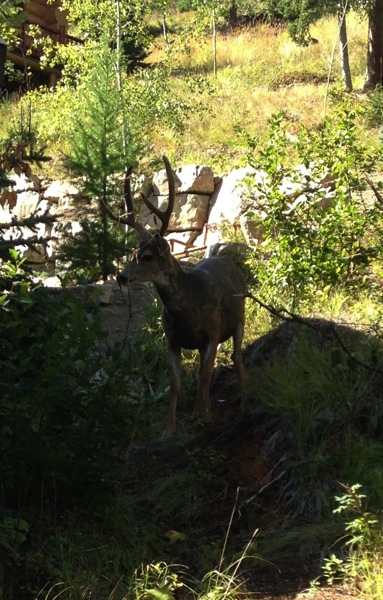
To my left, we come across a doe and two fawns. We’ve been in the mountains long enough that Farley behaves  – for a moment. I decide I’ll be safe if I walk on the far side of the road away from the deer. The mama deer, she decides I might rethink that plan. Her two fawn hide behind her, and she turns and faces me.

She struts her fronts paws, telling me to back off. And I do. I’m not sure if she’s about to charge.

Dusk is upon us, and I’d like to reach home before dark. I can take a path down to the river, back behind the houses and up on the other side, but I’m a little nervous about bears. I can climb up a step hill to a neighbouring house and cut through their property, or I can pass the mama deer. I opt for choice number two.

I grab ahold of long grass, four feet long and full of thistles, and pull my myself toward the crest of the hill. Farley quickly jumps in front of me and pulls me forward. I’m halfway up when we startle a buck. He’d been sitting in the grass, and I’d been too focussed on the doe and her fawns to notice him. He bolts, and I catch a glimpse of his antlers as he runs by.

Buck

Change of plan. I head toward the next house, feeling like a trespasser, and walk around the front, only to come face to face with another, bigger, buck. I hold in a scream, Farley barks wildly and Mr. Buck stares at us. Doesn’t move an inch.

So, I step back, cross through my neighbours outdoor eating area, wishing I’d actually met my neighbours, and head away from the buck. And who’s behind the next house. Buck number one.

This is crazy, I think. Did the deer decide to have a party near my house? Mama doe, her fawns and both bucks are frozen like statues, staring at me. I choose the only option left and keep walking forward. They stay, I go. All works out well.

I arrive home a little exhilarated, realizing sometimes I just have to face my fears. Even when it comes to writing.

Early on in my writing career, someone told me the best thing to do after finishing a draft of a novel, is to put it in a drawer and don’t look at it for at least two weeks. How hard is that? Well, I followed that advice and haven’t looked at my novel for 6 months.

Now that I’m my new brave self, I go to my desk drawer and pull out my novel. I didn’t understand the advice at first, but now I get the act provides distance from the story. I’m so glad I put the novel away.

After hours of hard work, I find plot holes, repeated words (even if they’re a chapter apart, they can jar the reader), scenes that are not needed and of course, the dreaded typos. Now my novel is a better read, and I’m glad I put it out of sight. I’m also glad the deer are out of sight, and hopefully sleeping somewhere and dreaming finding haunting grounds farther away from my house.

Even though hiding your novel out of sight might seem impossible, if you’re looking for ways to improve the writing, this might help.

Thanks for reading . . .

Prepping for a Reading

Have you ever read your writing aloud in public? I haven’t and am about to.

My short story “When a Friendship Fails” has been nominated for the Capital Crime Writer’s Audrey Jessup. As part of the nomination, the 5 nominated authors are asked to read part of the story aloud. The event is taking place in a pub in down town Ottawa.

The complete story takes 20 minutes to read, and I’ve been given 7 minutes.

I’ve been using Audacity to practice, and to deliver a strong emotional impact, I need to choose if I should read:

  • from the beginning
  • middle
  • or the last three scenes

Audacity makes me listen and practice. After I decide which section to read, I can work on the timing.

Here’s my question.

When reading a scene on a page, the reader can see paragraph breaks and knows a new character is speaking. But when listening to a story, the listening doesn’t have the advantage of seeing the paragraph breaks. I’m not an actor who can change the sound of my voice for each character (although I’m trying),  so when reading from a finished work, is it okay to add a few he said/she said tags to make it clear who is speaking?

What comes next and is the most nerve-wracking of all: I have to read aloud in front of people.

Yikes.

Thanks for reading . . .

Scapple and Writing

If you haven’t used Scapple, it’s a neat tool for organizing thoughts when editing or writing a novel.

I made bubble diagrams of each suspect in my novel, Avalanche.

Things I found that helped:

  • Connections between characters that could strengthen the readers belief that one of the characters was guilty.
  • Inconsistencies with clues.
  • Ideas for more clues.
  • At what point in the plot did the protagonist learn important details. Then I made sure I didn’t reference the information earlier.
  • Were the clues evenly balanced amongst the suspects?
The software is free flowing in the sense that you can draw what you like. Bubble diagrams, flow of information etc. It has a free 30 day trial so if you’re interested, you have nothing to lose.

It’s a fun and easy tool to work with, and I think has tightened my plot. See Literature and Latte for a better product description.

Here’s a shout out to Kirsten for pointing out Scapple to me. She always blogs about something interesting and useful.

Do you have any tools to help you write?

Thanks for reading . . .

Reading Before E-Books

Life before E-books? Try sailing before E-books.

On our Niagara 42, Allura, we sailed from Toronto to Aruba and back. Every summer I would scour the second-hand books stores looking for a year’s worth of reading material. Trying to figure out in August what I’ll want to read in January is difficult. So many things influence what I feel like reading.

You can imagine the storage space all the books took up, not to mention the weight. Throughout our first sailing adventure, I searched for book trades if I needed to add to my library. I left books in many marinas and libraries along the way.

Enter E-books. I bought my first Kindle after one year on Mattina. Imagine the happiness my husband felt when I cleared out the cabinets and storage spaces under the bed. He thought he could have the space for storing important things like tools and spare parts. So the negotiations began, and we shared the space. I used to stuff the built-in bookshelf on my side of the bed with books, now I don’t know what to put there. My Kindle only takes up a tiny space.

With the Kindle, I have an endless supply of books at my fingertips. I thought of this today because I’m reading all of the books nominated for the Arthur Ellis writing awards for excellence in crime writing. Before an E-book, I never would have had access to these books while I was sailing. Isn’t it nice how technology makes our lives more fun.

Thanks for reading . . .

Reading to Write Well

I believe to write well, you have to read. Read everything in the genre you write in, read everything close to the genre you write in, read books you would never write but love to read, but find the time to read.

This is a lovely excuse to spend time reading. I pretend I’m working. Yup – working. Then I don’t feel as if I’m slacking off and not doing other things I should be doing.

So how do I find books to read?

Every year when the Crime Writers Of Canada announces the Arthur Ellis Short lists, I read all the books on the list.

I read by category. The Best Novel, Best First Novel, Best Novella.

Then I play a game with myself and pick the winners. After the winners are announced I compare my list to the winning list. If I’ve chosen a different book, I go back and look at the two books and try to figure out why a certain book one over the one I chose. It makes me look at the book in  a different way and helps me learn new writing techniques.

I hope you find time to read too.

Thanks for reading . . .

Character Development

I’m excited to say I’ve added a new spreadsheet to my box of writing tools.

Getting to know new characters, or even existing characters, is exciting.

For each scene, I ask the POV character the following questions and then answer in their first person voice:

  • How did you get into the predicament you’re in?
  • What do you want?
  • Why do you want it?
  • How did you feel when (insert disaster or setback here) happened?
  • What are you going to do next?

The questions open my mind to new ideas and remind me to keep character personalities consistent.

Do you ask your characters questions to get to know them?

Thanks for reading . . .


The Audacity of Reading a Novel Aloud

I’m testing both Garageband and Audacity to determine which one is better for creating podcast. So far Audacity is winning.

With the new Mac operating system, the help files are stored online and not on the Mac itself. For people connected 24/7 to the internet, this might be okay. For me, not so much. While living on my sailboat, I’m often not connected and can’t get access to the help files.

This is particularly frustrating when learning a new software program like Garageband. So on the advice of my fellow blogger, Kirsten at A Scenic Route,  I tried Audacity.

The help files come with the program, so I don’t have to have internet access. The noise reduction function works very well. The help files give tips on how to speak into a microphone. The basic functions are easy to learn.

So, Goodbye Garageband. Hello Audacity.

On the proofreading side of things, I discovered creating a podcast of written text helps find errors. A lovely added bonus when trying to perfect work.

Thanks for reading . . .

Books On Point Of View

I just finished reading The Power of Point of View: Make your Story Come To Life by Alicia Rasley.

This book provides an in-depth explanation of POV and how to use it. It’s one of the best I’ve read on the subject. It’s so good I’m on my second reading.

The information contained in the pages is clearly expressed and well thought out. The exercises have motivated me to try writing in first person. Usually I write in third person, but I thought it was time to expand and try something new.

Do you know of any books on writing that were helpful? I’d love to get some suggestions for further reading.

Thanks for reading . . .

Reading A Novel Aloud

Have you ever read your novel aloud?

Do you know how you sound?

I made a recording of a scene, thinking the process would help me proofread. Then I got side tracked, wondering if I could make a podcast. Many writers have web sites with podcasts and book trailers, so I thought I should build some new skills.

I’ve been trying out Garage Band on my Mac. The first thing I discovered was I read too fast. After practicing with the same scene for an hour, I was finally happy with the tempo, but not with the tone. Oh, and my throat was sore. How to professional readers talk for so long?

The next thing I discovered when I read a different scene aloud was I read too fast. I guess I have to learn to slow down when reading a scene for the first time.

Do you have an easy way to create an audio file? Garage Band has a lot of features I don’t need, and I’d like a quick way to do this.

Now if I ever get lucky enough, maybe I’ll read aloud to an audience and not just to my dog – although by the way he cants his head, I think he’s very interested in what I’m saying.

Thanks for reading . . .