 Mystery Thriller Week is an annual event that celebrates the Mystery, Thriller genre. Welcome to all writers, published or unpublished. MTW was Feb.12-19, 2017! That was last week, but we still have mystery authors to showcase.
Mystery Mondays is helping celebrate by hosting mystery writers leading up to this exciting week. Today we have C.J. Petterson, author of contemporary romance novels.
NOVEL THEMES by C.J. PETTERSON
How does an author come up with a theme for a novel? I usually look for something in the news, but that’s incredibly ominous and ugly right now. So, let’s go lighter. First, let’s agree that novels need a theme, a premise on which to hang the action and plot points. An overall theme continues as a thread through the novel. It lets a writer connect the dots of subplots to the main plot. One way to get a handle on finding your theme/premise might be to think about describing your novel in one sentence, a cliché for example. I try to come up with the cliché to use as a thread (premise) then polish it into a back-of-the-book blurb.
Caveat: A cliché is, by definition, a trite and overused expression—a figure of speech that has become tiresome and uninteresting. Several experts advise against the use of clichés in your narrative. In fact, author and editor Sol Stein has this advice: “Cut every cliché you come across. Say it new and say it straight” (Stein on Writing, 1995).
Clichés are those taboo things that writers should avoid like the plague, but they can be good fodder for this exercise.
For a romance story, how about this one? “Love will find a way.” Then every time you put an obstacle in a character’s path on the way to her required happily ever after, that obstacle would be overcome with some kind of act of love . . . even self-love (conceit, egotism) is fair game.
Another cliché for a romance could be, “All is fair in love and war.” Here, the premise is that the character can do whatever he/she can in order to capture the heart of a lover. You’d expect the tale to be rife with conflict.
For a love story (which doesn’t always end happily ever after): “Always a bridesmaid, never a bride.” Sounds sad.
Or how about this trite line for a YA or memoir: “A coming of age story.” That premise keeps the threads of the story tied to some agonizing affliction and growth of young people over a longer time span.
A possible theme for one of my stories could be “My brother’s keeper.” Choosing Carter is about an American woman who wants to extract her brother from a domestic terrorist cell.
In my latest work, “Bad Day at Round Rock,” a historical fiction short story in the Western anthology, The Posse, I think of the premise as being “Money is the root of all evil.” The characters’ quests to find a hidden cache of stolen twenty-dollar gold pieces are the cause of all the mystery, murder, myth, and greed in the story.
Going back to Stein’s admonition to cut all clichés, what if one of your characters is fond of using clichés? I say, okay. Use them, but only in that character’s dialogue. However, too much of that can become distracting to your readers. I also believe that even Stein’s new and straight words can become hackneyed when used too often.
If you have a different way of working on theme/premise for your novels, let me know how you do it. I love, love, love learning new methodologies.
And thanks, Kristina, for your gracious hospitality. ‘Preciate it.
THE POSSE:
 My latest work is a short story in the Western anthology, The Posse. “Bad Day at Round Rock” is a historical fiction story written in overlapping segments about four people whose lives are changed by a cache of twenty-dollar gold pieces that the outlaw Sam Bass stole in a train robbery. The story is chockfull of history, mystery, myth, greed, and love…as is the rest of the anthology. Seven authors contributed short stories to The Posse. All are human interest tales but with all the action you expect in a story about the Wild West.
Lyn Horner: The Schoolmarm’s Hero
Franks Kelso: One Way or Another
cj petterson: Bad Day at Round Rock
Charlene Raddon: The Reckoning
Chimp Robertson: Headed for Texas
Jim Stroud: Savage Posse
Chuck Tyrell: Set a Thief
Bonus- Frank Kelso: Tibby’s Hideout.
Look for The Posse anthology, tales of action, romance, myth and truth, on Amazon.
WHO IS C.J. Peterson?
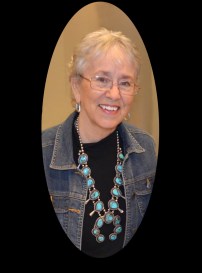 Author cj petterson is the pen name of Marilyn A. Johnston. As cj, she writes contemporary romance novels as well as fiction and non-fiction short stories that have appeared in numerous anthologies. She has served as judge for the Romance Writers of America’s Daphne du Maurier contests. Her works-in-process include a mystery series that features private detective Jannicka “Jake” Konnor.
Retired from corporate life and now living on Alabama’s Gulf coast, Marilyn takes her pen name from her paternal grandmother. She is a member of the international Sisters-in-Crime organization and their online Guppy group, the Alabama Writers Forum, the Alabama Writers Conclave, and a charter member of the Mobile Writers Guild
cjpetterson@gmail.com
Choosing Carter — Kindle / Nook / Kobo / iTunes/iBook
Deadly Star — Kindle / Nook / Kobo
California Kisses 10-book publishers bundle on Amazon 99 cents
blog at: www.lyricalpens.com
Coming in late February 2017—“Bad Day at Round Rock” a short story in The Posse, a Western anthology of tales of action, romance, myth and truth.

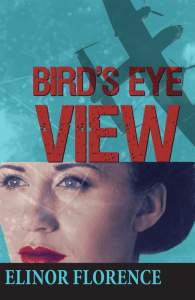 My wartime novel Bird’s Eye View isn’t a classic murder mystery – although I have seen it shelved in the Mystery section of one bookstore – but rather, a whole series of mysteries.
 Elinor Florence is a career journalist who grew up on a farm in Saskatchewan, a former wartime airport. She wrote and edited daily newspapers and magazines across Western Canada, including Reader’s Digest. Married with three grown children, she now lives in the mountain resort of Invermere, British Columbia. Bird’s Eye View is her first novel. It’s available through bookstores or online from Amazon, and as an ebook. Order it here:
