Introducing Write Better Fiction

Introducing Write Better Fiction- Give Yourself Feedback On Your Manuscript

Feedback is an important part of the writing process. There are some elements of your novel you’ll need human feedback for, but there are others you can analyze on your own. Today, I’m kicking off a series called WRITE BETTER FICTION. Every Wednesday, I’ll post on the topic of self-critiquing.

Whether you’re a panster or a plotter, the thrilling moment will arrive when you’ve written a first draft.

Are you ready for beta readers to see your work for the first time?

How do you know when it’s time for an editor and a proofreader?

Are you thinking of hitting the publish button?

If you’re anything like me, you don’t want to share your writing with anyone until you’ve done your best to perfect it. Maybe you’ve read hundreds of writing books, maybe you’ve taken courses and information is spinning in your head, but how do you keep track of the knowledge and ensure you’re using what you’ve learned? With a spreadsheet, of course.

Writing Books
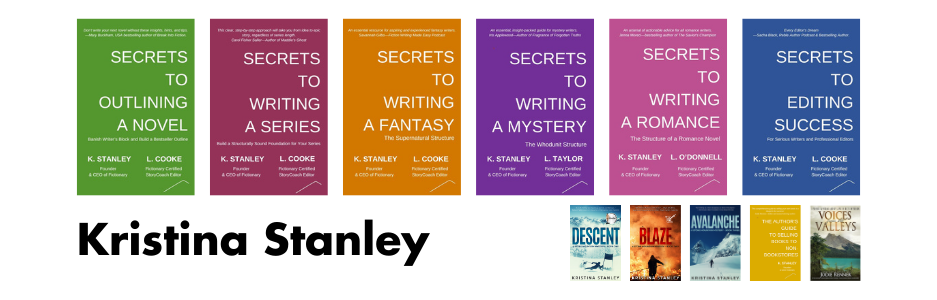
Some of my books


A novel is made of of scenes, and scenes are made up of elements. Over the years, I’ve created a spreadsheet, and every time I learned about a scene element, I added that element to my spreadsheet.

My spreadsheet consists of  65 columns. That may seem like a lot, but each element needs to be considered if you’re writing a scene for maximum reader engagement.

Screen Shot 2015-11-30 at 5.06.20 PM

To make analyzing easier, I’ve broken the spreadsheet into three categories.

  1. PLOT
  2. CHARACTER
  3. SETTING

To quote James Scott Bell in his book, PLOT & STRUCTURE, he says,“Plot happens.” To me that means it’s the action of the story. So every element not included under CHARACTER or SETTING is grouped under PLOT.

Each of these categories has a set of elements, meaning when I work on a scene I can work on more than one element at a time. Over the next 65 weeks or so, I’m going to explain how I use each element in the spreadsheet to strengthen scenes, and thereby strengthen the novel. Hence this is the first in a series of blogs I’ll tag, “Write Better Fiction.”

WHERE TO START WHEN THERE ARE 65 CHOICES

Once I have a completed draft, I look at the most important element of each category. Today I’ll start with PLOT.

The first element under PLOT I evaluate is the purpose of the scene. The purpose of the scene must relate to the overall story. If it’s not driving the story forward, then ask yourself what is the point of including the scene in your novel.

Here are some examples of the way the purpose of a scene can drive the story forward. You can choose one of these to define your purpose or come up with your own definitions.

  • Is the inciting incident
  • Introduces characters
  • Creates an emotional connection between characters and reader
  • Provides character development
  • Establishes setting
  • Introduces or intensifies conflict
  • Builds suspense
  • Establishes mood
  • Reveals a clue
  • Shows a red herring
  • Is the climax
  • Provides resolution

HOW PURPOSE OF A SCENE HELPS WITH THE OTHER ELEMENTS

I articulate the purpose of the scene first, so I can address other elements of the scene and test if they are in line with the purpose.

Let’s say you fill out the list of objects in a scene. You can weigh the objects against the purpose of the scene and see if there is a way to use them to further the purpose. This goes for revelations, tension, conflict, weather, etc. Basically, every scene element can be tested against the scene purpose.

After you whittle down the purpose of a scene to a few words, one of three things will happen.

  1. You’ve got the purpose nailed, and you understand why this scene is included in your novel.
  2. You have a weak purpose, but there is still some value in the scene.
  3. You have no idea what the purpose is.

Screen Shot 2015-11-30 at 4.56.40 PMIf you landed on number 1, give yourself a gold star and move on to the next scene.

Number 2:  consider rewriting the scene, keeping the parts in the scene that further the plot. Or take the important bits and place them in another scene which has a strong purpose. You could also take two scenes with a weak purpose and combine them into one scene to create stronger purpose.

Number 3: consider removing the scene. We all end of with scenes that seemed relevant when we wrote them, but might not work within the novel as a whole. However, don’t delete the scene. Remember to store it somewhere. You’re next novel might have a place for it.

WHAT I DON’T USE THE SPREADSHEET FOR

I don’t use my spreadsheet to evaluate voice, dialogue, balance, style, consistency, etc. For that, I think another human is the best source for feedback.

Using a spreadsheet to force yourself to critique your own writing and give yourself feedback will enable you to write better fiction.

Next week I’ll share with you the #1 question to ask yourself about CHARACTER.

Please comment below and let me know what you think of the advice. Do you agree, disagree or do something different for the purpose of a scene? Do you group elements of a scene in a different way?

Thanks for reading…


Mystery Mondays: C.S. Lakin on Showing Through Your Characters’ Senses

This week I have the pleasure of hosting C.S. Lakin.

C. S. Lakin is a novelist and writing coach who spends her time divided between developing new book ideas and helping writers polish theirs. She is the author of fourteen novels – six contemporary novels, seven in the fantasy/sci-fi genre, and one in historical Western romance. Whether she is exploring the depths of the human psyche and pushing her characters to the edge of desperation, or embellishing an imaginary world replete with talking pigs and ancient magical curses, she is doing what she loves best – using her creativity and skills to inspire and affect her readers.

I was first introduced to C.S. Lakin through her novel Time Sniffers and have been a fan ever since.

Today’s she’s sharing an excerpt from her latest non-fiction book. Just another indication of her willingness to help other authors.

Excerpt from the newest release in the Writer’s Toolbox Series: 5 Editors Tackle the 12 Fatal Flaws of Fiction Writing.

 Fatal Flaws FINAL ebook coverShowing through Your Characters’ Senses

 One of the reasons readers willingly immerse themselves in a story is to be transported. Whether it’s to another planet, another era—past or future—or just into a character’s daily life, readers want to be swept away from their world and into another—the world of the writer’s imagination.

It’s challenging for writers to know how much detail to put in scenes to effectively transport a reader. Too much can dump info, drag the pacing of the story, and bore or overwhelm. Conversely, too little detail can create confusion or fail to evoke a place enough to rivet the reader.

In addition to knowing how much detail to show, writers have to decide what kind of details to use. I often read scenes in the manuscripts I critique, for example, that have characters engaging in lots of gestures, such as rubbing a neck, bringing a hand to a cheek, pushing fingertips together, turning or moving toward something—all for no clear reason.

Showing body movement, gestures, and expressions can be an effective way to indicate a character’s emotional state, but this needs thoughtful consideration so that the gesture or expression packs the punch desired.

It also important to show setting—and not just show it any old way. What is key to creating a powerful setting is to show it through your character’s POV and in a way that feels significant.

Showing Significant Settings

 When is setting significant to the reader? When it’s significant to the character.

That’s not to say every place you put your character has to evoke some strong emotion. A character who goes around gushing, crying, or jumping in excitement over every locale will appear to be missing some marbles.

But just as in real life, places affect us—some more than others. Each of us can think of numerous places in our past that bring a flood of emotionally charged memories. Showing setting colored by a character’s emotions is not only effective and powerful, it also captures real life.

But let’s talk about those other settings. The ones that aren’t emotionally charged. The many places in which you set your characters to play out your scenes. Some of those places are merely backdrops, places your character traverses daily or on occasion. They’re not important, right?

Let me just pose this possibility: even though you’ve thought a bit about the locales for your scenes, it may be that you aren’t truly tapping into the power of setting. In the rest of this chapter, we’ll look at ways to fix that.

Bring the Setting to Life

 You may need to write a scene that shows a tense discussion between two characters. So you stick them in the coffee shop, since it doesn’t matter where you put them. And, hey, a coffee shop makes sense. Everyone goes to them. It shows the characters doing ordinary things.

Sure, put your characters there (but please not twenty times in a novel). Or do something more interesting. I encourage writers to try to think up original, unique settings that bring a character’s bigger world—town, city, region—alive. But even if a writer thinks up fresh and creative locales in which to place her characters, those settings might still come across in a boring, ineffectual way.

But it’s the conversation that matters, the writer argues. That’s what I want readers to pay attention to. The setting is just a backdrop.

In many scenes, that may be true. But if a writer wants to transport her reader, she’ll think about bringing the setting to life via sensory details—which are observed by the POV character.

 Go through your scenes and look for these indications of flawed” telling” instead of showing:

  • Summarizing important moments instead of playing them out in real time
  • Lack of sensory details to bring the scene alive: sights, smells, sounds, and textures, brought out through the POV character’s senses
  • Detailing insignificant actions that aren’t important to the plot or don’t reveal anything helpful about the characters (showing too much)
  • Not starting in the middle of something happening in real time; instead, setting up a scene by explaining and filling in with information
  • Showing characters moving (driving, walking, etc.) from one location to another when those actions are not useful to the story
  • Numerous paragraphs of narrative that summarize interaction between characters and lack actual dialogue, gestures, and/or body language
  • Excessive use of gestures, body language, and “body feelings” to show emotion instead of alternating or replacing with internal thoughts that imply the emotion
  • Showing setting not presented through the POV character and void of sensory detail

Setting is so often overlooked, but it can be a powerful element in your story, so don’t neglect it.

Author C.S. Latin
Author C.S. Latin

S. Lakin is a multipublished novelist and writing coach. She works full-time as a copyeditor and critiques about two hundred manuscripts a year. She teaches writing workshops and gives instruction on her award-winning blog Live Write Thrive.

The latest book in The Writer’s Toolbox Series is now available for sale on Amazon: 5 Editors Tackle the 12 Fatal Flaws of Fiction Writing. Get yours here.

***

Next week on Mystery Mondays we welcome Gloria FerrisWinner of the 2012 Bony Blithe Award forCheat the Hangman” and Winner of the 2010 Unhanged Arthur for “Corpse Flower