Backing Up Your Novel

Do you back up  your novel?

Last night, I was out for dinner and a friend asked me if I kept printed copies of my novels. Since I’ve spent the last five years living on a sailboat, my answer was no.

My friend was incredulous.

Of course, I had to start thinking about it – at three in the morning – when the worry fairy comes to visit.

I back up to an external hard drive.

I email a copy to my dad for safe keeping. While we were living on the boat, I worried a lightning strike would take out all out electronics, so even it my back up was on a separate hard drive, I thought it wasn’t enough.

The question is: do I need a paper copy too?

Thanks for reading . . .

The Writing Process Blog Hop

Calgarian Garry Ryan, author of the Detective Lane mystery series and the Blackbirds Trilogy, asked me to be part of the blog hop. Of course I said yes to Garry. You may have heard of the Crime Writers of Canada. When Garry was the president, I was lucky enough to have him as my mentor as part of the CWC mentorship program. Garry worked by my on my Manuscript, Burnt, which has since been nominated for the Debut Dagger by the Crime Writers Association in the UK. How could I not be excited to follow Garry in the blog hop?

This is your chance to get a looking inside a writer’s  mind, or in this case many minds if you follow the blog hop.

I have tagged two author friends to take part in the blog hop. The bio’s are listed below. Please check out their blogs too 🙂

Now to the reason for the blog hop:

What Am I Working On?

I read somewhere that life as a writer means having homework for the rest of your life. There is aways something to work on, whether it is writing, researching, social networking, learning, editing or proofreading. Then there is the query letter, blurb or synopsis to be written. Now add in my blog. All are part of being a writer and all can be very engaging tasks.

On the writing scene, I currently drafting the fourth novel in the Stone Mountain mystery series. The series takes place in a fictitious ski resort located in the depth of the Purcell Mountain Range in British Columbia, Canada.  The protagonist, Kalin Thompson, is the director of security and human resources at the resort in continually finds herself torn between running investigations and her friends who live in the small community. She can’t look for suspects without looking at one of her friends.

For editing, I am working on Look the Other Way. The novel takes place in the Bahamas and is a spin off from the Stone Mountain mystery series.

How Does My Work Differ From Others in It’s Genre?

Drugs and the drug industry gets a lot of focus in the BC press. i try to stay away from the topic. There are many great books by BC novelists that delve into this area. I’ve chosen other crimes, typically the type committed by an every day individual who has been pushed beyond their limits. I try to make wilderness living and wildlife interaction a character within my books.

Why Do I Write What I Do?

One night, while I was living in Germany, I tried to go to bed early. A company driver was to pick me up at 4 a.m. to take me to the airport. I was nervous about a presentation I was to make in London, England and wanted a good night sleep. Here’s where a small decision I made changed my future path. I picked up a novel, Moonlight Becomes You, by Marry Higgins Clark. It starts out with a woman trapped in a coffin. Now how could I put that down before finding out how she got out of the coffin. I read through the night until my car arrived. Exhausted, but excited, I knew I wanted to write something that would keep a person from going to sleep, even when they knew they needed to be their best for the coming day.

I write about the Purcell Mountain range because it’s a magical place. I write about human resources and security at a ski resort because I have experience in the field. My job at a ski resort was the best job of my life and writing about the industry is a way for me to keep it with me.

How Does My Writing Process Work?

Variety. That’s the key for me. Morning’s are usually better for me if I want to get more words on the page. By the end of the day, I’m better at researching or working on my online platform. I like to write without interruption, as I’m sure most of us do, but I’m pretty good a tuning out the world around me if I can’t find a quiet place. Mostly I write on a computer, but sometimes a pen a paper get my creativity moving.

To create a first draft, I decide on a crime and start writing. I develop my characters as I go. By the end of the first draft, I usually know who committed the crime, but that might change in a later draft. Once the draft is done, I create a spreadsheet and start a detailed analysis of each scene. This is where I look for the empty stage, errors in timing, too much or too little of something and so on. Once I’ve written several, okay many, drafts, I send the manuscript to my favourite readers. At this stage I ask for them for notes on when they think they know who committed the crime, if they skim any sections, if something is unclear, and if they feel connected to the characters. i don’t ask for proofreading at this stage. That comes later before I’m about to submit to my agent.

As soon as I submit to my agent, I start on my next novel. The writing business is slow, and this is a good time to focus on new work and not agonize about the words I’ve sent out.


Fellow author friends are:

Charlotte Morganti will post on July 28th:

Charlotte Morganti has been a burger flipper, beer slinger, lawyer, and seasonal chef de tourtière. And, always, a stringer-together-of-words. Her first novel, The Snow Job, was a finalist for Crime Writers of Canada’s Unhanged Arthur award in 2014 for the best unpublished crime novel. You can find out more about Charlotte’s fiction at www.charlottemorganti.com.

Brenda Chapman will post on August 11th.

Brenda Chapman began her writing career with the Jennifer Bannon mysteries for young adults. More recently, she writes the Stonechild and Rouleau police procedural series – Cold Mourning was released from Dundurn in 2014 and Butterfly Kills will be on the shelves in early 2015. Brenda also writes the Anna Sweet mystery novellas for Grass Roots Press, with My Sister’s Keeper shortlisted for a 2014 Arthur Ellis Award. Brenda is a former teacher and currently works as a senior communciations advisor in Ottawa.
Brenda’s blog link:  http://brendachapman.blogspot.ca/

Thanks for reading . . .


RePost of Capital Crime Writers Audrey Jessup Announcement.

Thank you to Capital Crime Writers for hosting the Audrey Jessup short story contest.  Also thanks to the judges who took the time to read all of the entries and thanks for the lovely evening out.

The photo is me looking surprised and happy 🙂

This is the blog they posted on Monday.

Congratulations to our Audrey Jessop Short Story Prize winner!


Kristina Stanley Audrey Jessup


Kristina Stanley walked away with the 2014 Audrey Jessop Short Story prize for her submission, “When a Friendship Fails”.

The awards dinner at The Heart & Crown in the Byward Market capped off a Capital Crime Writers’ mayhem-filled year.

A huge thanks to our judges and all participants. And it’s never too early to start working on your submission for next year.

Here’s the complete list of prize winners and honourable mentions:

FIRST PRIZE:   ‘When a Friendship Fails’ by Kristina Stanley

SECOND PRIZE:  ’The Moment It Fell’ by Wynn Quon

THIRD PRIZE:  ’The Ride Home’ by Linda Standing

HONOURABLE MENTION:  ’Act the Part’ by Jennifer Jorgensen

HONOURABLE MENTION:  ’Scapegoat’ by Nicholas Ashton

How to Make the Most of a Writer’s Conference

Thinking of attending a writer’s conference?

You can learn a lot, make contacts and have fun, but how do you make the most of your time?

Here are a few tips:

  • Read the program before attending and decide who you want to meet. If there is a photo of the person/people you want to meet, it will help you pick them out of the crowd.
  • Ask yourself why you want to meet this person and prepare your questions ahead of time. You might only get a few minutes in a hallway, so make the most of it.
  • Often there are several presentations at the same time, so read the synopsis and choose what’s best for you.
  • Bring business cards. If you have any publications or writing awards, print these on the back of your card. You may get the chance to hand your card to and agent or a publisher and this will help them remember who you are. Maybe your card will stand out from the crowd.
  • Don’t be shy. Everyone is there to make contacts, so walk up to  groups of people you don’t know, introduce yourself. Ask what they write as an icebreaker. Who doesn’t like talking about their work?
  • If there is a way to volunteer, do so. It’s an easy way to meet people if you are shy. Sitting at a booth means other people come and talk to you. Working with other people gives you the chance to get to know them.

I hope this helps.

Thanks for reading . . .

Thanks to HSW Literary Agency

Life as a writer is often spent behind closed doors working hard, but there are moments when a writer catches a glimpse of hope that her work may actually entered the world of the published.

Margaret Hart and Natalie St. Pierre at the HSW Literary Agency have been working hard behind the scene to help me get my novels published.

Their last post at HSW Literary Agency:News certainly made me smile, so here’s a shout out to say thanks.

Sometimes a girl just has to share her happiness.

Thanks for reading . . .

Here is what HSW wrote about me:

Persons Unknown? Crime Writer Kristina Stanley Makes Her Name

Author Kristina StanleyThe life of an author, quietly perfecting her craft, is often anonymous. But the efforts of crime writer Kristina Stanley are at last getting the attention they deserve: Stanley has three works up for separate crime writing awards!

Descent, the first book in Stanley’s Kalin Thompson series, is nominated for the Unhanged Arthur, the Arthur Ellis Award recognizing the year’s most promising piece of unpublished crime fiction. Over in the UK, the Crime Writers’ Association honours book two in the series, Burnt, with a nomination for their Debut Dagger. Finally, just in time for Short Story Month, Stanley’s “When a Friendship Fails” is nominated for the Capital Crime Writers‘ Audrey Jessup Short Story Award.

Congratulations, Kristina! We anxiously await the results!

Farley’s Friday: My Human Is Doing The Happy Dance

Farley here.

My human is singing “Debut Dagger Shortlist” and doing the happy dance. Sometimes Kristina looks really silly, but she’s so happy I won’t mention that to her.

I give her my confused look to ask her what’s going on. Seriously, she’s freaking me out.

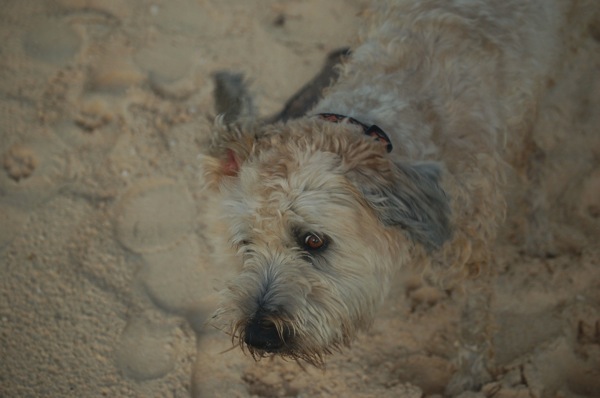
Farley looking interested

She makes we wait until I settle down. Then she says, “My novel BURNT has been shortlisted for the Debut Dagger Award.”

“Huh,” I bark.

“It’s from the Crime Writers’ Association in the UK for unpublished authors.”

I decide I better do the happy dance too.

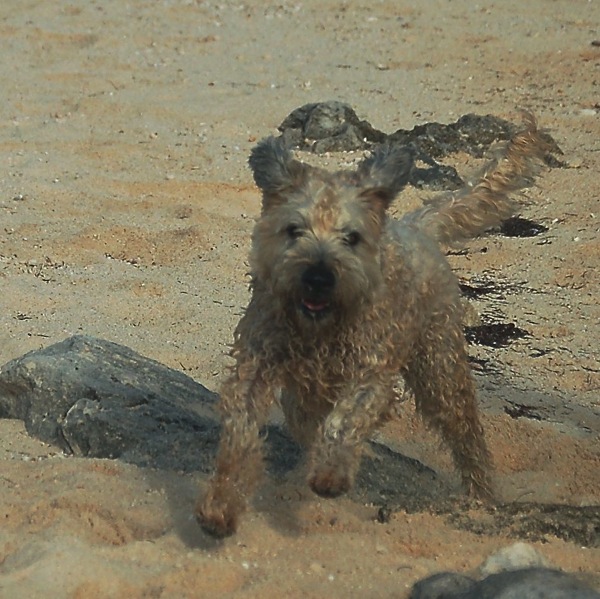
Farley Happy Dance

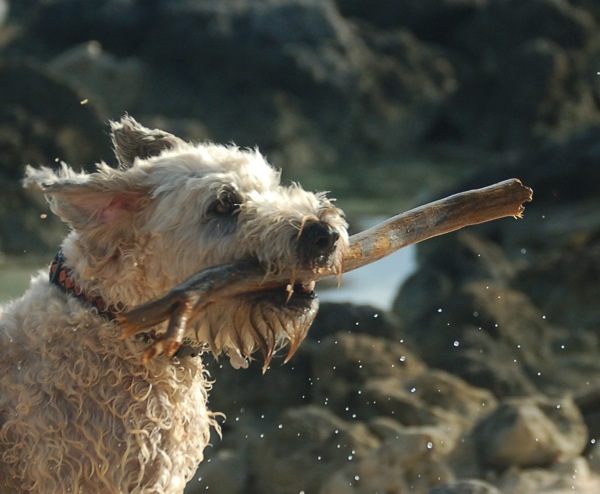
Then I bring her a present. Who doesn’t like an already chewed stick?

Farley With Stick


Well apparently Kristina. She won’t chew it, but she’s still dancing.


Woof Woof


See Mystery Fanfare: CWA Nominations

He Said/She Said When Reading Aloud

Last Monday, I wrote about reading aloud. I’m on a bit of a discovery mission and figuring out how to do this well.

I think if you’re an actor or have training as an actor, this might come easy to you. For those of us that have only read aloud to children, it’s hard.

After creating a recording of a short story, I quickly discovered listening to a story is different than reading a story.

When a person reads the story they see the paragraph breaks between speakers. This tells them the speaker has changed. When listening the person doesn’t have the visual to aid in understanding the change of character.

So if you’re not a person who can talk in many voices, what do you do?

I’m trying to add he said/she said in the audio version. Sometimes placing the tag before the spoken sentence instead of after of adding the tag near the beginning. For example:

“Thanks,” Bob said. “I need to hear that.”

The other option is to add a character movement or action before they speak. Something simple like: She sighed.

I’m not sure if this is a proper method for reading aloud.

Any suggestions on how to do this?

Thanks for reading . . .

To Plot or Not To Plot

Do you plot your story before writing it or do you write and then plot?

I write first. Then I get serious and look at my plot after I have a first draft written.

There is lots of writing advice out there telling writers to have major events at 25%, 50% and 75%. These are major plot points where something happens to change the direction of the story or the character arc.

So I went through my novels to see if I’d done this and was surprised to find I was close. I ended up with plot points between 22% and 27%, 45% and 53% and again between 72% and 77%. I figure this is close enough. There must be something about reading many books that makes this structure appear naturally when writing.

I used the kindle to find look at the percentages. This was easier than counting words. Now in my scrivener, I add a per cent number at each chapter heading. One more way to see if my writing is on track.

So, how to you know if you’re plot is laid out properly? and does it matter?

Thanks for reading . . .

Writing Novels With A Spreadheet

If you’ve been reading my blog, you know I love to write with a spreadsheet. I’m still amazed by how helpful  I find the tool and that I still find new ways to use it.

One of the columns in my spreadsheet lists objects. Originally I put this column in to make sure my scenes weren’t empty sets. I also list smell, sights, and sounds for this purpose.

Sometimes with the objects, I’ll use the object in a later scene. Like an innocent little baseball bat. The list reminds me to check what I’ve placed in an earlier scene and see if I can use it in an inventive and unusual way in a following scene. Like an innocent little baseball bat that’s not so innocent.

I knew all this. What I discovered this week is the object column can also help me find errors.

In one scene I have two characters eating lunch together. I list a fork. Later in the scene, I list a spoon as an object. But wait! I’m writing about the same character eating the same meal, so why has her utensil changed?

I went back in the scene and discovered I’d changed the utensil. Silly, but unnoticed when I read the scene without listing objects.

I love discovering new ways my spreadsheet can help.

Let me know if you use a spreadsheet and how it helps you write.

Thanks for reading . . .

Related articles:

Writing a Series: Spreadsheet

Keeping Track of Scenes

How to Use a Spreadsheet for Your Synopsis

Tips For Ordering Scenes In A Novel

Why Blog About Something You Want To Learn?

I had a friend in medical school who told me when she was learning a new medical procedure she was taught:

  1. Learn one
  2. Teach one
  3. Do one

I think this process can be applied to learning grammar and punctuation. When I’m unsure about a rule, the first thing I do is check my grammar books and read about it. This is the Learn One phase.

Next, I blog about it. If I can explain the rule, then I probably understand it. This is the Teach One phase. If you’re doing this, be careful to use your own words. Don’t cheat and look at the grammar book for help. You need to be able to explain the rule without any aids. Sometimes I don’t blog about the rule, but I do try to write the rule in my own words. Even if it’s on a scrap piece of paper, it helps me remember the rule.

Lastly, I write using the rule. This is the Do One phase. You can edit and proofread to ensure you’re using the rule properly too. I consider editing part of the Do One phase.

I figure if this is how medical students learn, it must work for other areas of knowledge too.

Do you have any tips for learning?

Thanks for reading . . .