
Why Victims and Culprits are the Heart of Your Mystery
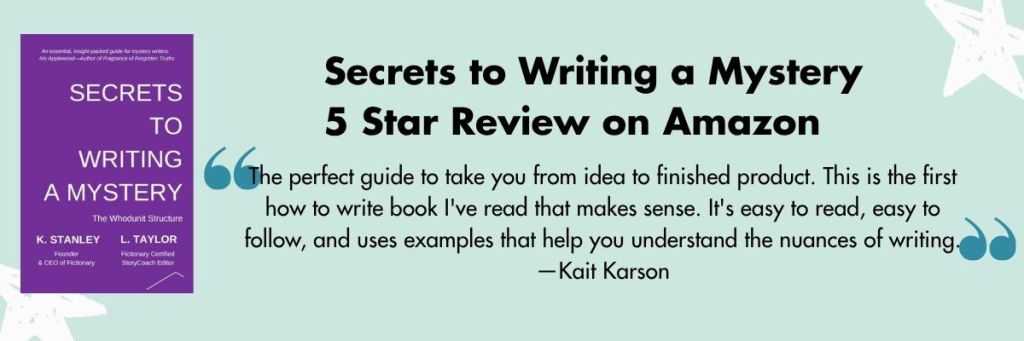
Are you struggling to capture your story in your skeleton blurb? In Secrets to Writing a Mystery, we dive deep into the mechanics of suspense to help you find your mystery.
One of the most vital lessons for any aspiring detective novelist is understanding that a crime is only as compelling as the people involved. To create a page-turner, you must look beyond the “what” and focus on the “who.”
The Myth of the Innocent Victim
A common mistake in early drafts is treating the victim as a mere prop, a body on the floor meant only to kick off the investigation. However, the most memorable mysteries feature victims whose own actions, flaws, and “fatal flaws” directly contribute to their demise. When a victim has agency, they create the very motives, opportunities, and means that lead to the crime.
Take, for instance, the blackmailing Niall in Murder in an Irish Village or the cruel, drug-dealing Andie in A Good Girl’s Guide to Murder. These aren’t just targets; they are catalysts. By giving your victim a complex, perhaps even morally gray history, you naturally generate a wider pool of suspects and more visceral motives. When you assign these traits, you ensure your victim isn’t just a statistic, but the engine of the story.
Humanizing the Culprit
Just as the victim shouldn’t be a saint, your culprit shouldn’t be a cartoon villain. Pure greed or inexplicable rage can feel thin to a modern reader. The most chilling and effective murderers are those driven by deeply human, relatable stakes: protection, desperation, or a twisted sense of justice.
Think of Alex in Vera Wong’s Unsolicited Advice for Murderers, who kills to protect others from his son’s predatory behavior, or Ian Hind in Missing, Presumed, whose desperation to maintain his professional facade leads to a fatal choice. When a reader can understand, even if they don’t condone, the “why” behind the killer’s actions, the mystery gains a layer of tragic depth that lingers long after the final page.
The Mystery Skeleton Blurb Uncovered
Developing these complex dynamics is just the beginning. You can turn these character studies into a tight mystery skeleton blurb and eventually a full-length novel. The interplay between your culprit and your first victim can give you the first version of your skeleton blurb. With this information, you know what crime the sleuth must solve. You may also have a glimmer of how far the culprit will go to hide their crime, leading to potential stakes if the sleuth can’t uncover the culprit.
My next blog will focus on introducing the five key scenes that create the main structure for your mystery novel. If you can’t wait, pick up a copy of Secrets to Writing a Mystery today and start building a crime that no reader can put down!

Until next time, Lisa.

From the moment the children’s librarian walked a young bookworm upstairs to the Adult Department and introduced her to the mystery section…Lisa Taylor has been hooked on the genre.
For years, Lisa was an educator and librarian, honing her skills in helping readers and writers develop with curiosity and creativity. Now as an editor and writing coach, Lisa works with a small publishing house as well as being a Fictionary Certified StoryCoach Editor and Certified Instructor.
Secrets to Writing a Mystery is Lisa’s first published book. Along with editing and coaching, she is currently writing an amateur cozy mystery series set in Northern Ontario.
Want to Learn to Self-Edit?
Join the Fictionary School for Writers and Editors

Discover more from Kristina Stanley
Subscribe to get the latest posts sent to your email.

