To write a book, start with structure, not chapter one. Write a one-sentence skeleton blurb, plan your five story arc scenes, place the inciting incident before 15% of the book, and then write scene by scene with a POV goal in every scene. A plan gives your book a shape before you write the first word of the draft.

Why do so many first novels stall?
Most first novels stall because the writer starts typing chapter one with no map. Without a plan, the story drifts, the middle sags and the writer loses track of where the book is going.
A book that holds readers has a clear shape. You can plan that shape before you write a word of the draft, and the plan is what keeps you writing when the excitement of a new idea fades.
Here are the four steps to start with:
- Write your skeleton blurb.
- Plan your five story arc scenes.
- Place the inciting incident before 15% of the book.
- Write scene by scene, with a POV goal in every scene.
What is a skeleton blurb?
A skeleton blurb is a one-sentence summary of your story that names your protagonist, the story goal and the story stakes. Use this formula:
[Protagonist] must [story goal]; otherwise, [story stakes].
Here’s an example for an invented mystery: A small-town baker must prove her brother didn’t set the fire that destroyed her bakery; otherwise, he’ll go to prison for a crime he didn’t commit.
If you can’t write your skeleton blurb yet, you don’t know your story yet. That’s fine. Work out who your protagonist is, what they must achieve and what they’ll lose if they fail. Then write the sentence before you plan anything else.
What are the five story arc scenes?
A story has five story arc scenes: the inciting incident, plot point 1, the middle plot point, plot point 2 and the climax. These five scenes are the map of your book. Plan them first, and every other scene has something to build toward.
- Inciting incident: the event that disrupts the protagonist’s ordinary world and starts the story.
- Plot point 1: the protagonist commits to the story goal, and there’s no going back.
- Middle plot point: the story shifts, and the protagonist moves from reacting to acting.
- Plot point 2: a major setback that pushes the protagonist toward the final confrontation.
- Climax: the protagonist faces the biggest challenge of the book, and the story goal is won or lost.
You don’t need to know every scene in between before you start writing. You need these five, because they hold the story together.
Where should the inciting incident go?
The inciting incident belongs before 15% of the book. Readers need a reason to keep turning pages, and the inciting incident gives them one.
Here’s what 15% looks like in practice:
| Book length | Inciting incident by |
|---|---|
| 70,000 words | about word 10,500 |
| 80,000 words | about word 12,000 |
| 300 pages | about page 45 |
If your inciting incident arrives later than that, look at your opening chapters. Backstory, setup and travel scenes often push the real start of the story too far back.
What does it mean to write scene by scene?
Writing scene by scene means drafting your book one scene at a time, and giving every scene a POV goal. The POV goal is what the point-of-view character wants in that scene.
A POV goal keeps something at stake in every scene. When the POV character wants something, readers wonder whether they’ll get it. When a scene has no POV goal, nothing is at risk, and readers start skimming.
Before you write each scene, answer two questions:
- What does the POV character want in this scene?
- What stands in the way?
Once you can answer both, you’re ready to write the scene.
What does an early inciting incident look like in a real novel?
Freida McFadden’s thriller The Housemaid places its inciting incident early. In the opening chapters, Millie is hired into the Winchester house.
From that moment, the story has somewhere to go. Millie’s new job disrupts her ordinary world, and readers want to know what waits for her inside that house. The early start is a big part of why the book is so hard to put down.
Where can I learn every step of writing a book?
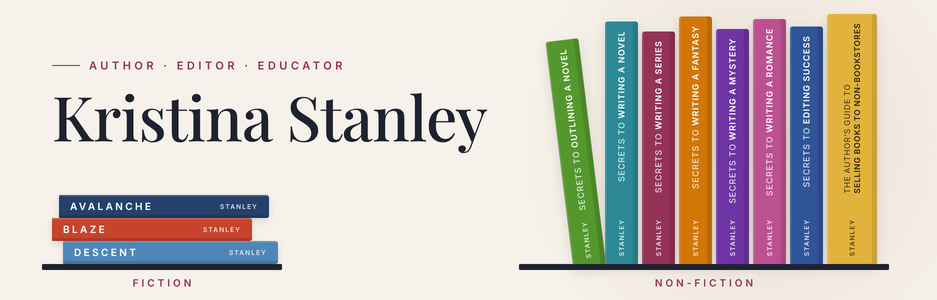
Secrets to Writing a Novel walks you through each step in this post, from your first idea to a finished draft. You’ll learn how to write your skeleton blurb, plan your five story arc scenes and build every scene around a POV goal. You’ll overcome writer’s block using this Fictionary Method.
Get your copy of Secrets to Writing a Novel
What’s stopping you from starting your book? Tell me in the comments.
Frequently asked questions about writing a book
Do I need a full outline before I write a book?
No, you don’t need to plan every scene before you start. You do need your skeleton blurb and your five story arc scenes. Those give you a map, and you can discover the scenes in between as you write.
What if I can’t write my skeleton blurb?
If you can’t write your skeleton blurb, you don’t know your story yet. Answer three questions: Who is your protagonist? What must they achieve? What will they lose if they fail? Your answers become the sentence.
Should I start writing my book at chapter one?
Start with structure, not chapter one. Once your skeleton blurb and five story arc scenes are in place, chapter one is much easier to write, because you know where the story is going and how soon the inciting incident must arrive.
Can I change my story arc scenes while I write?
Yes. Your plan is a map, not a contract. If a better idea comes up while you’re drafting, update your skeleton blurb and story arc scenes so the whole book still fits together.
What is a POV goal?
A POV goal is what the point-of-view character wants in a scene. Every scene needs one, so something is always at stake and readers keep turning pages.
About the author
Kristina Stanley is an author and editor, and the founder and CEO of Fictionary. She built Fictionary around the method she edits with: the Story Arc and the 38 Fictionary Story Elements. Her book Secrets to Writing a Novel, part of the Write Novels That Sell series, walks through the method step by step.
Share this:

Discover more from Kristina Stanley
Subscribe to get the latest posts sent to your email.