Today is the day! Imajin Books is hosting an online Christmas Party to celebrate 2015. Just click the banner to join.
Many of Imajin Books’ authors will be at the party including the International Best-Selling Author Cheryl Kaye Tardif, who also happens to be the CEO of Imajin Books.
Thanks for reading and hope to see you at the party!
It’s time to celebrate the first 6 months of Mystery Mondays. Leading us to the end of the year is Laurence St. John with the final Mystery Monday of 2015. He has some excellent advice on dealing with writer’s block.
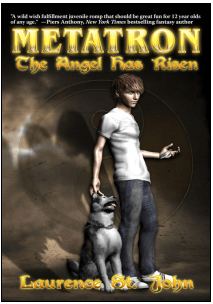
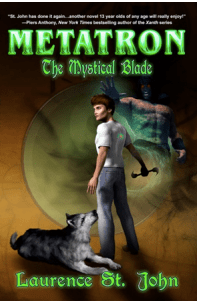
But first, Laurence is the author of the young adult fantasy/sci-fi novel series Metatron. Click on the book covers to find the novels on Amazon. Just remember, Christmas is coming soon, and these books would make awesome gifts…
The Angel Has RisenThe Mystical Blade
My Secret Remedy for Writer’s Block by Laurence St. John:
For writers or even kids in school working on an essay or any other writing assignment – I’m sure at least one point in time while writing or in school you have had writers block. I did – several times when I began by writing career. When I was in school, teachers told me to keep writing/typing stuff no matter if it made sense or not. The purpose behind it was to keep my mind active. After a few minutes or even longer for some, something I wrote would spark an idea to get me back on track on what I was originally writing. Early in my writing career it was recommended to me that I should walk away from my work and take a break. However, I didn’t do what I was told – sshh, don’t tell.
My secret…
First of all, I don’t have time to walk away from my work when I know I have a personal deadline to attain. Therefore what I do for writers block is to metaphorically kill two birds with one stone. I will run on my treadmill for a few minutes to get my heart rate up. Or instead of running I will perform sit-ups and push-ups. This gets my blood flowing as well as my mind. From what I have read, exercise triggers a kind of chain reaction beginning with the release of chemicals that stimulate increased blood flow, which in turn causes the brain to perform more efficiently in numerous ways.
Exercise is my remedy for writers block.
Bio: Laurence A. St. John was born on January 11, 1965 in Toledo Ohio. Laurence has one older brother and two younger sisters. Laurence along with his parents, brother and sisters moved once while growing up to Genoa Ohio, just south of Toledo. While attending Genoa Area schools, he was active in track, football and baseball. Later, after he graduated from Genoa High School (Comets) in 1983, he worked for a few manufacturing companies.
At the age of 23 and after three years of dedication, hard work and sweat, in 1988, Laurence received his first-degree black belt (Shodan) in Tae Kwon Do. This gave him the self-confidence and perseverance needed to surmount anything that came his way.
When Laurence was 25 years old he fell in love then married the love of his life, Julie in 1990. He then adopted her two young wonderful children Joe and Jan shortly after.
Out of high school for nearly fifteen years and after persuaded by his former manager, Laurence attended Owens State Community College where he obtained an Associates Degree in Microcomputer Business Systems while working full-time. In addition to computer classes, he enjoyed composition classes where he could free his mind and write what he wanted.
While working in the steel processing business for almost fifteen years, Laurence’s place of employment changed hands, for the third time in 2006; fighting for his job, again. In the same year his first granddaughter, Kendall, “Papa’s Angel” was born. He described this as one of the most uplifting moments of his life. In addition, it was during this time when his emotions were running wild; he became inspired as well as determined to write his penned-up thoughts on paper.
Nearly four years later, he had completed his first middle grade/teen fantasy/sci-fi novel, Metatron: The Angel Has Risen. In addition his second novel, Metatron: The Mystical Blade was published in August 2014. The next Metatron novels in the series are projected to be published in 2016 and 2018.
Laurence currently lives in Northwood Ohio with his wife of 26 years, Julie. His son Joe is married to Cari and they have three daughters, Kendall, Sadie and Harper. His daughter Jan is married to Andrew and they have a son Eli and a daughter Evelyn. Laurence currently holds the position of Administrations Manager at Precision Strip, Inc. in Perrysburg Ohio, where he works full time. He continually writes in his spare time; weekends and after work, and is endlessly inspired by his five grandkids Kendall, Elijah, Sadie, Evelyn and Harper.
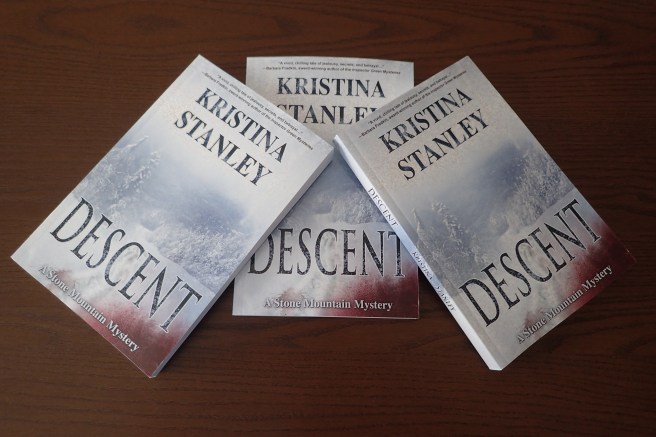
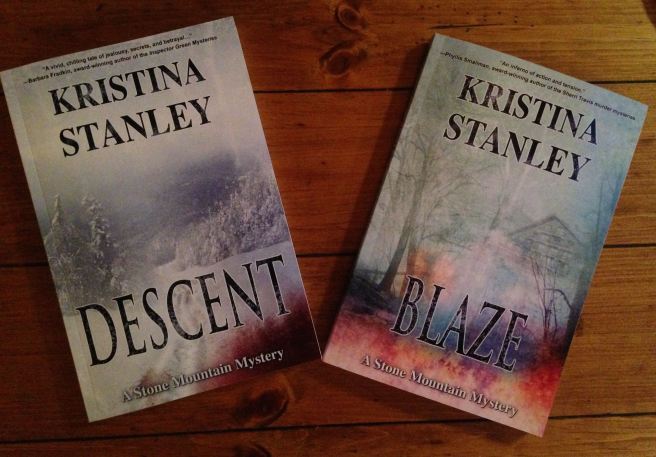
Find out what happened in Kaln’s life on the day Jack died and in the process you have a chance to win a copy of DESCENT. I’m guest blogging at: http://drusbookmusing.com/2015/12/10/kalin-thompson/ and there is a contest…
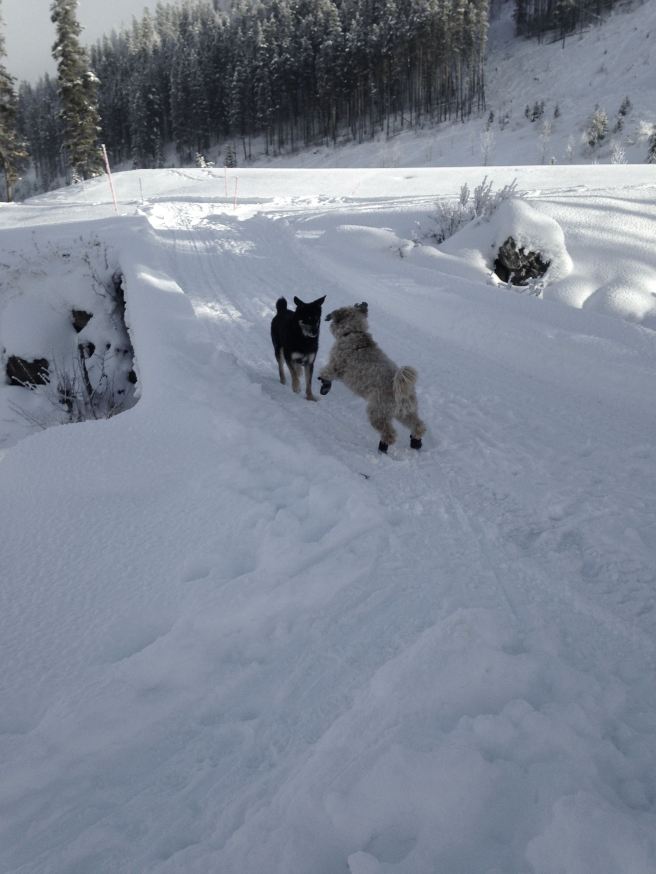
The sun rises over the mountain peaks just as I hear a bark. You’d think it was early, but it’s already 10:30. We have short days up north, especially in-between the mountains.
The temp is well below zero. The groomers are getting the runs ready for skiing. And I’m minding my own business.
There it is again. A bark. I don’t smell any humans other than Kristina, so who’s out here alone?
“It’s me, Max,” my neighbour barks.
Clearly, he’s escaped again and is heading our way. Before Kristina can react and send him home, I run.
“I’m coming,” I bark. Kristina, with her humans legs, is slow. I slip around her before she can catch me and head his way.
Max’s owner yells for him to come.
“Ignore him,” I bark.
He glances once in the direction of home, once back at me, and says, “Let’s go.”
Kristina has her phone out. She’s going to tell on Max, but she’s smiling. I know she’ll let us play, and I love to play with Max.
Are you trying to figure out how to self-critique your writing?
Write Better Fiction is a series focussing on how to give yourself feedback.
Last week on Write Better Fiction we covered using a spreadsheet to critique your manuscript.
As you remember, we broke each scene in a novel into three categories.
PLOT
CHARACTER
SETTING
There are other elements of a scene I believe you’re better off getting feedback from people, meaning editors or beta readers, as opposed to using a spreadsheet to organize your thoughts, so if you think something is missing from my list, that’s probably why. But if you’re not sure, just let me know in the comments below and we can discuss the idea.
As promised, I’m going to give you the #1 question to ask yourself for each scene element under the category of CHARACTER.
WHO HAS THE POINT OF VIEW?
According to my research, it’s generally agreed upon that each scene should be written from one character’s point of view (POV). Of course, it’s up to you if you want to follow that advice or not.
I believe you should make a conscious choice. If you want to keep your writing tight and the reader engaged, you should at least understand if you’re writing in one POV and if not, when you change POV do so consciously.
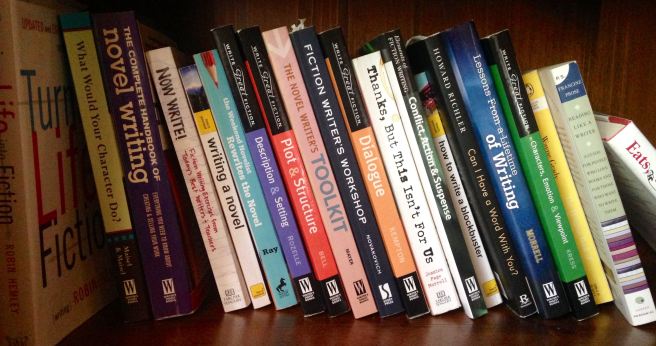
There are many books written about what POV, so I’m not going to cover the topic here. I’ll list some of the books I’ve read on point of view at the end of the blog.
THE SPREADSHEET
Is the point of view in the best order for pacing?
If you write from only one POV, then you don’t need to include this column.
Let’s assume you have multiple POVs. You can quickly check the POV column and evaluate the order of the POV scenes.
If you plan to change POVs the generally accepted writing advice is to do so early in your novel. Making a POV change 50% into the novel might jar your reader out of the story.
Too many scenes in one POV before switching to another can cause the same issue.
The genre you write in may influence how you use this column. In a romance novel you might want to give the female and male protagonists (read love interests) alternating scenes. Check if you’ve done this and if they each got a fair number of scenes.
SORTING THE SPREADSHEET
Once I’ve entered a POV for each scene, I sort the spreadsheet by that column. It now tells me how many POV scenes each character has and how many different points of view I’ve written in.
Who is your main protagonist? Does this character have the majority of scenes? If not, evaluate whether this character should be your main protagonist. If the answer is yes, you can review scenes where the protagonist is not your POV and determine if you can rewrite the scene from his/her point of view.
How many point of view characters is too many? That’s up to you as a writer, but if you’re getting feedback from your readers that they have trouble keeping track of your characters or lose interest in the story because of a point of view change, then the spreadsheet can help you figure out how to improve.
Do you have any characters that only one scene where they are the point of view character? Here’s your chance to reduce the number of POVs. Review the scene and determine if you can write it from another character’s point of view, perhaps one that has quite a few scenes.
BOOKS I’ve read on POV:
The Power of Point of View by Alicia Rasley
Characters and Viewpoint by Orson Scott Card
Characters, Emotions and Viewpoint by Nancy Kress
Next week I’ll share with you the #1 question to ask yourself about SETTING. Using a spreadsheet to force yourself to critique your own writing and give yourself feedback enabling you to write better fiction.
Please comment below and let me know what you think of the advice. Do you agree, disagree or do something different to evaluate point of view?
Today we welcome Toronto Author Howard Shrier. I had the pleasure listening to Howard speak about Buffalo Jump at The Scene Of The Crime on Wolf Island, Kingston, Ontario and never dreamed I’d be hosting him on my blog. Howard writes the Jonah Geller series.
Howard is sharing some of his insight today, but if you’re interested in more…Howard teaches a Mystery Writing Workshopat the University of Toronto.
TOP TEN RULES OF WRITING BY HOWARD SHRIER
1.Create characters with strong needs and send them on a journey worth documenting and telling
2. Place significant obstacles in their path and allow them to reveal their characters through the actions they take to get around them.
3. Do enough research to be authoritative and plausible, but keep it to a minimum in the text.
4. Read voraciously, epsecially but not exclusively in your chosen field.
5. Tell your story in the most compelling voice you can muster. Have a sense of urgency, even if it’s buried. And develop an ear for dialogue if you don’t already have one.
6. As Hemingway and so many others have noted, the best writing day ends when you know how you’re starting tomorrow.
7. Outlining, even if it’s in your head, can save you months of grief. The process of building a story in notebooks, all the aha moments, can be every bit as creative as writing itself.
8. Throw everything you can at the first draft. You can always cut it later.
9. Cut it later. And often.
10. Do not, under any circumstances, make the mistake I did and quit your day job before your first book comes out.
11. Bonus: A first draft is just that. Once you finish it, get people to read it. Take their comments graciously, even if you don’t agree with them. Sleep on them. See if they make sense in the morning. For me, revisions are where the best writing happens. Cutting what’s not needed, tightening the springs that provide tension, sharpening dialogue. As much as you revise your completed text, polish your first few chapters to a fine point. Bring them to a note of suspense, perhaps the incendiary incident we’ve talked about. Create a worthy sample of 5,000-10,000 words to show an agent if you get the chance.
Howard Shrier Bio
Howard Shrier is the author of four acclaimed novels featuring Toronto investigator Jonah Geller: Buffalo Jump (2008), High Chicago (2009), Boston Cream (2012) and Miss Montreal (2013). A two-time winner of the Arthur Ellis Award for excellence in crime fiction, he has also written the standalone thriller Lostport, and is now working on a crime novel set in Montreal, 1950, when it was Canada’s Sin City.
Howard was born and raised in Montreal, where he earned an Honours Degree in Journalism and Creative Writing at Concordia University in 1979. He started out as a crime reporter at The Montreal Star and has since worked in print journalism, theatre and television, sketch comedy and improv, and corporate and government communications. Howard now lives in Toronto with his wife and two sons and teaches writing at University of Toronto’s School of Continuing Studies. He also works with mystery writers on their manuscripts to bring them up to professional standards. You can find out more about his work at howardshrier.com.
Introducing Write Better Fiction- Give Yourself Feedback On Your Manuscript
Feedback is an important part of the writing process. There are some elements of your novel you’ll need human feedback for, but there are others you can analyze on your own. Today, I’m kicking off a series called WRITE BETTER FICTION. Every Wednesday, I’ll post on the topic of self-critiquing.
Whether you’re a panster or a plotter, the thrilling moment will arrive when you’ve written a first draft.
Are you ready for beta readers to see your work for the first time?
How do you know when it’s time for an editor and a proofreader?
Are you thinking of hitting the publish button?
If you’re anything like me, you don’t want to share your writing with anyone until you’ve done your best to perfect it. Maybe you’ve read hundreds of writing books, maybe you’ve taken courses and information is spinning in your head, but how do you keep track of the knowledge and ensure you’re using what you’ve learned? With a spreadsheet, of course.
Some of my books
A novel is made of of scenes, and scenes are made up of elements. Over the years, I’ve created a spreadsheet, and every time I learned about a scene element, I added that element to my spreadsheet.
My spreadsheet consists of 65 columns. That may seem like a lot, but each element needs to be considered if you’re writing a scene for maximum reader engagement.
To make analyzing easier, I’ve broken the spreadsheet into three categories.
PLOT
CHARACTER
SETTING
To quote James Scott Bell in his book, PLOT & STRUCTURE, he says,“Plot happens.” To me that means it’s the action of the story. So every element not included under CHARACTER or SETTING is grouped under PLOT.
Each of these categories has a set of elements, meaning when I work on a scene I can work on more than one element at a time. Over the next 65 weeks or so, I’m going to explain how I use each element in the spreadsheet to strengthen scenes, and thereby strengthen the novel. Hence this is the first in a series of blogs I’ll tag, “Write Better Fiction.”
WHERE TO START WHEN THERE ARE 65 CHOICES
Once I have a completed draft, I look at the most important element of each category. Today I’ll start with PLOT.
The first element under PLOT I evaluate is the purpose of the scene. The purpose of the scene must relate to the overall story. If it’s not driving the story forward, then ask yourself what is the point of including the scene in your novel.
Here are some examples of the way the purpose of a scene can drive the story forward. You can choose one of these to define your purpose or come up with your own definitions.
Is the inciting incident
Introduces characters
Creates an emotional connection between characters and reader
Provides character development
Establishes setting
Introduces or intensifies conflict
Builds suspense
Establishes mood
Reveals a clue
Shows a red herring
Is the climax
Provides resolution
HOW PURPOSE OF A SCENE HELPS WITH THE OTHER ELEMENTS
I articulate the purpose of the scene first, so I can address other elements of the scene and test if they are in line with the purpose.
Let’s say you fill out the list of objects in a scene. You can weigh the objects against the purpose of the scene and see if there is a way to use them to further the purpose. This goes for revelations, tension, conflict, weather, etc. Basically, every scene element can be tested against the scene purpose.
After you whittle down the purpose of a scene to a few words, one of three things will happen.
You’ve got the purpose nailed, and you understand why this scene is included in your novel.
You have a weak purpose, but there is still some value in the scene.
You have no idea what the purpose is.
If you landed on number 1, give yourself a gold star and move on to the next scene.
Number 2: consider rewriting the scene, keeping the parts in the scene that further the plot. Or take the important bits and place them in another scene which has a strong purpose. You could also take two scenes with a weak purpose and combine them into one scene to create stronger purpose.
Number 3: consider removing the scene. We all end of with scenes that seemed relevant when we wrote them, but might not work within the novel as a whole. However, don’t delete the scene. Remember to store it somewhere. You’re next novel might have a place for it.
WHAT I DON’T USE THE SPREADSHEET FOR
I don’t use my spreadsheet to evaluate voice, dialogue, balance, style, consistency, etc. For that, I think another human is the best source for feedback.
Using a spreadsheet to force yourself to critique your own writing and give yourself feedback will enable you to write better fiction.
Next week I’ll share with you the #1 question to ask yourself about CHARACTER.
Please comment below and let me know what you think of the advice. Do you agree, disagree or do something different for the purpose of a scene? Do you group elements of a scene in a different way?
This week I have the pleasure of hosting C.S. Lakin.
C. S. Lakin is a novelist and writing coach who spends her time divided between developing new book ideas and helping writers polish theirs. She is the author of fourteen novels – six contemporary novels, seven in the fantasy/sci-fi genre, and one in historical Western romance. Whether she is exploring the depths of the human psyche and pushing her characters to the edge of desperation, or embellishing an imaginary world replete with talking pigs and ancient magical curses, she is doing what she loves best – using her creativity and skills to inspire and affect her readers.
I was first introduced to C.S. Lakin through her novelTime Sniffers and have been a fan ever since.
Today’s she’s sharing an excerpt from her latest non-fiction book. Just another indication of her willingness to help other authors.
It is my pleasure to welcome Jesse Giles Christiansen, #1 bestselling author in sea adventures. As you know, I’ve spent nine years living on the sea, so these books have a special place on my shelf, and I’ve very excited about Jesse’s upcoming novel REVENGE OF THE SEA.
So over to Jesse. Ahoy!
The Journey of a Mystery – by Jesse Giles Christiansen
The editing for REVENGE OF THE SEA is almost finished, the goosebumpish book trailer is ready, great reviews are drifting in, and I have the best book cover of my career.
So why am I so nervous?
You see, with Pelican Bay, there was no time to think about anything. It was my first published book, and like a dreamy-eyed Adam in the Garden of Publishing, wearing geeky glasses, a dog-eared tweed with patched elbows, and torn jeans, I personified blissful ignorance.


 Bio: Laurence A. St. John was born on January 11, 1965 in Toledo Ohio. Laurence has one older brother and two younger sisters. Laurence along with his parents, brother and sisters moved once while growing up to Genoa Ohio, just south of Toledo. While attending Genoa Area schools, he was active in track, football and baseball. Later, after he graduated from Genoa High School (Comets) in 1983, he worked for a few manufacturing companies.





 o Author
 6. As Hemingway and so many others have noted, the best writing day ends when you know how you’re starting tomorrow.
 Howard Shrier is the author of four acclaimed novels featuring Toronto investigator Jonah Geller: Buffalo Jump (2008), High Chicago (2009), Boston Cream (2012) and Miss Montreal (2013). A two-time winner of the Arthur Ellis Award for excellence in crime fiction, he has also written the standalone thriller Lostport, and is now working on a crime novel set in Montreal, 1950, when it was Canada’s Sin City.




 If you landed on number 1, give yourself a gold star and move on to the next scene.


