Sailing, Windsurfing and Kiting

Sometimes during the fall it seems like all we do is work on Mattina to get her ready for the season. Although I love this part too, the fun bits come once we reach the Bahamas.

Kiting and windsurfing in an isolated anchorage with 20 knots of winds makes a pretty good day.

Windsurf Kite

Thanks for reading . . .

Word Sensitivity

As a writer you probably focus on words more than others. You spend a good part of your day trying out the different words to see which one gives your sentence the meaning and nuance you’re striving for.

But what does this do to you as a person?

Do you listen differently than you used to?

I’ve found that I certainly do.

Sometimes I hear what’s been said, then I process it, and then whammo – I think – that was an insult. I might not have noticed before I started writing, but now I have to turn down my sensitivity metre. Sometimes it’s not a good thing to understand the deeper meaning behind words. Sometimes I think, what a great way to hide an insult inside a compliment, and then I use it in a novel.

On the happy side, it means I’ll notice a compliment more often too. And that makes me smile.

Has writing changed you? Do you hear differently?

Thanks for reading . . .

Farley’s Friday: Wheaten Terrier Meets Dolphin

Farley Here,

“What the barking blazes is that thing swimming in front of Mattina?” I bark

Kristina and Matt come to the bow. They’re all calm, like a monster isn’t swimming so close to us.

“Go away I,” I bark. “Or else.” Or else what, I have no idea.

Do you see how close it came to our boat?

Farlley and Dolphin

I can’t believe the beast doesn’t listen to me. So you know what it does next?

It swims right underneath me. I go crazy jumping up and down barking at it.  Mr. Dolphin turns on his side and looks up at me. I think he’s smiling at me. An evil smile, mind you. I bounce, and I bark, doing my best to scare it away. I am the protector of this pack, and I take my job seriously.

Kristina and Matt hide behind me. They know they need me to take care of them. And I do. Ten long minutes later, the dolphin finally understands he’s not welcome and he swims away.

I don’t he’ll come back anytime soon. Phew. I’m glad that’s over and I can go back to napping on my trampoline.

Woof Woof.

Mattina At Compass Cay

Fall and winter in the Bahamas can mean cold fronts. Now we don’t mind some, but anything pushing thirty knots and we want to find a place to hide.

There are several marina’s in the Exumas that offer 360 degree protection. Highbourne Cay, Compass Cay and Cave Cay are all good places to hide.

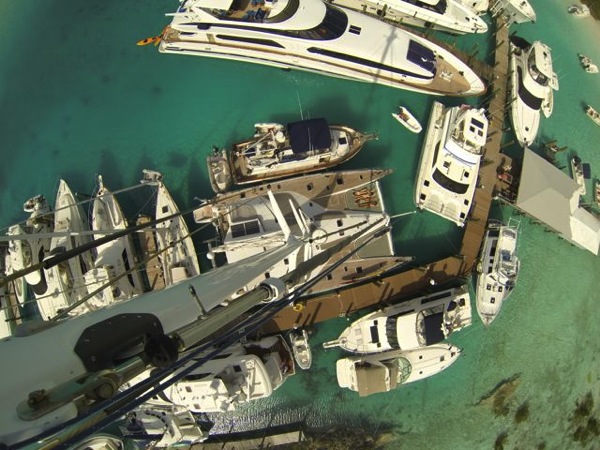
This photo was taken last year by a friend from the top of his mast.

Mattina At Compass Cay

You can see Mattina in the bottom left  corner. You can also see how many other boats chose to hide with us.

The thing about Compass is it’s easy to keep busy. Walking, swimming, kayaking in the mangroves and even hiking to the bubbles baths for a splash in the surf entertain us.

Sometimes we hunker down at anchor and wait out a cold front. This can get a little boring or very exciting depending on what the weather does. Really all we care about is that we’re safe

Thanks for reading . . .

Scrivener and Setting Summaries

Scrivener is still helping me write.

In Scrivener and Scene Summaries, I wrote about using a template for asking a series of questions about a scene to ensure I making the most of the opportunity to engage readers in the story.

I’ve added a second template where I ask myself the following questions about the setting of the scene.

  • Role In Story
  • Related Characters
  • Unique Features
  • Description
  • Sights
  • Sounds
  • Smells
  • Objects
  • Notes

This helps in several ways.

  1. I keep track of how many times a use the same setting. Sometimes it’s easy to write about the same setting, but maybe that’s a lazy way to write. i follow this up by asking myself, could be the scene be set somewhere else that would further the plot and make the story more interesting?
  2. If I use a setting more than once, this is a memory aid for keeping the descriptions consistent and for not repeating details.
  3. If I don’t fill out enough of the points, I haven’t put enough effort into describing the setting.
  4. I use the notes section to remind myself of how I want to use the setting later in the novel, Perhaps I’ve used setting for foreshadowing and I want to remember to follow through later in the story.
How do you ensure your settings work for you and move your story forward?
Thanks for reading . . .


Lagoon 380 S2: Air Conditioning

How to keep happy on a Lagoon 380 in the heat of the south, you ask.

Air conditioning is certainly a personal choice and depends on where you plan to sail your boat. For us, we have two units on Mattina. One for the main salon and one for our cabin.

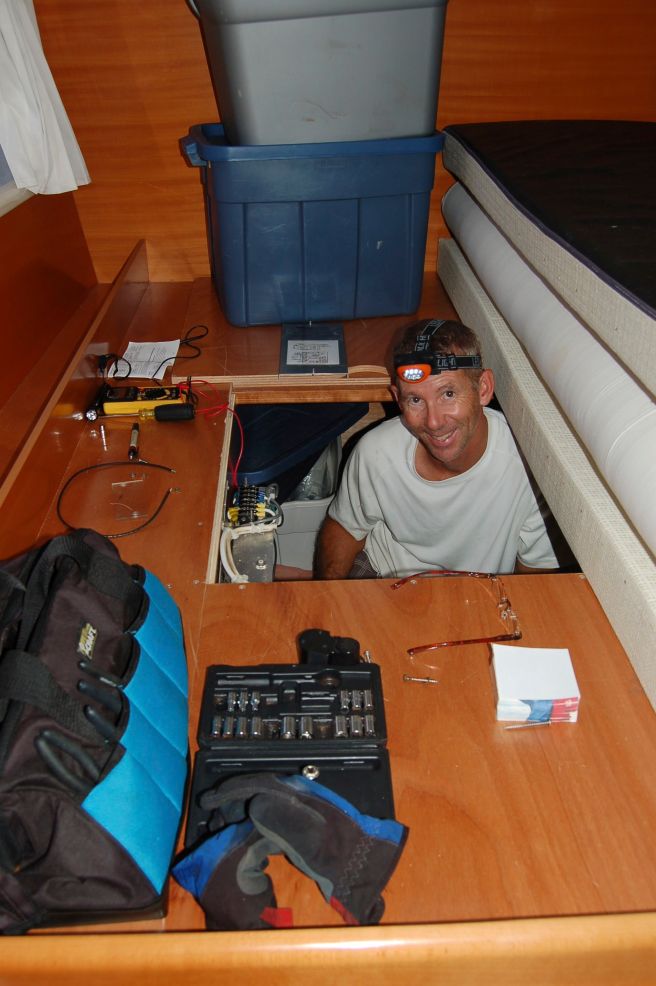
Every year, Matt checks the units to make sure they are functioning properly and does any maintenance required. Wouldn’t want to have to overheat.

Airconditioner

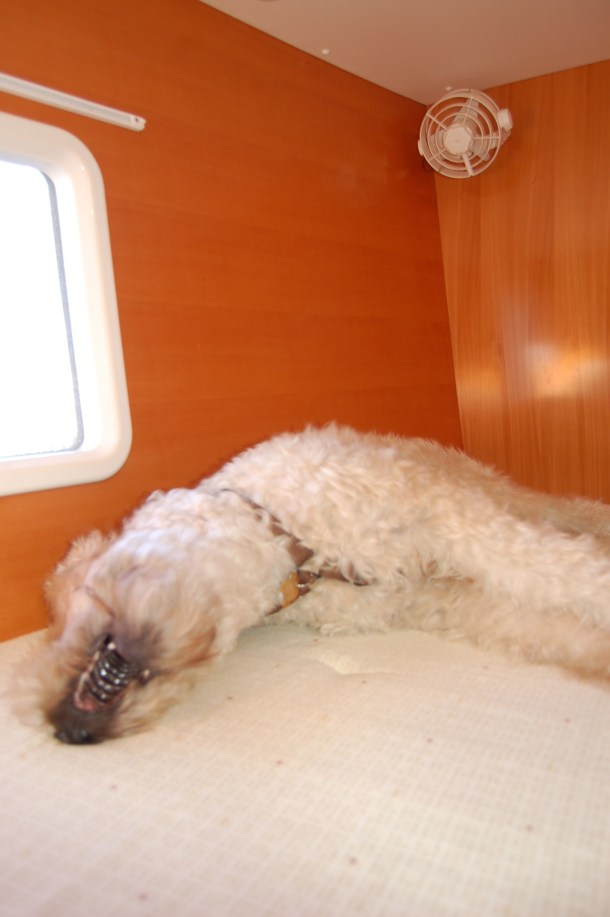
No surprise to anyone, but Florida is hot and the three of us love to turn on the air. Our dog has figured out the coolest spot on the boat is close the vent. The unit is our cabin is situated perfectly to blow air across the bed. I can’t imagine being in the tropics without this luxury.

There’s nothing like a cool boat to give a person a good night sleep.

Thanks for reading . . .

Tips For Writing a Synopsis

There seems to be a common thought that writing a synopsis is difficult, and I have to agreed.

In my post, How To Use A Spreadsheet For Your Synopsis, I give tips on how to use a spreadsheet to help you write your synopsis. But I have more to say on this subject. Like all things to do with writing, there is a lifetime of learning associated with talented synopsis writing.

Today, I want to talk about word limits and how they can help you improve your synopsis.

Publishers, agents, writing competitions usually ask for a synopsis and they usually give a word limit.

To make meeting the word limit easier, cut the limit in half. Yup, you heard me. If the limit is 1000 words, write a synopsis in 500. Don’t go over the 500 words. When you are satisfied that you’ve written the best possible synopsis in under 500 words, then and only the, can you start adding words.

Now you have 500 words available to improve your synopsis.

You may find you have room to add a subplot or show how you develop a character. You may find you want to delve deeper into the setting. You now have 500 words to do this.

It’s amazing how much easier it is to work your way up from 500 words to a 1000 than to try and cut from 1500 to 1000 words.

Please let me know if you have any tips for synopsis writing.

Thanks for reading  . . .
Farley’s Friday: A Wheaten Underway.

Farley here.

So I’m sailing again. What do I do underway? Well, unless there are dolphins swimming by, I get bored.

And when I’m bored, I get crazy.

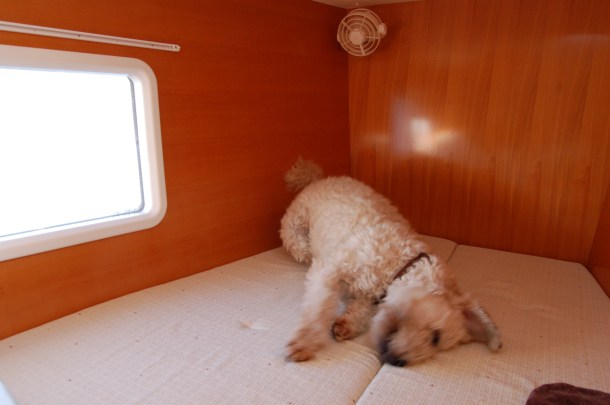
I go to the forward guest cabin and I roll right . . .

Farley Rolling 1

And then I roll left.

Farley Rolling 2

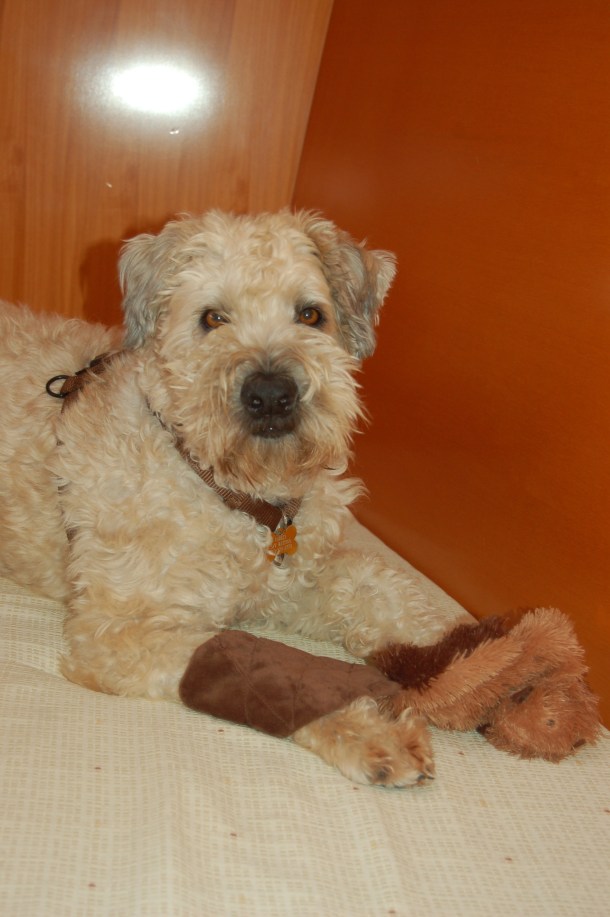
And lastly, I play with my squeaky toy.

Farley Rolling 3

I mean what else does a dog do when sailing. Matt and Kristina won’t let me steer, at least not all the time.

It’s a talent being able to entertain yourself.

Woof Woof

Dinner on a Lagoon 380

Eating seems to be a big part of cruising, so I thought I’d share where we dine.

We have two choices.

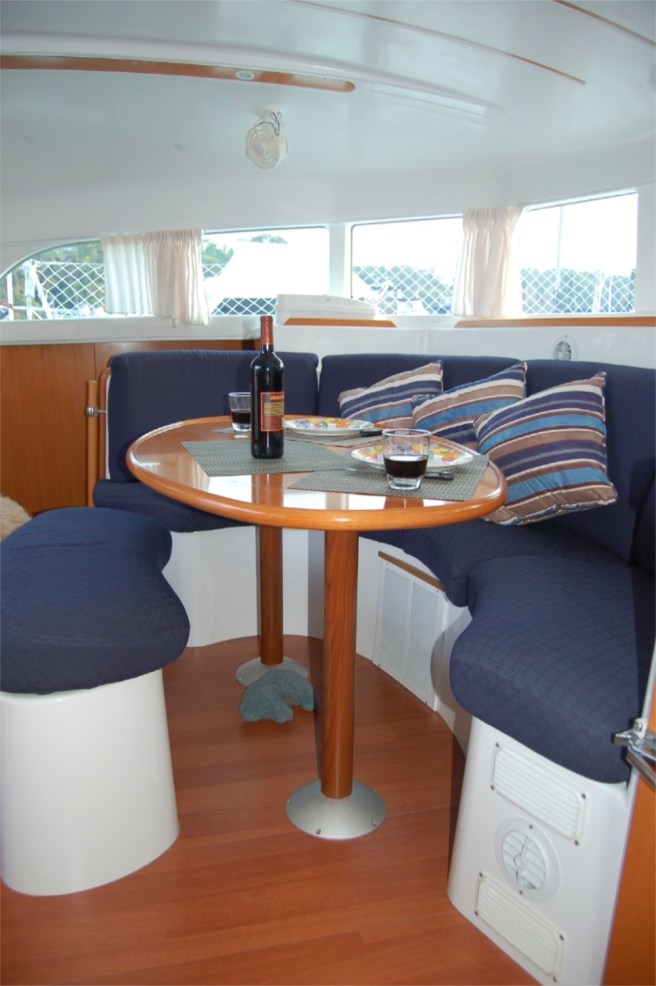
Inside:

Dinner on Mattina

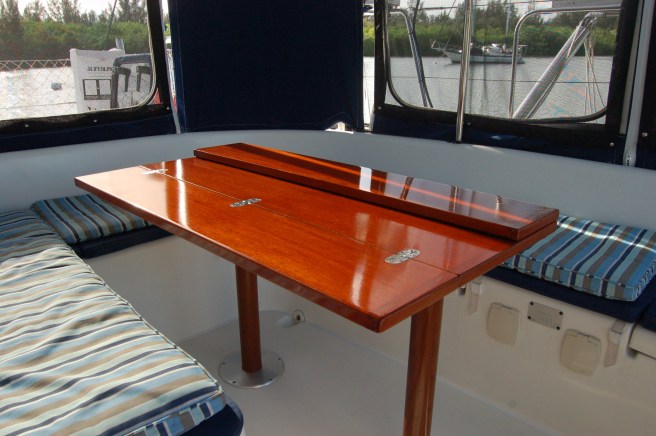
Or outside in the cockpit.

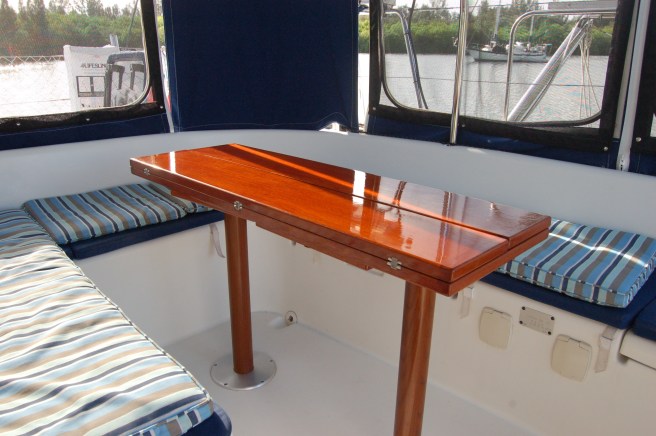
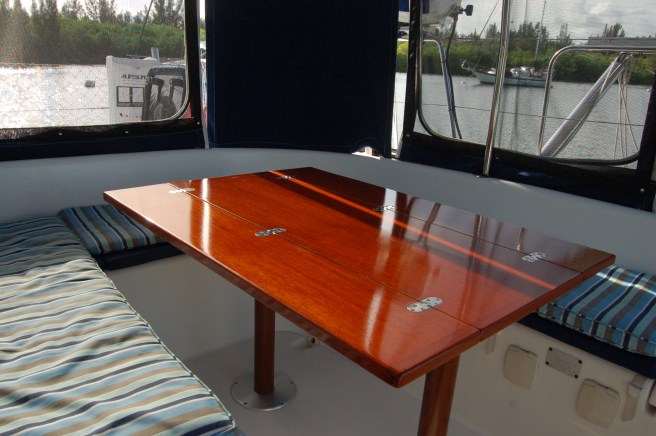
The cockpit table has two leaves, but instead of opening down so the leaves block your legs, we had then made to fold up and lay flat on the top. We designed the table for three settings.

Breakfast Nook: One side is open.

Cockpit Table breakfast

Happy Hour: Both sides closed

Cockpit table happy hour

Dinner: Both sides open.

Cockpit Table Dinner

Both work well while we are underway. The array of windows at the front give  us a great view forward, so we can watch for traffic while we eat. A catamaran sits flat while sailing, and eating underway becomes a joy instead of something to do quickly while healed over.

Thanks for reading . . .