Mystery Mondays: Jessica Norrie on Friends in your Novel

KONICA MINOLTA DIGITAL CAMERA

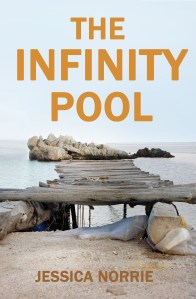
Mystery Mondays has been a fascinating experience for me. This week, our guest is Jessica Norrie, author of THE INFINITY POOL. I met Jessica through other author’s I’ve met on line, and now I have another book to read that I might not have heard about.

THE INFINITY POOL is Jessica’s debut novel. So let’s give Jessica a warm welcome.

Here is what she has to share with us.


“Your friends should know they’re fair game if you’re a writer.” By Jessica Norrie

So says a more established writer friend, with plays on the West End stage and on exam syllabuses, who runs workshops and appears on BBC culture programmes. I haven’t yet heard her comments on “The Infinity Pool”, which means she may not have recognised the at best quirky and at worst nasty detail that I shamelessly plucked from my first encounter with her. I hope that what seemed funny at the time, and has been commented on by many readers, will not spoil a friendship.

No such problem with the yoga teacher in my novel, “The Infinity Pool”. He’s everything a yoga teacher should be, wise, relaxed, humorous, fit and athletic, sympathetic, adaptable to different levels, sensible, stable, demanding to the point of stimulus but not stress, in command but without notions of hierarchy. Michael Stewart, who appears as Satnam in the book, I salute you! And anyone looking for a yoga teacher (although he gets around, last heard of in Mexico) should Google him. I thought I couldn’t have given a better testimonial – but then someone said he was “creepy”.

But what of the hero/antihero/semi hero? At the start of the story he’s attacked and left for dead; the mystery concerns how his disappearance affects others, why it happened, whodunnit, and whether that’s the end of him. He WAS based, to some extent, on someone I knew. Someone I didn’t think I liked, because I disapproved of him. I thought he manipulated people, dangerously, leading them to disclose inner thoughts and feelings too quickly for safe processing. Where a therapist might allocate months or even years, this guy had people unburdening themselves in two weeks, often getting very upset along the way. I changed his age, his appearance and manner, but it was essentially him and when  I thought I’d kill him, it may have come from my anger.                                                                                                                                                                                                                                                    Strangely, as I progressed, I began to like him. I took his part, tried to present his actions more sympathetically – in fact I fell for him. I chose his shirts more carefully and paid attention to his footwear. I even came to agree with some of his ideas, though I still took my debunking responsibility seriously. He began to stand a chance of survival.

It’s surprising how far back one can go in selecting people on whom to model characters. Aged eighteen, I was in a class with two ravishing girls of Greek Cypriot origin, best friends who turned heads everywhere, but who, though attractively and sexily dressed, were always correct and traditional in their behaviour. I hardly knew these girls; they were pleasant but we moved in different circles and I was too in awe of their perfect looks to approach them much. One of them became Maria in the book, and yet I’m sure I hadn’t thought of her for thirty years until she turned up in my story.

Few people are all good or bad, in life or in good fiction. Ruby, Bernard, Megan and Chris are all composites of people I’ve known. I should apologise to “Ruby” for giving her an unattractive drink problem as well as generosity of spirit and an intriguing wardrobe; in the spirit of remorse I did try and redeem her. Bernard has origins in a man I once dated for a short while: grumpy, and superior but highly intelligent and actually quite warm and vulnerable under a pompous exterior. It’s quite fun to improve such characters as you go along, teaching them and yourself a lesson in the process.

I’m told I write a good location and the setting is of course itself a character. And this one IS a composite –loosely based on a place I holidayed in but with details changed and huge liberties taken. As soon as I arrived, I thought, what a great setting for a whodunit. But if it was really as poorly run, as ramshackle, as un health and safety conscious, as turbulent as I paint it, there would have been no story and they would not still be running highly praised “holistic breaks”. I’m keeping mum about the exact location, although anyone who’s been there will recognise it straight away. That’s just another small mystery for the other readers to solve.

The Infinity Pool:

“Adrian Hartman is the charismatic director of the Serendipity holiday community, set among pine trees on a sun-baked island. His job is to ensure the perfect mindful break, with personal growth and inner peace guaranteed. His guests return year after year to bare their souls. For some, Adrian IS Serendipity.

But this year Adrian isn’t there, and nobody knows the reason why. Things have changed: staff and guests are bewildered without their leader and the simmering hostility of the local villagers is beginning to boil over. Is the atmosphere of menace connected with Adrian’s absence? And will life on the island ever be the same again?

As romance turns sour and conflict threatens the stability of both communities, everyone has to find their own way to survive. This evocative novel explores the effect of well-intentioned tourism on a traditional community, and questions the real meaning of getting away from it all.”

Jessica’s Profile:

6x4 (3 of 8)Jessica Norrie was born in London and studied French Literature at the University of Sussex and Education at the University of Sheffield. She taught in Paris and Dijon, and in the UK has taught English, French and Spanish to age groups from 5 to 80 in almost every educational setting possible.

She took a break from teaching when her two children were small, to study for and work as a freelance translator. She has also published occasional journalism and collaborated on a Primary French textbook (“Célébrons les Fêtes”, with Jan Lewandowski, Scholastic 2009).


Jessica sings soprano with the Hackney Singers, and wherever else she gets the chance in the UK and abroad. Less publicly, she plays the piano – slow pieces suit her best as she needs lots of time to figure out the chords.

She is fascinated by languages and has worked hard to make language learning approachable and fun even for the most nervous students. But having always read voraciously, she would now prefer to concentrate on writing. “The Infinity Pool” is her first novel, drawing on many years of travel and encounters, and she already has several ideas for another.

Everything you need to know about Jessica you can find out below:

Amazon Canada (no Canadian reviews yet but for rather more go to Amazon.ukAmazon.comAudible.uk or for less favourable ones in the land where it sold best (?!) Amazon.au. I would LOVE some reviews in Canada or more in the US where it’s fair to say I haven’t yet made much impression on the market. However the Audible narrator, although Welsh, lives in Canada. In Australia II went to no 1 in Literary Fiction when on promo in September, but unfortunately Amazon classified it as Crime and I think readers were disappointed by the lack of psychopaths and general gore. It’s now been moved to Literary Fiction. If anyone would like to review it please contact me via my Facebook author page or witter Jessica Norrie – author:
https://www.facebook.com/Jessica-Norrie-1617940365158063/?ref=hl or by direct message on Twitter: @jessica_norrie.
Amazon Canada
Amazon Australia
Amazon India


Mystery Mondays: Call For Authors

Promoting Reading – Promoting Authors

Mystery Mondays began in July 2015. Authors from many genres who write with a hint of mystery have told you about their books, answered your questions about writing and shared their thoughts with you. Every Monday, you’ve be introduced to another author and maybe discovered someone you’re not familiar with.

Are you interested in guest blogging?

I am now accepting guest blog requests for the remainder of 2016 starting on April 18th so if you’re interested contact me here.

If you’d like to participate, here’s what you need to qualify:

  • you are a published author – traditional or Indie or any other way that I don’t know about,
  • you are about to publish and have a launch date within a week of blog post,
  • you want to promote other authors and spread success,
  • you write novels with a hint of mystery,
  • you are willing to engage in the comments section when readers comment on your post.

All I ask from you is that you follow my blog, comment on author’s posts and help share via Twitter and Facebook.  If you’re interested send me a message via my contact page.

The guidelines:

You’ll have to send me your bio, back text of your novel, author photo and book cover. I’d like you to write something about yourself, your novel, your research, a writing tip or a publishing tip. Please keep in mind I am a family friendly blog. I do reserve the right to edit anything I think might be inappropriate for my audience, which I will discuss with you first. I think anything under 700 words is great, but it’s your book so up to you.

I’m looking forward to hearing from you and sharing your novel with the Internet world.

Mystery Mondays: Ann Farnsworth on How To Write A High Concept Thriller

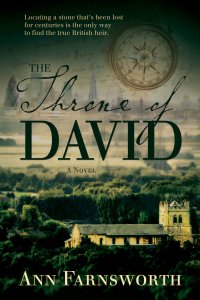
The Throne of David coverAs usually Mystery Mondays continues to be a source of inspiration and and knowledge for me. Today we have Ann Farnsworth, author of THE THRONE OF DAVID.

HOW TO WRITE A HIGH CONCEPT THRILLER by Ann Farnsworth.

I found the idea for my book The Throne of David while reading the Old Testament and knew it was a high concept idea from the very first. Understanding the scope of the story helped me stay very focused as I wrote the manuscript and when I sent out queries, (two of them). Both agents wanted the book and I am convinced it was the high concept element that got their attention. So, I can hear you asking, just what is high concept and how do I incorporate these ingredients into my writing?

High concept fiction is a term hijacked from Hollywood. Think ‘visual’, ‘high stakes’, and ‘easily communicated’. It is attractive to publishers and agents and eventually, readers and moviegoers.

The reaction you want when an agent reads your synopsis is: “Why didn’t I think of that?” or “Why hasn’t somebody written about this before?” Or, “You tell me your amazing idea, and then I decide I have to kill you so I can steal it!” When people light up after you tell them about your book, you know you’ve got them. This is what high concept is all about.

The essential elements of a high concept book are:

  • an original idea
  • mass commercial appeal
  • a great title
  • a big problem

An original idea:

You need an idea that will be talked about. One that generates excitement and compels people (agents, publishers and readers) to get involved. Simply put, a high concept is an intriguing idea that can be stated in a few words and is easily understood by all. Take this sentence: An asteroid the size of Texas is speeding toward earth. This sentence is definitely high concept! It arouses an emotional response, and, using only ten words, tells us exactly what the book/movie is all about. It hooks us immediately.

THE THRONE OF DAVID is a historical thriller along the lines of DaVinci Code or Raiders of the Lost Ark involving a religious artifact, murder most foul and a mystery surrounding the king of England. I thought about contacting Dan Brown with the idea that became THE THRONE OF DAVID, but I finally decided to figure out how to write it myself. It was a little daunting to write such a towering book for a first novel but writing it became an adventure and I loved figuring out how to write around the bones of a compelling story.

Being able to reduce your idea into something powerful that can be expressed in a few words forces the writer to come to terms with what the story is really about. If the idea is too complicated and is difficult to explain or understand, it may never reach the people who make the decision to publish or produce your work.

Mass Commercial Appeal:

High concept books use hooks and compelling plots to give the story wide, mainstream appeal. Commercial fiction often has the ‘wow’ factor. If you can summarize what happens in your novel in a single, succinct sentence, and people ask where they can buy it, you might have a high concept book. Plot and the story drive the story, character choices and actions create drama that propels the reader forward with urgency.

If you aren’t sure if your story is high concept try to categorize your book by comparing it to other books that are similar and are easily defined as high concept.

A great title:

A great title not only tells the audience what the story is about, it reveals the genre. The title prepares us to experience the feelings associated with each type of genre, thrillers, mysteries, love stories, adventures and so on. Each of these different genres propels us towards a unique emotional adventure. A great title can catapult your book into the bestseller spheres.

A Big Problem:

The fourth element is THE big problem to be solved, the reason for the story, and the reason action has to be taken.

An asteroid is about to collide with the earth. A serial killer is loose in the . A baby is left on a doorstep. An invading army has to be confronted and defeated. An erupting volcano has to be escaped from. A man-eating shark has to be destroyed, and so on.

You will know it is a big problem if action has to be taken and taken immediately.

Great stories are about problems and once the writer introduces us to the problem, the problem must be resolved. It is the essences of any story, no matter how big or small, it must be focused on a problem. Every character will somehow be involved in that problem. Everything that happens will in some way affect the outcome of the problem. Revealing how that problem was created and how it will be resolved is the heart and soul of every story.

Of course, you should write what you enjoy reading. Read the classics in your genre, read the most recently released books in your genre so you know what is selling. If you enjoy reading high concept books and decide to attempt writing one, it is imperative that you think big and then write with sweeping, satisfying language. The crux of the matter is a big idea and making sure your idea will appeal to a vast audience of readers is the craft of the writer. Follow with a great title and be sure you introduce a big problem. Including all these elements will help you create a great story, and will help you sell your story on the front and back ends. Selling first to agents and a publisher, and then to booksellers and finally, readers and moviegoers.

Be assured that high concept books are sought after by publishers and readers alike.

Author’s work and plot of the book:

My book, THE THRONE OF DAVID, is a historical mystery and joins works such as the Da Vinci Code or Raiders of the Lost Ark, in unraveling ancient legends. The story follows the history of the throne of David, you might remember that king David was promised that his throne would endure until Christ came to personally reign on the earth. David’s throne has always been joined with a sacred stone and you might be shocked to learn that this throne exists today, hidden in plain sight.

The book is set in New York, London, Ireland and Scotland and is a fictionalized account of the intricacies of this great mystery. Prophecies about the throne abound and my book follows its history through time and across continents. The book ultimately reveals the likely resting place of the coronation stone – symbol of the royal throne of David.

It is a riveting story and it has been one of the great adventures of my life to research, untangle and then write about the royal stone.

I came to writing late, as I was busy raising a family of 10 children and devouring books on the side. Our youngest is now eleven and the stories that have been clamoring for attention these last 25 years are finally going to be given a chance at life.

Ann’s Bio:

AnnHeadshotAnn Farnsworth came to writing late, as she was busy raising a family of 10 children and devouring books on the side. Her youngest is now eleven and the stories that have been clamoring for attention these last 25 years are finally going to be given a chance at life.
If you take Ann Farnsworth’s love of history, her admiration for truly great story tellers and a devotion to precise, descriptive vocabulary. If you add to those interests a true devotion to memorable characters it seems as if her book, ‘The Throne of David’, is almost an inevitable work of creation.


Mystery Mondays: Kathy Prairie On Inner Voices and Her New Release

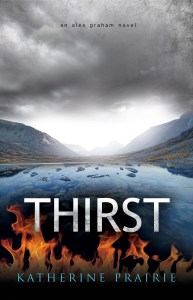
Thirst webToday on Mystery Mondays we welcome Canadian author Kathy Prairie. This is a special week for Kathy. Her novel, THIRST, is now available for pre-order and the official launch is February 18th. Yup, That’s this Thursday.

I’m thrilled to be part of Kathy’s launch and to have her share her writing advice on “inner voices.”

To entice you to have a look at THIRST, R.J Harlick, a previous guest on Mystery Mondays has this to say:

“With compelling characters and an extraordinary setting, THIRST is a fast-paced thriller that will keep you on the edge of your seat until the very last word.” – R.J. Harlick, author of the popular Meg Harris mystery series

That’s just a teaser for now. The description of THIRST is as the bottom of the blog.

So on to Kathy and her advice on finding your inner voice…

INNER VOICES by Kathy Prairie

I’m delighted to join a fellow B.C. author today – thanks for the invitation, Kristina.

I’ve heard the advice “find your voice” at almost every writing workshop I’ve attended and while the concept seemed simple enough, trying to achieve it has been anything but. So today I’d like to share the three elements that were key to finding my voice: characters, perspective and style.

First a simple defintion of voice: It’s your signature, your way of telling a story. But I think it’s also that sweet spot where your sentences flow with ease and your characters come to life. If you find that spot you’re sharing your personality with your readers and your writing will be as unique as a fingerprint.

I’d suggest that you start with your characters because they tell your story. In our lifetimes we probably meet thousands of people and no two of the them are exactly the same and your characters should be unique too. There are many decisions here including gender, profession, physical appearance, personality and motivations and it can be tough! I’ve heard much advice about writing what you know, but I believe it’s more important to write about what interests you.

I’m fascinated by science and intrigued by politics and through my geologist Alex Graham, I’m able to weave these elements into my stories. She’s an interesting character to me, someone I’d like to know in real life and I look forward to writing more stories about her. Ask yourself what kind of personalities most interest you. Are you intrigued by the psychology of the criminal mind or the intellect of the puzzle-solving detective? If you follow your passion, you’ll create memorable characters and perhaps find a protagonist you love enough to include in another book.

Next focus on how your characters will tell their story. First person proved the most challenging for me, but I liked the resulting scenes. Omniscient on the other hand, never really felt right because of its impersonal nature. But limited third person felt right from the start because my story flowed effortlessly through each character’s viewpoint.

You might find that you naturally gravitate towards first person, omniscient or third person but it’s worth exploring each of them fully. A simple change from “she” to “I” can profoundly affect your scenes and I found that my style, the dialogue, the details – everything shifted as I moved from one perspective to another. I wrote three complete scenes in each perspective before finally deciding on third person and even now when I’m having trouble with a particular scene, I’ll switch to first person because it changes how I see the scene and often identifies the problem.

Once you’ve decided on perspective and characters it all comes down to how you tell your story. If you allow your characters to guide you, you may find that your style develops naturally. For example, a hard-boiled detective would tell a story differently than a twelve-year-old girl.

The nature of your sentences – smooth, choppy, long, short. The kind of language you use – gritty, soft. The level of description – too many adjectives, too few, too flowery, too blunt. All of these elements contribute to your unique writing style and you need to find what suits you best. I’ve found that some of the most interesting authors break the grammar rules, so go ahead and explore. Don’t get me wrong, your story has to be readable and you should never ignore the good advice of your editor, but you also don’t need to sound exactly like everyone else.

How you paint a scene or describe a character is equally important. Some authors include few details while others write long descriptions and especially if you’re a new author, you’ll likely favour one extreme or the other. Read your favourite authors. Do you skip over the details or read every word? You probably won’t feel any more comfortable writing loads of description if you don’t like to read it. But your challenge is to balance your natural writing style against the reader’s need for detail. Push beyond your comfort zone here and add a little more descriptive detail as you write, and vice-versa and you may find your answer.

Through characters, perspective and style I finally feel that I’ve found my voice and focusing on these elements might also work for you. Your voice will evolve over time as your writing matures – I’ve seen that happen already in my own work – but your overall approach should stay steady. And if you stay true to your personality your voice is guaranteed to be unique!

Kathy’s Biography

Screen Shot 2016-02-14 at 3.22.32 PMKatherine, a geologist and IT specialist, stepped away from the international petroleum industry to follow her passion for writing. An avid traveller with an insatiable curiosity, you never know where you’ll find her next! But most days, she’s in Vancouver, Canada quietly plotting murder and mayhem under the watchful eye of a cat. She is an award-winning presenter and the author of the thriller THIRST.


Links

www.katherineprairie.com

www.facebook.com/katherine.prairie

THIRST

Science. Politics. Deadly Intent.

Deep in a Columbia River valley rocked by violence and tightly controlled by a U.S.-Canada military force, geologist Alex Graham is on the hunt for silver. Her plans are derailed when she joins the search for a suspected toxic spill as the victim count rises. But the lethal contamination is no accident.


Mystery Mondays: Lisa de Nikolits on The Writer’s Seeing Eye

BTCSF_FrontCoverLisa de Nikolits sat in front of me at The Bloody Words conference, and what I remember is her great bit smile. This week, I’d like to welcome this very friendly and talented author to Mystery Mondays. Lisa’s going to tell you about the Writer’s Seeing Eye.

THE WRITER’S SEEING EYE by Lisa de Nikolits

 Ideas for crime novels. Where do they come from? 

“We need to watch another episode of Forensic Files,” I said to my husband. 

“It’s 2 a.m. on Christmas Day,” he replied, “We need to get some sleep so we can enjoy Christmas.”

“Ah, just one more,” I encouraged him. “It’s all research for me and I’ll make you a fresh cup of tea. Just one more!”

Research? 

That’s what I tell myself anyway. 

And it’s true that I have learned a lot about ethylene glycol and ketotic hyperglycinemia, blood spatter, fingerprint analysis, handwriting analysis, the ever-famous DNA, toolmarkings and ballistic analysis.

While the things those guys can do is just mind-blowingly amazing, two things struck me with this program. The first is how stupid some people are, when it comes to committing a crime. Most of the time they leave behind a trail of evidence that is nearly a paint-by-numbers for the detectives to solve. 

And the second thing is the impulsivity of the crimes, which occur on the spur of the moment. 

While I am full of admiration for Forensic Files, when it comes to novels, things are very different. Readers have very little patience with stupid protagonists and they are very quick to spot any story inconsistencies or things that might not ring true in the flow of a crime committed. 

In real life, how many times you have found yourself staying “real life really is stranger than fiction” and it is stranger because it’s not reasoned out in the same way that we plot books, real life crime just happens and then people try to mop up the mess and sometimes they succeed and sometimes they don’t. 

My ideas for the crime in my novels comes from flights of my imagination. The big ‘what if?’

For example, my husband and I got confused while taking a ferry back from Sydney to Cremorne Point – he got off while I didn’t and in that nano-second, I was convinced that he had fallen into the black water of the Sydney harbor and drowned. 

He was fine, of course he was, he had got off while I had been photographing something and there was nothing to it. 

But my writer’s seeing eye saw him being ushered off the boat, with a gun tucked under his armpit, and a gothic anarchist girl leading him away. I saw that a human trafficking gang had confused him with his doppelganger, and that an innocuous picture that he had posted on Instagram had caused all the confusion. I saw that my husband’s niece was involved in the kidnapping, and that she was being haunted by the ghost of a woman who had been locked up in an insane asylum. 

None of which could have come from Forensic Files or crime stories from real life, but that said, nothing is going to stop me from watching my favourite program – all for ‘research’ of course!

Bio

WhiteShirtBioPicLisa de Nikolits is the author of five novels: The Hungry MirrorWest of Wawa, A Glittering ChaosThe Witchdoctor’s Bones and Between The Cracks She FellBetween The Cracks She Fell was reviewed by the Quill & Quire and on recommended reading lists for Open Book Toronto and 49th Shelf. Canadian Living magazine called it ‘a must-read book of 2015’. 

Lisa has also been published in various anthologies and journals including Postscripts To Darkness, Volume 6, 2015, Thirteen O’ClockMaud.Lin House, the Canada Woman Studies Journal, Hood and the Jellyfish Review.


Links:

www.lisadenikolitswriter.com 

twitter: @lisadenikolits

www.facebook.com/lisa.denikolits

https://www.facebook.com/lisadenikolitsauthor

http://www.goodreads.com

http://pinterest.com/lisadenikolits/

LinkedIn: http://linkd.in/1r8H9Df

Instagram: http://www.instagram.com @lisadenikolits

Wattpad: https://www.wattpad.com/user/LisadeNikolits

The Mesdames of Mayhem: http://mesdamesofmayhem.com/about/

Mystery Monday: R.J Harlick on When Dreams Become a Reality

This week I have the honor of hosting R.J. Harlick on Mystery Mondays. I was lucky enough to have R.J. provide an endorsement of BLAZE which I proudly display on the cover, so it is a true pleasure to have her on Mystery Mondays.

R.J is here to talk to us about When the dream becomes a reality.

By R.J. Harlick

Hi Everyone.

I’m thrilled to be speaking to you today on Kristina’s blog . Thanks, Kristina for inviting me.

Today I thought I would address a question I am often asked by readers. At what point did I know I wanted to be a writer?

Though some of my confrères knew at a very young age, for me it was a more gradual transformation. There was no lightening bolt moment when I shouted, “Yes, I want to be a writer.” I more or less slid into it, starting where most writers start, as a reader.

As a child, I devoured books, in particular mysteries beginning with Nancy Drew and the Hardy Boys, eventually graduating to Agatha Christie, Sherlock Holmes, Dorothy Sayers, Raymond Chandler, Nero Wolf and the like. Sometimes I thought it would be fun to write one of these myself.

I even tried writing a mystery for a grade seven English class. But I blush at the memory. I’m afraid this first attempt was far too long and, I hate to say it, far too boring. Nonetheless I kept this idea of writing a mystery buried in the far reaches of my mind.

Though I loved reading, English was never my favourite subject in high school. I found the piecemeal taking apart of a story would destroy the magical hold it had over me. But I loved the creative writing part of English classes. I’d spend many an hour on class assignments making the stories swirling around my head come alive with words. Needless to say many had a mystery angle to them.

In university, I continued to enjoy playing with words. I excelled at making essays sound as if I knew something about the topics about which I was writing, when I didn’t. Studying wasn’t one of my strengths. Perhaps this is where my penchant for creative writing started.

I also continued to read voraciously branching out into the world of the greats. Though I thought it might be fun to become a writer, like Ernest Hemingway or Somerset Maugham, I didn’t treat it seriously. I didn’t really think I had it in me.

This enjoyment for words continued on into my work life as an information technology consultant. I invariable preferred the writing part of my job to other aspects. But it was business writing; letters, proposals and reports. Nonetheless I continued to harbour the dream of being ensconced somewhere bucolic penning the next great Canadian novel, or should I say mystery.

To satisfy my need to write, I started recording my time spent at my log cabin in a journal. Finally, one day after reaching a significant birthday, I decided it was time to find out if I could become the fiction writer in the bucolic setting of my dreams. The setting was easy. I was already sitting in it; the screened-in porch of my log cabin overlooking the surrounding forests. And so I set out to write what would eventually be published as my first Meg Harris mystery, Death’s Golden Whisper.

My first goal was to see if I could write a novel. Up till then, none of my business writing had approached the one hundred thousand word length of a typical novel. The next goal was to determine if I could write fiction, for I quickly discovered fiction writing was a totally different animal from business writing. As I marched along this new adventure, scene after scene, chapter after chapter, toward the climactic end, I realized I really, really enjoyed it. I decided writing was what I wanted to do for the rest of my life. The third goal, of course, was to see if I could get it published. But this is a story best left for another day. Let’s just say it was a long haul with many disheartening rejections.

Seven books and the odd short story later I am still having fun. I’m in the midst of continuing my adventure with Meg. I’m midway through the writing of the eighth Meg Harris mystery. Though I do have a title, I’m not quite ready to share it, in case I change my mind. But I will tell you that the colour for this book is purple and it will be set in the Northwest Territories.

What about you? Was it a slow gradual slide into becoming a writer or did you know from the get-go that you wanted to be one?

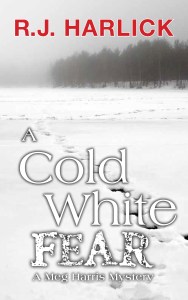
Cold White Fear final coverNow for some BSP – If you happened to live in the Toronto area, I will be reading from and signing my latest book A Cold White Fear on Thursday, January 28 from 6:00 pm to 7:30 at Sleuth of Baker Street on Millwood Ave. It would be fabulous to see you there.


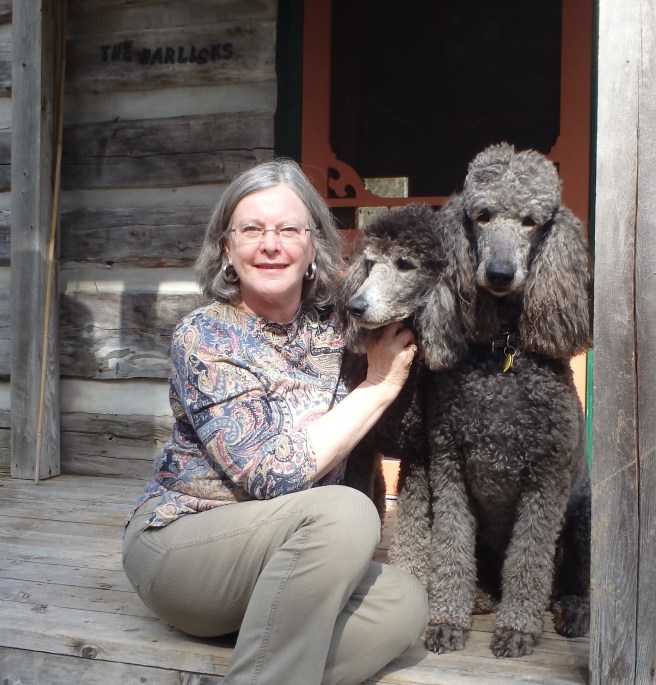
OLYMPUS DIGITAL CAMERA

RJ Harlick is an escapee from the high tech jungle. After working for over twenty-five years in the computer industry, first for major computer corporations such as IBM and DMR Group, then with her own management consultancy practice, she decided that pursuing killers by pen would be more fun than chasing the elusive computer bug.

Originally from Toronto, R.J., along with her husband, Jim, and their standard poodles, Sterling and Miss Molly, now bides her time between her home in Ottawa and log cabin in West Quebec. A lover of the outdoors, she spends much of her time roaming the forests of the Outaouais. Because of this love for the untamed wilds, she decided that she would bring its seductive allure alive in her writings. This she has done in her Meg Harris mystery series, where the wilderness setting plays almost as large a role as the main character, Meg Harris.

Mystery Mondays: Elinor Florence on the Mystery Genre

This week on Mystery Mondays we welcome Elinor Florence. I met Elinor about a year ago, and since then we’ve been sharing our writing and publishing experiences over lunches.

Here’s what Elinor has to say about genres and her debut novel, BIRD’S EYE VIEW.
Bird's Eye ViewMy wartime novel Bird’s Eye View isn’t a classic murder mystery – although I have seen it shelved in the Mystery section of one bookstore – but rather, a whole series of mysteries.

You see, in my novel the serial killers are the Nazis, and my detective is an aerial photographic interpreter. Rose Jolliffe is an officer in the Royal Canadian Air Force. Like Sherlock Holmes, she uses her magnifying glass to study aerial photographs for clues, trying to outwit the enemy.

Along the way, she tackles a number of baffling mysteries:

  1. When the Allies bomb an important railyard behind enemy lines, why don’t the aerial photographs taken the next day show any damage?
  2. Is that charming French village real, or is it an elaborate camouflage created by the Germans to disguise an aircraft factory?
  3. Most importantly, what is the secret revenge weapon that Hitler says will win the war — and where on earth is it?

Rose examines aerial photos to the point of exhaustion (since there was no colour film, she is literally studying fifty shades of gray), striving to solve these and other mysteries – painfully aware that her failure will cost thousands of lives.

She is suffering from personal strain as well. Her brother Jack is flying a Spitfire, and she fears for him every day. She is in love with her commanding officer, who unfortunately already has a wife. And she is desperately homesick for her farm on the Canadian prairies. She keeps in touch with the home front through a constant flow of letters from her parents and her best friend, June.

Bird’s Eye View is the only novel ever written in which the main character is a Canadian woman in uniform. I find that very sad, considering that there were fifty thousand of them in World War Two alone. They were just as patriotic and dedicated as the men, but we know little about them. I wanted to shine a light on women’s contribution to the war effort.

To create my characters, I drew heavily on my own family. My mother lived through the war as a teenager in Canada, and her home town of North Battleford, Saskatchewan was an air training base. Her beloved elder brother was killed in the war. My father served in the Royal Canadian Air Force, as did my uncles. So I had access to a gold mine of personal anecdotes.

I was also intrigued by that fascinating but little-known branch of Allied Intelligence called photo interpretation. During the war hundreds of trained interpreters studied the aerial photos brought back from Europe – literally spying on the enemy from the sky. I read as much as I could about the subject, and travelled to both England and Germany for my research. Every incident in the book is based on fact.

Since the book was published a year ago, I’ve received hundreds of positive comments. People often tell me that my book enlightened them about our own Canadian history, especially the role of women. One former bomber navigator told me that he combed my book looking for errors and couldn’t find any – that was music to my ears! Others tell me that my book moved them to tears. Touching people’s hearts is always a good thing.

By far the most typical comment, however, is this: “I couldn’t put it down!” That’s the best compliment of all.

Elinor Florence PhotoElinor Florence is a career journalist who grew up on a farm in Saskatchewan, a former wartime airport. She wrote and edited daily newspapers and magazines across Western Canada, including Reader’s Digest. Married with three grown children, she now lives in the mountain resort of Invermere, British Columbia. Bird’s Eye View is her first novel. It’s available through bookstores or online from Amazon, and as an ebook. Order it here: http://www.amazon.ca/Birds-Eye-View-Elinor-Florence/dp/1459721438/ref=sr_1_1_twi_1_pap?ie=UTF8&qid=1429642038&sr=8-1&keywords=Birds+eye+view

Thanks for reading…


MYSTERY MONDAYS: 2016 Kicks off with Cheryl Kaye Tardif

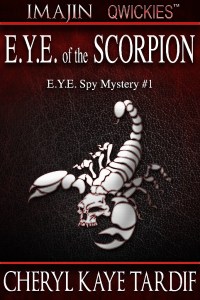
To celebrate a new year of Mystery Mondays,  Cheryl Kaye Tardif will share a bit of E.Y.E OF THE SCORPION. But first, here is what she has to say on the future of fiction.

A Mystery Qwickie with an Eye on Vengeance and Salvation

 Cheryl Kaye Tardif FBLaunching Imajin Books’ new Imajin Qwickies™ imprint, international bestselling author Cheryl Kaye Tardif introduces us to her E.Y.E. Spy Mystery series with Book 1, E.Y.E. OF THE SCORPION…

Many readers are looking for shorter reads, something they can read on a bus, train, plane etc., and finish in one or two sittings. Qwickies™ are the perfect solution. Shorter than a full-length novel, but longer than a short story or novelette, novellas offer more depth of character and plot.

In my mystery novella, E.Y.E. OF THE SCORPION, I introduce readers to an older, wiser female protagonist, one who is divorced, has given up a career as a Vancouver police officer and has become a private investigator. Eileen Edwards is still grieving the loss of her son when she’s given the daunting task of locating a street kid named Zipper. But all is not as it seems, and the case proves to be difficult, especially keeping the boy alive. As with all mysteries, there are twists and turns, and a huge revelation that will blow your mind. At least, that’s what I’m hoping for.

The challenge with writing a Qwickie is to start off with action right away and keep the pace moving “qwickly,” so that readers feel compelled to keep reading until the end. I believe my characters really add to keeping the pace hot and always moving forward. Of course, as with every good mystery, you’ll find some bad guys who only seek vengeance, and a protagonist whose life changes dramatically in the end.

Salvation is found in odd ways and with an unusual pairing of young and old. I have fallen in love with three of the characters, Eileen, Zipper and Alfie. All three have been searching for something that has eluded them. Will they find what they’re looking for? I hope you love them as much as I do.

E.Y.E. OF THE SCORPION Description:

EYE of the Scorpion front medWhen Eileen Edwards, a former-cop-turned-PI, is given the task to find a missing street kid named Zipper, she has no idea what she has let into her life. Not only did the boy witness a murder, he’s now being hunted by at least one motorcycle gang. Finding Zipper is the easy part; keeping him alive is the challenge.

As a killer prowls the streets of Vancouver looking for the kid, Eileen discovers that Zipper not only can’t remember what he saw, he’s also hiding a shocking secret. With the assistance of Constable Larry Norman from Eileen’s old Gang Task Force unit, she helps to expose a ruthless killer, and in the process, Eileen learns that sometimes one must let go of the past in order to move forward.

Here’s a sneak peek:

Chapter One

The Grim Reaper often came knocking when it was unexpected. That was something Eileen Edwards had figured out years ago. So when the phone on her desk rang at just after eight in the morning on Sunday, February 8th, she knew it wouldn’t be good news.

“Call from Law-ree Nor-man,” the androgynous call display voice told her.

Constable Larry Norman was a detective in Vancouver’s Gang Task Force—and her former partner.

Eileen picked up the phone and grimaced as a twinge of pain shot through her right hand. “Sorry I can’t come to the phone right now. Please leave your name and—”

“Really, Eileen? Is that the best you can do?”

“—after the beep. Beeeep.

There was a slight pause. Then Larry said, “You done?”

She sighed and adjusted her reading glasses. “I hope this is a crank call.”

“I need a favor. I need you to find a street kid named Zipper.”

“You do know this is Family Day weekend and my first weekend off in forever.”

“But you’re already up and working anyway,” Larry said.

Eileen leaned back in the chair and glanced across the room. The white letters on the glass door of the office reminded her that E.Y.E. Spy Investigations had bills to pay. “How do you know? Maybe you woke me.”

Larry chuckled. “You’re in your office. I can hear your printer gasping for breath in the background.”

She glared at the hefty, aging machine that was busy groaning and vomiting up paper like Linda Blair puking up pea soup. Maybe the printer needed an exorcism. Papers scattered on the floor told her she’d forgotten to extend the catch tray again. Another sheet shot out, and she caught it before it hit the floor with the others.

“You know, you should really trade that antique in for a modern printer,” Larry said. “Maybe one built after 1990.”

“It works fine. Now what’s so important about this Zippy kid?”

“Zipper.”

“What did he do—kill someone?”

“No, the opposite. We think he witnessed a murder.”

Continue reading this mystery Qwickie at http://getBook.at/EYEScorpion

 Question for Readers: What do you think about Qwickies or novellas? Are there benefits to a shorter read?

*****

Born in Vancouver, BC, Cheryl Kaye Tardif is an international bestselling suspense author who currently resides in Kelowna, BC. Her most popular works include: CHILDREN OF THE FOG, SUBMERGED, DIVINE INTERVENTION, DIVINE JUSTICE, DIVINE SANCTUARY, THE RIVER and WHALE SONG. Represented by Trident Media Group, she is published by various publishers in the US, Canada, Germany, Turkey and China. Cheryl is also the owner of hybrid publishing company, Imajin Books.

http://www.cherylktardif.com

http://www.imajinbooks.com

http://www.imajinqwickies.com

Mystery Mondays: Laurence St. John on Writer’s Block

It’s time to celebrate the first 6 months of Mystery Mondays. Leading us to the end of the year is Laurence St. John with the final Mystery Monday of 2015. He has some excellent advice on dealing with writer’s block.

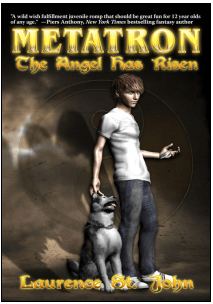
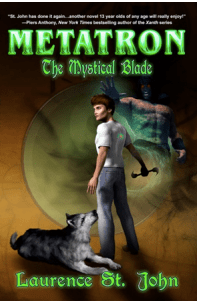
But first, Laurence is the author of the young adult fantasy/sci-fi novel series Metatron. Click on the book covers to find the novels on Amazon. Just remember, Christmas is coming soon, and these books would make awesome gifts…

The Angel Has Risen
The Angel Has Risen
The Mystical Blade
The Mystical Blade

My Secret Remedy for Writer’s Block by Laurence St. John:

For writers or even kids in school working on an essay or any other writing assignment – I’m sure at least one point in time while writing or in school you have had writers block. I did – several times when I began by writing career. When I was in school, teachers told me to keep writing/typing stuff no matter if it made sense or not. The purpose behind it was to keep my mind active. After a few minutes or even longer for some, something I wrote would spark an idea to get me back on track on what I was originally writing. Early in my writing career it was recommended to me that I should walk away from my work and take a break. However, I didn’t do what I was told – sshh, don’t tell.  

My secret…

First of all, I don’t have time to walk away from my work when I know I have a personal deadline to attain. Therefore what I do for writers block is to metaphorically kill two birds with one stone. I will run on my treadmill for a few minutes to get my heart rate up. Or instead of running I will perform sit-ups and push-ups. This gets my blood flowing as well as my mind. From what I  have read, exercise triggers a kind of chain reaction beginning with the release of chemicals that stimulate increased blood flow, which in turn causes the brain to perform more efficiently in numerous ways.

Exercise is my remedy for writers block.  


Laurence St. JohnBio: Laurence A. St. John was born on January 11, 1965 in Toledo Ohio. Laurence has one older brother and two younger sisters. Laurence along with his parents, brother and sisters moved once while growing up to Genoa Ohio, just south of Toledo. While attending Genoa Area schools, he was active in track, football and baseball. Later, after he graduated from Genoa High School (Comets) in 1983, he worked for a few manufacturing companies.  

At the age of 23 and after three years of dedication, hard work and sweat, in 1988, Laurence received his first-degree black belt (Shodan) in Tae Kwon Do. This gave him the self-confidence and perseverance needed to surmount anything that came his way.  

When Laurence was 25 years old he fell in love then married the love of his life, Julie in 1990. He then adopted her two young wonderful children Joe and Jan shortly after.  

Out of high school for nearly fifteen years and after persuaded by his former manager, Laurence attended Owens State Community College where he obtained an Associates Degree in Microcomputer Business Systems while working full-time. In addition to computer classes, he enjoyed composition classes where he could free his mind and write what he wanted.  

While working in the steel processing business for almost fifteen years, Laurence’s place of employment changed hands, for the third time in 2006; fighting for his job, again. In the same year his first granddaughter, Kendall, “Papa’s Angel” was born. He described this as one of the most uplifting moments of his life. In addition, it was during this time when his emotions were running wild; he became inspired as well as determined to write his penned-up thoughts on paper.  

Nearly four years later, he had completed his first middle grade/teen fantasy/sci-fi novel, Metatron: The Angel Has Risen. In addition his second novel, Metatron: The Mystical Blade was published in August 2014. The next Metatron novels in the series are projected to be published in 2016 and 2018.  

Laurence currently lives in Northwood Ohio with his wife of 26 years, Julie. His son Joe is married to Cari and they have three daughters, Kendall, Sadie and Harper. His daughter Jan is married to Andrew and they have a son Eli and a daughter Evelyn. Laurence currently holds the position of Administrations Manager at Precision Strip, Inc. in Perrysburg Ohio, where he works full time. He continually writes in his spare time; weekends and after work, and is endlessly inspired by his five grandkids Kendall, Elijah, Sadie, Evelyn and Harper.    

You can find Laurence at:

Website: http://www.laurencestjohn.com  

Blog: http://laurencestjohn.blogspot.com/

Twitter: http://twitter.com/laurencestjohn

Facebook: http://www.facebook.com/laurenceastjohn  

    ***

I know the suspense is killing you…when will the next Mystery Monday be? Who will kick off 2016? Well…

The international best-selling author and CEO of Imajin Books, Cheryl Kaye Tardif, will guest blog on Monday, January 4th!

Mystery Monday: Howard Shrier on 10 Rules of Writing

Today we welcome TorontBuffalo Jumpo Author Howard Shrier. I had the pleasure listening to Howard speak about Buffalo Jump at The Scene Of The Crime on Wolf Island, Kingston, Ontario and never dreamed I’d be hosting him on my blog. Howard writes the Jonah Geller series.

Howard is sharing some of his insight today, but if you’re interested in more…Howard teaches a Mystery Writing Workshop at the University of Toronto.Boston Cream

TOP TEN RULES OF WRITING BY HOWARD SHRIER

1.Create characters with strong needs and send them on a journey worth documenting and telling

2. Place significant obstacles in their path and allow them to reveal their characters through the actions they take to get around them.

3. Do enough research to be authoritative and plausible, but keep it to a minimum in the text.

4. Read voraciously, epsecially but not exclusively in your chosen field.

5. Tell your story in the most compelling voice you can muster. Have a sense of urgency, even if it’s buried. And develop an ear for dialogue if you don’t already have one.

High Chicago6. As Hemingway and so many others have noted, the best writing day ends when you know how you’re starting tomorrow.

7. Outlining, even if it’s in your head, can save you months of grief. The process of building a story in notebooks, all the aha moments, can be every bit as creative as writing itself.

8. Throw everything you can at the first draft. You can always cut it later.

9. Cut it later. And often.

10. Do not, under any circumstances, make the mistake I did and quit your day job before your first book comes out.

11. Bonus: A first draft is just that. Once you finish it, get people to read it. Take their comments graciously, even if you don’t agree with them. Sleep on them. See if they make sense in the morning. For me, revisions are where the best writing happens. Cutting what’s not needed, tightening the springs that provide tension, sharpening dialogue. As much as you revise your completed text, polish your first few chapters to a fine point. Bring them to a note of suspense, perhaps the incendiary incident we’ve talked about. Create a worthy sample of 5,000-10,000 words to show an agent if you get the chance.

Howard Shrier Bio

Howard Shrier PhotoHoward Shrier is the author of four acclaimed novels featuring Toronto investigator Jonah Geller: Buffalo Jump (2008), High Chicago (2009), Boston Cream (2012) and Miss Montreal (2013). A two-time winner of the Arthur Ellis Award for excellence in crime fiction, he has also written the standalone thriller Lostport, and is now working on a crime novel set in Montreal, 1950, when it was Canada’s Sin City.

Howard was born and raised in Montreal, where he earned an Honours Degree in Journalism and Creative Writing at Concordia University in 1979. He started out as a crime reporter at The Montreal Star and has since worked in print journalism, theatre and television, sketch comedy and improv, and corporate and government communications. Howard now lives in Toronto with his wife and two sons and teaches writing at University of Toronto’s School of Continuing Studies. He also works with mystery writers on their manuscripts to bring them up to professional standards. You can find out more about his work at howardshrier.com.