Mystery Mondays: Gwen Mayo on Co-Authoring

Happy New Year: Today is the kick off of Mystery Mondays 2017, and I have the pleasure of introducing Gwen Mayo, c0-author of Mullet Express. She writes with Sarah E Glenn.

Co-Authoring by Gwen Mayo

One of the questions I’ve been hearing about writing Murder on the Mullet Express with a partner is “How do you write with someone else?” The short answer is that I channel the Coen brothers.

Okay, so I just wish I could channel the Coen brothers. With seventeen films to their credit, they have one of the most successful writing partnerships in history. They claim that one of them does the first draft of a scene then passes it to the other, and he takes it up a notch. This back and forth continues until they both feel that they have the best scene they can produce.

What works for them doesn’t work for everyone. The mother/son duo that writes as Charles Todd spend a lot of time discussing their ideas and say that they can’t remember at the end of the book who wrote which line.

Sarah and I have worked out our own way of approaching writing together. We had to. Our writing styles are worlds apart. Sarah starts with whatever scene captures her imagination, and builds her book from there. Things get switched around a lot, and gaps have to be filled in as she draws the work together. I can’t do that. I start at the beginning of the book and write to the end. She thinks life needs a soundtrack; I want a quiet room when I’m writing. To team up on a book, we both had to compromise. I sometimes joke that we have a writing prenup.

Seriously though, writing partnerships are a lot like a marriage. You need to work out the plan in advance. Having those details in writing isn’t a bad idea. When a partnership goes bad, it can get as ugly as a divorce.

If you go into a writing partnership with mutual respect, cooperation, a willingness to discuss issues, and the ability to let the other person win disagreements that are important to him or her, chances are you will have a successful partnership. We try very hard to leave our egos at the office door. Each of us have books that are ours alone. Together we write in a different voice. It is not my book or Sarah’s book; it is our book.

What Does Gwen Write?

mmexcoverfrontIt’s 1926. The West Coast Development Company is staging its biggest land deal in Homosassa, Florida, selling pieces of a planned city to speculators who dream of a tropical paradise. Army nurse Cornelia Pettijohn takes leave to travel to Florida with her ancient uncle, who claims that he wants a warm winter home. When their car breaks down, they take the local train, The Mullet Express, into Homosassa. By the time they arrive, though, a passenger has been poisoned. A second murder victim boards the train later, iced down with the fish. Uncle Percival’s hidden agenda makes him the sheriff’s prime suspect. Cornelia and Teddy Lawless, a twenty-year-old flapper in a body pushing sixty, must chase mobsters and corner suspects to dig her uncle out of the hole he’s dug for himself.

Who Is Gwen Mayo?

dscf2897Gwen Mayo is passionate about blending the colorful history of her native Kentucky with her love for mystery fiction. She currently lives and writes in Safety Harbor, Florida, but grew up in a large Irish family in the hills of Eastern Kentucky.

Thanks for reading…

Mystery Mondays: Year End Post With Rebecca Bradley on Google Alerts

Today we celebrate another year of Mystery Mondays. Thank you to the contributing authors who make this series possible. And thanks to Rebecca Bradley for rounding out 2016 and sharing with us a unique way to research a novel.

I’m looking forward to another year of Mystery Mondays and a wonderful group of authors to meet and learn from.

All the best to everyone in 2017!

dfw-rb-mtbb-cover-midRebecca Bradley, author of MADE TO BE BROKEN, is a retired police detective. There’s a little tidbit that should entice you to read her novel. I know that’s what I thought when I read her bio.

Before we get to Rebecca’s post, let me tell you a bit about her novel.

A rising death toll. A city in panic.

A young mother is found dead in her home with no obvious cause of death. As DI Hannah Robbins and her team investigate, it soon becomes clear that the woman is the first in a long line of murders by poison.

With the body count climbing, and the city of Nottingham in social meltdown, the team finds themselves in a deadly race against a serial killer determined to prove a point.

And Hannah finds herself targeting an individual with whom she has more in common than she could possibly know.

Over to Rebecca…

Using Google Alerts For Research by Rebecca Bradley

Using Google alerts for research…

I hadn’t thought of this until I was talking to a woman who specialised in a specific area that I was interested in for my current work in progress.

I’d emailed Jo, informed her of my interest and we agreed to meet in London for a bite to eat and a chat as she had a lot of information I needed. This was me researching my novel. Meeting people face to face. It’s the way I soak up and retain information. Some people retain better by reading, some by listening (audiobooks) some by doing (tying themselves up in the backs of vans to see how it works and feels – I actually read about a crime writer who did this!) and others, myself included, take on board information better by conversing. We all have a different style of learning. (If you Google learning styles, you will find a whole host of information on this subject and you can even take a test to find out what kind of learner you are, if this interests you of course!)

I had a great afternoon with Jo and came away with lots of useful information that will definitely make it into the novel, but not where you’d be able to see it. I also came away with a great tip that I hadn’t thought about for continued researching as I was writing.

Because she has an ongoing interest in her field, Jo wants to know about all new mentions, in whatever capacity it might be, of her chosen area, so she has Google alerts set up. When she said this, it was a lightbulb moment for me. Why couldn’t I use this? For this very subject that I’d been talking to Jo about and for other subject areas within the novel! I would have all up-to-date information at my fingertips.

Google alerts are when Google picks up a mention of whatever it is you’ve asked it to look out for, anywhere on the internet, so, news articles and blog posts etc. and sends you an alert with the headline and a couple of lines of what’s inside and a link.

So, when I arrived home, I set up alerts for Jo’s subject and two other subject areas. A tip for when you’re setting them up; don’t just use the one specific phrase you might think you need, consider if it could be called or reported as something else and create an alert for that as well. Cover your bases.

One of my alerts is quite rare and I don’t get many hits. One of my alerts brings me hits every day, as it’s for Moldova, and I just skim read it. Picking out the bits I think I’ll be interested in. But, I’d definitely say it was worth doing because I don’t know enough about any of the areas I set the alerts up for.

Having already written two novels and a novella I’m wondering why I didn’t figure this out sooner! No amount of research will keep you as up-to-date as what is coming in through the news on a day-to-day basis. You could miss an amazing new breakthrough or a weird and wonderful titbit that could be the icing on the cake of an already promising work in progress.

Do you use Google alerts when researching? Is it something you would now consider doing?

Who is Rebecca Bradley?

profile-photoRebecca Bradley is a retired police detective and lives in Nottinghamshire with her family and her two cockapoo’s Alfie and Lola, who keep her company while she writes. Rebecca needs to drink copious amounts of tea to function throughout the day and if she could, she would survive on a diet of tea and cake while committing murder on a regular basis.

Mystery Mondays: Patricia F. Pagan On Writing In A Busy Life.

Welcome, Patricia F. Pagan. First, congratulations to Patricia on being a new mom. How she finds to time be a mom, write and work is a mystery..one and we’ll soon learn about.

Writing When You’re Busy by Patricia F. Pagan.

The first collection that I have curated since becoming a working adoptive mom, Approaching Footsteps, was published by feminist publisher Spider Road Press in late November. I am very proud and pretty gosh-darned tired. I am so pleased that readers are enjoying the four unique and suspenseful novellas, and I’m happy and that I am finally finding a path as a writer/parent of a young child. I have to beat back some tree limbs, and watch out for garter snakes, but the path stands firm beneath my feet.

Writers need time alone to create. Many writers are introverts. And, ask any parent, alone time gets chiseled out of sleep time. Whether at 5 am or 10 pm, it’s only when the kids sleep that mama is truly free to create. Taking alone time to invite the muse also means one has fewer hours in which to connect with other parents, a key to fighting isolation, and to getting tips for dealing with toddler temper tantrums in a quiet library. I met a writer and actress through my church who also has a toddler- and it has been great to commiserate in person, but also via email when we feel we need precious time to be alone. Other creative moms get it. They never say platitudes like “the days are long, but the years are short,” they empower you to take the time to write, because you’ll be happier, and then you’ll be a better parent.

In her recent piece, “For Writers Who Are Also The Mothers of Small Children,” Marcy Dermansky writes, “I want to hug every last mother-writer I know with a small child. I want to tell them it will be ok.”

It’s hard not to feel guilty when you choose an hour with your characters over an hour with your child. However, as writers, our words and tenacity define us. We are role modeling that creativity and doggedness matter. That stories merit time and attention. That fiction can be magic.

As long as I spend as much time as I can reading stories to my child, I know that it’s OK to take some time to craft them.

WHO IS Patricia Flaherty Pagan?

Patricia Flaherty Pagan loves writing and reading about complex female characters. She is the author of Trail Ways Pilgrims: Stories and the writer of award winning literary and crime short stories such as “Bargaining” and “Blood-red Geraniums.” She edited Up, Do: Flash Fiction by Women Writers. She teaches flash fiction writing at Writespace in Houston. After earning her MFACW from Goddard College, she founded Spider Road Press to champion writing by and/or about strong women. Learn more about her recent release, Approaching Footsteps, and her upcoming events on her website: http://www.patriciaflahertypagan.com. Follow her on Twitter : @PFwriteright

WHAT DOES Patricia Write?

Pageflex Persona [document: PRS0000038_00068]Four compelling novellas add up to one suspenseful and entertaining collection.

Enjoy suspenseful tales with unexpected twists? These four compelling, unique novellas

by women will keep you guessing.

*Best-selling novelist Donna Hill spins a gripping tale of desperation and danger in “136 Auburn Lane.”

*Author Jennifer Leeper puts her own spin on noir fiction in “The Reiger File.”

*In “A Night with Kali,” writer & scholar Rita Banerjee blends a story of two unlikely allies trapped in a monsoon with a tale of murder and magic.

*In the historical novella “Brave Enough to Follow,” debut writer Megan Stuessloff tells the story of an interracial couple and the deadly price that must be paid for freedom.

*Editor Patricia Flaherty Pagan curates these rich narratives and the highlights of Spider Road Press’ recent flash fiction contests.

5% for Healing: Five percent of the proceeds from this collection benefit rape crisis and veterans’ charities.


Mystery Mondays: Bill Engleson on Setting, Plot, Problem, Solution

Mystery Mondays has become such fun for me. It’s a place to discover mystery writers that I wouldn’t otherwise know about. This week, I have the pleasure to host Bill Engleson, author of Like a Child to Home and Confessions of an Inadvertently Gentrifying Soul.

So over to Bill.

Setting, Plot, Problem, Solution by Bill Engleson
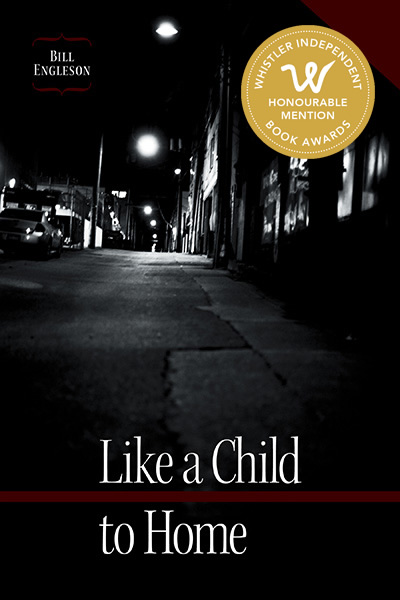
cover-of-lacth-with-badgeMy novel, Like a Child to Home, is a telling, in a slightly noirish style, or so I tell myself, of the final working weeks of Child Welfare Social Worker, Wally Rose. As I was a recently retired Child Welfare Social Worker when I began the book in 2004, there is little mystery to my research style.

In Early 2004, I was contracted by my previous employer, the BC Ministry of Children and Family Development, to write a report detailing a framework for an MCFD Ethics Committee. That report, Through a Kaleidoscope, was completed in May 2004.

Like a Child to Home, or, as I called it then, Next of Kin, began with that report, with that intensive exploration of ethical practice. I am probably sounding too pompous here. What I wanted to do, in a fictional form, was describe, as best as I could, what my experience of working with at-risk kids and families was like. At the time, I had a long-shelved, since dusted-off detective manuscript, Bloodhound Days, whose main character was Wally Rose. I transposed Wally’s name into this new novel.

Borrowed character name notwithstanding, It wasn’t such a leap to view child welfare as having many of the key elements of mystery fiction.

People in crisis are the characters, humans in need. I hope I am not lessening the very real issues people face as opposed to the somewhat imaginary situations characters in novels find themselves.

Family, or loss of or estrangement from family, is frequently the setting.

The plot…how the lives of children and families are unfolding.

The problem…abuse, neglect, death, financial need.

And the solution…usually temporary…always open to interpretation.

So, with this rather generic similarity, I wrote my novel. Initially, the best I could do was write two character studies, two chapters. It was probably at this point that I actually decided to write a full-blown novel. Which I did.

Back Story of Like a Child to Home


November on the Canadian West Coast; it’s often wet, miserable and dark. Lives get messy; streets are unsafe.

Wally Rose is a brooding, sporadically up-beat, old-time social worker. Carla Prentice is an overwhelmed, single mother of two teenagers, one who has lost his way, another who may be losing hers. The Prentice family, paralyzed by fear and silence, can barely keep a lid on their out-of-control lives.

Wally is juggling a convoluted caseload of youth, each coping with more than their fair share of adolescent struggles, the taxing muddle of leftover family distress, and a baffling child welfare system they are submerged in. An old file comes back to bedevil Wally. A habitual line-crosser, he may have pushed his luck one too many times.

Wally has been “nurturing” kids and fellow workers for decades. He has little patience for red tape and is a thorn in the side of his employer. He is also running out of gas. He hopes he can fill his tank one more time, not only to save himself, and those he cares for, from a capricious system, but also to draw his career to a close on his own terms.

Since

I write daily. Something. Anything. Lately, Monday mornings have required the writing of a haiku. Admittedly, the output is numerically minimalist but the satisfaction is almost acceptable.

In the past couple of years, my regular weekly writerly routine has involved the creation of a number of pieces of flash fiction for a variety of sites. Some of these inspiring sites have closed, proving a burden to the hosts, most of whom are not only authors themselves, but working stiffs.

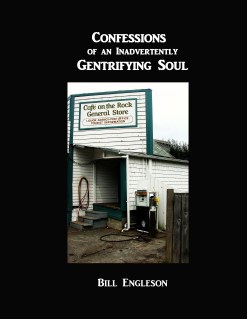
Aside from a prequel to Like a Child to Home, and the resuscitated P.I. novel (with my protagonist re-christened), and the occasional poem, my principal writerly activity at the moment is shepherding a second book, a humorous creation of literary non-fiction, Confessions front cvr1.jpgConfessions of an Inadvertently Gentrifying Soul, released in early October by my publisher, Silver Bow Publishing, along the path of success.
Additionally, a short story, Hell is a Holiday was included in the recent Centum Press anthology, One Hundred Voices.

A recent writing highlight has been the announcement in November’s online CQ magazine that I have won their 2nd Short Story Challenge. The story will be printed in the February edition. Here is a link in case people are unfamiliar with CQ. https://issuu.com/ramblingawaymagzine/docs/cqnov16v2

I am also part of my community. At the moment I am in my final year as Chair of the Hornby & Denman Community Health Care Society. It is a fine service oriented organization.

http://hornbydenmanhealth.com/about-us/people/


Awards

Few, I’m afraid.

This year, Like a Child to Home received an Honourable Mention at the inaugural Whistler Independent Book Awards.

Reading Inclinations

These days, I enjoy Michael Connelly, Philip Kerr and Lawrence Durrell to name but three.

Links

www.engleson.ca

@billmelaterplea

http://www.silverbowpublishing.com/confessions-of-an-inadvertently-gentrifying-soul.html

http://www.centumpublishing.com/product-page/5f32c1aa-3309-3fa5-8aa7-319051d5436f

AND A LITTLE MORE ABOUT BILL

Autobiography
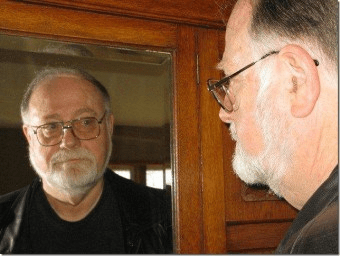
bill-engleson-in-a-reflective-momentOn the day I was born, or thereabouts, my parents pulled into a dock at Powell River and made their way to the hospital.

I am pretty sure it went that way. They never actually spelled out the details and I never asked.

I can’t imagine we lingered more than a couple of days in that seaside town after I was delivered.

The next year and a half was spent on their fish boat. I am told I developed sea legs. I assume that is true. I never fell into the chuck. They never mentioned it anyways.

We finally came to shore in Nanaimo. A Pulp Mill had to be built. My father signed on.

I came of age in Nanaimo. In my later teens, I left, had a truncated Canadian military encounter in Kingston, a tail-between-my-legs return to High School to repeat Grade 12 (after signing a behavioural contract,) and a second, more permanent exit into my own wonky version of maturity and liberation.

I attended SFU as a charter student, dropped out whilst remaining within, immersed myself in student politics, had a six month flirtation with Frontier College and spent more than a decade living in the CRCA, a New Westminster Co-op/Commune which is celebrating its 50th Anniversary in August, 2017.

For a career, I spent twenty-four years with MCFD, initially as a family support worker and, post-Solidarity, 1983, as a child protection social worker.

In 2002, I accepted early retirement but after a couple of months of mind-numbing sloth, went to work, for 1 ½ years, with the Lower Mainland Purpose Society headquartered in New Westminster. Previously I had served on the Board of Directors for many years.

All along the plan, our post-work life plan, was for my partner and me to live in the country, preferably on an Island.

Devil’s Island or Denman Island. It didn’t matter.

Well, it mattered some.

Life on Denman has been full, mostly with writing, volunteering, table tennis and, of late, Pickleball.

To keep as active as is befitting a retired social worker who writes, I maintain a blog, www.engleson.ca, and occasionally post both musings on writing and observations on the state of Child Welfare.

There is an intensity to rural life yet, all the while, a comfortable detachment exists, can exist. The community struggles, yet comes together.

I like to think that my writing hasn’t hindered its intermittent coalescence.



Mystery Mondays: Elaine Cougler on Linking History and Fiction

When I first started blogging, long before I was published, Elaine Cougler was one of the first author’s I met online. She’s been encouraging me ever since, so it’s a great pleasure to finally have her on Mystery Mondays.

book-tour-logo-final

Linking History and Fiction Through Theme

by Elaine Cougler

One of the things I like to do in my books is to show the strengths of ordinary people, fictional though they may be. Putting them in ever more dangerous and extraordinary situations allows me to do just that. In The Loyalist Legacy, for example, Lucy has to find a way to get her husband released from jail where he has been wrongly imprisoned with not so much as a charge against him. Oh, she learns why those in power are holding him. He has helped far too many simple settlers with legal problems over their land in the burgeoning Niagara communities, all too often going against the rich and powerful. In a rough country where democracy is still just an idea, the high-and-mighty rule.

A good shot with her very own rifle, Lucy is the mother of a grown family with grandchildren on both sides of the Niagara River. On more than one occasion she has shown her mettle, but now she yearns for what she had thought would be quiet years with her husband. Instead, she and John are still struggling, this time with their own British government in Upper Canada.

The day John was seized from their mill near Fort Erie, she rushed to Niagara (present-day Niagara-on-the-Lake) thinking John would be released immediately. It didn’t happen. This circumstance gave me, as the author, the chance to have Lucy meet Richard Beasley, the real person who owned the land on Burlington Bay, which the British actually seized as a marshalling station and army camp during the War of 1812.

Beasley’s mostly true story became one of the subplots in this third novel in the trilogy.

Here is the scene where Lucy meets Richard Beasley.

 Lucy lay on the lumpy bed as the snow beat against Aaron’s newly installed glass windowpane and tried to keep the tears from coming again. John had told her to forget about him. He worried that her constant running back and forth from the inn to the jail would aggravate her paining joints. “Go back home, Lucy,” he’d said week in and week out the past three months.

“But I can’t!” Her voice echoed in the bare room. How she ached to have him with her. She rolled over once again, taking care with her right knee. Her latest patchwork quilt at least kept her warm and reminded her of better times.

In the morning she would try to get the jailer to let her bring food to John. His hands were so bony and his trousers so loose, she knew they weren’t feeding him much at all. She would make that jailer listen to reason!

The rebuilt Angel Inn, burned with almost every building in Niagara that December of 1813, this morning bustled with travelers and local hangers-on, all slurping their steaming bowls of porridge and gulping tankards of ale as though they hadn’t eaten or drunk for days. Aaron was back in the kitchen dishing up orders while Lucy rushed as best she could from table to table, side-stepping the boots protruding into the aisles and the arms flung out to emphasize some important point in a customer’s harrowing story.

Her mind was on her plan this morning. That jailer would listen or she would—well, she didn’t know what she would do but she would convince him to let her give John the bowl of porridge she would carry with her. Maybe she’d take two and bribe the jailer with his very own. Ah, that’s a good idea.

“Watch what you’re doing, woman!”

She tripped and fell right into the table, upsetting the bowl of porridge she carried all over the men’s food. “I’m so sorry, gentlemen!” With her cloth she wiped up the mess. “I’ll get more. I wasn’t thinking…Please forgive me.” She couldn’t stop talking and felt the heat spread from her face all down her front, adding to her embarrassment.

“Madam, do not worry.” The well-dressed man’s voice soothed as he spoke. “This is just a trifle. Do not concern yourself.”

She looked up. The speaker was the ruddy-faced, white-haired man she’d noticed when he came in. He smiled at her. He still had most of his teeth. The table put back to rights, she picked up her cloth and curtsied quickly. “Thank you, sir,” she whispered in a voice so soft she wondered if he could even hear it.

But he did. “Landlord! Give this woman a shot of brandy. She’s pale as a ghost.”

The Loyalist Legacy.

Screen Shot 2016-11-12 at 1.22.23 PM.png

When the War of 1812 is finally over William and Catherine Garner flee the desolation of Niagara and find in the wild heart of Upper Canada their two hundred acres straddling the Thames River. On this valuable land, dense forests, wild beasts, disgruntled Natives, and pesky neighbors daily challenge them. The political atmosphere laced with greed and corruption threatens to undermine all of the new settlers’ hopes and plans. William cannot take his family back to Niagara, but he longs to check on his parents from whom he has heard nothing for two years. Leaving Catherine and the children, he hurries along the Governor’s Road toward the turn-off to Fort Erie, hoping to return in time for spring planting.

With realistic insights into the challenging lives of Ontario’s early settlers, Elaine Cougler once again draws readers into the Loyalists’ struggles to build homes, roads, and relationships, and their growing dissension as they move ever closer to another war. The Loyalist Legacy shows us the trials faced by ordinary people who conquer unbelievable hardships and become extraordinary in the process.

Praise for Elaine Cougler’s writing:

elaine-photo-2-from-paula-tizzard6203edit

“….absolutely fascinating….Cougler doesn’t hold back on the gritty realities of what a couple might have gone through at this time, and gives a unique view of the Revolutionary War that many might never have considered.”

Sharon’s Garden of Book Reviews.

“….an intriguing story”                                             A Bookish Affair


“I highly recommend this book for any student of history or anyone just looking for a wonderful story.”

Book Lovers Paradise –“Elaine’s storytelling is brave and bold.”                       Oh, for the Hook of a Book

Oh, for the Hook of a Book

BUY THE BOOK LINK: https://www.amazon.com/Loyalist-Legacy-Trilogy/dp/1539451283/ref=sr_1_1?s=books&ie=UTF8&qid=1478040721&sr=1-1&keywords=The+Loyalist+Legacy+Elaine+Cougler

ABOUT THE AUTHOR + LINK TO MY SITE http://www.elainecougler.com/news/author-bio/

VIRTUAL BOOK TOUR LOGO AND SCHEDULE http://www.elainecougler.com/

Elaine Cougler can be found on Twitter, Facebook Author Page, LinkedIn and on her blog at http://www.elainecougler.com/blog/

Mystery Mondays: M.H. Callway on Short Stories Vs Novels

It is my pleasure to welcome fellow author M.H. Callway to Mystery Mondays. Madeleine and I met online and have since become friends. Her novel Windigo Fire was a finalist for the Crime Writers of Canada Arthur Ellis Award. She writes both short stories and novels, and she’s here to tell you about that.

SHORT STORIES VS NOVELS

I often give talks on how to get published to aspiring writers. One tip I pass on is to start writing shorter pieces. As an author, I found great encouragement when one of my stories was accepted for publication and/or became a finalist for an award. The boost gave me the will to continue and to believe that I had enough talent to pursue my writing dream.

That’s not to say that writing a short story is easy although it is easier than tackling a novel. To use a running analogy, it’s like preparing for a 5K as opposed to a marathon. You need good basic cardio to run a 5K and most people can finish, but running a marathon introduces a whole new level of complexity. It requires far more endurance, experience and will power – and you won’t be able to complete one without the right training.

Would that I had followed my own advice!

I had always wanted to write a novel so that’s where I started. In 2002, I began my learner novel. Ignorance was bliss so I wrote and wrote and wrote. I ended up with 140,000 words of mishmash. Patient author friends ploughed through my verbiage and gave me excellent advice. I revised the draft several times, reduced the length to 100,000 words and mailed it off to multiple rejections and a few near misses.

By now, it was 2006. The Crime Writers of Canada announced a short story contest and several of my friends planned to enter. We are always advised to write what we know and since I’d spent most of my career working in the civil service, I wrote a comic short story about two hard-working civil servants saddled with a new Boss from Hell. To my great surprise and delight, “Kill the Boss” won first prize.

“Kill the Boss” was picked up by Silver Moon Magazine and reprinted in Mouth Full of Bullets. It proved to be a turning point for my writing career, mostly because I’d devoted four years to improve my writing skills.

I spent the next few years writing short stories. In 2009, I decided to try novel writing again. That work eventually became my first published novel, Windigo Fire. Writing and publishing short fiction kept me going through Windigo Fire’s ups and downs and continues to do so while I wrestle with the next book in the Danny Bluestone series, Windigo Ice.

My short fiction starts with a simple idea. When I write a short story, I’m a complete pantser though I usually know how the story is going to end. Often I have the closing line in mind. What I don’t know is how long it’s going to take to get to the end. I simply write until the story is fully told.

I find the process of writing short fiction immensely freeing. Also since I tend to write long, I’ve started exploring the novella form. In our digital age, we aren’t as constrained to rigid word limits as we once were because of the mechanics of print publishing. Nowadays, too, readers have less time, so I believe that the novella form has potential to become popular.

Readers can now find my published stories and novellas together in my new book Glow Grass and Other Tales. It’s available on Amazon in print and digital form.

I love to hear from readers. Do visit my website and leave me your comments at www.mhcallway.com. Or you may contact me at mcallway1@gmail.com.

M.H. Callway’s Books:


12000831_10154197942864018_1649104801334232488_oWINDIGO FIRE

A  Canadian noir thriller.

Danny Bluestone, a young Native man, overeducated and underemployed, is drawn into an illegal bear hunt to escape his stultifying hometown of Red Dog Lake in Northern Ontario.  Things quickly go violent and he must fight to survive both the killers and the wilderness.


glowgrassGLOW GRASS and OTHER TALES:

Revenge, guide dogs, cats big and small, beleaguered ladies of a certain age and a cop with a tarnished heart, meet them all here in Glow Grass and Other Tales.

The characters in the seven stories and two novellas fight for justice even when their sense of justice is warped.  The tales include winners of The Bony Pete and Golden Horseshoe awards as well as the finalists for the 2015 Derringer and 2016 Arthur Ellis Best Novella Award.


Mystery Mondays: Raquel V. Reyes on Networking

Thinking of going to a Writing Conference? Raquel Reyes, author of JEWELER’S MARK, will tell you how to make the most of a conference.  Welcome to Mystery Mondays and another fun filled blog.

Networking Pointers by R. V. Reyes


rvr-sf-16Why should you go to writers conferences? There are many answers to that question, but for me, the best answer is networking. Yes, one also goes to better one’s craft or to hear the headlining guest of honor. And you will get both those things just by attending and sitting in your seat. But if you want to get the most from the conference then you need to go in prepared to network.

I attend SleuthFest in South Florida. The conference is three days of panels, mini- workshops, and demonstrations. There are four tracks: beginning craft, advanced craft, career advancement, and forensics. An add-on called “Third-Degree Thursday” is offered that provides more in-depth workshops. Put on by the Florida Chapter of Mystery Writers of America, it is volunteer run with a twenty-plus year history. This will be my third year as a volunteer and since I am a chapter member I’m also on the planning committee. But before I was behind the scenes, I attended several times as a newbie knowing no one. The people I met those first years are in my network to this day and have provided me with support, advice, back-cover blurbs, agent leads, commiseration, hope, and laughter. When you network at a conference the results are long lasting.

Here are my tips for networking.

Introduce yourself to your neighbor. “Hi, I’m Raquel. Is this your first SleuthFest?”

Curb your ego. Or rather let the other person speak. You’re having a conversation not selling a car.

Be confident in where you are in your career. Don’t worry if you are not published yet. Be honest. Try this: I’m a beginning writer or my work-in-progress is a suspense set in Glasgow. This year I’ll be saying, “I’ve recently published my first full-length cozy, Jeweler’s Mark.”

Have business cards with your name, e-mail, website, social media accounts, and some unique identifier. Mine say Latina Mysteries as all my stories have a Latina protagonist.

Have your elevator speech or log-line at the ready. “A Miami jewelry designer runs into the Russian mafia, murder, counterfeiting and romance while trying to save her brand and best friend.”

Give yourself opportunities to meet people. At SleuthFest there are plenty. 101 Dinner, Mystery Trivia at the bar, Agents & Editors cocktail party, the coffee stand in the bookstore— Don’t run to your room and hide whenever there is a break in the schedule.

Respect the headlining authors, agents, and editors. They are there to meet you but not while they are reading the morning news in a quiet corner of the lobby. Wait until they are mingling at an event then introduce yourself. Sometimes, they’re the first one to break the ice. One time, I was in the hot tub and didn’t know I was sharing it with an agent and her fiancé until she made introduces.

Volunteer. Not only will you be helping the sponsoring organization but you’ll be meeting people by default. Example, volunteering at the registration table guarantees you will know people’s names and they will remember your face.

Relax. When you are genuine, authentic relationships develop. You will find your tribe.

I hope you’ll attend SleuthFest. It’s a quality conference and you won’t meet a friendly group of people anywhere. Plus, I hear South Florida is lovely in February. You’ll find me behind the registration table or milling about selling raffle tickets. Find me and introduce yourself. I’ll be wearing a pink boa. 

WHO IS RAQUEL REYES?

r-v-reyes-head-shotR.V. Reyes lives in Miami, Florida with a dog, a cat, a rabbit, a husband, and one delightfully, snarky teen. Like the protagonist in her Love & Diamonds Mystery series, she works in her family’s jewelry business. When not crunching numbers there, she interviews other Florida Authors on her blog, Cozy in Miami.

Jeweler’s Mark- A Love & Diamonds Mystery

ebookGigi Santos, wedding ring designer and diamond appraiser, is looking forward to her ten-year high school reunion. She is trying to be a better, less gossipy person, but Lourdes, her BFF since forever, has not matured past teenage pettiness. Cover boy–handsome Detective Carlos Garcia comes into the picture to investigate a year-old burglary at Gigi’s jewelry business. They flirt, and sparks fly. Gigi is sure she will have him on her arm as her reunion date. That is, until her BFF becomes the prime suspect in the murder of the reunion’s organizer. Gigi knows Lourdes is innocent and she is determined to prove it. When Gigi’s sleuthing puts her and the people she loves in danger, Detective Garcia tries to keep her out of harm’s way. But she wants a date, not a hero. Will Gigi and Carlos dance under the Miami moonlight? Or will fake diamond rings send them all to jail? Find out in the first of the Love and Diamonds mysteries.
Where to find out more about Raquel:

Website: http://rvreyes.com/
Blog: http://rvreyes.com/blog/
Facebook: https://www.facebook.com/CozyinMiami
Twitter: https://twitter.com/writerRVR

Goodreads: https://www.goodreads.com/author/show/8834980.R_V_Reyes
Book Links: https://www.amazon.com/dp/1536939501


Mystery Mondays: Sheri Levy On Inspiration

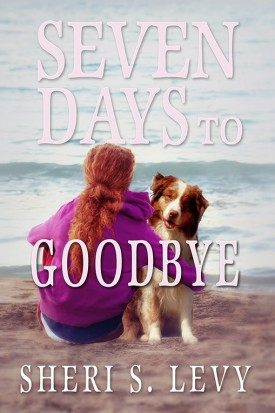
Today on Mystery Mondays we welcome Sheri Levy, award-winning author of Seven Days to Goodbye. If you’re interested in service dogs, there’s a little bit for you at the end of the blog, so read on. Sheri’s book intrigues me. I’ve often thought of getting a service dog but haven’t lived near enough to an urban center to take part in a program.

Sheri is hear to tell us about where her inspiration came from to write Seven Days To Goodbye.

Inspiration for Seven Days to Goodbye By Sheri S Levy

Before retiring from teaching, writing about my experiences with dogs, special needs children, and my favorite beach setting played out like a movie in my mind as I walked my dogs every day.

My story memories began soon after my husband and I moved from California to Georgia. We rescued our first dog, a German shepherd. She lived with us six years, and after her death, we knew we could never live without another dog. Our children wanted an eight-week-old white German shepherd puppy.

Eleven years later with our children grown, our house echoed emptiness. We chose our very first Aussie, Sydney. Six months later, a black Lab, blew into our yard during a snow storm. We continued through the years with three more Aussies, our last one being a difficult rescue. He required me to get involved in extensive dog training.

My teaching experience with special needs children created the idea of using a service dog in my story. Since I had used positive reinforcement with my students, I understood the newest techniques in dog training. Agility training helped my rescue overcome his fears, and taught me commands. When I began writing Seven Days to Goodbye, I chose Sydney as my main character.

I researched service dogs online throughout the U.S. until I made a connection with PAALS. Since they were close to my home, the founder included me in training sessions. I interviewed a young girl who worked as a puppy raiser and used her ambition of helping others as the goal for my main character, Trina. One generous parent shared her son’s difficulties with autism. They lived on the coast, and had a boat. I incorporated his needs of a water dog into my story and created Logan, a seven year old boy with autism. For more conflict, Trina needed a best friend, Sarah, whose interest in guys had changed her overnight.

Edisto Beach became my setting, and I used Sydney’s many beach adventures. My husband and I and our closest friends spent long weekends in a rented old house with two bedrooms and one bath, and a screened-in porch over-looking the ocean. We sat in rockers, with music blaring, enjoying the salty air and the crashing waves.

When I closed my eyes, I visualized Sydney and Jake romping on the sand with our friends’ Springer Spaniel, Darby. Sydney herded the waves and bit the white foam rolling on to shore. When he pursued the sea gulls, Jake chased Syd, and Darby raced after Jake. They made figure eights on the sand until they collapsed with their tongues drooping sideways. After writing my first version, Jake was pulled from the story to add more of an emotional impact.

During the months of May through October, outside lights are forbidden. Each female turtle returns to their birth place to lay their eggs. If they see a light, they get distracted, and head back to the water. One dark night, we spotted a trail going up to the dune and tip toed to our discovery. A loggerhead turtle using her fins, dug her nest and laid over a hundred eggs. Then she moved the sand to camouflage the eggs. It was a first for us, but a common event on Edisto, and had to be woven into the story.

I strived to capture the intense feelings of being on Edisto. Beginning with the drive through oak trees dripping with Spanish moss. Watching the pelicans soar over the ocean in a V-formation against the sapphire blue sky, and an occasional bird diving for breakfast. Tossing crumbs to the squawking sea gulls. Eating boiled shrimp freshly caught. Having your breath sucked away by pink sun rises and orange sunsets. Flinging away the distressing roaches and mosquitoes. And burying your feet in the sand.

I call Seven Days to Goodbye my heart book. There’s as much truth in the story as fantasy. It was great fun creating my characters, plot, and conflicts.

Coming, July of 2017, Starting Over. More fun with dogs, horses, and many new conflicts!

Seven Days To Goodbye

510x765-goodbye-275x413After Trina’s beloved dog dies, she swears she’ll never have another one. But then she learns about service dogs, and realizes that if she becomes a puppy raiser, she could train puppy after puppy and never worry about them dying. But like all great ideas, this one has a serious flaw: Her first service dog must be returned to his kennel at the end of their week long summer vacation. And saying goodbye to Sydney is going to be much tougher than she ever imagined.

Trina’s last week with Sydney is made that much harder by her newly strained friendship with her best friend, Sarah, who’s become so over-the-top boy crazy that she’s almost like a stranger. Sarah is determined to have them hang out with every boy on the beach, but when a boy named Chase takes an interest in Sydney and Trina, it puts an even bigger strain on the friendship.

It’s hard enough to deal with losing Sydney, but now she may lose her best friend, too. And even if she manages to patch things up with Sarah—and figures out what to do about Chase—she still must face a daunting decision: is she strong enough to take on another service puppy?

Who is Sherri Levy?

007_sheri_levyAfter twenty-five years of teaching special education and training her own dogs in obedience and agility, Sheri finds the subject of dogs and special needs children close to her heart. Sheri S. Levy’s magazine article about a diabetic alert dog, “Scent with Love,” was published in Clubhouse Magazine in July 2010. This story was nominated for a Maxwell Medallion Award at the Dog Writers of America Association, February, 2011, awards banquet in New York.
In 2015, Sheri’s debut novel, Seven Days to Goodbye, won another Special Interest Award with DWAA. She is a member of the Society of Children’s Book Writers and Illustrators (SCBWI) Carolinas, teaches writing workshops, enjoys doing author visits, tutor’s students, and volunteers with an accredited, nonprofit service dog kennel, PAALS.


Mystery Mondays: Christine Verstraete on Entertainment and the Big Crime

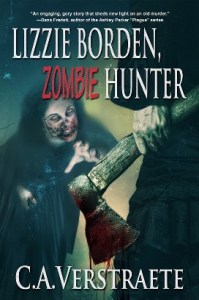
Just under two weeks ago, Lizzie Borden, Zombie Hunter was released, and now I have the pleasure of hosting the author, Christine  (C.A.)Verstraete on Mystery Mondays.

Entertainment (and the Big Crime) of 1892 By Christine (C.A.)Verstraete

Developing and fleshing out a character means researching what their life would be like: where and how they lived, what they liked, what they wore or ate, and even the music they listened to or their entertainment interests.

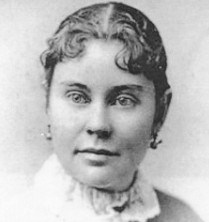
It’s a bit different when your character is based on a real person, especially one as well known as accused murderess Lizzie Borden, lizzie-sm2who was arrested, tried and then declared not guilty of murdering her father and stepmother in August, 1892.

The problem is that even though much is known about her via newspaper reports and crime information of the day, most of it isn’t too personal. There are a few snippets which have come out or can be gleaned from blogs or publications, but much of it is based on conjecture or distant observation, not on first-hand knowledge.

Writing fiction, however, gives you more leeway. After all, giving Lizzie a new life as I did in my book, Lizzie Borden, Zombie Hunter, is certainly far from real. Yet, I did try to stay within the guidelines of her real life situation and the crime. The rest—her actions, likes, personality, even some supposed romantic interests, and of course, the zombies—came from my own imagination.

The interesting part of doing a project like this is researching the time period. There was plenty going on, with crime then as now, deaths (many from morphine abuse), and scandals (Lizzie’s trial becoming the OJ trial of 1892.)

But there also was a big interest in entertainment. Lizzie, of course, is mostly tied up with her trial—and avoiding the gallows—during this time period. But I imagined her also being a big newspaper reader, as most people of the time were then with no other way to get the news.

She not only follows the local papers like the Fall River Herald, but I imagined her reading reports from the nearby Boston Globe. She especially is incensed with the lewd attempts in some publications to heighten publicity about her and her trial. After all, this was “the” story and crime of the day (and the century), and newspapers followed it with a vengeance, seeing it as circulation bonanzas. Readers, if you will, devoured every detail they could get. It was sensationalism at its height. Even nationally, readers couldn’t get enough.

220px-daisybellFor entertainment, sheet music was big with families playing and gathering around the piano. Most everyone knew the words or the tune to songs like Daisy Bell (A Bicycle Built for Two), a big hit in 1892. And it still is a fun song, reminiscent of a much sweeter age, isn’t it?
The lively marches of composer John Philip Sousa had many toes a tapping. What always struck me about older music were the fun titles. You have to wonder what Daddy Wouldn’t Buy Me a Bow-Wow sounded like. (See more musical titles from 1892.)

Live theatre also was a popular pastime for those in better economic positions to buy tickets, just as vaudeville was the entertainment of the everyday person. By 1893, with Lizzie free from jail if not still untainted by scandal, she reportedly did find some solace and freedom in travel and supposedly enjoyed going to the theatre.

In my book, I’m guessing that one play I mentioned , Lady Windermere’s Fan, written by Oscar Wilde, may have hit Lizzie a certain way (or hit too close to home) since it satirized the morals of society. It continues to be produced even now.

Another big theater hit of the time was Charley’s Aunt, which involved an unexpected visit from a rich aunt. It opened in London, had a long Broadway run and enjoyed success worldwide. It still is put on today. (See https://en.wikipedia.org/wiki/Charley%27s_Aunt and https://en.wikipedia.org/wiki/Lady_Windermere%27s_Fan.)

That’s the real fun of writing such a story, I think. It’s learning about, and getting lost in, the details of the time.

Where can you find out more about Christine  (C.A.)Verstraete?

verst-3bsm

Add it on Goodreads: https://www.goodreads.com/book/show/31553183-lizzie-borden-zombie-hunter

Website: http://cverstraete.com

Blog: http://girlzombieauthors.blogspot.com

Amazon: http://getbook.at/LizzieBordenZombieHunter

About Lizzie Borden, Zombie Hunter by C.A. Verstraete

lbzh-front-cover-4-sm2

Every family has its secrets…
One hot August morning in 1892, Lizzie Borden picked up an axe and murdered her father and stepmother. Newspapers claim she did it for the oldest of reasons: family conflicts, jealousy and greed. But what if her parents were already dead? What if Lizzie slaughtered them because they’d become zombies?
Thrust into a horrific world where the walking dead are part of a shocking conspiracy to infect not only Fall River, Massachusetts, but also the world beyond, Lizzie battles to protect her sister, Emma, and her hometown from nightmarish ghouls and the evil forces controlling them.

Mystery Mondays: Winter is Coming: My Top 5 Chilling Reads by Elle Wild

strangethingsdone-finalThis week on Mystery Mondays it’s my pleasure to welcome Elle Wild,  winner of the Arthur Ellis 2015 for Best Unpublished Mystery and author of Strange Things Done.

First, congratulations to Elle. Strange Things Done will be released by Dundurn Press on September 24th, so if you’re looking for something noir to read, need a new thriller in your life, check below for the details on her book.  She’s generously shared her top five chilling reads, and didn’t include her own 🙂

Winter is Coming: My Top 5 Chilling Reads by Elle Wild

 This is my favourite time of year: the snap of crisp air, the lingering scent of wood smoke, and the lengthening of shadows. Winter is coming, and I don’t mean that in a Ned Stark kind of way. It’s the season for books, and I can’t wait to stoke the fire and get cosy with a new mystery or a killer thriller.

I just finished The Unseeing by London-based Anna Mazzola, an elegantly written historical mystery in the vein of Atwood’s Alias Grace. I don’t think it’s out in North America yet, but I highly recommend when it is. I’m currently approaching the third act of With Malice, a blisteringly-fast read by Canadian writer Eileen Cook, with echoes of the Amanda Knox story. Next up in my line of spines: Edgar Allan Poe and the London Monster by Karen Lee Street, which looks to me like a perfect fall read. I’ll let you know how it goes.

In the meantime, I thought I’d share my all-time favourite Top 5 Chilling Reads to usher in the cooler weather reading season.

Top 5 Chilling Reads

#1: Miss Smilla’s Feeling for Snow by Peter Høeg (Smilla’s Sense of Snow in the U.S./Can)

There had to be at least one Nordic noir on the list, right? I love this story about Smilla, a young woman in Copenhagen who becomes involved in the investigation of the death of her neighbour, Isaiah, a child who lived in her building. Smilla is originally from Greenland and is a trained glaciologist, and therefore knows a lot about snow. By looking at the footsteps on the roof of her apartment building, she understands that Isaiah was running away from something, or someone, when he fell from the roof. In short: it wasn’t a suicide, despite what the police might say and the absence of other footprints. I love how moody and evocative Hoeg’s writing is, and the tension between the characters — that sense of hidden turbulence beneath surface conversations, like water under ice.

#2: Alias Grace by Margaret Atwood

This Giller-prize winning novel tells the fictionalized true story of Grace Marks, the 16-year-old servant accused of killing her employer and his housekeeper in Toronto, 1854. The story alternates between Marks’ perspective and that of Dr. Simon Jordan, the physician asked to determine her state of mind, as well as her guilt or innocence. Atwood is a master of shifting perspectives and voices, and I am inspired by her careful layering of character in this work. Marks haunts you long after you’ve stopped reading.

#3: The Luminaries by Eleanor Catton

This sparkling tale won the Man Booker Prize in 2013. The novel takes place in a small, gold-rush town in New Zealand in 1866, and has been described as “Dickens meets Deadwood”. At the outset of the story, a young fortune seeker called Walter Moody unwittingly stumbles into a clandestine meeting in a bar, where locals are trying to solve a series of crimes, including the disappearance of the town’s wealthiest miner. Each character contributes a piece of the story while Moody is tasked with the job of fitting the sections together to make sense of the whole. The trouble is, each character is keeping secrets, holding back parts of the tale. I love the hushed tone of the opening that begins in whispers and steadily builds into the crescendo of loud accusations at the conclusion. Although this novel was 832 pages in length, I felt myself sucked in with Walter Moody and barely noticed the time pass. Others have described how Catton structured the characters as planets rotating in a carefully plotted universe, but for me, I came away with the sense that I had stumbled into the calm eye of a storm and had then been caught up in a tornado of storytelling, spinning along with the other characters. I loved the cold, rain-soaked locale and the prevailing atmosphere of suspicion.

#4: The Dinosaur Feather by S.J.Gazan

Yet another great Nordic noir – this one winning the Danish Crime Novel of the Decade. The story follows the plight of PhD student Anna Bella Nor as she learns that her academic supervisor, Dr. Lars Helland, has been murdered – just before she has to defend her PhD thesis. To make matters worse, a copy of Nor’s thesis was discovered on Helland’s lap when the body was found, drawing the attention of Police Superintendent Soren Marhauge. I love that the noir setting for this story is the dark, twisted labyrinths of academia and the shadowy hallways of the “ivory tower”. Gazan’s artfully constructed characters are both vulnerable and lost, and so terribly self-absorbed that they are barely able to acknowledge one another as human beings. Then there’s the wonderful conflict between scientific process and human emotion

*A word of warning, however: I was completely unable to bring myself to eat meat for a long time after reading this book. Perhaps not ideal for Thanksgiving. Still worth it, though – a pleasingly spooky fall read.

#5: The Little Friend by Donna Tartt

I know that, when it comes to Donna Tartt, most people are all about The Goldfinch and The Secret History, which I also love, but my Tartt favourite is still The Little Friend. Set in the American south, a young girl, Harriet Cleve Dufresnes, sets out to solve the murder of her brother, Robin, who was found hanging in a tree in the backyard of the family’s home ten years earlier, on Mother’s Day. Tartt hooks the reader with her atmospheric opening: you can almost feel the static electricity of the coming storm as poor Robin skips down the steps in flashback to meet his doom. Harriet’s vivid flashes of memory feel like lightning illuminating pieces of an impossible puzzle for the reader, as Harriet sets out to impose a narrative on the chaotic jumble of her memories. The story is a moody exploration of childhood, but one that is haunted by strains of the nursery rhyme, “Who Killed Cock Robin?” This is a perfect read to curl up with during the coming storms.

 So, that’s my five “Big Chills” – but I wish I could have squeezed in a little of Karen Russell’s wickedly absurd Swamplandia (pairs well with a fall paddle around the lake, though it’s more “mysterious” than “mystery”), given a shout out to Michael Chabon’s 40s-nostalgic noir, The Yiddish Policeman’s Union, and served up a slice of Alan Bradley’s outrageously witty mystery, The Sweetness at the Bottom of the Pie, a tasty and autumnal note to end on.

What are you reading this fall?

WHO IS ELLE WILD?

elle_wildELLE WILD grew up in a dark, rambling farmhouse in the wilds of Canada where there was nothing to do but read Edgar Allan Poe and watch PBS mysteries. She is an award-winning short filmmaker and the former writer/host of the radio program Wide Awake on CBC Radio One. Her short fiction has been published in Ellery Queen Magazine and her articles have appeared in The Toronto Star, Georgia Straight, and Westender. Wild’s debut novel, Strange Things Done, won the Arthur Ellis Award 2015 for Best Unpublished First Crime Novel, and was shortlisted in multiple contests internationally. Recently returned from the U.K., Wild currently resides on an island in the Salish Sea named after the bones of dead whales.


Strange Things Done

strangethingsdone-final2015 Unhanged Arthur Award for Best Unpublished First Crime Novel — Winner
2014 Telegraph/Harvill Secker Crime Competition — Shortlisted
2014 Southwest Writers Annual Novel Writing Contest — Silver Winner
2014 Criminal Lines Crime-Writing Competition — Shortlisted
2014 Amazon Breakthrough Novel Award — Longlisted

A dark and suspenseful noir thriller, set in the Yukon.

As winter closes in and the roads snow over in Dawson City, Yukon, newly arrived journalist Jo Silver investigates the dubious suicide of a local politician and quickly discovers that not everything in the sleepy tourist town is what it seems. Before long, law enforcement begins treating the death as a possible murder and Jo is the prime suspect.

Strange Things Done is a top-notch thriller — a tense and stylish crime novel that explores the double themes of trust and betrayal.