Secrets to Writing a Romance

When people hear I’m a writer, they often respond with something like, “Oh, I’ve been thinking about writing a book,” as if a novel can be conjured up over a long weekend. And when I mention that I write romance, the respect level usually drops, even though it shouldn’t.
Romance is the top-selling genre in fiction, accounting for nearly a quarter of all sales, about $1.5 billion in annual revenue. That’s a lot of readers eager to fall in love with a story. But before you grab your favorite mug, settle in with your keyboard, and start crafting that ode to love, it helps to know that there’s a real precision to storytelling. Writing a strong romance isn’t just about chemistry; it’s about structure that supports emotional payoff.

Learn How to Write a Romance

That idea is what inspired Kristina and me to write Secrets to Writing a Romance. We wanted to help writers understand not just how all stories work, but what makes a romance feel different. Every successful novel relies on what we call the five story arc scenes, the key turning points that give a story its spine. Without that foundation, pacing drags, tension fizzles, and the story can lose its way. Structure holds everything together, even in a genre built on emotion.

If you love romance, you already know that a happy ending, whether it’s a Happily Ever After or a Happy For Now, is non-negotiable. But what many writers don’t realize is that the other story arc scenes in a romance differ from other genres. In our book, we map how romance delivers its emotional beats through its core structure: from the meet-cute, to the admission of attraction, to the middle’s emotional pivot, the break-up moment, and finally the declaration of love. These specialty scenes are what make readers sigh, swoon, and turn the pages late into the night.

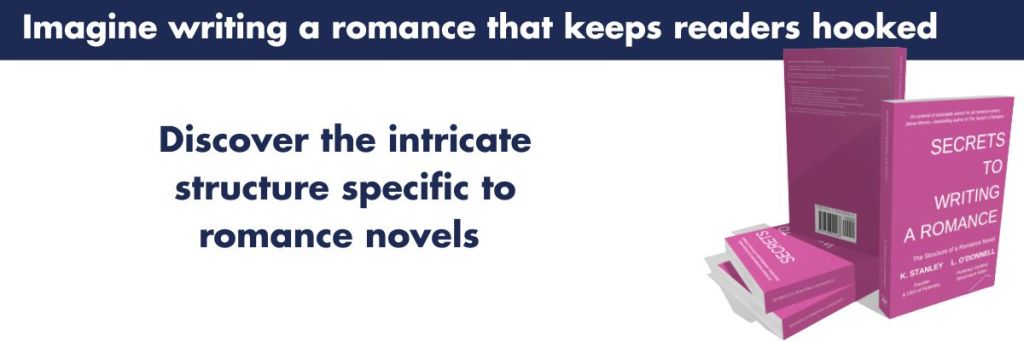
Imagine writing a romance with a clear sense of direction, one that keeps readers hooked through every emotional high and low. Secrets to Writing a Romance offers exactly that: a guide to pairing structure with purpose and letting emotion be informed by design. Think of it as a toolkit for crafting love stories that truly work, both on the page in the heart.
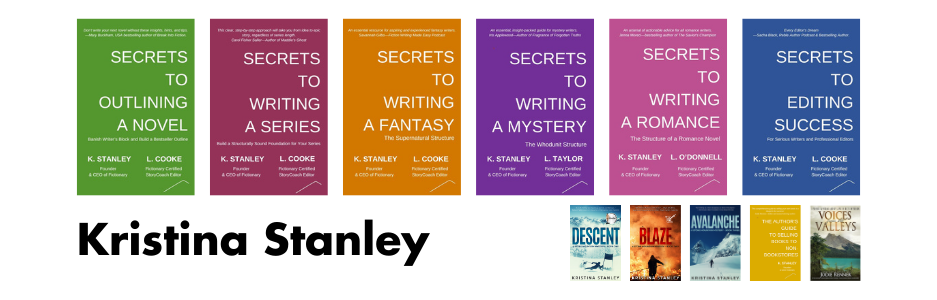
Kristina Stanley, CEO and founder of Fictionary, award-winning writer, and the driving force behind The Fictionary School for Writers & Editors, laid the foundation for this book with her deep expertise in story structure. Together, we shaped our shared knowledge into practical strategies romance writers can use.

Tips for Writing a Romance

Each month, I’ll be sharing a blog post with a practical tip from the book, bite-sized lessons on structure, specialty scenes, and emotional craft you can apply to your own project, no matter where you are in the process. I hope you’ll follow along and join the conversation as we explore how to turn the timeless magic of romance into stories that truly connect.

If you’re ready to dive deeper into the craft of romance, Secrets to Writing a Romance is now available in eBook and print. I hope you’ll pick up a copy and bring its tools into your own writing practice. 

Written by Linda O’Donnell

Linda O'Donnell Linda O’Donnell is a writer, certified structural editor, certified copy editor, and a writing and editing instructor. She co-authored Secrets to Writing a Romance with Kristina Stanley and together, they’re working on their latest book, Secrets to Writing a Novel. Linda’s romance novel, Behind the Scenes, is coming soon.

Want to Learn to Self-Edit?

Join the Fictionary School for Writers and Editors
Learn How To Self-Edit #AuthorToolboxBlogHop

Nano Blog and Social Media Hop2

Thank you, Raimey Gallant for organizing the #AuthorToolboxBlogHop. Today is day one of this new series, and I’m very excited to be part of it.

This is a monthly blog hop on the theme of resources/learning for authors: posts related to the craft of writing, editing, querying, marketing, publishing, blogging tips for authors, reviews of author-related products, anything that an author would find helpful.

To kick off this series, I’d like to talk about becoming your own self-editor.

Why Learn How To Self-Edit?

With the advent of self-publishing, there is no one stopping a writer from publishing poor fiction that does not sell.

So what can new fiction writers do to ensure they’ve written a story that works and is ready to share?

They need to complete a big-picture story edit and rewrite the first draft.

Science fiction novelist Michael Crichton agrees when he says: “Great books are not written–they’re rewritten.   

But big-picture editing and rewriting is hard and can take months to complete.

Today, I’ll give you a place to start with a focus on plot. 

Plot describes the events that take place in your story. The events occur in a sequence, and that sequence forms the structure of your novel. You’ll most likely have a main plot and one or two subplots. Your protagonist (main character) follows the main plot. Secondary characters follow the subplots.

Your job as a writer is to evaluate how you’ve written the plot (and subplots) and to rewrite until you’ve created a compelling story for your readers. Then you can move on to word choice, style, and copyediting.

Your plot is made up of scenes. If you make each scene great, have each scene flow from one to the next in a way that makes sense to the reader, and pay attention to the key elements of fiction for each scene, you’ll end up with a great novel.

The first element under PLOT to evaluate is the purpose of the scene. The purpose of the scene must relate to the overall story. If it’s not driving the story forward, ask yourself why you included the scene in your novel.

Once you know the purpose of each scene, you want to test how the flow of your novel is working. To do this, keep track of how you enter and exit each scene.

For entering each scene, do you:

  • Vary the way you enter each scene in your draft?
  • Have a hook that draws the reader into the scene?
  • Anchor the reader in terms of point of view, setting, and timing?

For exiting each scene, do you:

  • Vary the way you end each scene?
  • Have a hook that makes the reader want to start the next scene?
  • Use a technique that connects the current scene to the following scene?

Answer each of the above questions for every scene, use the answers to rewrite the scenes, and you’ll be sure to improve your story.

More Self-Editing Advice

Join the Fictionary School for Writers & Editors

Learn How To Self-Edit #AuthorToolboxBlogHop Opening A Scene

Nano Blog and Social Media Hop2

Thank you, Raimey Gallant for organizing the #AuthorToolboxBlogHop. Today is the fourth post of this new series!

This is a monthly blog hop on the theme of resources/learning for authors: posts related to the craft of writing, editing, querying, marketing, publishing, blogging tips for authors, reviews of author-related products, anything that an author would find helpful.

To continue hopping through other great blogs in the monthly #AuthorToolboxBlogHop or to join, just hop on over to Ramey Gallant!

I’ll focus my entire series on self-editing. Here is what I’ve covered so far in the series:

Today’s topic is OPENING A SCENE.

Treat every scene like you would treat the opening scene in your novel. You’ve got to hook the readers so they don’t put your book down. You want them to be so intrigued by your scene opening, that they HAVE to keep reading.

You can do this be evaluating the scene opening type,  the scene entry hook, and scene anchoring.

Scene Opening Type

Don’t Bore Your Reader With Repetitive Scene Opening Types. You have four choices for scene opening type:

  • Dialogue
  • Thought
  • Description
  • Action

Go through each scene of your novel and label the scenes with one of the above. Then check that you haven’t been repetitive. Do many scenes in a row starting with one type is tiresome.

Scene Entry Hook

Get The Reader’s Attention With A Great Scene Hook

When creating a scene entry hook, consider:

  • Starting in media res (opening in the middle of action)
  • Foreshadowing trouble
  • Using a strong line of dialogue
  • Raising a question
  • Not wasting words on extraneous description

After your first draft is complete, check each scene and list how you created a hook. As with the scene opening type, you want to vary the method you use. Variety will keep the reader engaged.

Scene Anchoring

Anchor Your Readers, And They Won’t Put Your Book Down

Anchor The Point Of View:

Check whether the reader will know who has the point of view within the first paragraph or at least within the first couple of paragraphs of each scene. If not, the reader might find this frustrating.

If you write your entire novel from one point of view, like many first-person novels, then you don’t need to worry about this.

Anchor The Setting:

You know where the character is because you wrote the scene, but does your reader? If the reader can’t figure out the setting within the first couple of paragraphs, you may lose them–the reader I mean and not the character.

There are exceptions to this. If your scene is about a character waking in a dark place and confused about where she is, then it’s okay for the reader to be confused about where she is, too. This will add to the tension. The reader does need to understand the lack of setting is done on purpose

Anchor The Timing:

 The timing of the scene can mean:

  • Time of day
  • Time passed since the previous scene
  • A particular date

Your readers will get disoriented if they can’t follow the timeline. Check each scene and make sure the timing is clear.

Want to Learn to Self-Edit?

Join the Fictionary School for Writers and Editors

Learn How To Self-Edit #AuthorToolboxBlogHop Emotional Impact of Setting

Nano Blog and Social Media Hop2

Thank you, Raimey Gallant for organizing the #AuthorToolboxBlogHop. Today is the third post of this new series, and I’m very excited to be part of it.

This is a monthly blog hop on the theme of resources/learning for authors: posts related to the craft of writing, editing, querying, marketing, publishing, blogging tips for authors, reviews of author-related products, anything that an author would find helpful.

To continue hopping through other great blogs in the monthly #AuthorToolboxBlogHop or to join, just hop on over to Ramey Gallant!

I’ll focus this entire series on self-editing. The first blog in my series covers Why Learn To Self-EditThe second blog covered Characters In The Context of Editing.

Today’s topic is setting.

THE EMOTIONAL IMPACT OF SETTING

I once read a book where I didn’t skim any of the setting descriptions. Afterward, I wondered why. Engaging settings generate emotion.

I admit I’m impatient with too much description. To learn what captured me, I re-read the book and highlighted every sentence that described the setting. I realized the author only described things or places that were relevant to the plot.

That was the moment I went on a mission to learn everything I could about setting and how to use it to make my novels more enjoyable.

Location

Location is the place where a scene happens. 

When describing the location, ask yourself: Is the location important to the plot, characters, or theme? If no, fewer details are required. If yes, be more generous with the details.

Once you’ve determined the location for each scene, ask yourself if the setting is the best place for emotional impact. This one little question helps you:

  • Increase or decrease conflict
  • Increase or decrease tension
  • Set the mood
  • Highlight emotion
  • Show characterization
  • Slow down or speed up pacing

Thinking about location in terms of emotional impact will wake up your creativity. Let me give you an example.

Suppose you have a character who is afraid of the dark. Imagine the character is about to have a confrontation with an employee. If the character feels confident being in his office and you want the character to be in a position of strength, then use the office as a setting.

If you want him to feel vulnerable during the confrontation, try locating him outside, at night, in an isolated parking lot. And make it very dark. The streetlight is broken. There is no moon. Maybe it’s windy, so a yell for help won’t be heard.

Do you see the difference? The location can help you bring out emotion in the scene by showing conflict, tension, mood, and characterization. Conflict is action that is happening. Tension is the suspicion/dread something will happen.

You decide what emotion you want the reader to feel, then decide how the location can help elicit that emotion.

If you think the location is not the best place for emotional impact, it’s time for a rewrite. Set the scene where you can elicit strong emotions, then rewrite the scene in that location.

More Self-Editing Advice

Join the Fictionary School for Writers and Editors

Learn How To Self-Edit #AuthorToolboxBlogHop: Two Questions To Ask When Writing a Sequel

Nano Blog and Social Media Hop2Thank you, Raimey Gallant for organizing the #AuthorToolboxBlogHop.

This is a monthly blog hop on the theme of resources/learning for authors: posts related to the craft of writing, editing, querying, marketing, publishing, blogging tips for authors, reviews of author-related products, anything that an author would find helpful.

To continue hopping through other great blogs in the monthly #AuthorToolboxBlogHop or to join, just hop on over to Ramey Gallant!


Two Questions To Ask When Writing a Sequel

Action scenes and sequels drove me crazy until I figured out a way to deal with them.

Image Source Pixabay

My simple view of action and sequel:

POV Goal: Girl wants to put beloved fish in new tank.

Action: Girl trips, her hand flops, and the glass tips. The fish falls out. Girl scrambles on floor, gets fish, and puts in tank.

Sequel: Girl mad at herself for dropping fish but proud she saved it.


The Scene: Action or Sequel?

The common terms to define an event in a novel are “scene” and “sequel”, but I find this confusing as “scene” is too generic for me. I use “action” or “sequel” when I’m evaluating my scenes.

An action scene is where something happens. This is written mostly via movement and dialogue. Usually, description and character internalizations during the action scene are kept to a minimum. The point of view character’s goal often drives the action.

A sequel is where a character reacts to the events that happened in the action scene. This can be an emotional reaction, a decision made, or just thoughts. If you do this right, your reader will feel connected to your character.


To Write a Sequel:

At the end of each action scene, ask yourself:

  1. How did the action affect the POV character?
  2. How did the action affect the protagonist if it’s not the same character as the POV character for the scene?

The answers will help you create a sequel that works with the action.

The answers may also help you resolve plot holes. For example, you may find a character felt something you didn’t want them to feel till much later in the novel.

If you have a character whose flaw at the beginning of the story is fear of intimate relationships, and this is the flaw that will change by the end of the story, you don’t want to have a scene mid-novel where the character has an intensely intimate moment with another character.

You want the big change in your character to occur during the climax scene.

You can hint at how the character feels or reacted, so there is growth throughout the story, but don’t solve the flaw until the climax scene.


Keep Track of How Many Scenes are Action or Sequel

Depending on the genre, you’ll want to balance action versus sequel scenes. Action scenes increase the pace of your story. Sequels can be used to slow the pace.

In a thriller, you’ll focus on action scenes. Your readers will still need some sequels to catch their breath and stay connected to the hero.

In a character-driven story, write more sequels than in a thriller so your readers form an intense emotional connection with your characters.

It’s important to know your genre and what works for that genre.


Check out Fictionary’s free 14-day trial, and turn your draft into a story readers love.

Mystery Mondays: New Release by Laurence St. John

It’s such a thrill to share a new release by Laurence St. John. Laurence and I share the same publisher (Imajin Books), and he’s just one of those authors who helps other authors promote their works.

The following is pretty exciting, so get ready…

Terror on the East Coast – Two Million Dead!

TOLEDO, OHIO, March 15, 2018 – Yesterday, more than two million people were killed, including the President of the United States.

The death toll is the worst in the history of America and the world.

This tragic day will be known forevermore as “The Day of Annihilation.”

The CIA has the sole person responsible for the killing of millions and millions of innocent people in custody.

His name is Tyler Thompson – a moral person turned evil. The question foremost on everyone’s mind is, why did he orchestrate this horrific act of terror and how did he pull it off?

This headline is fake news – or is it?

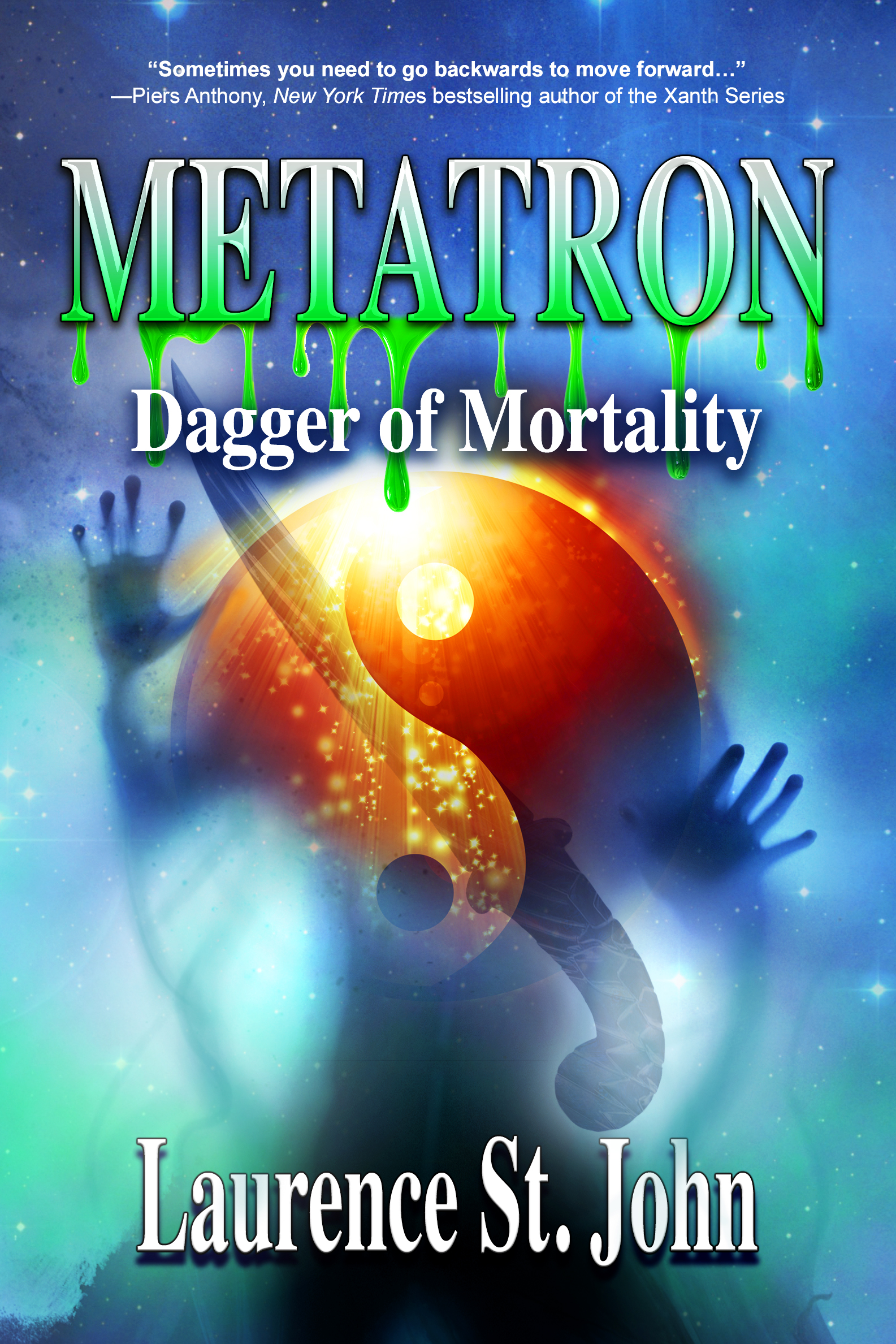
In his new release, METATRON: DAGGER OF MORTALITY, science fiction/fantasy author Laurence St. John creates an uplifting and inspiring fiction novel that “sustains constant action as 15-year-old Tyler struggles to stop the relentless animosity of a demonic figure and his accomplice! Sometimes you need to go backwards to move forward,” said Piers Anthony, New York Times bestselling fantasy Author of the Xanth series.

St. John, who hails from just south of Toledo, Ohio, quickly grabs the reader’s attention then poses the ultimate question: Can superheroes really be killed?

Who is this Black Shadow character and who does he want to get revenge from?

Tyler must execute the most grueling choice of his life – save himself, save his beloved girlfriend Kendall or save millions of helpless people and hinder Kelltie’s plan.

In this, his highly anticipated third action-adventure, St. John keeps readers turning the pages up to the last adrenaline-filled moment when Tyler’s fate is determined.

The story is set in New York, Nevada, and Massachusetts, where the action-packed adventure opens your mind’s eye, conveying the sensation that you’re watching a movie.


Metatron: Dagger of Mortality is a novel made for the silver screen ― action-packed, emotional and a gripping story that will leave you wanting more.
Metatron Book 3 Front Cover 2.8.2018Tyler believes a Superhero’s responsibility is to make the right decision then follow it through to the end. But, what if the outcome results in his death?

Fourteen-year-old Tyler Thompson has been in isolation for eight months so he could focus on completing his superhero training. Not even one day after his completion, Master Pat Tanaka urgently summoned Tyler. Pat desperately needs his help, but for what?

Kelltie is threatening Tyler’s destiny of being a superhero by framing him for what will be the largest mass killings in American history and there’s nothing he can do to stop it. She also teams up with Black Shadow, a ruthless demonic figure with his own agenda — to use the Dagger of Mortality and kill Metatron.

Tyler feeling vulnerable gets inspiration one last time from Master Tanaka’s instructor Master Dogmai. Nevertheless, with the Dagger of Mortality in hand, it’s time for Black Shadow to get his revenge. Tyler must render the most arduous choice of his life. He’ll save himself, save his beloved girlfriend Kendall or save millions of helpless people and hinder Kelltie’s plan.

Can superheroes really die? What choice does Tyler make?


Reviews:

“Metatron – Dagger of Mortality, by Laurence St. John sustains constant action as 15-year-old Tyler struggles to stop the relentless animosity of a demonic figure and his accomplice! Sometimes you need to go backwards to move forward…”

Piers Anthony – New York Times bestselling fantasy Author of the Xanth Series

“Laurence St. John turns up the heat with Metatron – Dagger of Mortality. This book continues the story of Tyler Thompson and his journey of discover as he masters his powers in preparation of a new evil threat. A can’t miss read for middle-grade readers and young adults!”

Braxton A. Cosby – Author of the award-winning Star-Crossed Saga Series

“Dagger of Mortality’ packs a wallop! St. John blends equal parts superhero and X-Files into a high energy yarn sure to inspire.”

Jason Born – Author of The Norseman Chronicles Series

“Teens and adults alike will identify with Tyler and his all too human angst as he executes superhero feats in a way only St. John’s hero can accomplish, with many twists and surprising turns of events in this young adult thriller.”

Kenna McKinnon – Author of Short Circuit: And Other Geek Stories, Blood Sister, and Den of Dark Angels


Metatron: Dagger of Mortality was published by Ogopogo Book an Imprint of Imajin Books and is available in eBook edition at Amazon, Google Play and Kobo. Order your copy today.

It is also available in trade paperback edition at Amazon, Books-A-Million, and Barnes & Noble, as well as other retailers.

View the paperback and eBook links at the bottom of this page.


DSC_9511-1aLaurence St. John is currently working on book four and five in the Metatron Series.
Laurence is also available for interviews/guest appearances.

For book sign dates please see his Facebook page.

For more information please visit:

http://www.laurencestjohn.com or http://getbook.at/DaggerofMortality

Follow Laurence on Twitter: http://twitter.com/laurencestjohn

“Friend Request” Laurence on Facebook: http://www.facebook.com/laurenceastjohn

Imajin Books: http://www.imajinbooks.com

For those of you who have dreamed of having super powers like the Avengers or Superman; or special abilities like the force or even cool moves like Neo in the Matrix, you’ll want to check out METATRON: Dagger of Mortality by author Laurence St. John – a superhero novel that sustains constant action as 15-year-old Tyler struggles to stop the relentless animosity of a demonic figure and his accomplice!

Piers Anthony – New York Times bestselling fantasy Author of the Xanth Series

Tyler believes a Superhero’s responsibility is to make the right decision then follow it through to the end. But, what if the outcome results in his death?

Laurence is a 1983 graduate of Genoa High School, a 1988 Black Belt recipient in Tae Kwon Do and a 2004 graduate of Owens State Community College.

Links:

Amazon – http://getbook.at/DaggerofMortality

3 Reasons To Relate A Character’s Goal To The Plot

Richard North Patterson has some great writing advice. I’d like to take the high-level advice and get practical with it.

Let’s link Patterson’s advice to the point of view character’s goal in every scene.
  1. Deepen characters — have a goal that relates to the story’s plot.
  2. Trim writing — cut story elements that don’t relate to the goal or the plot.
  3. Intensify scenes — have your character strive for a goal that is related to the overall plot.

1. Deepen Characters

Each scene has a point of view character. This character must have a goal for the scene. If there is no goal, then what is the character doing?

To add depth, give the character an internal and an external goal.

The reader is aware of the external goal.

A character’s internal goal is one you may or may not share with the reader. This is something the reader should be able to guess from the story. You as the writer know that the character has an internal goal.

Either goal can be expressed through dialogue, thought, action, or narrative. You need to decide how blunt you want to be when letting the reader know what the goal is. Varying your methods will make the story more interesting to the reader and add depth to your characters.


2. Trim

For each scene, think about how the POV character’s goal is related to the plot of the novel. If you don’t know the answer, perhaps the scene isn’t relevant to the story, or perhaps another character should have the POV for that scene.

Your scene may just need some updating. Can you strengthen the character’s goal? Is there a way to add a goal to the scene so it relates to the novel’s plot? Otherwise, it’s time to trim.


3. Intensify

Whatever type of story you’re writing, there will be a plot. The plot may entail solving a mystery, saving the world, coming of age, or many other things. Only you know the overall plot.

You can intensify a scene using character goals. Here’s a quick example:

The POV character’s goal is to get her car from the service station. That’s not very intense. Ho hum even. But what if we link the goal to the plot.

The plot: The protagonist has witnessed a crime. Her overall goal in the novel it to prove a crime was committed and find who committed it.

The antagonist is trying to find and kill her, but he only knows what car she drives. He doesn’t know where she lives, but he knows where she took her car. In this case, the POV goal of getting the car from the service station may put the character’s life in danger, give an advantage to the antagonist, and intensify the scene.


How Fictionary Can Help You

Fictionary is a new interactive web app for self-editing fiction that helps writers turn a first draft into a story readers love.

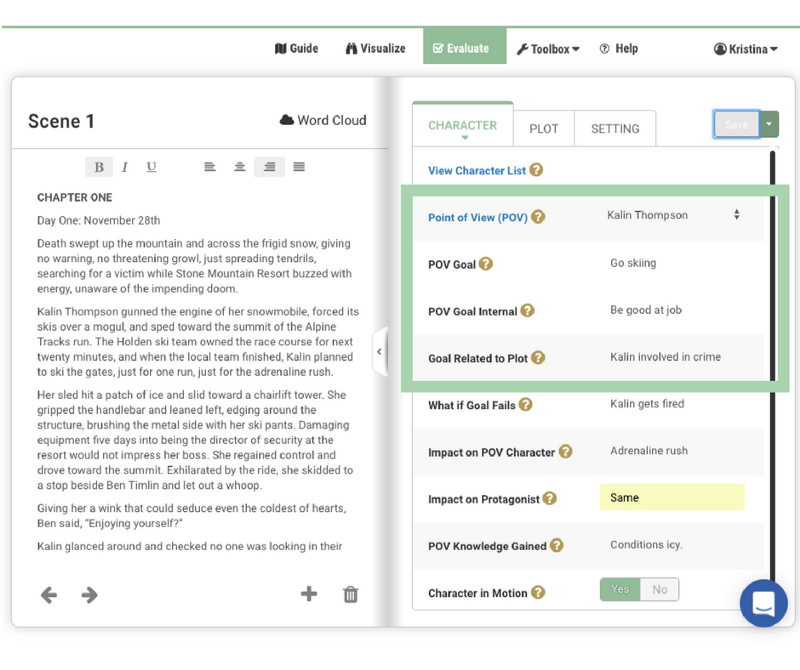
This is a scene from DESCENT (by Kristina Stanley— cofounder of Fictionary)

Finding a murderer is Kalin’s main goal throughout DESCENT. She also has goals within each scene where she holds the point of view.

In this scene below her external goal is to go skiing. Her internal goal is to be good at her job.

The reader is shown Kalin wants to go skiing. She doesn’t achieve this goal because a skier falls and is terribly hurt. She has to put her own wants aside and deal with the situation. This is the start of Kalin’s journey of searching for a murderer. At the time, she doesn’t know she is witness to a crime, she’s only thinking of taking care of the skier. The external goal of skiing places her on the hill at the time the skier falls.

Kalin’s internal goal is to be good at her job. In this scene, she doesn’t know yet this will involve chasing a murderer.

Both goals are linked directly to the overall plot.

The internal and external goal give Kalin depth. It shows she has an active life and enjoys adventure, but it also shows she knows when to put aside her own wishes and be serious about her job.

The first time I wrote this scene, Kalin heard about the accident over the phone. She had no goal. She just reacted by answering the phone. By putting her in an action scene and giving her both an internal and external goal, the scene is intensified.

In my final rewrite of the scene, I trimmed everything that wasn’t related Kalin’s goals or to the plot.

You can use Fictionary to check the character’s goal for each scene is related the plot.


Check out our free 14-day trial and turn your draft into a story readers love.

Mystery Mondays: Judy Penz Sheluk on Fore the Love of Golf (and Writing)

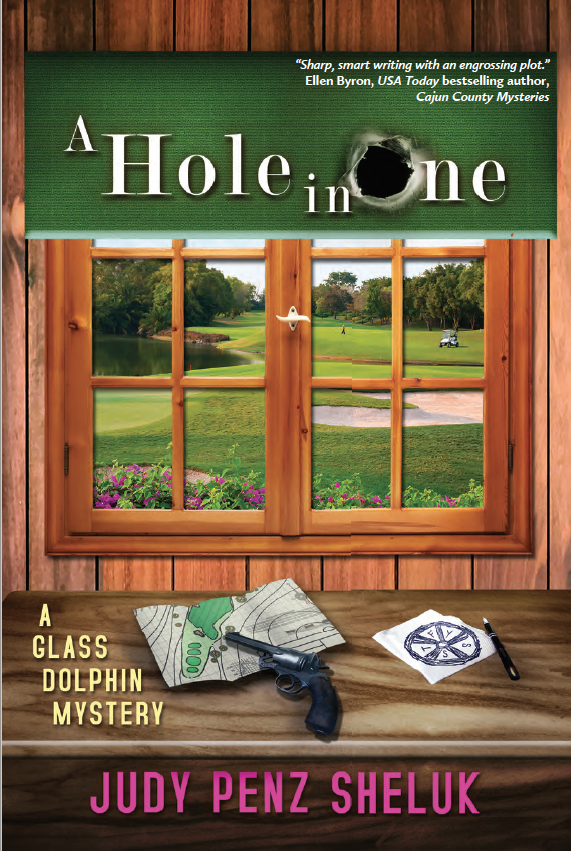
I’m very excited to have Judy on Mystery Mondays again. Before getting to her post, let me share the endorsement I wrote for her latest book: A Hole In One.

A Hole in One is a captivating page turner. Set in the world of antique dealing, dangerous secrets simmer until they lead to murder.

Penz Sheluk is an expert at writing intriguing characters. Past and present relationships drive the story. Along with a splash of romance, Penz Sheluk delivers a fast-paced story with twists that keep you guessing until the very end. You don’t have to be a golf lover to love A Hole In One.

So now go and buy her book 🙂

Fore the Love of Golf (and Writing)

by Judy Penz Sheluk

I’ve been a passionate, if less than spectacular, golfer for about 15 years now, and one of my quirkier hobbies is collecting golf quotes that are also life lessons. Here are five of my favorites:

“It takes hundreds of golf shots to gain confidence, but only one bad one to lose it.” Jack Nicklaus.

So true, and yet, ridiculous when you stop to think about it. The same thing can apply to the negative review that broke your heart, fellow authors – don’t let it spoil all the 4-and 5-star reviews you’ve managed to garner. You can’t par on every hole!

“In golf, as in life, it’s the follow through that makes the difference.” Anonymous.

Ah…would that be like making time to write every day instead of procrastinating?

“To find a man’s true character, play golf with him.” P.G. Wodehouse.

Yup. Also watch the way someone treats the wait staff at a restaurant. Just saying.

“Golf is a game of ego, but it is also a game of integrity: the important thing is you do what is right when no one is looking.” Tom Watson.

Enough said.

“Golf is the closest game to the game we call life. You get bad breaks from good shots; you get good breaks from bad shots – but you have to play the ball where it lies.” Bobby Jones.

This quote from the co-founder of The Masters is my all-time favorite, because it really is true on all counts. But how has golf made me a better writer? I’ll leave you with one last quote, this one from me:

“Golf has taught me to accept that patience is part of the process—patience and a lot of hard work. Practice may not make perfect, but it’ll go a long way to getting there.”

About A HOLE IN ONE

Judy Penz Sheluk’s latest release (March 6, 2018, Barking Rain Press).

Lo-res coverHoping to promote the Glass Dolphin antiques shop, co-owners Arabella Carpenter and Emily Garland agree to sponsor a hole in one contest at a charity golf tournament. The publicity turns out to be anything but positive, however, when Arabella’s errant tee shot lands in the woods next to a corpse.

They soon learn that the victim is closely related to Arabella’s ex-husband, who had been acting as the Course Marshal. With means, opportunity, and more than enough motive, he soon becomes the police department’s prime suspect, leaving Arabella and Emily determined to clear his name—even if they’re not entirely convinced of his innocence.

Dogged by incriminating online posts from an anonymous blogger, they track down leads from Emily’s ex-fiancé (and the woman he left Emily for), an Elvis impersonator, and a retired antiques mall vendor with a secret of her own.

All trails lead to a mysterious cult that may have something to do with the murder. Can Arabella and Emily identify the killer before the murderer comes after them?

 Who Is Judy Penz Sheluk

Opening Day
Judy is in the red hoodie (standing up)

Judy Penz Sheluk is the author of two mystery series: The Glass Dolphin Mysteries (THE HANGED MAN’S NOOSE and A HOLE IN ONE) and The Marketville Mysteries (SKELETONS IN THE ATTIC)

Judy’s short crime fiction appears is several collections. She is a member of Sisters in Crime, International Thriller Writers, the Short Mystery Fiction Society, and Crime Writers of Canada, where she currently serves on the Board of Directors as the Regional Representative for Toronto/Southern Ontario.

Find Judy on her website/blog at http://www.judypenzsheluk.com, where she interviews and showcases the works of other authors and blogs about the writing life.


The Importance of Failure

Failure will make your point of view character human. Failure will add tension to your scene. Failure drives your character and your story forward.

What is the goal?

The reader should understand early in each scene what the POV character’s goal is.

How Serious Is The Goal?

In each scene, the POV character may or may not reach the goal. As a writer, even if the character reaches the goal, you need to understand what’s at stake if he doesn’t. If there isn’t much at stake, there won’t be enough tension in the scene.

If the character’s goal is to have a cup of coffee and he doesn’t get it, will the reader care? Probably not. But what if he wants a cup of coffee, and there is poison in the coffee? Now there is a lot a stake — his life — and the tension just ratcheted up a notch.

To Fail or Succeed?

In some scenes, the POV character should reach the goal, and in others, he should not.

A character who reaches every goal will be unbelievable and won’t be struggling. There won’t be enough tension to keep the reader engaged.

A character who fails at reaching every goal could be hard to empathize with. Again, the character won’t be believable, and your reader may lose interest.

Having a balance of succeeding and failing will keep your reader guessing and engaged in your story. If your story is upbeat, have more successes. If your story is dark, more failure is in order.

The Reaction

Whether the character succeeds or fails, don’t forget to include a sequel to the action. This is the beat where the reader is shown the character’s reaction. Readers love to know how a character feels, and you can use the goals to show the feelings.

Every Scene?

There must be a POV character goal in every scene. Without a goal, think about removing the scene from the story. If there is no goal, the scene might not have a purpose, so review each scene carefully. Maybe you can add a goal to the scene if you want to keep the scene for other reasons.

Fictionary Helps With Character Goals

Fictionary is a new interactive web app for self-editing fiction that helps writers turn a first draft into a story readers love.

This is the first scene from Maxwell Huxley’s Demon (by Michael Conn — cofounder of Fictionary).

Image Source: Fictionary

Maxwell Huxley wakes up with a hand on his mouth. It’s immediately clear his goal is to survive. If he fails, he dies. Something serious is at stake. The goal sets the tone for the novel. The reader knows they are about to read a thriller. The genre is YA thriller.

You can use Fictionary to check the character’s goal for each scene is related the plot and keep track of the impact on the POV character.

Developed by writers to help fellow writers, Fictionary is the first online tool for editing the story, not just the words. Writers are guided through a scene-by-scene evaluation of their manuscript by analyzing key story elements for characters, plot, and settings.

With interactive reports and writing advice for each element, writers can visualize their story and see where and how to improve their writing. With automated progress tracking, writers save time on self-editing and can be confident that their work is ready to share.

How Fictionary Works: A writer imports a manuscript. Within seconds, Fictionary automatically creates a character list, links characters to scenes, plots word count per scene, and draws a story arc.

The writer then inputs key story elements for each scene, evaluates and edits the manuscript based on Fictionary’s reports, and then exports the updated manuscript. The reports in Fictionary are dependent on the writer’s input and is specific to each manuscript.

Why not check out our free 10-day trial? Turn your draft into a story readers love.

Two Types Of Character Goals

A character goal is what a character wants. She should want it so badly that your readers feel her need in their guts.

The Point of View (POV) goal is what the POV character of a scene wants.

Whether you write from a single POV for the entire novel or from multiple points of view, it’s important to know what the POV character is trying to achieve in each scene.


Internal and External Goals

An external goal is the goal a character shows the world.

In a fantasy novel, that might be to find a magic object. The reader and other characters in the novel are aware of the goal. The antagonist(s) will try to make the character fail.

An internal goal is a character goal that the other characters in the scene are not aware of.

For example, a character may have a goal of stealing a jewel from a desk drawer. The other characters in the scene may think the character’s goal is to sit at the desk and calculate the latest revenue figures for their business.

The reader may or may not know about the internal goal, but as a writer, you must keep track of this.

To give a scene depth, have an internal and external goal for the POV character for each scene.

Failing To Reach A Goal

Once you know the POV goal for a scene, you can start thinking about all the ways the character will fail at achieving the goal, what obstacles you put in the way, and how the character will feel about failing or achieving the goal.

This will add tension and conflict to your scenes.

Scene Goal Versus Novel Goal

Your protagonist must have an overall goal for the novel, but she will also have a goal for each scene where she is the POV character.

You may find the POV goal for a scene is the same as the character’s goal for the novel, or you may find the character has a different goal for a scene. In the second case, make sure the scene goal is related to the plot.

For example, in a murder mystery, the protagonist’s goal for the novel is to solve the murder. In a specific scene, her goal may be to uncover a clue, hide something from the antagonist, or something a simple as trying to get a few hours of desperately needed sleep.

Driving the story forward

By giving your POV character a goal in every scene, you’re also giving your readers something to cheer for or cheer against. This will keep your readers engaged in your story and turning the pages.


Fictionary

Fictionary helps you keep track of internal and external goals. You can list the goals right beside a scene, or you can see the goals listed together in the Story map report.

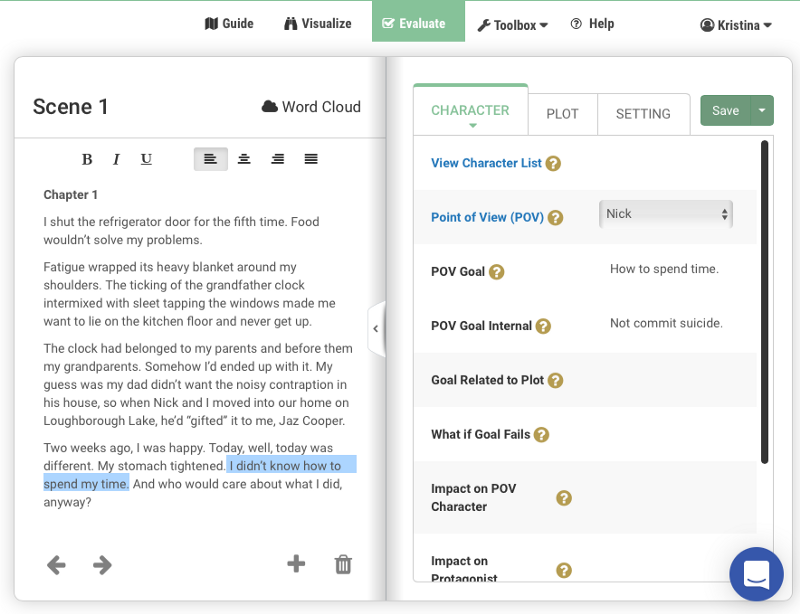
Here is an example of my work in progress, Evolution, from within Fictionary. The protagonist, Jaz Cooper has two goals in the first scene.

She’s struggling with how to spend her time. This external goal is shown to the reader early in the scene (highlighted in blue).

Her internal goal, which the reader doesn’t know about, is her struggle against suicide. As the writer, I know this is her goal, and it influences what I write.

Why not try the free 10-day trial of Fictionary and see if can help you turn your first draft into a story readers love?