Who Is Kalin Thompson?

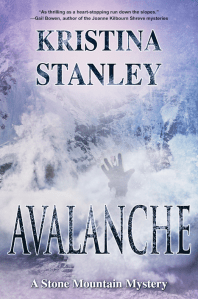
Avalanche Cover FinalWith AVALANCHE about to be released, I wanted to share a bit of Kalin Thompson’s life with you. Before the Stone Mountain Series began, Kalin was married to Jack, had a successful career in Human Resources with the Canadian Government, and loved her life.

Then one day, everything changed…But I’ll let Kalin tell you about it.

A DAY IN MY LIFE by Kalin Thompson

I opened the door to find two Ottawa police officers standing on my stoop.

“May we come in?” the one on the right asked.

No. You may not. Jack wasn’t home yet, and he should have been home hours ago. I wanted to slam the door and run. Instead, I stood there, smiling at them, being polite. What an idiotic time to smile. I took one careful step after another into the living room, trying to slow time. I must have looked as if I was walking the line of sobriety.

“Are you Kalin Thompson?”

Get out of my house. “Yes.”

“Your husband is Jack Thompson?”

I hated these two strangers standing in my living room. The guy had sweat on his brow. From the oppressive heat that day or from what he was about to tell me, I couldn’t know. The woman’s cheeks flushed, and her eyes avoided contact with mine. She examined the photos of Jack and me on the mantle, shuffled her feet and waited for her partner to speak.

Jack and I were supposed to be sitting in an air-conditioned theatre, fingers intertwined, watching the latest James Bond movie. I didn’t have time to talk. Maybe he was waiting for me, ticket in hand, shaking his head at how unusual it was for me to be late.

“You’re husband was riding his bike on Bronson Avenue when he was hit by a car,” the man said.

Okay, that’s not so terrible. He’s at the hospital. I’ll go to him, and he’ll be fine. Except what if he was paralyzed. He must be seriously hurt if the cops were here, otherwise he would have phoned me himself.

I picked up my car key. “What hospital is he at? I’ll go now.”

“He’s not at a hospital.”

“I don’t understand. Then why are you here?”

“I’m very sorry to tell you, but Jack died in the accident.”

I kept breathing, but I’m not sure how. My body still functioned when my mind wanted to shut down. I backed into the living room wall but had nowhere to go. If only I hadn’t answered the door.

“Who hit him?” I asked, like that mattered.

“We don’t know yet.”

“You mean the driver didn’t stop?” Bronson Avenue was a block away from our home. Jack had been minutes away from our driveway.

Minutes from opening the front door, burying me in a hug, and taking me out for the night.

“Have you been driving your car this afternoon?”

“What?”

“We’d like to have a look at your car,” the man said.

I handed my key to the officer, then sagged onto the couch. “It’s in the garage.”

Two years later when I looked back at this scene, I still didn’t understand how something so dreadful could have happened. I couldn’t believe I might never know who killed Jack.

I quit my job and accepted a new one. I’ll be the human resources manager at Stone Mountain Resort in the Purcell Mountains. It’s almost as far west as I could travel and still be in the same country. A big change was the only way for me to survive.

I knew leaving wouldn’t kill the pain of losing Jack. I knew I’d never get over him. But I also knew I had to live. I wasn’t thirty yet.

I got on a plane and flew to Calgary. From there I took the bus to Holden, BC. I took a taxi to Stone Mountain Resort and life began again.

***

If you want to find out what happened next in Kalin Thompson’s life, DESCENT is the first in the “Stone Mountain” Mystery Series followed by BLAZE, and then AVALANCHE. In AVALANCHE you might just find out what really happened to Jack…

A Little About AVALANCHE (To Be Released June 25th, 2016):

On a cold winter morning, the safe at Stone Mountain Resort is robbed, and Kalin Thompson’s brother, Roy, suspiciously disappears. As Director of Security, Kalin would normally lead the investigation, but when her brother becomes the prime suspect, she is ordered to stay clear.

The police and the president of the resort turn their sights on Kalin, who risks everything to covertly attempt to clear Roy’s name. As threats against her escalate, she moves closer to uncovering the guilty party. Is Kalin’s faith in her brother justified? Or will the truth destroy her?

A Gift to My Readers from Imajin Books:

Imajin Books has put AVALANCHE on sale for $0.99 USD for a limited time. Grab your copy before the price goes up. It’s available for pre-order now.
Thanks for reading…

cropped-kristina-stanley.png


Write Better Fiction: POV and Writing A Series

I’ve been thinking a lot about writing a series, and what an author must consider when it comes to point of view.

AVALANCHE is the third book in the Stone Mountain Mystery Series and is to be released June 25th, 2016. When I first started writing the series, I thought I was writing a standalone novel. Of course my characters took over, and now I have a series.

Early on, I decided to write in close third person from multiple points of view. Little did I know, that once I made that decision, I would have to stick to that for the rest of the series.

Here are some questions to ask yourself when you begin your novel. And when you ask these questions of yourself, don’t assume you’ll be writing a standalone novel. You just never know.

Do you plan to switch POVs?

If you’re going to have multiple POVs in your novel, it’s important to let your reader know this early on in the story.

It could be jarring for a reader to get half way through a novel, and the POV is ripped from underneath their feet and a new character steps in.

Changing POVs in the first few chapters will warn the reader this is your style and hopefully they’ll enjoy your book more. They’ll expect different characters to have their say, to drive the novel, and to provide surprises. They won’t get so attached to one POV that they can’t bear the change and toss the novel aside.

What POV type will you choose?

Can you be consistent for an entire novel or several novels?

  • If you chose first person, do you stay in first person? Do you reference anything first person can’t possibly know?
  • For Third person, are you writing third person, third person limited or omniscient? If limited, so you reference things character can’t know about? In limited reader can’t see into characters mind.

For the second book in your series, follow the same POV pattern. The reader will expect a similar style and voice in the second and following books.

BOOKS I’ve read on POV:

The Power of Point of View by Alicia Rasley

Characters and Viewpoint by Orson Scott Card

Characters, Emotions and Viewpoint by Nancy Kress

A Little About AVALANCHE (To Be Released June 25th, 2016):

Avalanche Cover FinalOn a cold winter morning, the safe at Stone Mountain Resort is robbed, and Kalin Thompson’s brother, Roy, suspiciously disappears. As Director of Security, Kalin would normally lead the investigation, but when her brother becomes the prime suspect, she is ordered to stay clear.

The police and the president of the resort turn their sights on Kalin, who risks everything to covertly attempt to clear Roy’s name. As threats against her escalate, she moves closer to uncovering the guilty party. Is Kalin’s faith in her brother justified? Or will the truth destroy her?

A Gift to My Readers from Imajin Books:

Imajin Books has put AVALANCHE on sale for $0.99 USD for a limited time. Grab your copy before the price goes up. It’s available for pre-order now.
Thanks for reading…
Thanks for Reading…

Kristina Stanley

Author Rosemary McCracken Talks Location

Today, Tuesday June 7, is the FINAL day Raven Lake is available for the special promo price of 99 cents!


Screen Shot 2016-06-07 at 5.15.15 AM 

Location! Location! Location!

Thank you, Kristina, for hosting me here today. When I think of your Stone Mountain mysteries, their spectacular setting pops into my mind—a ski resort high in the Canadian Rocky Mountains. So I thought it would appropriate to share some of my thoughts about setting with your followers.

Setting is the backdrop against which characters act out the events of the story. But it’s impossible to powerfully capture a setting by objective description alone. Today’s readers will just skim over paragraphs of exposition. It is through the eyes and heart of a character that a place comes alive. How does the character feel about this place where she lives or is visiting? That, and a few vivid details, can create your story’s backdrop.

Historical novels—set in Tudor England, ancient Egypt and Rome, the American Old West—seem ideally suited to display setting. Their authors have researched the visual backdrops: the buildings, the clothing, the modes of transportation. But they also need to create a sense of the times on the page through dialogue and their characters’ body language and manners.

Settings are either real or fictitious. If your character finds herself in Paris, you have a real setting and your readers probably know enough about Paris to form a mental picture of the city. But you’ll need to make sure you have your facts straight. You may want to save up for a trip to Paris to find out how long it takes to ride the Métro from Champs Élysées to Port-Royal. (And at tax time, you can claim the trip as an expense against earnings from your writing.)

For stories such as Alice in Wonderland and Lord of the Rings, their authors had to create fictional settings, which takes a lot of work. They had to map out their fictional landscapes carefully in order to present them clearly to their readers.

Safe Harbor, my first Pat Tierney novel, is set in Toronto, where I currently live. I used neighborhoods that I know well, but I fictionalized some things such as the name of a Toronto newspaper, the Toronto World. In his review in the real Toronto Star, Jack Batten wrote that Safe Harbor has “an exact feel for the Toronto locales.”

I set Black Water, the second mystery in the series, and Raven Lake, the third that has just been released, in Ontario cottage country north of Toronto. The setting is inspired by the Haliburton Highlands, lake country on the Canadian Shield north of Toronto that I know and love, but I’ve fictionalized it. I call it the Glencoe Highlands, and I’ve created a town called Braeloch, which incorporates some aspects of the two real towns in the area, Minden and Haliburton Village. I needed to create special places in Braeloch and in the surrounding countryside for my plots that don’t exist in the actual area.

I’ve included a disclaimer in both novels that says they are “set in an imaginary part of Ontario cottage country that bears a strong resemblance to the real Haliburton Highlands. None of the Haliburton Highlands’ residents appear in this book.”

In the planning process before I start writing, I draw up a list of the key settings that I know will appear in the novel—and others may crop up as they are needed. Pat Tierney’s home or where she is based in that story will always be an important location. The wider geography of the area is also featured in Black Water and Raven Lake. In the first, Pat drives over the township’s frozen lakes in a snowmobile. In the second, she explores the same chain of lakes in a kayak.

There are times when setting seems to participate in the story. Places in a novel may have a special—maybe even a magical—significance. The diner where the protagonist and her friends hung out when they were teenagers. The stone quarry where they swam in the summer. In Raven Lake, Pat’s kayak takes her to places she would have difficulty reaching without it, and her trips over the lakes help her unwind and think about the puzzles she’s trying to solve.

Setting can be effective when it goes against readers’ expectations. Ray Bradbury uses a carnival setting for terror in Something Wicked This Way Comes. In Stephen King’s The Mist, people are trapped in a supermarket when a fog filled with nightmare creatures surrounds the store. In Raven Lake, a murder takes place during a Canada Day fireworks show.

But beware of going overboard with setting. You may have spent hours on research, but you don’t need to use everything you dig up. A rich, detailed setting can overwhelm the story. The setting should always be positioned behind characters and events.

WHO IS Rosemary McCracken?

OLYMPUS DIGITAL CAMERA

Rosemary McCracken has worked on newspapers across Canada as a reporter, arts reviewer, editorial writer and editor. She is now a Toronto-based fiction writer and financial journalist. Her first Pat Tierney mystery, Safe Harbor, was shortlisted for Britain’s Crime Writers’ Association’s Debut Dagger in 2010 and published by Imajin Books in 2012. It was followed by Black Water in 2013. “The Sweetheart Scamster,” a Pat Tierney mystery in the anthology Thirteen, was a finalist for a Derringer Award in 2014. Rosemary’s third Pat Tierney mystery, Raven Lake, has just been released! Jack Batten, the Toronto Star’s crime fiction reviewer, calls Pat “a hugely attractive sleuth figure.”

Follow Rosemary on her blog, Moving Target at http://rosemarymccracken.wordpress.com, on Facebook at www.facebook.com/rosemarymccracken and on Twitter @RCMcCracken. Visit Rosemary’s website at http://www.rosemarymccracken.com/.

Here are links for the books mentioned in the blurb above. The first three are universal links for Amazon, so whoever clicks on them will reach the Amazon in his/her own country.. Thirteen’s is a link to Amazon.com

Safe Harbor: myBook.to/SafeHarborTierney

Black Water: myBook.to/BlackWaterTierney

Raven Lake: myBook.to/RavenLakeTierney

Thirteen: http://amzn.to/18oY8mF


Mega thanks!

Rosemary


Mystery Mondays: J.D. Hawkins on Setting Up Suspects

Today on Mystery Mondays we welcome, J.D. Hawkins would be lion tamer turned authors.

Setting Up Suspects by J.D. Hawkins

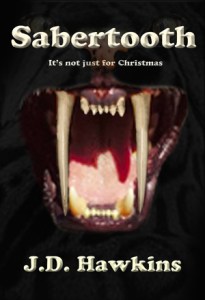
Front300In mystery and suspense writing, the last thing a writer wants to do is to make it obvious who committed a murder or perpetrated whatever crime or event that is at the heart of the story.

There are different ways to lead the reader through a labyrinth of clues in a way that will provide plenty of the mental exercise of working it out that most mystery readers crave. One method is to have the perpetrator hide in plain sight; someone close to the main protagonist who appears to be above suspicion until a sequence of clues slowly begins to reveal that all is not how it seems.

Another approach is to single out an innocent character and make them look like the guilty party, diverting attention away from the real culprit until the very end. Sometimes these two techniques are used in combination to good effect.

My own favorite process, however, is to set up several suspects, each with a possible means and motive, so that the reader is kept guessing until the very end. This scenario has been used by some of the most famous and popular mystery writers of all time; Agatha Christie and Arthur Conan Doyle to name two. Especially in the realm of murder mysteries, the story quickly becomes a whirlpool of clues and diversions that lead the reader (and the protagonist) on a merry chase to sort out what is relevant and what might be a decoy or distraction from the real solution.

In A Spark of Justice, my protagonist is an insurance investigator who has to determine whether the death of a lion tamer was an accident or a premeditated murder. This gave me a lot of scope for presenting alternative possibilities. Like many writers, I drew from my own past experience that made me aware of life within the circus environment to depict a closed society of people who would make the investigator’s job more difficult.

I also set up several possible suspects; the jealous and possibly unfaithful wife, the mistress who might have discovered that her lover had led her along with false promises, various co-workers within the circus environment who might have carried their own grudges and not least of all, the possibility that it had actually been an accident. Investigator John Nieves has plenty of motive and opportunity to sift through, while also confronting questions of his own identity and desires for his future.

A good mystery story has multiple levels so that the reader gets to know not just the protagonist, but also all the main suspects. They become familiar, like people known in real life. Whether they would be capable of murder provides food for thought and speculation.

In the circus world I chose for my story, the deadly predators; the big cats, provided an additional level of familiarity with a non-human form of character as well as an alternative possibility; was it just a fluke of circumstance in a high risk profession where a wild animal was only doing what came naturally? As a cat lover myself, I have to confess that including the big cats among the characters my readers get to know was a pleasurable indulgence, as well as a source for comedy value. The pranks played on the investigator by the circus people add a sense of fun and adventure to what would otherwise be a very serious situation. Bringing the Circys (circus people) under suspicion also added conspiracy to the list of possible solutions.

The art of mystery writing is in setting someone up. Whether the antagonist appears to be an innocent party, one of a collection of suspects or a bystander who the reader doesn’t give a second thought until the big reveal in the final conclusion, someone gets set up to take the fall. Half the fun of reading in this genre is to try to work out who and why. The writer’s job is to answer those questions before the end, as well as providing a stimulating story and memorable characters to love, hate or fear along the way.

In my next book, Sabertooth, it is my characters who face the mystery. Are the murders in Los Angeles being committed by a serial killer or by an animal? The readers may think they know the obvious answer all along, but in the end, they just might be wrong.

WHO IS J.D Hawkins?

Front300-1J.D. Hawkins is a native of Los Angeles where most of his stories are set, but has also lived in Hawaii and the Midwest States. He spent part of his youth traveling with a carnival and has lived through many real life adventures that include hitchhiking cross country and living through one of L.A.’s more famous earthquakes.

He began writing stories in high school and has turned his hand to writing Mystery and Thriller novels, intentionally devising more original themes than the usual police procedurals and standard murder mysteries.

He once seriously considered becoming a lion tamer and fantasized owning a zoo as a child. He still gives regular thought to becoming involved with a Big Cat sanctuary and this love of wild felines may come out in the plots of some of his stories.

https://jdhawkinsmysteries.wordpress.com/

https://www.facebook.com/JohnDeanetteHawkins

A Spark of Justice:

The Great Rollo had enemies and dirty family secrets. Investigator John Nieves enters the surreal world of the circus, determined to learn if the lion tamer’s death was an accident or foul play, but a series of mishaps suggests that the Cirkys are desperately trying to hide the truth. In his struggle to overcome a childhood fear of clowns and to come to grips with his own search for his Latino identity in a hostile world, even attempts on Nieves’ life cannot thwart him from his obsession to learn who killed the lion tamer.

Buy A Spark of Justice at http://www.amazon.com/Spark-Justice-J-D-Hawkins-ebook/dp/B014AB4BYU


Farley’s Friday: Bears and Dogs

Farley here,

It’s bear season again, and you know that means. I’m back on a leash. I made the mistake once, only once, of chasing a bear, and now Kristina thinks I’m not reliable when there are bears around.

This guy was in our backyard last year. We’d just come home from a walk, and he was meandering across our grass and over into the neighbours yard.  He’s pretty little, so what harm could he do. He’s giving me a snarky look because I’m barking at him. No chasing though. Kristina has a good grip on my harness.

IMG_2230

But I can still have fun with a leash on. Kristina lets me sneak around the golf course sometimes. This is my favorite hill. Rolling down it is a blast. Then it’s back to Kristina and walking on leash. I don’t know why that’s safer than walking off-leash. But she’s in charge, so what’s a dog to do?

Farley rolling downhill

Woof Woof

Blaze – a review

Thank you, Roland for this thoughtful review of Blaze. it’s made my day , so I have to share it with others. 🙂

Roland Clarke's avatarWriting Wings

Having finished two novels in quick succession last week, there will be two book reviews this week as well as my Insecure Writers Support Group monthly post tomorrow.

First though a review of another mystery novel that gave me some more insights into writing an engrossing and exciting read.

Blaze_27218007

Blaze (A Stone Mountain Mystery #2)

by Kristina Stanley 

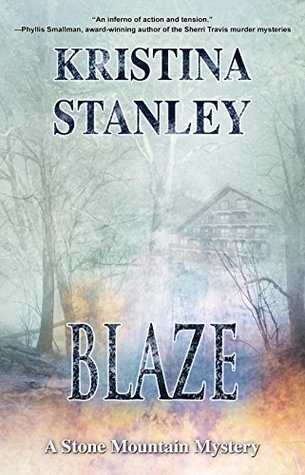
Instead of exchanging vows, Kalin Thompson spends her wedding day running from a forest fire near Stone Mountain Resort, and the pregnant friend trapped with her has just gone into labor. Meanwhile, Kalin’s fiancé, Ben Timlin, hangs from the rafters of a burning building, fighting for his life. Can the situation get any hotter?

When the fire is declared as arson, finding the firebug responsible becomes Kalin’s personal mission. In the course of her investigation as Director of Security, she discovers that some people will go to extreme measures to keep…

View original post 281 more words

RAVEN LAKE flies tomorrow!

Today is the last day to book a 99¢ pre-order of RAVEN LAKE. The third Pat Tierney mystery will be released tomorrow, June 1! And tomorrow I’ll start my whirlwind seven-day blog tour. Here’s my ske…

Congrats to Rosemary McCracken!  Her new books releases today and I can’t wait to read it. Source: RAVEN LAKE flies tomorrow!

Mystery Mondays: Tracy L. Ward on Dreamers, Wishers and Do-ers

Today on Mystery Mondays, we welcome Tracy L. Ward, author of PRAYERS FOR THE DYING. Both Tracy and I graduate from the Humber School for Writers, so I thought they deserved a little shout out.

If you’re thinking of writing a novel, this is the post for you!

Dreamers, Wishers and Do-ers by Tracy Ward.

There are a lot of great writers out there, and I mean A LOT.

I’m not talking about the Dan Browns or Diana Gabaldons of the world. Everyone knows them. Readers everywhere buy their books and praise their abilities. There’s no question that these A-list authors have made their mark on the book industry. I’m also not talking about the mid-list authors either. The lesser known, but still lovingly followed, authors who never seem to disappoint as they produce fabulous books of note and stellar characters we readers want to hear from again and again.

Today I want to talk about the writers who have never been published. The ones who have never gotten passed the first few chapters. The writers who have never progressed passed the idea stage. The dreamers. The wishers. The would-be authors.

As an established writer I meet people all the time who tell me they have always dreamed of being an author. They tell me it’s been a dream of theirs since they were a child. They’ve had an idea in their head for years but have struggled to get it out onto paper.

Recently, I’ve been helping my thirteen-year-old son, who struggles with writing as well. He’s an avid reader and is a pretty good speller, but his sentences, his stories, his descriptive writing are all below his grade level. I’ve noticed how he clams up when we sit down to do his school work. Suddenly, with a notebook in front of him, his normally chatty self has run out of words. I think I’ve narrowed down the culprit.

Fear.

Like the would-be authors, my son is afraid of making a mistake. He’s afraid of looking foolish (perhaps more so because he knows what his mother does for a living). When it comes down to it, it’s not that he’s run out of words or that he doesn’t know what to say. It’s that nagging fear that tells him whatever he gets down on the piece of paper will not be good enough or that it will be wrong somehow. He’s doomed before he starts, so why bother?

Here’s why…A first draft is just that; a draft. Nothing you write is written in stone. Get used to that doubt. Say hello. Invite it for tea. Snuggle up to it on cold winter nights. It’s not going anywhere, so you might as well be friends.

Getting through a first draft is UG-LY. It’s like taking a look at a 2000 piece puzzle for the very first time. What the heck did we get ourselves into? Knowing this from the get-go, I force myself to write every day, 500 words minimum, until that puppy is D-O-N-E. I push myself forward even when that nagging doubt chips away at every word. By the time I get to the last paragraph my first draft resembles my weather-worn “Blankie” from my younger years. It’s misshapen and colourless with holes so big you can drive a Mack truck through them. It’s hideous.

So, what’s a girl to do?

Scroll back up to the top and start reading from the very beginning. Fix those sentence fragments. Erase superfluous characters. Give that antagonist a little more depth. Add a scene, delete a scene. Do whatever it is your book is telling you to do. None of this can happen without that first draft tough and that’s the truth. It’s an evolutionary process and it’s much easier once that first draft is done. That first draft is like the frame work of a house. It sort of resembles a home and there’s still quite a bit more to do, but at least now you know what the main structure looks like and you can better see what needs your attention.

So if you are a would-be author who’s dreaming of finally getting that idea out, my advice is stop. Don’t dream. Don’t doubt. Just do.

PRAYERS FOR THE DYING:

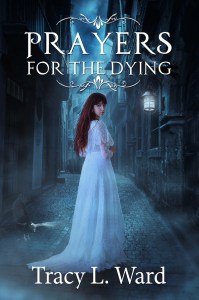
Small Prayers CoverDr. Peter Ainsley knew it was only a matter of time before London claims another murder victim, but this time the body is discovered tied to a lamppost four doors down from the house Ainsley shares with his sister and their bedridden father. The day the body is discovered, a maid of their house and Ainsley’s lover, Julia Kemp, fails to return home from errands in the city.

Convinced the body found in Belgravia and Julia’s disappearance are related, Ainsley follows leads that point him to an infamous bookman, Thaddeus Calvin, known as much for manipulating boxing outcomes as he is for his violent temper. Fiercely protected by the neighbourhood he extorts, Thaddeus is like a ghost, so deeply feared even Scotland Yard is unable to charge him for his crimes.

When another young woman’s body, a housemaid like Julia, is discovered floating in the river Ainsley hastens his desperate search to discover Julia’s whereabouts before she too becomes just another murder victim found in the Thames.

WHO IS Tracy L. Ward?

Author HeadshotA former journalist and graduate from Humber College’s School for Writers, Tracy L. Ward has been hard at work developing her favourite protagonist, Peter Ainsley, and chronicling his adventures as a morgue surgeon in Victorian England. She is currently working on the sixth book in the Marshall House Mystery series set for release in 2017. To find out more about Tracy’s books follow her on www.facebook.com/TracyWard.Author or visit her website at www.gothicmysterywriter.blogspot.com


Should You Do a Thunderclap Campaign?

The Thunderclap.it story continues. On May 28th, 2016 at 10 AM my campaign went out to 1,793,812 people.  Thank you to everyone who supported the campaign. Your effort made a big difference in my life, and I’d like to share the data from yesterday.

Screen Shot 2016-05-29 at 6.49.56 AM

Moments before the message was sent, my stats on Amazon.ca were:

Screen Shot 2016-05-29 at 6.54.17 AM

Later in the day, here’s what happened:

Screen Shot 2016-05-29 at 6.54.57 AM

That’s enough of an increase to make me happy 🙂

So should you do a campaign?

My campaign for was a non-fiction book, so keep that in mind. I’m not sure if it would be successful for a fiction book. I don’t plan to do one for AVALANCHE  when it’s released, June 25th.

Preparing for the campaign takes a fair amount of time. You must contact people personally when you first start the campaign. You need 100 people to support you for the campaign to go live. After I reached 100 people, I spent 3 weeks contacting others in my network asking for support. At the end, I reached out personally to all supporters and thanked them.

Time consuming – yes. Fun – also yes.

Would I do it again? Yes. But only for a non-fiction title.

Thunderclap is a crowdspeaking platform that helps people be heard by saying something together. It allows a single message to be mass-shared, flash mob-style, so it rises above the noise of your social networks. By boosting the signal at the same time, Thunderclap helps a single person create action and change like never before.

And a little secret…Imajin Books has decided to keep THE AUTHOR’S GUIDE TO SELLING BOOKS TO NON-BOOKSTORES on sale for a little while longer. You can still get a copy for $0.99 USD at myBook.to/SellingBooks

If you have thoughts on doing a Thunderclap campaign, please share your thoughts in the comments below.

Thanks for reading.

HOT NEW RELEASE: Selling Books to Non-Bookstores

In the life of an author, one of the best days is the day a new book is released. Today is that day for me. 

I’m feeling awesome and would like to thank Cheryl Kaye Tardif and Imajin Books for suggesting I write this book and for publishing it.

My trek to visit as many non-bookstores as possible led me to sell more books to non-bookstores than bookstores, so I took photos throughout the journey.

AGSBNB Photo colllage in stores

The best moment during the pre-release phase:

Screen Shot 2016-05-27 at 12.08.10 PM

Who wouldn’t want to be placed beside the “nice” shark, Robert Herjavec?

If you’d like to buy the book it’s available at:  AmazonKoboGoogle Play Also on iBooks

Thanks for reading…