Scrivener and Setting Summaries

Scrivener is still helping me write.

In Scrivener and Scene Summaries, I wrote about using a template for asking a series of questions about a scene to ensure I making the most of the opportunity to engage readers in the story.

I’ve added a second template where I ask myself the following questions about the setting of the scene.

  • Role In Story
  • Related Characters
  • Unique Features
  • Description
  • Sights
  • Sounds
  • Smells
  • Objects
  • Notes

This helps in several ways.

  1. I keep track of how many times a use the same setting. Sometimes it’s easy to write about the same setting, but maybe that’s a lazy way to write. i follow this up by asking myself, could be the scene be set somewhere else that would further the plot and make the story more interesting?
  2. If I use a setting more than once, this is a memory aid for keeping the descriptions consistent and for not repeating details.
  3. If I don’t fill out enough of the points, I haven’t put enough effort into describing the setting.
  4. I use the notes section to remind myself of how I want to use the setting later in the novel, Perhaps I’ve used setting for foreshadowing and I want to remember to follow through later in the story.
How do you ensure your settings work for you and move your story forward?
Thanks for reading . . .

 

Lagoon 380 S2: Air Conditioning

How to keep happy on a Lagoon 380 in the heat of the south, you ask.

Air conditioning is certainly a personal choice and depends on where you plan to sail your boat. For us, we have two units on Mattina. One for the main salon and one for our cabin.

Every year, Matt checks the units to make sure they are functioning properly and does any maintenance required. Wouldn’t want to have to overheat.

Airconditioner

No surprise to anyone, but Florida is hot and the three of us love to turn on the air. Our dog has figured out the coolest spot on the boat is close the vent. The unit is our cabin is situated perfectly to blow air across the bed. I can’t imagine being in the tropics without this luxury.

There’s nothing like a cool boat to give a person a good night sleep.

Thanks for reading . . .

Tips For Writing a Synopsis

There seems to be a common thought that writing a synopsis is difficult, and I have to agreed.

In my post, How To Use A Spreadsheet For Your Synopsis, I give tips on how to use a spreadsheet to help you write your synopsis. But I have more to say on this subject. Like all things to do with writing, there is a lifetime of learning associated with talented synopsis writing.

Today, I want to talk about word limits and how they can help you improve your synopsis.

Publishers, agents, writing competitions usually ask for a synopsis and they usually give a word limit.

To make meeting the word limit easier, cut the limit in half. Yup, you heard me. If the limit is 1000 words, write a synopsis in 500. Don’t go over the 500 words. When you are satisfied that you’ve written the best possible synopsis in under 500 words, then and only the, can you start adding words.

Now you have 500 words available to improve your synopsis.

You may find you have room to add a subplot or show how you develop a character. You may find you want to delve deeper into the setting. You now have 500 words to do this.

It’s amazing how much easier it is to work your way up from 500 words to a 1000 than to try and cut from 1500 to 1000 words.

Please let me know if you have any tips for synopsis writing.

Thanks for reading  . . .

Farley’s Friday: A Wheaten Underway.

Farley here.

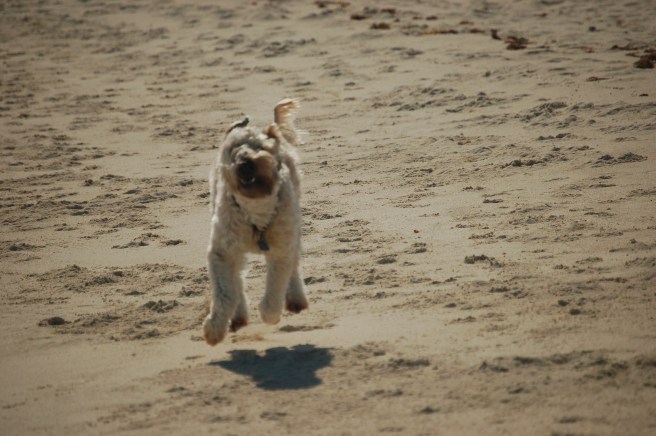
So I’m sailing again. What do I do underway? Well, unless there are dolphins swimming by, I get bored.

And when I’m bored, I get crazy.

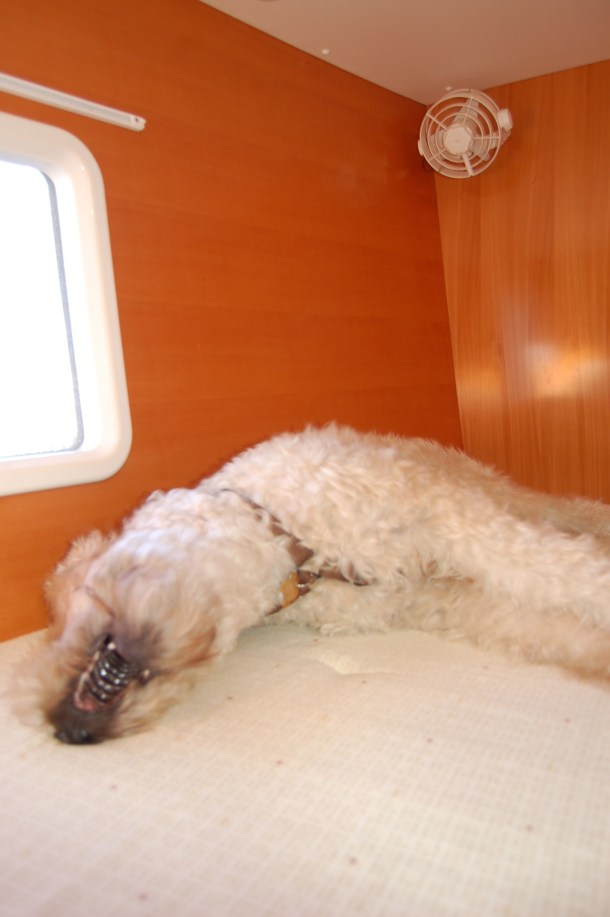
I go to the forward guest cabin and I roll right . . .

Farley Rolling 1

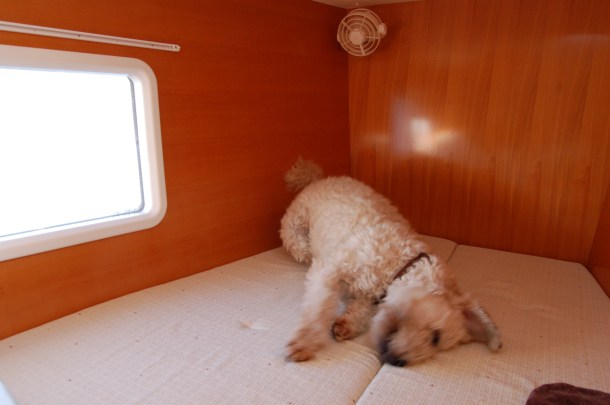
And then I roll left.

Farley Rolling 2

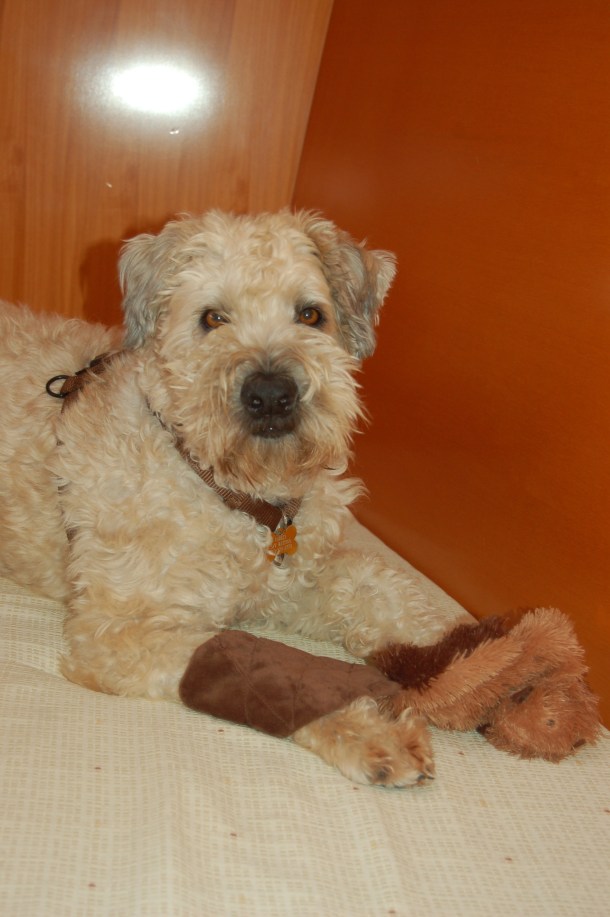
And lastly, I play with my squeaky toy.

Farley Rolling 3

I mean what else does a dog do when sailing. Matt and Kristina won’t let me steer, at least not all the time.

It’s a talent being able to entertain yourself.

Woof Woof

Dinner on a Lagoon 380

Eating seems to be a big part of cruising, so I thought I’d share where we dine.

We have two choices.

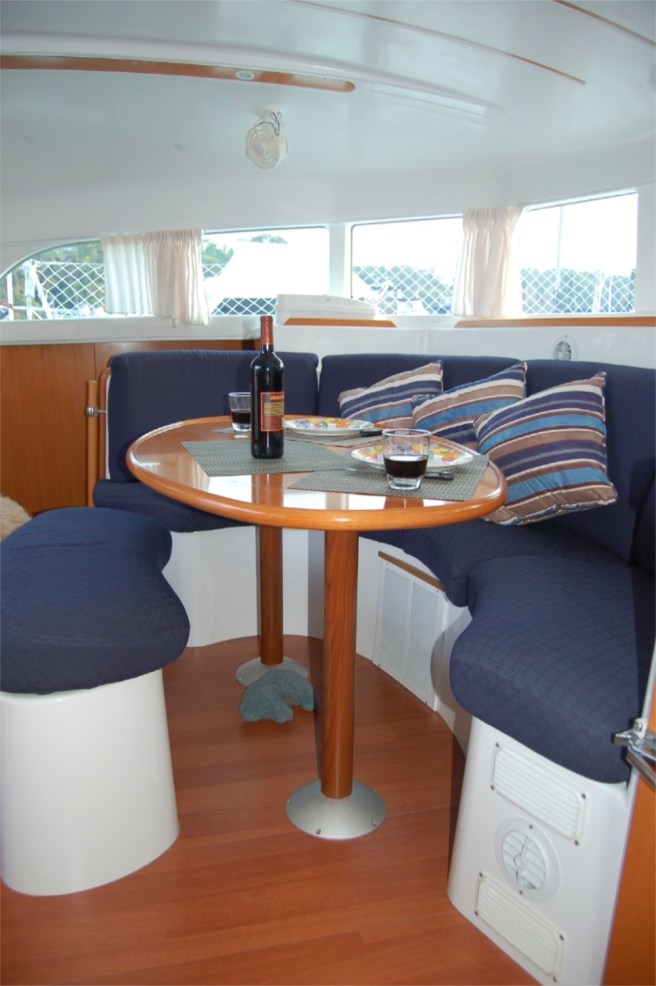
Inside:

Dinner on Mattina

Or outside in the cockpit.

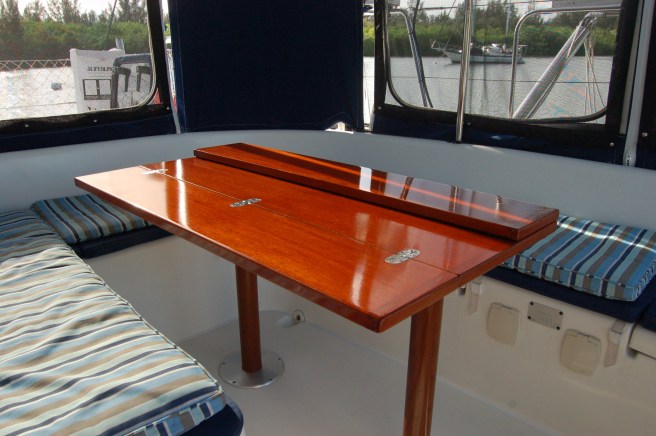
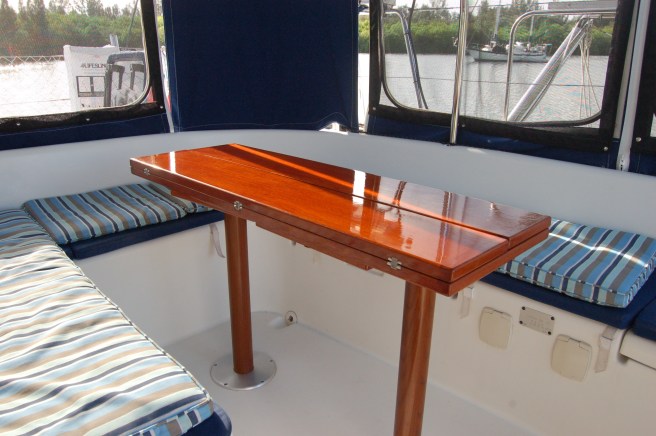
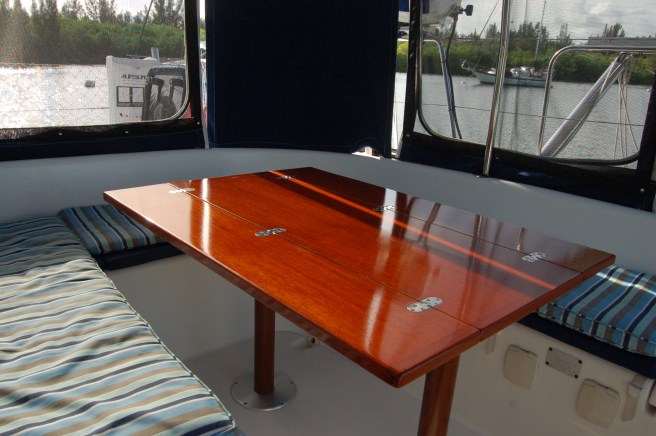
The cockpit table has two leaves, but instead of opening down so the leaves block your legs, we had then made to fold up and lay flat on the top. We designed the table for three settings.

Breakfast Nook: One side is open.

Cockpit Table breakfast

Happy Hour: Both sides closed

Cockpit table happy hour

Dinner: Both sides open.

Cockpit Table Dinner

Both work well while we are underway. The array of windows at the front give  us a great view forward, so we can watch for traffic while we eat. A catamaran sits flat while sailing, and eating underway becomes a joy instead of something to do quickly while healed over.

Thanks for reading . . .

Scrivener versus Word: Spellchecker

Since I’ve written about Scrivener before, I wanted to share something I discovered today.

I think Microsoft Word has a better spellchecker.

I ran the spellchecker in Scrivener and found no issues. Just out of curiosity, not sure why, I decided to compile the document as MS Word and then run the spellchecker in MS Word.

MS Word found an error: Barreling.

MS Word wanted to change this to: Barrelling.

I have my software set to Canadian English, hence the difference in spelling. Being cautious, I checked the Oxford English Dictionary, and sure enough barrelling with two r’s and two l’s is the correct form.

Now I’m going to check spelling in both types of software before submitting to my agent.

Anyone else had this problem?

Thanks for reading . . .

For another review of Scrivener, see MQAllen.com.

Farley’s Friday: A Wheaten With Allergies

Farley here.

Do any of you other canines suffer from allergies? I do, and they drives me crazy.

One thought is wheat, another is certain types of grass, but my latest theory is turkey. I’ve got American and Canadian humans as part of my extended pack, so on Sunday we celebrated AmeriCanadian Thanks Giving. We do this every year. Of course, I got turkey left overs. Yum Yum and then itch itch.

My next question is how many times can a dog wake a human without them getting annoyed?

Apparently a lot, if the human is Kristina.

I wake her by tapping my nails on the floor. I do this until she gets out of bed and helps me out.

Sometimes she’s a little slow when she’s sleepy, and it took her until the fourth time I woke her to figure out I was itchy and needed a Benadryl.

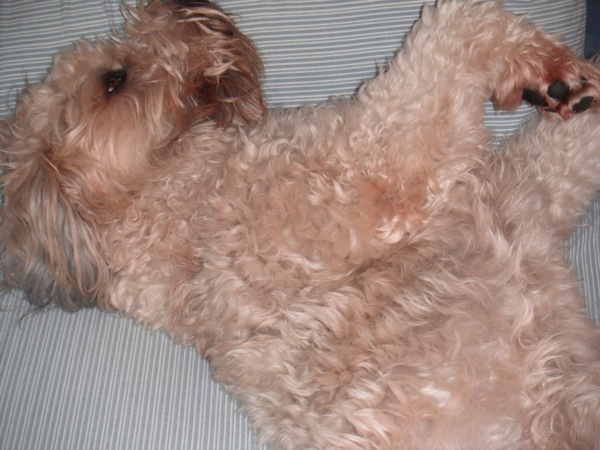
Now, I’m a floor dog. I don’t sleep on furniture or in the bed, but I think Kristina was so tired and wanted to lie down, that she made me get in the bed. Yup, made me. She lifted me up and then rubbed my belly until I settled down and could sleep. This is me lying on her pillow!

Farley sleeping

Really, do I have her trained or what?

Woof Woof.

Lagoon 308 S2 Watermaker

When we first moved onto Mattina, I knew the one item I wanted before we headed offshore was a water maker.

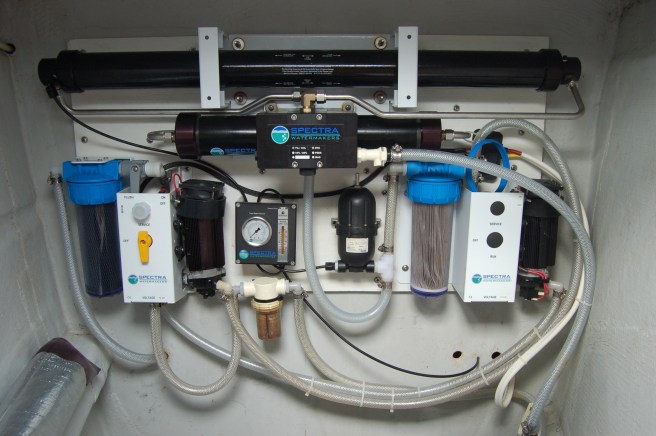
So, Matt got to work and installed a 12 volt Spectra “Cape Horn Extreme.” The unit is installed in the forward deck locker for easy access.

Watermaker

Now, we get 15 gallons per hour of clean water. No trying to find water. No carrying water.  Just turn on the tap and there it is.

We like the reliability and the efficiency.  It only draws one amp per gallon produced.

Mattina comes with a  large shower, so the extra water makes living aboard luxurious.  We don’t have to monitor every drop that comes out of the taps.  I can’t imagine life in the Bahamas without our Spectra water maker.

Thanks for reading . . .
Writing Novels With A Spreadheet

If you’ve been reading my blog, you know I love to write with a spreadsheet. I’m still amazed by how helpful  I find the tool and that I still find new ways to use it.

One of the columns in my spreadsheet lists objects. Originally I put this column in to make sure my scenes weren’t empty sets. I also list smell, sights, and sounds for this purpose.

Sometimes with the objects, I’ll use the object in a later scene. Like an innocent little baseball bat. The list reminds me to check what I’ve placed in an earlier scene and see if I can use it in an inventive and unusual way in a following scene. Like an innocent little baseball bat that’s not so innocent.

I knew all this. What I discovered this week is the object column can also help me find errors.

In one scene I have two characters eating lunch together. I list a fork. Later in the scene, I list a spoon as an object. But wait! I’m writing about the same character eating the same meal, so why has her utensil changed?

I went back in the scene and discovered I’d changed the utensil. Silly, but unnoticed when I read the scene without listing objects.

I love discovering new ways my spreadsheet can help.

Let me know if you use a spreadsheet and how it helps you write.

Thanks for reading . . .

Related articles:

Writing a Series: Spreadsheet

Keeping Track of Scenes

How to Use a Spreadsheet for Your Synopsis

Tips For Ordering Scenes In A Novel