The Secret Engine of Romance: Why Your Story Needs an External Goal

We all know the heart of a great romance lies in the emotional journey. It’s about the protagonist overcoming a deep-seated wound, shattering a lifelong misconception, or fixing a flaw that keeps them from accepting love. But if two characters just sit in a room analyzing their emotional baggage for three hundred pages, the story loses its momentum.

To give those raw emotions a place to clash and grow, your characters need a concrete, real-world objective. In the framework Kristina Stanley and I created in our book, Secrets to Writing a Romance, we map this out using an external skeleton blurb:

[Love Interest(s)] must [external goal]; otherwise [external stakes].

Whether this external plot is a full three-act story or just an initial goal that fades once the momentum takes over, it serves as the essential engine for the romance. Here is how a clear external goal acts as the ultimate catalyst for romantic tension.

1. Engineering Natural Forced Proximity

The most immediate benefit of an external goal is that it provides a logical, undeniable reason for your love interests to occupy the same space.

Instead of relying on random coincidences to bring your couple together, the external goal demands it. They might be forced to share a workspace, cooperate to solve a pressing problem, or navigate a temporary living situation because their individual real-world objectives give them no other choice. Walking away from each other would mean failing at their external goals and triggering those high external stakes.

This forced proximity gives your characters the physical runway they need to let their emotional guards down—or throw them out entirely.

2. Introducing the Perfect Obstacles

While the external goal is excellent for pulling characters into the same orbit, its true narrative superpower is introducing organic conflict. A beautifully crafted external goal doesn’t make the romance easy; it actively throws obstacles in the way of the Happily Ever After.

When a character is desperately chasing a professional milestone, managing a family crisis, or protecting a secret, that goal will inevitably collide with their growing feelings. It creates a beautiful friction where pursuing the romance directly threatens the external stakes, or vice versa.

When a character is desperately chasing a specific milestone or managing a high-stakes crisis, that pursuit should directly collide with the other character’s world. It’s not just about a lack of time; it’s about a clash of interests. For instance, one character’s professional success might directly threaten something the other character is fighting to protect. By introducing these tangible, high-stakes roadblocks where one person’s triumph could mean the other’s setback, the external plot dramatically raises the tension. It forces the characters to navigate a minefield of conflicting loyalties, making the eventual romantic resolution feel incredibly hard-won and deeply earned.

3. Forcing Internal Growth Through External Pressure

The real magic happens when the external goal puts direct pressure on the romance plot. A protagonist shouldn’t be able to achieve their goals without changing.

The pressure cooker of trying to hit that external milestone forces the protagonist to confront their inner flaws, fears, and past traumas. The external pressure is the exact crucible required to break down their internal walls, forcing them to grow into the person who is finally capable of accepting true love.

Master the Combined Punch

When plotting, your external goals and romantic goals shouldn’t run on entirely separate tracks. To ensure your plot and romance are intricately linked, consider fusing them into a combined skeleton blurb:

[Love Interest(s)] must [romance goal and external goal]; otherwise [romance stakes].

By anchoring your characters’ hearts to a concrete, external mission, you ensure your romance has the structure, pace, and friction it needs to keep readers turning pages all night long.
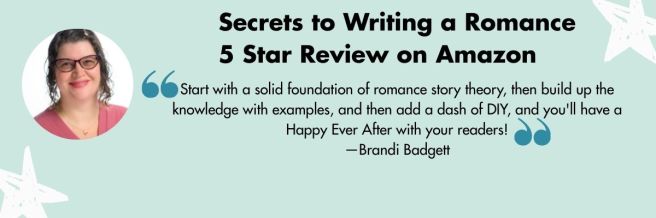
To learn more about Happily Ever Afters and other romance topics, pick up a copy of Secrets to Writing a Romance

Post Written by Linda O’Donnell

Linda O'Donnell

Linda O’Donnell is a writer, certified structural editor, certified copy editor, and a writing and editing instructor. She co-authored Secrets to Writing a Romance and Secrets to Writing a Novel with Kristina Stanley. Linda’s contemporary romance novel, Behind the Scenes, is coming out soon.

Romance Novels and the Protagonist’s Wound

Why the Protagonist’s Wound Is the Beating Heart of Every Romance

Every romance novel begins with a promise: two people will find their way to love. But beneath the banter, chemistry, and swoony moments lies the true engine of the story—the protagonist’s wound, misconception, or flaw. This internal struggle is what gives a romance its emotional weight, its stakes, and ultimately, its meaning.

In a romance, the protagonist isn’t just moving through plot beats; they’re pursuing a story goal that is shaped, and often distorted, by the wound they carry. Until that wound is confronted and healed, love cannot truly take root.

This is why identifying your protagonist early matters so much. Before you can outline or draft effectively, you need to know whose emotional journey the reader is meant to follow. One of the simplest tools for doing this is the skeleton blurb, a single sentence that captures the protagonist’s goal and the stakes attached to it:

[Love interest] must [story goal]; otherwise, [the stakes].

When you write a skeleton blurb for each character, the wound becomes visible. The character’s misconception shapes the goal they believe they want, while the stakes reveal exactly what they fear losing if they fail.

If the characters have different goals, one character’s emotional arc will naturally dominate—and that character is your single protagonist. But if both characters share the exact same romance goal and stakes, you are writing a combined protagonist.

Regardless of your book’s structure, the wound is the compass. Every major scene, starting with the first scene, must impact the protagonist in a clearly positive or negative way. These scenes aren’t just plot points; they are emotional pressure points that force your characters to confront the beliefs holding them back from love.

Consider how this plays out in modern romance, depending on how you choose to frame the journey:

  • The Single Protagonist (The Bodyguard by Katherine Center): Hannah is the sole POV character. The reader only gets her interpretation of the hero’s feelings. Whatever tension Hannah feels because she doesn’t know what her love interest is thinking, the reader feels it too.
  • The Combined Protagonist (The Flatshare by Beth O’Leary or The Wedding Date by Jasmine Guillory): Both love interests share the spotlight with a balanced scene split. Because they share a unified romance goal, they function as a combined protagonist. This creates a wonderful knowledge gap where the reader knows what both characters are thinking, creating high tension because we can see the misunderstandings coming long before the characters do.

Whether you choose a single or combined protagonist, the core principle remains the same: the romance doesn’t work unless the wound does. A romance isn’t just about two people coming together, it’s about the protagonist becoming someone capable of receiving that love.

So, as you plan or revise your manuscript, return to the wound. Name it. Understand how it shapes your protagonist’s worldview, and then let every scene, every conflict, every moment of connection, every setback, push them toward healing. Because when the protagonist transforms, the love story transforms with them.

To learn more about Happily Ever Afters and other romance topics, pick up a copy of Secrets to Writing a Romance

Post Written by Linda O’Donnell

Linda O'Donnell

Linda O’Donnell is a writer, certified structural editor, certified copy editor, and a writing and editing instructor. She co-authored Secrets to Writing a Romance with Kristina Stanley, and together they are working on their latest book, Secrets to Writing a Novel. Linda’s contemporary romance novel, Behind the Scenes, is coming out soon.

The Heart of the Start: The Romance Meet-Cute

In the world of commercial fiction, structure is your best friend. It provides the guideposts that keep a story moving and ensures readers stay buckled in for the ride. But when you are writing romance, there is one specific “guidepost” that carries more weight than almost any other: the inciting incident, better known in our genre as the Meet-Cute.

In our book, Secrets to Writing a Romance, Kristina Stanley and I do a deep dive into why this moment is the literal spark that lights the fire of your story. If you’re looking to level up your manuscript, here is how to craft a meeting that keeps readers turning pages.

1. Make it an “Active” Event

A common pitfall is placing the meeting in the backstory. You might be tempted to start the book with your protagonist reminiscing about a “gorgeous jerk” they saw yesterday. Don’t. In romance, the inciting incident must happen on the page in an active scene. Readers don’t just want the information; they want to be in the thick of it. They need to feel the pulse spike and the breath hitch along with your characters. If you skip the “good stuff” at the start, the reader loses their emotional investment before the story even begins.

2. The Power of the “Re-Meet”

While many stories focus on strangers, remember that a powerful meet-cute can also be a re-meet. This is perfect for friends-to-lovers or second-chance arcs. In these cases, the “meet-cute” is a transformative event where two people who already know each other—perhaps as lifelong neighbors, bickering coworkers, or platonic best friends—suddenly see one another in a brand-new light. This shift in perspective acts as the catalyst, launching their existing relationship onto an entirely new, romantic course.

3. Disruption is Key

A great meet-cute should flip your protagonist’s “normal” upside down. This is the moment their ordinary world goes “poof.” Crucially, this disruption should be caused by the love interest. If the world is falling apart because of a meteor strike, you’re writing an action movie. If the world is falling apart because a specific person just walked into the room (or finally looked at them differently) and challenged their status quo—now you’re writing a romance.

4. Lean Into the “Meet-Ugly”

It doesn’t always have to be sunshine and roses. In fact, many of the most memorable pairings start with a meet-ugly. Whether it’s an awkward misunderstanding, an unwanted encounter, or a heated argument, the goal is friction. The initial interaction should be characterized by high emotional intensity. Whether that is instant attraction or instant annoyance doesn’t matter, as long as the emotion is powerful.

5. Early and Intertwined

To keep the pacing tight, aim to have your characters meet (or have their “re-meet” moment) early—ideally before you are 15% into the book. Once they collide, give them a reason they must stay in close proximity. Whether it’s a shared project, a family crisis, or a forced living situation, proximity keeps the tension simmering.

6. Leave Them Wanting More

The meet-cute raises a vital question in the reader’s mind: How on earth are these two going to end up together? Keep that question alive. Let your characters resist the attraction and fight the goal. Readers love knowing what’s right for the characters before the characters do—it’s what makes them cheer for that final “Happily Ever After.”

To learn more about Happily Ever Afters and other romance topics, pick up a copy of Secrets to Writing a Romance

Post Written by Linda O’Donnell

Linda O'Donnell

Linda O’Donnell is a writer, certified structural editor, certified copy editor, and a writing and editing instructor. She co-authored Secrets to Writing a Romance with Kristina Stanley, and together they are working on their latest book, Secrets to Writing a Novel. Linda’s contemporary romance novel, Behind the Scenes, is coming out soon.

Romance: Keeping the Promise

One of the most common questions I hear when I tell people I co-authored a craft book on writing romance is, “Does it really have to end with a happily ever after?” The short answer is yes. The longer answer is far more interesting, because it gets to the heart of what makes romance such a powerful and enduring genre. If you’re new to writing romance, understanding this expectation will save you a lot of confusion and revision down the road.

Romance isn’t defined by the presence of a love story. Plenty of novels contain love stories — literary fiction, thrillers, historical, even horror. A romance is defined by its promise: the central relationship must resolve in a way that is emotionally satisfying for the reader. In other words, it must end with either an HEA (Happily Ever After) or an HFN (Happy For Now). Think of an HEA as “we’re in it for the long haul” and an HFN as “we’re together and happy, and we’ll see where life takes us.”

This isn’t a formula. It’s a contract.

When a reader picks up a romance, they’re entering into an agreement with the author. They’ll endure the wounds and fears, the complications and obstacles you put in the character’s path, trusting that, in the end, their heart is safe. The HEA/HFN is the fulfillment of that promise. It’s the moment when the emotional arc lands, the internal epiphanies click into place, and the characters choose each other in a way that feels earned.

An HEA is the classic version: the couple is together, committed, and looking toward a shared future. It doesn’t require a wedding, a ring, or a baby. It simply requires clarity: the reader closes the book knowing the relationship is solid, and the characters have done the work to make it last.

An HFN offers a future that’s hopeful, even if it’s not fully mapped out. HFNs are especially common in romance series arcs or in stories where the characters are still in transitional phases of life. The key is that the ending feels emotionally complete, even if the future isn’t yet spelled out.

If you’re new to romance, you might worry that this makes your story predictable or less “serious.” In reality, readers choose romance because they want that emotional payoff. Your job isn’t to surprise them with whether it ends happily, but to surprise and move them with how it happens. Genre expectations don’t limit creativity; they shape it. Mysteries must solve the crime. Thrillers must stop the threat. Romance must resolve the relationship. Readers want to feel hopeful and secure about the couple’s future. Within that framework, authors set their stories apart through character depth, emotional complexity, unique conflicts, and fresh settings. The HEA/HFN simply ensures that the emotional journey lands where romance readers need it to.

And readers do need it. Romance is one of the few genres that consistently affirms hope — not in a naïve way, but in a deeply human one. These stories remind us that people can grow, relationships can heal, and love is worth the risk. In a world that often feels chaotic and uncertain, that promise matters.

So yes, a romance requires an HEA or HFN. Not because the genre is rigid, but because the emotional payoff is the point. It’s what makes romance comforting, cathartic, and profoundly satisfying. It’s what keeps readers coming back. And it’s what makes writing romance such a joyful, meaningful pursuit.

To learn more about Happily Ever Afters and other romance topics, pick up a copy of Secrets to Writing a Romance

Post Written by Linda O’Donnell

Linda O'Donnell

Linda O’Donnell is a writer, certified structural editor, certified copy editor, and a writing and editing instructor. She co-authored Secrets to Writing a Romance with Kristina Stanley, and together they are working on their latest book, Secrets to Writing a Novel. Linda’s contemporary romance novel, Behind the Scenes, is coming out soon.