Today on Mystery Monday is another first. We have author L.J.M Owen here and she’s going to share her experience with self and traditional published novels. She’s done both! It’s all very interesting and insightful.
Mystery Mondays: L.J.M. Owen on Self-Publishing v. Traditional Publishing
In 2015 I accidentally performed the ultimate newbie experiment: self-publishing and traditionally publishing the same book in one year. I’m often asked which option I’d recommend to aspiring authors. Here are my thoughts.
How did it happen?
The day I finished drafting Olmec Obituary, the first instalment in my Dr Pimms, Intermillennial Sleuth archaeological mystery series, I faced The Question: how do I publish it?
After calculating the odds of my Midsomer Murders-meets-Temperance Brennan tale rising from the collective slush pile, I decided on self-publishing. After all, there had to be other Amelia Peabody devotees out there who would love my awkward archaeologist-librarian protagonist as much as I did, right? All I had to do was find them. Enter crowdfunding.
On 12 December 2014 I launched a Kickstarter campaign to raise sufficient funds to print a 300 copy run. Just five days later I was contacted by a commissioning editor from Bonnier Australia asking to see the manuscript. The ensuing celebratory dance was, I’m told, a sight to behold!
Several nail-biting weeks later and not only did I reach the Kickstarter goal, Bonnier also offered me a book deal.
So, in 2015 I found myself publishing my first novel twice—once as a limited edition self-produced run, and then with a traditional publisher.
How did the processes differ?
The differences between the two experiences were stark.
To set up a Kickstarter proposal I had to sell the book to potential readers, which involved developing a project outline, financial spreadsheets, and a promotional a video and blurb. Then I stumbled through crash courses in Twitter and Facebook in an effort to reach my prospective audience. It was a month of incessantly promoting my work to others, not a comfortable undertaking for any introvert.
In order to complete the self-published run I had to develop brand new skills in editing, design, typesetting in multiple formats, printing, distribution, shipping, finances, social media strategy, marketing and events.
The exhaustion was overwhelming. I failed basic hair shampooing. Twice. (Despite the limited options in the confines of a shower cubicle I have no idea what I put in my hair. Can body wash and face scrub combine to form builder’s putty?)
Ultimately, I found self-publishing as a first-time novelist arduous but gratifying. The fatigue was the most difficult aspect to manage; if I had continued with self-publishing I honestly don’t know how many instalments I could have produced in the Dr Pimms series before collapse. Yet there was a special joy in sending books I had personally created to readers that, to this day, remains unmatched.
Publishing with Bonnier, by comparison, meant a team of experts handled cover design, typesetting, printing and finances. I was involved in editing, marketing and events, but not responsible for organising them. Oh, and the distribution! My traditionally published Olmec Obituary was on the shelves of every major book chain in Australia, something I could only dream of as a self-publisher.
The one difficulty I faced with traditional publishing was having to let other people in to largely control the process. If you’re used to (in life) being responsible for all aspects of delivery, as I am, it’s a touch unnerving to share the process. The benefits, however, far outweighed any considerations of personal comfort.
I’m three books into my planned series of nine now, and I honestly don’t know if I would have made it this far as a self-publisher. Apart from the innumerable practical aspects of publishing taken care of by Bonnier, having the support and encouragement of a commissioning editor who believes in my work is invaluable.
Which would I recommend?
Is self-publishing suitable for you? If you’re passionate about getting your work out there and confident you can handle the editing, typesetting, cover design, publishing, marketing and events on your own–or hire people directly to do those things for you–then yes. You’ll have the certainty of knowing your novel will be published, as long as you can shoulder the burden of managing the entire project.
If you want the machinery of a publishing house behind you, and are prepared to wait until you connect with the right publisher (I’m aware of and grateful for my ridiculously good fortune in having been plucked from obscurity via the internet), then the long-term benefits to an emerging author of signing on with a good publisher are incalculable.
Of course, you can always go for a combination by self-publishing some work while pitching other pieces to traditional publishers. If you’re successful as a self-publisher–that is, you build a significant social media following and demonstrate that your work sells–you’ll be an attractive proposition when the right publisher comes along.
WHO IS L.J.M OWEN?
 DR L.J.M. OWEN escapes dark and shadowy days as a public servant by exploring the comparatively lighter side of life: murder, mystery and forgotten women’s history. An author, archaeologist and librarian with a PhD in palaeogenetics, L.J.’s focus is on transforming science and history into accessible fiction with a broad appeal.
A passionate advocate for reclaiming women’s history, L.J. incorporates human genetics, forensic science and ancient cultures in her Australian-set mystery series: Dr Pimms, Intermillennial Sleuth. The first book in the series, Olmec Obituary (2015) was awarded a Highly Commended in the 2016 ACT Writing and Publishing Awards. The second in the series, Mayan Mendacity (2016), will be followed by Egyptian Enigma in 2018.
In addition to writing, L.J. is a panellist, interviewer, workshop provider and public speaker. Rare moments of free time are spent experimenting with ancient recipes–under strict feline supervision, of course.
Mayan Mendacity
 Dr Elizabeth Pimms has a new puzzle.
What is the story behind the tiny skeletons discovered on a Guatemalan island? And how do they relate to an ancient Mayan queen?
The bones, along with other remains, are a gift for Elizabeth. But soon the giver reveals his true nature. An enraged colleague then questions Elizabeth’s family history. Elizabeth seeks DNA evidence to put all skeletons to rest.
A pregnant enemy, a crystal skull, a New York foodie, and an intruder in Elizabeth’s phrenic library variously aid or interrupt Elizabeth’s attempts to solve mysteries both ancient and personal.
With archaeological intrigue, forensic insight and cosy comfort, Mayan Mendacity takes readers back into the world of Dr Pimms, Intermillennial Sleuth.
Really cold cases.
You Can Find Her…
Website: ljmowen.com
Facebook Author Page: @DrLJMOwen
Facebook Book Series Page: @dr.pimms.intermillennial.sleuth
Twitter: @Bleuddyn_Coll
Instagram: Librocubicularist (@ljmowen)
 Focus on the settings in your novel and write a better story. Structural editing using Ficionary will help you get this done faster.


 Thank you,

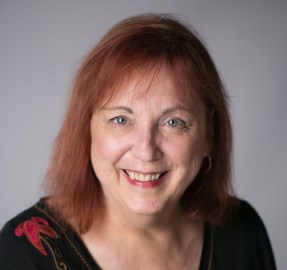 Kathleen Duhamel is the author of the Deep Blue Trilogy (Deep Blue, Deeper, and Deep End) and At Home With Andre. She wrote and illustrated her first short story at the age of eight, and has been a writer for most of her life.. Her love of the written word continued throughout her varied career as a newspaper journalist and editor, public relations executive, freelance travel writer and owner/operator of two small businesses. A native of Texas, she has spent most of her adult life in Colorado. She lives in the Denver area with her husband, a geriatric standard poodle and a spoiled cat. She is a lifelong devotee of rock and soul music, contemporary art, and pop culture.
 Secrets of the past seldom stay buried forever…


 One reason people read fiction is to escape and experience the world through the thoughts and actions of the characters in the story.
 In Canada, researcher Armand Sabatier witnesses what could be the murder of groom Odette Fedon, but traumatic images from his past smother his memory, and a snowstorm buries the evidence. Harassed by nightmares but fighting through them, Armand remembers the crime a few months later. By then he is in England, where he is dragged into a plot involving international sport horse breeding.

 James lives in the rugged but beautiful North of England with his wife Wendy.

