Avalanche Explodes Again: More Praise…

Screen Shot 2016-04-03 at 7.24.14 AMThe weeks and months before a novel is published is an exciting time. It’s the time when early praise starts to roll in. I’m so thrilled to share an endorsement from James M. Jackson. James is the author of Ant Farm, Cabin Fever, and Bad Policy.

THANK YOU, JAMES 🙂

Avalanche is the third in the Stone Mountain Mystery series and is scheduled for publication by Imajin Books this spring.

Avalanche smashes and uproots relationships in Stone Mountain Resort, leaving devastation in its wake. With as many layers as winter’s snow, this whodunit will keep you turning pages and guessing to the end. ~ James M. Jackson, author of the Seamus McCree Series

***

On a cold winter morning, deep in the Purcell Mountains, the safe at Stone Mountain Resort is robbed hours before Kalin Thompson’s brother, Roy, disappears in an avalanche.

Under normal circumstances, as the director of security, Kalin would lead the investigation into the theft, but Roy is the prime suspect. The police and the president of the resort turn their sights on Kalin. She’s told to stay clear of the investigation and risks her job to covertly attempt to clear Roy’s name.

Threats against Kalin escalate as she gets closer to the truth. Is her faith in her brother justified? Was the avalanche an accident or did something more sinister happen? And is the truth worth destroying her life for?


Write Better Fiction: Learn How To Edit

Today on Write Better Fiction we’ll cover Learning to Edit. Write Better Fiction is a process to help you critique your own manuscript and give yourself feedback. This will help you improve your novel, so you’re ready to submit it to an editor.

Now that we are fifteen episodes into Write Better Fiction, you’ve probably guessed I have a passion for learning how to edit, and since I blog about the writing process, I wanted to share a little story with you.

I believe to become a better writer, I needed to learn to edit my own story. What about you?  Before sending your story to beta readers, writers’ critique groups, or to an editor, don’t you want your story to be the best you can make it?

The story I’m going to share with you involves Jodie Renner, editor & award-winning author

Screen Shot 2015-09-22 at 7.33.47 AM

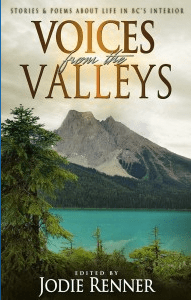
Early last fall, Jodie put out a call for submissions for short stories written about British Columbia. The accepted entries would be published in the Voices From The Valleys anthology. I submitted Deirdre Hunting Season, and Jodie accepted it into the anthology.

Once I stopped jumping up and down, and doing the happy dance, I read through Jodie’s website. As all proceeds from the sale of the anthology go to Doctors Without Borders, Jodie asked for volunteers to help proofread. So with a great cause in mind, I volunteered.

Jodie sent me each story she accepted into the anthology and asked for my comments. Over the course of several months, I read every submission that Jodie accepted, sent her my comments and then read the final version.

This gave me the opportunity to see what Jodie did with her edits. It gave me time to read a story, not just because it was a wonderful story, but to read with the eye of an editor. It made me think about spelling, punctuation, and grammar. About word choice, head hopping, and inconsistencies in the story line.

So if you’re looking to improve your editing skills, why not find a project where you can volunteer your time, help a good cause, and learn at the same time?

Besides learning from an expert, Jodie was kind enough to mention me in the acknowledgment section of Voices From The Valleys. Tell me that’s not a thrill.

To entice you to read Voices From the Valleys, Jodie has posted excerpts from all contributing authors at http://www.jodierenner.com/wp-content/uploads/2015/09/VOICES-FROM-THE-VALLEYS-EXCERPTS.pdf

I’ve put the excerpt from Deirdre Hunting Season below…

Next week, I’ll return to Write Better Fiction with Scene Middles.

Thank you, Jodie!

Deirdre Hunting Season

Excerpt as published in Voices From The Valleys

Due to the shortage of deer in the area, our community restricted deer hunting to bucks with four point antlers. The doe in the area needed more males. Well, so did I. I was forty years old, and my buck just married a doe half his age.

In our small town nestled between the Rockies and the Purcell Mountains of British Columbia, everyone knew everyone. I did the books for half a dozen businesses on Main Street and was known as the accountant with the cheating husband. That’s me. Failure at marriage extraordinaire. What did I do to deserve this? I’m a rule follower. I do good deeds. I volunteer. I’ve never even received a parking ticket. So what happened in my life surprised me.

The day mother nature blew the leaves off my tree, I came home unexpectedly. We’d hired a local company to clean our air ducts, and the guy doing the work was supposed to come the following day. He called and asked if I could meet him a day early. I rushed home, even though I was busy, unlocked the front door, and headed toward the back of the house. I’d told him I’d leave the kitchen door open for him.

Fifteen years of marriage pinholed to one moment. A naked woman standing in my kitchen, leaning against my sink, drinking water from my glass.

“Hey, Babe. Get back here. I don’t have much time,” my then husband called from our bedroom.

The glass of water froze at the babe’s lips as if she’d stuck her tongue on a metal swing set in winter. I recognized her from my husband’s office. Deirdre something-or-other.

Help Me Choose My Novel’s Back Text

My latest mystery novel, LOOK THE OTHER WAY, is written. My trustworthy beta readers have sent me their comments, and I’ve updated the novel. Each beta reader provided different input on the story, and each person helped me make it better.

So why not ask my beta readers for help with the book description? They’ve read the book and will know if the description is accurate. So ask, I did. After receiving feedback from 5 people, my two favorite versions are below.

Please vote on your favorite. Which description would entice you to read LOOK THE OTHER WAY?

OPTION A:

Bobby Hall’s body washes up in the surf on a remote Bahamian island. His death is declared accidental. His grieving wife, Debi, hires Captain Jake Hunter, a former cop fleeing personal trauma, to sail with her on A Dog’s Cat and retrace Bobby’s final weeks at sea.

Shannon Payne is fired from the job she loves. Her engagement ends in disaster, and she no longer trusts her judgment of men. Giving up the life she knows as a reporter, she joins her aunt on A Dog’s Cat. The tranquility of life on a sailboat is what she needs. A tumultuous journey with the handsome captain is what she gets.

As tensions heighten on board, so does the attraction growing between Jake and Shannon. When Shannon learns a shocking truth about her childhood, a truth that might mean Bobby was murdered, the only thing clearer than the crystalline waters of the Bahamian archipelago is that someone is not telling the whole truth and hasn’t for a long time.

OPTION B:

A year after her uncle is lost at sea, Shannon Payne joins her grieving aunt on a journey through the idyllic Bahamian islands. She needs to recover from a devastating breakup with her fiancé. And sailing the turquoise waters, tracing her uncle’s route as a tribute to him, may just repair her heart. But instead of tranquility, she uncovers dark secrets from her past that may destroy any chance she has at happiness.

Captain Jake Hunter joins the duo on the thirty-eight-foot catamaran, A Dog’s Cat. He’s running away from painful memories. He dreams of escaping his life as a cop but finds himself embroiled in an investigation. He’s sworn off women, and now he’s living in close quarters with his boss’s niece, a blue-eyed beauty he can’t resist but should. Could his life get any more turbulent?

Shannon and Jake suppress the attraction they feel for each other, Bobby’s mysterious death hangs over them, and someone out there doesn’t want the truth uncovered.


I sailed on Mattina, a 38-foot catamaran, for five years in the Bahamas. She’s the sailing vessel used in LOOK THE OTHER WAY, and this is her, one beautiful day in the Exuma Islands.

Mattina sailing


Thanks for voting! Comments are most welcome.


Mystery Mondays: Teagan Riordain Geneviene on What’s In A Name?

With a name as beautiful as Teagan Riordain Geneviene, you may well ask, what’s in a name? Well Teagan, author of ATONEMENT TENNESEE,  is here on Mystery Mondays to tell you.

At the bottom of the post, Teagan has some interesting questions for you, so keep reading…

What’s in a Name?

Hi Kristina. Thanks for inviting me to your Mystery Mondays.

Brain-NamesWhat do you think about names – generally? Or do you think about them? Most people don’t. I however, could really enjoy a big metaphysical discussion about names, but that’s not where I’m headed here. When I started this blog, I promised myself I’d stick to things related to writing or my books.

Names are incredibly important in life and in fiction. The names of my pets were something I chose very carefully, to suit them.

I’m just as meticulous in choosing the names of my characters. The right name can pull you into the mystery of the story, or lend a dramatic tone. When I write a classic type of fantasy, I go all out – researching name meanings and origins, and making sure they fit the traits of the character.

For stories located in the real world (fantasy or not), such as Atonement, Tennessee, I don’t always go to such lengths. Even so, each name speaks strongly to me about the who, what, and where of the character. Right now, I’m showing installments of my novel The Guitar Mancer at my blog. The name-meaning of the heroine is carefully interwoven into the story.atonement-video-cover-copy

There are a lot of cool sites about names and their meanings and origins. Yeah, I know — I’m a total research geek… but check out a few of the websites sometime. You already know that you can find an Internet site for just about anything. There are sites that list names of various myth figures, gods and goddesses, and summaries of the myths. Also, I’m sure you’ve seen at least one of the “baby name” sites. I even found one that list names by their popularity, by state, per year. It’s actually a cool resource if you want to find a character name that’s typical, or common for a given area and time, to help enhance the story in a subtle way.

I’ve used so many of these sites, I won’t try to list them all here. However, I liked this one (below), and thought it was general enough for other people to find it interesting. It’s divided by state. For the most recent years, it lists names for each year, but if you scroll down it gives an average over a five-year range. I liked that because it gave me a wide-ranging picture of what characters might populate my story. I used it for Atonement, Tennessee since the research for that National Novel Writing Month (NaNoWriMo) novel had to be done in such a hurry. http://pregnancy.about.com/od/localbabynames/a/statebabynames.htm

Okay, now I’m putting you to work. It’s time for a quick imagining of a story. Pick a state for the setting. Then choose the average age for most of the people there (even go to a “city data” page if you want to get the mean age in your chosen location), and figure out in what year they would have been born. Then click on the closest year listed. Now look at those names and tell me what images came to your mind. What did you see? Didn’t you see a group of people when you looked at the names? What were they doing? Where did they go when they headed out their separate ways?

Have fun,

Teagan

Mystery Mondays: James M. Jackson On Is Your Manuscript Ready

Welcome to Mystery Mondays. I’m a huge fan of the Seamus McCree novels, so it’s a great honor to have James M. Jackson share his writing advice today. I first met James when he agree to have me guest blog on his site in August 2015. James was helping me spread the word about my first novel, Descent. Over the last year, I’ve learned what generous people authors are, and here he is again being generous with his time and sharing some advice.

Is it Soup Yet? by James M. Jackson

Well, no. When I agreed with Kristina to write this blog, (thank you so much for the invitation), I was confident I would have published the next book in the Seamus McCree series. It hasn’t happened, and I’m quite happy with that because the decision was mine.

By today’s standards, I am a slow writer. There are several reasons for this. Probably the most important is that writing is only one of the things I enjoy doing. I spend considerable time each year teaching the game of bridge at my local bridge club. [In fact my first published book was One Trick at a Time: How to start winning at bridge.] I also teach an online class on self-editing/revision, and I am the president of the 600-member Guppy Chapter of Sisters in Crime.

But none of those other interests or commitments are why you can’t buy Doubtful Relations today. You can’t buy it because I don’t think it’s ready.

Readers clamor for authors they enjoy to write more books more quickly. Publishers echo the demand, even writing faster deadlines into contracts. The once-a-year-release timetable has been replaced by a nine-month regimen. Many authors now produce two books a year, and many independent authors produce three or more books a year.

This pressure for more words, more quickly, comes at a time when publishers have pulled back on the amount of sales and marketing support they provide most of their authors. Now, most published authors spend a significant amount of time performing tasks that do not directly relate to writing their next book.

Some authors have always been prolific, producing great quality writing with everything (or nearly everything) they publish. For these authors, nothing has changed. I read eighty to a hundred books a year, mostly fiction, and over the past few years, I have discovered many authors who I once loved cannot produce high-quality manuscripts with these shorter timeframes.

Storylines become flat, characters become caricatures, plot holes appear. Editors in the past would have jumped all over these problems, but shortened production schedules don’t leave enough time for major fixes. Problems are papered over. For big names, this isn’t really much of a problem: a number one bestseller will obtain huge sales with a mediocre book, or two, or three. For a less-known author, it could be a death knell.

I teach my students that in revising a manuscript, it is important to give space between the writing and the rewriting. As a first step, they should try to read their manuscript as if they were a discerning reader. When I did that with Doubtful Relations, I realized the manuscript contained two major problems: new readers to the series required a deeper understanding of prior relationships than I had provided, and I had not given the reader sufficient understanding of the motivation of the primary antagonist.

Each problem had a straightforward solution, and had I been forced to turn in a manuscript to meet an approaching deadline, I could have applied those bandages to an otherwise decent manuscript. But in thinking about those issues, I realized I could significantly improve the novel if I tore it apart and addressed certain aspects using a different approach.

I attended a week-long workshop in 2015 run by Donald Maas, and one of the takeaways I have treasured is that sometimes the best way to fix something is to tear it down to its foundation and build it back up again. That’s what I am doing with Doubtful Relations. That’s also the approach I took with my most recent publication, Ant Farm. It started life as my first written novel. It attracted an agent’s attention and went nowhere. Frankly, it had good bones, but my writing was not yet mature. The flawed writing should not have earned an agent’s contract, and I am glad it was not published back in 2010. [I would now be very embarrassed if it had.] After being consigned to a drawer, I reread it in 2014, tore it down and built it up through a series of rewrites. When I was done, it won a contract through the Kindle Scout program.

I’m now in the process of building Doubtful Relations back up. I expect it will be available later this year. You can follow its progress (and the next two in the series that are also in the works) on my website, http://jamesmjackson.com or follow me on Facebook https://www.facebook.com/James-M-Jackson-388804844542707/ or on my Amazon page http://www.amazon.com/James-Montgomery-Jackson/e/B004U7FRP2 .

Ant Farm
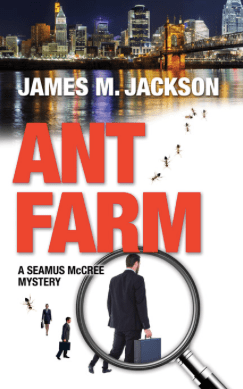
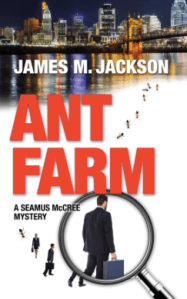
Screen Shot 2016-04-03 at 7.24.14 AMIn this thrilling prequel to Bad Policy and Cabin Fever, when thirty-eight retirees meet a gruesome end at a picnic meant to celebrate their achievements, financial crimes consultant Seamus McCree comes in to uncover the evil behind the botulism murders.

But the deadly picnic outside Chillicothe, Ohio, isn’t the only treacherous investigation facing Seamus; he also worms his way into a Cincinnati murder investigation when the victim turns out to be a church friend’s fiancĂ©.

While police speculate this killing may have been the mistake of a dyslexic hit man, Seamus uncovers disturbing information of financial chicanery, and by doing so, puts his son in danger and places a target on his own back. Can Seamus bring the truth to light, or will those who have already killed to keep their secrets succeed in silencing a threat once more?

author-photoJames M. Jackson authors the Seamus McCree mystery series. ANT FARM, BAD POLICY, CABIN FEVER, and DOUBTFUL RELATIONS (2016). Jim also published an acclaimed book on contract bridge, ONE TRICK AT A TIME: How to start winning at bridge, as well as numerous short stories and essays. He splits his time between the deep woods of Michigan’s Upper Peninsula and the open spaces of Georgia’s Lowcountry.

Farley’s Friday: Joke’s on me

Farley here,

Did you know when ice melts off a pond’s surface, the water doesn’t get warm right away? In fact, it’s freezing.

Kristina did try to tell me before I jumped in, but I didn’t listen.

Happy April Fool’s Day. Don’t do anything silly. 🙂

Farley swimming

Woof Woof

Write Better Fiction: Is Your Scene Anchored?

Today on Write Better Fiction we’ll cover Is Your Scene Anchored? Write Better Fiction is a process to help you critique your own manuscript and give yourself feedback. This will help you improve your novel, so you’re ready to submit it to an editor.

One could argue that asking yourself if your scene is anchored should fall under setting or under plot.

I’ve included scene anchoring under plot because it’s more than setting, and I think it leads well into the next topics we’ll cover, which are hook, development and climax of a scene.

AnchorSo what does it mean to anchor a scene?

The reader needs to know:

  • Who has the point of view
  • Where the character is
  • What the timing of the scene is

POINT OF VIEW:

We’ve dealt with point of view in detail, so I won’t say much here except you should checkEye whether the reader will know who has the point of view within the first paragraph or at least within the first couple of paragraphs. If not, the reader might find this frustrating. If you write your entire novel from one point of view, like many first person novels, then you don’t need to worry about this.

SETTING:

“Where is your character”“Where is your character” fits under setting. You know where the character is because your wrote the scene, but does your reader? If the reader can’t figure out where the character is within the first couple of paragraphs you may lose them – the reader I mean and not the character. 🙂

There are exceptions to this. If your scene is about a character waking in a dark place and confused about where she is, then it’s okay for the reader to be confused about where she is too. This will add to the tension. The reader does need to understand the lack of setting is done on purpose.

TIMING:

The timing of the scene can mean:Clock

  • Time of day
  • Time passed since last scene
  • A particular date

If several years or several seconds have passed in a characters life, then the reader needs to understand that. If you are jumping back in time or forward in time the reader needs to understand that too. The quicker the reader gets the timing, the quicker they will be drawn into the scene.

START OF A NEW SCENE:

The start of a new scene means point of view has changed, the setting has changed, or time has changed, hence every scene needs to be anchored.

Your challenge this week is to ask yourself if every scene in your novel is anchored. Does the reader know who has point of view, where the character is and what time it is?

I critiqued DESCENT and BLAZE using the techniques I’m sharing in Write Better Fiction, and I believe this helped me sign with a publisher.

Please me know in the comments below if you have any suggestions or improvements for anchoring a scene.

Thanks for reading…

Mystery Mondays: Michael Phillips On Writing Goals

Between_Good_And_EvilMystery Mondays welcomes Michael Phillips, Author of: Between Good And Evil, first book in the Auburn Notch Mysteries Published by Sunbury Press.

It’s amazing to me that each week an author generously shares wisdom about writing and the writing industry and this week is no exception.

If you’ve been needing a plan to get your work published, read on…

Writing Goals by Michael Phillips

Any time I do a book-signing event one of the first questions I get is, “What is the toughest part about being a writer?” Some would say finding an agent or a publisher. Others might say dealing with all the rejections that go along with finding an agent or a publisher. But my usual response is—formulating a plan and sticking to it no matter what. Doing this can make those other two things much easier and achievable.

So what do I mean about a plan? Well, I mean setting achievable goals and attacking them one at a time. One completed goal should lead to the next, and the next, and so on until you have a complete manuscript in hand and a stop-them-in-the-aisle query to go along with it.

Before I break these goals down for you, let me mention a few things to help this process along. First, you should treat your writing like a job. Our lives are crazy, but if you are serious about writing you should carve out a time to write and try to stick to it. Some folks write an hour or so early in the morning before the day really starts, others write at night after the family has gone to bed. I write 8-10 hours one day a week. Whether it’s one paragraph, three chapters, or just reference, I stay at it for 8-10 hours. One day a week doesn’t sound like much, but I get a lot done in that one day. For example, my Ernie Bisquets Mysteries are English cozies, so they are quirky and enjoyable to write and I can complete an 80k word manuscript in 6-8 months. The Auburn Notch Mysteries are a little darker and have much more research involved, so an 84k+ manuscript may take up to a year. Whatever your preference, stake your claim and stick to it.

Second, you really need to know your characters. Character mapping is incredibly important and something you should invest time in before you get too far along in the process. Think of this as filling out an on-line dating questionnaire, adding in as much detail as you can. This is also a living document, so you can adjust as needed as your story progresses. I take this one step further and map each character’s relationship with all the other characters. There are a number of character mapping apps out there. I use one more suited to screenwriting because I like the character-to-character relationship aspect.

Third, try working from an outline. Even if it is just a few sentences for each chapter describing what’s going on, I find doing this helps me plan out the whole book and keep track of what’s next.

Now, onto those goals.

First Goal: Write your story. I don’t mean labor over every word, or second guess the affect of your foreshadowing, or wondering if your protagonist still has the same color hair in chapter seven as she does in chapter one, etc. What I mean is right your story. It’s a first draft. It’s going to be short and it’s going to be terrible, but that’s ok. Just get the whole idea out of your head and onto your laptop. Someone told me a long time ago that 90% of writers never get their work published for one reason alone—they give up. They get so bogged down in the details while they’re writing the first draft, or worrying if their work is good enough, that they just give up. Some would see this as a daunting statistic, figuring if 90% give up what chance do I have? If you’re like me, I figured I just eliminated 90% of my competition. I was quite sure my writing skills were as good as or better than ½ of the remaining 10%, so I just got to work and finished writing my story. Check off Goal #1.

Second Goal: Walk away. Put the completed first draft aside for a month. This is important. You need to look at the story with fresh eyes before you start the editing process, and the best way to do that is to walk away from it. Spend this time researching potential agents/publishers for your book. Get a complete list together, so when you’ve finished the book completely you’re ready to start the query process. And do not start the query process until the book is polished. Check off Goal #2.

Third Goal: The editing process. With a hot cup of whatever, you sit down and start back at the beginning and read what you’ve written. Read through the whole story a few times making notes along the way. This is the time when you take that rough first draft and turn it into a compelling story. Define the characters, establish the conflict, and embellish the details. Add weight to your writing. My favorite part of this goal comes at the end of the second draft and I go back to the beginning and start the “was” edit. This is the time to sift out the passiveness from the story and increase the word count. Do a word search for “was” and start the edit. For example:

My original sentence: It was just after 4:30 when Promise returned to the office and found Hank waiting for her.

The edited version: The long shadows of the cool, late afternoon stretched across the busy Main Street leading Promise into her office, the very tip of the shadow resting beneath the tapping foot of her deputy, Hank.

No “was” any more, and you’ve done a little show don’t tell in the process. We’ve also gone from 17 words to 34 words. It’s amazing what you can do with a single word when you try.

I’ve written a couple books requiring only 2 drafts, but three other books took a third and forth until I was happy. Everyone is different; so take as long as you need to get it right.

Forth Goal: Hire an editor. Most new writers don’t want to hear this one, but it is incredibly important. Look at it as an investment in yourself and your work. Do a little research, find a reputable editor, and turn over the manuscript once you get to your final draft. For the few hundred dollars it will cost you, the return on investment will be worth it. Together you will polish the manuscript and get it ready for submission.

Fifth Goal: The Query. To some extent this is more important than the entire book. On one 8.5”x11” piece of paper you are going to dazzle an agent with your hook, and then draw them into your story with a brief paragraph or two describing your characters and the conflict they’re struggling with to reach the resolution. Writing the query is a post in itself, so I’ll just leave you with the knowledge of how important it is and leave the how-to for another post.

Thank you so much for inviting me to share my writing experience with your readers. It’s been a delight being here.

Cheers,

Mike


RMPhillips_Profile_12ACCLAIMED MYSTERY NOVELIST R. MICHAEL PHILLIPS RELEASES FIRST BOOK IN NEW SERIES

CARLISLE, PA. – Sunbury Press has released Between Good and Evil by R. Michael Phillips, the first in the Auburn Notch Mystery series.

About the Book:

Promise Flynn was an overly impulsive Metro Detective whose disregard for procedure finally resulted in her being shot and left for dead during an investigation.

To repair her bruised ego and splintered confidence she abandons the dark alleys of Chicago to patrol the quiet, birch-lined streets of Auburn Notch.

For two years everything was idyllic, until the body of a young girl found in the abandoned asylum outside of town awakens the insecurities she thought her new life would insulate her from.

As the new Sheriff she begins her investigation, oblivious to being unexpectedly recognized and penciled in at the top of a clever murderer’sTo- Do list.

Her internal struggle intensifies when a discredited crime reporter from the past arrives in town to resurrect his

reputation, along with an FBI agent chasing down a lead in a cold case.

Both men quickly become entangled in Flynn’s investigation and her attempts to finally put her past to rest.

Praise for Between Good and Evil:

“It’s such a treat to start a new Phillips mystery…He gracefully brings new people into our lives, giving us time to get to know who is who. The dark yet very real worlds of his characters are so clearly defined that you are sucked inside and grabbed along in a slow-building rise of anxiety and danger…”

—The Editing Pen

“R. Michael Phillips has an incredible hand at descriptive detail: clothing, rooms, scenery. It leaves a flavor for you to sample and settings you can envision stepping into…”

— June Lorraine Roberts, Murder In Common About the Author:

Michael is a classically trained artist turned mystery writer. He has written three books in his first series, The Ernie Bisquets Mysteries, and has released the first book in his Auburn Notch Mystery series, Between Good and Evil.

When he’s not painting or writing Michael is an avid antique collector, filling his home—an 1894 Queen Ann Victorian he, his wife, and son are restoring—with antiques from around the world. Michael also enjoys cooking, working in the garden, and playing in the yard with their two rescues, Beau and Pup.


THE AUTHOR’S GUIDE TO SELLING BOOKS TO NON-BOOKSTORES

What do Jodie Renner, Dan Alatorre and Elinor Florence have in common, besides being awesome writers of course?  Each has a generous spirit. All three have read an advanced reader copy of THE AUTHOR’S GUIDE TO SELLING BOOKS TO NON-BOOKSTORES.

I am honored to share their words with you today.

efficient ways to get around the city


You can check out the work of the fabulous three by clicking on their names above.

Writers are truly generous people. I thank Jodie, Dan and Elinor with all my heart.

The Author’s Guide To Selling Books To Non-Bookstores will be released this spring by Imajin Books.

Thanks for reading…