Farley’s Friday: Woo Hoooo!

Farley here,

I love, love, love running down a hill.

Here’s the game. I let my humans scramble down the hill ahead of me while I wait patiently at the top. And I mean patiently. They’re really slow.

Then, I let it rip…

Farley Running

This hill is as steep as it looks in the photo. But I’m not scared.  I keep going until the flat bit below.  I may not live in the  mountains anymore, but I can still handle the terrain!

Woof Woof

The Story Arc & Why Stories Captivate!

Are you struggling to make your story work?

The story arc can help you.

The story arc is made up of the Inciting IncidentPlot Point 1, the Midpoint and Plot Point 2, and the Climax.

There are those who think the story arc is a formula to follow and that it will stifle creativity. I don’t believe this. I think the story arc is about form, not formula, and it inspires me to tell better stories.

Writing a novel is a personal story arc.

Inciting Incident: You’ve been living your life, but something just isn’t right. AND THEN…your brain tells you that you need to write a story. You don’t know yet how hard this is going to be, but the world has changed, and you’re going to roll with it. So here’s the problem. How are you going to write 80,000 to 100,000 words and get people to like it?

Plot Point 1: You’ve written 20,000 words or so, spent hours doing this, and there is no turning back. You’ve invested emotion, time, brainpower and you won’t give up.

Midpoint: You’ve made it halfway. Now you really get working. Everything you have is going into the story. This is where you figure how hard it is to write a novel, but you’re determined to solve the problem.

Plot Point 2You can’t possibly go on writing. Your structure is a mess. Everything you’ve written since the middle is making it difficult to bring the story together. You don’t know how to end the story, but you know you must work hard to finish or you’ll lose the whole story — and maybe a little part of yourself, too.

Climax: You are going to overcome your demons and finish the story. Your adrenaline is rushing. You’ve got this. You just have to fight your way through and you can write the resolution. There’s the word count you needed, and you’ve solved your problem.

I searched for an interesting way to describe the story arc. And then I found Tomas Pueyo and had to share his video.

This entertaining and insightful video will motivate you!

It’s time to stop struggling to make your story work.

Why not evaluate your story arc and see if you can make the story better? You’ve got nothing to lose by learning and trying — as long as you save your work before making large changes…


Fictionary is online software that simplifies story editing. Fictionary draws a recommended story arc and draws the story arc for your story. You can see how to improve the structure of your story within seconds.

Why not check out Fictionary’s free 14-day trial and tell better stories?

The Climax In The Context Of The Story Arc

The climax scene is where you get to shine as an author. Every word you’ve written up to this point is going to pay off.

What is the Climax?

You’ve built you’re story up to the climax with rising action, and now the climax scene (or scenes) will have the highest level of conflict, the greatest tension, or the most devastating emotional upheaval.

Up to this point there has been no scene as intense as the climax scene.

I read a book where the most intense scene occurred at the midpoint. A woman trapped in a car was slowly being submerged. The scene was wonderfully written and had me turning the pages. The book could have ended there. If I’d stopped reading there, I would have left the book feeling satisfied.

Unfortunately, I had no idea the climax was going to be a let down compared to the midpoint scene. The climax was less tense and less emotionally satisfying. The author built up the expectation by putting a ripper of a scene in the middle of the book and couldn’t keep the excitement rising. I felt let down at the end.

The protagonist must be in your climax scene, or you risk alienating your reader. The protagonist should face the biggest obstacle in the story and determine her own fate.

After the climax you’ll follow up with a resolution to the story.

Earlier posts cover the Inciting IncidentPlot Point 1, the Midpoint and Plot Point 2.


Famous Climax Scenes:

Note: there are story spoilers, so don’t read this section if you want to read the book or see the movie.

Gone Girl: Nick plans to reveal Amy to the world in a novel that reveals the true story of what she did. He thinks he has the upper hand until she tells him she’s pregnant. In order to protect his unborn child, he’ll never be able to leave Amy.

The Martian: Mark is finally at the moment where he launches his space ship so he can intercept with the crew on the Hermes. The tension is built when his ship doesn’t have the range to reach the Hermes and he has to pierce his space suit to propel himself to the Hermes.

The Philosopher’s Stone: Harry, Ron, and Hermione must protect the Philosopher’s Stone from (they think) Snape. They want to stop Snape from giving the stone to Voldemort. Ron sacrifices himself during the climax, and Harry faces the final confrontation alone.

Twilight: Bella gets injured by James when as she tries to save her mother.


Placement Of The Climax

The climax should happen somewhere around 90% into your novel. This is a guide so you can check you’re not writing too much before or after the climax.

If the climax occurs too early in your story, the reader may get impatient with a long resolution and start skimming.

If the climax appears to late, the resolution may lack depth and the reader finishes the story without being satisfied.

Here’s an example of a story arc from Fictionary. The brown line shows the recommended story arc, and the green line shows the actual story arc for the novel.

Image Source: Fictionary

You can see above, the inciting incident occurs too late in the story, plot point 1 occurs too quickly after the inciting incident, and the middle occurs too late in the story.

After that, plot point 2 is reached too quickly, denying the reader story depth. By appearing too early, it also means the last act is dragging. Act III is going on for too long.

And on it goes until the climax is too late, and there isn’t enough time for a satisfactory resolution. Meaning the reader won’t read the writer’s next book.

I’ve love to know what you think and if you have any questions 🙂


Fictionary is online software that simplifies story editing. Why not check out Fictionary’s free 14-day trial and tell better stories?


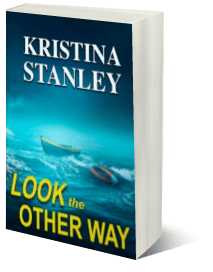
Post written by Kristina Stanley, best-selling author of Look The Other Way (Imajin Books, Aug 2017).

Top 5 Fiction Elements For A Mystery #AuthorToolboxBlogHop

Nano Blog and Social Media Hop2Thank you, Raimey Gallant for organizing the #AuthorToolboxBlogHop.

This is a monthly blog hop on the theme of resources/learning for authors: posts related to the craft of writing, editing, querying, marketing, publishing, blogging tips for authors, reviews of author-related products, anything that an author would find helpful.

To continue hopping through other great blogs in the monthly #AuthorToolboxBlogHop or to join, just hop on over to Ramey Gallant!

This week, I thought I’d focus on my favorite genre – Mysteries (my fav ’cause that’s the genre I write in).

Top 5 Fiction Elements For A Mystery

Self-editing a mystery is one of the joys of the writing process. You get to use your imagination to lead the reader through your story.


If you’re a mystery writer, it’s important to keep track of your story, and not only in the context of what you share with your readers but also what your characters know.

You don’t need to keep track while you write your first draft, but once you’ve written a draft, go back through your manuscript and rewrite it with the following 5 key elements of fiction in mind.

1. CLUES

A clue tells the readers something that will help them solve the mystery. You don’t want to give clues too early and have the reader guess who the villain is. You also want to give enough clues, so when you reveal the villain, the reader is surprised, but also feels the choice is logical. You can also call this a revelation. Any you let the reader know that’s important to the story.

2. FORESHADOW

Think of a clue as a piece of a puzzle. You need all the pieces to solve the puzzle. Foreshadowing is hinting at some future event. It’s not solving the puzzle. Foreshadowing will keep the tension rising throughout your story. It’s the anticipation of something bad happening that will draw your reader in.

Usually, I’ll put foreshadowing as the purpose of a scene if it includes foreshadowing. Then I can quickly check where I’ve done this.

3. POINT OF VIEW CHARACTERS

You need to decide early if your antagonist will have the point of view (POV) for any scenes. If your antagonist has a POV scene, you cannot let the reader know everything the character is thinking.

In a thriller, the reader often knows right away who the villain is, but in a mystery, the villain is kept secret until the very end.

4. WHAT PROTAGONIST KNOWS

Keep track of everything the protagonist learns. You need control what she/he knows versus what the reader knows. Your protagonist can only act on information she/he has.

5. WHAT THE READER KNOWS

This is very important if you write from multiple points of view. Keep track what the protagonist knows and if the reader knows something from another POV character that the protagonist doesn’t know.

Happy editing!


Check out Fictionary’s  free 14-day trial  and tell better stories.

Fictionary is online software that simplifies story editing.

Plot Point 2 In The Context Of The Story Arc

It’s the end of act II and all is lost. Your protagonist must work hard to get what she wants or lose everything.

The story arc has been around for over 2000 years, and is a proven way to tell a good story. It’s not the only way, but it does work.

Evaluating your story arc in the context of the three-act structure should spark your creativity, not box it in. Use the story arc to make your story better by understanding why certain key events happening at the right time will engage your readers.

The story is yours. The arc helps you make it better.

Today, we’re talking about Plot Point 2.

Earlier posts cover the Inciting IncidentPlot Point 1 and the Midpoint.


What Is Plot Point 2

Plot Point 2 (PP2) signals the end of Act II.

Plot Point 2 will be a low point for your protagonist. Her actions since the middle have caused disaster. At PP2, she becomes more determined to reach her goal.


Famous First Plot Points:

Note: there are story spoilers, so don’t read this section if you want to read the book or see the movie.

Gone Girl: Amy comes home and lies about being kidnapped. Nick wants nothing more to do with her, but can’t get away. Amy will frame him for attempted murder if he leaves her. Life looks bad for Nick.

The Martian: Mark leaves his base for the final time and has to cover 3000 km in a hostile environment. If he misses the window for the crew to pick him up, he’ll die on Mars. This is serious motivation.

The Philosopher’s Stone: Harry encounters the Voldemort in the Dark Woods. Voldemort tries to kill Harry, but a centaur rescues Harry. Harry will have to confront Voldemort at some point if he’s going to survive.

Twilight: A vampire is going to go after Bella for her blood, and Bella must leave Fork. Bella wants to survive.


Placement Of Plot Point 2

Plot Point 2 should be somewhere around the 75% mark in your novel. If this plot point comes too late, the story will feel like it’s dragging. If it comes too early, the story may feel rushed or lacking in depth.

Here’s an example of a story arc from Fictionary. The brown line shows the recommended story arc, and the green line shows the actual story arc for the novel.

You can see above, the inciting incident occurs too late in the story, plot point 1 occurs too quickly after the inciting incident, and the middle occurs too late in the story.

After that, plot point 2 is reached too quickly, denying the reader story depth. By appearing too early, it also means the last act is dragging. Act III is going on for too long.

And on it goes until the climax is too late, and there isn’t enough time for a satisfactory resolution. Meaning the reader won’t read the writer’s next book.

I’ve love to know what you think and if you have any questions 🙂


Fictionary is online software that simplifies story editing. Why not check out Fictionary’s free 14-day trial and tell better stories?


Post written by Kristina Stanley, best-selling author of Look The Other Way (Imajin Books, Aug 2017).

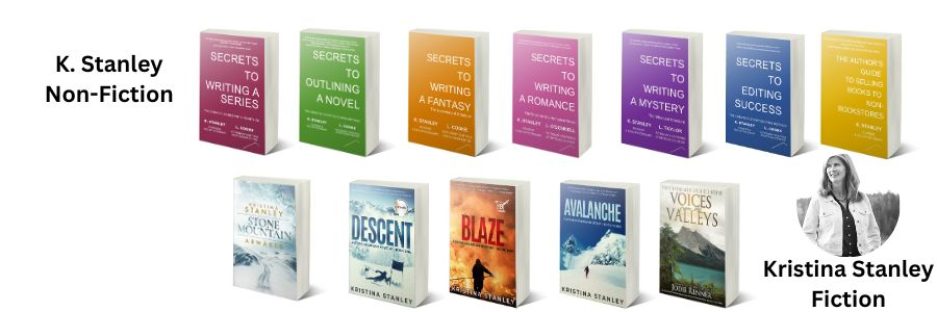
Kristina Stanley is the best-selling author of the Stone Mountain Mystery Series and Look The Other Way.

Kristina is the CEO of Fictionary.

Farley’s Friday: Couch Dogs

Farley here,

So I am the love of Kristina’s life, right?

Well, I’m wondering why she feels the need to have other dogs stay with us.  Meet Piper.

Farley Piper


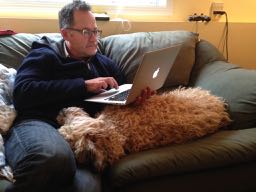
Sure, she’s cute. She’s pretty well behaved. But I don’t think she should have the same couch privileges as me. This is my couch, and Piper thinks she can sleep on it with me. Usually, I snuggle up here with Kristina, but there was no room for her.

I decided to get even, so I went to Piper’s house and visited her human.

Mike and Farley

I think I won the couch game. No room for Piper here.

Woof Woof

The Midpoint Of A Novel In The Context Of The Story Arc

Act II is underway, and your story is dragging. What do you do?

A dragging story is not what we want as authors, so let’s look at how to fix this.

A good story contains key plot events. To create a story readers love, these events must happen at the right time — including the midpoint.

If you’ve written the inciting incident and plot point 1 well, then at the midpoint, you’ll be taking your readers on a journey where the protagonist moves from a reactionary mode to a proactive mode.

The midpoint of your novel happens at around 50% of your story’s total word count. It’s also about halfway through the second act. So that was a little obvious…but had to be said.

The events following your midpoint will lead the reader to plot point 2 (at the end of Act II), and then on to the climax.


Key Scenes In The Story Arc

The inciting incident is the moment the protagonist’s world changes in a dramatic way.

Plot point 1 is the point of no return. The character can’t back out of the central conflict. This is the moment when the setup of the story ends and Act I is over.

The midpoint is when the protagonist changes from reactive to proactive.

Plot point 2 happens when your protagonist discovers something that allows him to finish his mission, or he thinks all is lost. This depends on the type of story your writing. Act II is over.

The climax is where your protagonist faces the biggest obstacle in the story. She may or may not win…


How To Make Your Midpoint Sparkle

At the midpoint, make something terrible or life-changing happen to your protagonist. This will raise the stakes.

Your protagonist needs to find the strength to deal with whatever horrible thing you’ve made happen or she’ll lose everything.

Because of this, she’ll decide to do something and take the rest of the book to do it. Meaning, the event has to be significant.

At the midpoint point, your reader should understand the story is moving in a new direction.

Depending on the type of story you’re writing, the event could be emotional, spiritual, or action packed. It must fit your story. Even though the midpoint is an exceptional event, remember the climax has to have even higher stakes.


Famous Midpoints:

Note: there are story spoilers, so don’t read this section if you want to read the book or see the movie.

Gone Girl: Nick wants to improve his image and gives a press conference. Amy’s “secret” best friend attacks, demanding to know what he did with Amy. Nick must now get proactive if he’s going to save himself.

The Martian: Mark Watney finds out his supplies are going to be delayed and believes he’s going to die on Mars. This results in kicking him into action to figure out how to live long enough for the supplies to get to him.

The Philosopher’s Stone: During a Quidditch match, Harry’s Nimbus 2000 broom takes Harry on a ride. Snape casts a spell. Hermione lights Snape’s cloak on fire. Harry can’t ignore all this and must become proactive

Twilight: Bella sees Edward’s true power. This strengthens how she feels about him, and she’ll do anything to be with him.

See Inciting Incident In The Context Of The Story Arc and Plot Point 1 In The Context Of the Story Arc for more on these stories.


Fictionary is online software that simplifies story editing. Why not check out Fictionary’s free 14-day trial and tell better stories?


 Post written by Kristina Stanley, best-selling author of Look The Other Way(Imajin Books, Aug 2017).

Plot Point 1 In The Context Of The Story Arc

You’re heading into Act II of writing or editing your novel. So how are you going to keep readers engaged? You need a great plot point to drive them forward.


In an earlier post, I talked about the inciting incident in the context of a story arc. Today we’ll examine plot point 1.

What Is Plot Point 1?

Plot Point 1 is the point of no return. The character can’t back out of the central conflict. This is the moment when the setup of the story ends and Act I is over.

But there’s more. There must be something at stake. If the character doesn’t care about the outcome, a reader won’t care either.

Example plot point types (there a many more):

  • The character is obligated to take action.
  • The character is trapped.
  • Tuning back means returning to a life of unhappiness.
  • The character’s desire for something overrules all else.


Famous First Plot Points:

Note: there are story spoilers, so don’t read this section if you want to read the book or see the movie.

Gone Girl: Amy’s first treasure hunt clue is found. Nick has no choice but to follow it. Amy’s life is at stake (as far as the reader knows).

The Martian: Mark Watney decides he won’t die on Mars. Now he gets proactive. To back out means to die — that’s a lot a stake.

The Philosopher’s Stone: Harry Potter arrives a Hogwarts. He can’t turn back. He can’t get back on the train. That would mean life back with the Muggles and unhappiness.

Twilight: Bella learns what Edward is a vampire, but she loves him and decides to pursue him. Edward has emotional power over Bella.

See Inciting Incident in the Context Of The Story Arc for the Inciting Incident in each of the above stories.


Placement Of Plot Point 1


The story arc is the structure of your story and the timing of the events in that story.

The arc takes the reader from one state at the beginning to a changed state at the end.

Plot Point 1 should be somewhere around the 25% mark in your novel. If this plot point comes too late, the story will feel like it’s dragging. If it comes too early, the story may feel rushed or lacking in depth.


Here’s an example of a story arc from Fictionary. The brown line shows the recommended story arc, and the green line shows the actual story arc for the novel.

You can see above, the inciting incident occurs too late in the story.

After that, plot point 1 is reached too quickly, denying the reader story depth. By appearing too early, it also means the middle is dragging. Act II is going on for too long.

And on it goes until the climax is too late, and there isn’t enough time for a satisfactory resolution. Meaning the reader won’t read the writer’s next book.

I’ll cover other key events such as the midpoint, plot point 2 and the climax in future blogs.

I’ve love to know what you think and if you have any questions 🙂


Fictionary is online software that simplifies story editing. Why not check out Fictionary’s free 14-day trial and tell better stories?

Mystery Mondays: Author Joanne Guidoccio on Information Overload

Today on Mystery Mondays we have the pleasure of hearing from author Joanne Guidoccio. Joanne writes cosy mysteries and paranormal romances.

Special offer: read to the bottom, and you’ll find a chance to win an Amazon gift card.

In case you missed it, Joanne has also contributed to Mystery Mondays by writing Finding Your Voice.

If you’d like to contribute to Mystery Mondays, let me know.

Over to Joanne…

How to Deal With Information Overload

by Joann Guidoccio

One lost email could cost a life. A bit overly dramatic, but it didn’t stop Constable Leo Mulligan from suggesting that Gilda Greco could have prevented a former student’s death, if only she had read that email. 

The storyline of A Different Kind of Reunion revolves around this overlooked email.

I would like to think that a lost email would never set in motion such dire consequences in real life situations. But still, a part of me worries about the increased inflow and outflow of information.

Ten years ago, I had email and other correspondence under control. I was teaching full-time and would check emails and messages three times a day. Dealing with back-to-back classes, meetings, and extra-help sessions left with me with only small pockets of free time during the day. In the evenings, I disciplined myself to check email only after my marking and lesson preparation was complete.

Everything changed when I retired and started a full-time writing career. Suddenly, my in-box overflowed with messages from editors, publishers, and writers in different time zones. When I joined several national and international groups, I also had access to their Yahoo groups. Participating in Twitter, Facebook, Pinterest, and other social media added to the constant flow of information.

My personal numbers:

• 8 Yahoo Groups
• Over 6K Twitter followers
• 500+ connections on each of the following: LinkedIn, Facebook, Pinterest, and Goodreads.
• 100+ emails each day
• Following 30+ blogs
• Active participant in Twitter chats

Here are five strategies that help me stay on track:

  1. 1. Schedule blocks of time for email, doing research, completing work-related tasks, and simply browsing. Do not simply jump on anytime you feel like it. If necessary, disconnect from the internet if you need to focus on a particular task. In his book, The Power of Less, Leo Babuta introduces the idea of an “offline hour,” which could be extended to an “offline day.”
  1. 2. Turn off email notifications. Most programs have alerts like a sound, pop-up message, or blinking icon that let you know when you have received a new email. This interruption can be disruptive and gives power to anyone who wants to email you.
  1. 3. Work your way from top to bottom, one email at a time. Open each email and deal with it immediately. Reply, delete, or archive for future reference. Whenever possible, limit your response to five or fewer sentences. This forces you to be concise and limits the time spent in the email box. Before deleting any email, ensure there will be no negative consequences.
  1. 4. Take your breaks away from the Internet. Instead of checking social media during lunch and breaks, get away from your desk: take a walk, meditate, practice yoga, meet with friends. 
  1. 5. Eat the frog. This famous dictum comes from Mark Twain, who strongly recommended completing difficult—and sometimes unpleasant—tasks early in the day. e.g. Writing a synopsis, outlining a novel, completing a round of edits. 

How do you deal with Information Overload?

A Different Kind Of Reunion
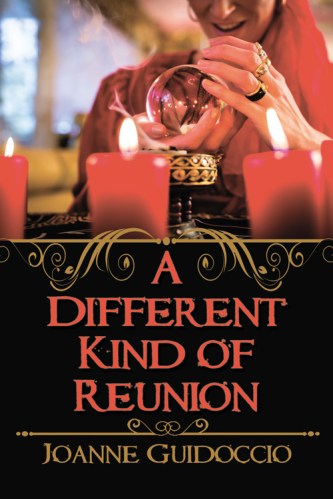
ADifferentKindofReunion_w12053_750 (2)While not usually a big deal, one overlooked email would haunt teacher Gilda Greco. Had she read it, former student Sarah McHenry might still be alive.

Suspecting foul play, Constable Leo Mulligan plays on Gilda’s guilt and persuades her to participate in a séance facilitated by one of Canada’s best-known psychics. Six former students also agree to participate. At first cooperative and willing, their camaraderie is short-lived as old grudges and rivalries emerge. The séance is a bust.

Determined to solve Sarah’s murder, Gilda launches her own investigation and uncovers shocking revelations that could put several lives—including her own—in danger. Can Gilda and the psychic solve this case before the killer strikes again?

Trailer

https://youtu.be/wqiTpt2KfZA

Giveaway:

Click on the Rafflecopter link below for your chance to win a $10 Amazon gift card.

http://www.rafflecopter.com/rafl/display/628069207/

Buy Links

Amazon (Canada):  https://is.gd/vR5Sxn

Amazon (United States): https://is.gd/lU0qw7

Kobo: https://is.gd/5MMKWF

Indigo: https://is.gd/11GpVs

Barnes & Noble: https://is.gd/ckNfhx

iTunes: https://is.gd/oPe0RD

The Wild Rose Press: https://is.gd/nQ2ZjT

About Joanne

Guidoccio 001In 2008, Joanne Guidoccio took advantage of early retirement and decided to launch a second career that would tap into her creative side and utilize her well-honed organizational skills. Slowly, a writing practice emerged. Her articles and book reviews were published in newspapers, magazines, and online. When she tried her hand at fiction, she made reinvention a recurring theme in her novels and short stories. A member of Crime Writers of Canada, Sisters in Crime, and Romance Writers of America, Joanne writes cozy mysteries, paranormal romance, and inspirational literature from her home base of Guelph, Ontario.

Where to find Joanne Guidoccio

Website: http://joanneguidoccio.com/

Twitter: https://twitter.com/joanneguidoccio

Facebook: https://www.facebook.com/authorjoanneguidoccio

LinkedIn: https://www.linkedin.com/in/joanneguidoccio

Pinterest: http://pinterest.com/jguidoccio/

Goodreads: https://www.goodreads.com/author/show/7277706.Joanne_Guidoccio
Inciting Incident In The Context Of The Story Arc

You’ve written a first draft. And with that major milestone completed, I’ll guess you want others to read your story and love it.

fantasy-3281795_1920

That means you need to take your first draft and tell a better story. One way to to tell a better story is to evaluate the story arc while you’re performing a story edit.

Today, we’ll cover the the first key event in the story arc. The inciting incident.

What is an inciting incident?

The inciting incident is the moment the protagonist’s world changes in a dramatic way.

It’s a major turning point that occurs before the midpoint of the first act. Note it doesn’t have to be the first event in your story.

The dramatic change can be positive or negative and should give the protagonist a goal she can’t turn away from.

To make your inciting incident shine, make it cause both a conscious and unconscious desire in your protagonist.

I recommend that you write your inciting incident as a dramatic scene and not as backstory or narrative summary. This enables the reader to experience the event at the same time as the protagonist and increases your chances of getting the reader emotionally involved.

The inciting incident can happen to the protagonist or can be caused by the protagonist. It’s up to you as the artist to decide what’s best for your story.

Famous Inciting Incidents

Gone Girl: Nick comes home to find his wife missing. (External goal — find wife. Internal goal — get wife out of his life.)

The Martian: Mark Watney goes missing during a storm on Mars. His teammates can’t find him, think he’s dead, and evacuate the planet.

The Philosopher’s Stone: Harry Potter receives a letter from Hogwarts and his uncle won’t let him have it.

Twilight: Bella faces the hunter as he moves forward to kill her.

Placement of the Inciting Incident

The story arc has been around for over 2000 years. It’s a proven form to keep readers engaged and is not about formula. The story, the imagination is unique to you.

The story arc is the structure of your story and the timing of the events in that story.

The arc takes the reader from one state at the beginning to a changed state at the end.

Using the tools at your disposal, like the story arc, and knowing how to write and when to place key events in your story for maximum reader satisfaction is key to a good story. So what’s a good story? It’s story others want to read.

The first of the key events is the inciting incident.

The inciting incident exists in the context of the complete story arc. If you don’t have an inciting incident in the first 15% of your novel, you need a strong reason for delaying it. Readers expect something to trigger the protagonist to act. If you delay the inciting incident, add in subplots that keep the reader engaged.

Here’s an example of a story arc from Fictionary. The brown line shows the recommended story arc, and the green line shows the actual story arc for the novel.

Story Arc Bad

You can see above, the inciting incident occurs too late in the story. The writer will lose readers who get bored.

After that, plot point 1 is reached too quickly, denying the reader story depth.

And on it goes until the climax is too late, and there isn’t enough time for a satisfactory resolution. Meaning the reader won’t read the writer’s next book.

I’ll cover other key events such as plot point 1, midpoint, plot point 2 and the climax in future blogs.

I’ve love to know what you think and if you have any questions 🙂


99428-0zktgjmg_nbxoiy49

Fictionary is online software that simplifies story editing. Why not check out Fictionary’s free 14-day trial and tell better stories?


Post written by Kristina Stanley, author of Look The Other Way (Imajin Books, Aug 2017).

d9e70-1utkhhu-sp5fjiahqxtl8xwKristina Stanley is the best-selling author of the Stone Mountain Mystery Series and Look The Other Way.

Kristina is the CEO of Fictionary, and all of her books were edited using Fictionary.