Starting A Novel Scene

This week I’ve been thinking about starting points. On Monday, I blogged about when to begin your novel. But what about a scene?

Once you’ve decided when to start your scene, as in before the action, in the middle of the action, or after then action, what about how to start your scene?

There are different ways to do this. These include with:

  • Action
  • Dialogue
  • Thought
  • Narrative

To choose which one, I think about what I want to accomplish with the scene, what happened in the previous scene, and what’s going to happen in the next scene.

For example, if the previous scene was high on action, I might want to start the current scene with narrative, perhaps describing where the POV character is. This slows the story and gives the reader a break.

When a first draft is complete, the next step is to check whether the scenes begin in different ways. If all the scenes start with dialogue, the novel might be tedious to read.

As usual, I keep track of scene starts with a column in a spreadsheet. This allows me to quickly glance and check that I haven’t been monotonous.

What’s your method for deciding how to start a scene?

Before the Story Begins . . .

For any author, the starting point of a novel is a big decision. Do you start before the beginning, at the beginning or after the beginning? And how do you decide?

For my fourth novel, Look the Other Way, I’m trying something new. I wrote 20,000 words of the story. With 20,000 words on paper, I have a good idea who the characters are.

The characters come to life, but not fully at this point. Next, I write character synopses that include the basic details, but also the story of the character’s life up to the beginning of the novel. Each synopsis ends up being three to five pages.

The synopsis format is informal. Point form will do. I don’t worry about typos or grammar, but I do get to know my characters.

This process helps me decide where to begin my novel. It’s a creative process. As I write each synopsis, I keep a separate document open that contains plot points or ideas. By the time I have all the synopses written, I have the full novel outline done too.

From this process, I somehow know where the starting point should be and what the inciting incident is. I chose the point that will drive the characters through the story. Too early, and the scene’s aren’t needed. Too late, and an important scene might be excluded.

Next comes scene writing.

Everybody has a different process for writing a novel. What’s yours?

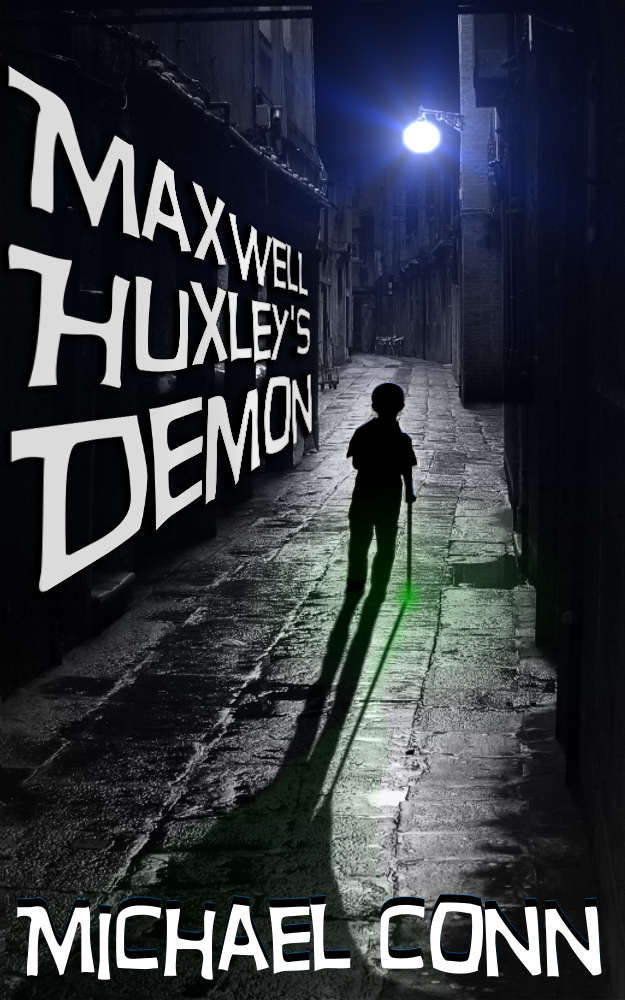
Free Download of Maxwell Huxley’s Demon Extended

Thanks to everyone who has already downloaded my brother’s novel. Due to an overwhelming response, Michael Conn is extending the free download  of Maxwell Huxley’s Demon by one day. The free download will be available on Sunday too.

It’s crazy how this is working, and we are very excited.

If you get a chance, please post a review of the novel on amazon.

Thanks for all the support 🙂

Dogs and Ticks: Yuck

What dog doesn’t love to run off leash in a yard or in a field? My wheaten terrier certainly does and that ups the risk of him getting a tick on him.

Farley has already had ehrlichiosis, and it was not fun. He had it when he was a year old. After being bitten by a brown tick in the Bahamas, he got very lethargic. His joints hurt – we could tell because he yelped when we touched him. The pain seemed to move from on joint to another. He had a fever of 104. Lucky for us, there is a vet in George Town, Bahamas who diagnosed Farley and treated him. Now, I’m a little sensitive about ticks.

Farley in on Advantix and he has a Lyme’s disease vaccination. I’m not saying this is right for your dog, it’s just what I do. I wash him in Avon Skin So Soft body wash. This seems to reduce the number of ticks that land on him. I met a woman in a park who told me about it and, and I thought, what the hey, it couldn’t hurt to try it – and he smells sooooo nice.

Do you have any good tips for preventing ticks?

Does Writing A Journal Help You Write a Novel?

Keeping a Journal #writetip

In Write Away: One Novelist’s Approach to Fiction and the Writing Life  by Elizabeth George, she explains the value of writing in a journal. I’ve never kept a journal or a diary, but thought I’d try it.

My first timid entries focussed on writing. I can’t seem to get away from that, but a more valuable thing to focus on might be daily observations. I decided to behave like a writer and keep track of interesting or odd things I noticed during the day.

Over the past few days, I’ve recorded funny or critical words people said. I’ve recorded how I feel about what went on during the day. And I’ve recorded ideas for novels.

The first thing I learned from writing a journal is that there is not a lot of me in my characters. When writing a novel, I write in a completely different voice than in my journal. My characters thoughts and feelings are nothing like mine. I have to say, I’m quite pleased about this.

Do you keep a journal? Have you discovered anything interesting by doing this?

June 8 and 9: Free Download of Maxwell Huxley’s Demon

One part Ender, one part Jason Bourne, and a dash of Harry

Micheal Conn, author of Maxwell Huxley’s Demon, is offering a free download of his novel this Friday and Saturday. Now is your chance for a great read.  You can find out more about Michael and his novel on his website.

If you don’t have a kindle, don’t worry. You can download a free kindle reading app.

You can read on the following devices:
Smartphones

 iPhone & iPod touch Android Windows Phone 7 BlackBerry

Computers

 Windows Mac

Tablets

 iPad Android Tablet

Why is Character Development Important?

While I spend time in Canada during the summer, I get to watch the news on TV, something that never happens in the Bahamas.

I’ve been watching how friends and family react to news, and I started thinking about character development in a novel and why it’s so important.

Witnessing a car crash, or the aftermath of a car crash, on TV can be upsetting, or make a person sad, but once the clip is over, everyone focuses on the next news clip.

But, what if someone you know is in the car? Then, I think, most people react a little differently. All of sudden, there is a vested interest in the crash. Were the people hurt? Are they in the hospital? Will they recover?

Why? Because you are personally involved.

I find if I can’t put a novel down, it’s usually because I feel like I know the characters and I care about what happens to them. To me, this means the author has done a great job of developing the characters. As a writer, I think it’s important for me to spend time on developing characters. Then maybe I’ll get lucky, and my readers won’t want to put my book down.

Flying With Your Dog.

Is your dog crate trained?  This summer I’m taking Farley, my wheaten terrier, on a plane for the first time. I’ve flown several times with Chica, my yellow lab, but never with Farley.

Farley was crate trained as a puppy, but hasn’t been in a crate for three years.

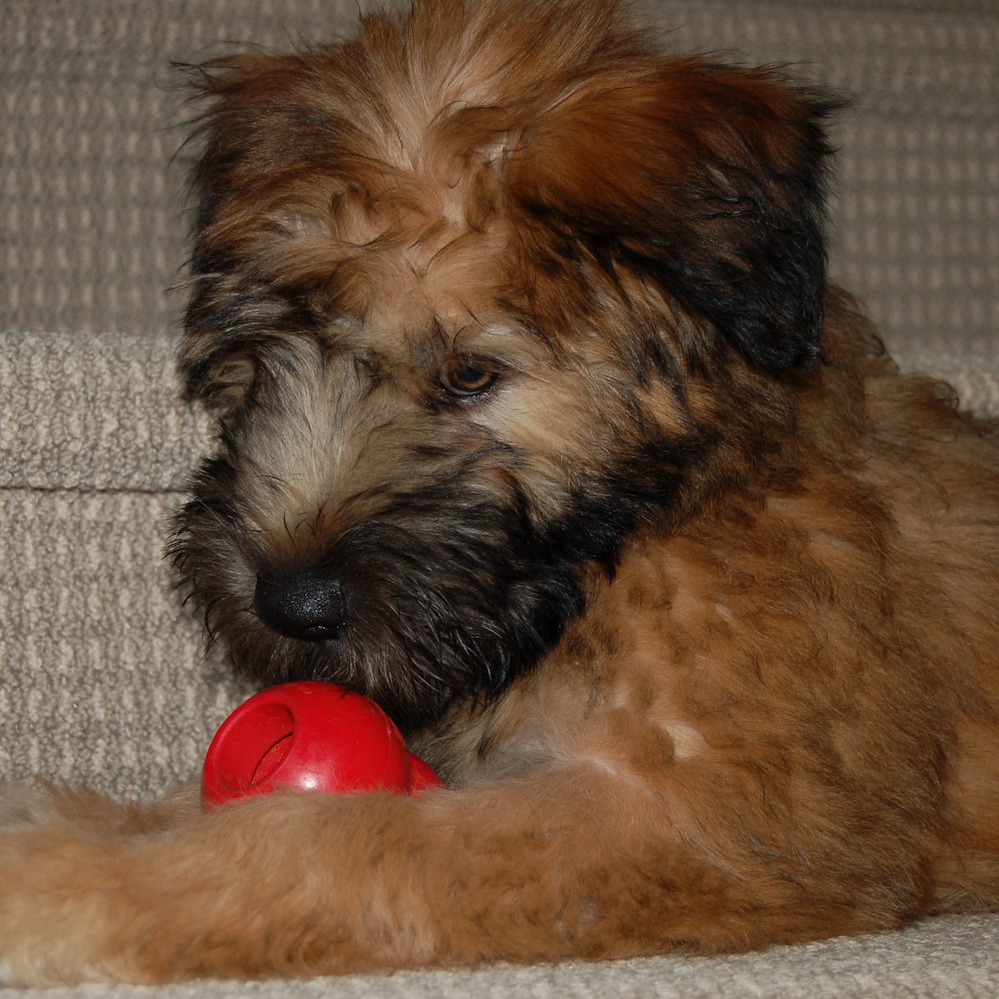
Farley at 3 Months Old

I decided I better get him used to it.

This is how I did it:

  • Put him in crate and let him walk right back out
  • Fed him in crate for four days in a row and let him get out as soon as he finished eating. The gate remained open during this time.
  • Put him in crate for 10 minutes with door open and me the room.
  • Increased time by 10 minutes each day up to an hour.
  • Closed the door, but I stayed in the room
  • Started leaving room for 10 minute intervals, then increased the time.
  • I remove him from the crate before he started to fuss.

Yesterday was the big break through. Farley fell asleep in the crate.

I hope this helps you if you are trying to get your dog crate trained. Farley rarely barks, so barking in the crate hasn’t been an issue.

Let me know if you have any other tricks that might help.

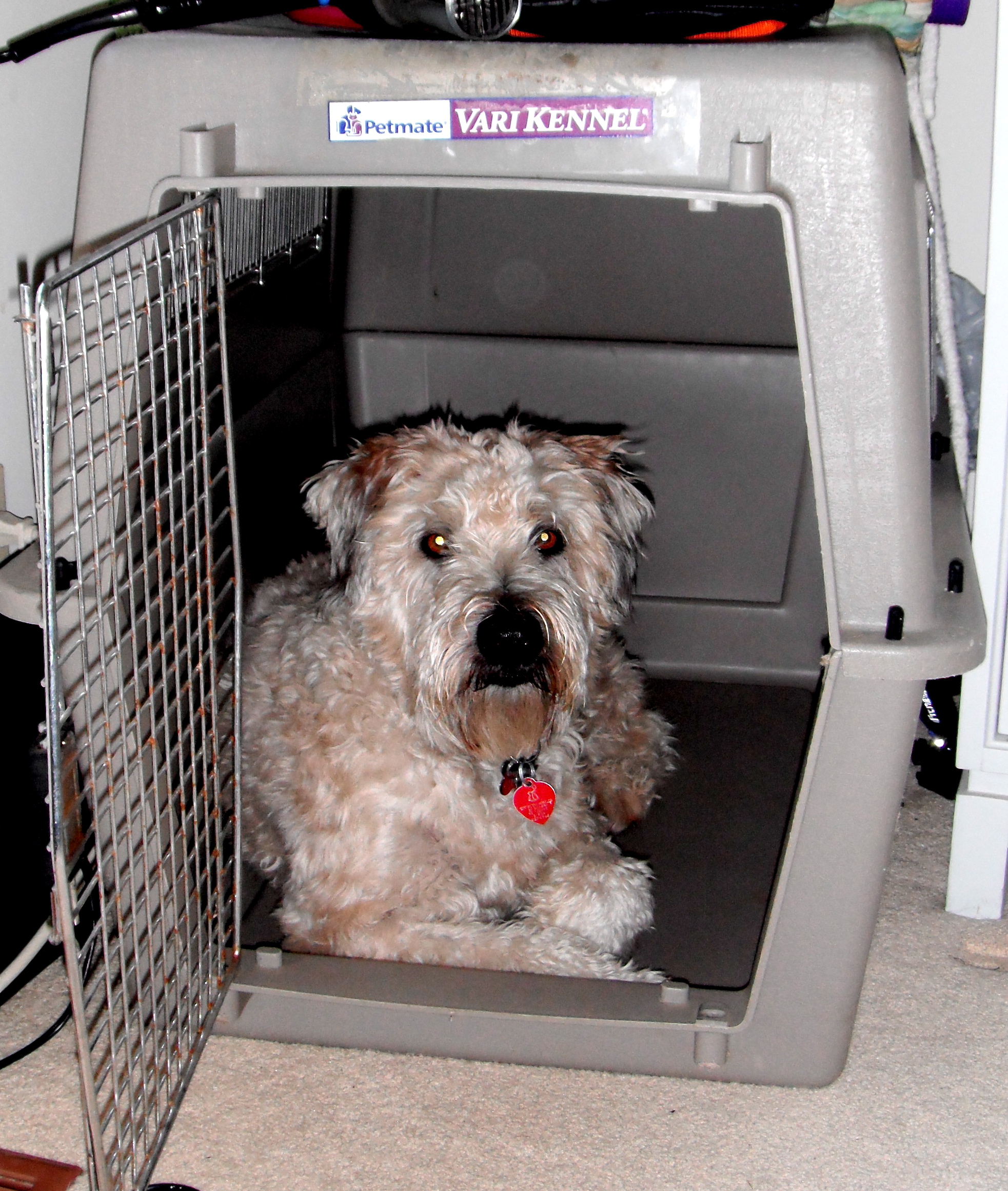
Farley Crate Training

Does Your Writing Give You Nightmares?

This is my latest discovery. I’ve been sailing my Lagoon 380 S2 for three years now and never had a bad dream about it. Well, life changes.

My fourth novel, yet to be named, takes place on a sailboat in the Bahamas. So this week, I’ve been dreaming scary dreams about sailing, and it occurred to me it’s because I’m writing a murder mystery set on a boat.

Bad weather, sailing alone, boat malfunctions, crazy people who try to get on my boat . . . and I’m only 20,000 words in. What’s going to happen by the end?

I wonder what Stephen King or Dean Koontz dream about. It can’t be good.

Has your writing changed what you dream about?

The Novel Spreadsheet

After completing three novels using my handy-dandy spreadsheet and being 10,000 words into my fourth,  I discovered I was lacking a column.

This far into the game, I thought I would have had my spreadsheet nailed. The joke’s on me.

My first three novels take place in a fictitious ski resort (Stone Mountain) in British Columbia. I needed one location column when I had one town and a bunch of locations within the town. All I needed to note in the location column was where the scene took place within Stone Mountain. That meant on the ski lift, in an office, on a trail, in the forest, in a car, etc.

My fourth novel starts out in Kingston, ON, moves to Ft. Lauderdale, FL, and then makes its way through the Bahamian island chain.

Now, I need to keep track of locations within the new locations. The new column lists the town or island where the scene takes place. The existing column still works and lists where in the town or island the scene happens. This means on a beach, at anchor, in the dinghy, etc.

I guess my spreadsheet will continue to evolve as I write more novels.