New Release: Secrets to Writing a Mystery

The latest book in the Write Novels that Sell series, Secrets to Writing A Mystery: The Whodunit Structure is now available. Are you a writer ready to move beyond the basics and dive into the deep structure that powers commercially successful mystery novels? Then this book is for you.

Unlock the secrets to writing a bestselling mystery novel. 

This book solves the puzzle of deep structure specific to mysteries and guides you through an actionable, flexible process to outline, write, and edit a mystery novel.

Through the process, you’ll

  • Learn to identify your mystery type (Cozy, Traditional, Detective)
  • Assemble your essential cast of characters (Sleuth, Victim, Suspects, and Culprit)
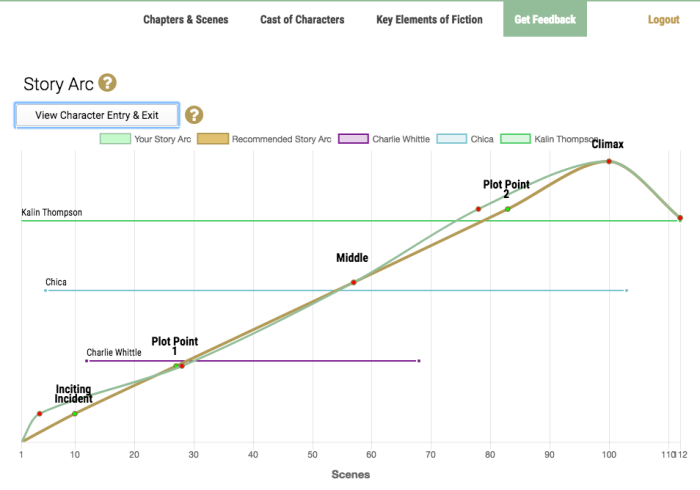
  • Anchor your story with the five mystery story arc scenes.
  • Develop your story with genre-specific patterns and scenes.
  • Learn how secondary plots and subplots can be woven into the mystery plot.
  • Deepen your story by giving victims fatal flaws and anchoring culprit motives in personal stakes.
  • Structure the story by choosing the right POV strategy to control tension and effectively drop clues and red herrings.  

Use this book as a reference, and from now on, you’ll write every mystery with confidence.

As with all the books in the Write Novels that Sell series, we give you the theory—the why behind our recommendations—and you use the actionable advice to understand the theory and apply it.

Are you a writer ready to move beyond the basics and dive into the deep structure that powers commercially successful mystery novels? Then this book is for you.

Praise for Secrets to Writing a Mystery:

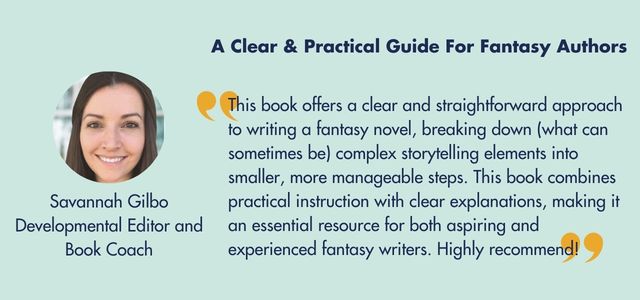
While reading this book, I kept thinking, “I wish I had this book when I wrote my own mystery.” Secrets to Writing a Mystery brilliantly demystifies the genre. It’s an essential, insight-packed guide for mystery writers. Clear, actionable, and full of those “ah-ha” moments that change the way you write. —Iris Applewood, Author of Fragrance of Forgotten Truths

You can buy your copy here.

Textbook for the Fictionary School for Writers & Editors

Secrets to Writing a Mystery: The Whodunit Structure is a comprehensive reference that provides the deep structural theory and an actionable process for Fictionary’s Write a Mystery course.

It serves to solidify and expand on the concepts taught in the live course, allowing your to internalize the techniques and apply them to your own manuscripts.

Thinking of taking the course? Our Black Friday Sale is now on. The Write A Mystery course is included in the Write Your Series Program.

🔥 Black Friday Deal: Get 40% Off Your Membership 🔥

For a limited time, you can secure your membership for 40% off the regular price. This is the best deal we’ll offer all year. Offer ends December 1, 2025.

Use the coupon code BF2025

Black Friday Pricing: 

Write Your Series: $281 /quarter or $899 /year (Reg $468 /quarter or $1499 /year)

Note we also have our other programs (Write Your Novel and Become and Editor) on sale too.

Commit to Your Best Novel With Series Membership Programs

Write Your Series: Eight live 8-week courses to launch your series are delivered by our world-class instructors. This program takes 12 months to complete and includes 64 hours of live instruction. StoryTeller Premium software included.

Use the coupon code BF2025

Top 3 Secrets for Writing A Romance

Ready to write your own bestselling romance novel? 

Join authors K. Stanley and L. O’Donnell for an exclusive event celebrating the release of their new book, Secrets to Writing a Romance. Linda and Kristina will reveal the top three secrets they discovered while researching the genre—secrets that will help you write a captivating story that readers won’t be able to put down.

RSVP to the Free Class in the Fictionary School for Writers. The first 100 people can attend live. A replay will be sent to everyone who RSVPs.

Tuesday, Sept 2. 4 to 5PM ET.

Book Description

Unlock the secrets to writing a bestselling romance novel. This book reveals the intricate structure specific to this genre, showing you the essential elements that make these stories captivating. 

Balance reader expectations with your distinctive voice to create an irresistible story that meets romance conventions.

Go beyond the “meet-cute” and learn about the scenes readers expect in commercially successful romance novels. Portray character growth and perfect your story’s pacing by writing scenes that build tension and demonstrate conflict. Drive your story forward by weaving in external and subplot story arcs.

We analyze six commercially successful romance novels with different subgenres and subplots. It’s exciting to see that each novel follows the story arc pattern but is still a unique story.  You’ll see the full breakdown of these books:

  • The Bodyguard by Katherine Center
  • Happy Place by Emily Henry
  • The Seven Year Slip by Ashley Poston
  • The Flatshare by Beth O’Leary
  • Just For the Summer by Abby Jimenez
  • The Wedding Date by Jasmine Guillory

As with all the books in the Write Novels that Sell series, we give you the theory—the why behind our recommendations—and you use the actionable advice to outline, write, and edit novels.

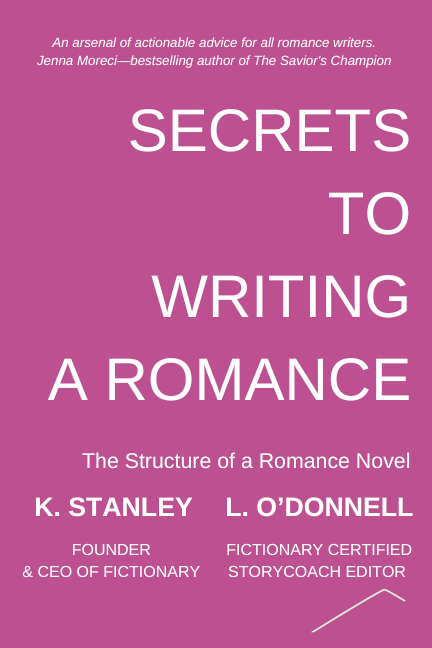
New Release: Secrets to Writing a Romance

The latest book in the Write Novels that Sell series is now available.

Unlock the secrets to writing a bestselling romance novel. This book reveals the specific structure of the genre and the essential elements that make these stories captivating.

Balance reader expectations with your distinctive voice to create an irresistible story that satisfies romance readers.

Go beyond the “meet-cute” and learn about the scenes readers expect in commercially successful romance novels. Portray character growth and perfect your story’s pacing by writing scenes that build tension and demonstrate conflict. Drive your story forward by weaving in external and subplot story arcs.

We analyze six commercially successful romance novels with different subgenres and subplots. It’s exciting to see that each novel follows the story arc pattern but is still a unique story.  You’ll see the full breakdown of these books:

  • The Bodyguard by Katherine Center
  • Happy Place by Emily Henry
  • The Seven Year Slip by Ashley Poston
  • The Flatshare by Beth O’Leary
  • Just for the Summer by Abby Jimenez
  • The Wedding Date by Jasmine Guillory

As with all the books in the Write Novels that Sell series, you’ll learn the theory—the “why” behind our recommendations—and use the actionable advice to outline, write, and edit your novels.

Praise for Secrets to Writing a Romance

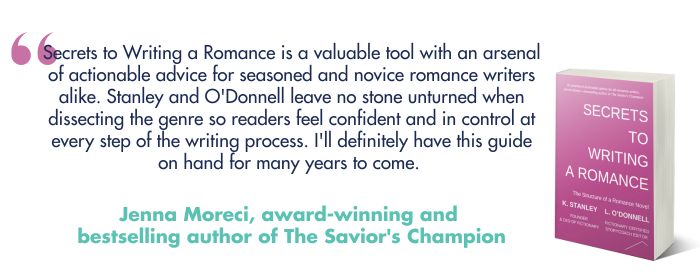
Secrets to Writing a Romance is a valuable tool with an arsenal of actionable advice for seasoned and novice romance writers alike. Stanley and O’Donnell leave no stone unturned when dissecting the genre so readers feel confident and in control at every step of the writing process. I’ll definitely have this guide on hand for many years to come. 

– Jenna Moreci, award-winning and Amazon bestselling author of The Savior’s Champion 

You can buy your copy here.

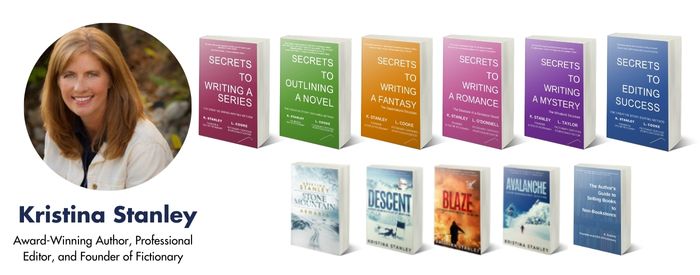
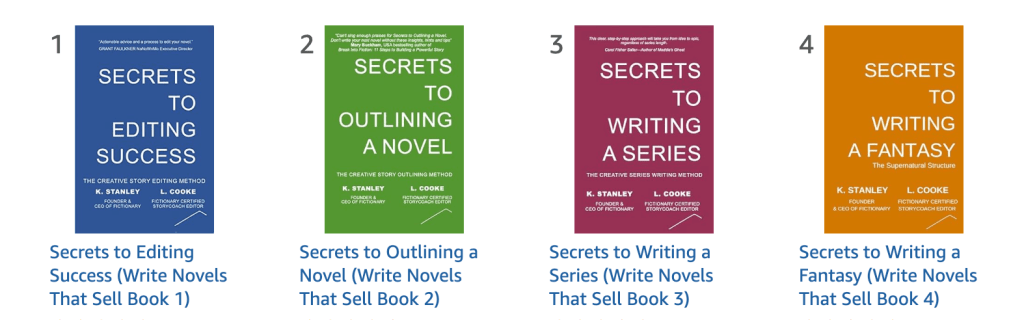
Also available by K. Stanley

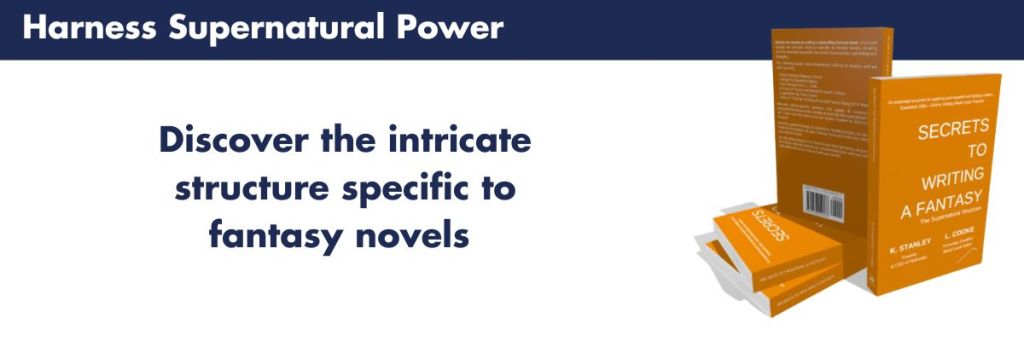
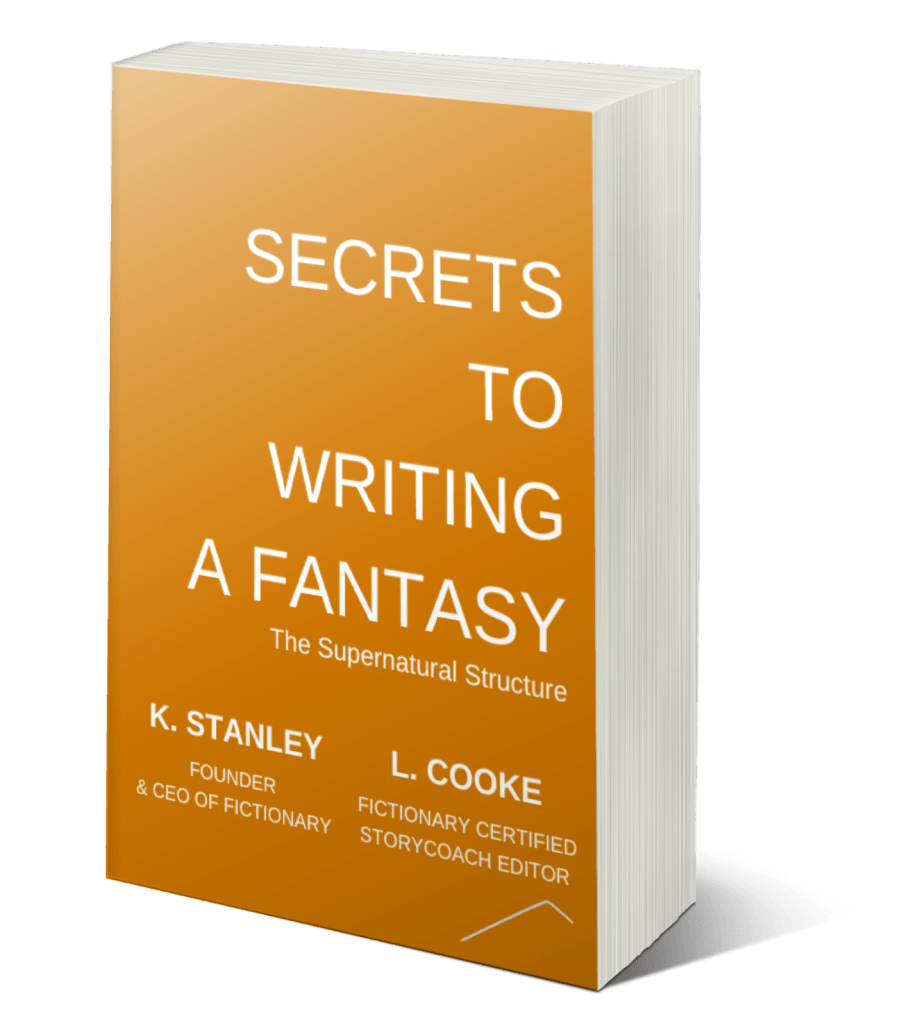
New Release: Secrets to Writing a Fantasy

The latest book in the Write Novels that Sell series is now available.

Unlock the secrets to writing a bestselling fantasy novel. This book reveals the intricate structure specific to fantasy novels, showing you the essential elements that make these stories captivating and engaging.

The following books have entertained millions of readers, and we show you why. 

  • Fourth Wing by Rebecca Yarros
  • Twilight by Stephenie Meyer
  • The Unbroken by C. L. Clark
  • A Court of Thorns and Roses by Sarah J. Maas
  • Legendborn by Tracy Deonn
  • Game of Thrones: A Song of Ice and Fire by George R. R. Martin

Discover the scenes readers expect in commercially successful fantasy novels. Create an external and supernatural story arc. Learn how the story arcs are woven together to drive a story forward.

You’ll be guided through an actionable, flexible process, so you can build the foundation of your fantasy novel and write your story as you read this book.

As with all the books in the Write Novels that Sell series, we give you the theory—the why behind our recommendations—and you use the actionable advice to write and edit your novels.

You can buy your copy here.

Also available by K. Stanley

Woo Hoo. 50% of Camp Nanawrimo Target Met, and I know who killed Nick!

Only 10,000 more words to go, and I have the first draft of my 5th novel written. Starting to get excited.

Screen Shot 2017-07-11 at 9.19.49 AM

As I was writing this morning, I was wondering if anyone else writes out of order.

Part of writing a mystery means having a murderer and catching that person. I never know who the murderer is until I’ve written most of the book. The fun part of the journey is having a host of suspects and then selecting the best one.

Today, I decided who killed Jaz’s husband, and it surprised me. Then I wrote the climax and the resolution. Now I have to back and connect the first 65,000 words to the last 5,000 words, and I have that draft.

Who else writes like this? Do you always know who committed the crime before you start writing?

As many of you know, we’re about to launch Feedback (an online tool to guide a writer through a rewrite.) I plan to use Feedback to perform a big-picture edit on Evolution, and I can hardly wait.

If you’re going to rewrite your first draft in August, join me on the adventure. We can cheer each other on!

Thanks for reading…


The EDITING App You Need – Guest Blog Post by Kristina Stanley | Dan Alatorre – AUTHOR

Dan Alatorre

is author of numerous best sellers, host of the YouTube video show Writers Off Task With Friends, blogger… and father to a hilarious and precocious daughter, “Savvy” of the bestselling book series Savvy Stories. His novels, short stories, illustrated children’s books and cookbooks have been translated into 12 different languages and are enjoyed around the world.

So why am I talking about Dan? Dan graciously hosted my guest post yesterday on his blog, and I’d like to share that with you.

So over to Dan’s blog: The EDITING App You Need – Guest Blog Post by Kristina Stanley | Dan Alatorre – AUTHOR

***

Kristina Stanley has been a friend of the blog for quite a while. As a fellow author she noticed several things we writer types struggle with and set about finding a way to help. I’ll let her…


Mystery Mondays: Author P.J. Lazos on Writing Exercises

Today on Mystery Mondays we welcome author P.J. Lazos. Also known as Pam, she wrote OIL WATER,  about oil spills and green technology. She’s also an environmental lawyer, so I’m guessing she knows what she’s writing about. Sound interesting? You can find out more after her guest post.

If you need help getting your creativity working, this is the blog for you. Over to Pam.

A Prompt Prompt Prompted Me Promptly by P.J. Lazos

Prompt. The word is fascinating and versatile. It’s a noun, a verb, an adjective and an adverb. Holy guacamole, how often does that happen? It’s like winning the EGOT — Emmy, Grammy, Oscar, and Tony, a laudable goal shared by only 12 lucky and hardworking people. It makes you wonder, is there anything a word like that can’t do? (I found a blog post on the internet that listed 56 similarly situated words (https://onweb3.wordpress.com/2013/08/14/663/); prompt hadn’t made the list.)

I wish I would have thought of prompt during one of the timed writing exercises I used to do with a friend in the now defunct Borders cafeteria. We’d sip fancy coffees and rip small strips of paper from our notebooks, then write one word down on each slip of paper, three nouns, three verbs and three adjectives, eighteen slips of paper total, separated into three different piles. (We left out adverbs. Call us prejudiced, but we just didn’t see the need.) We’d pull a word from each of the piles and do timed exercises of five, ten, and fifteen minutes.

The rules were simple. Write until your hand falls off. Haha! No, actually, it was write using one word chosen from each of the three piles for the prescribed minutes without stopping: not to ponder a plot twist, not to reach for a word that was escaping your pen, not even to go to the bathroom. It was invigorating and imaginative, and it shushed the internal editor more succinctly than any of the other writing exercises I’d tried. Sometimes we’d tweak the rules, adjusting the time or using twice as many words, but the basic premise was the same. This simple writing prompt fueled the basis for scene after scene of a novel that would eventually become “Oil and Water,” but it also taught me something about the craft of writing: imagination is like every other muscle in the body; you need to flex it if you want to keep it in shape. For me, writing prompts facilitated my workout.

So much of our day is spent elsewhere, unconsciously trolling the past or hypothesizing about the future. Cutting through the madness of life is challenging, but the here and now is where you want to be. If done with full awareness, the art of writing IMG_3209can facilitate a sacred communion with your Higher Self. When you tune in to your Higher Self, the internal editor — the one that never really stops criticizing — is silenced, brushed aside to allow the light of clarity to shine through and the quiet little voice to finally get a few minutes of air time. Don’t banish the internal editor because you’ll need him or her later in the rewrite stage — just tell them to shush up so the quiet little voice can speak.

You can also get that kind of unfettered access writing morning pages. The minute you are out of bed, write down whatever comes to you, a dream, some leftover baggage from the day, any nervousness about the day to come, all of it, and when you’re done, start the day fresh.

Here’s another one. Grab a tangerine, or an apple, the fruit doesn’t matter, or if you don’t like fruit, grab a wrench, then set a timer for fifteen minutes, more if you’re brave, and write down everything you can about the tangerine.   Notice the color, the texture, the feel of its skin against your own, the little indentation on the one side and the little nub of a branch on the other where it was plucked from its momma tree. Notice the hexagonal star pattern surrounding the little nublet — not a word, but it describes the little wooden branch remnant on the top center of the tangerine perfectly, doesn’t it? Describe the smell and whether this is what you thought the color orange would feel like. Rub it against your cheek and lips and describe the almost plastic feeling of the skin and balance it on your head and talk about the weight or how easy or hard it is to balance it there and then write a sentence with a tangerine on your head (which does great things for your posture), and talk about how hard it was to keep it from falling, and on and on until your timer goes ding and THEN, eat the tangerine and describe that, so tart, so sweet, so delicate. If you chose a wrench as your object, you’ll have to leave this last part out. The exercise is freeing because there’s really no goal other than to train yourself to observe and describe. Do it a hundred times and you’ll have mastered the art of observation and description which is all writing really is.

Got it? Great! I challenge you to choose your prompt and get to work. Your readers are waiting. You’re going to be amazing.

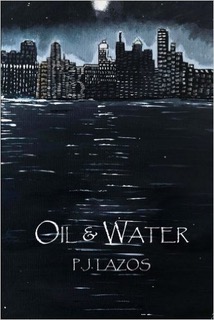
OIL AND WATER

51ZWliCKZqL._SX331_BO1,204,203,200_        When inventor Martin Tirabi builds a machine that converts trash into oil it sends shockwaves through the corporate halls of the oil cognoscenti. Weeks later, Marty and his wife, Ruth are killed in a mysterious car accident. Their son, Gil, a 10-year old physics prodigy is the only one capable of finishing the machine that could solve the world’s energy problems.  Plagued with epilepsy from birth, Gil is also psychic, and through dreams and the occasional missive from his dead father he gets the push he needs to finish the job.

Meanwhile, Bicky Coleman, head of Akanabi Oil is doing his best to smear the planet in it. From a slow leak in the Gulf of Mexico to the most devastating oil spill the Delaware River has ever seen, Akanabi’s corporate practices are leaving oily imprints in their wake. To divert the tide of bad press, Bicky dispatches his son-in-law and Chief Engineer, David Hartos to clean up his mess.  A disillusioned Hart, reeling from the recent death of his wife and unborn child, travels to Philadelphia to fulfill his father-in-law’s wishes.

There’s no such thing as coincidence when Hart meets Gil and agrees to help him finish Marty’s dream machine. But how will he bring such a revolutionary invention to market in a world reliant on fossil fuels and awash in corporate greed?  To do so, Hart must confront those who would quash the project, including his own father-in-law.

You’ll find murder, mystery, and humor as black as fine Arabian crude filling the pages of Oil and Water. The characters are fictional, but the technology is real. What will we do when the oil runs out?   Open up and see.

Who is P.J. Lazos?


IMG_9598P. J. Lazos is an environmental lawyer and author of the recently released novel, Oil and Water, an environmental murder mystery about oil spills and green technology; of Six Sisters, a collection of novellas about family and dysfunction; the creator of her lifestyle and literary blog, Green Life Blue Water (greenlifebluewater.wordpress.com); on the Editorial Board for the wH2O Journal, the Journal of Gender and Water (University of Pennsylvania) (http://www.wh2ojournal.com); a blogger for the Global Water Alliance (GWA) in Philadelphia (http://www.globalwateralliance.net), a literary magazine contributor (Rapportage); a former correspondent for her local newspaper (LNP); former Editor-in-Chief for the Environmental Law and Technology Journal at Temple Law School; a ghostwriter; the author of a children’s book (Into the Land of the Loud); an active and enthusiastic member of the Jr. League of Lancaster, and, because it’s cool, a beekeeper’s apprentice. She practices laughter daily.

Thanks for reading…

Mystery Mondays: Bill Engleson on Setting, Plot, Problem, Solution

Mystery Mondays has become such fun for me. It’s a place to discover mystery writers that I wouldn’t otherwise know about. This week, I have the pleasure to host Bill Engleson, author of Like a Child to Home and Confessions of an Inadvertently Gentrifying Soul.

So over to Bill.

Setting, Plot, Problem, Solution by Bill Engleson
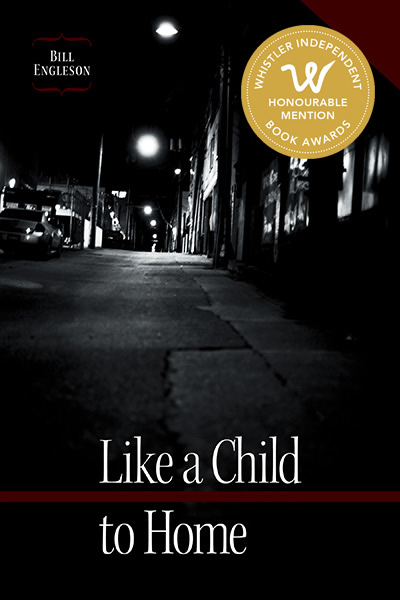
cover-of-lacth-with-badgeMy novel, Like a Child to Home, is a telling, in a slightly noirish style, or so I tell myself, of the final working weeks of Child Welfare Social Worker, Wally Rose. As I was a recently retired Child Welfare Social Worker when I began the book in 2004, there is little mystery to my research style.

In Early 2004, I was contracted by my previous employer, the BC Ministry of Children and Family Development, to write a report detailing a framework for an MCFD Ethics Committee. That report, Through a Kaleidoscope, was completed in May 2004.

Like a Child to Home, or, as I called it then, Next of Kin, began with that report, with that intensive exploration of ethical practice. I am probably sounding too pompous here. What I wanted to do, in a fictional form, was describe, as best as I could, what my experience of working with at-risk kids and families was like. At the time, I had a long-shelved, since dusted-off detective manuscript, Bloodhound Days, whose main character was Wally Rose. I transposed Wally’s name into this new novel.

Borrowed character name notwithstanding, It wasn’t such a leap to view child welfare as having many of the key elements of mystery fiction.

People in crisis are the characters, humans in need. I hope I am not lessening the very real issues people face as opposed to the somewhat imaginary situations characters in novels find themselves.

Family, or loss of or estrangement from family, is frequently the setting.

The plot…how the lives of children and families are unfolding.

The problem…abuse, neglect, death, financial need.

And the solution…usually temporary…always open to interpretation.

So, with this rather generic similarity, I wrote my novel. Initially, the best I could do was write two character studies, two chapters. It was probably at this point that I actually decided to write a full-blown novel. Which I did.

Back Story of Like a Child to Home


November on the Canadian West Coast; it’s often wet, miserable and dark. Lives get messy; streets are unsafe.

Wally Rose is a brooding, sporadically up-beat, old-time social worker. Carla Prentice is an overwhelmed, single mother of two teenagers, one who has lost his way, another who may be losing hers. The Prentice family, paralyzed by fear and silence, can barely keep a lid on their out-of-control lives.

Wally is juggling a convoluted caseload of youth, each coping with more than their fair share of adolescent struggles, the taxing muddle of leftover family distress, and a baffling child welfare system they are submerged in. An old file comes back to bedevil Wally. A habitual line-crosser, he may have pushed his luck one too many times.

Wally has been “nurturing” kids and fellow workers for decades. He has little patience for red tape and is a thorn in the side of his employer. He is also running out of gas. He hopes he can fill his tank one more time, not only to save himself, and those he cares for, from a capricious system, but also to draw his career to a close on his own terms.

Since

I write daily. Something. Anything. Lately, Monday mornings have required the writing of a haiku. Admittedly, the output is numerically minimalist but the satisfaction is almost acceptable.

In the past couple of years, my regular weekly writerly routine has involved the creation of a number of pieces of flash fiction for a variety of sites. Some of these inspiring sites have closed, proving a burden to the hosts, most of whom are not only authors themselves, but working stiffs.

Aside from a prequel to Like a Child to Home, and the resuscitated P.I. novel (with my protagonist re-christened), and the occasional poem, my principal writerly activity at the moment is shepherding a second book, a humorous creation of literary non-fiction, Confessions front cvr1.jpgConfessions of an Inadvertently Gentrifying Soul, released in early October by my publisher, Silver Bow Publishing, along the path of success.
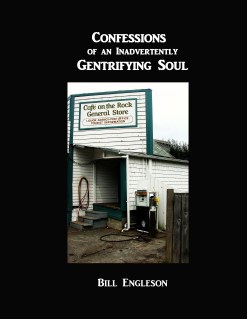
Additionally, a short story, Hell is a Holiday was included in the recent Centum Press anthology, One Hundred Voices.

A recent writing highlight has been the announcement in November’s online CQ magazine that I have won their 2nd Short Story Challenge. The story will be printed in the February edition. Here is a link in case people are unfamiliar with CQ. https://issuu.com/ramblingawaymagzine/docs/cqnov16v2

I am also part of my community. At the moment I am in my final year as Chair of the Hornby & Denman Community Health Care Society. It is a fine service oriented organization.

http://hornbydenmanhealth.com/about-us/people/


Awards

Few, I’m afraid.

This year, Like a Child to Home received an Honourable Mention at the inaugural Whistler Independent Book Awards.

Reading Inclinations

These days, I enjoy Michael Connelly, Philip Kerr and Lawrence Durrell to name but three.

Links

www.engleson.ca

@billmelaterplea

http://www.silverbowpublishing.com/confessions-of-an-inadvertently-gentrifying-soul.html

http://www.centumpublishing.com/product-page/5f32c1aa-3309-3fa5-8aa7-319051d5436f

AND A LITTLE MORE ABOUT BILL

Autobiography

bill-engleson-in-a-reflective-momentOn the day I was born, or thereabouts, my parents pulled into a dock at Powell River and made their way to the hospital.

I am pretty sure it went that way. They never actually spelled out the details and I never asked.

I can’t imagine we lingered more than a couple of days in that seaside town after I was delivered.

The next year and a half was spent on their fish boat. I am told I developed sea legs. I assume that is true. I never fell into the chuck. They never mentioned it anyways.

We finally came to shore in Nanaimo. A Pulp Mill had to be built. My father signed on.

I came of age in Nanaimo. In my later teens, I left, had a truncated Canadian military encounter in Kingston, a tail-between-my-legs return to High School to repeat Grade 12 (after signing a behavioural contract,) and a second, more permanent exit into my own wonky version of maturity and liberation.

I attended SFU as a charter student, dropped out whilst remaining within, immersed myself in student politics, had a six month flirtation with Frontier College and spent more than a decade living in the CRCA, a New Westminster Co-op/Commune which is celebrating its 50th Anniversary in August, 2017.

For a career, I spent twenty-four years with MCFD, initially as a family support worker and, post-Solidarity, 1983, as a child protection social worker.

In 2002, I accepted early retirement but after a couple of months of mind-numbing sloth, went to work, for 1 ½ years, with the Lower Mainland Purpose Society headquartered in New Westminster. Previously I had served on the Board of Directors for many years.

All along the plan, our post-work life plan, was for my partner and me to live in the country, preferably on an Island.

Devil’s Island or Denman Island. It didn’t matter.

Well, it mattered some.

Life on Denman has been full, mostly with writing, volunteering, table tennis and, of late, Pickleball.

To keep as active as is befitting a retired social worker who writes, I maintain a blog, www.engleson.ca, and occasionally post both musings on writing and observations on the state of Child Welfare.

There is an intensity to rural life yet, all the while, a comfortable detachment exists, can exist. The community struggles, yet comes together.

I like to think that my writing hasn’t hindered its intermittent coalescence.


Farley’s Friday: Can a dog help a human write?

Farley here,

Did you know it takes a human a long time to write a novel?

Kristina is working on a novel she’s calling EVOLUTION. She says there are several dogs in this book. One of them is a wheaten terrier, just like me.

“Is his name Farley,” I woof.

“Nope,” Kristina says. “Farley was in BLAZE, so he can’t be in EVOLUTION. The dog’s name is Jasper.”

I sigh. I don’t see why my name can’t be used in all her books and not just BLAZE.

She’s typing words, but I want to go for a walk. I figure if I sit on her, she’ll work faster.

Farley on lap

Not sure my theory is working…

Woof Woof

Time is running out…on Book Sale

2015 is coming to close today, and I want to thank everyone who has interacted with me during the year. Connecting with other writers, readers and dog lovers has been fun.

Farley had a blast sharing his stories and reading my books.

Farley reading DESCENT

DESCENT and BLAZE are on sale for a few more days and then life gets back to normal.

eBook Sale 1

Thanks for reading…

Happy New Year.