Mystery Mondays: Cathy Ace on Editing and Multiple Series

Today is a bit of an occasion. It’s the final post in the 2015-1016 Mystery Mondays series, and next week, I’ll have something special for you.

So to celebrate, Cathy Ace is joining us today.
Screen Shot 2016-06-07 at 7.03.23 AM

Editing and Writing Multiple Series (aka soot-juggling) by Cathy Ace

I’m a lucky girl (apparently it’s okay to call myself a “girl” if you go by the plethora of books with “girl” in the title…when the subject is anything but “girl-aged”!). Yes, I’m truly fortunate. I’m in the enviable position of having two publishers, each allowing me to write a series of books, with contracts stretching a couple of years into the future. So I have it a lot better than many authors, let alone writers searching for that elusive first contract. (Keep going, by the way!)

I’m writing this on June 3rd 2016. I’ve just returned to my home near Vancouver, BC, Canada from a trip that took me to CrimeFest UK (a large UK crime convention) where the likes of Ian Rankin were guests of honor, and then Toronto where I attended the Arthur Ellis Awards and the Bony Blithe Awards. Thus, for the past couple of weeks, I’ve been surrounded by people intensely focused on crime fiction, and those who’ve been nominated for, and won, the top prizes in their field. It’s been a wonderful trip – the sort of thing that makes me realize how many people are out there who share my passion for creating crime fiction. But now it’s back to just me, my laptop, all the people in my head…and my dogs at my feet.

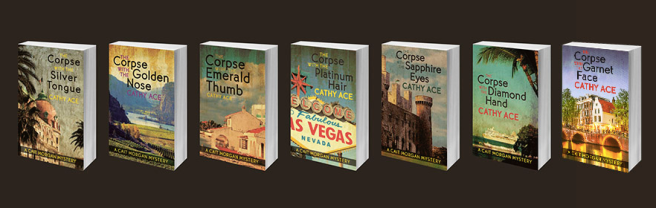
As I mentioned, I write two series of books: The Cait Morgan Mysteries are published by TouchWood Editions based in Canada, The WISE Enquiries Agency Mysteries by Severn House Publishers in the UK. The series differ from each other in many ways, yet are similar in that they are both “traditional”: no foul language, no sex on the page, no gore or “unnecessary” violence. Yes, they’re murder mysteries, but I stick to the more palatable types of murders…the sort I first encountered in the books of Agatha Christie and Ngaio Marsh.

Right now I have two manuscripts on the go – one for each series. That’s not unusual, but the specific timing is. And not in a good way. I think of writing a novel as being akin to Three-Day Eventing: day one sees horses galloping over fences and across fields, day two forces more discipline as the show-jumping takes place and day three requires deftly controlled exercises in the dressage. First drafts, editing and copy-editing follow much the same formula for me; the joy of the gallop, the challenge of refining, the excruciating attention to detail.

Book #3 in the WISE Enquiries Agency Mysteries (currently entitled The Murdered Miniaturist, but that could change) is at the stage where it’s contracted for, and I have a deadline of June 20th to get the manuscript to my publisher with agreed structural changes having been made to what is currently the fifth draft. This will mean I have to, essentially, pull the book apart, delete one sub-plot and insert another plotline, with new characters that then have to be woven through the entire work. It sounds scary, but (having done this before) I know it won’t be as bad as it feels right now, before I begin. It will then go to my editor (who works for Severn House) who’ll go through the manuscript with a fine-toothed comb and get back to me with notes, which I will work through. We’ll finally agree it’s ready for proof-checking, and then I’ll go through notes on that part of the process. I’m looking forward to it – I enjoy being with “The WISE Women” as I call my characters in this series.

The slight “challenge” I face is that I expect to receive notes from my editor at TouchWood Editions about Cait Morgan Mystery #8 (entitled The Corpse with the Ruby Lips – that’s set) any day now. I’m one stage further along with this book than the WISE book, but a bit of a problem with scheduling means I’m going to have to do what sounds a bit like brain-mashing, by working on both manuscripts at the “same time”. How will I handle this? One during the day, one at night. That’s the best I can do.

Usually, when I am writing and working through my own editing and redrafting, I give up most of my daytime work hours to organizing events, writing guest blogs, writing for the two blogs where I’m a regular contributor (7 Criminal Minds every other Wednesday and Killer Characters on the 22nd of each month) as well as prepping for Blog Tours for book launches (I had four books published last year) and the work and various committee meetings I undertake for Crime Writers of Canada (I am Chair for the next two years). That, plus using Facebook and Twitter to promote my work and build and maintain relationships with readers I meet in the digital world (and having six grandchildren, five acres, two dogs and a husband to tend to – yes, I thought about the order!) takes up a good deal of time, so I write when everyone’s gone to bed – from about 9.30pm until I realize I’m typing what looks like a poor hand at Scrabble…maybe 1-2am.

But for the rest of this June, it’ll be a bit different; I’ll have to switch from the Welsh stately home of Chellingworth Hall and the nearby village of Anwen-by-Wye, where the four women of the WISE Enquiries Agency run their business, to Budapest – where Cait Morgan is having a challenging time trying to work out whether a cold case back in Canada is connected to the Cold War, or whether being so far from her Canadian home without her retired-cop husband is addling her thought process. Cait’s stories are told in the first person, the WISE women each have their own point of view chapters. It’ll be a blast (I hope!). My plan is to work with the WISE women during the day, and Cait at night. With a break to make and eat dinner with my husband in between the two, that should give me enough head-space to shift location, storytelling style and voice.

Yes, I’m giving the impression I don’t know how it will go, and that’s true; I’ve never done this before. I’ve worked on the two series for a couple of years, but with only one book on the go at a time, thanks to some canny scheduling. Now the planets have aligned to no longer allow that to be the case, I plan to cope. I have to cope. Somehow.

That’s the thing, you see; there are always new challenges in this writing life. Last year was the first time I’d written four books in a year, but I know I won’t do that again. I managed it, but my family and home life suffered because of it, and that’s not fair on anyone. I have agreed to write three books this calendar year; one’s the WISE #3 I mentioned above, one will be Cait #9, the third will be WISE #4. Two books have been launched in the US/Canada this year so far (WISE #2 and Cait #7) and Cait #8 and WISE #3 will be published before it’s 2017. It’ll still be a busy time, but I am (I think/hope) becoming a smarter worker. I’m a detailed outliner, and I don’t use any programs to schedule characters/timelines; I found the use of technology took too much time in itself. Nope, it’s good, old-fashioned pencil and paper for me (and the frequent use of an eraser!).

I’m fortunate to have the deals and the deadlines I do. And I know it. My parents always taught me the harder you work, the luckier you get. Like I said, I’m a lucky girl, so I’d better keep my head down, and get back to this manuscript!

***

1610884_639339149521629_3791092845543988135_nCathy Ace was born and raised in Swansea, South Wales, worked for decades in marketing communications, and migrated to Canada in 2000. Having traveled the world for work and pleasure for many years, Cathy put her knowledge of the cultures, history, art and food she encountered to good use in The Cait Morgan Mysteries – a series of traditional closed-circle murder mysteries featuring a globetrotting professor of criminal psychology. Ace’s other series is set in her native Wales: The WISE Enquiries Agency Mysteries feature four female professional investigators, one of whom is Welsh, one Irish, one Scottish and one English, aided and abetted by a sleuthing dowager duchess. They tackle quirky British cases from their base at a Welsh stately home – the ancient seat of the Twyst family, the Dukes of Chellingworth, set in the rolling countryside of the Wye Valley in Powys, near the picturesque village of Anwen-by-Wye. Cathy lives in beautiful British Columbia, where her ever-supportive husband and two chocolate Labradors make sure she’s able to work full-time as an author, and enjoy her other passion – gardening. Bestselling author Ace is the 2015 winner of the Bony Blithe Award for Best Canadian Light Mystery (for Cait Morgan Mystery #4, The Corpse with the Platinum Hair).

Web: http://cathyace.com/

Facebook: https://www.facebook.com/Cathy-Ace-Author-318388861616661/

Twitter: @AceCathy


Write Better Fiction: Point Of View

Today on Write Better Fiction we’ll cover Point Of View. Write Better Fiction is a process to help you critique your own manuscript and give yourself feedback. This will help you improve your novel, so you’re ready to submit it to an editor.

What is Point of View?

I use the Point Of View (POV) in many of my spreadsheet columns and have been asked to describe what POV is.

POV is the perspective the story is told from. There are three main types of POV.

  • Omniscient
  • First Person
  • Third Person

There is also second person, but this doesn’t seem to be used much in commercial fiction, so I won’t spend any time on it.

OMNISCIENT is when the narrator of the story knows all. The narrator can get into the head of any character to drive the story forward.

An excellent of a novel written in omniscient POV is the Da Vinci Code by Dan Brown. One way to determine this is to notice that the narrator provides information that the characters are unaware of.

FIRST PERSON means the narrator is speaking directly to the reader. This comes in the form of ‘I’.

Janet Evanovich writes the Stephanie Plum novels in first person. Often, near the beginning, she’ll write something like: My name is Stephanie Plum. I work as a bond enforcer…

THIRD PERSON is written from the he said / she said narration.

Of course, I have to mention my novels for third person point of view narration. I wrote  DESCENTBLAZE,  and AVALANCHE in third person. I like to change points of view and get into the heads of more than one character, so this style suits me.

My favorite book on point of view is The Power Of Point Of View: Make Your Story Come To Life by Alicia Rasley. If you want an in-depth description of all the points of view and their variations, this is a great book to read.

Please let me know in the comments below if you have any thoughts on POV. What form do you write in and why?

Thanks for reading…

Mystery Mondays: James M. Jackson On Is Your Manuscript Ready

Welcome to Mystery Mondays. I’m a huge fan of the Seamus McCree novels, so it’s a great honor to have James M. Jackson share his writing advice today. I first met James when he agree to have me guest blog on his site in August 2015. James was helping me spread the word about my first novel, Descent. Over the last year, I’ve learned what generous people authors are, and here he is again being generous with his time and sharing some advice.

Is it Soup Yet? by James M. Jackson

Well, no. When I agreed with Kristina to write this blog, (thank you so much for the invitation), I was confident I would have published the next book in the Seamus McCree series. It hasn’t happened, and I’m quite happy with that because the decision was mine.

By today’s standards, I am a slow writer. There are several reasons for this. Probably the most important is that writing is only one of the things I enjoy doing. I spend considerable time each year teaching the game of bridge at my local bridge club. [In fact my first published book was One Trick at a Time: How to start winning at bridge.] I also teach an online class on self-editing/revision, and I am the president of the 600-member Guppy Chapter of Sisters in Crime.

But none of those other interests or commitments are why you can’t buy Doubtful Relations today. You can’t buy it because I don’t think it’s ready.

Readers clamor for authors they enjoy to write more books more quickly. Publishers echo the demand, even writing faster deadlines into contracts. The once-a-year-release timetable has been replaced by a nine-month regimen. Many authors now produce two books a year, and many independent authors produce three or more books a year.

This pressure for more words, more quickly, comes at a time when publishers have pulled back on the amount of sales and marketing support they provide most of their authors. Now, most published authors spend a significant amount of time performing tasks that do not directly relate to writing their next book.

Some authors have always been prolific, producing great quality writing with everything (or nearly everything) they publish. For these authors, nothing has changed. I read eighty to a hundred books a year, mostly fiction, and over the past few years, I have discovered many authors who I once loved cannot produce high-quality manuscripts with these shorter timeframes.

Storylines become flat, characters become caricatures, plot holes appear. Editors in the past would have jumped all over these problems, but shortened production schedules don’t leave enough time for major fixes. Problems are papered over. For big names, this isn’t really much of a problem: a number one bestseller will obtain huge sales with a mediocre book, or two, or three. For a less-known author, it could be a death knell.

I teach my students that in revising a manuscript, it is important to give space between the writing and the rewriting. As a first step, they should try to read their manuscript as if they were a discerning reader. When I did that with Doubtful Relations, I realized the manuscript contained two major problems: new readers to the series required a deeper understanding of prior relationships than I had provided, and I had not given the reader sufficient understanding of the motivation of the primary antagonist.

Each problem had a straightforward solution, and had I been forced to turn in a manuscript to meet an approaching deadline, I could have applied those bandages to an otherwise decent manuscript. But in thinking about those issues, I realized I could significantly improve the novel if I tore it apart and addressed certain aspects using a different approach.

I attended a week-long workshop in 2015 run by Donald Maas, and one of the takeaways I have treasured is that sometimes the best way to fix something is to tear it down to its foundation and build it back up again. That’s what I am doing with Doubtful Relations. That’s also the approach I took with my most recent publication, Ant Farm. It started life as my first written novel. It attracted an agent’s attention and went nowhere. Frankly, it had good bones, but my writing was not yet mature. The flawed writing should not have earned an agent’s contract, and I am glad it was not published back in 2010. [I would now be very embarrassed if it had.] After being consigned to a drawer, I reread it in 2014, tore it down and built it up through a series of rewrites. When I was done, it won a contract through the Kindle Scout program.

I’m now in the process of building Doubtful Relations back up. I expect it will be available later this year. You can follow its progress (and the next two in the series that are also in the works) on my website, http://jamesmjackson.com or follow me on Facebook https://www.facebook.com/James-M-Jackson-388804844542707/ or on my Amazon page http://www.amazon.com/James-Montgomery-Jackson/e/B004U7FRP2 .

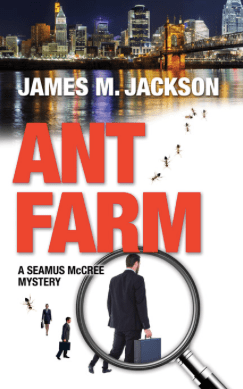
Ant Farm

Screen Shot 2016-04-03 at 7.24.14 AMIn this thrilling prequel to Bad Policy and Cabin Fever, when thirty-eight retirees meet a gruesome end at a picnic meant to celebrate their achievements, financial crimes consultant Seamus McCree comes in to uncover the evil behind the botulism murders.

But the deadly picnic outside Chillicothe, Ohio, isn’t the only treacherous investigation facing Seamus; he also worms his way into a Cincinnati murder investigation when the victim turns out to be a church friend’s fiancé.

While police speculate this killing may have been the mistake of a dyslexic hit man, Seamus uncovers disturbing information of financial chicanery, and by doing so, puts his son in danger and places a target on his own back. Can Seamus bring the truth to light, or will those who have already killed to keep their secrets succeed in silencing a threat once more?

author-photoJames M. Jackson authors the Seamus McCree mystery series. ANT FARM, BAD POLICY, CABIN FEVER, and DOUBTFUL RELATIONS (2016). Jim also published an acclaimed book on contract bridge, ONE TRICK AT A TIME: How to start winning at bridge, as well as numerous short stories and essays. He splits his time between the deep woods of Michigan’s Upper Peninsula and the open spaces of Georgia’s Lowcountry.

Mystery Mondays: Michael Phillips On Writing Goals

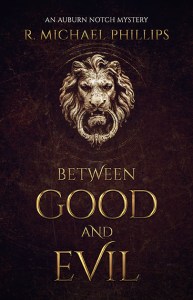
Between_Good_And_EvilMystery Mondays welcomes Michael Phillips, Author of: Between Good And Evil, first book in the Auburn Notch Mysteries Published by Sunbury Press.

It’s amazing to me that each week an author generously shares wisdom about writing and the writing industry and this week is no exception.

If you’ve been needing a plan to get your work published, read on…

Writing Goals by Michael Phillips

Any time I do a book-signing event one of the first questions I get is, “What is the toughest part about being a writer?” Some would say finding an agent or a publisher. Others might say dealing with all the rejections that go along with finding an agent or a publisher. But my usual response is—formulating a plan and sticking to it no matter what. Doing this can make those other two things much easier and achievable.

So what do I mean about a plan? Well, I mean setting achievable goals and attacking them one at a time. One completed goal should lead to the next, and the next, and so on until you have a complete manuscript in hand and a stop-them-in-the-aisle query to go along with it.

Before I break these goals down for you, let me mention a few things to help this process along. First, you should treat your writing like a job. Our lives are crazy, but if you are serious about writing you should carve out a time to write and try to stick to it. Some folks write an hour or so early in the morning before the day really starts, others write at night after the family has gone to bed. I write 8-10 hours one day a week. Whether it’s one paragraph, three chapters, or just reference, I stay at it for 8-10 hours. One day a week doesn’t sound like much, but I get a lot done in that one day. For example, my Ernie Bisquets Mysteries are English cozies, so they are quirky and enjoyable to write and I can complete an 80k word manuscript in 6-8 months. The Auburn Notch Mysteries are a little darker and have much more research involved, so an 84k+ manuscript may take up to a year. Whatever your preference, stake your claim and stick to it.

Second, you really need to know your characters. Character mapping is incredibly important and something you should invest time in before you get too far along in the process. Think of this as filling out an on-line dating questionnaire, adding in as much detail as you can. This is also a living document, so you can adjust as needed as your story progresses. I take this one step further and map each character’s relationship with all the other characters. There are a number of character mapping apps out there. I use one more suited to screenwriting because I like the character-to-character relationship aspect.

Third, try working from an outline. Even if it is just a few sentences for each chapter describing what’s going on, I find doing this helps me plan out the whole book and keep track of what’s next.

Now, onto those goals.

First Goal: Write your story. I don’t mean labor over every word, or second guess the affect of your foreshadowing, or wondering if your protagonist still has the same color hair in chapter seven as she does in chapter one, etc. What I mean is right your story. It’s a first draft. It’s going to be short and it’s going to be terrible, but that’s ok. Just get the whole idea out of your head and onto your laptop. Someone told me a long time ago that 90% of writers never get their work published for one reason alone—they give up. They get so bogged down in the details while they’re writing the first draft, or worrying if their work is good enough, that they just give up. Some would see this as a daunting statistic, figuring if 90% give up what chance do I have? If you’re like me, I figured I just eliminated 90% of my competition. I was quite sure my writing skills were as good as or better than ½ of the remaining 10%, so I just got to work and finished writing my story. Check off Goal #1.

Second Goal: Walk away. Put the completed first draft aside for a month. This is important. You need to look at the story with fresh eyes before you start the editing process, and the best way to do that is to walk away from it. Spend this time researching potential agents/publishers for your book. Get a complete list together, so when you’ve finished the book completely you’re ready to start the query process. And do not start the query process until the book is polished. Check off Goal #2.

Third Goal: The editing process. With a hot cup of whatever, you sit down and start back at the beginning and read what you’ve written. Read through the whole story a few times making notes along the way. This is the time when you take that rough first draft and turn it into a compelling story. Define the characters, establish the conflict, and embellish the details. Add weight to your writing. My favorite part of this goal comes at the end of the second draft and I go back to the beginning and start the “was” edit. This is the time to sift out the passiveness from the story and increase the word count. Do a word search for “was” and start the edit. For example:

My original sentence: It was just after 4:30 when Promise returned to the office and found Hank waiting for her.

The edited version: The long shadows of the cool, late afternoon stretched across the busy Main Street leading Promise into her office, the very tip of the shadow resting beneath the tapping foot of her deputy, Hank.

No “was” any more, and you’ve done a little show don’t tell in the process. We’ve also gone from 17 words to 34 words. It’s amazing what you can do with a single word when you try.

I’ve written a couple books requiring only 2 drafts, but three other books took a third and forth until I was happy. Everyone is different; so take as long as you need to get it right.

Forth Goal: Hire an editor. Most new writers don’t want to hear this one, but it is incredibly important. Look at it as an investment in yourself and your work. Do a little research, find a reputable editor, and turn over the manuscript once you get to your final draft. For the few hundred dollars it will cost you, the return on investment will be worth it. Together you will polish the manuscript and get it ready for submission.

Fifth Goal: The Query. To some extent this is more important than the entire book. On one 8.5”x11” piece of paper you are going to dazzle an agent with your hook, and then draw them into your story with a brief paragraph or two describing your characters and the conflict they’re struggling with to reach the resolution. Writing the query is a post in itself, so I’ll just leave you with the knowledge of how important it is and leave the how-to for another post.

Thank you so much for inviting me to share my writing experience with your readers. It’s been a delight being here.

Cheers,

Mike


RMPhillips_Profile_12ACCLAIMED MYSTERY NOVELIST R. MICHAEL PHILLIPS RELEASES FIRST BOOK IN NEW SERIES

CARLISLE, PA. – Sunbury Press has released Between Good and Evil by R. Michael Phillips, the first in the Auburn Notch Mystery series.

About the Book:

Promise Flynn was an overly impulsive Metro Detective whose disregard for procedure finally resulted in her being shot and left for dead during an investigation.

To repair her bruised ego and splintered confidence she abandons the dark alleys of Chicago to patrol the quiet, birch-lined streets of Auburn Notch.

For two years everything was idyllic, until the body of a young girl found in the abandoned asylum outside of town awakens the insecurities she thought her new life would insulate her from.

As the new Sheriff she begins her investigation, oblivious to being unexpectedly recognized and penciled in at the top of a clever murderer’sTo- Do list.

Her internal struggle intensifies when a discredited crime reporter from the past arrives in town to resurrect his

reputation, along with an FBI agent chasing down a lead in a cold case.

Both men quickly become entangled in Flynn’s investigation and her attempts to finally put her past to rest.

Praise for Between Good and Evil:

“It’s such a treat to start a new Phillips mystery…He gracefully brings new people into our lives, giving us time to get to know who is who. The dark yet very real worlds of his characters are so clearly defined that you are sucked inside and grabbed along in a slow-building rise of anxiety and danger…”

—The Editing Pen

“R. Michael Phillips has an incredible hand at descriptive detail: clothing, rooms, scenery. It leaves a flavor for you to sample and settings you can envision stepping into…”

— June Lorraine Roberts, Murder In Common About the Author:

Michael is a classically trained artist turned mystery writer. He has written three books in his first series, The Ernie Bisquets Mysteries, and has released the first book in his Auburn Notch Mystery series, Between Good and Evil.

When he’s not painting or writing Michael is an avid antique collector, filling his home—an 1894 Queen Ann Victorian he, his wife, and son are restoring—with antiques from around the world. Michael also enjoys cooking, working in the garden, and playing in the yard with their two rescues, Beau and Pup.


Write Better Fiction: Characters Mentioned In A Scene

Feedback iconToday on Write Better Fiction we’ll cover the Characters Mentioned in a Scene. Write Better Fiction is a process to help you critique your own manuscript and give yourself feedback. This will help you improve your novel, so you’re ready to submit it to an editor. Check the bottom of this post for links to previous Write Better Fiction articles.

Sometimes a character does not have a role in a scene but is referred to by another character. This could be in dialogue, thought, dream, an eMail or phone conversation.

Why would you do this?

  • To remind the reader of a character if you haven’t written about them for a few scenes or chapters
  • To show the character through the eyes of an other character
  • To foreshadow an event that will affect the character
  • To give the reader a clue or red herring
  • To show the POV character’s goal, personality trait, or attitude
  • To keep the antagonist in the readers mind if the antagonist doesn’t have any POV scenes.

This is a column that I fill out when I review each scene. Once the spreadsheet is complete review the column and plot how often characters are referred to. This is similar to a first character appearance diagram.

Once I’ve finished, I review the column for each character. I’m looking for:

  • Big blocks of time where a character disappears
  • Sections where a character is mentioned repeatedly but then not for a while
  • Mentioning an unimportant character too often

Your challenge this week is fill out this column with the characters mentioned.  Then review you major characters and see how often they are mentioned. Too often? Too Little? Too much time passed between being in a scene or being mentioned?

I critiqued DESCENT and BLAZE using the techniques I’m sharing in Write Better Fiction, and I believe this helped me sign with a publisher.

Please me know in the comments below if you found this exercise challenging. Did it help you improve your character arcs?

Thanks for reading…

Other blogs on the topic…

Write Better Fiction: A Character Enters A Scene

Write Better Fiction: Characters in a Scene – too few/too many?

Write Better Fiction: #1 Question To Ask About Characters In A Scene.

Write Better Fiction: Characters in a Scene – too few/too many?

Today on Write Better Fiction we’ll cover the Characters In A Scene. Write Better Fiction is a process to help you critique your own manuscript and give yourself feedback. This will help you improve your novel, so you’re ready to submit it to an editor. Check the bottom of this post for links to previous Write Better Fiction articles.

We’ve discussed using our spreadsheet to balance the number of scenes the protagonist and antagonist are in. But what about other characters? There is a columns for that too.

In the column called characters, list all characters in the scene. This includes characters that don’t have a name. The bartender, the skier, the person on the street, etc. I include animals as characters. The animal may or may not have a name. If you’ve read DESCENT, you know Chica is a character that is a yellow labrador. In BLAZE, a grizzly bear has a scene, but it’s not named. They both get listed in this column.

The character column helps

  • keep track of characters from one scene to another. If a character is in one scene, and the next scene is in the same location, then either the character has to still be there or you must write his/her exit. This column will keep you from having randomly disappearing characters.
  • you assess whether you have too many characters or too few in a scene.
  • you count how many times the protagonist and antagonist appear together.

If you get feedback from beta readers that you have too many characters, this column will help look for places you could cut characters or combine two characters into one.

Your challenge this week is to list all the characters in each scene.  Have you given your protagonist and antagonist a fair amount of time in your novel?

Please me know in the comments below if keeping track of characters in a scene helped you tighten your writing. Did you edit out any characters?

Thanks for reading…


If you’d like to check out DESCENT or BLAZE the links are below:

myBook.to/Descent

When Kalin Thompson is promoted to Director of Security at Stone Mountain Resort, she soon becomes entangled in the high-profile murder investigation of an up-and-coming Olympic-caliber skier. There are more suspects with motives than there are gates on the super-G course, and danger mounts with every turn.

myBook.to/BLAZEbyKristinaStanley

Instead of exchanging vows, Kalin Thompson spends her wedding day running from a forest fire near Stone Mountain Resort, and the pregnant friend trapped with her has just gone into labor. Meanwhile, Kalin’s fiancé, Ben Timlin, hangs from the rafters of a burning building, fighting for his life. Can the situation get any hotter?

Scapple and Writing

If you haven’t used Scapple, it’s a neat tool for organizing thoughts when editing or writing a novel.

I made bubble diagrams of each suspect in my novel, Avalanche.

Things I found that helped:

  • Connections between characters that could strengthen the readers belief that one of the characters was guilty.
  • Inconsistencies with clues.
  • Ideas for more clues.
  • At what point in the plot did the protagonist learn important details. Then I made sure I didn’t reference the information earlier.
  • Were the clues evenly balanced amongst the suspects?
The software is free flowing in the sense that you can draw what you like. Bubble diagrams, flow of information etc. It has a free 30 day trial so if you’re interested, you have nothing to lose.

It’s a fun and easy tool to work with, and I think has tightened my plot. See Literature and Latte for a better product description.

Here’s a shout out to Kirsten for pointing out Scapple to me. She always blogs about something interesting and useful.

Do you have any tools to help you write?

Thanks for reading . . .

Crime Writers Of Canada: Arthur Awards

I’m giddy with happiness and need to share.

Writing  and trying to publish a novel is a long, seriously long, journey, with very few accolades along the way.

With trepidation, I entered DESCENT in the Unhanged Arthur competition. This competition is for Canadian writers and is given for excellence in mystery, suspense and crime writing to unpublished authors.

I submitted my entry last fall. In January came the first exciting news. Descent made the long list. A wild sense of relief filled me. Descent had made it that far, and I felt pretty good. Now, all I had to do was wait until April 24th for the short list announcement.

That’s sounds easy, right?

Wrong. I didn’t sleep for the four nights leading up to the announcement. On the night of the 24th, I went to bed not knowing if Descent made the list or not. I woke up more times than I want to admit, but forced myself not to turn on my computer and check. If Descent wasn’t on the list, I knew I was in for a completely sleepless night.

On the morning of the 25th, I took my first sip of coffee, opened my laptop and collected my email.

The first message I read was from a facebook friend. The text read : Congrats on making the short list.

I looked up at my husband and smiled.

“I told you, you would make it,” he said with a big grin on his face.

Next I read the email from CWC (Crime Writers of Canada) with the official notice that Descent was short listed.

I asked my husband to read the email, just to make sure I wasn’t reading only what I wanted to see.

“Yup, he said. You made it.”

Friday turned out to go by in a blur. I couldn’t quite believe I was on the list.

Saturday morning, I woke up with the first feeling of happiness about the award.

I’m still in the middle of my journey, but once in a while it’s good to stop and enjoy small successes.

Thanks for reading . . .

Here are the places I found the announcement:

CBC Books

Crime Writers Of Canada

Blog Mystery Fanfare

Blog Criminal Element

Blog Shots Crime and Thriller Ezine 

Blog Mystery Mavin Canada

Blog Black Mask

Blog The Rap Sheet

Blog Mystery Scene

Character Development

I’m excited to say I’ve added a new spreadsheet to my box of writing tools.

Getting to know new characters, or even existing characters, is exciting.

For each scene, I ask the POV character the following questions and then answer in their first person voice:

  • How did you get into the predicament you’re in?
  • What do you want?
  • Why do you want it?
  • How did you feel when (insert disaster or setback here) happened?
  • What are you going to do next?

The questions open my mind to new ideas and remind me to keep character personalities consistent.

Do you ask your characters questions to get to know them?

Thanks for reading . . .


Procrastination Can Be A Writer’s Friend

Procrastination? Don’t feel like writing but want to hit your word count?

Writing a novel can be an intimidating task, so why not try something shorter?

For me, when I’m overwhelmed or feel too pressured by word count, I write something else. I like to have my blogs written and pre posted. In my lifestyle, I’m never sure I’ll have internet access on a daily basis, so writing blogs ahead of time reduces the stress for me. You’re probably laughing and thinking what stress can I have living on a boat for the winter, but I take my writing and my blog seriously. Self induced stress, but still stress.

How does writing in smaller increments help with novel writing?

I find by taking on a shorter piece of work, I often get in the flow of writing and can switch over to the novel. Even if I don’t, I’ve been productive and written something.

Does it have to be a blog? Nope. You could write a short story or an entry in your journal.

How do you kickstart your writing?

Thanks for reading . . .