Mystery Mondays: A Year of Advice

I can’t believe one year is coming up since the first Mystery Monday post.

It’s been a year of collecting great writing advice. So as a thank you to all my readers, I’ve created a book containing the advice from more than 30 of the author that I’ll give away starting June 20th, 2016.

The contributing authors have all given consent that their advice can be included in the book. They will retain all rights to their work. But they have generously allowed me to compile it into a book.

It’s with great excitement that I show you the cover today.

Screen Shot 2016-05-05 at 2.24.17 PM

I’ll be starting a newsletter, and for those who sign up the book is yours. I plan to create both a PDF and Mobi format. This is a learning experience, so bear with me as I try this out. All contributing authors will receive a copy directly from me.

Next, I just have to  figure out how to use  MailChimp and how to create a newsletter…

Thank you to all how have been reading and commenting, and thank you to the contributing authors.

Write Better Fiction: Is Your Scene Anchored?

Today on Write Better Fiction we’ll cover Is Your Scene Anchored? Write Better Fiction is a process to help you critique your own manuscript and give yourself feedback. This will help you improve your novel, so you’re ready to submit it to an editor.

One could argue that asking yourself if your scene is anchored should fall under setting or under plot.

I’ve included scene anchoring under plot because it’s more than setting, and I think it leads well into the next topics we’ll cover, which are hook, development and climax of a scene.

AnchorSo what does it mean to anchor a scene?

The reader needs to know:

  • Who has the point of view
  • Where the character is
  • What the timing of the scene is

POINT OF VIEW:

We’ve dealt with point of view in detail, so I won’t say much here except you should checkEye whether the reader will know who has the point of view within the first paragraph or at least within the first couple of paragraphs. If not, the reader might find this frustrating. If you write your entire novel from one point of view, like many first person novels, then you don’t need to worry about this.

SETTING:

“Where is your character”“Where is your character” fits under setting. You know where the character is because your wrote the scene, but does your reader? If the reader can’t figure out where the character is within the first couple of paragraphs you may lose them – the reader I mean and not the character. 🙂

There are exceptions to this. If your scene is about a character waking in a dark place and confused about where she is, then it’s okay for the reader to be confused about where she is too. This will add to the tension. The reader does need to understand the lack of setting is done on purpose.

TIMING:

The timing of the scene can mean:Clock

  • Time of day
  • Time passed since last scene
  • A particular date

If several years or several seconds have passed in a characters life, then the reader needs to understand that. If you are jumping back in time or forward in time the reader needs to understand that too. The quicker the reader gets the timing, the quicker they will be drawn into the scene.

START OF A NEW SCENE:

The start of a new scene means point of view has changed, the setting has changed, or time has changed, hence every scene needs to be anchored.

Your challenge this week is to ask yourself if every scene in your novel is anchored. Does the reader know who has point of view, where the character is and what time it is?

I critiqued DESCENT and BLAZE using the techniques I’m sharing in Write Better Fiction, and I believe this helped me sign with a publisher.

Please me know in the comments below if you have any suggestions or improvements for anchoring a scene.

Thanks for reading…

Write Better Fiction: Point of View Goal and Plot

Today on Write Better Fiction we’ll cover How the Point of View Scene Goal Relates to Overall Plot. Write Better Fiction is a process to help you critique your own manuscript and give yourself feedback. This will help you improve your novel, so you’re ready to submit it to an editor. Check the bottom of this post for links to previous Write Better Fiction articles.

The column in the spreadsheet has long title, and if you can think of a better one let me know.

This is column where I analyze both the internal and external goal of the point of view character.

Each scene has a point of view character. This character must have a goal for the scene. If there is no goal, then what is the character doing?

Let’s deal with the external goal first. This is the goal the reader is aware of.

Finding a murderer is Kalin’s main goal throughout DESCENT. She also has goals within each scene where she holds the point of view. In the opening scene her external goal is to go skiing. Her internal goal is to be good at her job.

The reader is shown Kalin wants to go skiing. She doesn’t achieve this goal because a skier falls and is terribly hurt. She has to put her own wants aside and deal with the situation. This is the start of Kalin’s journey of searching for a murderer. At the time she doesn’t know she is witness to a crime, she’s only thinking of taking care of the skier. The external goal of skiing places her on the hill at the time the skier falls.

Kalin’s internal goal is to be good at her job. In the opening scene, she doesn’t know yet this will involve chasing a murderer.

For each scene, think about how the POV character’s goal is related to the plot of the novel. If you don’t know the answer, perhaps the scene isn’t relevant to the story, or perhaps another character should have the POV for that scene.

Your scene may just need some updating. Can you strengthen the character’s goal? Is there a way to add a goal to the scene so it relates to the novel’s plot?

You can also use this column to check for consistency. Let’s say your character is a tea drinker, and you put the character’s scene goal as finding a cup of coffee. That should trigger you’ve made a mistake.

When you’ve finished the spreadsheet for each scene, you should be able to scan this column and find any entries that are weak.

Your challenge this week is to check the previous column for internal and external character goal and determine if that goal relates to the overall plot.

I critiqued DESCENT and BLAZE using the techniques I’m sharing in Write Better Fiction, and I believe this helped me sign with a publisher.

Descent & Blaze

Please me know in the comments below if you found this exercise challenging. Did it help you write a tighter scene?

Thanks for reading…


Mystery Mondays: Jessica Norrie on Friends in your Novel

KONICA MINOLTA DIGITAL CAMERA

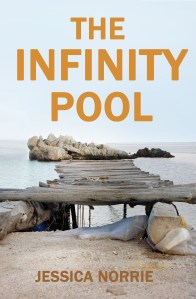
Mystery Mondays has been a fascinating experience for me. This week, our guest is Jessica Norrie, author of THE INFINITY POOL. I met Jessica through other author’s I’ve met on line, and now I have another book to read that I might not have heard about.

THE INFINITY POOL is Jessica’s debut novel. So let’s give Jessica a warm welcome.

Here is what she has to share with us.


“Your friends should know they’re fair game if you’re a writer.” By Jessica Norrie

So says a more established writer friend, with plays on the West End stage and on exam syllabuses, who runs workshops and appears on BBC culture programmes. I haven’t yet heard her comments on “The Infinity Pool”, which means she may not have recognised the at best quirky and at worst nasty detail that I shamelessly plucked from my first encounter with her. I hope that what seemed funny at the time, and has been commented on by many readers, will not spoil a friendship.

No such problem with the yoga teacher in my novel, “The Infinity Pool”. He’s everything a yoga teacher should be, wise, relaxed, humorous, fit and athletic, sympathetic, adaptable to different levels, sensible, stable, demanding to the point of stimulus but not stress, in command but without notions of hierarchy. Michael Stewart, who appears as Satnam in the book, I salute you! And anyone looking for a yoga teacher (although he gets around, last heard of in Mexico) should Google him. I thought I couldn’t have given a better testimonial – but then someone said he was “creepy”.

But what of the hero/antihero/semi hero? At the start of the story he’s attacked and left for dead; the mystery concerns how his disappearance affects others, why it happened, whodunnit, and whether that’s the end of him. He WAS based, to some extent, on someone I knew. Someone I didn’t think I liked, because I disapproved of him. I thought he manipulated people, dangerously, leading them to disclose inner thoughts and feelings too quickly for safe processing. Where a therapist might allocate months or even years, this guy had people unburdening themselves in two weeks, often getting very upset along the way. I changed his age, his appearance and manner, but it was essentially him and when  I thought I’d kill him, it may have come from my anger.                                                                                                                                                                                                                                                    Strangely, as I progressed, I began to like him. I took his part, tried to present his actions more sympathetically – in fact I fell for him. I chose his shirts more carefully and paid attention to his footwear. I even came to agree with some of his ideas, though I still took my debunking responsibility seriously. He began to stand a chance of survival.

It’s surprising how far back one can go in selecting people on whom to model characters. Aged eighteen, I was in a class with two ravishing girls of Greek Cypriot origin, best friends who turned heads everywhere, but who, though attractively and sexily dressed, were always correct and traditional in their behaviour. I hardly knew these girls; they were pleasant but we moved in different circles and I was too in awe of their perfect looks to approach them much. One of them became Maria in the book, and yet I’m sure I hadn’t thought of her for thirty years until she turned up in my story.

Few people are all good or bad, in life or in good fiction. Ruby, Bernard, Megan and Chris are all composites of people I’ve known. I should apologise to “Ruby” for giving her an unattractive drink problem as well as generosity of spirit and an intriguing wardrobe; in the spirit of remorse I did try and redeem her. Bernard has origins in a man I once dated for a short while: grumpy, and superior but highly intelligent and actually quite warm and vulnerable under a pompous exterior. It’s quite fun to improve such characters as you go along, teaching them and yourself a lesson in the process.

I’m told I write a good location and the setting is of course itself a character. And this one IS a composite –loosely based on a place I holidayed in but with details changed and huge liberties taken. As soon as I arrived, I thought, what a great setting for a whodunit. But if it was really as poorly run, as ramshackle, as un health and safety conscious, as turbulent as I paint it, there would have been no story and they would not still be running highly praised “holistic breaks”. I’m keeping mum about the exact location, although anyone who’s been there will recognise it straight away. That’s just another small mystery for the other readers to solve.

The Infinity Pool:

“Adrian Hartman is the charismatic director of the Serendipity holiday community, set among pine trees on a sun-baked island. His job is to ensure the perfect mindful break, with personal growth and inner peace guaranteed. His guests return year after year to bare their souls. For some, Adrian IS Serendipity.

But this year Adrian isn’t there, and nobody knows the reason why. Things have changed: staff and guests are bewildered without their leader and the simmering hostility of the local villagers is beginning to boil over. Is the atmosphere of menace connected with Adrian’s absence? And will life on the island ever be the same again?

As romance turns sour and conflict threatens the stability of both communities, everyone has to find their own way to survive. This evocative novel explores the effect of well-intentioned tourism on a traditional community, and questions the real meaning of getting away from it all.”

Jessica’s Profile:

6x4 (3 of 8)Jessica Norrie was born in London and studied French Literature at the University of Sussex and Education at the University of Sheffield. She taught in Paris and Dijon, and in the UK has taught English, French and Spanish to age groups from 5 to 80 in almost every educational setting possible.

She took a break from teaching when her two children were small, to study for and work as a freelance translator. She has also published occasional journalism and collaborated on a Primary French textbook (“Célébrons les Fêtes”, with Jan Lewandowski, Scholastic 2009).


Jessica sings soprano with the Hackney Singers, and wherever else she gets the chance in the UK and abroad. Less publicly, she plays the piano – slow pieces suit her best as she needs lots of time to figure out the chords.

She is fascinated by languages and has worked hard to make language learning approachable and fun even for the most nervous students. But having always read voraciously, she would now prefer to concentrate on writing. “The Infinity Pool” is her first novel, drawing on many years of travel and encounters, and she already has several ideas for another.

Everything you need to know about Jessica you can find out below:

Amazon Canada (no Canadian reviews yet but for rather more go to Amazon.ukAmazon.comAudible.uk or for less favourable ones in the land where it sold best (?!) Amazon.au. I would LOVE some reviews in Canada or more in the US where it’s fair to say I haven’t yet made much impression on the market. However the Audible narrator, although Welsh, lives in Canada. In Australia II went to no 1 in Literary Fiction when on promo in September, but unfortunately Amazon classified it as Crime and I think readers were disappointed by the lack of psychopaths and general gore. It’s now been moved to Literary Fiction. If anyone would like to review it please contact me via my Facebook author page or witter Jessica Norrie – author:
https://www.facebook.com/Jessica-Norrie-1617940365158063/?ref=hl or by direct message on Twitter: @jessica_norrie.
Amazon Canada
Amazon Australia
Amazon India


Mystery Mondays M.H. Callway on NaNoWriMo

Mystery Mondays welcomes M.H. Callway to talk about riding NaNoWriMo Tiger.

If you don’t know what NaNoWriMo is: read on!

I know M.H. Callway as Madeleine. We met online through other authors. Madeline has a special place here as she provided an endorsement for my second novel, BLAZE. It’s difficult to ask another author for an endorsement and Madeleine said yes right away. Her generosity with her time and thoughtfulness in writing an endorsement has pushed my writing career along.

So please help me welcome M.H Callway.

RIDING THE NANOWRIMO TIGER by M.H. Callway

Many thanks to Kristina for inviting me to her blog! I’m delighted to be here.  Today I want to share with you my experiences doing last November’s National Novel Writing Month or NaNoWriMo.

Print

My friend and fellow author, TO Poet, encouraged me to join him and his friends for this 50,000 word marathon adventure. He has ridden the NaNoWriMo tiger no less than six years running.

So I jumped in feet first with little – well, let’s be honest – no preparation!


What is National Novel Writing Month?

November is pretty dull so every year hundreds of thousands of authors around the globe try to write 50,000 words to fill up the 30 days. Chris Baty and 21 of his writer friends came up with the idea in San Francisco more than 15 years ago. Thanks to the internet, participation has since gone viral. In 2015, writers located as far away as central Russia and Micronesia took part. No restrictions, no writing experience necessary.

How did y’all keep going? 

TO Poet set up a Facebook page for our team, the NaNoWriMo Misfits.  He kept us inspired with daily posts and we logged on to report our progress. Peer pressure proved to be a compelling motivator for me.

And coffee. Lots and lots of coffee.  TO Poet’s coffee mugs rival goldfish bowls.

Why embark on this marathon?

Like most newly published authors, I’d spent the past 12 months promoting my debut novel, Windigo Fire,  through conferences, meet-ups, bookstores and libraries. On my own or with our group, The Mesdames of Mayhem, I literally did hundreds of events. I needed to do get back to work on the second novel in my Danny Bluestone series, Windigo Ice.

Not that my keyboard was idle. I managed to write a suspense novelette, “Glow Grass”, for the Mesdames of Mayhem’s second anthology, 13 O’clock.

What plan / approach to use? 

As a scientist and MBA-type, I knew that an overwhelmingly large project can be broken down into incremental steps. That meant 1700 words over 30 days to reach the required 50,000 word count. I did a couple of test runs to prove to myself that I could pull it off. November 1st dawned and I was off and writing!

How did NaNoWriMo go? Did you make 50,000 words?

I did indeed make the grade: 50,048 words to be exact.  Here are the stats from my trusty Excel spreadsheet: my daily output ranged between 1600 and 2200 words. On my last day, I wrote 3300 words just to get done – my record for the month! It’s “the barn door syndrome” familiar to runners: we get a charge of life-saving energy when we spot the finish line.

What worked with NaNoWriMo?

For me, NaNoWriMo was a lifesaver. I refocused on writing and pushed aside life’s nagging demands to make it a priority.

Meeting my daily word count meant turning off the editor in my head. I tend to be a deliberate, measured writer so NaNo felt immensely freeing. I got to know my characters again, resolved tricky plot problems, churned out fun action sequences and created an encounter between Danny and Santa, the escaped villain from Windigo Fire that was a joy to write.  I now have several ideas for the core theme(s) and a goodly chunk of words to draw on – or to store for Books 3 and 4.

What challenges remain? 

After the freedom of NaNo, the hard work really begins, the tough thinking especially. I had to put my “plotter” hard hat back on while surrendering my “pantser” plumage with a sigh. I reviewed the 50,000 words I wrote and organized everything into a plot-logical order.

Right now I’m developing the details of the crime at the heart of Windigo Ice. And fleshing out the villain who made his first ghostly appearance to me during NaNo.

A thriller runs 80,000 to 100,000 words so even if all my 50,000 words were useable, I’d only be halfway there. That’s the keyword: useable. Editing is the next big step so in February, we NaNo Misfits are will be supporting each other during our Edit Month.

Would you recommend NaNoWriMo to other authors?

Most definitely! I’m pumped about Windigo Ice and can’t wait to finish writing Danny’s winter adventures. It’s a great way to get refocused on writing and to bond with fellow authors.

In an ideal world, I’d recommend having one’s plot meticulously laid out so that one’s first draft would be done by the end of November. But no matter, anyone who participates will be infinitely farther ahead than sitting around worrying about finding time to write.


Madeleine’s BIO:

madeleineM. H. Callway’s critically acclaimed debut novel, Windigo Fire (Seraphim Editions) was short-listed for the 2015 Arthur Ellis Award for Best First Novel. Under different titles, it was nominated for both the Unhanged Arthur and the Debut Dagger Awards. Margaret Cannon of The Globe and Mail called her “a writer to watch”.
Madeleine’s crime fiction stories, many of which have won or been short-listed for major awards, have appeared in anthologies and magazines. Most recently, her speculative fiction story, “The Ultimate Mystery” in World Enough and Crime (Carrick Publishing), was a 2015 Derringer finalist.

Madeleine blogs regularly about the weird things she encounters and about the wonderful people in her life. Visit her at www.mhcallway.com.

In 2013, she founded the Mesdames of Mayhem, a group of 15 established Canadian women crime writers. Two anthologies showcase their work: Thirteen and 13 O’clock. Stories in Thirteen were finalists for the Arthur Ellis and Derringer awards. Learn more about the Mesdames at www.mesdamesofmayhem.com

Madeleine is a longstanding member of Crime Writers of Canada and Sisters in Crime. An avid cyclist, runner and downhill skier, she has participated in the Toronto Ride to Conquer Cancer every year since 2008.  She and her husband share their Victorian home with a spoiled cat.

***

Thanks for reading…

Next week we welcome Lisa De Nikolits


Mystery Monday: R.J Harlick on When Dreams Become a Reality

This week I have the honor of hosting R.J. Harlick on Mystery Mondays. I was lucky enough to have R.J. provide an endorsement of BLAZE which I proudly display on the cover, so it is a true pleasure to have her on Mystery Mondays.

R.J is here to talk to us about When the dream becomes a reality.

By R.J. Harlick

Hi Everyone.

I’m thrilled to be speaking to you today on Kristina’s blog . Thanks, Kristina for inviting me.

Today I thought I would address a question I am often asked by readers. At what point did I know I wanted to be a writer?

Though some of my confrères knew at a very young age, for me it was a more gradual transformation. There was no lightening bolt moment when I shouted, “Yes, I want to be a writer.” I more or less slid into it, starting where most writers start, as a reader.

As a child, I devoured books, in particular mysteries beginning with Nancy Drew and the Hardy Boys, eventually graduating to Agatha Christie, Sherlock Holmes, Dorothy Sayers, Raymond Chandler, Nero Wolf and the like. Sometimes I thought it would be fun to write one of these myself.

I even tried writing a mystery for a grade seven English class. But I blush at the memory. I’m afraid this first attempt was far too long and, I hate to say it, far too boring. Nonetheless I kept this idea of writing a mystery buried in the far reaches of my mind.

Though I loved reading, English was never my favourite subject in high school. I found the piecemeal taking apart of a story would destroy the magical hold it had over me. But I loved the creative writing part of English classes. I’d spend many an hour on class assignments making the stories swirling around my head come alive with words. Needless to say many had a mystery angle to them.

In university, I continued to enjoy playing with words. I excelled at making essays sound as if I knew something about the topics about which I was writing, when I didn’t. Studying wasn’t one of my strengths. Perhaps this is where my penchant for creative writing started.

I also continued to read voraciously branching out into the world of the greats. Though I thought it might be fun to become a writer, like Ernest Hemingway or Somerset Maugham, I didn’t treat it seriously. I didn’t really think I had it in me.

This enjoyment for words continued on into my work life as an information technology consultant. I invariable preferred the writing part of my job to other aspects. But it was business writing; letters, proposals and reports. Nonetheless I continued to harbour the dream of being ensconced somewhere bucolic penning the next great Canadian novel, or should I say mystery.

To satisfy my need to write, I started recording my time spent at my log cabin in a journal. Finally, one day after reaching a significant birthday, I decided it was time to find out if I could become the fiction writer in the bucolic setting of my dreams. The setting was easy. I was already sitting in it; the screened-in porch of my log cabin overlooking the surrounding forests. And so I set out to write what would eventually be published as my first Meg Harris mystery, Death’s Golden Whisper.

My first goal was to see if I could write a novel. Up till then, none of my business writing had approached the one hundred thousand word length of a typical novel. The next goal was to determine if I could write fiction, for I quickly discovered fiction writing was a totally different animal from business writing. As I marched along this new adventure, scene after scene, chapter after chapter, toward the climactic end, I realized I really, really enjoyed it. I decided writing was what I wanted to do for the rest of my life. The third goal, of course, was to see if I could get it published. But this is a story best left for another day. Let’s just say it was a long haul with many disheartening rejections.

Seven books and the odd short story later I am still having fun. I’m in the midst of continuing my adventure with Meg. I’m midway through the writing of the eighth Meg Harris mystery. Though I do have a title, I’m not quite ready to share it, in case I change my mind. But I will tell you that the colour for this book is purple and it will be set in the Northwest Territories.

What about you? Was it a slow gradual slide into becoming a writer or did you know from the get-go that you wanted to be one?

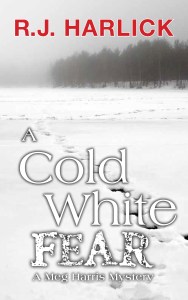
Cold White Fear final coverNow for some BSP – If you happened to live in the Toronto area, I will be reading from and signing my latest book A Cold White Fear on Thursday, January 28 from 6:00 pm to 7:30 at Sleuth of Baker Street on Millwood Ave. It would be fabulous to see you there.


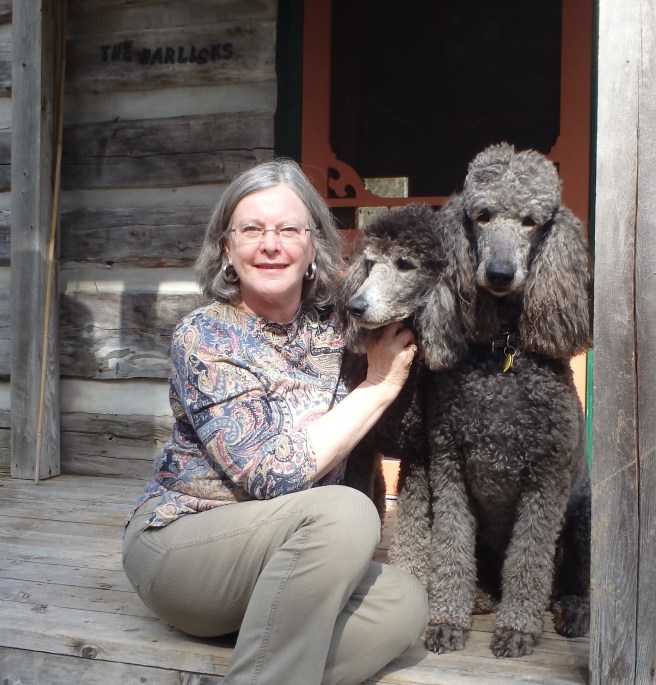
OLYMPUS DIGITAL CAMERA

RJ Harlick is an escapee from the high tech jungle. After working for over twenty-five years in the computer industry, first for major computer corporations such as IBM and DMR Group, then with her own management consultancy practice, she decided that pursuing killers by pen would be more fun than chasing the elusive computer bug.

Originally from Toronto, R.J., along with her husband, Jim, and their standard poodles, Sterling and Miss Molly, now bides her time between her home in Ottawa and log cabin in West Quebec. A lover of the outdoors, she spends much of her time roaming the forests of the Outaouais. Because of this love for the untamed wilds, she decided that she would bring its seductive allure alive in her writings. This she has done in her Meg Harris mystery series, where the wilderness setting plays almost as large a role as the main character, Meg Harris.

Mystery Mondays: Kat Flannery

This week I have the pleasure of hosting Kat Flannery. Now I’m going admit I haven’t read much romance, but when I read CHASING CLOVERS by Kat Flannery, I was hooked. I was just going to read a couple of pages and get on with my day, but then I couldn’t get off the couch. So it’s with great excitement today that I get to share Kat’s writing tips.

By Kat Flannery and Alison BruceBefore getting to the tips, I have some breaking news. HAZARDOUS UNIONS  by Kat Flannery and Alison Bruce is on sale from Nov. 8-12 for $1.99

Now let’s get find out what Kat has to say.

5 Tips to Help You Write a Novel by Kat Flannery

Start with a Bang!

The beginning of a book is where you will set the stakes for your story. How do you do this? Start your story with tension, action, or a problem. I always begin with a conflict. This enables me to introduce the reader to the plot in a way that will grip them and hopefully keep them turning the pages.

In freelance, journalism, short stories, novellas etc. the key ingredient is to hook your reader, just as you’d hook a publisher when querying them; writing a novel is no different. Bring the reader into your story by setting up the action. Keep your reader engaged by giving droplets of information about your character and the plot, or sub plots while building toward the climax of the story.

Backstory and Exposition

As authors we are always told to keep the story moving forward. When telling backstory writers often get confused with how to continue forward when it is a contradiction to the rule. Tell, not show the reader in a paragraph, or page important facts relevant to the character or setting.

Exposition is breaking away from the action to give information. You will need to decide when it is appropriate to place necessary background facts within your novel. This can be tricky, but always remember the story comes first.

Do not bog down the plot with flashbacks of exposition. What I like to always remember for exposition is…telling it when the story allows.

* Three ways to present your exposition is to place it into the scene, put it between scenes, or let a character explain.

Characters

Write them to be tangible. If your character is the antagonist, who is a serial killer, explain how they became this way by foreshadowing, inner dialogue, and actions of other characters. Do not assume your reader doesn’t care who the antagonist is because he is the bad guy. Make it believable, and always ask yourself why, when flushing out character biographies.

Do not change the rules. Characters that don’t follow his/her actions will pull the reader from the story. When you’ve written a character that is shy and timid then all of a sudden she is argumentative and abrasive you will piss your reader off. There is nothing like being stopped dead in a book from poor characterization. If your character starts out meek and mild but you want her to become stronger, build toward it. Do not change her in a few pages. People don’t behave this way. Keep it real.

Sub plots

Well handled, subplots can deepen the story’s background, and be used as pacing to turn the action from a break in the plot. If you’re going to have one or two subplots pertaining to the main characters, start the first one right in the beginning of the story. If you’re choosing to have your subplot around someone other than your protagonist, allow the reader to get to know them first before starting the subplot.

Subplots should be woven throughout the novel, each taking a turn at being the central point of the story. This can be complicated and I’d advise taking notes on subplots so you don’t get confused.

Tie up loose ends. Like plots, subplots need development, crisis, and resolution. Even if the subplot is minimal, treat it the same way you would your plot. Mention to it once in a while throughout the story. Try to write the subplots predicament to be directly involved with the main plot.

Resolution

This is the end of your story. Similar to the beginning, the end will solve the problem you’ve built the reader up to throughout the whole story. Endings can come in three ways, happy, unhappy or both together. It is up to you, and the story you’ve written as to which way you will end things.

The resolution is the winding down of the rocky middle. Here you will resolve the central conflict. The main plot will end, and if you choose to write a series, you can keep a sub plot open, but do not leave the reader guessing on your central plot. Wrap it up!

Happy Writing!

Bio:

IMG_0484
Kat Flannery

Kat Flannery’s love of history shows in her novels. She is an avid reader of historical, suspense, paranormal, and romance.

A member of many writing groups, Kat enjoys promoting other authors on her blog. She’s been published in numerous periodicals throughout her career.

Her debut novel CHASING CLOVERS has been an Amazon bestseller many times. LAKOTA HONOR and BLOOD CURSE (Branded Trilogy) are Kat’s two award-winning novels and HAZARDOUS UNIONS is Kat’s first novella. Kat is currently hard at work on her next book.

 You can find Kat here:

Facebook

Twitter

Author Website

***

Next week on Mystery Mondays come on by and find out what C.S. Lakin (novelist and writing coach) has to say.

Thanks for reading…

#1 Question to Ask Yourself After A First Draft

You’ve completed a first draft, you look at the mound of papers on your desk, and wonder what next.

How do you look at your draft with new eyes. There is a lot of advice about putting your novel in a drawer for a few weeks before looking at it again, sending it to others for a beta read, reading it aloud etc.

But what if you want to do something more practical and immediate?

For each scene ask yourself: WHAT IS THE POINT OF THIS SCENE?

Try not to answer in a generic way.

An easy answer is: Moves the story forward.

To me, that’s too general. How does the scene move the story forward? Be as specific as you can.

Ask yourself: Does the scene

  1. have an important revelation, clue or red herring?
  2. develop a character? To me this means, does the reader learn something new about a character that is important to a story?
  3. introduce a new character?
  4. show character motivation?
  5. give the reader a break after a high action scene?
  6. give the reader action after a break scene (sometimes called a sequel scene)?
  7. foreshadow, give backstory or contain an important flashback?
  8. develop setting that is important to the story and not just setting for the sake of describing something?
  9. close off loose ends?
  10. solve the crime?

If you can’t articulate the point of  a scene, think about removing the scene.

If the point of the scene is weak, see if you can take what is important in a scene and move it to another scene. Then delete the weak scene.

I use a spreadsheet to keep track of each scene. One column is dedicated to the point of the scene. If a cell remains empty when I’ve reviewed the entire novel then the scene must go.

Please share any tips you can add in the comments below.

I used this technique while writing DESCENT, BLAZE and AVALANCHE.

Thanks for reading…

If you’re interested, you can buy or download a sample of DESCENT at:  myBook.to/Descent

Lesson Seventeen from a Manuscript Red Line: Who are we talking to?

Before You Submit: Do you have a draft of your novel or short story and are thinking of submitting to an agent, publisher or writing contest? My series called Before You Submit might help. This series contains hints and tips I’ve received from professionals in the publishing industry. Each week I’ll share a new tip. This week, I’m reblogging a post from Jennifer Eaton. She’s talking about how to start a scene and let the reader know who has the point of view. Her explanation is so clear, I thought I’d share it with you. Thanks Jennifer 🙂

Jennifer M Eaton's avatarJennifer M Eaton


For an intro into where these tips are coming from, please see my post: A Full Manuscript Rejection, or a Gold Mine?  You can also click “Rant Worthy Topics” in my right navigation bar.  Choose “Gold Mine Manuscript” to see all the lessons to date.

We’ve been on Point of View for a little while now.  No need to break a trend.  This particular publisher harped on it a lot, so here I am passing their wisdom on to you.  The next POV comment they made was to make sure it is immediately obvious when you start a chapter whose POV you are in.

I was a little surprised by this.  One of the things that I admired in the Gold Mine Manuscript, was the beautiful imagery.  The author is so much better at building the “view” of the scene for a reader than I am.  The problem…

View original post 175 more words

Writing While Traveling

Can you write while being a passenger in a car?

For me the answer is sometimes.  While driving along the north shore of Lake Superior, the scenery is spectacular and just a little distracting. The road twists and turns, and i lean from side to side as my husband smoothly takes the curves. I thought I’d get a lot of writing done when it wasn’t my turn to drive, but no so.

Then I thought, when we arrive and stay in a quiet bed and breakfast, I can write there. Ha Ha. Northern Ontario has too many places to explore. We arrived at each spot, got settled and headed out the door. Again, no writing for me.

But there was time to take a goofy selfie . . .  Lake Superior is in the background.

IMG 0764

Maybe  when we hit the prairies. Straight roads, endless wheat fields, blue skies. What could be better for getting some writing done?

A girl can dream, can’t she?

Thanks for reading . . .