 Many things go into creating a final version of a book and getting it published. An author usually writes a dedication and an acknowledgment, which come from the heart and are hard to write.
I get emotional writing these as the people listed made a major effort to help me get this book published.
The dedication is for my in-laws, who have given me a lifetime of love. It was the summer of 2012, and Mathew and I needed some time off Mattina, our sailboat. Shirley and Michael invited us into their home, and we lived there for 5 months. This is where I wrote the first draft of Look The Other Way. I was in Canada dreaming of life in the Bahamas, and Look the Other Way is the result of that dreaming.
For Michael and Shirley Stanley, whose house I lived in while I wrote this book. With Love.
The acknowledgements speak for themselves…
Acknowledgements
Mathew, the love of my life, eagle-eyed editor, and constant supporter is the person I need to thank first.
A heartfelt thank you goes to my friends for life who read, reread, commented and commented again: Liliana Conn, Sonya Conn, Janice Janczyn, Sue Kreiling, Debi Sarandrea, and Adrienne Stewart.
Thank you to Elinor Florence for helping with the blurb and Kat Flannery for beta reading.
And, of course, thank you to Cheryl Kaye Tardif and Imajin Books for believing in me.
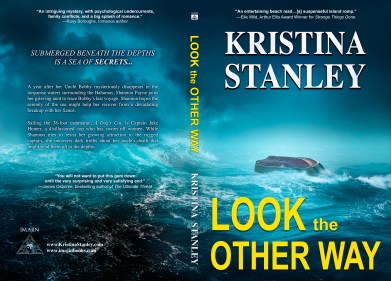
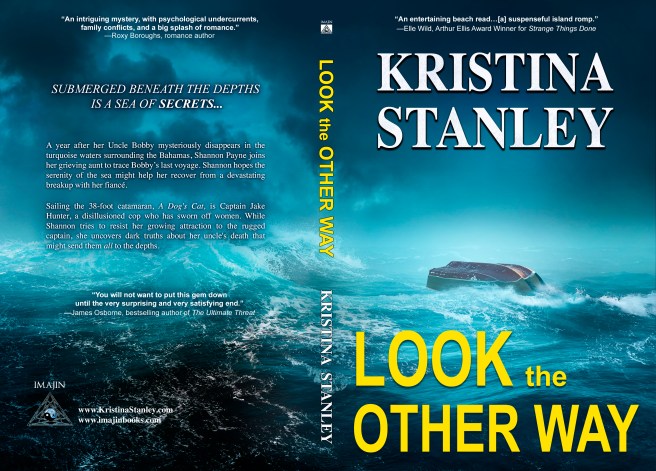
Here is the first chapter of Look The Other Way (with permission from Imajin Books.)
CHAPTER ONE
“We’re letting you go.”
Shannon Payne inhaled deeply, but the breath didn’t ease the tightness gripping her throat.
“I thought I was getting a raise today.”
Veronica Smythe slid an envelope across the surface of her desk.
“I’m not sure why you’d think that.”
The dreaded envelope of doom sat inches from Shannon. Did she dare flick it back at her boss?
“Because that was part of my contract. I accepted the lower wage with the understanding I’d be given a bump in pay at the end of three months.”
Veronica reached across the desk and tapped her acrylic fingernails on Shannon’s name written in sloppy cursive across the center of the unsealed envelope.
“It’s all explained in there.”
“You can’t just let me go because my three-month probationary period ends tomorrow.” Shannon fidgeted with the jacket of her favorite pantsuit, pulling the front seams tight over her blouse. She jammed her stiletto heels into the plush carpet, subduing the tremor that had taken hold of her legs.
“Did I do something wrong?”
“We don’t have the budget to keep you on. It’s nothing personal.”
“Of course it’s personal. I quit a good job and took a risk on this upstart newspaper. You persuaded me to do that.” Shannon’s heart hammered in her chest, and she tried to focus her attention on Veronica, but there was Lance to think about, too. What the heck was she going to tell him? Hi honey, how was your day? By the way, we can’t afford the house we looked at last night.
“I didn’t persuade you to do anything.” Veronica walked to the window and rested her backside on the ledge. The skirt she wore was an inch too short and pinched her thighs. She crossed her arms and looked down her long nose at Shannon.
“When is this effective?”
“Immediately.” Veronica twisted a gold bracelet around her wrist, playing with the sculpted butterfly that connected the chain together. “Obviously, you knew about the probationary period.”
Shannon shoved her own bracelet underneath her sleeve. She’d rather hide the bracelet than let Veronica know they had the same taste in jewelry. On her last birthday, Lance had left the gift on her pillow, and knowing Veronica had an identical one diminished its sentimental value.
“How long have you known this?”
“I’m not sure how that’s relevant.”
Rain pelted the windows framing the corner office. The waves frothing across Lake Ontario matched the motion in Shannon’s stomach.
“You could have given me more time to find another job.”
“I suggest you start looking now for somewhere else to work.”
“Do I get a reference?”
“Yes.” Veronica nodded at the envelope. “It’s in there.”
Shannon didn’t understand the coldness of Veronica’s tone. The change in her behavior had started a month ago, but she couldn’t figure out what she’d done to offend the woman. Female competition in the workplace? Not likely. Otherwise, Veronica wouldn’t have hired her.
“Kingston is a small town. There aren’t many jobs available in our industry.”
“You’re a reporter. Do some investigating, and you’ll find something.”
Shannon dropped her gaze to The Kernel’s competing newspapers. The Whig Standard and The Herald were strewn across Veronica’s desk, highlighted and written on. Three months ago, Shannon left a secure job at The Whig to join The Kingston Kernel, thinking working for a new paper would be exciting. The Kingston Kernel targeted the online market, and Shannon mistakenly believed her career would soar if she was part of a company that embraced new technology. Now she needed to find a new job and fast.
Veronica twirled a pen between her thumb and forefinger, examining it as if it might do something interesting.
“You could move to a bigger city. That might be easier for you.”
What? Leaving the company wasn’t good enough. Veronica wanted her to leave Kingston, too.
“I can’t. My fiancé is doing his residency at the hospital.”
~
Shannon stood underneath the awning in front of The Kernel’s outer doors and buttoned her raincoat. The wind blew rain sideways, soaking her pants. Water streamed across the pavement and ruined her shoes.
She clicked the contacts icon on her cell, then clicked her aunt’s photo. She’d just been fired, but the image made her smile. Shannon looked more like her brown haired, brown eyed, forty-six-year-old aunt than she did her own mother. As she often did when she was upset, she wished for her mom. Her mom would be fifty-six if she were still alive. Shannon had been ten when her mom died at the age of twenty-six. Four years younger than Shannon was now.
“Aunt Debi, it’s me. Are you busy?”
“I’m faxing boat papers to my broker in Florida. Hang on a sec.”
Aunt Debi was actually going through with her plan. What a crazy idea. Going sailing as a single woman. Shannon backed closer to the building but staying dry in this weather was like trying to stay dry in the shower. Lake Ontario was only a mile away. In the summer, she would have taken off from here and headed straight to her sailboat. An afternoon sailing in brisk wind cured anything. Too bad she couldn’t do that now.
Shannon heard the fax machine emit a beep, and Aunt Debi came back on the phone.
“There. I now own a Lagoon 380 S2.”
“That’s wonderful. Congratulations. I was hoping you’d get that catamaran.” Shannon had watched her aunt and uncle scheme and plan as if they were school kids setting out on an adventure. Her uncle was to deliver their sailboat to the Caribbean. Her aunt would transfer her clients to her law partner, sell him her half of the business, and fly south to join Uncle Bobby in Puerto Rico. That had been the plan, anyway. “You must be excited.”
“And nervous. I’ve hired a captain. I’m meeting him in Florida on Monday.”
“Good for you. I wish I could go with you.”
“What’s wrong? You sound funny,” Aunt Debi said.
“I can’t hide anything from you.” Shannon wiped her eyes on her raincoat sleeve. “I was let go today.”
“Oh, Shannon. I’m sorry. What happened?”
“I don’t know. My boss said budget cuts.” Shannon heard barking and knew her aunt’s Cocker Spaniel was getting into mischief. “What’s Peanut doing?”
“There’s a bird on my balcony. Can they just do that? Let you go?”
“I haven’t worked there for three months yet, so they can do whatever they want.”
“I thought it was longer than that. Can you go back to The Whig?”
“No. I just got off the phone with them. They filled my position with someone they really like. They’ll call if something opens up.”
“What did Lance say?”
Good question. How would Lance react? Maybe he’d surprise her and take the news well. This wasn’t her fault. The door to the newspaper office opened, and Veronica stepped outside. Shannon wouldn’t shy away from her. She stared at her without breaking eye contact.
Veronica opened her umbrella and strode in Shannon’s direction.
Shannon took a step away from the wall, forcing Veronica onto the street. Too bad there wasn’t oncoming traffic or at least a car to hit a puddle and soak her. Veronica stayed on the road until she reached the corner and turned out of sight.
“Shannon? Are you still there?”
“I’m here. What did you say?”
“I asked what Lance said.”
Shannon knew Aunt Debi only cared what Lance thought because Shannon planned to marry him. Aunt Debi probably believed she hid her dislike, but she knew her aunt too well. Her polite, slightly stiff manner around Lance exposed her feelings.
“I haven’t told him yet. He’s on call till Monday.”
“In that case, why don’t you drive down here and spend my last weekend in the big city with me. It’ll make you feel better.”
~
Since Lance didn’t like personal messages left on his cell, Shannon wrote a note telling him she was headed to Toronto for the weekend. Occasionally, while he was on call, he could get home for a couple of hours. If he didn’t come home, he’d never notice she’d been gone. She placed the note on the front hall table of the one-bedroom condo they rented, then picked it up again. Sometimes she was so unromantic. She added three hearts after her name and signed the note with a lipstick kiss. Better.
She didn’t mention she’d been fired. He wanted to make an offer on the house they’d checked out last night, but without two salaries, they’d never get a mortgage. He was going to be pissed. Nothing wrong with a little procrastination on her part. Maybe she could find a new job before she told him the bad news. She dropped the note back on the table and left their apartment.
The rain hadn’t abated. She made a mad dash to her car, flipped the windshield wipers to high, and turned in the direction of the four-lane highway that would take her all the way to Toronto.
She shifted into fourth and accelerated from the onramp onto the 401. After an hour and a half of driving west on the highway and replaying the scene with her boss in her mind countless times, she needed a rest stop. Against her nature, she’d held back during the meeting with her boss because she wanted a reference. Imagining improvements to the witty remarks she’d never said, she drove too fast and swerved as she took the next exit. She slowed and pulled into the closest gas station.
A little relief, a little snack, a full tank, and she was back in her car with the defrost on high. Her cell rang.
“I’m sorry, but I’ve got to cancel for the weekend,” Aunt Debi said. “I’ve booked a flight for the morning. The captain I found is coming early. I’m going to meet him in Fort Lauderdale tomorrow afternoon.”
Shannon could continue to Toronto and stay at Aunt Debi’s apartment. She could do some shopping, except she shouldn’t be spending money when her income had just been cut off. Sitting alone in an empty apartment in Toronto might be better than facing Lance, but maybe it was better to get the bad news over with. She signaled left and headed toward Kingston.
She parked close to their apartment and ran to the front door, avoiding puddles and blinking against the blinding rain. She twisted the knob and stepped through the entrance. The unlocked door meant Lance was home. Maybe he’d surprise her and be sympathetic. Until he finished his residency in ophthalmology, he wouldn’t make much money. They’d been counting on her salary.
She heard him rummaging for something in the tiny kitchen and smiled. For a skinny guy, he sure ate a lot. She hung her rain soaked coat behind the front door, trying not to drip on the carpet. Two steps into the living room, she turned the corner and froze.
Veronica Smythe stood in the aging kitchen, clenching a glass of water. Odd enough, but her naked body, adorned only with the butterfly bracelet, shattered any pretense of normality. Apparently, Lance wasn’t original in his purchases.
Shannon’s stomach tightened. To think she’d liked Veronica when she’d first met her just because she had the same name as her mom.
“Hey, babe. What’s taking you so long?” Lance shouted from the bedroom. “I’ve got to get back to the hospital.”
When Veronica didn’t answer, Shannon said, “Why don’t you join us in the kitchen?”
Lance appeared, wearing boxer shorts that drooped below his protruding hip bones.
“Shit.”
Shannon ignored him and stared at Veronica. “You fired me so you could sleep with Lance.” For the second time in one day, her throat tightened, and she choked back a sob.
Her boss—ex-boss she reminded herself—remained silent.
Shannon grit her teeth, stopping her chin from trembling, and took a deep breath through her nose. “I’ll be calling your boss on Monday. Maybe you’ll get fired for this.” Using her cell, Shannon photographed Veronica and held it up for her to see. “He’ll like this photo of you.”
“Shannon, please,” Lance said.
“Please what? Please don’t be mad you’re cheating on me? Please don’t be mad my ex-boss is standing naked in my kitchen?”
Lance stared at his bare feet. “I don’t know what to say.”
Shannon walked to Veronica, took the glass of water out of her hand, and gently placed it on the counter. She turned to Lance.
“Get out.”
“Be reasonable.” Lance took a hesitant step toward her. “Don’t do anything rash.”
“Rash? I hope you get one from her. Who knows what other trash she’s sleeping with. Both of you, get out.”
Veronica turned toward the bedroom. The cellulite on her ass jiggled as she walked away, giving Shannon a sliver of smug pleasure. Shannon’s ass was all muscle. Veronica had shown no spine. Had no witty remark. Maybe standing naked had sapped the courage out of her.
When they were gone, Shannon needed all of ten seconds to decide what to do.
“Aunt Debi, it’s me. I’m coming sailing.”
Shannon booked a morning flight to Fort Lauderdale. She emptied her half of the closet and two drawers, picked out boat clothes, and shoved them into a duffle bag. She packed her work clothes into a suitcase but didn’t know where she was going to leave the stuff and at the moment, didn’t care.
To call her brother, Charlie, or not? She missed him and wanted to reach out in the desperate hope he would forgive her. For what, she wasn’t sure. She dialed, got his voicemail, and left a message asking him to call her. She hadn’t spoken to him in nine months, since before Uncle Bobby died, and didn’t want to tell him in a voicemail she was leaving the country.
The adrenaline surging through her subsided, and she collapsed on the bed she shared with Lance, a bed she would no longer sleep in. She buried her head in her pillow. How could he do this to her? She loved him and didn’t want to leave him, but she couldn’t stay either. Putting some distance between herself and him was a good idea. Sailing with Aunt Debi would give her time to decide what to do about him, about a job, about her life. She couldn’t think with so much hurt consuming her. She needed to move. She thrust herself off the bed and stomped to the bathroom.
She wouldn’t bother writing Lance a note. The engagement ring and butterfly bracelet abandoned on top of the toilet seat should tell him all he needed to know.
If this grabbed you, you can pre-order here.
Thanks for reading…

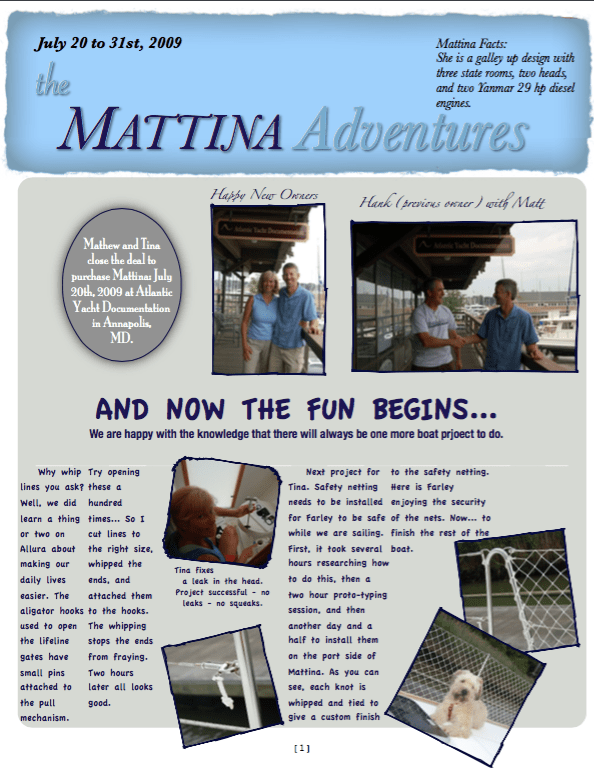



 The novel I’m writing in the camp is called Evolution and is a challenge for me. The Stone Mountain Series and Look The Other Way are all written in third person point of view. Evolution is written in first person point of view. It’s quite different to write an entire novel from on character’s point of view.
 What does Fictionary have to do with Camp Nanowrimo?
 Now back to Nanwrimo.

 lovers, there’s nothing like hinting someone is recently dead or going to die that peaks interest.
 This is where the back cover can be more powerful that the front. Select three or more images that highlight something your reader is going to care about. I write mainstream thrillers with a world-class equestrian as the main character. Readers who enjoy the world horses inhabit (think thoroughbred racing, rodeo, stadium jumping, cattle roping. . . you get the idea), are quick to have more interest in my books when they see a horse on the back cover.
 CONNIE JOHNSON HAMBLEY embraces the changes in the publishing world by being both traditionally and independently published. Growing up on a dairy farm in New York meant she had plenty of space to ride one of her six horses, and all would have been idyllic if a pesky arsonist hadn’t burned her family’s barn down. Bucolic bubble burst, she began to steadfastly plot her revenge against all bad guys, real and imagined. After receiving her law degree, she moved to Boston and wrote for Bloomberg BusinessWeek, Nature and other wonky outlets as she honed her skills of reaching readers at a deep emotional level. Her high-concept thrillers feature remarkable women entangled in modern-day crimes and walk the reader on the razor’s edge between good and evil. Connie delights in creating worlds where the good guys win–eventually. Her short story, Giving Voice, won acceptance in the award-winning New England’s Best Crime Stories: Windward, published by Level Best Books. The Troubles, is a 2016 Best Fiction winner at the EQUUS Film Festival in New York City.




 Emma Lovett leaves her philandering husband and crosses the country to begin her teaching career at a high school in Pinewood, Colorado.There, she meets Leslie Parker, a fellow teacher given to quoting Shakespeare to fit all situations, and the two become fast friends.